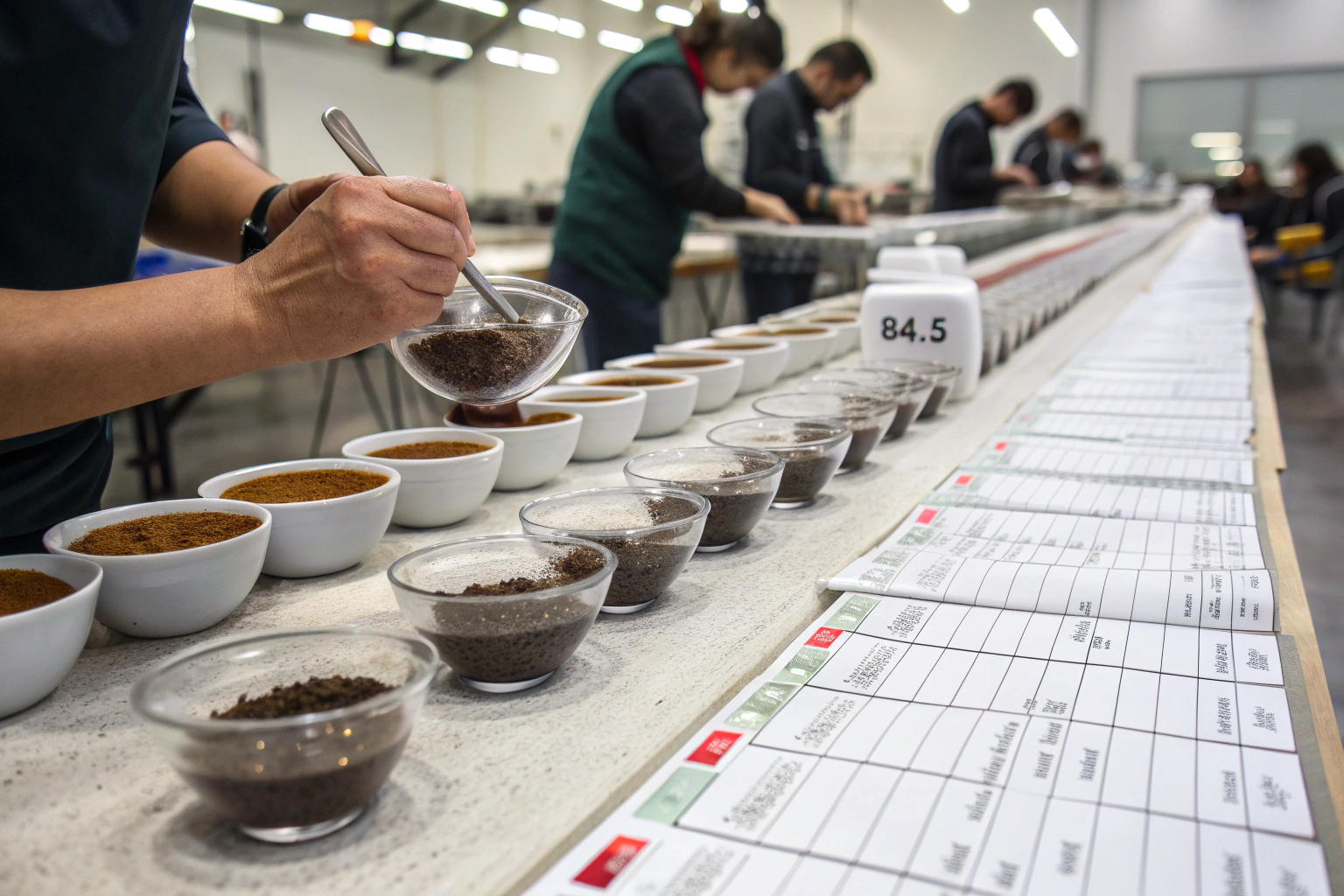
A few years ago, I received a call from a frustrated client. "The last container of your Yunnan was a 10/10," he said. "This one is... an 8. It's still good, but it's not the same. My customers are noticing." That call was a knife in my gut. I had failed him. Consistency, for a specialty roaster, is more important than an occasional spectacular score. You build your brand on a promise of a specific flavor experience. If that flavor shifts, you erode trust with every cup. The pain of inconsistency is a slow, quiet killer of a coffee business. I pulled every record for those two lots. I found a tiny deviation in the drying curve for a single day's harvest that had been blended in. It was a small mistake with a big consequence. That day, I redesigned our entire lot segregation protocol.
You can guarantee consistent quality for every coffee shipment by partnering with a supplier who does not rely on luck, but who operates a scientifically controlled, vertically integrated system with absolute genetic uniformity, a standardized processing protocol, a documented, multi-stage physical and sensory verification process, and a final quality gate of a lot-specific, impeccably documented Pre-Shipment Sample that you personally approve.
Consistency is not a mystery. It is a manufacturing discipline applied to agriculture. Let me show you the exact system we built to ensure that lot after lot, year after year, your coffee tastes exactly as promised. You can see the proof of this system on our Quality Control page at Shanghai Fumao.
How Does Vertical Integration Control the Variables That Cause Inconsistency?
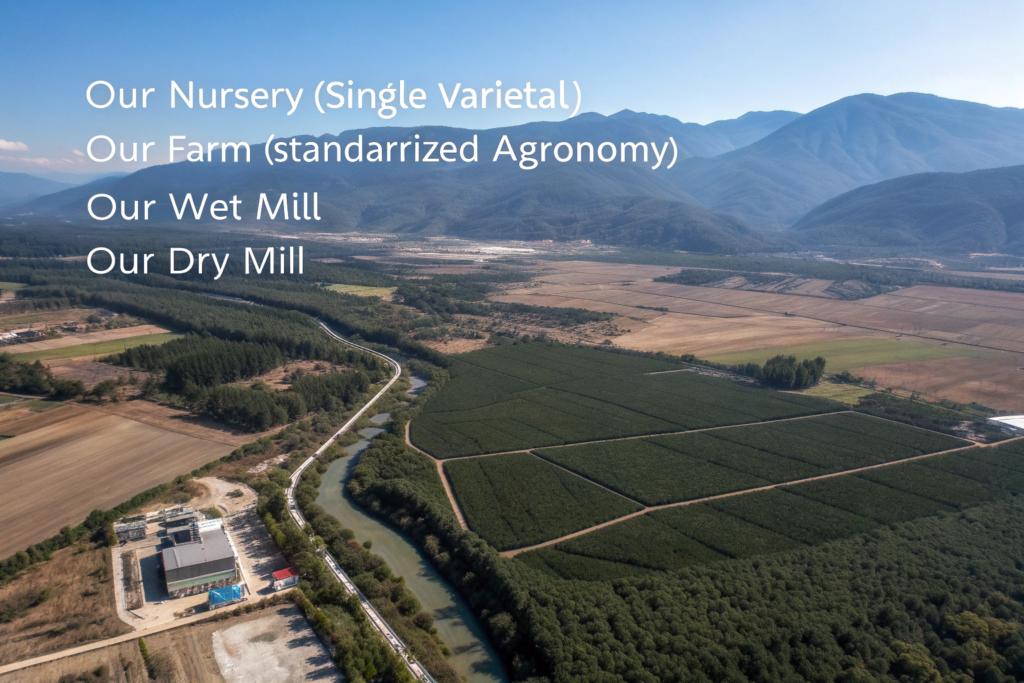
Most inconsistency in coffee is not a mystery. It is a direct result of a fragmented supply chain. A bag of "Yunnan coffee" from a trading company might contain beans from a dozen smallholders with different varietals, different soil, and different processing methods. You are buying a blend of anonymous variables. The single most powerful tool to guarantee consistency is to control the entire chain from seed to bag. This is the fundamental advantage of a vertically integrated operation.
A vertically integrated model, like the one we operate at BeanofCoffee, controls inconsistency at its source by owning and managing the entire process from a single, genetically uniform nursery, through standardized farming and processing, to in-house dry milling and density sorting, ensuring that every bean is produced within a single, audited, and perfectly controlled system.
We are not a network of anonymous smallholders. We are a single, 10,000-acre factory farm for quality. This is the foundation of our promise. You can learn more about this structural advantage in our article on What Are the Advantages of Sourcing Coffee from a Single Estate in China?.
Why Is a Single, Genetically Uniform Varietal the Foundation?
I once visited a co-op where they had planted a mix of old Catimor, some Typica, and a few random Bourbon trees all in the same block. The cup was a muddled mess. You could taste the harsh, herbal notes of the old Catimor fighting with the delicate sweetness of the Typica. It was a genetic lottery, and it was impossible to produce a consistent flavor profile.
At BeanofCoffee, we eliminated this variable at its root. Over 95% of our core Grade 1 production is planted with a single, carefully selected clone: our P3 selection of Catimor. This is a deliberate strategy for uniformity. Every tree in a designated block is genetically identical. They flower at the same time, mature at the same rate, and produce a cherry with a predictable sugar and acid profile. This genetic uniformity is the bedrock upon which all other consistency efforts are built. It means we are not blending different varieties at the farm level; we are harvesting a single, coherent crop.
How Do Standardized Processing Logs Create a Repeatable Flavor Signature?
A uniform crop can be easily ruined by inconsistent processing. A batch fermented for 24 hours one day and 36 hours the next will taste completely different. We treat processing not as an artisanal craft, but as a controlled industrial process with a documented, repeatable recipe.
Our approach to processing is built on precision and data. For our classic washed profile, we use a documented, logged, and perfectly repeatable protocol. We control the fermentation time and temperature in our dedicated stainless steel tanks. The drying curve on our raised African beds is carefully managed with a strict raking schedule, and the final moisture content is verified with a calibrated meter, not a by-feel test. This entire process, from the exact fermentation data to the drying bed temperature logs, is recorded for every single lot. This is how we have designed our "house flavor." It is a repeatable, scientifically managed formula, not an accident of the weather.
How Is the "Approved Quality Profile" Physically and Sensorily Locked?
You have now created a uniform product. The next step is to define exactly what that product should taste like and create an objective, repeatable process to verify it. This is the role of our rigorous cupping protocol and sensory documentation. We move from physical uniformity to proven sensory uniformity.
At BeanofCoffee, every finished export lot is locked against a master sensory profile through a rigorous, multi-stage cupping protocol conducted by our certified in-house Q-Grader, who uses the SCA 100-point scale to score ten distinct sensory attributes, with a strict internal minimum score of 83 points and a mandatory approval gate.
This is not a casual tasting; it is a formal, calibrated, and repeatable scientific evaluation. The "Approved Quality Profile" is a specific, documented reality. This process is detailed in our guide on What Is the Cupping Protocol at BeanofCoffee for Export Approval?.
How Is a Q-Grader's Palate Calibrated to Objective SCA Standards?
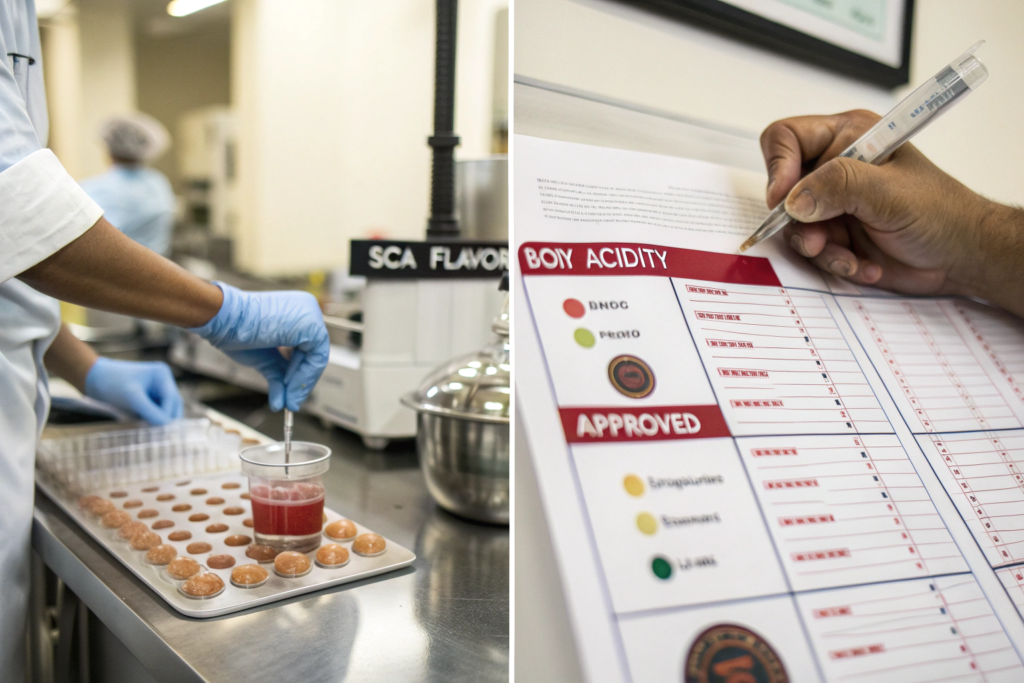
A sensory evaluation is only as reliable as the person making it. You cannot build a consistent global supply chain on one person's subjective "I think it tastes good." The palate must be calibrated to an international standard.
Our Q-Grader is not just a good taster; they are a licensed professional, certified by the Coffee Quality Institute, who has undergone years of rigorous training and testing to calibrate their palate to the exacting standards of the SCA cup score form. They can reliably identify a ferment defect, distinguish between malic and citric acidity, and score a body with a precision that is repeatable and aligned with other Q-Graders worldwide. This calibration ensures that an "84.5" score in our Baoshan lab means the exact same thing as an "84.5" in your lab in Seattle.
Can You "Lock" a Roast Profile for an Entire Year's Supply?
Yes. This is the ultimate promise of a consistent supply. You, as a roaster, are not just buying a green bean; you are buying a predictable thermal performance in your drum. For our long-term contract clients, we take this a step further.
Using the cupping data and the roast profile feedback you share with us, we can build a detailed "physical and sensory fingerprint" for your preferred coffee. We then reserve a specific block or a specific quality tier of production for your annual contract. As we process the new harvest, we cup the new crop against our retained samples from your previous approved lot. Our goal is not just to hit a general "83+ score," but to match the specific body, acidity, and flavor balance of your locked-in profile. This is the most advanced form of consistency we offer, and it is the foundation of our long-term Custom Blends Program.
What Is the Final Approval Gate Before a Container Is Sealed?
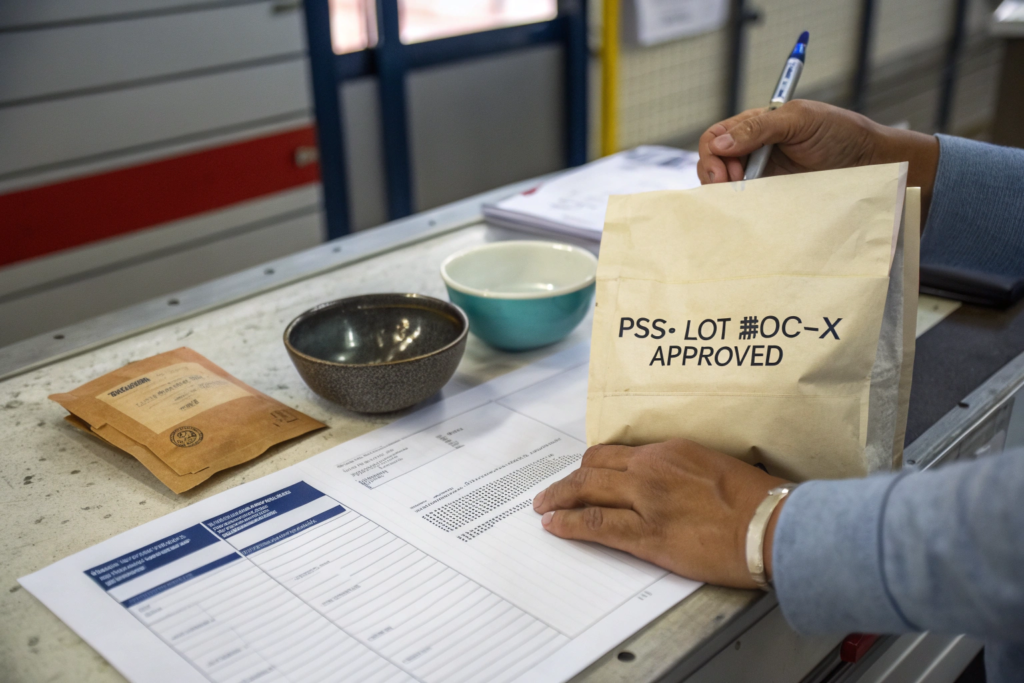
All our internal systems, protocols, and quality scores are directed toward one singular, defining moment: your approval. The final, non-negotiable gate before a single bag is sealed on a container is your personal, written sign-off on a Pre-Shipment Sample (PSS). This is the moment our guarantee becomes your verified reality.
The final and most critical approval gate is the Pre-Shipment Sample. Before any container is sealed for export, we pull a true, representative sample from the actual lot, roast it to your specified protocol, and express ship it to you. The container is only released for shipment upon receiving your explicit, written approval.
You are the ultimate quality gate. Our entire system is built to earn a "yes" from you, every single time. This process is your best defense against inconsistency, and you can learn how to use it effectively in our guide on How to Get a Pre-Shipment Sample Approved for Coffee Wholesale?.
What Should You Evaluate in a Pre-Shipment Sample (PSS)?
When you receive a PSS from us, your evaluation should be specific and rigorous. You are not just checking if the coffee is "good." You are verifying that it matches everything we have promised. It is a final, objective audit.
You should compare the physical green bean against the contract's specification sheet. You should roast the sample using your standard production profile and evaluate the curve consistency. And most importantly, you should cup it against your retained sample of the coffee you previously approved. The question is simple: "Is this lot, in my roaster, on my cupping table, an exact match for the quality I expect and have built my brand on?" Your "yes" is the final, definitive quality certification.
How Does a Supplier's Retention Sample Protect You in a Dispute?
A professional supplier does not just send you a sample; they also retain an official, sealed sample from the exact same lot. This is a critical piece of the quality guarantee. It protects both you and the supplier.
At Shanghai Fumao, after you approve the PSS, we seal an identical sample, label it with the lot number and date, and lock it in our retention room. If, upon arrival, you feel the container does not match the approved PSS, the sealed retention sample becomes the objective piece of evidence. It can be sent to an independent, mutually agreed-upon third-party lab or Q-Grader for a binding analysis. This system proves definitively whether the quality changed. It provides a fair, transparent, and scientific path to resolving any dispute. It is the ultimate proof of our commitment to stand behind our product.
Conclusion
Guaranteeing consistent quality is not about a single test or a final check. It is the predictable, inevitable outcome of a vertically integrated system that controls every variable, a standardized processing protocol that defines a repeatable flavor signature, a calibrated sensory verification process that locks the profile to an objective standard, and a final, buyer-driven approval gate that ensures the product meets your exact expectations.
You do not need to cross your fingers and hope for a good container. You can demand a system that manufactures consistency.
At Shanghai Fumao, this system is our entire business model. From the genetic uniformity of our trees to your final PSS approval, every step is designed to guarantee that your coffee tastes exactly as promised, every single time.
If you are tired of the inconsistency of commodity supply chains and want to experience a truly guaranteed quality program, let's start with a sample. Email Cathy Cai. Ask for a "Guaranteed Quality Pre-Shipment Sample" of our current Grade 1 lot. Contact Cathy at: cathy@beanofcoffee.com