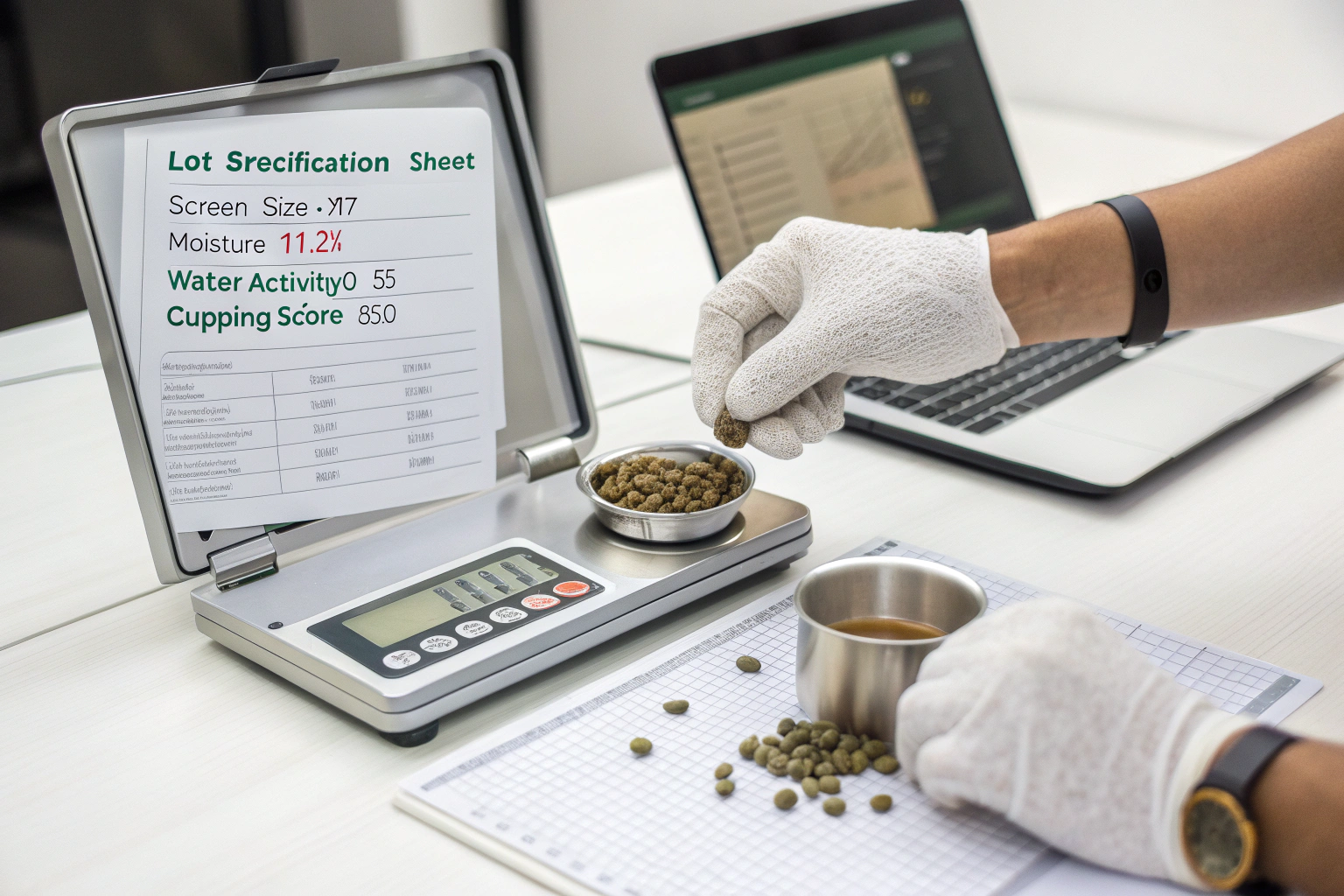
I was on a call with a new client last week. He told me, "I'm tired of buying bags of 'premium' coffee that taste different every time. What does that word even mean?" He had been burned by suppliers who used "premium" as a marketing word for anything that wasn't a broken, moldy defect. He needed a definition he could take to his bank and his customers. I told him the truth. In the wholesale coffee business, "premium" is not a feeling or a nice story. It is a specific, measurable, and independently verifiable set of physical and sensory standards. It is a certificate of analysis, not a compliment.
A premium wholesale coffee bean is defined by the rigorous intersection of exceptional physical quality, a superior sensory profile, a verifiable and transparent provenance, and a documented commitment to food safety and sustainability, all of which are guaranteed by a supplier who can provide third-party, lot-specific data to prove every single claim.
This is the comprehensive definition. Let me break down each of these four pillars using the exact standards we apply to our coffee at Shanghai Fumao. You can also see our full quality commitment on our Quality Control page.
How Do Physical Attributes Define a Truly Premium Green Bean?
Before a single bean is roasted or cupped, a premium green coffee must first meet a set of non-negotiable physical prerequisites. These are the fundamental, measurable attributes that separate a genuinely high-quality product from a commercial lot. These are the specifications that you can see, touch, and verify with objective instruments. A coffee that fails these physical tests is not premium, regardless of its story.
A premium green bean is physically defined by a combination of a tight, uniform screen size distribution (typically a minimum of 90% retained on Screen 17 or above), a very low and strictly limited defect count that meets the SCA Specialty Grade standard, and a precisely stabilized moisture content and water activity that ensures both its physical and microbiological integrity.
These are not negotiable targets. They are the foundation. At Shanghai Fumao, our Grade 1 Arabica must meet these exacting physical specs, which are detailed on our Green Coffee Specifications page.
Why Is a Tight Screen Size Distribution So Critical?
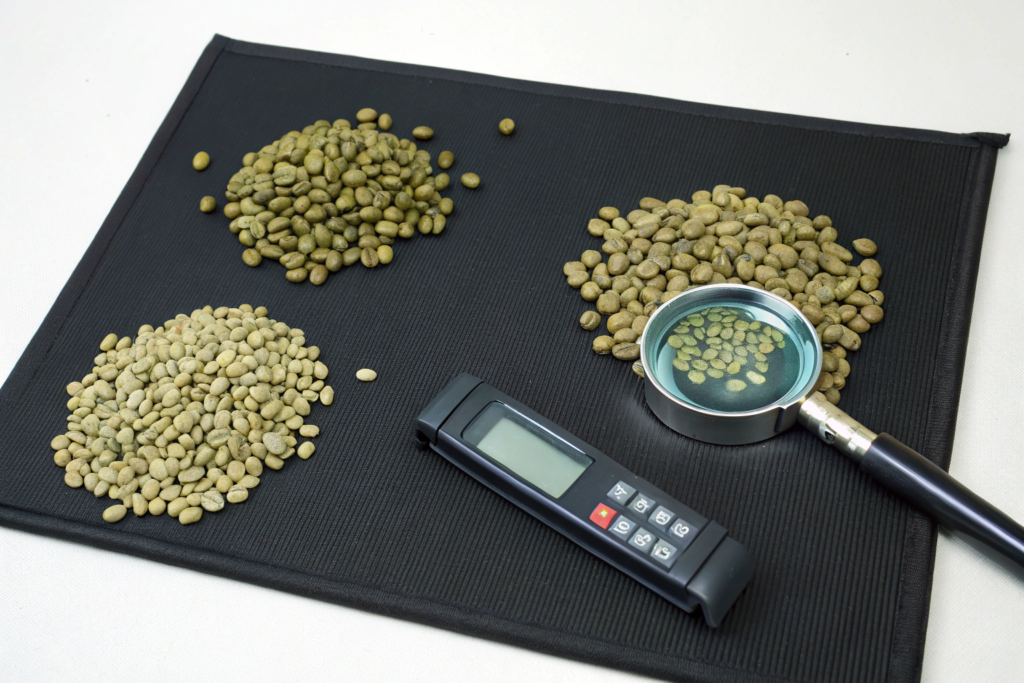
A buyer recently told me his roast consistency had fallen apart. He was using the same profile, but his batches were coming out uneven, with some beans scorched and others looking pale. The problem was not his roaster. It was the coffee. A new container from an unverified supplier had a wider mix of bean sizes, and the inconsistent thermal mass was causing chaos in his drum. This is why a narrow screen size distribution is non-negotiable.
A physically uniform lot is one where all the beans, as we explain in our guide on Why Is Screen Size Analysis Important for Espresso Blend Buyers?, are of a very similar size. Our premium specification mandates that at least 90% of the beans are retained on a Screen 17 (17/64 of an inch) or larger. This uniformity ensures that every bean has a nearly identical thermal mass. When dropped into a hot roaster, they all absorb heat at the exact same rate, leading to a perfectly uniform roast, a more predictable development, and a cleaner, more transparent expression of the bean's flavor. This is not just a visual preference; it is a fundamental physical requirement for a premium product.
What Do Moisture Content and Water Activity Reveal About Quality?
A coffee can look perfect, but be biologically unstable. Two critical, invisible measurements reveal the true internal health of the bean, its stability, and its potential shelf life. These two numbers tell a forensic story that a visual inspection cannot.
The moisture content must be within a tight, optimal range, typically 10.5% to 11.5% . A reading above 12.5% is an immediate alert; the coffee is a high-risk environment for mold. A reading below 9.5% is the sign of a dead, faded bean that will taste hollow and papery. However, the more revealing measurement is water activity (aw) . As we detail in our deep dive on Why Is Water Activity in Green Coffee Just as Important as Moisture?, water activity measures the "free" water available for mold and bacteria. Our internal premium standard requires an aw of less than 0.60, creating a microbiologically stable product with significant shelf life. A supplier who cannot provide both of these precise, lot-specific numbers is not a premium partner.
What Sensory and Flavor Characteristics Signal a Superior Cup?
A coffee can be physically perfect and still taste uninspired. True premium status is only conferred when that physical excellence translates into a demonstrably superior sensory experience. This is where the science of grading meets the art of the palate. A premium cup is not just free of defects; it is characterized by a specific, positive, and harmonious flavor architecture that is a genuine expression of its origin.
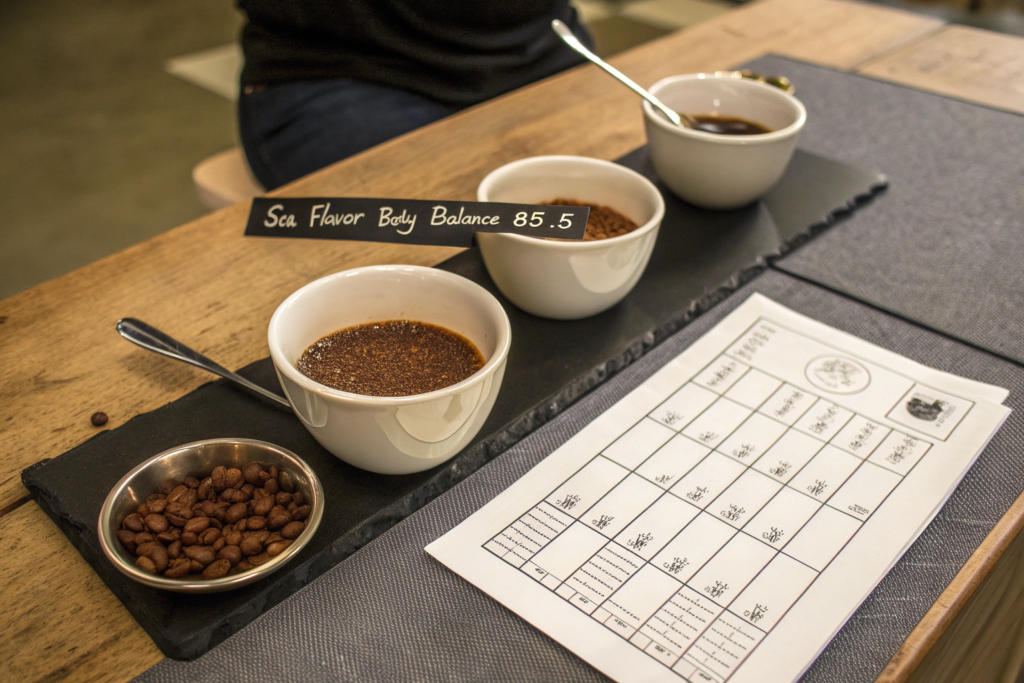
A superior cup is defined by both its cleanliness—a complete absence of any off-flavors—and its complex, positive flavor architecture, documented by a certified Q-Grader on a standardized SCA cupping form, with a minimum total score that meets a strict internal premium threshold, typically 83 points or higher.
This is the objective proof of flavor. It moves the conversation from "I like it" to "This has been scientifically evaluated and has achieved a verifiable score." At Shanghai Fumao, our Q-Grader cups and scores every single export lot to ensure it meets this standard. You can read more about this exact process in our What Is the Cupping Protocol at BeanofCoffee for Export Approval? article.
What Are the Defining Cupping Notes of a Premium Yunnan Arabica?
A great Yunnan Arabica does not taste like a generic "coffee flavor." It has a distinct and memorable identity. When our Q-Grader scores an exceptional lot from our high-altitude Baoshan blocks, the notes on the sheet consistently describe a specific and harmonious sensory signature.
The cup is anchored by a core of rich, malted dark chocolate that provides a deep, satisfying, and bittersweet foundation. This is lifted by a top note of clean black tea, which adds an elegant, slightly floral complexity and a remarkably clean finish. The entire experience is held together by a heavy, syrupy body that coats the palate, and a lingering sweetness that tastes distinctly of caramelized brown sugar. This is not a generic profile; it is a specific, identifiable, and repeatable signature of our land.
Why Must a Q-Grader Score Lead to an Internal "Pass" Above 83 Points?
The Specialty Coffee Association sets a minimum score of 80 points for a coffee to be classified as "specialty grade." At BeanofCoffee, we enforce a stricter internal standard. Our "premium" export lots must achieve a minimum score of 83 points, with no single attribute scoring below 7.5. This elevated threshold is not arbitrary. It is our guarantee that the coffee is not just technically specialty, but genuinely excellent and comfortably within the "very good" to "excellent" range. It removes borderline coffees from our top-tier offering. When you buy our premium grade, you are buying a coffee that has been subject to a more demanding sensory benchmark.
How Do Traceability and Provenance Add to a Bean's Premium Value?
A premium price demands a premium story, one that is backed by verifiable data, not marketing copy. Today, provenance is a core component of a bean's value. A buyer is not just paying for the taste in the cup; they are paying for the documented journey of the bean from a specific GPS coordinate. A generic "Product of China" label is not a premium claim, but a specific, single-estate story is a powerful brand asset.
Traceability and provenance add measurable premium value by transforming a commodity into a unique product with a verified, documentable identity, allowing a roaster to build an authentic and defensible brand story around a specific farm, a specific altitude, and a specific varietal.
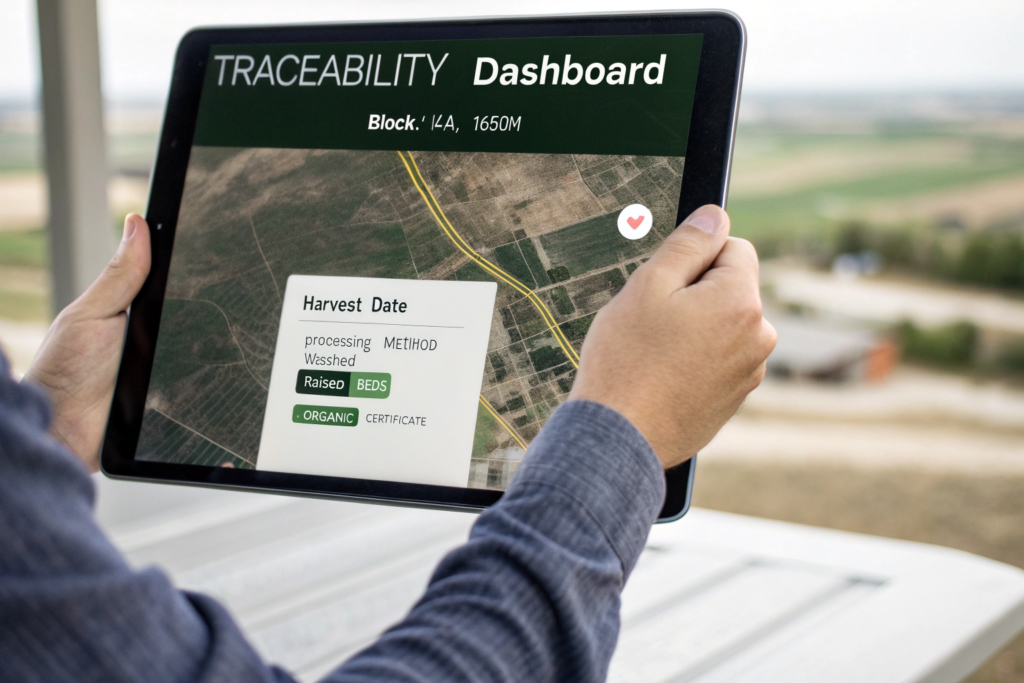
This is the story that commands a higher retail price. It is the story that builds customer trust and loyalty. At Shanghai Fumao, our single-estate model and our investment in blockchain traceability are designed to provide this exact asset to our partners. You can learn more about this technology in our article on Why Is Blockchain Being Used for Coffee Bean Traceability from China?.
Why Is Knowing the Exact Altitude and Varietal a Premium Signal?
A coffee labeled "Yunnan Arabica" is a commodity. A coffee labeled "Catimor P3, Block 14A, 1,650m, Baoshan" is a premium product. This specificity is the hallmark of a quality-focused supply chain. The difference is profound.
This granular information is not just a story for the coffee bag; it is a practical roasting and marketing asset. For a roaster, knowing the exact altitude directly predicts the bean's exceptional density and enables them to precisely dial in a roast profile. For the brand, the varietal and block name provide a unique, unduplicatable identity that no competitor can copy. This level of transparency demonstrates a radical commitment to quality from the producer and signals to the consumer that this is not a generic blend; it is a curated, authentic, and high-value product from a specific, extraordinary place.
How Do Verified Certifications (Organic, RA) Act as Independent "Trust Markers"?
In a world of greenwashing, a simple claim of sustainability is no longer credible. A premium product must have its ethical and environmental claims independently verified by a trusted third party. A logo is not a logo; it is an audited guarantee.
A seal like the Smithsonian Bird Friendly certification or a USDA Organic certificate is not just a logo. It is a powerful "trust marker." It communicates to the consumer, in a single, recognizable symbol, that the coffee's environmental and ethical claims have been independently audited by a scientific or governmental body. As we discuss in How to Source Coffee Beans That Are Certified Bird Friendly?, these certifications provide a shortcut to trust. They justify a premium price by providing an independent, legally defensible guarantee of the product's integrity.
Conclusion
A premium wholesale coffee bean is not defined by a single attribute, but by the powerful and proven intersection of four critical pillars. It begins with a physically flawless, uniform green bean with a stable and documented internal structure. It is validated by a superior sensory profile, objectively measured and scored by a certified expert. Its value is amplified by a transparent, specific, and verifiable provenance that tells an authentic story. And the entire product is protected by an independently audited framework of food safety and sustainability certifications.
You cannot claim a premium product. You must prove it. At Shanghai Fumao, we do not just sell coffee; we provide a complete, documented, and verifiable proof package for our premium grade. Our lot-specific data, Q-Grader scoresheets, and traceability maps are our definition of the word.
If you want to taste the difference that a scientifically defined premium coffee makes, and you want to see the full documentation that backs it up, let's talk. Email Cathy Cai. Ask for our "Premium Definition Documentation Pack" for a current lot. Contact Cathy at: cathy@beanofcoffee.com