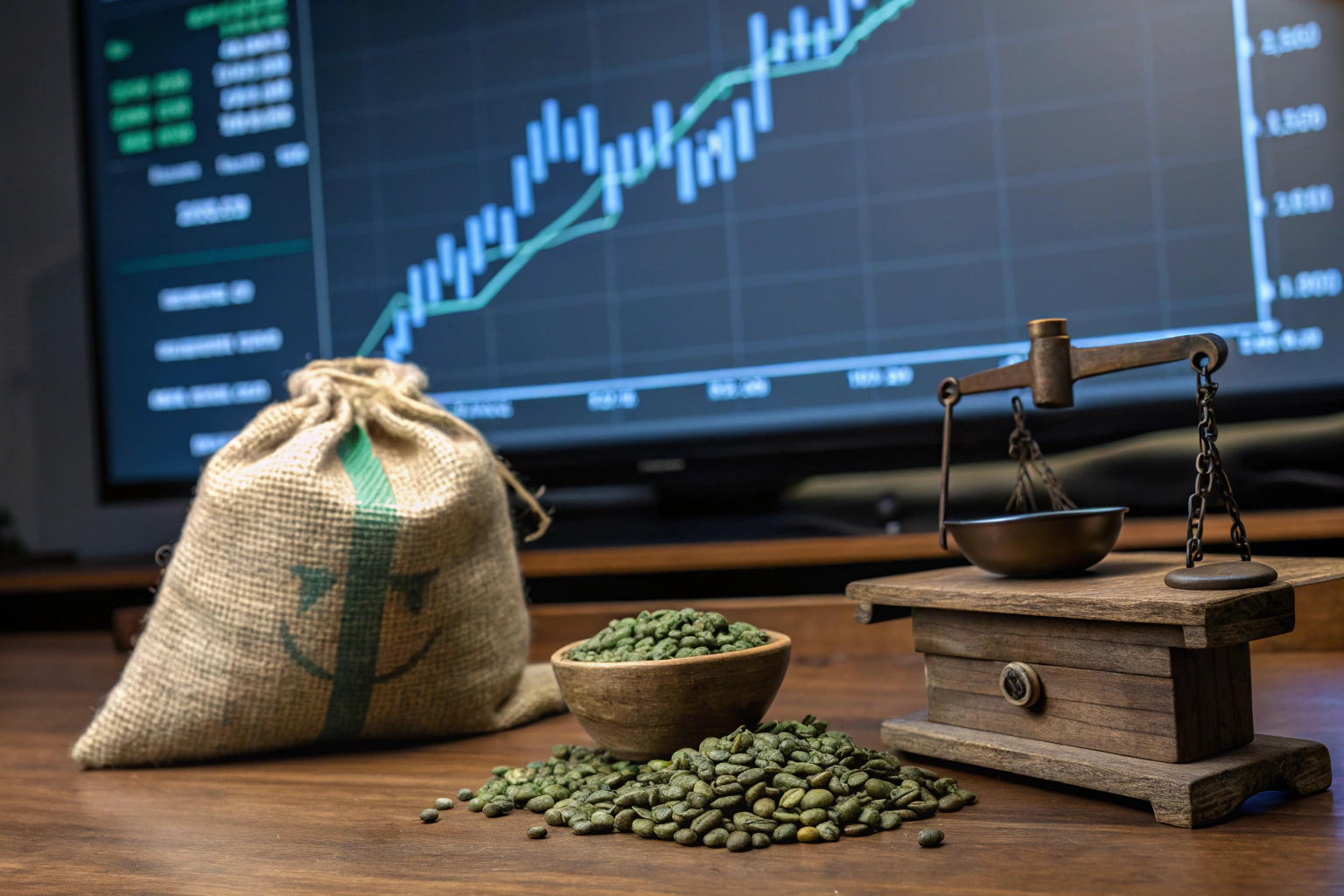
I'm a farmer, not a stockbroker. For years, I ignored the futures market. I thought it was just a casino in New York where men in suits bet on a commodity they'd never touched. The real price of coffee, I believed, was set at my farm gate, by the quality of my beans and my relationship with buyers. Then, in 2022, the C-market price for Arabica doubled in less than 18 months. My phone rang off the hook. Buyers who had been paying me $2.80 per pound FOB were suddenly facing $4.50 offers from my competitors. Contracts were broken. Relationships were strained. I realized then that the futures market is not a distant abstraction. It's a tide that lifts or sinks every boat in the harbor, including mine.
Coffee futures affect wholesale bean prices by establishing a global benchmark price that serves as the starting point for almost every physical coffee transaction. The Intercontinental Exchange Arabica futures contract, known as the C-market, represents the price of a standardized contract for washed Arabica from 19 designated origins. When this futures price rises, the floor price for all physical Arabica—from commodity-grade Brazilian to specialty Yunnan—rises with it. When it falls, the floor drops. The wholesale price you pay is ultimately the futures price plus a "differential" that reflects the specific quality, origin, and certification of the coffee.
The relationship between the C-market and your wholesale invoice is direct, but it's not simple. It's a dance between a global financial instrument and a physical product that I can hold in my hand. Understanding this dance is essential for any buyer who wants to budget accurately and negotiate fairly. Let me break it down from the perspective of someone who lives at the intersection of the screen price and the farm gate.
What Is the Coffee C-Market and How Does It Work?
The C-market is not a place. It's a network. It's the nickname for the Arabica coffee futures contract traded on the Intercontinental Exchange in New York. It's called the "C-market" because the ticker symbol for the contract is KC. It has existed in some form since the 1880s. It's old, powerful, and deeply embedded in the DNA of the coffee trade.
The coffee C-market is a centralized, regulated exchange where standardized contracts for future delivery of Arabica coffee are bought and sold. Each contract represents 37,500 pounds of washed Arabica from one of 19 designated producing countries. The price is discovered through open-market bidding, driven by supply and demand forecasts, currency fluctuations, speculative activity, and global macroeconomic trends. The C-market price is the single most influential number in the global coffee industry.
Who Is Trading on the C-Market?
The traders fall into two broad camps: hedgers and speculators. They have completely different motivations.
Hedgers are the coffee industry participants. A large Brazilian exporter might sell futures contracts to lock in a price for their upcoming harvest. A large German roaster might buy futures contracts to secure a predictable cost for their green coffee needs six months from now. They are using the futures market as insurance, not as a bet.
Speculators are the non-industry players. Hedge funds. Commodity trading advisors. Individual investors. They don't want the physical coffee. They want the price movement. They buy and sell contracts purely to profit from market volatility.
Speculators bring liquidity, but they also bring noise. When a hedge fund panic-sells a bunch of coffee contracts because of a global recession scare, the price drops, even if the weather in Brazil is perfect. This is why the C-market can be frustratingly disconnected from physical reality in the short term.
How Is a Futures Contract Different from Physical Coffee?
This is the most important distinction to understand. A futures contract is not coffee. It's a promise to deliver or receive coffee at a specific future date.
The contract specifies a very specific type of coffee: washed Arabica from one of 19 approved origins, delivered to a licensed warehouse in the United States or Europe. Coffee from China is currently not one of the deliverable origins on the C-market, which is a topic I'll come back to.
The vast majority of futures contracts are never delivered. They are "rolled over" or "offset" before the delivery date. The trader who bought the contract sells it back, and the trader who sold it buys it back. Cash settles the difference. The physical coffee in the warehouses is only touched by a tiny fraction of the contracts traded. This is why the market can seem so disconnected from the real world of farms and mills.
Why Does the C-Market Price Move So Dramatically?
If you pull up a 5-year chart of coffee futures, it looks like a mountain range. Sharp peaks. Deep valleys. The price can move 5% in a single day, 20% in a single month. For a physical buyer, this is terrifying. It makes budgeting feel impossible.
The C-market price moves dramatically because coffee supply is highly concentrated and highly vulnerable to weather. Brazil produces about 35% of the world's Arabica. A single frost or drought in the Brazilian coffee belt can remove millions of bags from the global supply forecast. Simultaneously, coffee demand is relatively inelastic—people don't stop drinking coffee when the price goes up. So when supply is threatened, prices spike rapidly and sharply. Speculative trading amplifies these moves, as algorithms and funds pile into the trend.
What Role Does Brazilian Weather Play?
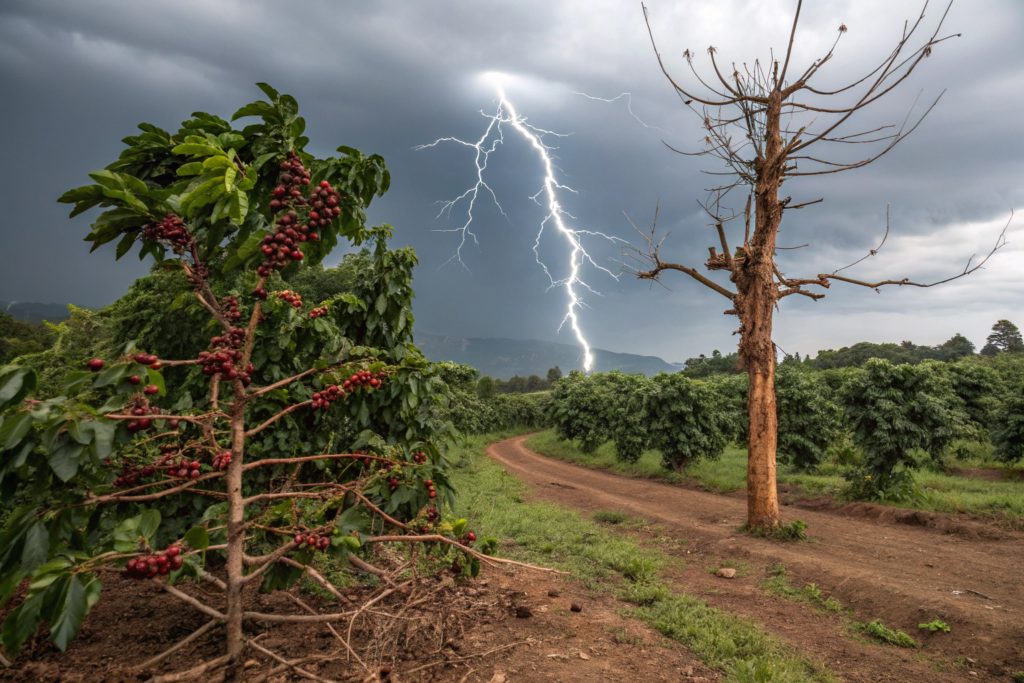
Brazil is the elephant in the room. When Brazil sneezes, the C-market catches a cold. When Brazil has a heart attack, the C-market goes into cardiac arrest.
The 2021 frost in Minas Gerais is the perfect example. It hit in July, during the Brazilian winter, a once-in-a-generation cold snap. It blackened millions of coffee trees. The futures price jumped 30% in a week. Not because coffee was physically scarce that day—there was still plenty of coffee in warehouses—but because the market was pricing in a future scarcity, a smaller harvest 18 months later.
The market trades on forecasts and fear. A weather model that predicts below-average rainfall in Brazil three months from now can move the price today. It's a market of anticipation, not just reaction. The NOAA Climate Prediction Center is watched by coffee traders as closely as any earnings report.
How Does the US Dollar Affect Coffee Prices?
Coffee is priced in US dollars. Every C-market contract is denominated in USD. When the dollar strengthens against other currencies, coffee becomes more expensive for buyers using Euros, Yen, or Brazilian Reais.
This can suppress demand. A European roaster whose local currency has weakened against the dollar effectively sees a price increase, even if the C-market price hasn't moved. They might buy less. Or they might switch to cheaper origins.
Conversely, when the dollar weakens, coffee becomes cheaper for non-US buyers. Demand picks up. The price can rise. The currency effect is a layer of complexity on top of the supply-and-demand fundamentals.
What Is the Differential and Why Does It Matter?
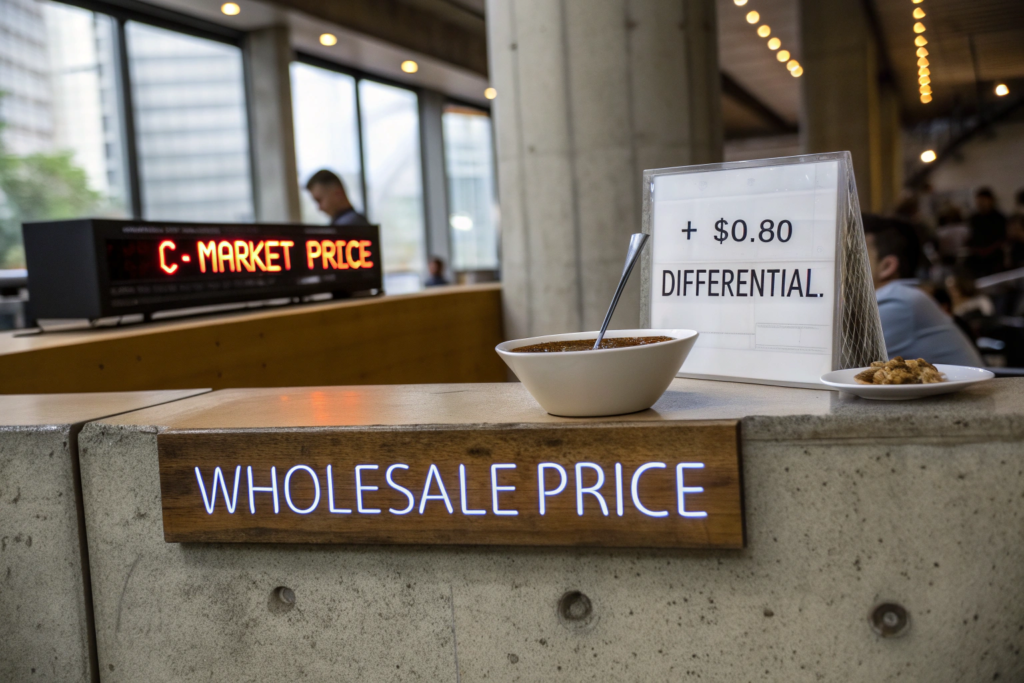
If the C-market is the base, the differential is the specificity. It's the "+$0.40" or "+$1.20" that you see appended to a coffee offer. It represents the value of the specific coffee above or below the generic benchmark.
The differential is the price adjustment applied to the C-market price to reflect the specific quality, origin, processing method, and certification of a particular lot of physical coffee. A clean, high-grown, specialty Colombian coffee might trade at "C + $0.60," meaning the final price is the current C-market price plus 60 US cents per pound. A lower-grade Brazilian might trade at "C - $0.10." The differential is where the unique value of the coffee is expressed. It is negotiated directly between buyer and seller, separate from the futures market.
How Is the Differential for Chinese Arabica Determined?
Since Chinese coffee is not a deliverable grade on the C-market, our pricing works slightly differently. We are not directly pegged to the C-market in the same way a Brazilian exporter is.
However, the C-market still sets the psychological and commercial context. Buyers compare our FOB price to the C-market price. If the C-market is at $1.50 and we are offering at $2.80 FOB, the buyer mentally calculates a differential of $1.30. They then ask: is the quality, the traceability, and the unique flavor worth that premium?
Our differential is influenced by our production costs, the quality of our lots, and the demand for Yunnan coffee specifically. As Yunnan's reputation has improved, our differential has risen. We are no longer competing purely on price. We are competing on value. The Specialty Coffee Transaction Guide provides excellent data on differentials for high-quality coffees across different origins.
How Do Certifications Affect the Differential?
Certifications add a premium to the differential. Organic certification. Rainforest Alliance. Fair Trade. These are not just logos. They represent verified, audited practices that cost money to implement.
A coffee that is both organic and specialty grade commands a higher differential than a conventional coffee of the same cup quality. The buyer is paying for the environmental and social value embedded in the bean.
This premium can range from $0.20 to over $1.00 per pound, depending on the certification and the market conditions. It's a separate negotiation, layered on top of the quality differential.
How Can Wholesale Buyers Hedge Against Futures Volatility?
If you can't control the C-market, and you can't control the weather in Brazil, what can you control? You can control your exposure. You can use tools that transfer the risk of price spikes to someone else, at a known, manageable cost.
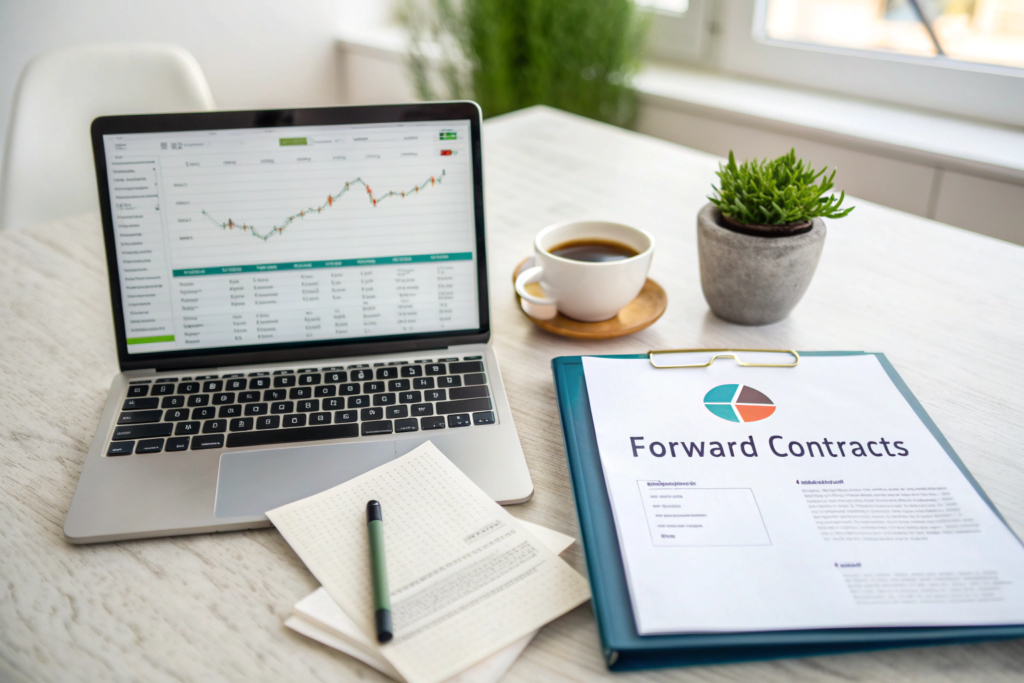
Wholesale buyers can hedge against futures volatility using three primary tools: forward contracts with a fixed differential, outright fixed-price contracts, and call options. A forward contract with a fixed differential locks in the quality premium but leaves the buyer exposed to C-market movements. An outright fixed-price contract locks in the total price, transferring all price risk to the seller. Call options give the buyer the right, but not the obligation, to buy futures at a specific strike price, capping the upside cost while allowing the buyer to benefit if prices fall. The right tool depends on the buyer's risk tolerance and cash flow situation.
What Is a Fixed-Price Contract?
A fixed-price contract is the simplest and most complete hedge. The buyer and seller agree on a specific FOB or CIF price, valid for a specific delivery window.
If I offer you a fixed FOB price of $3.20 per pound for delivery in March, that's it. That's the price. If the C-market skyrockets to $5.00 before March, you are protected. You pay $3.20. I, as the seller, bear the risk of the market increase.
However, this protection is not free. A fixed-price contract will always be priced above the current floating market level. The seller is building in a risk premium. They are also hedging their own exposure, either by buying futures contracts or by sourcing the physical coffee at a known cost. For a buyer who values budget certainty above all else, a fixed-price contract is the best choice.
How Do Forward Contracts with a Floating Differential Work?
This is the most common contract structure in specialty coffee. The buyer and seller agree on a differential, say "+ $0.80," and a delivery window. The final price is not fixed. It is determined by the C-market price on a specific date, usually the date the buyer "fixes" or "locks in" the contract.
This gives the buyer some control. They can watch the C-market and, if it dips to a favorable level, instruct the seller to fix the price. If they believe the market is going down, they can wait.
The risk is that the market goes up and never comes back down. The buyer who waited too long ends up paying a much higher price than they budgeted. This structure requires active market monitoring and a clear understanding of your own risk tolerance. We work with many buyers on this basis, communicating regularly about market conditions.
Conclusion
The coffee futures market is a powerful, impersonal force. It can feel like a storm that sweeps through your budget without warning. But it's not magic. It's a mechanism. It's driven by Brazilian weather, global currency flows, and speculative money. Its movements ripple outward, touching the wholesale price of every bag of coffee, from the commodity-grade Brazilian to the specialty Chinese Arabica.
Understanding this mechanism gives you power. You can choose how to interact with it. You can float your price and hope for the best. You can lock in a fixed price and pay for certainty. You can use a forward contract and actively manage your timing. The key is to make a conscious choice, not to be passively battered by the market's whims.
As a supplier, I see my role as helping buyers navigate this. I don't give financial advice, but I do provide transparency. I share my view of the market. I explain how our differential is built. I offer fixed-price options for those who want peace of mind, and floating-price structures for those who want to manage their own exposure.
If you're trying to make sense of the current futures environment and how it's affecting the FOB price for Yunnan Arabica, let's talk. We can walk you through our current offer sheet, explain our pricing philosophy, and discuss contract structures that align with your risk profile.
Reach out to Cathy Cai. She handles our contract negotiations and can provide you with current pricing options—fixed, floating, and forward.
Email: cathy@beanofcoffee.com. Let's find a pricing structure that lets you sleep at night, regardless of what the C-market does tomorrow.