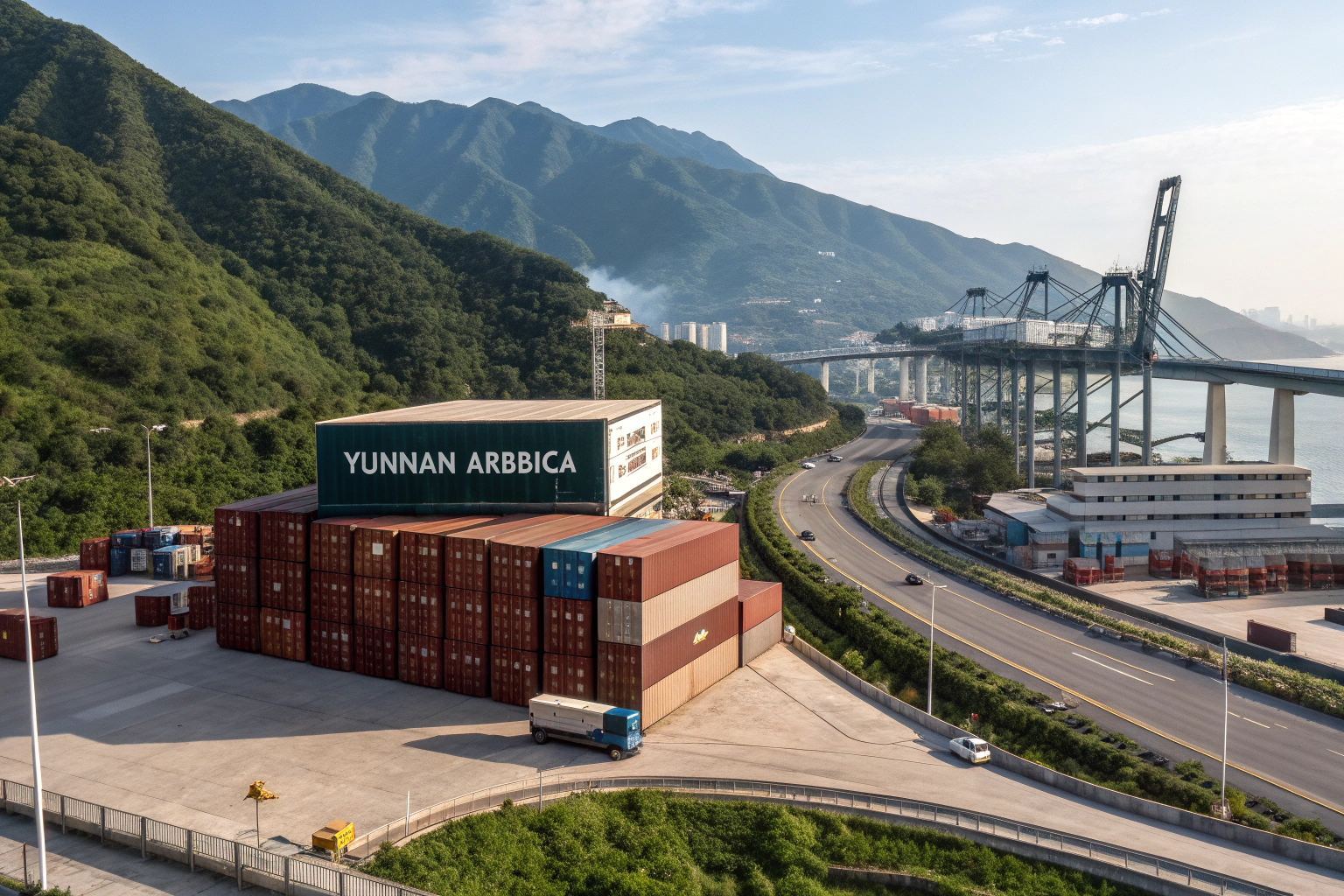
Fifteen years ago, the idea of China as a major coffee export hub was absurd. We were a tea nation. Coffee was a tiny, obscure crop grown by a few farmers in the mountains who didn't even drink it themselves. Exporting meant selling low-grade beans to anonymous instant coffee factories. There was no brand. No reputation. No pride. I remember a German buyer in 2010 who literally laughed when I said I wanted to sell specialty Arabica. He said, "China makes t-shirts and phones. Brazil makes coffee. Stick to what you know." Last month, that same buyer sent me an email asking for a container of our 86-point Typica. I replied with his old quote. He didn't remember saying it. But I remembered.
China is becoming a major coffee export hub because of a unique convergence of three forces: massive, sustained investment in agricultural infrastructure and processing technology, the rapid maturation of the domestic coffee culture which drives quality upward, and the country's pre-existing dominance in global logistics. Yunnan province now has the processing mills, the cupping labs, the trained Q-graders, the container terminals, and the shipping frequency to move specialty coffee from tree to destination port faster and more reliably than many traditional origins. China is not just growing coffee. It is building a complete, modern, end-to-end coffee export machine.
The world's mental map of coffee origins is outdated. It still centers on the old guard: Brazil, Colombia, Ethiopia, Guatemala. But a new geography is being drawn. And on that new map, Yunnan is a bright, growing node. Let me explain how we got here, and why the momentum is only accelerating.
How Has Yunnan's Coffee Infrastructure Transformed?
Infrastructure is the skeleton of an export industry. Without it, the body collapses. For decades, Yunnan's coffee infrastructure was primitive. Farmers dried cherries on concrete roads. Fermentation happened in old oil drums. Mills were dusty, dangerous places with broken machinery. The coffee that emerged from this system was inconsistent, often defective, and deserved its poor reputation.
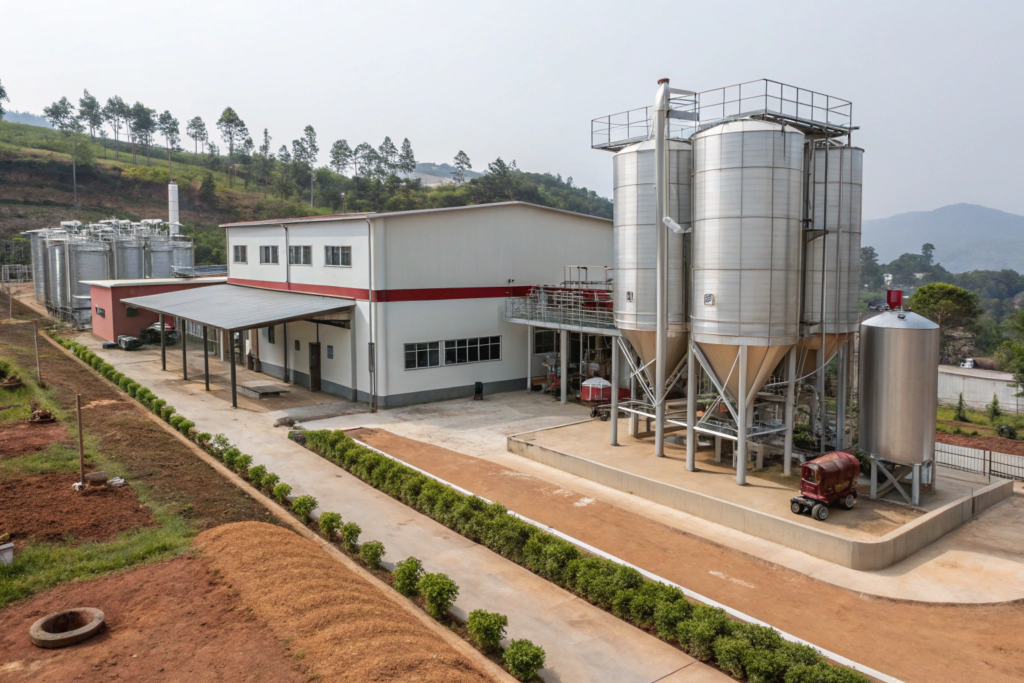
Yunnan's coffee infrastructure has undergone a generational transformation, driven by both government subsidies and private investment. The province now hosts dozens of modern wet mills with stainless steel fermentation tanks, temperature-controlled drying facilities, and optical color sorters. The old concrete patios are being replaced by raised African beds. The manual pulpers are being replaced by Penagos and Pinhalense eco-pulpers. The investment is not just in machinery, but in the buildings, the water treatment systems, and the quality control labs that house the machines. The physical capacity to produce clean, consistent, specialty-grade coffee at scale now exists.
What Role Did Government Policy Play?
The Chinese government, both provincial and national, identified coffee as a strategic poverty-alleviation crop for the mountainous regions of Yunnan. This designation unlocked significant funding.
Subsidies were provided for replanting old, low-yield Catimor trees with premium Typica and Bourbon varieties. Grants were given for building centralized wet mills that smallholder farmers could use. Roads were paved. Irrigation systems were installed. The Yunnan Provincial Department of Agriculture published detailed plans for coffee industry modernization.
This was not a laissez-faire approach. It was a deliberate, planned industrial policy. The government decided that Yunnan coffee should be a globally competitive product, and they backed that decision with money and political will. The results are visible in every new mill, every new drying bed, and every new cupping lab across the province.
How Did Private Investment Follow the Policy Signal?
Where government leads with infrastructure, private capital follows with expertise. In the last five years, a wave of private investment has flowed into Yunnan coffee.
Domestic Chinese companies, seeing the growing domestic market for specialty coffee, invested in model farms and state-of-the-art processing facilities. International trading houses established buying stations and trained local staff. Even some of the big global roasters have set up direct sourcing operations in Pu'er and Baoshan.
This private investment brought global best practices. It brought Q-graders who trained local cuppers. It brought engineers who installed and calibrated the machinery. It brought the invisible but critical knowledge of how to run a world-class coffee mill. At BeanofCoffee, our processing facility is the result of both our own investment and the accumulated knowledge shared by the many international coffee professionals who have visited and consulted with us.
Why Does Domestic Coffee Consumption Drive Export Quality?
This is a paradox that confuses many foreign buyers. A strong domestic market usually diverts product away from exports. Why would a growing Chinese coffee culture help foreign buyers? Because it forces quality to improve for everyone.
China's exploding domestic coffee consumption is the single biggest driver of export quality improvement. Young Chinese consumers are demanding the same specialty coffee experience they see on social media from cafes in Seoul, Melbourne, and Portland. Domestic roasters and cafe chains are competing fiercely for the best Yunnan lots, paying premiums for high cup scores. This creates a quality floor that benefits all buyers. A farmer who learns to produce an 85-point coffee for the Shanghai market will also produce better coffee for the export market. The rising tide of domestic demand lifts all boats.
How Big Is the Chinese Coffee Market Now?
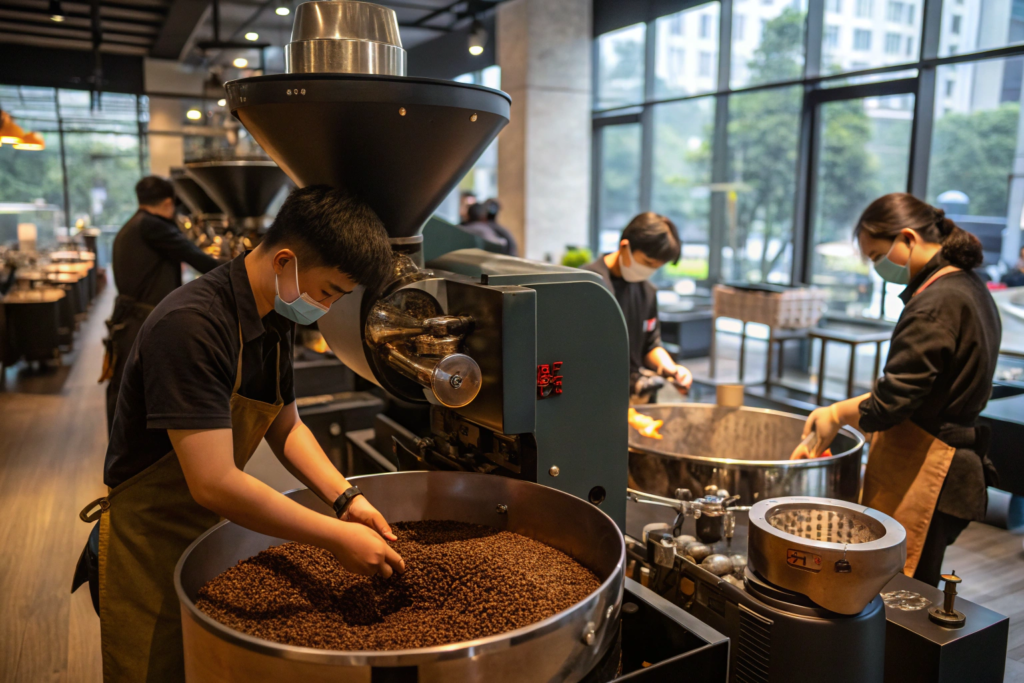
The numbers are staggering. China's coffee market has been growing at over 20% annually for several years. Major international chains like Starbucks operate thousands of stores in China. Domestic chains like Luckin and Manner are expanding even faster.
This market is not just for instant coffee anymore. Specialty coffee shops are proliferating in every major city. Chinese roasters are winning international competitions. A vibrant community of baristas, roasters, and cuppers has emerged. They travel to Yunnan. They build relationships with farmers. They demand traceability and quality.
This domestic demand means that the best Yunnan coffees are no longer automatically shipped overseas. They are being fought over by domestic buyers. This competition forces the quality of the entire crop to improve, as farmers realize that better coffee commands a better price, whether the buyer is from Shanghai or San Francisco.
How Does This Competition Benefit the Export Market?
A farmer who has learned to separate micro-lots, control fermentation, and carefully dry coffee for a demanding domestic buyer has acquired skills that transfer directly to the export market. The processing knowledge, the attention to detail, the understanding of what "quality" means in the cup—these are universal.
Furthermore, the domestic market provides a reliable base of income that allows farmers to invest in quality improvements. A farmer with a stable domestic contract can afford to build raised drying beds, even if the export premium hasn't materialized yet. The domestic market de-risks the investment in quality.
At BeanofCoffee, we sell to both domestic and international buyers. The two markets are complementary, not competing. The domestic market's emphasis on innovation—experimental fermentations, new varietals, unique processing methods—feeds into our export offerings. The export market's emphasis on consistency and clean cups feeds into our domestic reputation.
What Logistics Advantages Does China Have Over Traditional Origins?
Coffee is a physical product. It must be moved. The efficiency of that movement is a core component of its final cost and quality. This is where China's position as the world's factory becomes a huge advantage for its agricultural exports.
China's logistics advantages for coffee export are rooted in its status as the world's largest exporter of containerized goods. The ports of Shanghai, Shenzhen, and Ningbo are the busiest and most efficient in the world. Container availability is abundant. Vessel sailing frequency to every major global destination is high. The infrastructure for stuffing, fumigating, and documenting a container of green coffee is mature and well-practiced. This translates into shorter lead times, more reliable schedules, and often lower freight costs compared to origins with less developed logistics sectors.
How Does Container Availability Affect Coffee Shipments?
In many coffee origins, securing an empty container can be a major headache. During peak shipping seasons, containers are scarce. Exporters pay premiums. Shipments are delayed.
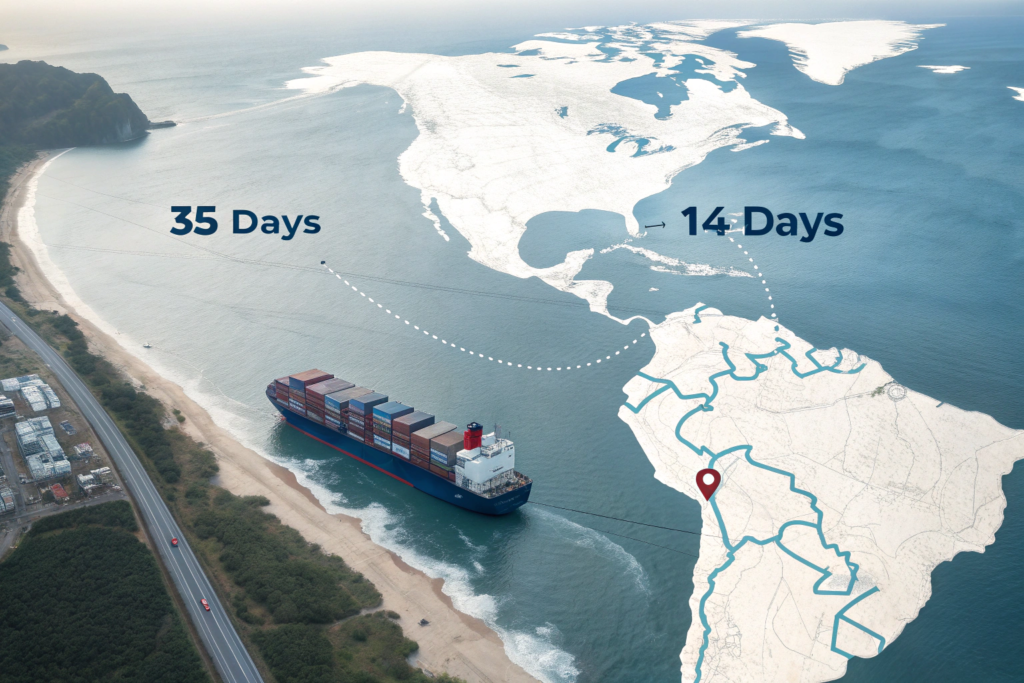
China is the opposite. China imports vast quantities of goods, which means empty containers are constantly being repositioned to Chinese ports to be filled with exports. Container availability is rarely a constraint. This means we can book a container for our coffee with short notice and high confidence that it will be available.
This is particularly valuable for coffee, where seasonal harvests create predictable spikes in shipping demand. While an Ethiopian exporter might struggle to find containers during their peak season, we benefit from the sheer scale of Chinese trade.
Why Does Shipping Frequency Matter?
A port with one sailing per week to your destination gives you flexibility. A port with one sailing per month creates rigid, high-stakes deadlines. If you miss the monthly vessel, your coffee sits for four weeks.
Major Chinese ports offer multiple daily or weekly sailings to key destinations. Shanghai to Los Angeles has multiple vessels every day. Shanghai to Hamburg has several per week. This frequency allows us to optimize our shipping schedule, reduce storage time at the port, and deliver fresher coffee to the buyer. The Shanghai International Port Group publishes real-time vessel schedules that reflect this density of service.
How Is China Building a Reputation for Quality and Consistency?
Reputation is the hardest thing to build and the easiest thing to lose. For decades, "Chinese coffee" was synonymous with "low quality." Changing that perception is a slow, deliberate process. It requires not just better coffee, but better evidence of better coffee.
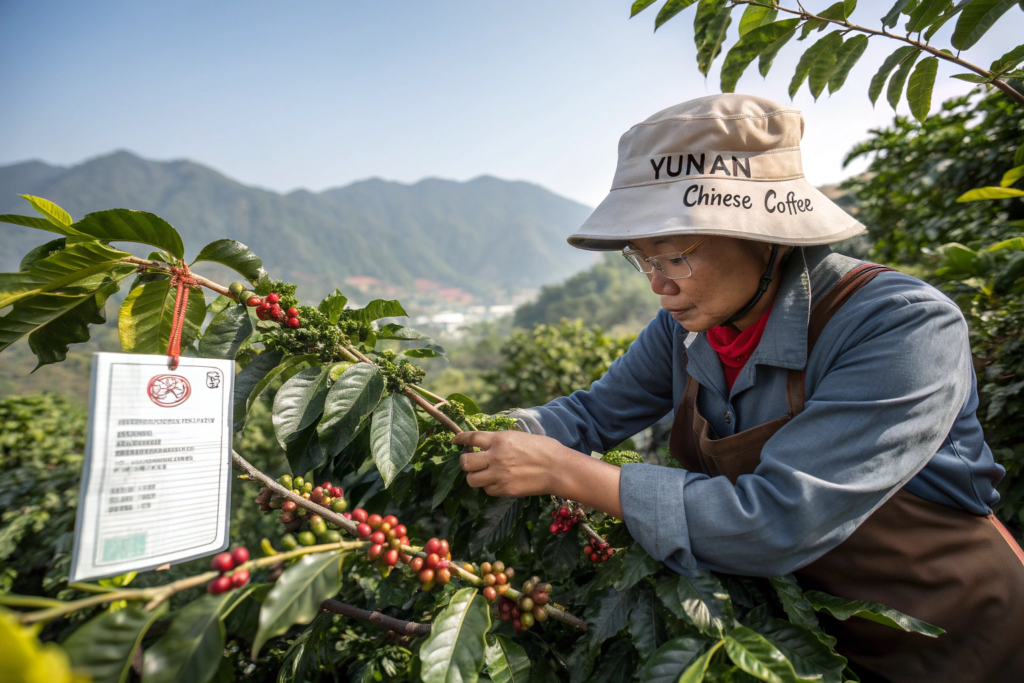
China is building a reputation for coffee quality and consistency by investing in human capital and participating in the global specialty coffee conversation. The country now has hundreds of certified Q-graders, an active SCA chapter, and producers who regularly submit their coffees to international competitions and auctions. Yunnan coffees have placed in the Cup of Excellence-style competitions and are increasingly featured by respected roasters in Europe, the US, and Australia. This is not marketing hype. It is the result of measurable, verified quality improvement.
What Role Do Q-Graders Play?
A Q-grader is a certified coffee cupper, licensed by the Coffee Quality Institute. It's a rigorous certification that requires passing 22 different sensory tests. It's the gold standard for coffee quality evaluation.
Ten years ago, China had fewer than a handful of Q-graders. Today, we have hundreds. They work at mills, at trading companies, at roasteries. They cup every lot. They provide objective, standardized feedback to farmers. They are the bridge between the farm and the international buyer's expectations.
A mill with a resident Q-grader can guarantee a certain level of quality control. The score on the report is not just an opinion. It's a professional evaluation using a globally recognized methodology. This gives international buyers confidence.
How Do International Competitions Showcase Yunnan?
Competitions matter. When a Yunnan coffee wins a medal or places highly in a blind tasting, the news travels fast.
The "Best of Yunnan" cupping competition, modeled after Cup of Excellence, has been instrumental. It identifies the top lots in the province each year. The winning coffees are auctioned to international buyers, often at significant premiums. These auctions generate press coverage and tasting notes from respected judges.
When a roaster in Copenhagen or Portland sees that a Yunnan coffee scored 90 points in a rigorous competition, it changes their perception. It creates curiosity. It leads to a sample order. And once a roaster cups a truly exceptional Yunnan coffee, the old prejudice crumbles. The Specialty Coffee Association has recognized these regional competitions as important platforms for emerging origins.
Conclusion
China's emergence as a coffee export hub is not an accident. It's not a fluke. It's the result of deliberate, sustained investment across every layer of the supply chain. The infrastructure is new and efficient. The domestic market is driving quality upward. The logistics are world-class. The human capital is growing in expertise and number. And the reputation is being earned, cup by cup, competition by competition.
We are not trying to copy Brazil or Colombia. We are building a uniquely Chinese coffee identity, rooted in the terroir of Yunnan, powered by the infrastructure of modern China, and connected to the global specialty coffee community. The world is beginning to notice. The buyer who laughed at me in 2010 is now a customer. He's not laughing anymore.
If you haven't tasted a modern Yunnan Arabica, you're working with an old mental map. The new map is ready. We invite you to sample it, to verify it, and to join the growing number of roasters and distributors who have added China to their sourcing portfolio.
To receive a sample of our current specialty lots, with full cupping notes, traceability data, and logistics options, reach out to Cathy Cai.
Email: cathy@beanofcoffee.com. Discover the new China on the cupping table.