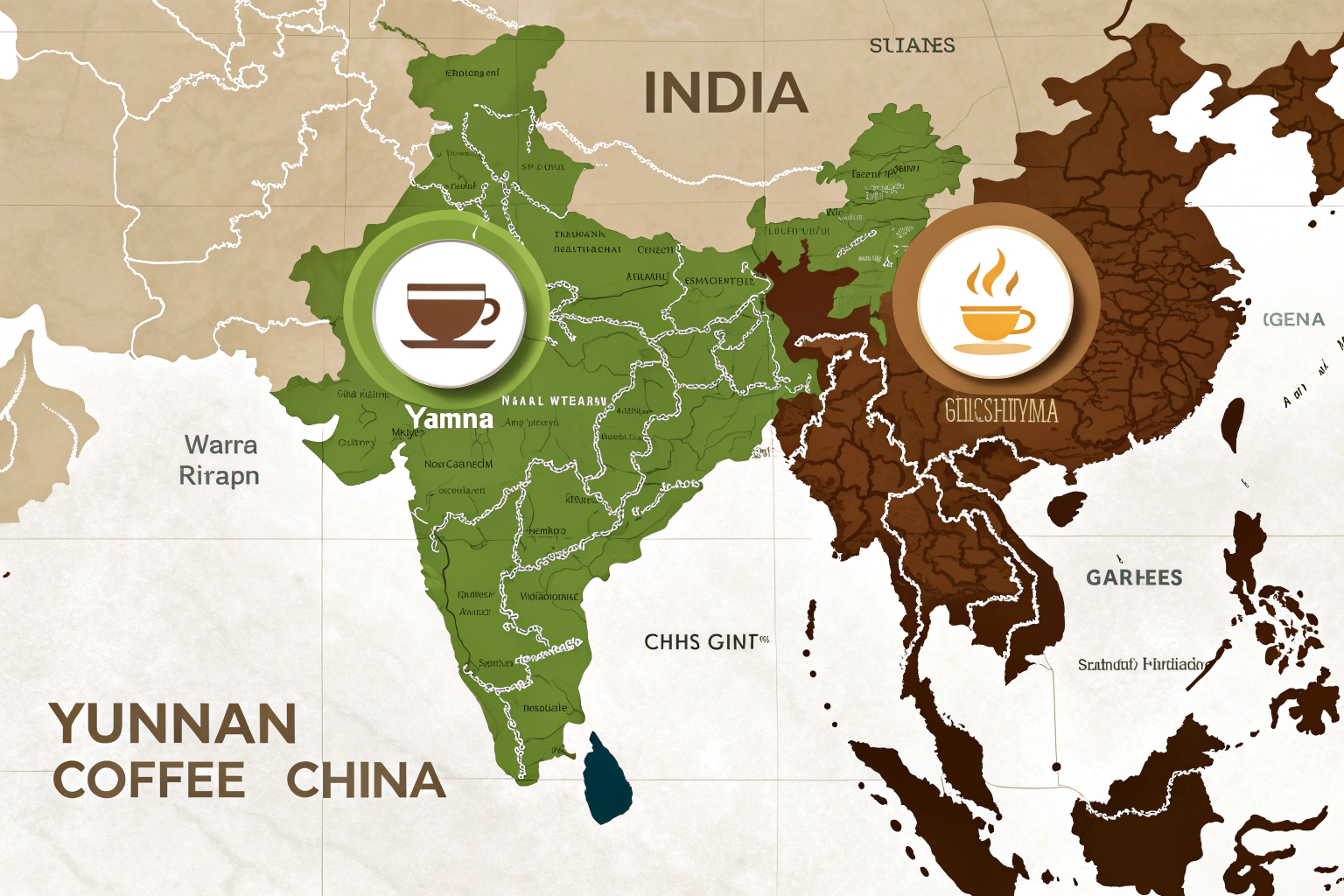
I was at a buyers' meeting in Europe last year. A roaster was looking at his sourcing map. He pointed to Asia. "We buy from India for our monsoon Malabar. Should we be looking at China for volume?" he asked. It was a smart question. He was comparing two non-traditional, large Asian origins. I pulled up the numbers. India is a giant, with a coffee culture dating back centuries. China is the new challenger, growing at a breakneck pace. Understanding the volume comparison is key to understanding where the future supply is coming from.
Chinese coffee bean production currently lags behind India in total volume, with China producing approximately 120,000 to 180,000 metric tons (60kg bags equivalent: 2-3 million bags) annually compared to India's more established output of 340,000 to 360,000 metric tons (5.5-6 million bags), but China's production is growing at a significantly faster rate and is more concentrated in the high-quality Arabica sector.
India is the established player. China is the emerging challenger. The gap is still large, but it is closing faster than many in the industry realize. Let me break down the numbers and what they mean for your sourcing strategy.
What Are the Current Annual Production Volumes for China and India?
Let's start with the hard numbers. Comparing agricultural production between countries is tricky because of different crop years and reporting standards. But we can look at the USDA and International Coffee Organization (ICO) data to get a clear picture.
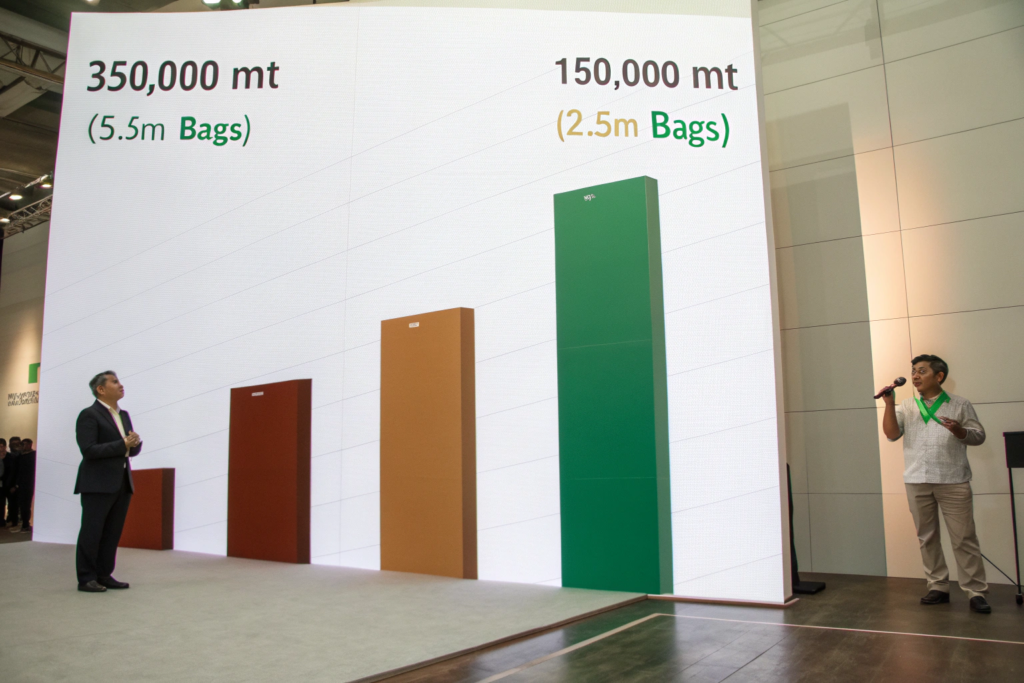
As of the 2024/2025 crop year, India's total coffee production is estimated at 5.8 million 60-kg bags (approximately 348,000 metric tons), while China's total coffee production is estimated at 2.5 million 60-kg bags (approximately 150,000 metric tons).
India produces roughly 2.3 times more coffee than China by total weight. India is the seventh-largest coffee producer in the world. China is around the fifteenth. The volume difference is significant. But the story is in the composition and the trend lines.
How Much of India's Volume Is Robusta vs. Arabica?
This is the critical distinction that changes the comparison. India's coffee production is heavily weighted toward Robusta.
India's Production Breakdown (Approximate):
- Robusta: 70% - 75% of total production. (~4.2 million bags)
- Arabica: 25% - 30% of total production. (~1.6 million bags)
India's Robusta is world-famous, particularly the "Monsooned Malabar" and the high-quality washed Robustas from the Western Ghats. They are excellent for espresso blends, providing body and crema. However, the volume of Arabica available for export from India is relatively limited. And much of that Arabica is older, lower-yielding varietals like S795, which can be susceptible to leaf rust.
China's Production Breakdown (Approximate):
- Catimor (Arabica Hybrid): ~95% of total production.
- Other Arabica (Typica, Bourbon, Geisha): ~4%
- Robusta: (small amounts grown in Hainan and lowland Yunnan).
This is the key insight. China produces roughly the same volume of Arabica as India, or even slightly more, depending on the crop year. India's total volume lead is entirely due to its massive Robusta crop.
For a specialty roaster focused on Arabica, the two origins are actually much closer in relevant volume than the headline numbers suggest. China's Arabica production is focused in Yunnan, where the quality and cup profile have been rapidly improving. At Shanghai Fumao, we are part of this Arabica-focused growth. Our estate alone produces a significant percentage of China's total specialty-grade Arabica. For official production statistics, the International Coffee Organization publishes annual reports by country.
Is China's Coffee Production Growing Faster Than India's?
This is where the future lies. India's coffee production has been relatively stagnant for the past decade. Challenges include:
- Aging Tree Stock: Many Arabica farms have old, low-yielding trees.
- Climate Change: Erratic rainfall and higher temperatures in the Western Ghats.
- Labor Scarcity and Cost: Rising wages are squeezing farmer margins.
- Land Pressure: Coffee land is being lost to urbanization and more profitable crops.
India's production fluctuates between 5 and 6 million bags, with no clear upward trend.
China's coffee production, on the other hand, is in a steep growth phase.
- New Plantings: The Yunnan provincial government has actively supported the expansion of coffee acreage over the past 15 years.
- Replanting with High-Yield Varietals: Older, low-yielding Catimor trees are being replaced with new, high-density plantings of improved Catimor selections (like P3/P4) and premium varietals like Typica, Bourbon, and even Geisha.
- Professionalization: The industry is shifting from smallholder subsistence farming to larger, professionally managed estates (like ours) that invest in agronomy and achieve higher yields per hectare.
Growth Trajectory: China's coffee production has more than doubled in the last 15 years. While the growth rate is slowing as the land suitable for coffee becomes saturated, China is on track to potentially surpass 3.5-4 million bags in the next decade if current trends hold.
This means that the incremental new Arabica supply coming onto the Asian market is largely coming from China. India's Arabica supply is stable to slightly declining. For a roaster looking for a reliable, long-term supply of Asian Arabica, China's growth trajectory is a major strategic advantage.
How Do Farming Models and Yields Compare Between the Two Origins?
The difference in volume is not just about total land area. It is about productivity. How much coffee is produced per hectare of land? The farming models in India and China are fundamentally different, and this drives the yield gap.
Chinese coffee farming, particularly on larger estates, achieves significantly higher average yields per hectare (2,000 - 3,500 kg/ha of green coffee) compared to the Indian smallholder model (800 - 1,500 kg/ha), due to higher-density planting, more intensive use of inputs like fertilizer and irrigation, and a focus on sun-grown, high-yielding varietals.
This means China produces more coffee from less land. This efficiency has major implications for cost and environmental footprint.
Why Are Indian Coffee Yields Generally Lower Than Chinese Yields?
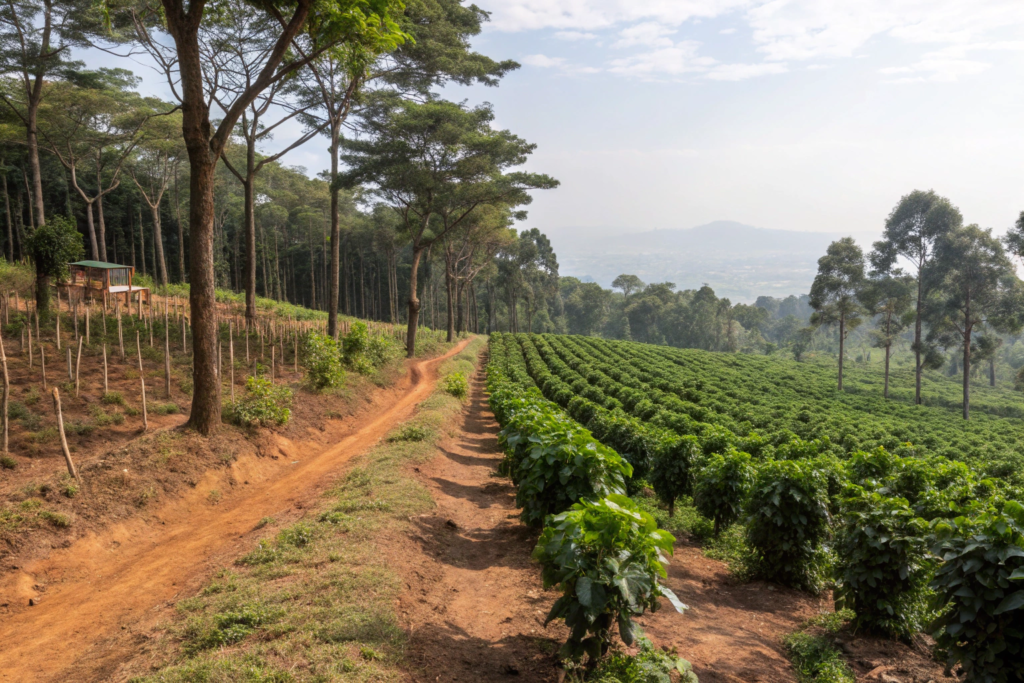
India's coffee is predominantly grown under a unique two-tier shade system in the Western Ghats. This is a biodiversity hotspot. Coffee is grown under a canopy of native forest trees, often intercropped with spices like pepper and cardamom.
The Benefits of the Indian Model:
- Ecological Sustainability: It preserves forest cover and biodiversity.
- Unique Cup Profile: The slow maturation under shade contributes to the unique "mild" character of Indian Arabica.
- Disease Mitigation: Shade can reduce the pressure from some pests and diseases.
The Yield Penalty of the Indian Model:
- Lower Light: Shade reduces photosynthesis. The trees produce less cherry.
- Lower Planting Density: Trees are spaced further apart.
- Limited Mechanization: The complex, hilly, shaded terrain makes mechanized pruning, spraying, and harvesting nearly impossible. Everything is done by hand, which is labor-intensive and limits the scale of operations.
The result is that the average yield for Arabica in India is around 800 - 1,200 kg of green coffee per hectare. This is one of the lowest average yields among major coffee-producing nations.
The Chinese Model:
In Yunnan, particularly on estates like ours, coffee is often grown in full sun or with managed, light shade. We use high-density planting (5,000 - 7,000 trees per hectare vs. 1,500 - 2,000 in India). We apply precise fertilization based on soil and leaf analysis. We use supplemental drip irrigation during dry spells. The result is yields of 2,800 - 3,500 kg/ha on our mature blocks.
This is a fundamental difference in agricultural philosophy. India prioritizes ecological integration and unique flavor profiles. China prioritizes agricultural efficiency and volume output. Both models have merit. But from a pure volume and cost-of-production standpoint, the Chinese model is more productive. At Shanghai Fumao, our high-yield model allows us to offer large volumes of consistent quality at competitive prices.
How Does the Estate Model in China Differ from Smallholders in India?
This is a structural difference that impacts every aspect of the supply chain.
- India (Smallholder Dominant): Over 70% of India's coffee is grown by smallholders with less than 10 hectares. They sell their cherry to "curing works" (processing plants) or to cooperatives. The supply chain is fragmented. Traceability can be challenging. Consistency requires rigorous blending at the curing works level.
- China (Rise of the Estate): While there are many smallholders in Yunnan, a significant and growing percentage of the exportable specialty volume comes from large, privately-owned or corporate estates (like ours). These estates have the capital to invest in their own wet mills, dry mills, and quality control labs. They can offer single-estate traceability and large, uniform lots.
This structural difference is a major advantage for a buyer like you, Ron. When you buy from a fragmented smallholder supply chain, you are buying a blend of many farms. The quality can vary from bag to bag. When you buy from a large estate, you are buying a single, controlled production lot. The consistency is much higher. The traceability is direct.
This is the evolution of the coffee industry. We are seeing the rise of the "estate model" in Yunnan, similar to what has happened in Brazil and parts of Colombia. It is a model that delivers the volume, consistency, and traceability that large specialty roasters require.
What Are the Implications of Volume Differences for Coffee Importers?
You are a buyer, Ron. You care about how these macro-level volume differences translate into practical sourcing decisions. India and China are not necessarily competitors for the same spot in your blend. They offer different things.
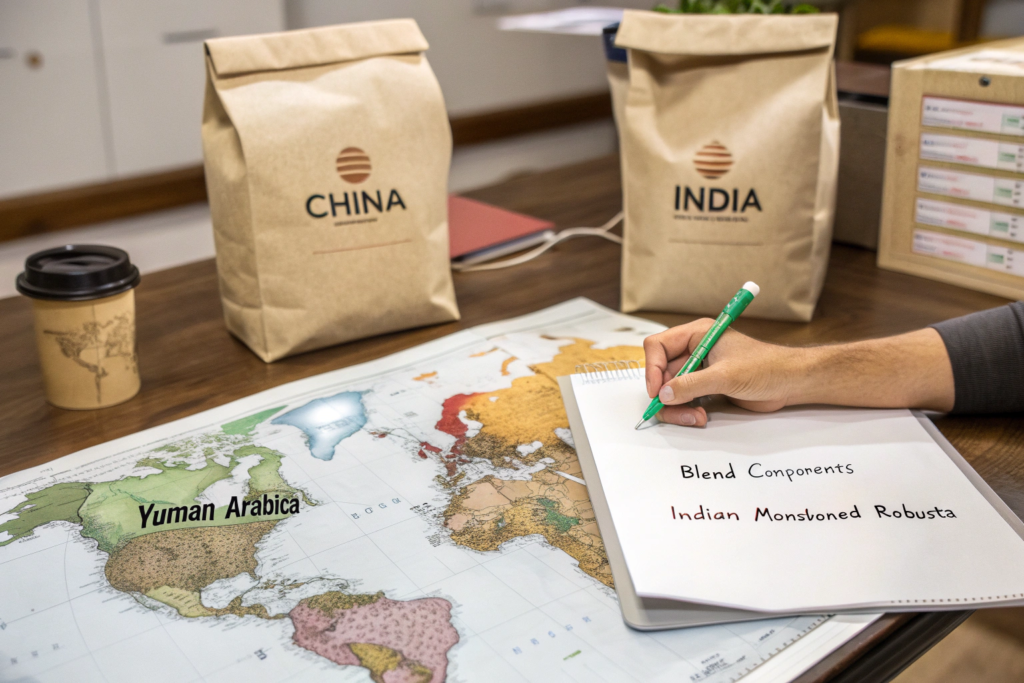
The volume differences imply that India should be viewed primarily as a source of high-quality Robusta and a limited supply of unique, mild Arabica for specific applications, while China is emerging as a reliable, large-volume source of clean, sweet, high-bodied Arabica that can serve as a cost-effective base for espresso blends and a distinctive single-origin offering. They are complementary origins in a well-diversified sourcing portfolio.
Is Chinese Arabica a Direct Substitute for Indian Arabica in Blends?
In terms of cup profile, no, they are not direct substitutes. They are different tools for different jobs.
| Attribute | Indian Arabica (Washed, e.g., Plantation A) | Chinese Arabica (Washed, e.g., Baoshan) |
|---|---|---|
| Body | Medium, sometimes thin | Heavy, Syrupy |
| Acidity | Mild, soft, sometimes muted | Medium, Black Tea, Lemon Zest |
| Flavor Notes | Spice, Cedar, Nutmeg, Subtle | Chocolate, Brown Sugar, Black Tea |
| Best Use | Adding "spice" and complexity to a blend. | Building body and sweetness in a blend. |
If you are using Indian Arabica for its unique spicy, woody notes, you cannot simply swap in a Yunnan Arabica. The flavor profile is different. You would lose the spice and gain chocolate and body.
However, if you are using a generic "Colombian-style" Arabica for body and sweetness in your espresso blend, Yunnan Arabica can be an excellent substitute or complement. It offers a similar (or even heavier) body and a clean sweetness at a potentially more stable and competitive price point.
The smart roaster uses both. They use Indian Arabica for the high-end, complex single-origin bags or for that specific spicy top note in a blend. They use Chinese Arabica as the reliable, sweet, heavy "workhorse" Arabica that forms the foundation of the blend. At Shanghai Fumao, we position our Grade 1 Arabica as a premium blending component. We know it plays well with others.
How Does China's Growing Volume Provide Supply Chain Stability?
This is the most important implication for a large buyer like you, Ron. You are concerned about security and timeliness. A growing, concentrated supply chain is more stable than a stagnant, fragmented one.
China's Volume Advantage for Stability:
- Concentration: A large percentage of China's Arabica comes from a single, contiguous region (Baoshan/Pu'er). This makes logistics and aggregation more efficient than in India, where coffee is spread across multiple states and thousands of small farms.
- Modern Infrastructure: The Chinese government has invested heavily in the transportation and port infrastructure serving Yunnan. Moving coffee from farm to port is faster and more reliable.
- Growth Mindset: The Chinese coffee industry is in "growth mode." It is actively seeking export markets. It is investing in quality and efficiency. India's industry is more mature and, in some ways, more inward-looking, with a large and growing domestic consumption market absorbing more of its production.
For a roaster seeking a long-term, reliable partner for large-volume Arabica supply, China's growth trajectory and structural efficiencies offer a compelling value proposition. You are partnering with an origin that is building capacity for the future, not one that is struggling to maintain its current output.
Conclusion
In the comparison of coffee production volume between China and India, the headline numbers favor India. It is the larger, more established producer. But beneath the surface, the story is more nuanced. India's volume lead is driven by Robusta. In the Arabica sector, the two origins are much closer in scale. And China's Arabica production is growing rapidly, driven by a high-yield, estate-based farming model that offers efficiencies and consistencies that the fragmented Indian smallholder model struggles to match.
For a specialty coffee roaster, India offers unique, terroir-driven flavors and world-class Robusta. China offers a new wave of clean, sweet, high-bodied Arabica in reliable, large volumes. They are not rivals. They are two distinct, valuable pillars of the Asian coffee landscape.
At Shanghai Fumao, we are proud to be a leading producer in China's coffee renaissance. Our scale, our efficiency, and our commitment to quality are helping to define what Asian Arabica can be.
If you want to cup a sample of our Yunnan Arabica next to an Indian Arabica and see how they compare in your blend, we can arrange that.Email Cathy Cai. She can send you samples and the latest crop report. Contact Cathy at: cathy@beanofcoffee.com