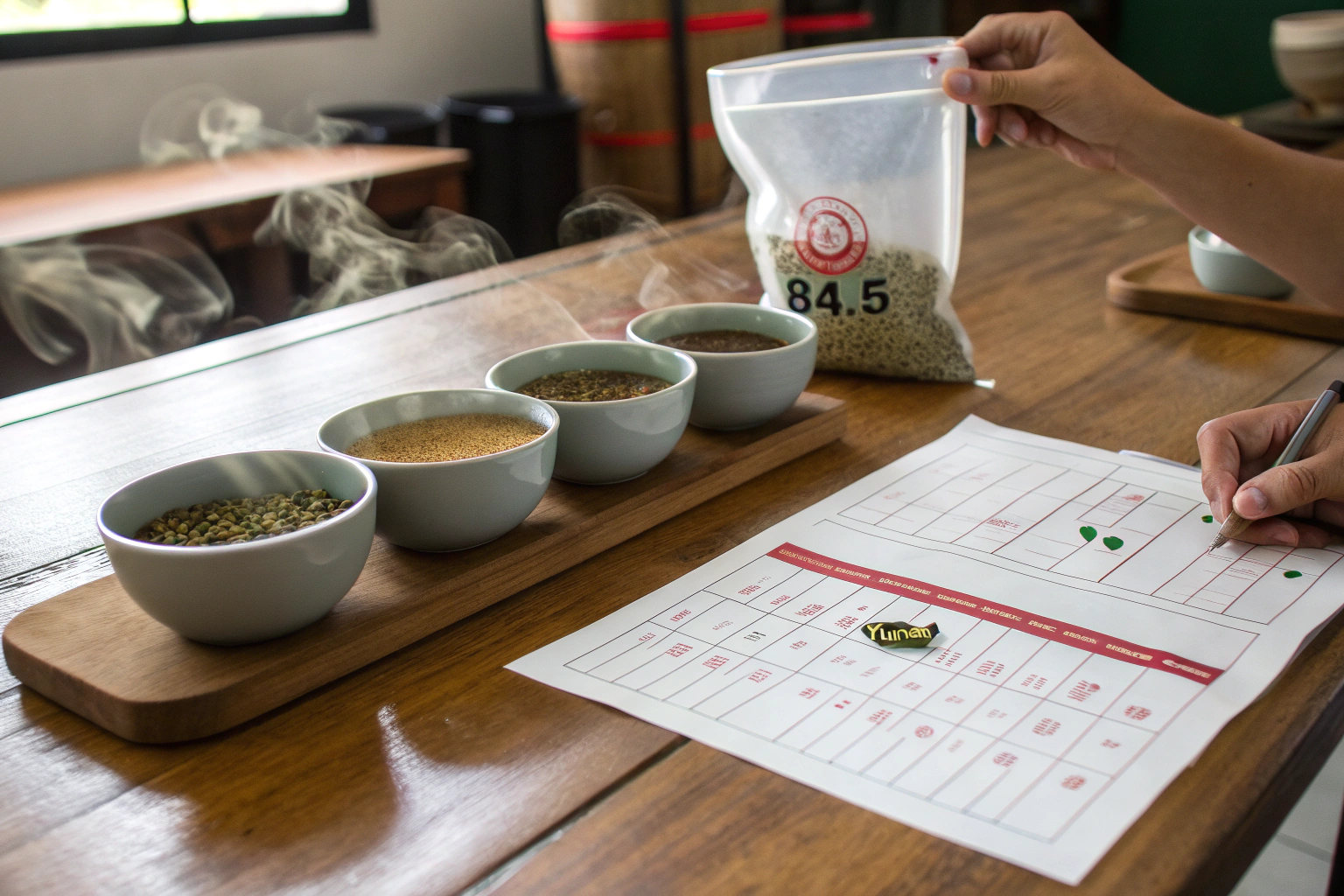
I was at a trade show in Seattle last year. A roaster walked up to our booth, picked up a bag of our Grade 1 Arabica, and asked the question I hear all the time: "Can you really get 84+ coffee out of China consistently?" I smiled. I pulled out my phone. I showed him a gallery of SCA cupping scoresheets. Not one. Not two. Dozens of them. All from our Baoshan estate. All scoring between 84 and 86.5. His eyebrows went up. Then came the second question: "What's the price?" When I told him the FOB price for a full container of 84-point coffee, he almost dropped his coffee cup. He was paying 30% more for a similar score from Central America.
To source 84+ scoring coffee beans from China at competitive prices, you must bypass the multi-layered broker system and work directly with a vertically integrated estate owner who controls the farming, processing, and export, thereby capturing the cost efficiencies of scale and eliminating the intermediary markups that inflate the price of comparable specialty lots from traditional origins.
This is not a secret. It is a structural advantage. China's coffee industry, and specifically our operation at BeanofCoffee, is uniquely positioned to deliver specialty-grade volume at commercial-grade prices. Let me show you exactly how we achieve that score and that price, and how you can access it.
Where Are the 84+ Scoring Lots Coming From in Yunnan?
The first step in sourcing high-scoring coffee is understanding the geography of quality. Not all of Yunnan is created equal. The 84+ scores are not coming from the lowlands or the river valleys. They are coming from specific, high-altitude micro-regions where the climate and soil align to produce exceptional cup profiles.
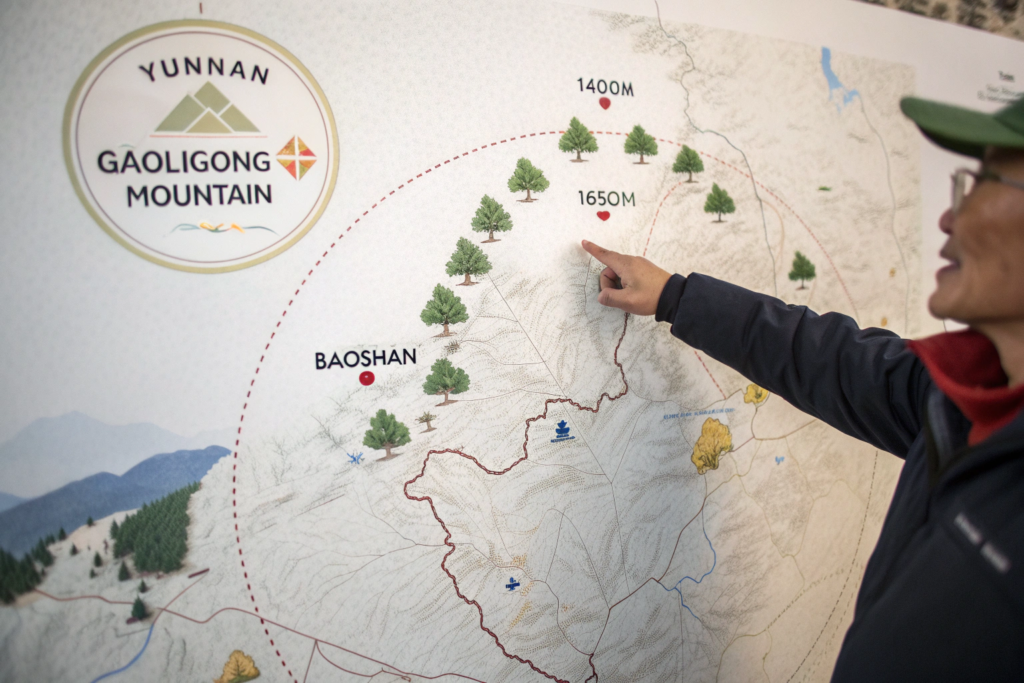
The 84+ scoring lots in Yunnan are concentrated in the high-altitude corridors of the Gaoligong Mountains in Baoshan Prefecture, specifically on farms situated between 1,400 and 1,650 meters above sea level, where the combination of volcanic loam soil, a pronounced dry-season harvest, and significant diurnal temperature shifts creates the ideal conditions for dense, sweet, and complex Arabica beans.
This is our backyard. We have been farming this specific terroir for three generations. We know which slopes produce the floral notes and which blocks produce the heavy chocolate body.
What Makes the Gaoligong Mountain Range Unique for Specialty Coffee?
The Gaoligong range is not just a pretty backdrop. It is a UNESCO Biosphere Reserve. It is one of the most biodiverse places on the planet. This biodiversity matters for coffee.
- Volcanic Soil: The soil is rich in minerals from ancient volcanic activity. It drains well but retains enough moisture. The coffee roots go deep.
- Pristine Water: The wet mills use pure mountain spring water for fermentation and washing. No off-flavors from treated or recycled water.
- Natural Shade: The native forest canopy provides dappled shade. This slows cherry maturation even further than the altitude alone would suggest.
- Biodiversity Buffer: The surrounding forest is home to natural predators of coffee pests. We have significantly lower pest pressure here than in monoculture farms in other parts of Asia. This reduces the need for intervention.
This terroir is unique. You cannot replicate it. The coffee from this specific mountain range has a signature—a distinct combination of black tea, stone fruit, and a syrupy body—that is the foundation of its 84+ cup score. At Shanghai Fumao, we have mapped our 10,000 acres and identified the "sweet spots" within the Gaoligong terroir. We reserve these blocks specifically for our specialty-grade production.
How Are We Segmenting Our Estate to Isolate 84+ Micro-Lots?
Owning 10,000 acres is an advantage. But only if you manage it intelligently. We do not just mix everything together and hope for an 84. We use precision agriculture to find and isolate the highest quality.
Our Segmentation Strategy:
- Altitude Zoning: We have divided the estate into altitude bands: 1200m, 1400m, and 1600m+. The 1600m+ band is where the 84+ potential lives.
- Varietal Blocks: Within the high-altitude band, we have separate blocks for our different varietals: Catimor P3/P4, Typica, Bourbon, and our new Geisha and Pacamara plantings.
- Harvest Timing: We cup every individual day's harvest from these premium blocks. We do not just assume it is good. We verify it. A lot from Block 14A picked on December 10th might cup at 85. The same block picked on December 20th might cup at 83.5. We keep them separate.
- Processing Trials: We take the best cherry and split it into different processing paths. Some goes to Washed. Some goes to Honey. Some goes to Anaerobic Natural. We cup the results. The process that yields the highest score for that specific lot is the one we use.
This is labor-intensive. It requires a dedicated cupping team and a sophisticated inventory management system. But it is the only way to consistently offer true 84+ micro-lots. We do not just sell "Yunnan coffee." We sell "Block 14A, 1650m, Washed Typica." That specificity is what commands the score and justifies the value. You can learn more about sensory evaluation of specific terroirs from the Coffee Quality Institute.
How Does BeanofCoffee Achieve 84+ Scores at Competitive FOB Prices?
This is the core of your question, Ron. How do we bridge the gap between high quality and low cost? It is not magic. It is the economic model of a large, vertically integrated estate versus the fragmented smallholder model of most other specialty origins.
BeanofCoffee achieves 84+ scores at competitive FOB prices by leveraging the economies of scale inherent in our 10,000-acre estate—spreading the fixed costs of agronomy, milling, and certification over a large volume—and by capturing the margin that would otherwise go to collectors, brokers, and traders in a fragmented supply chain. We are the farmer, the miller, and the exporter. There is no one else taking a cut.
How Do Economies of Scale Lower the Cost of Specialty-Grade Production?
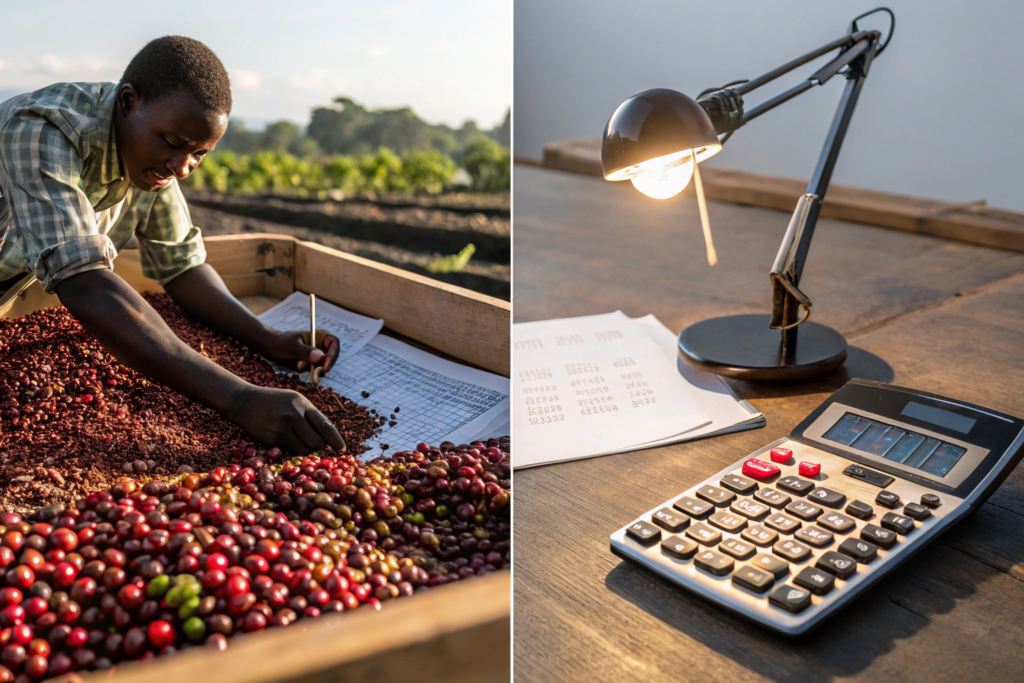
Let's compare the cost structure of producing an 84-point lot on our estate versus a smallholder in another origin.
| Cost Component | Typical Smallholder Model (e.g., Colombia) | BeanofCoffee Estate Model |
|---|---|---|
| Agronomy/Inputs | High cost per tree. Buy fertilizer retail. | Low cost per tree. Buy fertilizer wholesale. In-house agronomist. |
| Labor (Harvest) | High cost. Pay per kilo to seasonal pickers. | Stable cost. Year-round workforce with housing. Selective picking is standard. |
| Processing (Wet Mill) | Often shared or rudimentary. Inconsistent. | Centralized, modern wet mill. Efficient water use. Consistent fermentation. |
| Drying | High risk of loss on small patios. | Large-scale raised bed infrastructure. Low risk of weather damage. |
| Dry Milling & Sorting | Often outsourced to a toll mill. High cost per kilo. | In-house, five-line dry mill. Very low cost per kilo for sorting. |
| Certification (e.g., Organic) | Cost prohibitive for a 2-hectare farm. | Cost is spread over 10,000 acres. Negligible per pound. |
| Export Logistics | Must sell to a cooperative or exporter. They take a margin. | Direct export. We keep the margin. |
The result? Our cost to produce a pound of 84-point green coffee is structurally lower than the fragmented model. We can offer you an 84-point coffee at a price that might only buy you an 82-point coffee from a smallholder-dependent origin.
This is not about paying farmers less. Our workers earn stable, living wages with benefits. It is about efficiency. It is the difference between a factory and a cottage industry. At Shanghai Fumao, we pass those efficiency savings on to our long-term partners.
What Is the Price Differential Between Our 84+ Yunnan and a Comparable Colombian?
Let's talk real numbers. This is a snapshot comparison based on recent market data for a full container of washed Arabica, FOB port of origin.
| Attribute | Yunnan (BeanofCoffee Estate) | Colombia (Huila) |
|---|---|---|
| Cupping Score | 84.5 | 84.5 |
| Screen Size | 90% Screen 17+ | 90% Screen 17+ |
| Typical FOB Price/LB | $2.80 - $3.20 | $3.80 - $4.40 |
| Price Driver | Estate efficiency, lower labor volatility | C-Market + High Differential, labor scarcity |
The $1.00 to $1.20 per pound difference is not a reflection of quality. The cup quality is comparable. The difference is purely the supply chain model and the market perception. The Colombian coffee carries a "brand tax" based on decades of reputation. The Yunnan coffee is still proving itself, and its price reflects that opportunity.
For a roaster buying a full container (19,200 kg, or ~42,000 lbs), that $1.00 per pound difference translates to $42,000 in savings per container. That is real money. That is a new roaster. That is a marketing campaign. That is pure profit.
What Is the Relationship Between Volume Commitment and Price for High-Scoring Lots?
The price I just quoted is for a full container. That is our standard unit of sale. If you want to buy a single pallet of an 84+ micro-lot, the price per pound will be higher. This is not because we are being difficult. It is because of the fixed costs of exporting.
There is a direct, inverse relationship between volume commitment and price per pound for high-scoring lots, with full container loads (320 bags) achieving the lowest possible FOB price due to the amortization of fixed export documentation, sampling, and logistics costs across the largest volume of coffee.
If you want the absolute best price on 84+ coffee, you need to think in container loads. If you are a smaller roaster, there are still ways to access this quality, but the unit cost will reflect the smaller scale.
Can I Get a Discount on 84+ Lots with a Multi-Container Annual Contract?
Yes. This is the ideal arrangement for both of us. It provides you with price stability and supply security. It provides us with production planning certainty.
Our Multi-Container Contract Program:
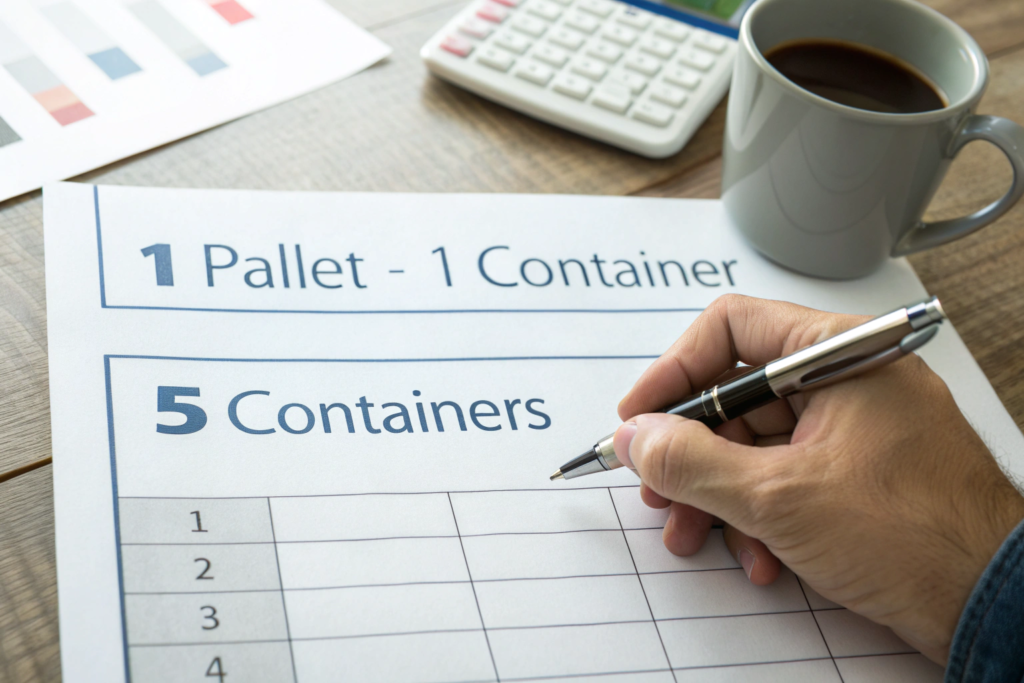
- Commitment: You agree to purchase a minimum of, say, 3 or 5 containers of our 84+ Grade 1 Arabica over a 12-month period.
- Fixed Price: We lock in a fixed FOB price for the entire contract term, based on the volume commitment. This price is lower than the spot market price for single containers.
- Flexible Shipments: You do not have to take all the coffee at once. We schedule shipments quarterly or as needed to match your inventory flow. The coffee is stored in our climate-controlled warehouse in GrainPro until you are ready for it.
This model gives you the volume discount without the warehouse burden. You get the best possible price and the freshest possible coffee delivered just in time. This is how the most successful specialty roasters manage their supply chains. They commit to their key origins and lock in their margins. At Shanghai Fumao, we prefer this model. It allows us to plan our milling schedule and allocate our best lots to our most committed partners.
How Does a Smaller Roaster Access 84+ Yunnan Without a Full Container?
I understand that not every roaster is ready for a full container. That is a lot of coffee. We do not want to lock out the small, quality-focused roasters who are the heart of the specialty industry.
Options for Smaller Roasters:
- Pallet Sharing (LCL): We can ship 1-2 pallets (10-20 bags) via LCL (Less than Container Load) ocean freight. The per-pound freight cost is higher, and there is a small premium on the coffee price to cover the extra handling, but it is accessible.
- Collaborative Buying: We can connect you with other small roasters in your region who are also interested in Yunnan coffee. You can split a container. We invoice separately, but the coffee ships together.
- Our US Warehouse Program (Future): We are exploring establishing a small consignment warehouse on the West Coast. This would allow US roasters to buy by the pallet with domestic shipping. This is on the roadmap.
The key is to talk to us. Tell us your volume needs. We will work with you to find a solution. We are not just a factory pumping out containers. We are a farm that wants to get our best coffee into the hands of roasters who will do it justice, regardless of their size.
How Can I Verify the 84+ Score Claim Before Committing to a Purchase?
You are a smart buyer. You should not just take my word for an 84+ score. You need to verify it. And we want you to verify it. A score is only as good as the trust behind it.
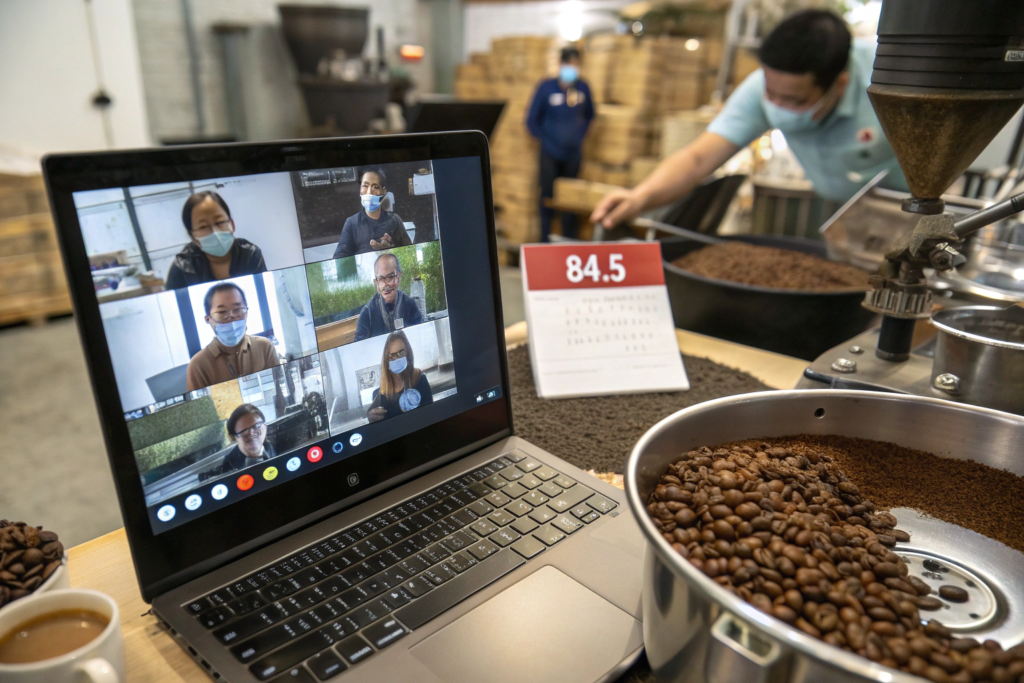
To verify an 84+ score claim, you should request a Pre-Shipment Sample (PSS) of the specific lot, roast and cup it yourself using SCA protocols, and if possible, arrange for a third-party Q-Grader of your choosing to evaluate the sample independently before you give the final approval to ship the container. This is the due diligence that separates professionals from amateurs.
What Is the Process for Sending an 84+ Pre-Shipment Sample for Approval?
We have covered this in detail in our Pre-Shipment Sample article, but let me recap the specific flow for an 84+ lot.
- Lot Identification: You express interest in a specific lot, e.g., "Block 14A, 1650m, Washed Typica, Lot #BOC-26-14A."
- Mill Sample: We send you a small (200g) sample of the green coffee so you can check the physical specs.
- PSS Roast Request: You say, "This looks good. Please roast a 500g PSS of this lot to Agtron 55 for my approval."
- Roasting & Shipping: We roast the sample on our Ikawa or Probat sample roaster to your spec. We package it in a valve bag and ship it via DHL (at your cost).
- Your Evaluation: You receive the sample. You cup it. You brew it. You pull shots. You score it.
- Score Comparison: You compare your score to our internal score. If they are within 1 point, we are calibrated. If they are off by more than 1 point, we have a conversation to understand the difference.
- Approval: You email us: "PSS Approved. Score 84.5. Proceed with shipment."
This process ensures that the coffee in the container matches the coffee you approved. At Shanghai Fumao, we retain a sealed reference sample of every PSS we send. If the container arrives and you claim it is not 84+, we can send the sealed reference sample to a neutral third-party lab for arbitration. The score is backed by evidence.
Can I Use an Independent Q-Grader to Validate the Sample?
Yes, and we encourage this for first-time buyers. It adds a layer of objective, third-party credibility.
The Process:
- You identify a certified Q-Grader in your network (or use a service like Coffee Rose or an SCA-certified lab).
- You ask us to ship the PSS directly to the Q-Grader's attention.
- The Q-Grader evaluates the sample blind and provides you with a formal scoresheet and notes.
- You compare the independent score to our claimed score.
This costs you a few hundred dollars for the Q-Grader's time. But for a $40,000 container of coffee, it is the best insurance you can buy. It validates the quality and it validates the supplier's honesty. We have never failed an independent Q-Grader validation. In fact, we welcome it because it builds an unshakeable foundation of trust for a long-term partnership. You can find a directory of certified Q-Graders on the Coffee Quality Institute website.
Conclusion
Sourcing 84+ scoring coffee beans from China at competitive prices is not a fantasy. It is the direct result of a specific business model: large-scale, vertically integrated, quality-focused estate farming in the unique terroir of the Gaoligong Mountains.
By bypassing the fragmented smallholder supply chain and leveraging the efficiencies of our 10,000-acre operation, we can offer specialty-grade coffee at a price point that challenges the traditional origins. And by committing to transparent verification processes like PSS approvals and independent Q-Grader evaluations, we remove the risk associated with buying from a newer origin.
The opportunity is here. The quality is proven. The price is right. The only question is whether you are ready to take advantage of it.
If you want to cup a sample of our current 84+ offerings and see the price list for container and multi-container contracts, let's get the conversation started. Email Cathy Cai. Tell her you are interested in our 84+ Specialty Grade program. She can send you the lot list, scoresheets, and pricing. Contact Cathy at: cathy@beanofcoffee.com