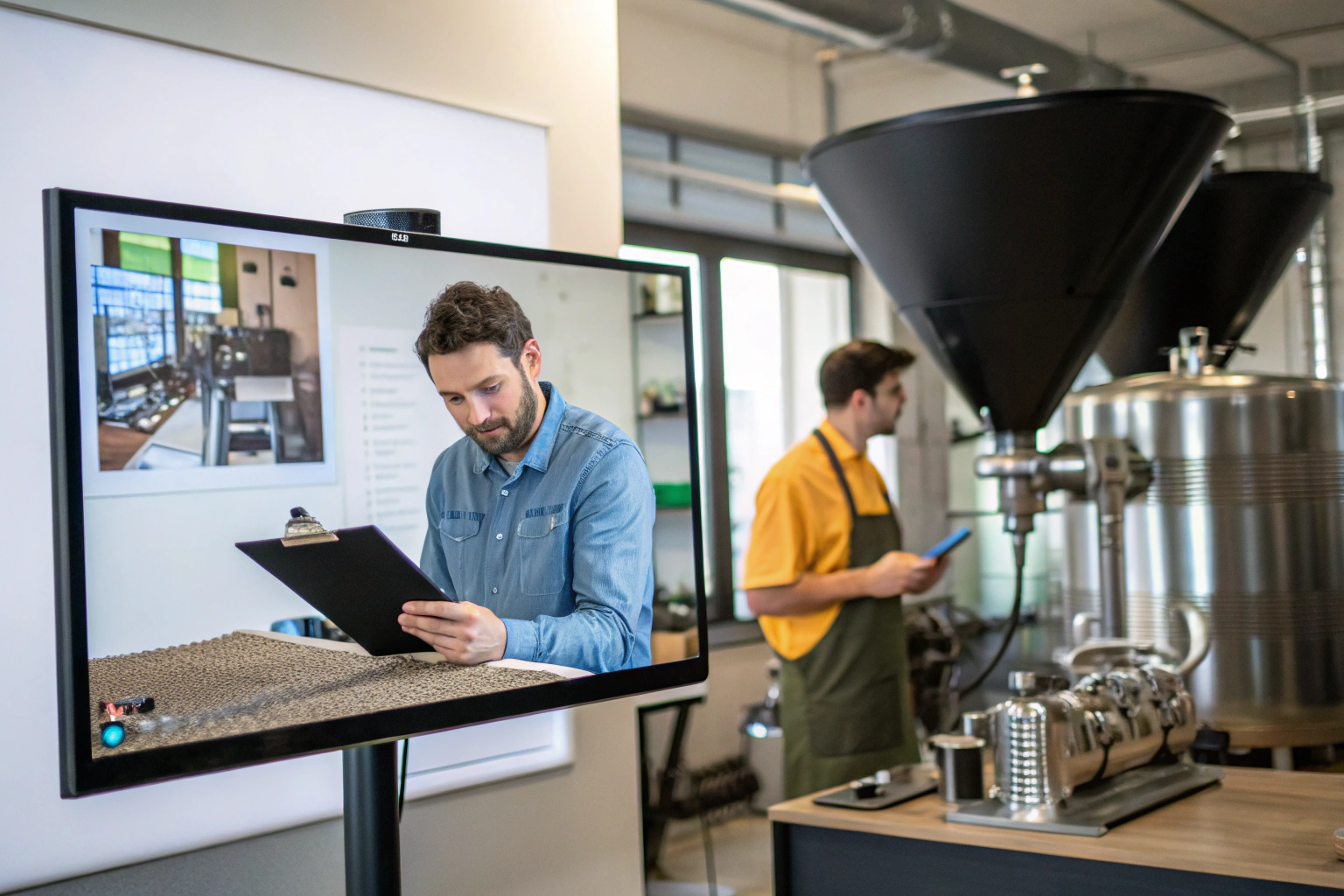
I remember the first time a buyer asked me for a virtual tour. It was early 2020. Travel was impossible. He was nervous. He had never bought a single bean from China before. And he was about to wire a deposit for a full container based on... what? A PDF brochure and my word? He needed to see it. He needed to walk the floor. So I grabbed my phone, put on a clean shirt, and walked him through every corner of the mill. It was shaky. It was unscripted. But it was real. And it closed the deal.
To conduct a virtual factory tour of a coffee producer in China, you should schedule a live, guided video walkthrough using a platform like Zoom or WeChat, prepare a checklist of specific areas to inspect including the dry mill, gravity table, warehouse, and cupping lab, and request that the supplier show real-time activities and documentation rather than a polished, pre-recorded marketing video.
This is not about being impressed by shiny equipment. It is about verifying that the operation is real, clean, and professional. It is about seeing the details that a brochure hides. Let me show you how to run a virtual tour that gives you the confidence of an on-the-ground visit, without the 15-hour flight.
Why Should I Request a Live Virtual Tour Instead of a Pre-Recorded Video?
A pre-recorded video is a marketing tool. It shows the best angle of the best machine on the best day. It is edited. It is polished. It is, frankly, often useless for due diligence. A live virtual tour is an audit. It is unscripted. It shows you what is happening right now.
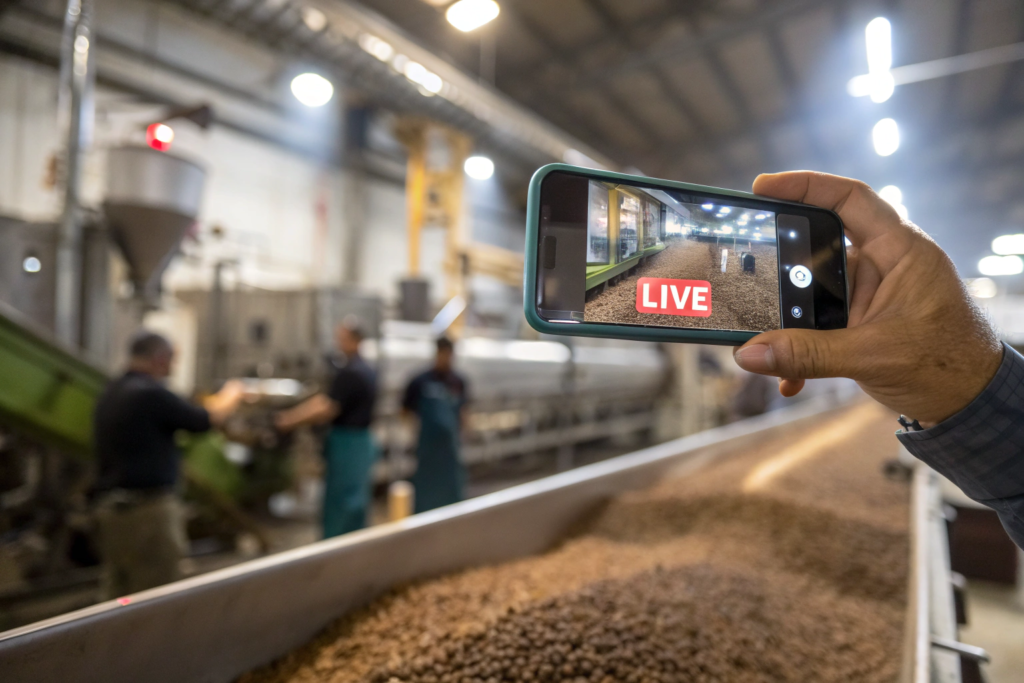
A live virtual tour is superior to a pre-recorded video because it allows for real-time interaction, enables you to ask spontaneous questions and request close-ups of specific areas, and verifies the current operational status and cleanliness of the facility, making it much harder for a supplier to hide issues or misrepresent their capacity.
If a supplier is hesitant to do a live tour, that is a massive red flag. A clean, well-run factory has nothing to hide. We welcome these tours.
What Are the Telltale Signs of a Genuine vs. Staged Virtual Walkthrough?
Even with a live video, a clever operator could try to stage things. Maybe they cleaned up one corner and only show you that. Or maybe they are showing you a facility that is not actually theirs. Here is how you spot the difference.
Signs of a Genuine Tour:
- Background Noise: You hear the hum of the gravity table. You hear the rumble of the huller. You hear workers talking. It is noisy.
- Spontaneous Movement: The camera operator walks at a normal pace. They bump into things occasionally. They show you the floor (which might have a few stray beans on it).
- Workers Present: You see actual people working. Not posing. Working.
- Specific Details: When you ask to see the lot number on a bag, they can walk over and show you the stencil. No hesitation.
Signs of a Staged Tour:
- Silence: The factory is eerily quiet. Where are the machines? Where are the people?
- Restricted Views: They only show you a tight shot of one machine. They refuse to pan the camera around the room.
- Generic Answers: You ask, "What is that pipe for?" They say, "Uh... water." A real operator says, "That's the exhaust for the destoner cyclones."
At Shanghai Fumao, my mill manager sometimes gets annoyed with me because I will walk into his clean area with my phone and start filming without warning. But that is the point. I want you to see the mill as it is. Dusty shoes and all. It builds trust. You can read more about supply chain verification best practices from organizations like the Global Food Safety Initiative.
How Can I Verify the Factory's Location Using the Video Call?
This is a clever trick. You want to make sure the factory is actually in Baoshan, Yunnan, and not some warehouse in a port city where beans are just being repackaged.
- Ask to See the View: During the tour, say: "Can you walk to the nearest window or door and show me the view outside?" A real Baoshan mill will show you mountains. Green, steep, terraced mountains. If they show you a flat industrial park with a highway, something is off.
- The Weather Check: Before the call, check the current weather in Baoshan on a weather app. During the call, ask them to step outside for a second to show you the loading dock. Is it sunny? Raining? Does it match the app?
- Geolocation in Real-Time: Ask them to open a map app on their phone during the call and share their live location via WeChat or WhatsApp. This is the most direct verification.
I have done this for buyers. I will walk outside and show them the Gaoligong mountain range in the background. It is not a green screen. It is my home. You cannot fake that.
What Specific Areas of the Mill and Warehouse Should I Ask to See?
You do not have time to watch them walk down every aisle. You need a hit list. A virtual tour should be targeted and efficient. You are looking for evidence of process control and food safety.
During a virtual factory tour, you must prioritize seeing the dry mill processing line (specifically the gravity separator), the finished goods warehouse (checking for bag labeling and floor cleanliness), the cupping laboratory (to verify quality control exists), and the green coffee storage area (looking for GrainPro bag usage and pallet racking).
How Can I Inspect the Cleanliness of the Dry Mill and Gravity Table Area?
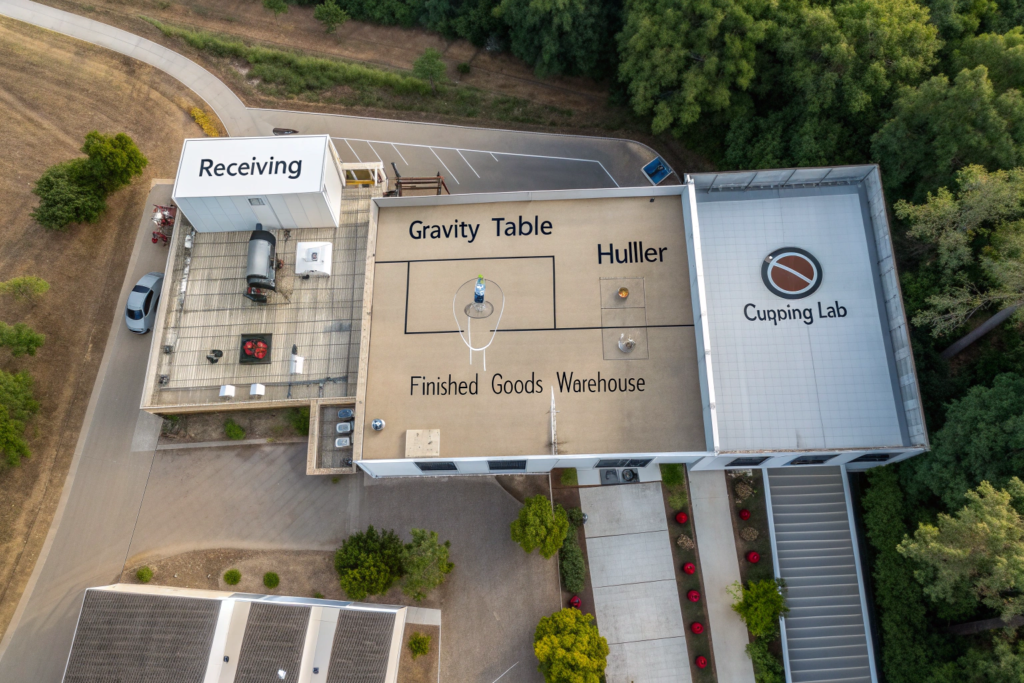
This is the most important stop on the tour. The dry mill is where the coffee is hulled, graded, and density sorted. It is a dusty, dirty process. A clean dry mill is a sign of a professional operation. A dirty dry mill is a sign of neglect.
Here is what to look for on the video call:
- The Floor: Ask them to point the camera at the floor near the gravity table. Is it swept? Are there piles of accumulated chaff and dust in the corners? A little bit of fresh chaff is normal. Piles of old, black chaff are a mold risk.
- The Machines: Ask for a close-up of the gravity table deck. It should be clean metal. Not caked with old coffee oil and dust.
- Magnetic Catchers: Ask: "Can you show me the magnets on the conveyor belt?" Every professional mill has powerful magnets to catch metal fragments before they go into the bag. Ask to see them. Are they clean? Or are they covered in black metal fuzz? A clean magnet means they check it regularly. A dirty magnet means it is not working.
- Pest Control: Ask: "Can you show me a pest trap on the floor?" They should be able to walk over to a wall and point to a small plastic box. That is an insect pheromone trap. It shows they have an integrated pest management program.
At Shanghai Fumao, we do a full clean-down of the dry mill every Friday. It takes four hours. It is a pain. But it keeps the coffee safe and the machines running. I will show you that on a tour. For more on food safety standards in dry food processing, the ISO 22000 standard outlines the requirements for a clean environment.
What Does a Properly Stored Finished Goods Warehouse Look Like Virtually?
After the coffee is processed, it goes into the finished goods warehouse to wait for the container. This is where a lot of quality problems are born. You need to see how the coffee is treated while it waits.
What to ask to see:
- Pallet Racking: Are the bags stored directly on the concrete floor? (Bad. Moisture wicks up from concrete.) Or are they on wooden or plastic pallets? (Good. Allows airflow.)
- GrainPro Liners: Ask them to zoom in on a bag. Can you see the blue or clear plastic liner inside the jute? That is the GrainPro bag. It is essential for preserving freshness.
- Bag Labeling: Ask them to walk up to a specific pallet and show you the tag. It should have a lot number, a grade, and a date.
- Cleanliness: Is the floor clean? Are the aisles clear? A cluttered warehouse is a safety hazard and a sign of poor management.
I once had a buyer ask me to count the number of bags on a specific pallet. I did it live on camera. It matched the inventory report I had sent him. That is the level of detail a virtual tour allows.
How to Evaluate the Cupping Lab and Quality Control Protocols Remotely?
The mill can be spotless. The warehouse can be perfect. But if they are not tasting the coffee, they are not controlling the quality. The cupping lab is the brain of the operation. You need to see it.
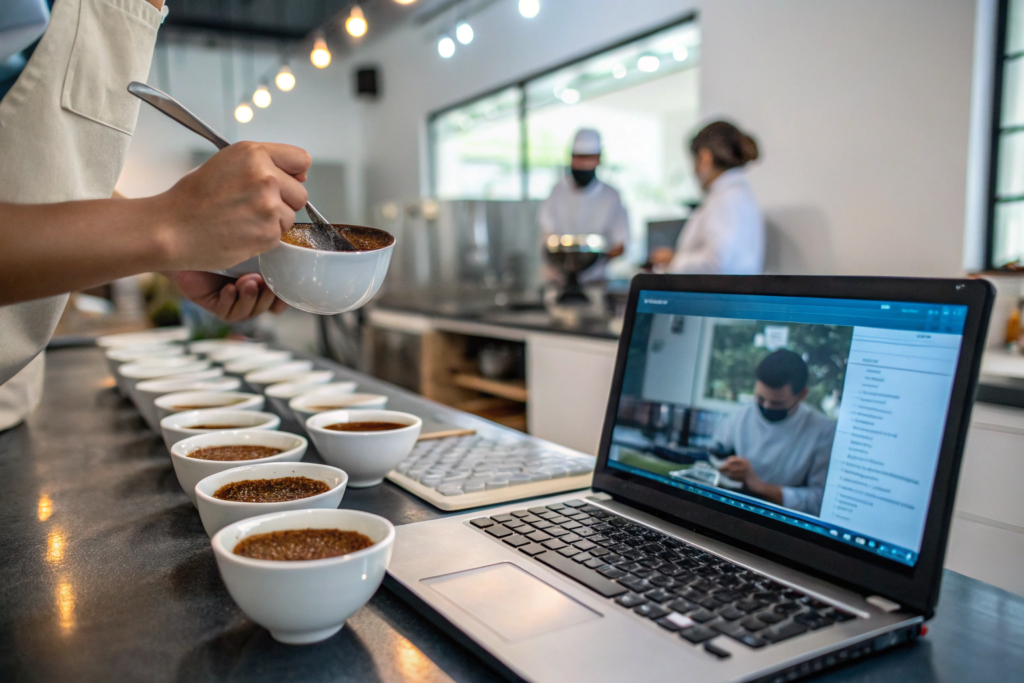
To evaluate the cupping lab remotely, request to see the roaster (a sample roaster like a Probat or Ikawa is a good sign), the green coffee sample library with labeled jars, and if possible, ask the Q-Grader to walk you through a live cupping of the specific lot you are considering purchasing.
This transforms the tour from a visual inspection into a sensory collaboration.
What Equipment Should I Expect to See in a Professional Yunnan Cupping Lab?
You do not need a full list of every spoon and bowl. But you should look for a few key pieces of equipment that separate the pros from the amateurs.
| Equipment | What It Tells You |
|---|---|
| Sample Roaster | They roast their own samples for evaluation. This is essential. If they use a popcorn popper, they are not serious. |
| Agtron or Roast Color Meter | They measure roast degree objectively. This means they are consistent. |
| Moisture Meter | They check the moisture of every lot before cupping. This is basic quality control. |
| Water Filtration System | They care about the water chemistry for cupping. This is a high-level detail. |
| Flavor Wheel / Cupping Forms | You see SCA cupping forms on the table. This means they speak the global language of coffee quality. |
At Shanghai Fumao, we have a dedicated cupping lab with a Probat sample roaster, a digital Agtron meter, and a reverse osmosis water system. When I give a virtual tour, I make sure to show you the Agtron reading from the last batch. It is a data point that proves we are managing the roast for evaluation, not just winging it. You can see examples of standard cupping lab setups in the Specialty Coffee Association education materials.
Can the Supplier Cup a Sample "Live" on Camera for Me?
Yes. And you should ask for this if you are considering a large contract. It is the ultimate test of transparency and skill.
Here is how to request it:
"Before we finalize the contract, would it be possible to schedule a brief live cupping of my pre-shipment sample lot? I would like to watch your Q-Grader evaluate the coffee and describe the notes in real-time."
You are not expected to taste the coffee through the screen. That is impossible. What you are looking for is calibration. You listen to their description of the coffee. Does it match the notes on the sample they sent you? If you taste black tea and lemon, and they describe "overripe fruit and ferment," there is a massive disconnect. That is a problem.
Watching them work also tells you about their process. Do they use the correct ratio? Do they break the crust properly? Do they slurp loudly and confidently? A professional Q-Grader has a specific, practiced routine. An amateur fumbles. This live demo is the single best way to verify that their "Grade 1" is actually being evaluated by a human with a trained palate.
What Follow-Up Documentation Should Accompany a Virtual Tour?
The virtual tour is the show. The documentation is the receipt. After the call, you need to solidify what you saw with paper and files. A verbal promise made during a tour means nothing. A follow-up email with attachments means everything.
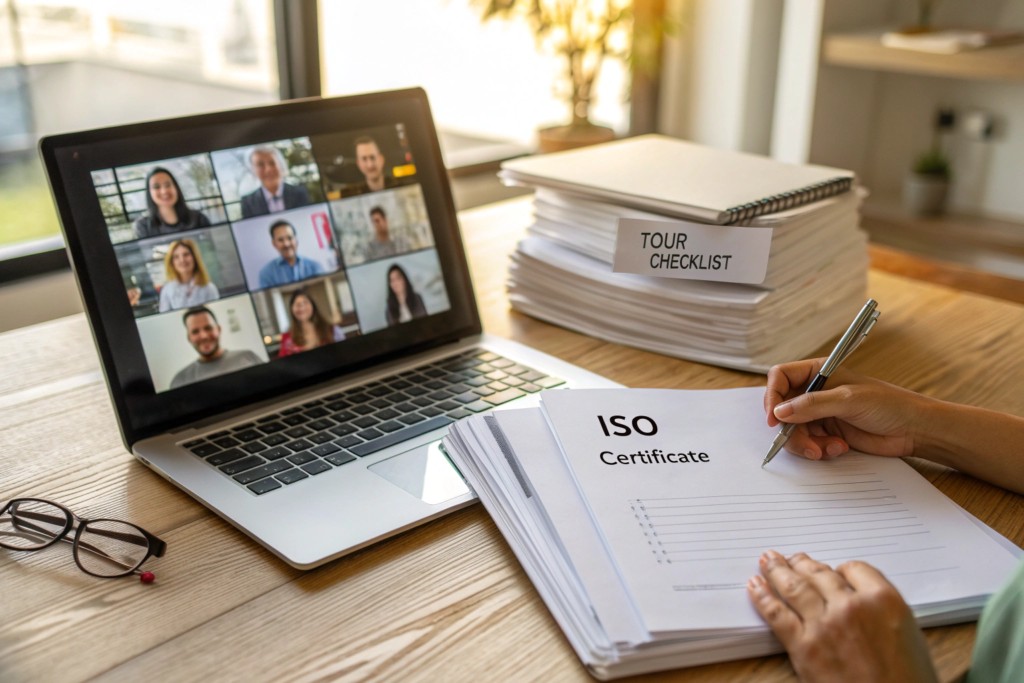
Follow-up documentation for a virtual tour should include a summary email outlining the key points discussed and areas viewed, a copy of the supplier's current food safety certification (ISO 22000 or HACCP), a sample traceability report for a recent shipment, and the specific lot numbers and photos of the bags that were shown on camera during the tour. This creates a paper trail that connects the live video to the legal contract.
How to Request Photos of Specific Lot Numbers Shown During the Tour?
During the tour, when you are in the warehouse, you should pick a bag at random. Say: "Can you zoom in on that bag right there? The one on the second pallet, third row from the top?"
Read the lot number on camera. Write it down.
After the tour, send this follow-up request email:
"Dear [Supplier Name], thank you for the virtual tour. To close out my due diligence, could you please send me the following:
- A clear photo of the bag with Lot Number [BOC-2026-045] that we viewed in the warehouse.
- The internal traceability record showing when this specific lot was milled.
- The QC lab report for this specific lot."
A legitimate supplier will have this information at their fingertips. They will send you the photo and the PDFs within 24 hours. A fake supplier will make excuses. "The lot is already sealed." "The documents are in another office." "We don't track that internally."
At Shanghai Fumao, Cathy keeps a digital folder for every tour we do. The photos of the bags viewed on the tour are saved with the date and time stamp. This is not extra work. It is part of our standard operating procedure for new client onboarding. You can learn more about best practices for supplier documentation from the International Trade Centre export guides.
What Certifications Should Be Visible or Emailed Post-Tour?
During the tour, you might see certificates hanging on the office wall. That is nice. But it is not verification. You need the digital copies.
Post-tour, request the following documents as PDFs:
- Food Safety Certification: ISO 22000 or HACCP certificate. Check the expiry date. Check the scope (does it cover coffee processing or just office administration?).
- Organic Certification: If you are buying organic, request the valid certificate from the certifier (e.g., OFDC, ECOCERT). Verify the certificate number on the certifier's public database.
- Business License: This is a basic Chinese document. It proves the company legally exists.
Receiving these documents promptly after the tour closes the loop. It confirms that the clean, organized facility you saw on video is backed by a legitimate, compliant business entity. If the video looks great but the paperwork never arrives, you have a problem.
Conclusion
A virtual factory tour is not a poor substitute for an in-person visit. It is a different tool with its own unique advantages. It forces the supplier to be transparent in real-time. It allows you to inspect the operation on a random Tuesday, not a scheduled "show day." And it saves you thousands of dollars and days of travel time.
By following a structured approach—focusing on the live video feed, inspecting the dry mill and warehouse, verifying the cupping lab, and following up with targeted documentation requests—you can achieve a high level of confidence in a Chinese coffee producer without ever leaving your office.
At Shanghai Fumao, we welcome these tours. We see them as the first step in a long-term partnership. We want you to see the mountains, hear the machines, and meet the people who handle your coffee.
If you are ready to schedule a virtual walkthrough of our Baoshan estate and mill, let's find a time that works for both time zones. We can cover the whole operation in about 45 minutes. Email Cathy Cai to coordinate the schedule and the video link.
Contact Cathy at: cathy@beanofcoffee.com.