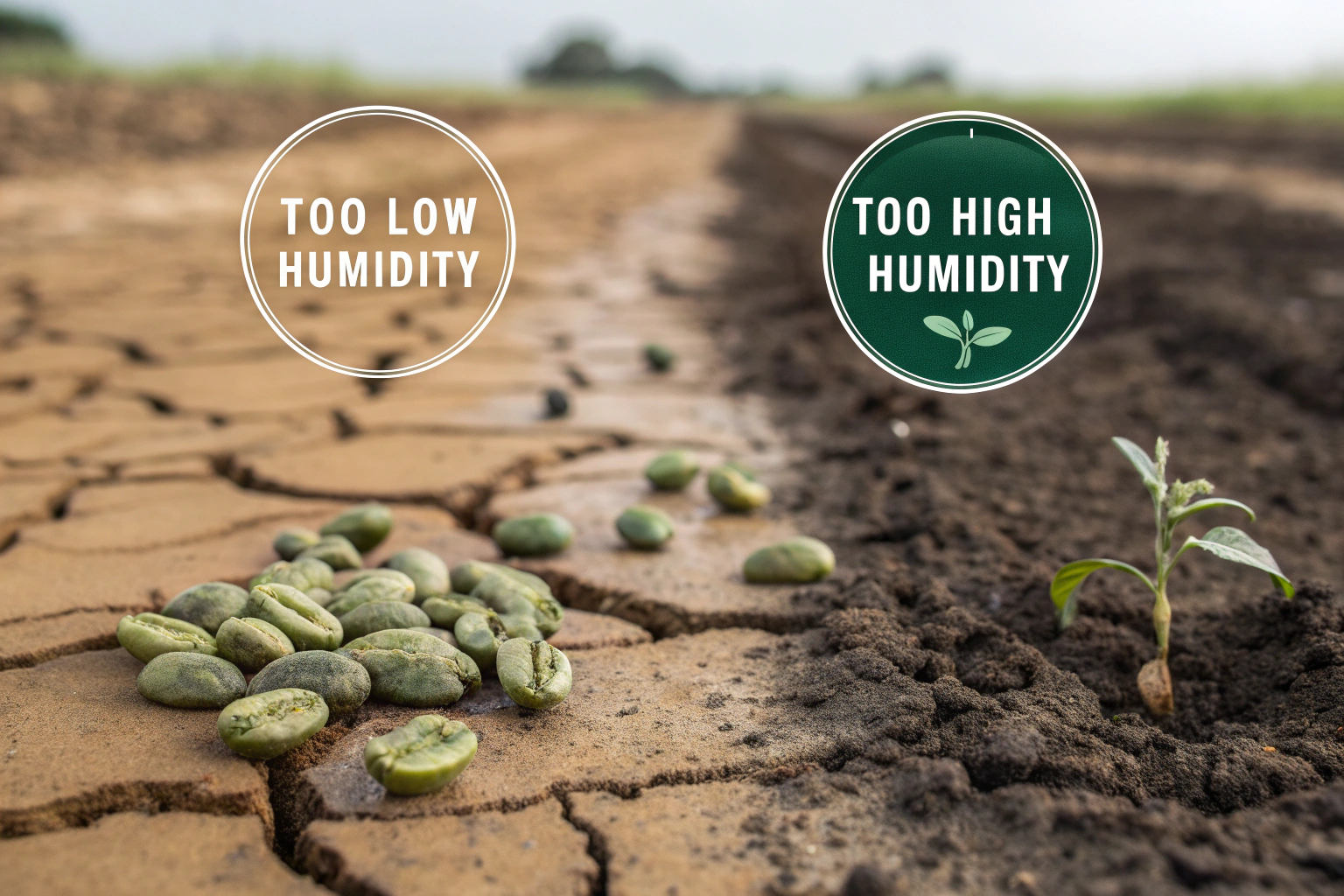
As a coffee buyer, you meticulously control every variable you can: the price, the roast profile, the shipping schedule. But what about the invisible enemy? You're like my client, Ron; you're sharp, and you know that the quality of the coffee you receive is paramount. You might not think about it every day, but an invisible factor—humidity—is constantly threatening to degrade your valuable inventory, whether it's in a warehouse or on your cafe shelf. This lack of control over the environment is a major source of anxiety.
Let's be unequivocally clear: humidity is one of the most critical environmental factors in coffee bean storage, for both green and roasted beans. It is not a minor detail; it is a primary driver of quality loss. Uncontrolled humidity can lead to mold growth, rapid staling, loss of flavor, and significant financial loss. Managing it correctly is the key to preserving the coffee's potential from the warehouse to the final cup.
As the owner of a 10,000-acre coffee estate in Yunnan, my obsession with quality doesn't end when the beans are bagged. We understand that our coffee's long journey to you is fraught with environmental risks. That's why controlling humidity is a non-negotiable part of our process. In this article, I'll explain the science of why humidity is so crucial and provide the best practices to protect your investment.
What Happens When Humidity is Too High?
Imagine opening a sack of green coffee you've had in storage, only to be hit with a musty, cellar-like smell. This is a buyer's worst nightmare. You're worried about the financial loss of a spoiled lot and, even more seriously, the food safety implications. This scenario is the direct result of storage humidity being too high.
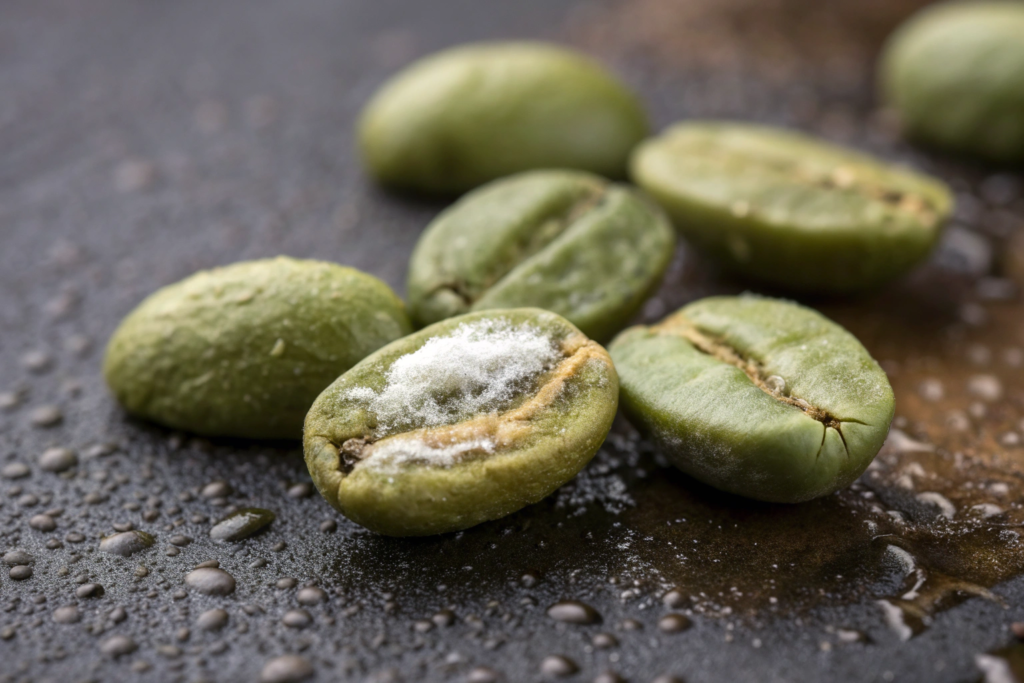
When the relative humidity (RH) of the storage environment is too high (generally above 65%), green coffee beans, which are hygroscopic, act like a sponge and absorb moisture from the air. This raises the bean's internal moisture content above the stable 10-12% threshold, creating the perfect breeding ground for mold and fungi. This is where dangerous mycotoxins like Ochratoxin A can develop.
For roasted coffee, the effect is just as devastating. High humidity dramatically accelerates the staling process. The moisture attacks the delicate cellular structure of the roasted bean, causing the precious aromatic oils to go rancid and the soluble compounds to degrade. The result is a cup that tastes flat, papery, and lifeless. At Shanghai Fumao, we use hermetic bags for our green coffee exports specifically to create a barrier against this external humidity, ensuring our beans arrive in perfect condition.
How Quickly Can Mold Grow?
Under the right conditions of high humidity and warm temperatures, mold can begin to develop on green coffee beans in a matter of days or weeks. It's a silent threat that can quickly compromise an entire shipment if not stored properly. This is why constant monitoring of warehouse conditions is a critical practice for any serious coffee professional.
Does High Humidity Affect the Roast?
Yes, significantly. Green coffee beans with high moisture content will roast unevenly and unpredictably. The roaster has to apply more energy at the beginning of the roast just to dry the bean out, making it incredibly difficult to control the subsequent Maillard and caramelization reactions. This often leads to baked flavors or an inconsistent, underdeveloped roast.
What is the Danger of Humidity Being Too Low?
While the dangers of high humidity are well-known, the opposite extreme is also a problem. You might think "drier is better," but that's a dangerous oversimplification. You're concerned with preserving the vibrant, complex flavors of the specialty coffee you purchased. An overly dry environment can be just as destructive to that goal as a damp one.
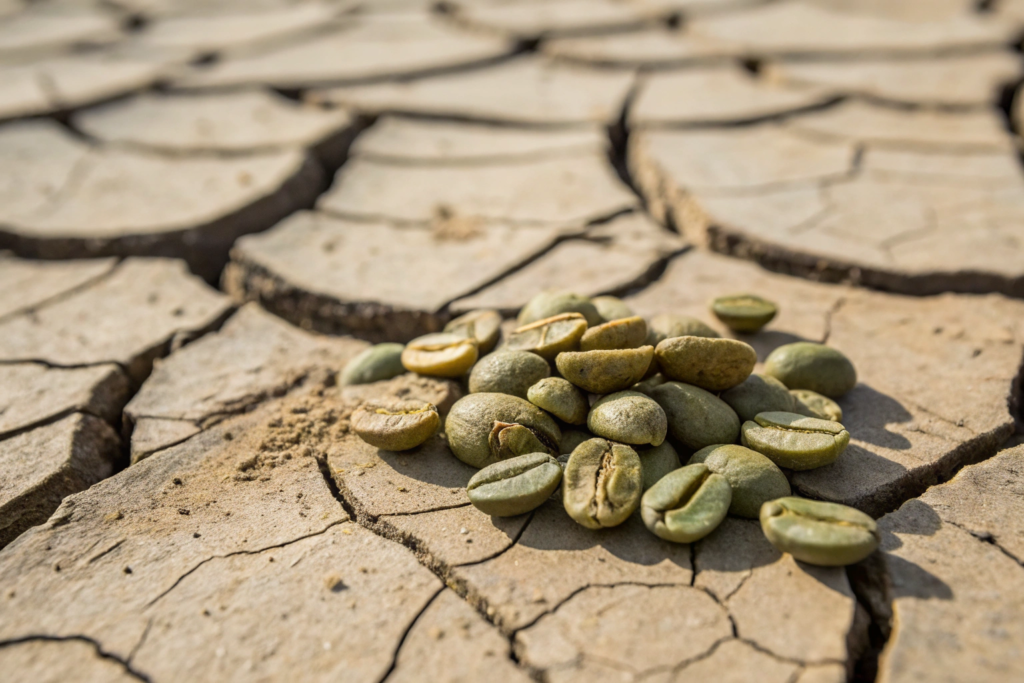
When coffee is stored in an environment with very low relative humidity (e.g., below 40%), the beans will start to lose their own internal moisture to the surrounding air. This excessive drying causes the beans to become brittle and lose their vitality. For green coffee, this means the loss of the essential organic acids and volatile aromatic precursors that are responsible for a vibrant and complex flavor profile after roasting.
The result of roasting these overly dry beans is a coffee that tastes flat, woody, and papery, with a noticeable lack of acidity and aroma. The life has literally been sucked out of it. For roasted coffee, an excessively dry environment can also cause the natural oils to evaporate more quickly, leading to a faster staling process. The key, therefore, is not just to keep coffee dry, but to keep it in a state of equilibrium.
What is the Ideal Moisture Content for Green Coffee?
The industry standard for stable, high-quality green coffee is a moisture content between 10% and 12%. This narrow range is the "sweet spot" where the bean is dry enough to prevent mold but retains enough moisture to preserve its cellular integrity and flavor potential. Reputable suppliers should always be able to provide you with the moisture content data for your lot.
How Does Low Humidity Affect Bean Appearance?
You can often see the effects of low humidity. Green coffee beans that have lost too much moisture will often look faded, turning from a healthy bluish-green to a pale, yellowish-white. They may also appear shrunken or wrinkled. These are visual red flags that the quality and flavor potential of the bean have been compromised.
What is the Ideal Humidity for Coffee Storage?
So, if too high is bad and too low is bad, where is the sweet spot? As a buyer, you need a clear, actionable target. You need to know what to ask your warehouse provider for, or what to aim for in your own storage space, to ensure you are protecting your inventory effectively.
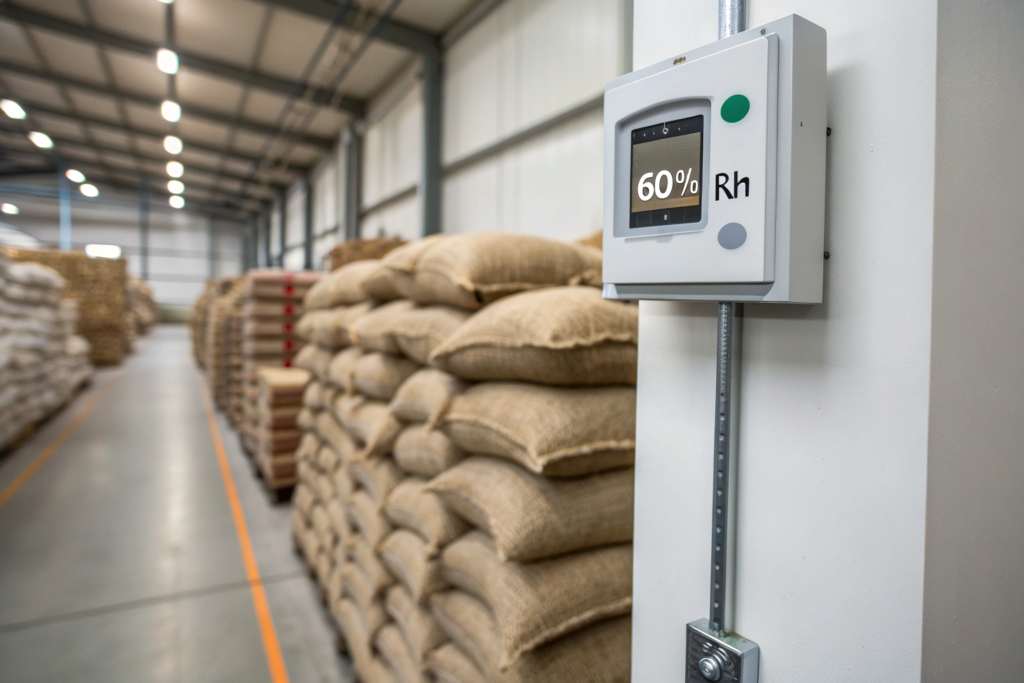
The consensus among coffee professionals is that the ideal storage environment for green coffee is one that maintains a stable relative humidity between 55% and 65% RH. This range is optimal because it is dry enough to prevent mold growth but has enough ambient moisture to stop the beans from drying out. It helps keep the beans' internal moisture content within that crucial 10-12% window.
For roasted coffee, the principle is the same, though the timeframe is shorter. Storing it in an airtight container in a room with stable, moderate humidity (around 50-60%) is ideal. The most important factor for both green and roasted coffee is stability. Wild swings in humidity, even within an "acceptable" range, can cause the beans to repeatedly absorb and release moisture, which is stressful to their cellular structure and degrades quality over time.
How Can You Monitor Humidity?
Monitoring humidity is simple and inexpensive. A good quality digital hygrometer can be purchased for a low cost and placed in your storage area. For larger warehouses, a system of multiple, calibrated sensors that log data over time is a professional necessity. This data allows you to track trends and confirm that your storage environment is truly stable.
What Are Hermetic Storage Bags?
Hermetic (airtight) storage bags, such as those made by GrainPro or Ecotact, are a game-changer for humidity control. These multi-layered plastic bags are placed inside the traditional jute sack. They create a barrier that stops the transfer of moisture between the beans and the outside air. This means that even if the external warehouse humidity fluctuates, the micro-environment inside the bag remains stable, perfectly preserving the bean's moisture content.
How Can You Control Humidity in Your Own Facility?
You're a roaster or cafe owner, and you don't have a massive, climate-controlled warehouse. How can you apply these principles in your own space? You're worried that professional-level storage is beyond your reach, but you still want to protect the quality of the bags you have on hand.
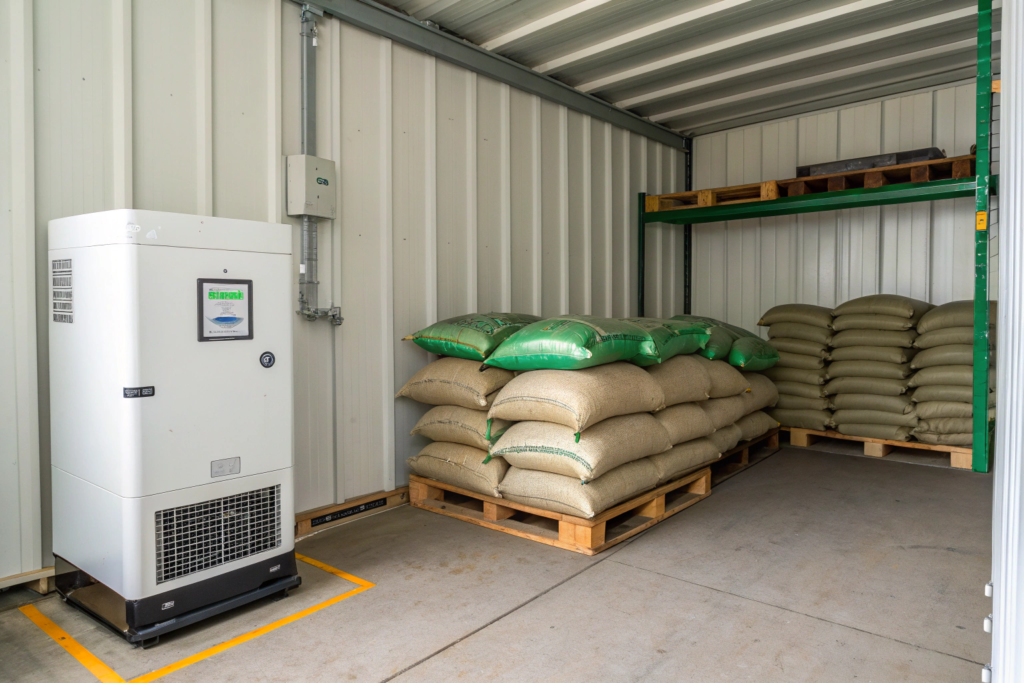
You can absolutely implement effective humidity control on a smaller scale. The key is to create a dedicated, insulated storage space and use modern equipment to manage the environment. First, designate a storage area—a closet, a small room—that is not exposed to direct sunlight, heat sources (like the roaster), or outside walls if possible.
Next, invest in a dehumidifier or a humidifier, depending on your climate. Use a digital hygrometer to monitor the RH in the space. If you live in a damp climate and the RH is consistently above 65%, a dehumidifier is essential. If you are in a very dry, arid climate and the RH is below 50%, a small humidifier might be necessary. Always store your coffee sacks on pallets to keep them off the concrete floor, which can transmit moisture. These simple, practical steps can replicate a professional environment and significantly extend the life of your green coffee.
Is Air Conditioning Enough?
While air conditioning does remove some moisture from the air, it is not a dedicated humidity control device. Its primary function is to control temperature. In very humid climates, an AC unit alone may not be powerful enough to keep the relative humidity in the ideal 55-65% range. A dedicated dehumidifier is a more effective and reliable tool for this specific job.
How Important is Airflow?
Good airflow is also important. Stagnant, humid air is more likely to lead to pockets of mold growth. Using a small fan to gently circulate the air in your storage space can help maintain a more consistent temperature and humidity throughout the room and around the coffee sacks. This works in tandem with your dehumidifier to create a healthier environment. You can find more practical storage tips from resources like the Specialty Coffee Association's handbooks.
Conclusion
Humidity is not a peripheral detail in coffee storage; it is a central pillar of quality preservation. From the moment a green bean is dried to the day a roasted bean is ground, it is in a delicate dance with the moisture in the air around it. Too much humidity invites mold and stales coffee with shocking speed. Too little humidity desiccates the bean, stripping it of its flavor and vitality.
By understanding the critical importance of maintaining a stable relative humidity—ideally between 55% and 65% for green coffee—you empower yourself to protect your product. Whether through hermetic bags, climate-controlled warehouses, or a well-managed storage closet with a dehumidifier, taking control of humidity is one of the most important investments you can make in your coffee's quality.
If you are looking for a supplier who obsesses over these details from the very beginning, ensuring your coffee is dried, packed, and shipped under perfectly controlled conditions, we are that partner. We believe our responsibility for quality extends all the way to your door. Please reach out to my colleague, Cathy Cai, at cathy@beanofcoffee.com to learn how our meticulous processes can bring you peace of mind.