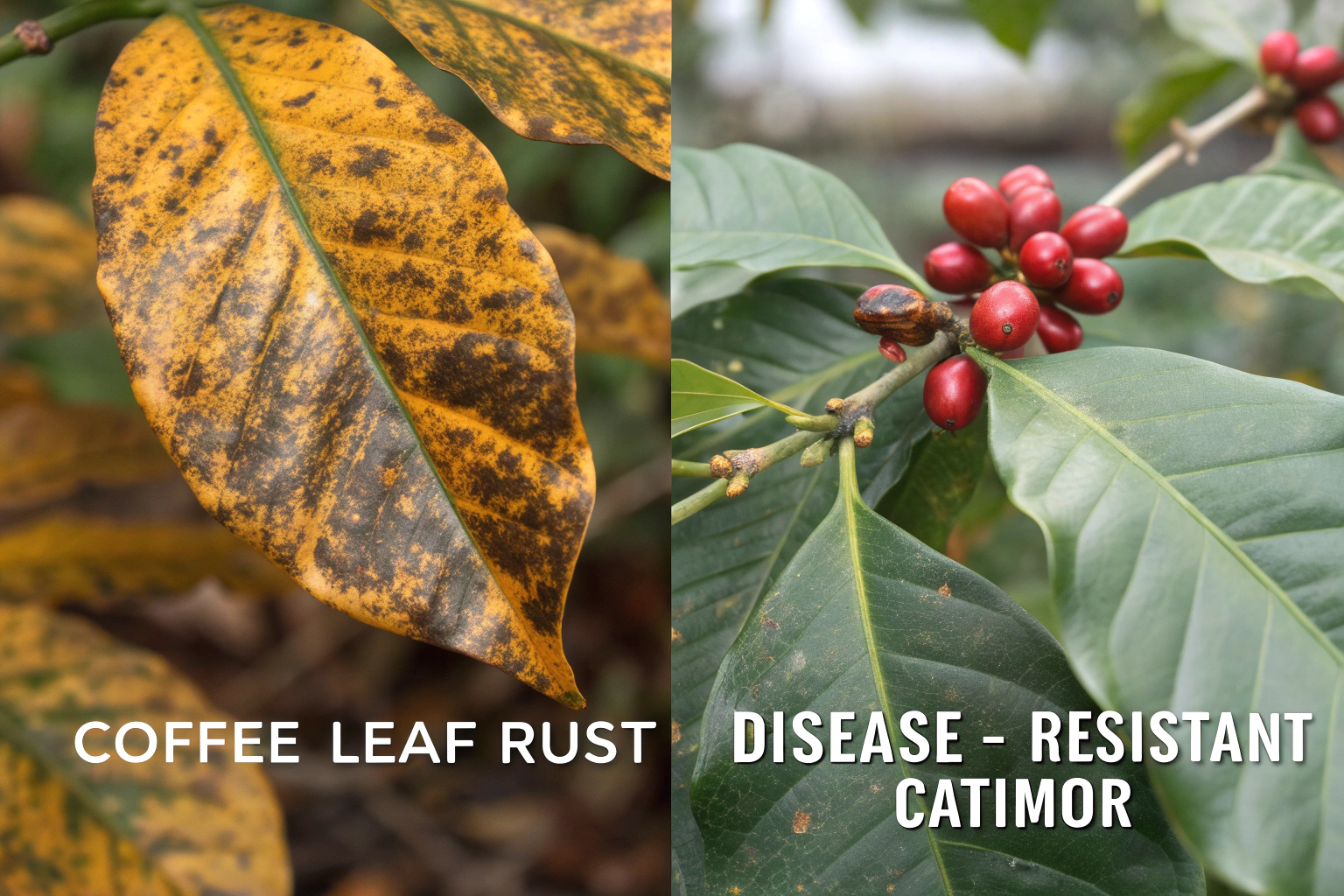
As a coffee buyer, you're constantly managing risk. You worry about price volatility, shipping delays, and quality control. But there's a deeper, more fundamental risk you might not think about every day: the health of the coffee plant itself. You're like my client, Ron; you need a stable, reliable supply chain. The last thing you want is a call from your supplier saying, "Sorry, our crop was devastated by coffee leaf rust this year." That's a catastrophic failure that threatens your entire business.
This is precisely where the advantages of the Catimor varietal become a massive strategic asset. Catimor's primary advantage is its strong genetic resistance to major coffee diseases, particularly Coffee Leaf Rust (La Roya) and Coffee Berry Disease (CBD). This resistance translates directly into lower risk, more stable yields, and ultimately, a more consistent and cost-effective supply chain for buyers.
On our 10,000-acre estate in Baoshan, Yunnan, a significant portion of our cultivation is dedicated to Catimor. Why? Because as a businessman, I value resilience as much as I value flavor. It’s a pragmatic choice that ensures we can be the "safe, reliable, stable, and trustworthy" partner you need. In this article, I'll break down exactly what Catimor's disease resistance means for you, the buyer, in real, practical terms.
How Does Disease Resistance Ensure Supply Chain Stability?
Your biggest fear as a buyer is unpredictability. You build your brand and your blends around a specific coffee profile, and you need to know that you can get that same coffee next year, and the year after. When a supplier's crop is susceptible to disease, your supply chain is built on a house of cards.
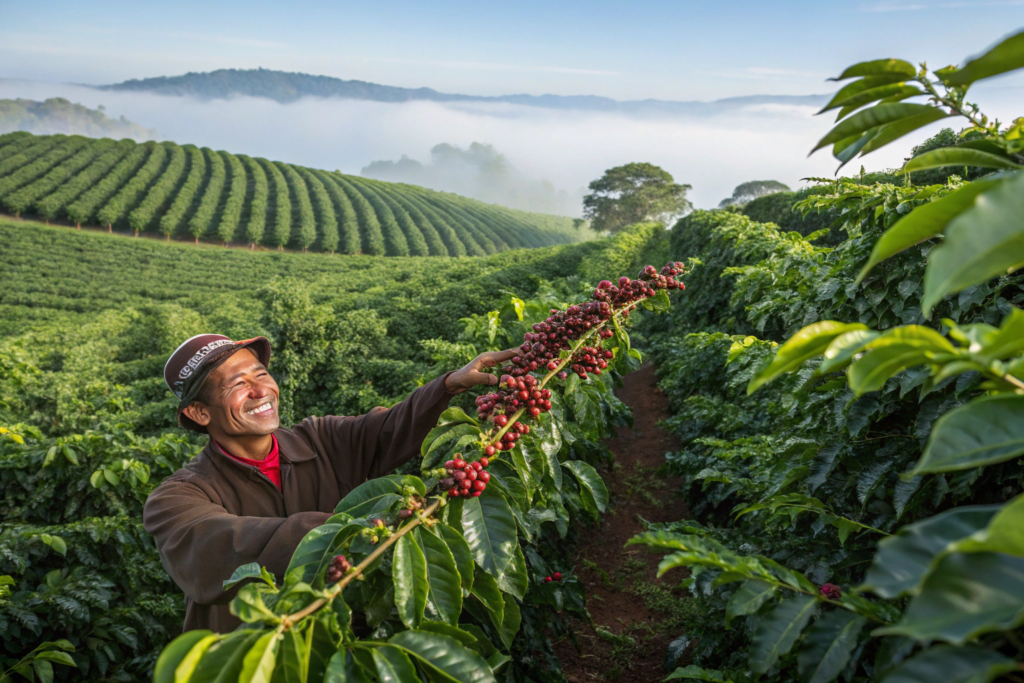
The most significant advantage of Catimor's disease resistance is the creation of a predictable and stable supply. Coffee Leaf Rust can wipe out 50% or more of a susceptible farm's production in a single season. This devastation leads to massive supply shortages and dramatic price spikes for those specific origins or varietals. Because Catimor plants can thrive even when rust is present in the region, they produce a consistent, reliable harvest year after year.
This stability is everything. It means that when you build a blend around the chocolatey, full-bodied profile of our Yunnan Catimor, you can be confident that we at Shanghai Fumao will have the volume you need, season after season. It removes a huge layer of agricultural risk from your business equation, allowing you to forecast your inventory and costs with much greater accuracy. It transforms a volatile agricultural product into a more dependable industrial ingredient.
What is Coffee Leaf Rust (La Roya)?
Coffee Leaf Rust is a devastating fungal disease that appears as orange-yellow spots on the leaves of coffee plants. The fungus causes the leaves to fall off, which prevents the plant from photosynthesizing properly. This severely weakens the plant, drastically reduces cherry production, and can eventually kill it. It has caused states of emergency in several Central American coffee-producing countries and is a constant threat to non-resistant Arabica varietals.
How Does Catimor Resist This Disease?
Catimor is a hybrid varietal, created by crossing a Caturra (a compact, high-yielding Arabica) with a Timor Hybrid. The Timor Hybrid is itself a natural cross between Arabica and Robusta, and it carries Robusta's natural genetic resistance to Coffee Leaf Rust. Catimor inherits this crucial defensive trait, allowing it to thrive in environments where other Arabica varietals would perish. You can learn more about coffee genetics from resources like World Coffee Research.
What is the Impact on Price and Affordability?
Let's talk about the bottom line. You're a business owner, and price is a critical factor. You see the high prices commanded by exotic, delicate varietals and wonder how to build a sustainable business. The constant threat of price spikes due to crop failures in other regions makes long-term financial planning a nightmare.
Catimor's disease resistance has a direct and positive impact on price stability and affordability. Because the varietal requires fewer chemical inputs (like fungicides) and has lower crop loss risk, the cost of production is significantly lower and more predictable. This economic advantage is passed down the supply chain.
Farmers who grow susceptible varietals have to budget for expensive, labor-intensive fungicide applications multiple times a year. If they fail, they lose their crop. This risk and high cost is priced into their coffee. Catimor farmers, on the other hand, have a much lower and more stable cost base. This allows us to offer our high-quality Catimor lots at a price that is not only competitive but, more importantly, stable. It protects you from the wild price swings that plague the market for more fragile coffees.

How Much Do Fungicides Cost Farmers?
The cost can be substantial. For a small farmer, the expense of fungicides and the labor to apply them can represent a significant portion of their annual income. This financial pressure can be crippling. By choosing to cultivate a resistant varietal like Catimor, farmers can reinvest that money into other areas that improve quality, such as better processing equipment or education.
Does Lower Cost Mean Lower Quality?
Absolutely not. This is a common misconception. The price of Catimor is not a reflection of a lower potential for quality, but a reflection of its efficiency and resilience in the field. A well-grown and carefully processed Catimor can produce a delicious cup with notes of chocolate, nuts, and a full body, often scoring well into the specialty range (80+ points). Its value lies in its ability to deliver this solid quality profile with unparalleled consistency and affordability.
How Does It Affect Sustainability and Environmental Impact?
Today's consumers are increasingly concerned with the environmental footprint of the products they buy. You're likely facing questions from your own customers about sustainability. You're worried about the negative stories associated with intensive agriculture and want to partner with suppliers who practice responsible farming.
The environmental advantage of Catimor's disease resistance is significant. By drastically reducing or even eliminating the need for chemical fungicides, cultivating Catimor leads to a much lower environmental impact. Fungicides can have unintended consequences, affecting soil health, water quality, and the local ecosystem's biodiversity.
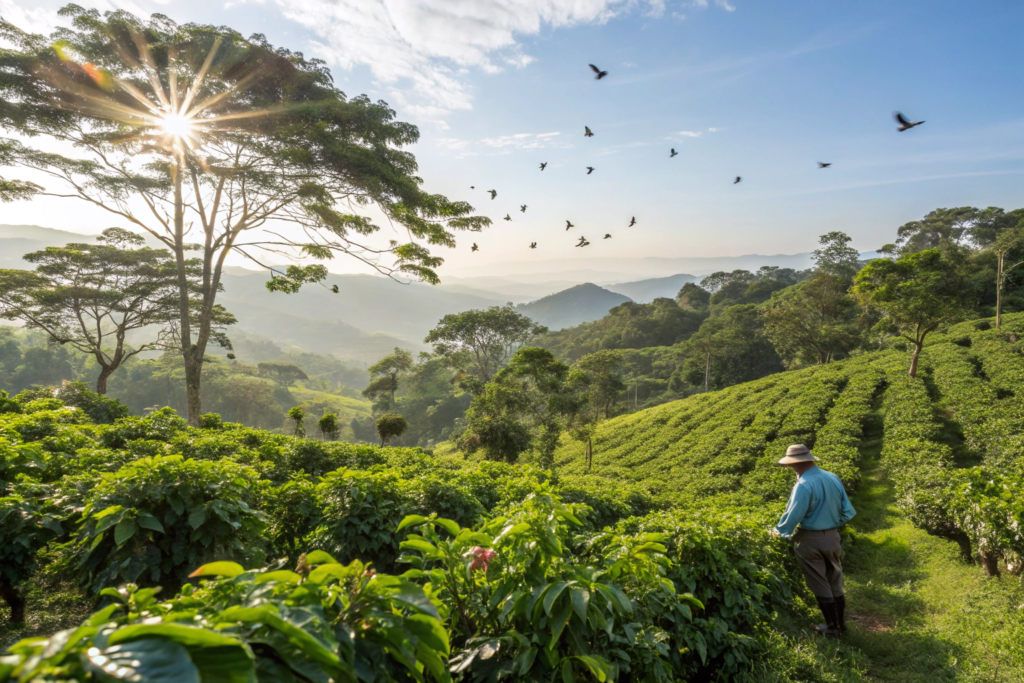
Choosing a disease-resistant varietal is a proactive, nature-based solution to a farming challenge. It's a core tenet of Integrated Pest Management (IPM), a strategy that prioritizes sustainable methods over chemical intervention. When you market a coffee made from Catimor beans, you have a powerful, authentic sustainability story to tell. You can confidently say that your coffee is produced in a way that minimizes chemical use, protecting both the environment and the health of the farmers themselves. This is a story we are proud to tell about our work at Shanghai Fumao.
What is Integrated Pest Management (IPM)?
IPM is a holistic approach to farming that uses a combination of methods to manage pests and diseases. It prioritizes biological and cultural controls—like choosing resistant varietals—and only uses chemical controls as a last resort. It's a smarter, more sustainable approach to agriculture than routine chemical spraying. You can learn more from agricultural bodies like the US Environmental Protection Agency (EPA).
How Does This Benefit the Farmer's Health?
Repeated exposure to chemical fungicides can pose health risks to farm workers. By cultivating a varietal that doesn't require this treatment, we are creating a safer and healthier working environment for our team on the ground. This focus on human well-being is a crucial, though often overlooked, aspect of true sustainability.
What is the Role of Catimor in a Diversified Farm?
So, if Catimor is so great, why doesn't everyone just grow that? As a savvy buyer, you know there's always a trade-off. You might worry that focusing only on Catimor means missing out on the exotic flavors of other, more delicate varietals.
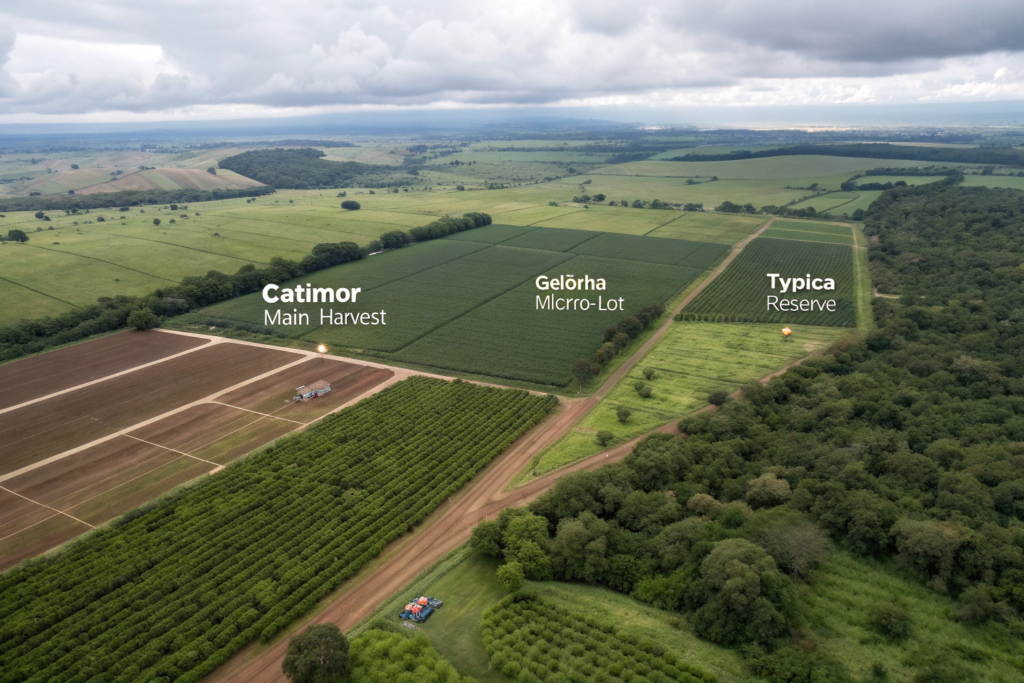
This is where smart farm management comes in. The true strategic role of Catimor is to serve as the reliable, economic backbone of a diversified farm. Its resilience and predictable yield provide a stable income base for the farmer. This financial security then allows the farmer to take risks and experiment with smaller plots of more fragile, exotic, and potentially higher-priced varietals like Geisha or Typica.
Think of it as a financial portfolio. Catimor is the stable, blue-chip stock that guarantees you won't go broke. The micro-lots of Gesha are the high-risk, high-reward tech stocks. Without the security provided by Catimor, a farmer simply couldn't afford to gamble on a delicate varietal that might be wiped out by disease. So, far from limiting variety, Catimor's presence actually enables and subsidizes the cultivation of the very "dazzling" coffees that the specialty market craves.
Does Catimor Have a Place in the Specialty Market?
Yes, unequivocally. While it may not have the delicate floral notes of a top-lot Gesha, a well-processed Catimor absolutely has a place in the specialty coffee world. It is prized for its consistency, full body, and classic, approachable flavor profile (often chocolatey and nutty), making it an exceptional component for blends or a solid single-origin offering for a broad customer base. It consistently scores above the 80-point specialty threshold.
How Does This Diversification Benefit a Buyer?
This diversified farm strategy benefits you directly. It means you can source your reliable, high-volume "workhorse" coffee (Catimor) and your exciting, limited-edition "showstopper" micro-lots from the very same trusted producer. This simplifies your sourcing, strengthens your relationship with the supplier, and gives you a richer, more complete story to tell your customers about the smart, sustainable practices at the farm level.
Conclusion
The advantages of Catimor's disease resistance are not just a minor agricultural detail; they are a cornerstone of a modern, resilient, and responsible coffee supply chain. For the farmer, it means financial stability and a safer working environment. For the planet, it means fewer chemicals and more sustainable practices. And for you, the buyer, it means a more stable supply, more predictable pricing, and the peace of mind that comes from a lower-risk investment.
Catimor is the unsung hero of the specialty coffee world. It provides the reliable foundation that makes the entire system stronger, safer, and more sustainable. It proves that practicality and quality are not mutually exclusive.
If your business depends on a consistent supply of high-quality coffee from a partner who understands how to manage risk from the seed to the shipment, we invite you to learn more about our Yunnan Catimor. It is the bedrock of our promise of stability to you. Please reach out to my colleague, Cathy Cai, at cathy@beanofcoffee.com to discuss how this resilient varietal can become the backbone of your coffee program.