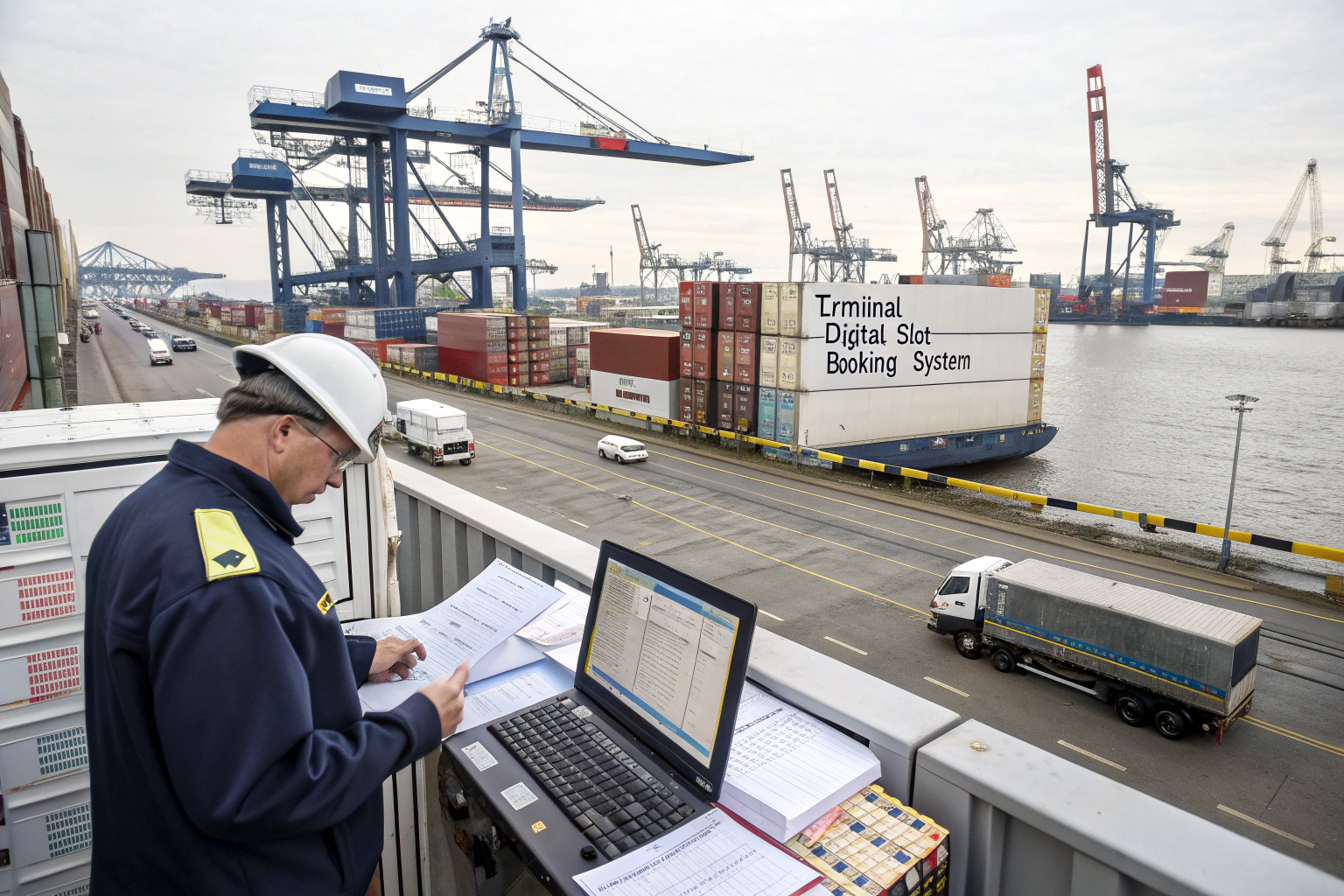
I still cringe when I think about my first direct shipment to Hamburg. It was a 20-foot container of washed Arabica, destined for a specialty roaster in Berlin who had given me a chance despite my inexperience with the German market. The vessel arrived on schedule. The container was discharged. And then, silence. Days passed. My buyer called, his voice tense: "The container is sitting at the terminal, customs has put a hold on it, and no one will tell me why." I spent three desperate days on international calls, waking up at 3 a.m. Yunnan time to reach the Hamburg port authority, only to discover that a single missing field on the customs entry form—the HS code sub-classification for organic product status—had triggered an inspection hold. The container sat for nine days. The demurrage bill ate up my entire margin on the shipment, and the Berlin roaster nearly cancelled the follow-up contract. That failure was the beginning of my education in Hamburg port logistics.
The most effective way to avoid Hamburg port delays for coffee containers is to ensure the customs entry documentation is filed with complete, German-compliant HS code precision before the vessel arrives, to pre-arrange a recognized importer of record with a valid EORI number, and to coordinate the delivery appointment with the terminal's digital slot booking system the moment the container is discharged from the vessel.
Hamburg is not just any port. It is the largest coffee-handling port in Europe, processing over 700,000 tons of green coffee annually. The port's specialized coffee terminals, the warehouses with controlled atmosphere storage, the on-site cupping labs—all of this infrastructure exists because Hamburg is the coffee capital of the European supply chain. But with that volume comes complexity. The customs process is rigorous. The terminal operations are strict. A small paperwork error can cascade into a multi-day hold, and multi-day holds cost hundreds of euros in storage and demurrage fees every single day. Over the years, I have built a systematic approach to Hamburg clearance that has eliminated these delays from our export operations. I want to share that approach with you.
What German Customs Documentation Must Be Perfect Before the Vessel Departs?
The customs clearance window opens not when the vessel docks in Hamburg, but at the moment the container is loaded in Shanghai. I learned this the hard way. The German Zoll, or customs authority, operates through an electronic system called ATLAS, which processes import declarations before the goods physically arrive at the border. The ATLAS system requires specific data elements that are not always required by customs authorities in other countries. If those data elements are missing, incomplete, or contradictory, the system flags the entry for manual review, and manual review means delays.
The critical pre-departure German customs documents are the commercial invoice with a precise six-digit HS code and the organic or conventional status clearly declared, a packing list with the net and gross weights matched to the bill of lading, a certificate of origin, a phytosanitary certificate meeting EU plant health requirements, and, for organic coffee, a valid EU Organic Certificate of Inspection issued by an EU-recognized control body.
The commercial invoice is the document I scrutinize most carefully. German customs expects the Harmonized System code for green coffee to be specific. For Arabica, the code is 0901.11.00. For Robusta, it is 0901.12.00. But the expectation does not stop at the six-digit level. The full eleven-digit Combined Nomenclature code required for EU import declarations distinguishes between certified organic and conventional coffee, and even between decaffeinated and non-decaffeinated. If I ship organic Arabica, the correct TARIC code, which is the EU's integrated tariff code, must be used. I have a printed reference sheet for these codes pinned to the wall above my documentation desk in Baoshan, and my logistics coordinator double-checks the TARIC code against the European Commission's online TARIC database for every single shipment, because the codes can update annually.
Which specific TARIC codes apply to organic versus conventional green coffee?
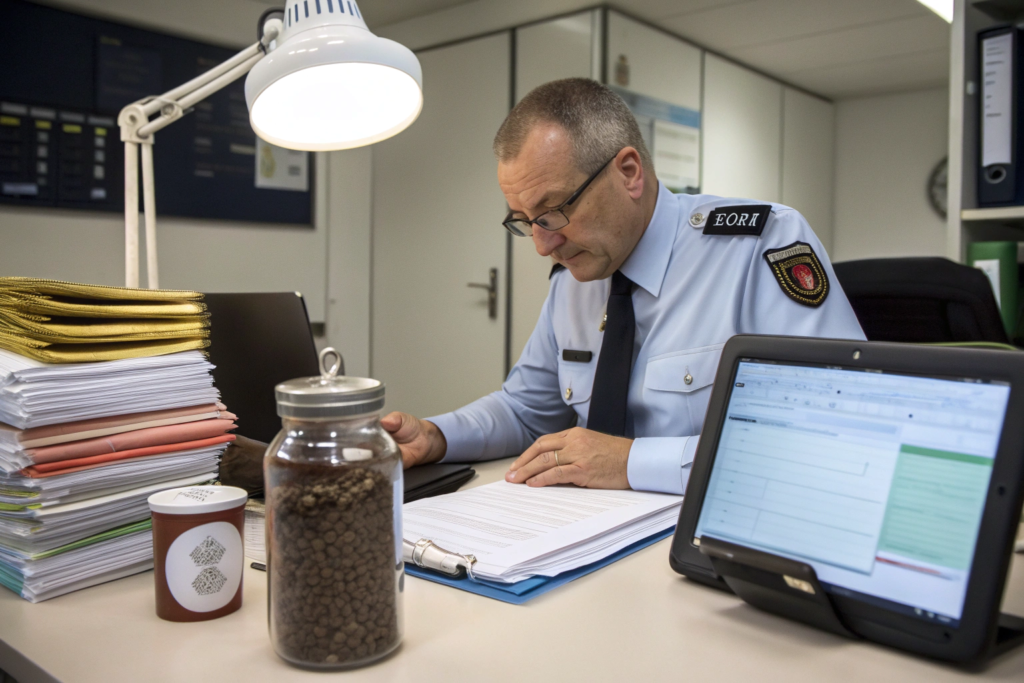
The TARIC code is the ten-digit EU-specific extension of the global HS code. For conventional, non-decaffeinated Arabica, the TARIC code is 0901 11 00 00. For certified organic Arabica with the EU green leaf logo, the code shifts to reflect the organic nature, and the specific sub-code varies slightly depending on the certification body. The correct coding is essential because the duty rate and the regulatory treatment differ. Organic coffee may be subject to different inspection protocols, and if the TARIC code does not match the organic certificate presented, the ATLAS system will generate a mismatch alert.
This mismatch alert is the kind of thing that triggers a physical inspection. I once had a shipment flagged because the organic certificate listed "washed Arabica" as the product description, but the commercial invoice described it as "green coffee beans, Arabica, washed." The wording difference of a few characters—"green coffee beans" versus just "Arabica"—was enough for the system to raise a query. Since that incident, I make sure the product description on the commercial invoice, the packing list, the bill of lading, and the organic certificate are identical, word for word. I literally copy and paste the description from one document to the others. This obsessive consistency satisfies the ATLAS automated checks and keeps our containers off the inspection list. For any buyer importing through Hamburg, I recommend sending a draft of the commercial invoice to the German customs broker for review before the vessel departs Shanghai. A five-minute review on a Monday morning can prevent a five-day hold on a Friday afternoon.
How does the EORI number system work, and who needs one?
EORI stands for Economic Operators Registration and Identification. It is a unique identification number that any business importing goods into the European Union must have. Without a valid EORI number, a customs declaration simply cannot be lodged in the ATLAS system. The container will sit at the terminal, un-cleared, accumulating storage charges until a valid number is provided. I have seen this happen to first-time coffee buyers who did not realize they needed to register with the German customs authority before their first container arrived.
The EORI number belongs to the importer of record, which is usually the coffee buyer in Germany. If the buyer is a GmbH or a registered sole trader with a German tax ID, they can apply for an EORI number through the German customs portal. The process takes a few weeks, so it must be done well in advance of the first shipment. For our DDP shipments, where we act as the importer of record, we use a fiscal representative with a valid German EORI number. This is an arrangement where a specialized service company acts as the customs declarant and tax representative for a non-EU supplier. Setting this up took several months of paperwork and a compliance review by the German tax authority, but once established, it enables us to clear customs under our own commercial control. For a buyer exploring a direct sourcing relationship with a Chinese supplier, one of the first questions I recommend asking is: "Do you have a German fiscal representative with an active EORI number for DDP deliveries?" The answer to that question reveals whether the supplier has genuine Hamburg port experience or is hoping to figure it out on the fly. The EORI system is the foundational layer of EU customs compliance, and no shipment moves without it.
How Does the Hamburg Coffee Terminal's Physical Inspection Process Work?
Hamburg's coffee terminals are not generic container yards. They are specialized facilities with decades of experience handling green coffee. The largest terminal operators—companies that roasters and importers know well—have invested heavily in coffee-specific infrastructure. They have warehouses with controlled temperature and humidity. They have in-house sampling and cupping labs. They understand that coffee is a hygroscopic, odor-sensitive commodity that cannot be stored next to chemicals or strong-smelling cargo. When a container arrives, it is not just another box. It enters a specialized handling stream.
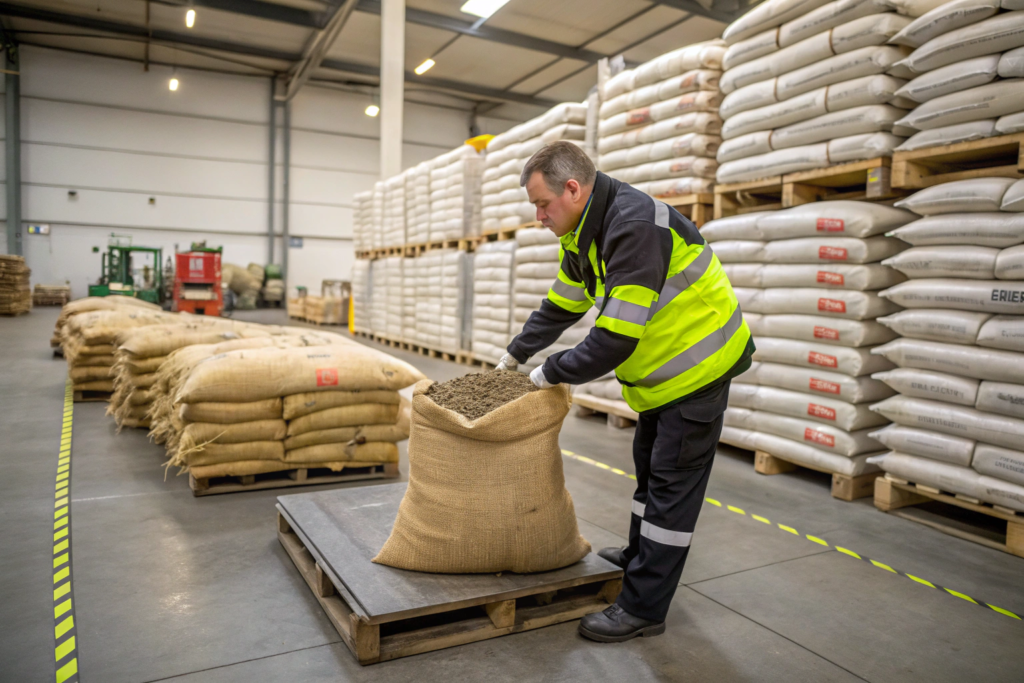
The Hamburg port inspection process for green coffee involves an initial documentary check by the Zoll, followed by a risk-based decision on physical inspection, which, if triggered, requires the container to be moved to a designated inspection area where customs officers, often accompanied by a plant health inspector, open the container, draw representative samples, and physically examine the beans for pest infestation, mold, and conformity with the declared organic or conventional status and the phytosanitary certificate's additional declarations.
The risk profile assigned to a container depends on several factors: the country of origin, the TARIC code classification, the compliance history of the importer, and the specific documentation package. Coffee from China historically faced a higher inspection rate than coffee from traditional EU-partner origins, simply because the trade flow was less established. However, as our shipment history has grown and our compliance record has remained clean, our containers now experience a much lower inspection rate. The ATLAS system learns from history. A clean record is a competitive asset. When an inspection does occur, the physical process is methodical. An inspector, sometimes from the plant health service of the Hamburg state government, physically attends the terminal. The container seal is broken in their presence. They photograph the interior. They extract samples from multiple bags using a trier—a long, hollow metal spike that pierces the jute and extracts a core of beans. The samples are sealed in evidence bags, labeled, and sent to a lab for analysis. The inspection report is generated within a few days, but the container is usually released for delivery sooner if the physical inspection reveals no visible pest or mold problems.
What triggers a plant health inspection on a container of green coffee?
The plant health inspection is triggered by the phytosanitary status of the commodity and the origin country. Under EU plant health regulations, green coffee beans from non-EU countries are classified as a regulated plant product. They must be accompanied by a phytosanitary certificate issued by the national plant protection organization of the exporting country. The certificate must include an additional declaration confirming the consignment is free from specific quarantine pests of concern to the EU. For Chinese coffee, the pests of concern include the coffee berry borer, Hypothenemus hampei, and various fungal pathogens.
The inspection trigger is often the result of a risk algorithm that factors in the pest interception history of coffee shipments from the specific origin in recent months. If several Chinese coffee shipments have been found with quarantine pests in the preceding quarter, the inspection rate for all Chinese-origin coffee rises. This is a collective reputation risk. A single exporter's sloppy shipment can raise inspection rates for every other exporter from the same country. This is why I am so meticulous about pest control on our farm and in our mill. We apply a CO2 fumigation treatment to every container before sealing, not because the buyer requires it, but because I want our individual compliance record to be spotless. We also include a detailed pest monitoring report from our mill's internal inspection program as part of the document package. This supplementary evidence, while not officially required, signals to the German inspector that the consignment has been professionally managed and may reduce the depth of the physical check. The phytosanitary certificate itself must be issued within a specific timeframe—typically no more than 14 days before shipment—and any discrepancy between the certificate and the actual container seal number will trigger an automatic inspection hold. The seal number on the phytosanitary certificate must exactly match the seal number on the bill of lading and the physical seal on the container. This is a detail I triple-check personally before the container departs our mill.
How can a supplier's compliance history speed up future clearances?
The German customs system, through the ATLAS database, builds a compliance profile for every importer and every recurring supplier. This profile is essentially a credibility score. A supplier whose shipments consistently pass documentary checks without errors, and whose containers, when physically inspected, are consistently found to be compliant, receives a progressively lower risk score. A lower risk score means fewer inspections, faster clearance, and lower ancillary costs.
I track our Hamburg clearance times in a spreadsheet. In 2022, our average time from vessel discharge to customs release was six calendar days. By 2024, after two years of error-free documentation and clean physical inspections, the average had dropped to just over two days. The fastest clearance we have achieved was less than 24 hours, for a container where the customs entry was filed five days before arrival and the ATLAS system processed it with zero queries. This improvement translates into real money. Every day of early release saves roughly €75 to €150 in terminal storage fees and a further €100 to €200 in demurrage costs, depending on the shipping line's free-time allowance. Over a year of regular shipments, the savings from a clean compliance history can exceed several thousand euros. More importantly, the reliability attracts buyers. A German roaster who knows that our containers consistently clear Hamburg within 48 hours can schedule their production with confidence. They do not need to maintain a large buffer stock to cover the risk of a delayed container. This reliability is part of the competitive advantage we package into our long-term contracts now.
What Freight and Logistics Partnerships Are Essential for Hamburg Port Access?
The port of Hamburg is a complex ecosystem, and no exporter in Yunnan can navigate it alone. The key is to build the right local partnerships and to manage them actively, not just hand over the file and hope for the best. I have a direct relationship with a Hamburg-based freight forwarder who specializes in coffee imports. This forwarder knows the terminal operators personally, understands the quirks of the ATLAS system, and has a pre-existing relationship with the plant health inspection service. They also have contracts with bonded trucking companies that serve the coffee terminals. This partnership did not come from a Google search. It came from attending the World of Coffee trade show in Berlin and deliberately seeking out logistics providers who had a booth there and who spoke specifically about coffee-handling experience.
Essential Hamburg port logistics partnerships include a coffee-specialist freight forwarder with direct terminal contacts, a German customs broker with ATLAS system expertise and a track record of clearing Chinese-origin agricultural products, a bonded trucking company capable of delivering to the buyer's warehouse within 24 hours of clearance, and, for DDP shipments, a fiscal representative with a valid German EORI number who can act as the importer of record.
The freight forwarder is the orchestrator. They receive the shipping documents from me before the vessel departs Shanghai. They lodge the customs entry with the German broker. They book the delivery slot with the terminal's electronic appointment system. They arrange the truck. They manage the communication with the buyer's warehouse team. I speak to my Hamburg forwarder by video call at least once per quarter, not because there is a problem, but to maintain the relationship and to stay updated on any procedural changes at the port. Recently, the forwarder informed me that the terminal had introduced a mandatory pre-announcement rule for truck arrivals: every truck must be registered in the system at least 24 hours before the pickup time, or the container would not be released to the driver. This rule change was not widely publicized. Without the proactive update from my forwarder, our next shipment would have been delayed by a day simply because our trucker was turned away at the gate. These small, insider-level pieces of information are the value of a specialized local partner.

Why should coffee importers use a forwarder with coffee-specific terminal experience?
A general freight forwarder who handles containers of auto parts, textiles, and occasionally a box of coffee beans will not know the specific handling requirements of the Hamburg coffee terminals. Coffee terminals, unlike general container yards, have specific gate hours for food-grade cargo, specific sampling protocols, and specific procedures for damaged bag assessment. A general forwarder might not know that a container of green coffee cannot be picked up by any bonded truck—the truck must meet food-grade transport standards, meaning the trailer must be clean, dry, and free of any previous cargo residues that could taint the coffee. If the forwarder books a standard truck that just carried a load of industrial chemicals, the terminal can, and will, reject the truck.
Coffee-specific forwarders also know the weight tolerance rules. Green coffee is a relatively heavy commodity. A standard 20-foot container fully loaded with bagged green coffee can approach the maximum gross weight limit for road transport in Germany, which is 44 metric tons including the truck and chassis. A forwarder who does not regularly handle coffee might miscalculate the axle load distribution, causing the truck to be overweight at a roadside check. This would result in a fine, a mandatory cargo redistribution, and a delivery delay. A coffee-specialist forwarder knows the exact truck and chassis combination needed for a full container load of coffee and pre-books that specific equipment type. Partnering with a specialist logistics provider who knows these operational details removes a layer of risk that a generalist provider simply cannot see.
How does the truck appointment system at Hamburg coffee terminals function?
The truck appointment system, known as the "Slotbuchungssystem" or slot booking system, is a digital gate management tool used by all major Hamburg coffee terminals. The system requires the forwarder to pre-book a specific time window—usually a 60-minute or 90-minute slot—for the truck to arrive at the terminal and collect the container. Without a booked slot, the truck is turned away at the gate, and the container remains uncollected. Slots fill up quickly, especially during peak coffee import seasons in late spring and early autumn when many roasters are replenishing inventory after the Northern Hemisphere winter demand cycle.
The slot booking process requires the container number, the customs release reference, and the truck registration number. The forwarder books the slot the moment the container status in the terminal's system changes to "customs cleared" and "released for delivery." I have instructed my Hamburg forwarder to monitor the terminal system twice daily during the clearance window and to book the earliest available slot. The slot booking also integrates with the terminal's internal container retrieval process. When the truck arrives during its booked window, the terminal's yard crane has been pre-alerted and the container is often already staged in the pickup zone, reducing waiting time. A missed or unbooked slot can add one to two days to the delivery timeline simply because the next available slot may not be until the following business day, and Hamburg terminals generally do not operate container pickups on weekends. This scheduling discipline, which might seem like a minor administrative detail, is actually a critical determinant of whether the buyer receives their coffee on Tuesday or on Friday.
How Can an Exporter Manage Post-Clearance Coffee Storage to Prevent Quality Issues?
The successful customs clearance of a container is not the end of the quality management journey. It is a transition point. The coffee has just spent several weeks in a metal box crossing the ocean. It has been subjected to temperature fluctuations, humidity changes, and possibly a period of storage on the terminal where conditions are not climate-controlled. If the beans are immediately delivered to the roaster's warehouse and put into climate-controlled storage, the risk is minimal. But in many cases, particularly for large volume buyers or for coffee that is part of a forward contract, the beans may need to be stored in Hamburg for weeks or even months before final delivery and roasting.
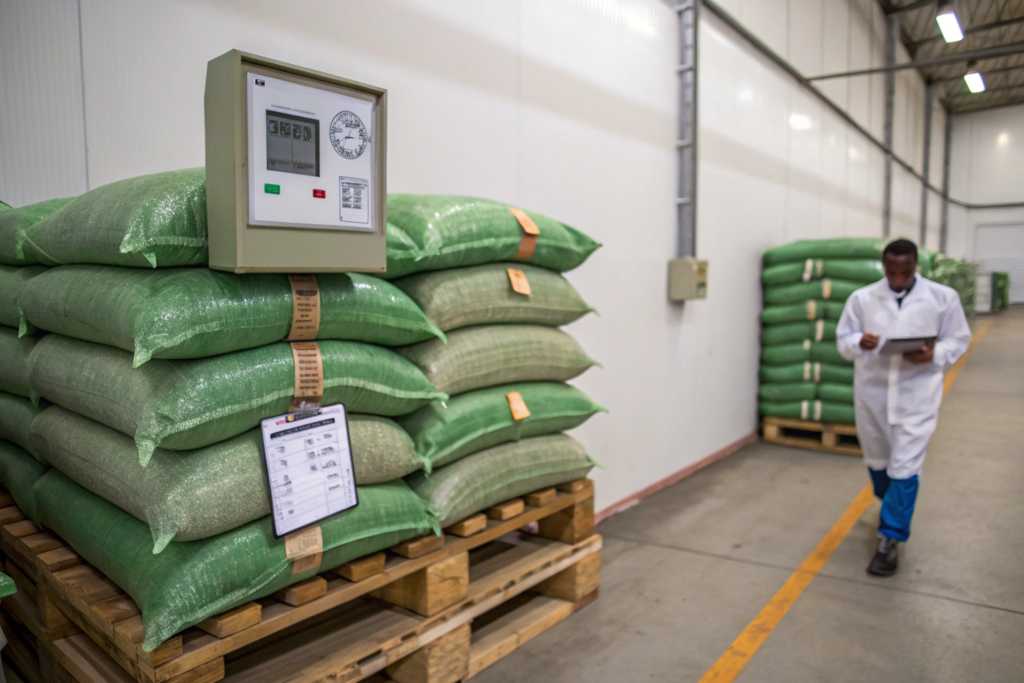
Post-clearance coffee storage in Hamburg requires placement in a coffee-specialist warehouse with controlled humidity below 65% relative humidity, temperature maintained between 15°C and 22°C, physical separation from any odorous commodities, and regular internal sampling and cupping to ensure the bean quality profile remains stable and free from any storage-related defects such as baggy, musty, or phenolic taints.
Hamburg is fortunate to have some of the best coffee warehousing infrastructure in the world. The specialized warehouses operated by companies with decades of green coffee storage experience offer storage conditions specifically designed for green coffee longevity. These warehouses maintain a steady relative humidity, typically between 55% and 62%, which is ideal for preserving the bean's internal moisture content in the 10.5% to 12.0% range without desiccating the bean or encouraging mold growth. They also have strict rules about co-storage. Coffee cannot be stored in the same airspace as spices, chemicals, or any product with a strong odor, because the beans will absorb those odors and the cupping score will reflect it. A coffee that picks up a garlic or chemical taint in storage is commercially ruined, and the loss is usually not covered by standard cargo insurance since it is considered a storage handling issue. When I arrange storage in Hamburg for a DDP shipment that the buyer wants delivered later, I specify in the storage contract the exact humidity and temperature parameters and the co-storage prohibitions, and I require monthly cupping reports from the warehouse's sampling service to be forwarded to the buyer. This transparency keeps the buyer confident that their coffee is not just physically present in Hamburg, but is being actively cared for.
What humidity and temperature levels preserve specialty coffee quality in storage?
The science of green coffee storage points to a narrow window of optimal conditions. Water activity, which is a measure of the freely available water in the beans that microorganisms can use, is the controlling variable. An ideal water activity for green coffee storage is between 0.53 and 0.59. This corresponds roughly to a bean moisture content of 10.5% to 11.5% and an equilibrium relative humidity of the surrounding air in the 55% to 60% range. If the storage environment's relative humidity climbs above 65% for an extended period, the beans will absorb moisture from the air, their water activity will rise above 0.60, and the risk of mold growth increases sharply.
If the storage environment is too dry—below 45% relative humidity—the beans will lose moisture too quickly, the seed structure will become brittle, and the cellular integrity that preserves volatile aromatic compounds will degrade. The coffee will taste flat and papery when roasted, even if no visible damage has occurred. The temperature also matters. Higher temperatures accelerate chemical reactions within the bean, including the degradation of lipids that contribute to body and mouthfeel. A storage temperature consistently above 25°C will noticeably age a green coffee within six months. For long-term storage of high-scoring specialty lots, I prefer temperatures in the 15°C to 18°C range. The Hamburg warehouses I work with offer different storage chambers at different temperature and humidity set-points, and I select the chamber that matches the anticipated storage duration. For a lot that will be delivered to the roaster within four weeks, standard 18°C to 20°C storage is sufficient. For a lot that will be held for six to nine months as part of a forward contract buffer, I pay a modest premium for the cooler, tightly controlled 15°C chamber with continuous humidity recording. The added storage cost is negligible compared to the value loss of a degraded specialty lot.
How can a supplier provide cupping stability reports during extended warehousing?
Extended warehousing creates a communication obligation for the supplier. The buyer, who may be thousands of miles away in their own roastery, cannot physically visit the Hamburg warehouse to check on their beans. They rely on the supplier to provide evidence that the coffee remains in good condition. I provide this evidence in the form of quarterly cupping stability reports. The process is straightforward. Our Hamburg forwarding partner, who holds power of attorney for our stored lots, instructs the warehouse's sampling service to draw a representative sample from the stored pallets. The sample is then cupped by an independent Q-grader in Hamburg, someone who is not affiliated with our company, to ensure objectivity. The cupping report, which includes the aroma, flavor, aftertaste, acidity, body, balance, and overall score, is emailed to the buyer and to me simultaneously.
The first stability report is typically generated three months after the coffee enters storage. If the cupping score and flavor notes are consistent with the pre-shipment sample report, the buyer has peace of mind. If any decline is detected—say, a slight mustiness or a drop in acidity—the report triggers an immediate investigation. The warehouse is inspected, the storage logs are reviewed, and if necessary, the coffee is moved to a different chamber or scheduled for earlier delivery and roasting before further quality degradation occurs. The stability report system transforms extended warehousing from a black box into a managed, transparent process. For the buyer, this level of care is rare and valuable. It signals that the supplier's commitment to quality does not end at the Hamburg dock. It continues until the moment the beans enter the roastery. This kind of after-discharge service is what creates the loyalty that sustains a long-term export relationship through market cycles and seasonal fluctuations.
Conclusion
Avoiding delays at the Hamburg port for coffee bean containers is fundamentally a matter of preparation, precision, and local partnership. The German customs system, with its ATLAS electronic platform and its rigorous TARIC code requirements, rewards meticulous documentation filed early. The Hamburg coffee terminals, with their specialized handling infrastructure and digital slot booking systems, reward forwarders who understand the coffee-specific operational rules. And the post-clearance storage environment rewards suppliers who treat quality preservation as an active, ongoing responsibility rather than a passive assumption.
We have traced the entire Hamburg clearance journey, from the pre-departure documentation check to the physical inspection triggers, from the essential local logistics partnerships to the post-clearance storage and cupping monitoring. Each stage contains potential delays that can be avoided with the right procedures and the right partners. The cumulative effect of getting each stage right is a delivery timeline that a German roaster can count on, and that reliability, in a market as competitive as Europe, is worth more than a marginal price advantage on the beans themselves.
If you are a European roaster or importer currently sourcing from China and experiencing Hamburg port delays, or if you are considering your first container from Yunnan and want to ensure the clearance process is smooth from day one, we at BeanofCoffee can help. Our export operations team, led by Cathy Cai, works directly with our Hamburg coffee-specialist forwarder and can provide a detailed port-to-warehouse timeline, a sample German-compliant documentation package, and a transparent landed cost calculation that includes all terminal handling and clearance fees. Contact Cathy directly at cathy@beanofcoffee.com. Let us make sure your next coffee container enters Germany not with a customs hold, but with a scheduled delivery appointment and a cupping stability forecast.