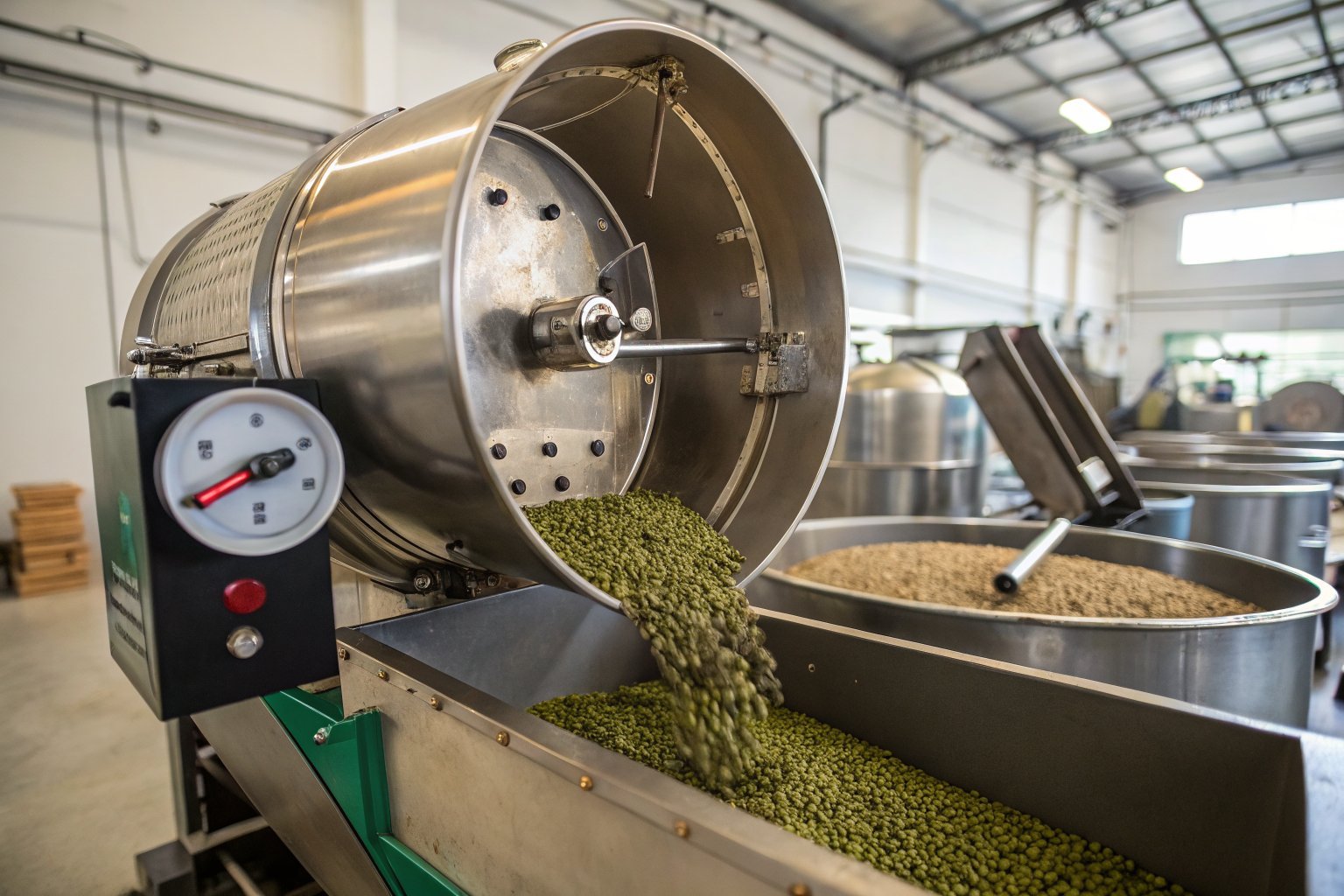
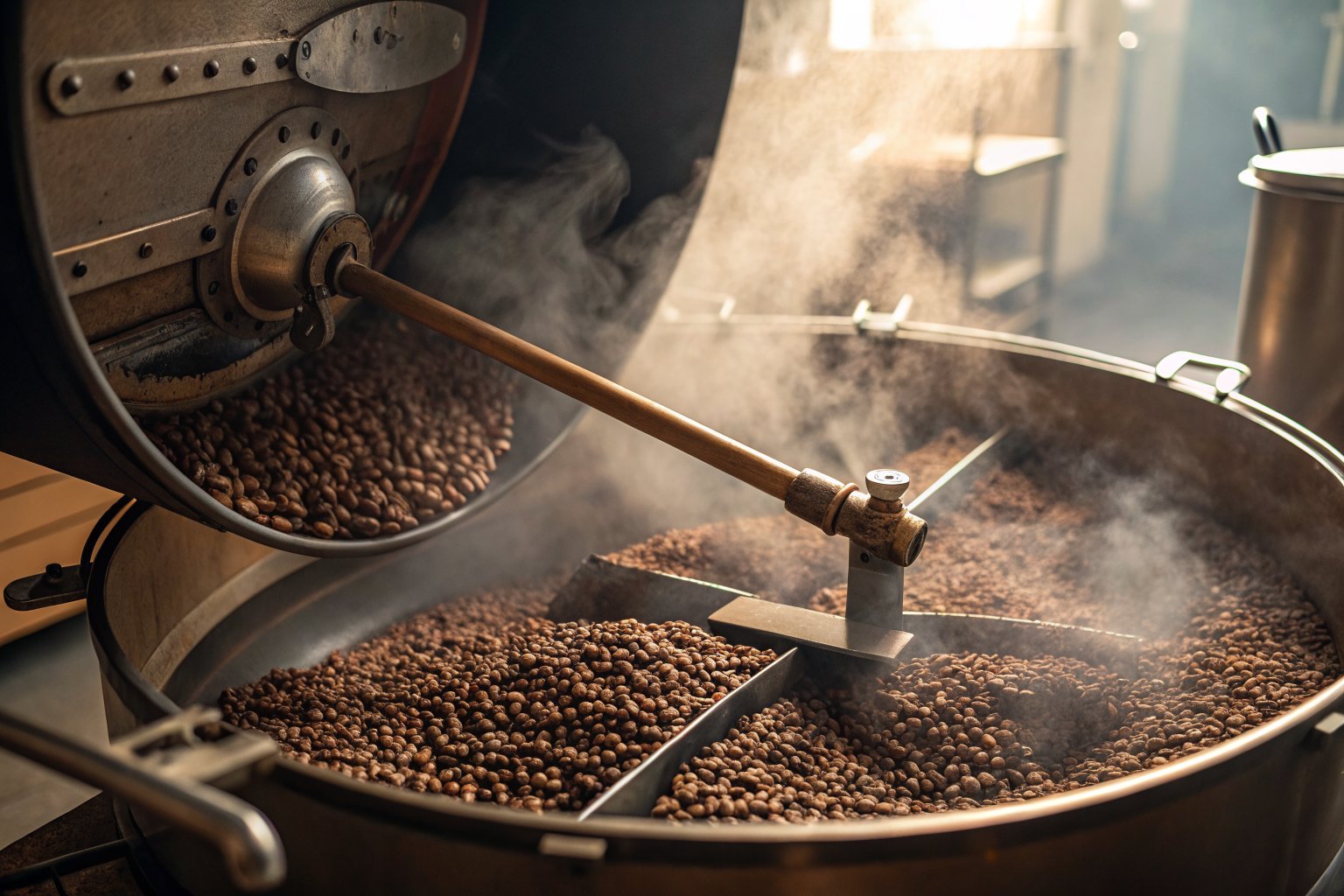
A buyer from Europe visited our Yunnan facility two years ago and asked to see our mechanical drying operation. He had been burned before — literally. His previous supplier had used a gas-fired drum dryer set at 60 degrees Celsius that scorched the outer layer of the beans while leaving the interior under-dried. The beans looked fine on the surface but cupped with a harsh, burnt note that was unmistakable. Mechanical drying is essential for large-volume coffee production, especially in regions with unpredictable weather during harvest season. But it is also one of the easiest places to ruin the quality of your coffee. Let me walk you through the critical temperature limits and the proper techniques to avoid overheating.
Why Is Mechanical Drying Such a Quality Risk?
Mechanical drying accelerates the process that nature does slowly. The risk is that artificial heat, applied too aggressively, damages the bean structure before the interior moisture has time to migrate to the surface. The result is case hardening — a hard, dry outer shell with a wet, under-dried interior — or thermal damage that creates harsh, bitter flavors in the cup.
What Happens to Coffee Beans at Different Temperature Thresholds?
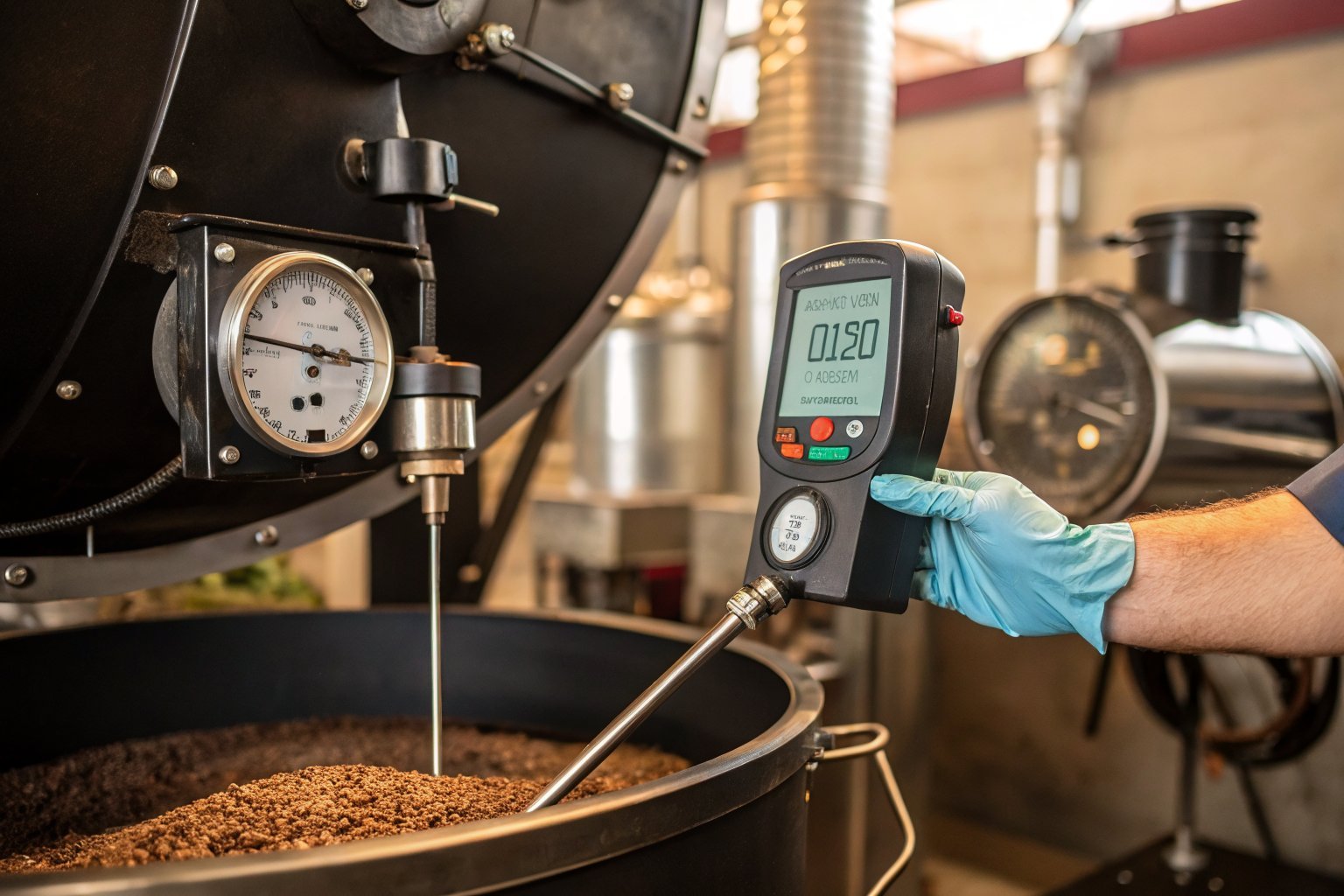
The critical temperature for green coffee drying is 40 to 45 degrees Celsius. Below 40 degrees, drying is slow and safe. Between 40 and 45 degrees, drying proceeds efficiently with minimal quality risk. Between 45 and 50 degrees, the risk of flavor degradation increases significantly. Above 50 degrees, you are losing quality with every degree of temperature increase. The World Coffee Research mechanical drying study tested drying temperatures from 35 to 60 degrees Celsius across multiple Arabica varieties. Coffee dried at 40 degrees Celsius retained 96 percent of its original cupping score. Coffee dried at 50 degrees retained 88 percent. Coffee dried at 60 degrees retained only 72 percent — a 14-point drop from a coffee that could have scored 86 to one scoring 72. That is the difference between specialty and commercial grade.
How Does Overheating Affect the Flavor of the Finished Coffee?
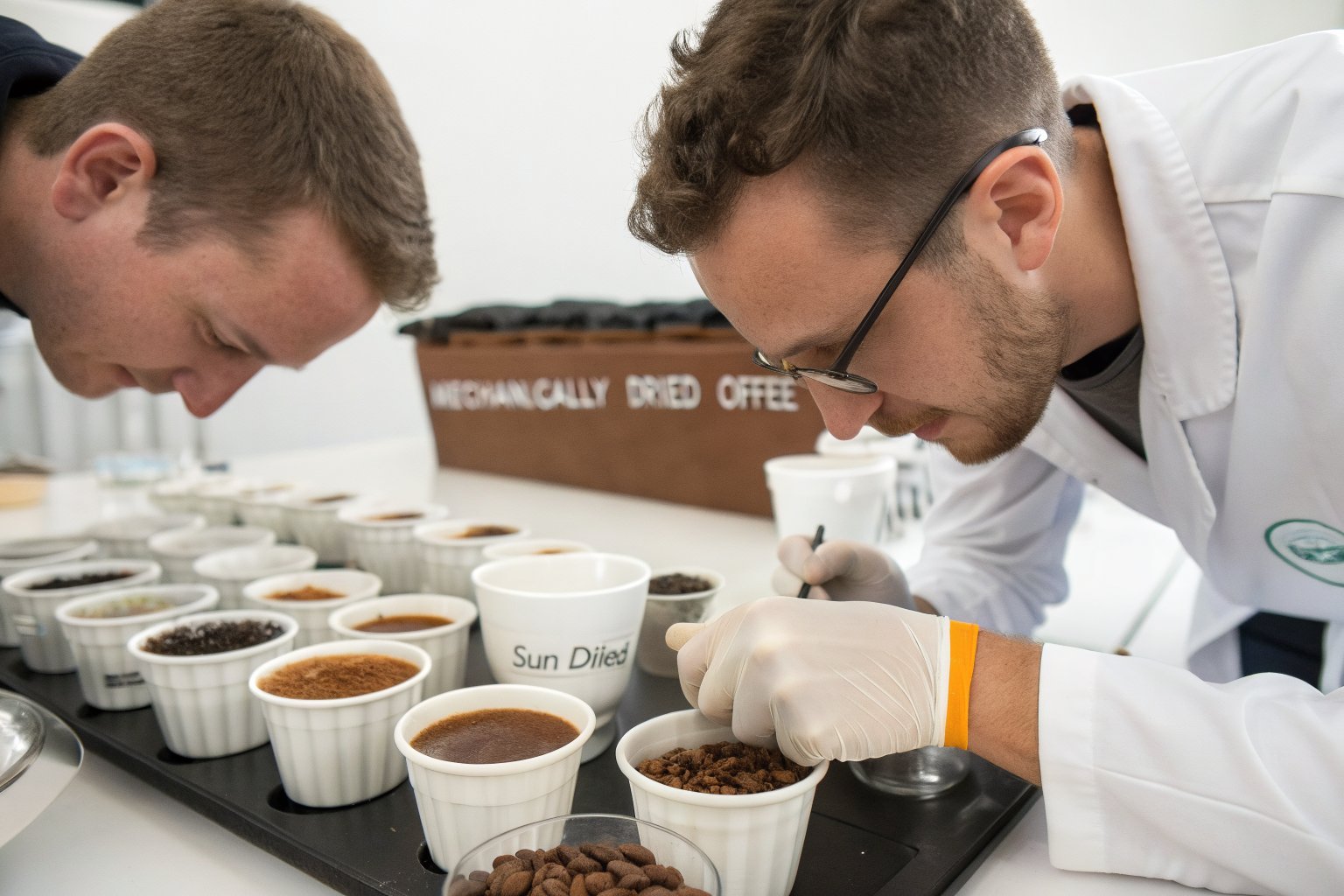
Overheated coffee has a distinct flavor profile. The most common note is a harsh, acrid bitterness that is different from normal roast bitterness. It tastes like burnt wood or ash. The coffee also loses acidity — the bright, fruity notes flatten into a one-dimensional taste. The aftertaste is short and sharp rather than the lingering sweetness of properly dried coffee. The Coffee Quality Institute's drying defect flavor guide identifies three specific markers of heat damage: a burnt note in the dry fragrance, a flat or hollow taste in the mid-palate, and a short, sharp finish. If you cup a coffee and detect all three, the drying process was too aggressive. At Shanghai Fumao, we monitor drying temperature on every batch and never exceed 42 degrees Celsius in our mechanical dryers. The quality difference is measurable — our mechanical-dried lots cup within 0.5 points of our sun-dried lots.
What Is the Correct Temperature and Duration for Mechanical Drying?
The right temperature depends on the moisture content of the incoming coffee and the target final moisture. But there are established best practices that minimize quality loss regardless of the starting point.
What Air Temperature Should You Use for Each Drying Phase?
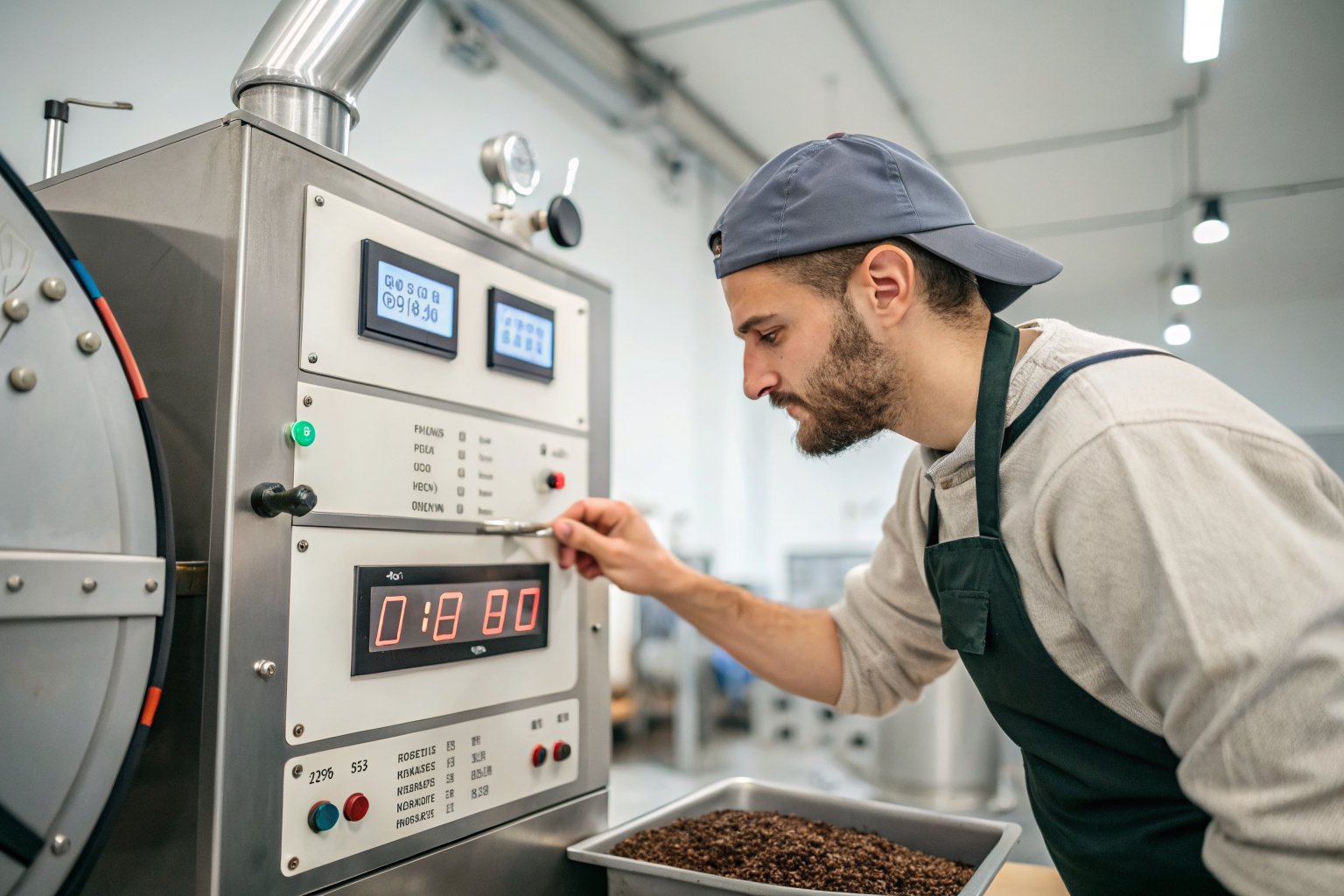
The best practice is a multi-stage drying profile. Start at a lower temperature of 35 to 38 degrees Celsius for the first 4 to 6 hours, when the surface moisture is evaporating. This prevents the surface from drying too fast while the interior is still wet. After the surface moisture is gone, increase to 40 to 42 degrees Celsius for the remainder of the drying cycle. The Specialty Coffee Association's mechanical drying protocol recommends that the temperature never exceed 45 degrees Celsius at any point during the drying process. The total drying time for parchment coffee in a mechanical dryer at 40 to 42 degrees should be 30 to 36 hours, depending on the starting moisture content. Drying faster than 24 hours at any temperature range should be treated with suspicion.
How Do You Know When the Coffee Is Dry Enough Without Over-Drying?
The target final moisture content is 10.5 to 11.5 percent for export-grade green coffee. Over-drying below 10 percent damages the bean structure and reduces flavor potential. Under-drying above 12.5 percent creates mold risk. The only reliable way to know when to stop is to measure moisture content hourly during the last 6 hours of drying. The Green Coffee Association's moisture measurement protocol recommends using a calibrated moisture meter with a probe that penetrates at least 2 centimeters into the bean mass. Surface readings are unreliable because the surface dries faster than the interior. Stop drying when the average of three readings from different depths reads 11.0 percent. The beans will continue to lose another 0.3 to 0.5 percent moisture during the cooling and resting phase.
What Equipment Settings Prevent Hot Spots and Uneven Drying?
The most common cause of overheated beans is not the overall temperature setting. It is hot spots inside the dryer caused by poor airflow or uneven bean distribution.
How Do You Ensure Even Heat Distribution in a Mechanical Dryer?
The critical factor is airflow, not temperature. If the hot air does not reach every bean equally, some beans will overheat while others remain under-dried. The solution is proper bed depth — the layer of coffee in the dryer should be no deeper than 30 to 40 centimeters for stationary bed dryers and 20 to 25 centimeters for rotating drum dryers. The International Coffee Organization's dryer design guidelines specify that the airflow rate should be at least 0.5 cubic meters per minute per square meter of drying surface for parchment coffee. If the airflow is lower, the beans at the bottom of the bed will absorb moisture from the beans at the top, creating uneven drying. At Shanghai Fumao, we use a recirculating batch dryer with adjustable airflow that we set to 0.7 cubic meters per minute per square meter — well above the minimum.
Should You Stir or Rotate the Beans During Drying?
Absolutely. Mechanical drying without agitation produces uneven results. The beans at the bottom of the bed are always hotter and drier than the beans at the top. Rotating drum dryers handle this naturally. Stationary bed dryers require mechanical stirring every 2 to 3 hours. Some high-end dryers use an auger system that continuously moves the beans from the bottom to the top. The Roast Magazine's drying equipment guide recommends stirring every 90 minutes for stationary bed dryers and checking the temperature gradient across the bed after each stir. If the temperature at the bottom is more than 5 degrees higher than at the top, increase the stirring frequency.
How Do You Verify That Coffee Was Dried Properly Before Buying?
You cannot always visit the dryer. But there are ways to check whether a lot was mechanically dried at safe temperatures.
What Laboratory Tests Reveal Drying Damage?
Two tests can reveal overheating. The first is a moisture gradient test: take beans from the surface and the interior of a bag and measure their moisture separately. If the surface beans are significantly drier than the interior beans — more than 0.5 percent difference — case hardening may have occurred. The second test is a cupping specifically looking for the burnt, flat, ashy notes that indicate heat damage. The Coffee Quality Institute's post-drying quality analysis recommends a cupping of the finished green coffee before it is shipped, with specific attention to the dry fragrance and aftertaste categories. If you detect burnt notes in the fragrance or a short, sharp finish, the drying process was too aggressive. Request documentation of the drying temperature logs from your supplier.
What Questions Should You Ask Your Supplier About Their Drying Process?
Ask four questions. What is the maximum drying temperature used? What is the average drying time? How do you measure moisture during the drying process? And can you provide temperature logs for this specific lot? A supplier who can answer all four with data is serious about quality. A supplier who says we just set it and let it run is not controlling the process. The Green Coffee Association's supplier drying questionnaire provides a standard set of questions to ask any new supplier. At Shanghai Fumao, we provide temperature logs and moisture readings for every batch we dry mechanically. We are proud of our drying process and we want buyers to see the data.
Conclusion
Mechanical drying can produce excellent coffee when done correctly, but overheating is a permanent flavor defect that no amount of roasting can fix. The critical rules are simple: never exceed 45 degrees Celsius air temperature, maintain proper airflow and bed depth, stir the beans regularly, and measure moisture hourly during the final drying phase. At 40 to 42 degrees Celsius with a 30 to 36 hour cycle, mechanical drying preserves cupping scores within 0.5 points of sun-dried coffee. At BeanofCoffee, we dry our mechanical batches at 40 to 42 degrees Celsius with continuous rotation and hourly moisture checks. The result is coffee that tastes as clean and sweet as our sun-dried lots, with the consistency that only temperature-controlled drying can provide. Contact Person: Cathy Cai Email: cathy@beanofcoffee.com Website: https://beanofcoffee.com/