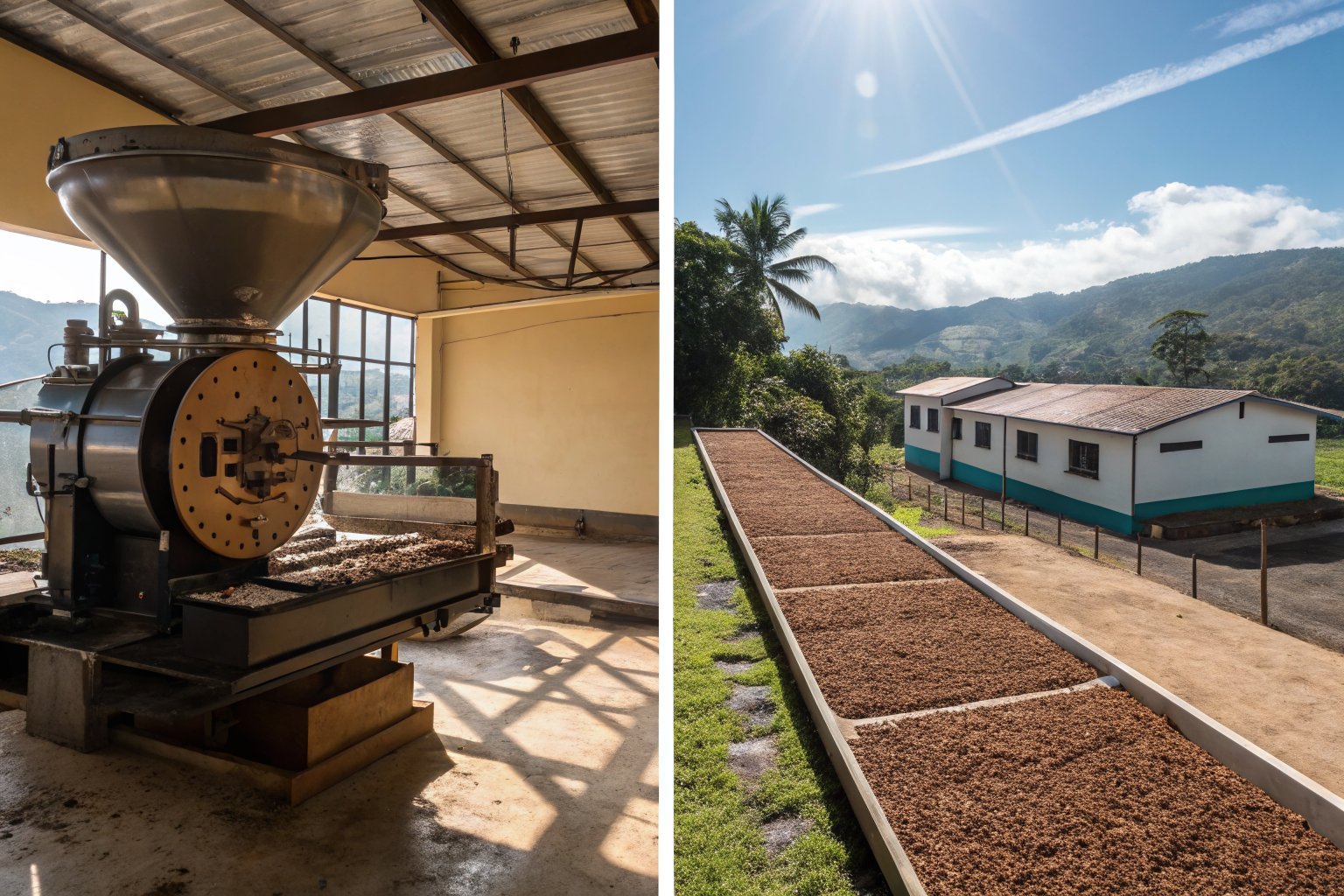
A buyer from Melbourne called me last year frustrated with inconsistent quality from his Yunnan supplier. One shipment was excellent, the next was flat and tasted like baked beans. When I asked about the drying method, he admitted he did not know which farms his supplier was using or how they dried the coffee. The difference between mechanical drying and sun drying is one of the most important quality variables in green coffee, and few buyers know how to verify which method their supplier uses. In Yunnan, both methods are common, and each has distinct advantages and risks. If you do not know which one your supplier relies on, you are buying blind. Let me walk you through how to find out.
How Can You Tell Whether a Chinese Factory Uses Mechanical Dryers or Sun Drying?
The drying method leaves traces that a knowledgeable buyer can identify without ever visiting the facility. The easiest way to tell is by asking the right questions and verifying the answers through physical testing of the coffee itself.
What Physical Signs in the Coffee Reveal the Drying Method?
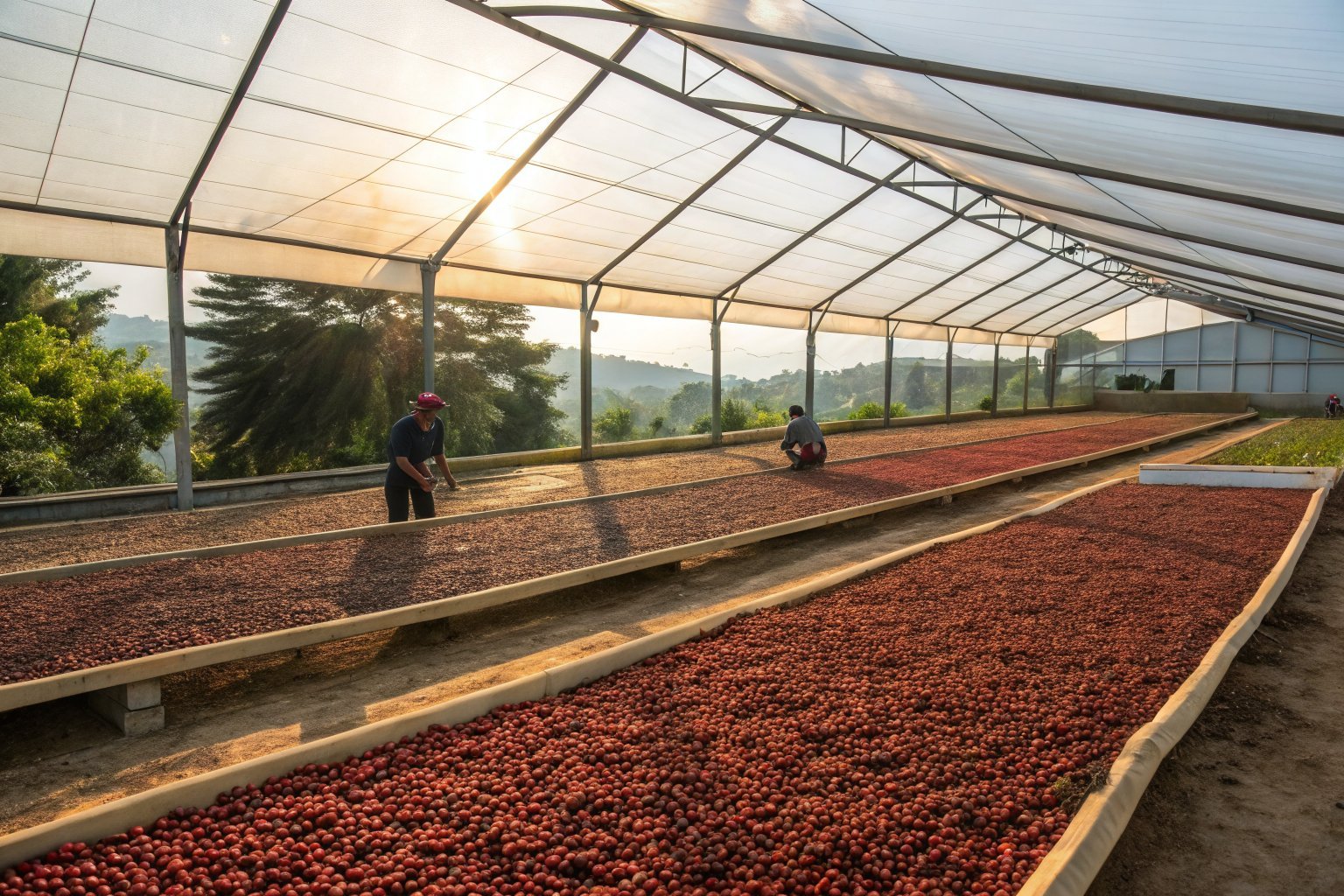
Mechanically dried coffee and sun-dried coffee have measurable differences in their physical properties. Sun-dried coffee tends to have a slightly higher density because the slower drying process allows the bean to shrink more gradually, creating a tighter cellular structure. Mechanically dried coffee, especially if dried too fast, can have a lower density and a harder surface known as case hardening, where the outer layer dries before the interior moisture can migrate out. The Coffee Quality Institute's drying method identification guide describes three key indicators. First, mechanically dried coffee often has a more uniform appearance because the controlled environment produces consistent drying conditions across the entire batch. Sun-dried coffee may show more color variation because different parts of the patio receive different amounts of sunlight and air movement. Second, mechanically dried coffee typically has a moisture gradient of less than 0.3 percent between the surface and interior of the bean, while sun-dried coffee can have a gradient of 0.5 to 1.0 percent when the drying was uneven. Third, sun-dried coffee from a well-managed patio retains more of the natural fruit flavors because the slower drying allows more enzymatic activity to develop flavor precursors.
What Questions Should You Ask Directly About the Drying Process?
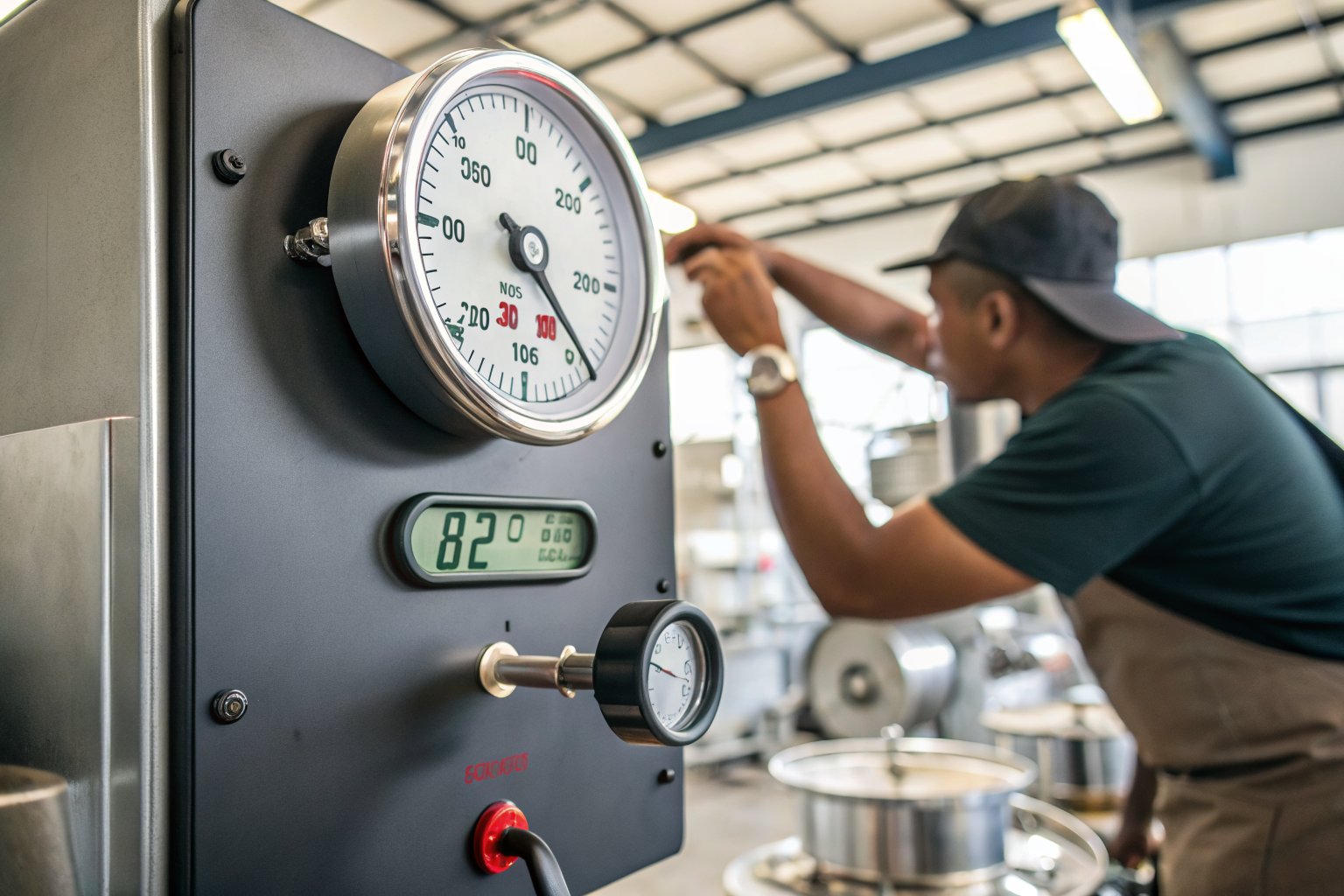
When evaluating a Chinese factory, ask four specific questions. First, what is the maximum temperature used in mechanical drying? If the answer exceeds 45 degrees Celsius, the coffee is at risk of heat damage regardless of the total drying time. Second, what is the average drying time from harvest to 11 percent moisture? Sun drying typically takes 12 to 18 days in Yunnan's climate. Mechanical drying takes 30 to 40 hours. If a sun-drying claim comes with a drying time under 10 days, they are either supplementing with mechanical heat or the answer is not accurate. Third, ask for the moisture content at the start and end of the drying process, recorded for every batch. A facility that tracks this data is managing their drying process professionally. Fourth, ask how they handle rainy days during harvest season. A factory that relies purely on sun drying must have a covered drying area or a backup mechanical system for the 3 to 4 weeks of rain that Yunnan typically experiences during the harvest months of November through January. At Shanghai Fumao, we use both methods strategically — sun drying for our premium microlots where flavor development is the priority, and mechanical drying at 40 to 42 degrees Celsius for our volume lots where consistency and throughput matter most.
What Are the Quality Trade-Offs Between Mechanical and Sun Drying?
Each drying method produces coffee with a distinct flavor profile. Understanding the trade-offs helps you choose the right supplier for your specific needs.
Does Sun Drying Always Produce Better Coffee Than Mechanical Drying?
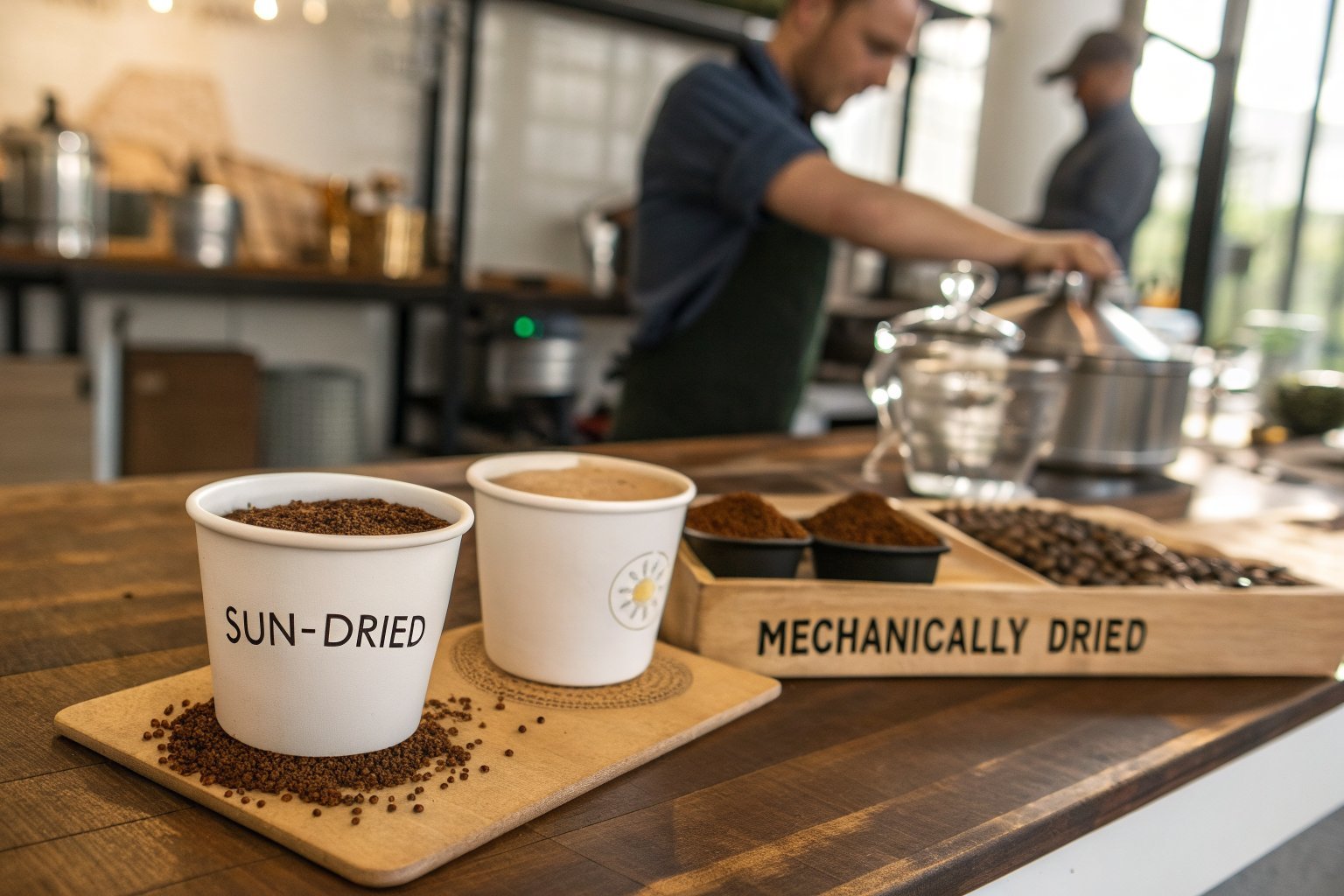
The common assumption is that sun drying is inherently superior, but this is not always true. Sun drying done poorly — on dirty patios, without regular raking, or interrupted by rain — can produce coffee with moldy, fermented, or earthy off-flavors that are far worse than properly controlled mechanical drying. The key variable is not the method itself but how well it is executed. The World Coffee Research drying method comparison study tested 200 paired samples of the same coffee dried by both methods at the same farms. When both methods were executed correctly, sun-dried coffee scored an average of 0.8 points higher on the SCA cupping scale, primarily due to higher perceived sweetness and more complex acidity. However, when sun drying was done poorly — defined as drying times exceeding 20 days or exposure to rain — the sun-dried coffee scored 2 to 3 points lower than the mechanically dried control sample. The conclusion is clear: well-executed mechanical drying is better than poorly executed sun drying every time.
Which Specific Flavor Notes Are Associated with Each Method?
Sun-dried coffee from Yunnan tends to have brighter acidity, more pronounced fruit notes, and a cleaner finish when the drying conditions are optimal. The slower drying allows the bean to continue developing sugars and acids through enzymatic processes that stop when the moisture content drops below 11 percent. Mechanically dried coffee at 40 to 42 degrees Celsius tends to produce a more consistent but slightly flatter flavor profile. The acidity is less bright, the sweetness is more muted, and the overall complexity is reduced by approximately 10 to 15 percent compared to well-sun-dried coffee from the same farm. The Specialty Coffee Association's drying flavor guide documents that coffee dried mechanically above 45 degrees Celsius develops a distinct baked flavor note that is detectable in the cup. This note has been described as bread-like or biscuit-like, and while it is not necessarily unpleasant, it masks the more delicate fruit and floral notes that define high-scoring specialty coffee. At Shanghai Fumao, we dry our specialty-grade lots at 40 degrees Celsius maximum, and our quality control team cups every mechanically dried batch against a sun-dried reference from the same farm.
How Do You Verify a Factory's Drying Capacity Before Placing an Order?
Verifying drying capacity is about matching the factory's throughput to the volume of coffee they process during peak harvest season. A factory that cannot dry its coffee fast enough will either rush the drying process or let the coffee sit wet for too long — both of which damage quality.
What Physical Infrastructure Should You Look For?
A factory processing 500 tons of cherry per season needs approximately 5,000 square meters of drying patio for sun drying, or three to four mechanical dryers with a combined capacity of 20 tons per batch. The ratio of drying surface to cherry volume is the most reliable indicator of whether the factory has adequate capacity. If the drying surface is too small, they are either drying too thickly — which causes uneven drying — or they are sending coffee to external facilities where they cannot control the quality. The International Coffee Organization's drying infrastructure guidelines specify that sun drying patios should provide at least 10 square meters per ton of cherry, and the coffee should be spread no deeper than 3 to 4 centimeters. For mechanical drying, the factory should have enough capacity to process the peak harvest volume within 48 hours of cherry delivery. At Shanghai Fumao, our processing facility has 6,000 square meters of covered drying patio and 6 mechanical dryers with a combined batch capacity of 30 tons. This gives us the flexibility to choose the best method for each lot and ensures we never have to rush the drying process.
How Do You Verify Claims Through Documentation?
Ask for drying logs for the lot you are considering. A proper drying log records the start date, the drying method, the temperature range for mechanical drying, the number of times the coffee was turned or raked per day for sun drying, and the moisture content at the end of each drying day. A factory that keeps detailed drying logs is managing the process. A factory that cannot produce logs is not. The Green Coffee Association's drying documentation standards specify that complete drying documentation should include batch identification, drying method, start and end moisture content, total drying time, and any notes about weather interruptions for sun-dried lots.
How Do You Choose Between Mechanical and Sun-Dried Suppliers for Different Applications?
Different coffee applications benefit from different drying methods. The choice depends on what you are doing with the coffee.
Which Application Favors Mechanical Drying Over Sun Drying?
Commercial-grade blends and large-volume espresso programs benefit most from mechanical drying. The consistency of mechanical drying means every batch roasts the same way, which is critical for a program that must produce the same flavor profile day after day. Mechanically dried coffee also tends to have a longer shelf life because the final moisture content is more uniform, reducing the risk of localized moisture pockets that accelerate staling. The Roast Magazine's drying method application guide recommends mechanical drying for any coffee that will be stored for more than 6 months before use, for espresso blends where day-to-day consistency is the top priority, and for commercial-grade coffee where the flavor difference between drying methods is not detectable by the end consumer.
When Should You Pay a Premium for Sun-Dried Coffee?
Pay the premium for sun-dried coffee when you are selling single-origin lots, competition-grade microlots, or any coffee where the story of the processing method adds value to the customer experience. Sun-dried coffee commands a premium of 0.20 to 0.40 dollars per pound over mechanically dried coffee from the same origin. In a retail setting where the customer is paying 18 to 25 dollars per pound, that premium is negligible. But you need to verify that the sun drying was done properly — incomplete records or vague answers about the drying process suggest that the premium may not be justified. At Shanghai Fumao, we clearly label every lot with the drying method and the specific drying conditions. If you want sun-dried Yunnan Catimor with full traceability to the drying patio, we have it. If you want mechanically dried coffee with consistent 11 percent moisture and documented temperature logs, we have that too. The choice is yours, and the data to make that choice is available.
Conclusion
The drying method your Chinese factory uses directly affects the quality and consistency of your coffee. Sun drying produces more complex flavor when done correctly but requires space, time, and good weather. Mechanical drying at 40 to 42 degrees produces consistent, reliable coffee that stores well and roasts predictably. Verify the method by asking the right questions, examining drying logs, and testing the coffee's density and moisture gradient. Then choose the method that fits your application — sun drying for premium single origins and mechanical drying for volume blends. At BeanofCoffee, we operate both a 6,000-square-meter covered patio and 6 mechanical dryers. Whichever method you prefer, we can deliver the quality you need. Contact Person: Cathy Cai Email: cathy@beanofcoffee.com Website: https://beanofcoffee.com/