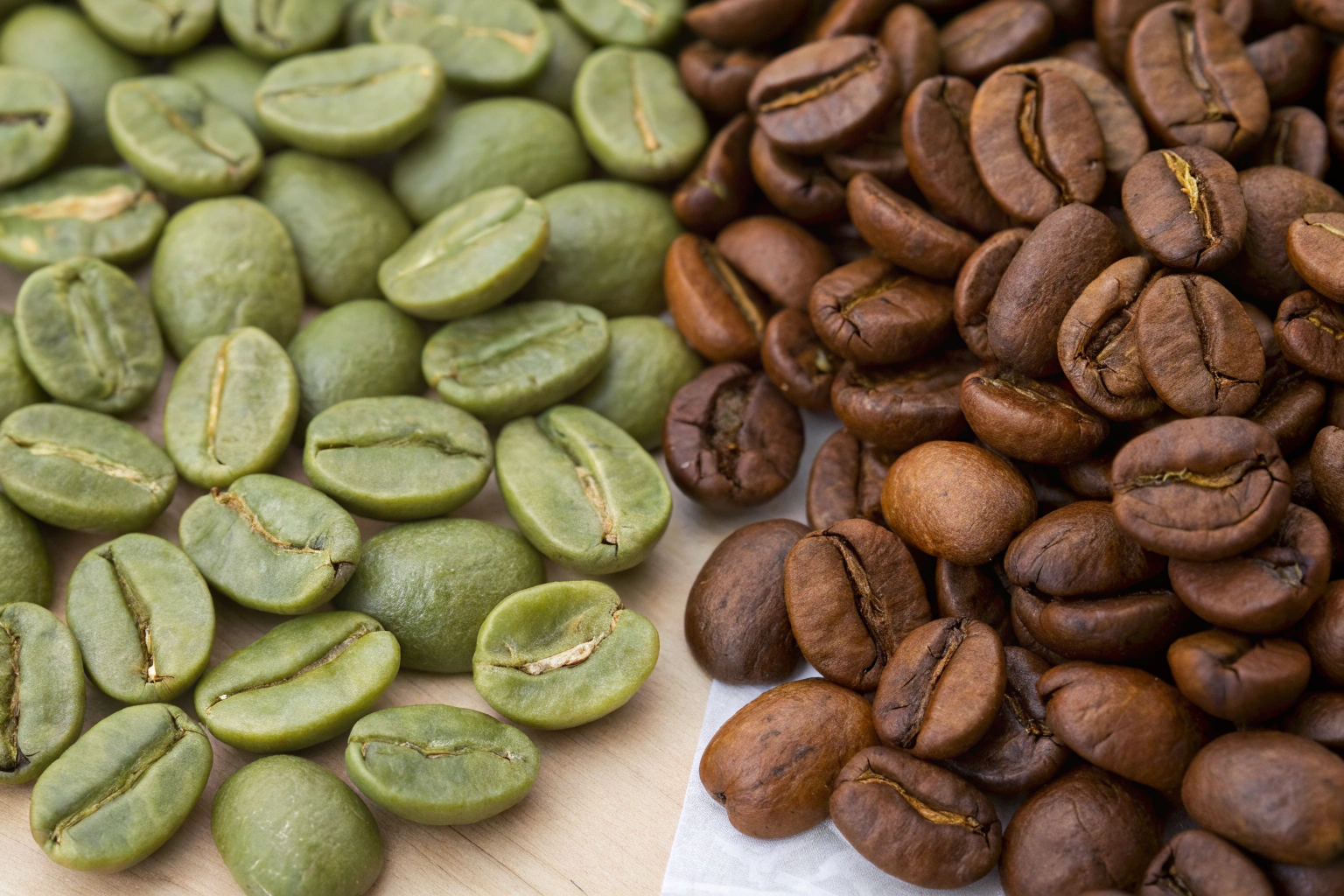
I was standing in our cupping lab in Baoshan a few months ago, preparing a sample roast for a visiting buyer, when he asked me a question I had never been asked before. He picked up a handful of green Arabica beans from the sample table, rolled them in his palm, and said, "What is actually in these right now, before you roast them? And how much of it survives the roaster?" I started to answer, then stopped. I realized I could describe the chemical transformation of roasting in detail—the Maillard reaction, the caramelization of sugars, the development of volatile aromatics. But I could not give him a clear, direct answer about the nutritional content of green coffee versus the roasted coffee he would eventually serve his customers. That moment sent me down a research path that changed how I think about what we grow.
Green coffee beans and roasted coffee beans are chemically and nutritionally distinct products derived from the same seed. Green coffee is rich in chlorogenic acids, a group of polyphenol antioxidants that are partially degraded during roasting, and it contains higher levels of trigonelline and certain B vitamins. Roasted coffee has lower chlorogenic acid content but develops melanoidins, complex antioxidant compounds formed during the Maillard reaction that are not present in green beans. Caffeine content is largely stable across both forms, though slight losses can occur at very dark roast levels. The key nutritional difference is not that one form is healthier than the other, but that they deliver different bioactive compounds with different potential health effects, and understanding this distinction is increasingly important for coffee brands marketing functional benefits.
I now include this information in the technical documentation we provide to clients who are developing functional coffee products, marketing their coffee's antioxidant content, or simply wanting to understand the product they sell at a deeper level. Here is what I learned, broken down into the questions that matter most for coffee professionals.
What Are the Key Antioxidant Compounds in Green Coffee That Degrade During Roasting?
The most important nutritional compound in green coffee, and the one that has driven the entire green coffee extract supplement industry, is chlorogenic acid. This is not a single molecule but a family of related polyphenol compounds formed by the esterification of caffeic acid and quinic acid. In the living coffee seed, chlorogenic acids serve as a defense mechanism against pests, oxidative stress, and UV damage. When the seed is roasted, these compounds undergo a dramatic transformation.
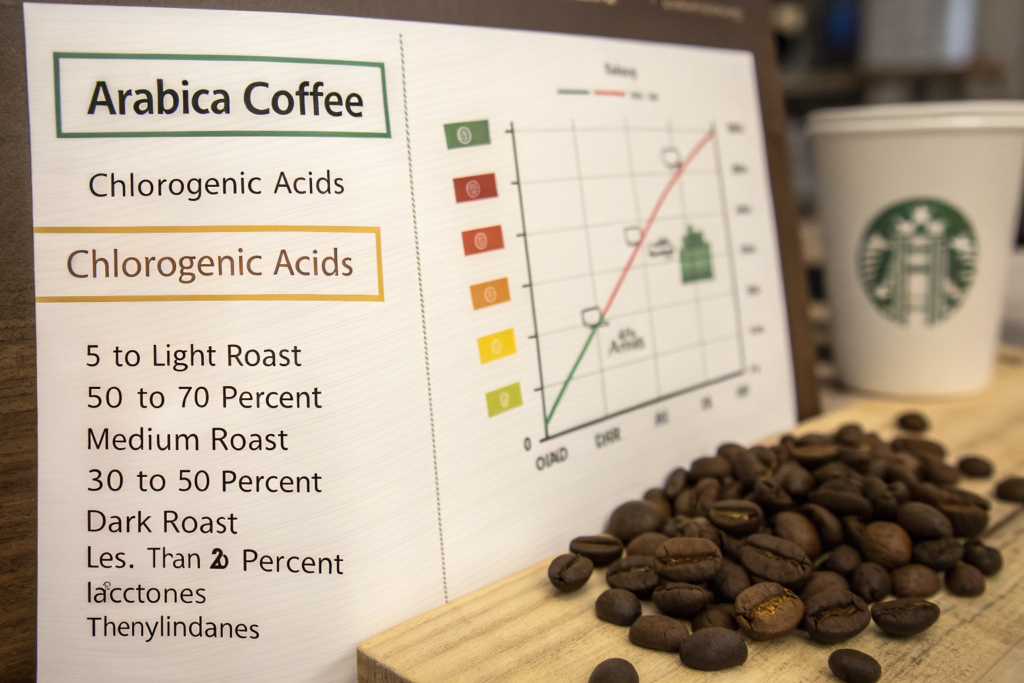
Green Arabica coffee typically contains 5 to 10 grams of chlorogenic acids per 100 grams of dry matter, depending on the variety, altitude, and growing conditions. During roasting, chlorogenic acids degrade progressively. A light roast may retain 50 to 70 percent of the original chlorogenic acid content. A medium roast retains 30 to 50 percent. A dark roast may retain less than 20 percent. The degradation is not simply destruction. Some chlorogenic acids convert to chlorogenic acid lactones, which are formed through the loss of a water molecule and have their own biological activity. At darker roast levels, these lactones further degrade into phenylindanes, which contribute to the bitter taste of dark-roasted coffee. What begins as a polyphenol antioxidant in the green bean becomes a series of transformation products in the roasted bean, each with different properties.
I have had clients who market their coffee specifically on chlorogenic acid content ask us for green coffee with unusually high CGA levels. This requires selecting specific varieties grown at high altitude, where the plant produces more of these compounds in response to environmental stress. Our high-altitude blocks consistently test higher in chlorogenic acids than our lower blocks, a pattern that is well-documented in coffee science. The Coffee Chemistry research database provides detailed information on chlorogenic acid structures and degradation pathways, and the Journal of Agricultural and Food Chemistry is the primary source for peer-reviewed research on coffee polyphenol chemistry.
How do different roast levels affect the total antioxidant capacity of coffee?
Total antioxidant capacity, measured by assays like ORAC or FRAP, does not simply decline with roasting. It shifts in composition. Green coffee's antioxidant capacity comes primarily from chlorogenic acids and related polyphenols. Light to medium roasts show antioxidant capacity from a combination of residual chlorogenic acids and newly formed melanoidins. Dark roasts lose most of the chlorogenic acids but gain substantial melanoidin content. In some studies, medium roasts show higher total antioxidant capacity than either green coffee or dark roasts, because they contain a balance of both types of antioxidants. The takeaway for a coffee brand is that a medium roast may be the optimal choice for marketing antioxidant content, depending on the specific compounds being highlighted.
What are melanoidins and why do they matter in the nutritional comparison?
Melanoidins are brown, nitrogen-containing polymers formed during the Maillard reaction between amino acids and reducing sugars. They are not present in green coffee. They are created entirely during roasting. Melanoidins contribute to the brown color of roasted coffee, the body of the brew, and a significant portion of its antioxidant activity. They also have dietary fiber-like properties, as they are largely indigestible and can reach the colon, where they may act as prebiotics by supporting beneficial gut bacteria. This is a nutritional benefit of roasted coffee that does not exist in green coffee.
How Does the Roasting Process Change the Vitamin and Mineral Profile of Coffee?
Coffee is not a significant source of most vitamins and minerals in the human diet. A cup of coffee is not replacing a meal or a multivitamin. However, coffee does contain several micronutrients that change during roasting, and understanding these changes is relevant for brands that emphasize the natural nutritional content of their products.
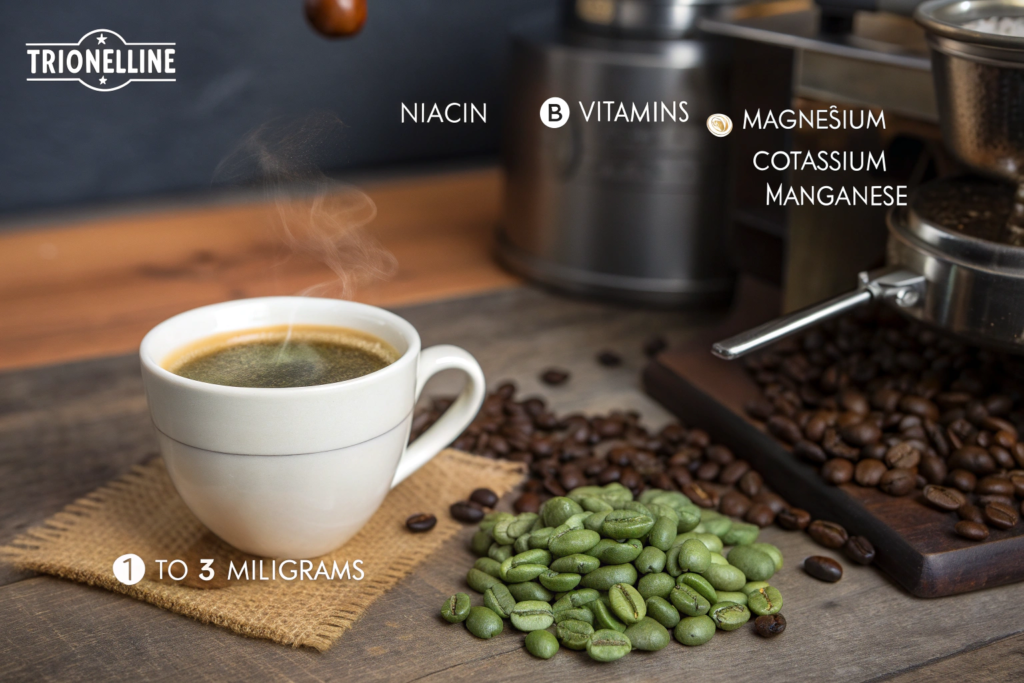
Green coffee contains measurable levels of several B vitamins, including niacin, B3, which is present in the form of trigonelline, a precursor that converts to niacin during roasting. Green coffee also contains small amounts of magnesium, potassium, and manganese, minerals that are relatively stable during roasting and survive into the brewed cup. The most significant nutritional transformation is the conversion of trigonelline to niacin. A medium roast can produce a cup of coffee containing 1 to 3 milligrams of niacin, which represents 6 to 19 percent of the adult recommended daily intake, depending on the country's dietary guidelines. This conversion is one of the few examples where roasting actually creates a nutritionally significant compound rather than degrading one.
I find this particular detail fascinating, and I share it with clients who are building content around the natural health benefits of their coffee. Niacin is an essential nutrient. It supports energy metabolism, nervous system function, and skin health. The fact that a simple cup of coffee can provide a meaningful percentage of the daily requirement, and that this nutrient is created during the roasting process, is a compelling story point that many coffee brands overlook entirely.
Which vitamins and minerals in coffee survive the roasting process intact?
The minerals in coffee—potassium, magnesium, manganese, and trace amounts of calcium and zinc—are largely unaffected by roasting temperatures. They are heat-stable elements that survive the roaster and extract into the brewed cup. Potassium is the most abundant mineral in brewed coffee, with a typical cup containing 60 to 120 milligrams. The B vitamin niacin, as discussed, actually increases during roasting. Other vitamins, such as small amounts of vitamin E in the coffee oil and trace B vitamins, may partially degrade but are present in such small quantities in green coffee that the nutritional significance is minimal regardless of roast level.
What happens to the dietary fiber content of coffee during roasting?
Green coffee beans contain significant amounts of polysaccharides, including cellulose, arabinogalactan, and galactomannan, which function as dietary fiber in human digestion. During roasting, these polysaccharides are partially degraded and transformed. Some become more soluble, contributing to the body and mouthfeel of the brewed coffee. Some become incorporated into melanoidins. A brewed cup of coffee contains approximately 0.5 to 1 gram of soluble dietary fiber per cup, depending on the roast level and the brewing method. This is not a large amount compared to fruits, vegetables, or whole grains, but it is a measurable contribution that is often overlooked in nutritional discussions of coffee.
What Bioactive Compounds Are Unique to Roasted Coffee and How Are They Formed?
The roasting process is not simply a subtraction, removing compounds from green coffee. It is a transformation that creates entirely new molecules that did not exist in the raw bean. These compounds have their own biological activities and contribute to the unique nutritional profile of roasted coffee.
The bioactive compounds unique to roasted coffee are primarily formed through three chemical pathways: the Maillard reaction between amino acids and sugars, which produces melanoidins and hundreds of volatile aroma compounds; the degradation of chlorogenic acids into lactones and phenylindanes; and the pyrolysis of trigonelline into niacin and various pyridine derivatives. The most nutritionally significant of these are the melanoidins, which act as antioxidants and potential prebiotics, and the niacin produced from trigonelline. Additionally, roasted coffee develops a complex profile of volatile organic compounds, over 1,000 of which have been identified, that are responsible for the aroma and flavor of coffee. While these volatiles are not nutrients in the traditional sense, they contribute to the overall sensory experience and stimulate digestive processes through the cephalic phase of digestion.
I think about this every time I walk through our dry mill and smell the green coffee, which has a grassy, vegetal scent, and then walk into the cupping lab where freshly roasted coffee fills the air with caramel, chocolate, and fruit notes. The difference between those two smells is a catalog of chemical transformations, each of which represents a compound that either existed in the green bean and was modified, or was created entirely during roasting. The Specialty Coffee Association's research library provides accessible summaries of coffee chemistry for industry professionals, and the Food Chemistry journal publishes primary research on melanoidins and Maillard reaction products in coffee.
What are the potential health effects of melanoidins in brewed coffee?
Melanoidins have been studied for several potential health effects. Their antioxidant activity helps scavenge free radicals in the body, though the extent to which this translates to health benefits is still an active area of research. Their dietary fiber-like properties mean they can reach the colon undigested, where they may be fermented by gut bacteria, producing short-chain fatty acids that support colon health. Some studies suggest melanoidins may have antimicrobial properties and may bind to certain minerals, affecting their bioavailability. The research is evolving, and no single compound should be marketed as a miracle ingredient. But for a coffee brand that wants to ground its health messaging in science, melanoidins are a well-documented class of bioactive compounds with plausible mechanisms of benefit.
How does the caffeine content change, if at all, between green and roasted coffee?
Caffeine is remarkably stable during roasting. The sublimation point of pure caffeine is 178 degrees Celsius, well above typical roasting temperatures that peak around 200 to 220 degrees Celsius, but caffeine is protected within the bean matrix and does not sublimate significantly under normal roasting conditions. Light, medium, and dark roasts contain essentially the same amount of caffeine per bean. The common belief that dark roasts have less caffeine is a misunderstanding. Dark roasts may have slightly less caffeine per scoop because the beans have expanded and lost density, so fewer beans fit in a given volume. Per bean, the caffeine is the same. This is an important distinction for brands making caffeine claims.
How Can a Coffee Brand Ethically Market the Nutritional Differences Without Misleading Claims?
The nutrition and wellness trend in coffee is powerful. Green coffee extract supplements. Antioxidant-rich specialty roasts. Functional mushroom-coffee blends. The marketing opportunity is real. The risk of overpromising and misleading is also real. I have seen coffee brands make claims that stretch the science far beyond what the evidence supports, and it damages the credibility of the entire industry.
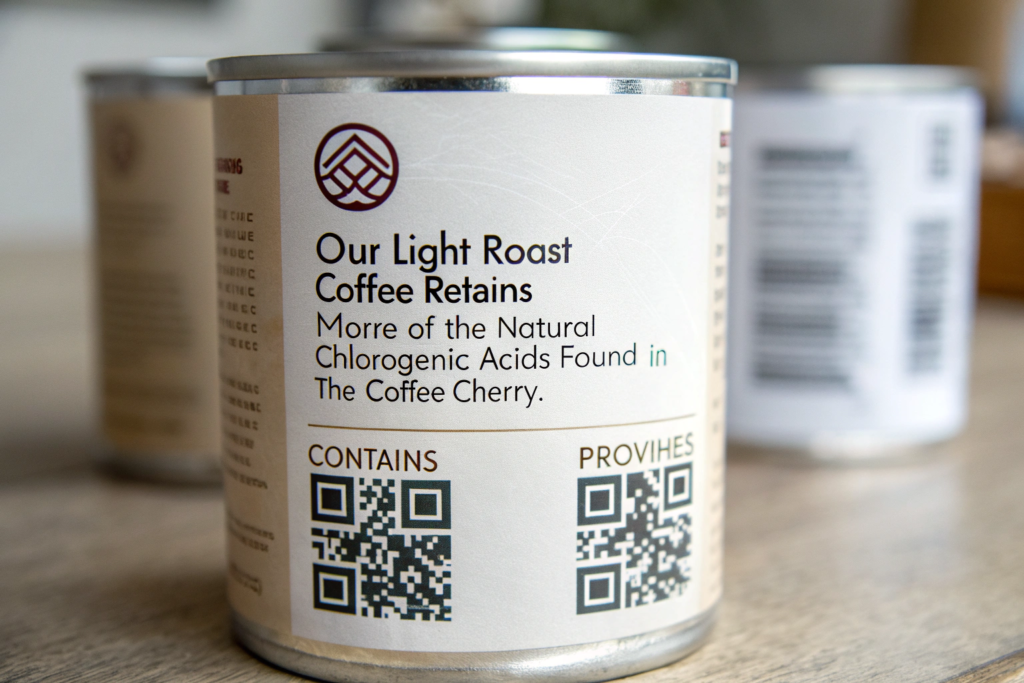
A coffee brand can ethically market nutritional differences by grounding every claim in specific, verifiable science and avoiding broad, unqualified health promises. Instead of claiming "our coffee prevents disease," which is a drug claim that would attract regulatory scrutiny, a brand can say "our light-roast coffee retains more of the natural chlorogenic acids found in the coffee cherry," which is a factual, measurable statement. The supporting evidence should be available to the customer, ideally through a QR code linking to a detailed page with references. The language should be precise: "contains," "provides," and "is a source of" are factual terms. "Boosts," "prevents," and "cures" are red flags. The brand's goal should be to inform the customer, not to promise miracles.
I advise my clients to think like a science communicator, not a supplement marketer. Share the fascinating chemistry of coffee. Explain what happens during roasting. Let the customer draw their own conclusions about the health implications. This approach builds trust and positions the brand as an authority. The FDA's food labeling and health claims guidance is the essential regulatory reference for US-bound products, and the European Food Safety Authority's nutrition claims regulations govern the European market.
What is the difference between a structure-function claim and a health claim on a coffee package?
A structure-function claim describes the role of a nutrient or substance in maintaining normal human structure or function. "Caffeine supports alertness" is a structure-function claim. It does not state that the product treats or prevents a disease. A health claim explicitly or implicitly links a food substance to a disease or health condition. "Coffee consumption reduces the risk of heart disease" is a health claim. Health claims require pre-market approval by regulatory authorities and a significant body of scientific evidence. Most coffee brands should limit themselves to structure-function claims, which require no pre-approval but must be truthful and substantiated.
How can a QR code on the bag provide transparency for nutrition-focused customers?
A QR code on the back of a coffee bag can link to a page that provides the full nutritional backstory: the specific chlorogenic acid content of that lot, the roast level and its effect on antioxidant profile, the lab test results if available, and references to the scientific literature supporting any claims made on the bag. This approach separates the marketing message on the bag, which must be concise and compliant, from the educational content that a curious customer can access. It also allows the brand to update the information with each harvest or as new research emerges without redesigning the bag. At Shanghai Fumao, we support our clients by providing the technical data—CGA levels, roast development metrics, lab test results—that fuels this kind of transparent customer communication.
Conclusion
Green coffee and roasted coffee are not nutritionally identical. Green coffee is richer in chlorogenic acids, trigonelline, and certain intact vitamins. Roasted coffee is richer in melanoidins, niacin, and volatile aroma compounds. The roasting process is not a loss of nutrition. It is a transformation of the nutritional profile, creating new compounds even as it degrades others. For a coffee brand, understanding these differences is not about claiming superiority of one form over the other. It is about knowing the product well enough to describe it honestly, market it credibly, and answer customer questions with confidence.
If you are developing a coffee product where nutritional content is part of the value proposition—whether it is a high-antioxidant specialty roast, a green coffee extract, or a functional blend—we can provide the technical data and the lot-specific information to support your claims. We test our lots for chlorogenic acid content, and we track roast development metrics that directly impact nutritional profiles. Contact Cathy Cai at cathy@beanofcoffee.com. She can share our technical documentation, discuss which of our lots might be the best fit for your product concept, and help you build a transparent, scientifically credible story for your customers. Coffee is complex. Understanding that complexity is what separates a commodity from a brand.