I was on a call with a first-time buyer from Germany last month. He had cupped our washed Yunnan Arabica, negotiated the price, and was ready to place his order. Then he asked the question that every serious buyer eventually asks: "How many bags fit on a pallet, and what are the exact dimensions I need to give my warehouse team?" I gave him the numbers. There was a long pause. Then he said, "That does not match what my freight forwarder quoted me for a standard pallet. Can you double-check?" We went back and forth for two days before we realized the disconnect: his forwarder had assumed Euro pallet dimensions, and I had quoted based on the standard export pallet we use for ocean freight out of Shanghai. The coffee was the same. The packaging was the same. The pallet was different, and that small difference had thrown off his entire warehousing and shipping budget.
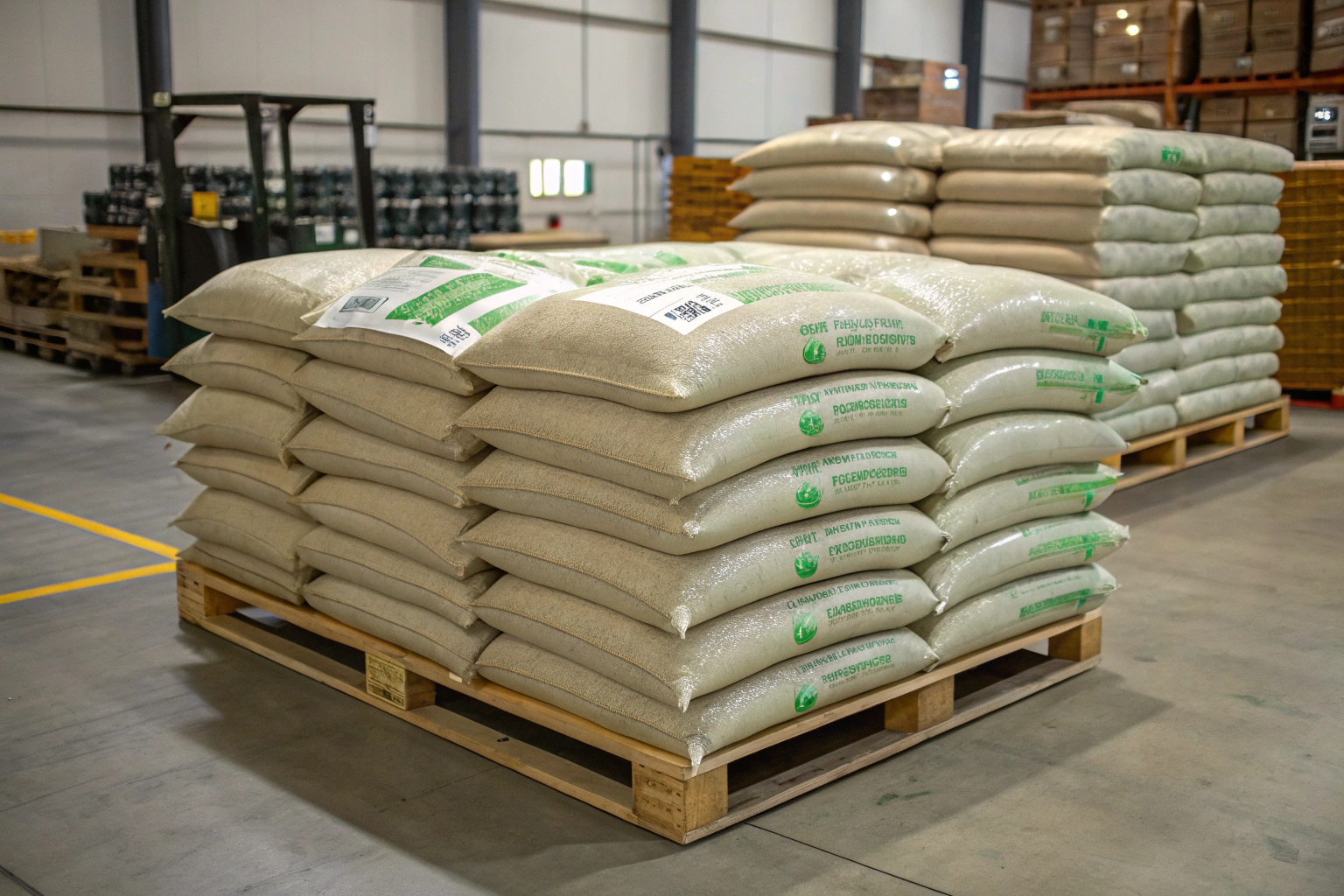
A standard export pallet of GrainPro-packed green coffee typically holds 20 to 22 bags of 60 kilograms each, measures 120 centimeters by 100 centimeters in footprint and approximately 140 to 160 centimeters in height when loaded, and weighs between 1,250 and 1,400 kilograms gross. These dimensions are based on the standard ISO pallet size commonly used for ocean freight exports from China and much of Asia. However, the exact configuration depends on the pallet type specified in the contract, the bag stacking pattern, and whether the shipment is destined for a market that uses Euro pallets, 80 by 120 centimeters, or other regional standards. A buyer who does not clarify the pallet specification in the purchase agreement may face unexpected storage incompatibility, additional handling costs, or even rejection at the receiving warehouse.
I learned the importance of pallet specification the hard way, and I now make sure every new buyer understands exactly what they are getting, how it will arrive, and what they need to have ready on their end. Here is the complete guide to GrainPro bag pallet dimensions, covering the details that matter for logistics planning.
What Are the Standard Dimensions and Weight of a Full Pallet of GrainPro Coffee Bags?
The GrainPro bag is the industry standard for specialty green coffee export. It is a multi-layer bag with an inner hermetic barrier that protects the coffee from moisture and oxygen during transit and storage. The bags themselves have consistent dimensions across suppliers, but the way they are loaded onto a pallet can vary. Understanding the baseline measurements is the starting point for all logistics planning.
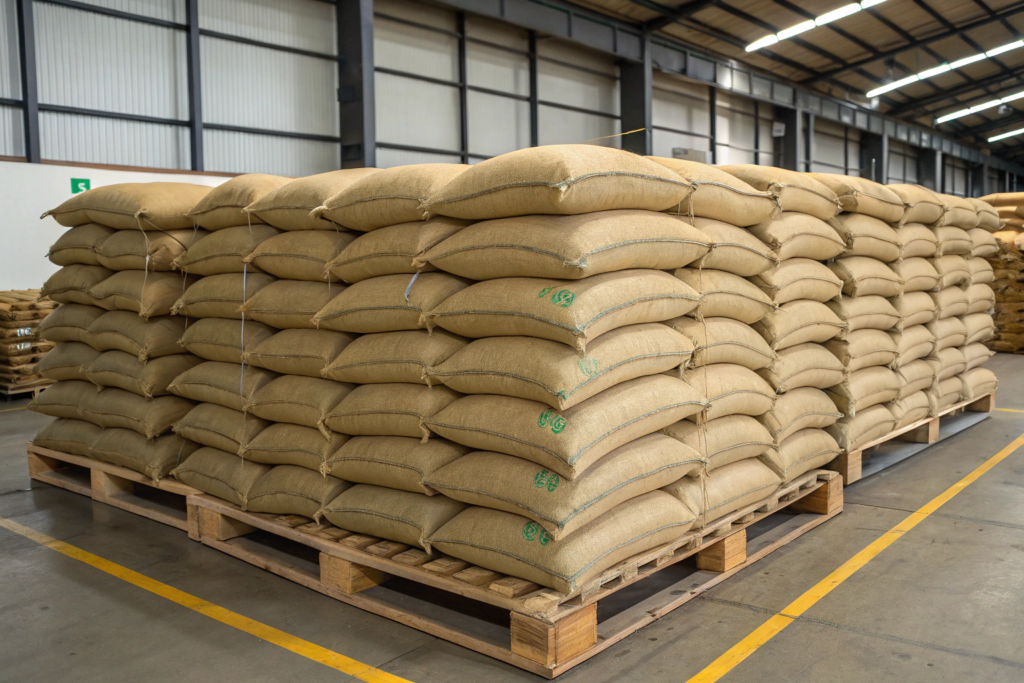
A single GrainPro bag of green coffee, when filled with 60 kilograms of specialty Arabica, measures approximately 70 to 75 centimeters in length, 45 to 50 centimeters in width, and 15 to 20 centimeters in thickness when laid flat. When loaded onto a standard ISO export pallet of 120 by 100 centimeters, bags are typically stacked in layers of 5 or 6 bags per layer, arranged in alternating patterns to create a stable, interlocking stack. A standard pallet load of 20 bags consists of 4 layers of 5 bags each. The loaded pallet height, including the pallet itself, which is approximately 14 to 15 centimeters, is typically 140 to 155 centimeters for a 20-bag pallet and up to 165 centimeters for a 22-bag pallet. The gross weight of a 20-bag pallet, including bags, coffee, pallet, and strapping, is approximately 1,280 to 1,350 kilograms.
I always recommend that buyers share these dimensions with their warehouse team and their freight forwarder before the shipment departs. A warehouse with narrow aisle racking designed for smaller pallets cannot safely handle a 120 by 100 centimeter pallet weighing over a ton. Knowing the numbers in advance prevents the painful discovery of incompatibility when the truck arrives at the dock. The International Organization for Standardization's pallet standards define the official dimensions for ISO pallets, and the GrainPro packaging specifications provide the detailed bag dimensions for different models.
How many 60-kilogram bags fit on a single pallet, and what determines the count?
The most common configuration for export from Asia is 20 bags per pallet, arranged in 4 layers of 5 bags each. This provides a stable, well-balanced load that stays intact during the multiple handling steps between the mill and the destination warehouse. Some suppliers offer 22 bags per pallet, usually arranged as 3 layers of 6 bags plus a top layer of 4 bags, but this configuration is taller and may exceed height restrictions in some warehouses or shipping containers. The maximum count is determined by three factors: the weight capacity of the pallet, which is typically 1,500 to 2,000 kilograms for a heavy-duty export pallet, the stacking stability, which degrades if the stack is too tall or poorly arranged, and the container door height, which limits how high a pallet can be and still fit through the container opening without tilting.
What is the difference between a standard ISO pallet and a Euro pallet for coffee shipments?
The standard export pallet used in China and much of Asia for ocean freight is the ISO pallet, measuring 120 centimeters by 100 centimeters. The standard Euro pallet, also known as a EUR or EPAL pallet, measures 120 centimeters by 80 centimeters and is the dominant standard in European warehousing and retail distribution. A pallet of coffee built on an ISO pallet will not fit efficiently into a European warehouse designed around Euro pallet dimensions. The narrower Euro pallet also affects bag configuration; a Euro pallet typically holds fewer bags or requires a different stacking pattern. Buyers in European markets should specify Euro pallets in their purchase agreement, and suppliers shipping to Europe should be capable of palletizing on the correct standard.
How Does Pallet Configuration Affect Container Capacity and Shipping Costs?
The pallet is not just a warehouse concern. It directly determines how many kilograms of coffee can be loaded into a shipping container, which determines the per-unit freight cost. A container that is poorly palletized wastes space, wastes money, and may arrive with damaged bags from load shifting during transit.
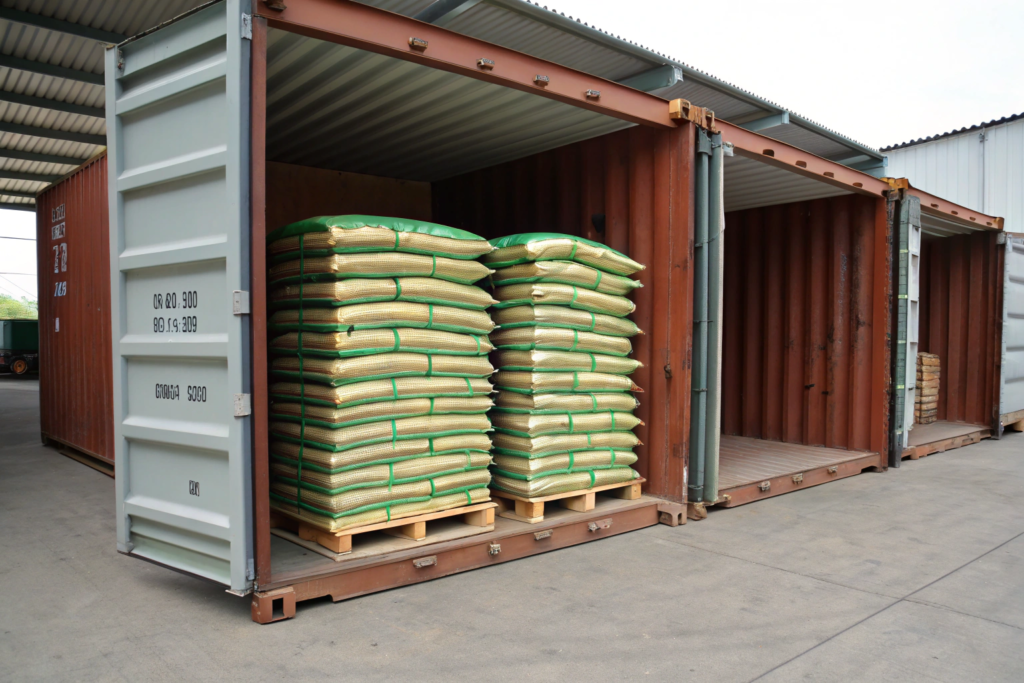
A standard 20-foot shipping container, also called a TEU, can hold 10 standard ISO pallets in a single-tier configuration. At 20 bags per pallet, this gives a total load of 200 bags, or 12,000 kilograms of green coffee. A 40-foot container can hold 20 to 22 pallets, giving a total load of 400 to 440 bags, or 24,000 to 26,400 kilograms. These numbers assume the pallets are loaded straight in, two rows of pallets across the width of the container. The load must also account for the container's maximum payload weight, which is typically 26,000 to 28,000 kilograms for a 40-foot container, though this is rarely the limiting factor for green coffee, which has a relatively low density compared to heavier commodities. The key to maximizing container utilization is ensuring the pallet configuration fills the container's width and length without wasted gaps, while staying within the height limits of the container door.
I have seen buyers make the mistake of assuming they can fit 22 pallets into a 40-foot container without checking the actual dimensions of the pallets and the container. Even a few centimeters of variance per pallet, multiplied across the container length, can mean the last pallet does not fit. The door will not close. A container partially unloaded and repacked at the port is a container incurring detention charges. The Maersk container specifications provide the exact internal dimensions of different container types, and the Freightos container loading guide offers practical tools for calculating container utilization.
How many 20-pallet containers are needed for a 40-foot container load?
A standard 40-foot container holds 20 standard ISO pallets loaded straight, in two rows of ten. If the supplier uses 20 bags per pallet, the container holds 400 bags total, or 24,000 kilograms. If the supplier and buyer agree on a 22-bag configuration and the container height permits, it may be possible to fit 20 pallets of 22 bags, for a total of 440 bags or 26,400 kilograms. This must be confirmed against the container's weight limit and the door height. A buyer who wants to maximize container utilization should discuss the pallet configuration explicitly with the supplier and request a container loading plan before shipment.
What are the most common pallet-loading mistakes that cause bag damage during transit?
The most common mistake is uneven stacking, where bags shift during the ocean voyage and create an unstable load that collapses against the container wall. This causes abrasion, bag tears, and potential exposure of the coffee to moisture or pests. Another common mistake is using pallets that are too weak for the load, resulting in pallet collapse when the container is moved. A third is failing to use corner boards and adequate strapping, which allows the bags to bulge outward beyond the pallet edge and catch on adjacent pallets or the container wall during loading and unloading. A properly built coffee pallet has straight sides, firm strapping, corner boards to protect bag edges, and a stable, interlocking bag pattern.
What Are the Pallet Specifications for Different Export Destinations?
The buyer in Germany who triggered my deep dive into pallet standards was not alone. Many buyers do not realize that pallet standards vary by region, and that the wrong pallet type can cause significant problems at the destination. A supplier who exports to multiple regions must be able to palletize on different standards depending on the destination market.
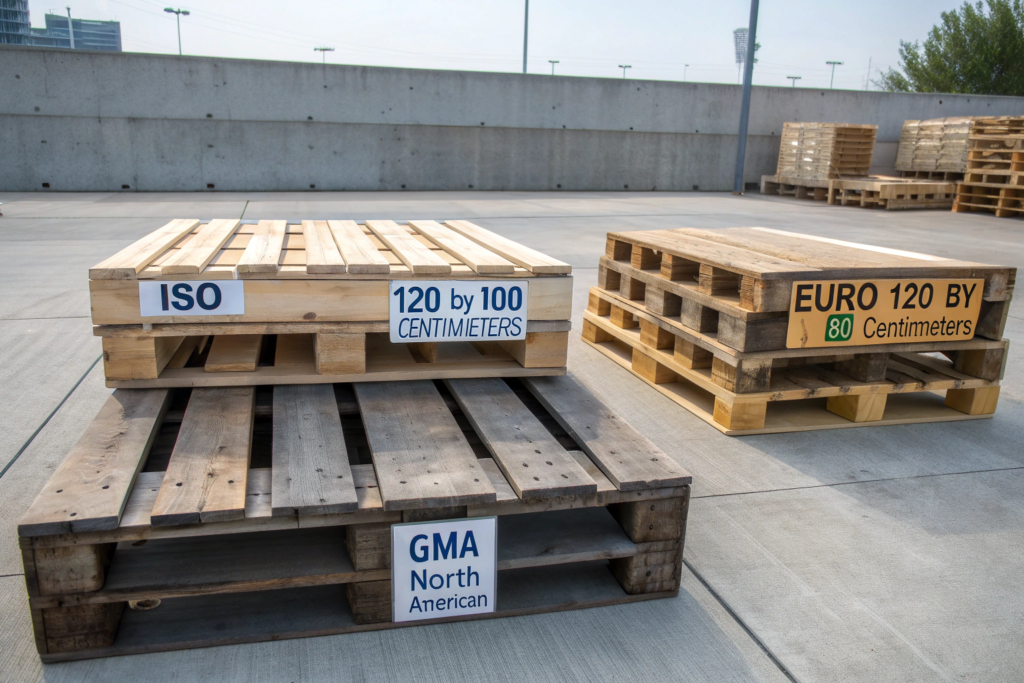
The three major pallet standards affecting coffee exports are the ISO pallet, 120 by 100 centimeters, used in much of Asia and accepted in North America; the Euro pallet, 120 by 80 centimeters, mandatory or strongly preferred for European retail and grocery distribution; and the GMA or North American pallet, 48 by 40 inches, approximately 122 by 102 centimeters, which is the standard in United States and Canadian warehousing. A coffee supplier exporting to Europe should offer Euro pallet configuration. A supplier exporting to North America should offer the GMA pallet configuration or confirm that the ISO pallet is acceptable at the destination warehouse. The purchase contract should specify the pallet type, not just the number of bags per pallet, to avoid the exact kind of confusion that nearly derailed my German buyer's order.
We now include a pallet specification line in every export contract. It states the pallet dimensions, the number of bags per pallet, the stacking pattern, and the strapping method. This simple addition has eliminated a category of disputes that used to arise several times a year. The EPAL Euro pallet standards provide the official specifications, and the GMA pallet standards are maintained by the Grocery Manufacturers Association for the North American market.
What is an EPAL pallet and why does it matter for coffee imports into the EU?
An EPAL pallet is a Euro pallet certified by the European Pallet Association. It measures 120 centimeters by 80 centimeters and is built to a specific, standardized design with a consistent weight and load capacity. The EPAL system is an open exchange pool; pallets are designed to be reused and exchanged across the supply chain. For a coffee importer in Europe, receiving a shipment on EPAL pallets means the pallets can immediately enter the standard European logistics system without repalletization. Receiving a shipment on non-standard pallets means the warehouse must either accept a non-standard pallet that does not fit their racking or transfer the bags to EPAL pallets, which adds labor cost and handling risk.
How do North American pallet standards differ from Asian and European standards?
The standard North American pallet, often called the GMA pallet, measures 48 inches by 40 inches, which is approximately 122 centimeters by 102 centimeters. This is slightly larger than the ISO pallet and significantly wider than the Euro pallet. The dimensional difference means that a load configured for a GMA pallet will not fit efficiently on a Euro pallet, and vice versa. A supplier accustomed to exporting on ISO pallets to Asia may need to adjust their pallet inventory and stacking patterns when shipping to a North American buyer who requires GMA pallets. The buyer should communicate their pallet requirement at the quoting stage, not after the contract is signed.
How Should a Buyer Specify and Verify Pallet Requirements in a Coffee Purchase Contract?
The pallet configuration is not a minor detail to be worked out informally over email after the contract is signed. It is a material term that affects cost, logistics compatibility, and the condition of the coffee upon arrival. A buyer who treats it as an afterthought is inviting problems.
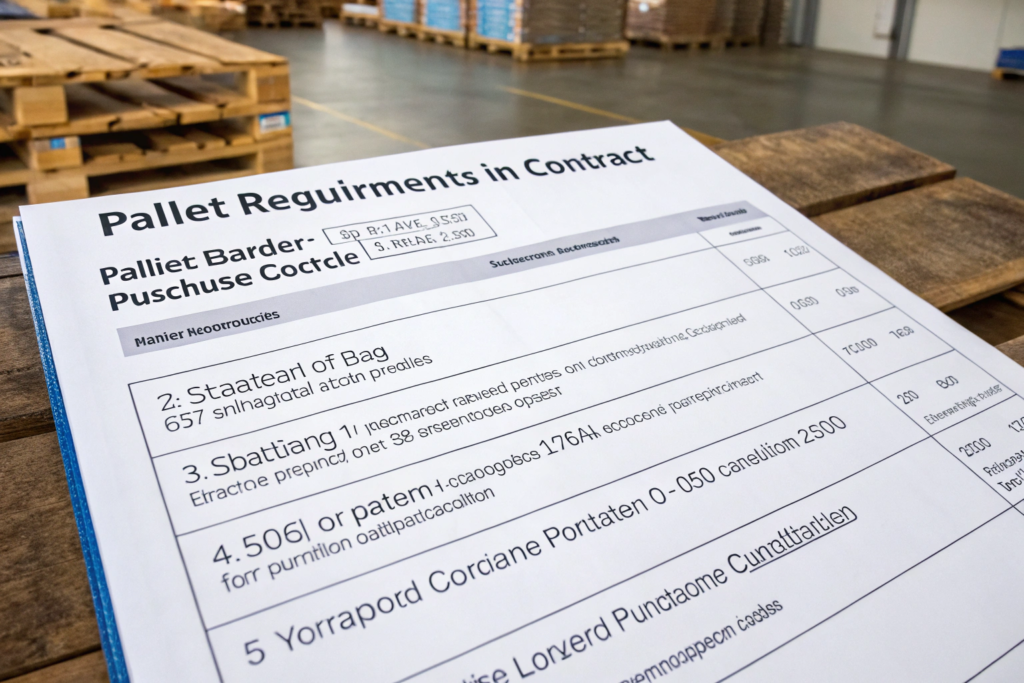
A buyer should specify the pallet requirements in the purchase contract with five pieces of information: the pallet standard, ISO, Euro, or GMA; the number of bags per pallet; the stacking pattern, such as 5 bags per layer, 4 layers; the strapping and corner board specification; and the maximum loaded pallet height if there are warehouse height restrictions. The buyer should also request a pallet configuration diagram or photo from the supplier before the first shipment, so both parties have a shared visual reference. For ongoing contracts, the pallet specification should be reviewed annually to ensure it still matches the buyer's warehouse and logistics setup.
I ask every new buyer during the onboarding process: "Do you have a preference for pallet type, and do you have any height or weight restrictions at your receiving warehouse?" Some buyers know immediately. Some have never thought about it. For the ones who have not, I walk them through the options and recommend they check with their warehouse manager before we finalize the order. The International Chamber of Commerce's Incoterms guide defines the point at which pallet-related costs and risks transfer from seller to buyer, and the Green Coffee Association's standard contract terms include packaging and shipping specifications.
What specific language should a pallet specification clause include?
A clear pallet specification clause reads something like this: "Coffee shall be packed in new GrainPro bags of 60 kg net weight each, palletized 20 bags per pallet on EPAL Euro pallets of 120 x 80 centimeters, stacked in 4 layers of 5 bags each per layer, with interlocking pattern, corner boards on all four corners, and secured with polyester strapping in both directions. Maximum pallet height including pallet shall not exceed 155 centimeters." This level of detail leaves no room for interpretation and protects both parties.
What should a buyer do if the pallets arrive in a different configuration than agreed?
Document the discrepancy immediately with photographs showing the pallet configuration, the pallet dimensions with a tape measure visible, and the bag arrangement. Notify the supplier in writing within the timeframe specified in the contract for packaging non-conformance claims. Determine the operational impact: can the warehouse accept the pallets as-is, or must they be repalletized? If repalletization is necessary, document the labor cost and request a credit from the supplier. A reputable supplier will own the mistake and compensate the buyer. A supplier who argues or deflects is revealing something important about their reliability.
Conclusion
The pallet underneath a shipment of GrainPro bags is easy to overlook. It is not as interesting as the coffee's cupping score, as urgent as the price negotiation, or as complex as the ocean freight contract. But it is the physical foundation on which the entire shipment rests. A wrong pallet configuration can delay a shipment, damage the bags, and strain a buyer-supplier relationship. A clearly specified, correctly executed pallet configuration does the opposite: it makes the receiving process smooth, protects the coffee, and builds confidence.
If you are a buyer planning your first or your hundredth container of coffee from Yunnan, do not leave the pallet specification to chance. We include it in every contract and we are experienced in palletizing for every major market standard. Contact Cathy Cai at cathy@beanofcoffee.com. She can provide our pallet configuration diagrams, confirm the options for your specific destination, and ensure that your coffee arrives on the right pallet, in the right configuration, ready for your warehouse. The coffee matters. So does what it sits on.