A buyer in Canada emailed me wanting to compare the cost of two Yunnan lots. One was screen 15 to 16, priced at 3.30 dollars per pound FOB. The other was screen 18, priced at 3.95 dollars per pound FOB. He could not understand why 18-dollar per bag difference existed when both were from the same farm and harvest. The answer lies in how the coffee screen size market works. Screen size is not just a physical measurement. It is a pricing signal that reflects the market's assessment of quality, yield, and buyer preference. Understanding the differential helps you decide when paying up for larger beans is worth it and when it is not. Let me walk you through the numbers.
What Do Screen Sizes Mean for Green Coffee Pricing?
Screen size refers to the diameter of the bean measured in 64ths of an inch. Screen 18 means the bean passed through an 18/64-inch screen but not a 19/64-inch screen. Larger beans are generally associated with higher altitude, better growing conditions, and more careful harvesting. The market prices them accordingly.
How Much More Does Screen 18 Cost Than Screen 15?
The FOB premium for screen 18 over screen 15 varies by origin and season, but the typical range is 0.40 to 0.80 dollars per pound. In the current market, screen 18 Arabica from Central America trades at a 0.50 to 0.70 dollar premium over screen 15 from the same country. For Asian origins like Yunnan, the premium is slightly smaller at 0.30 to 0.55 dollars per pound because the market perception of Asian large-bean quality is still catching up to Central American levels. The International Coffee Organization's screen size price database tracks FOB differentials by origin and screen size. The data shows that the screen 18 premium ranges from 8 to 18 percent above the base price for screen 15 from the same origin. For a 3.30 dollar per pound Yunnan screen 15, the screen 18 equivalent would range from 3.56 to 3.89 dollars per pound FOB.
Why Do Screen 18 Beans Command a Premium?
The premium exists for three reasons. First, larger beans require more selective harvesting — the picker must choose only fully ripe, well-developed cherries, which increases labor cost. Second, larger beans have a higher yield of usable coffee per pound because they produce fewer broken beans during hulling. Third, the market perception — justified or not — is that larger beans taste better. The Specialty Coffee Association's screen size quality analysis found that the correlation between screen size and cupping score is real but weak: approximately 0.25 to 0.30. Larger beans are slightly more likely to score higher, but the relationship is not strong enough to pay a 0.50 dollar premium purely on flavor grounds. The real value of screen 18 is in the yield improvement and the marketing advantage of being able to claim large-bean coffee.
How Does Screen Size Affect Roasting Yield and Consistency?
The financial case for screen 18 is stronger when you look at roasting performance rather than flavor alone. Larger beans roast more consistently and produce less waste.
Do Larger Beans Have Better Roast Uniformity?
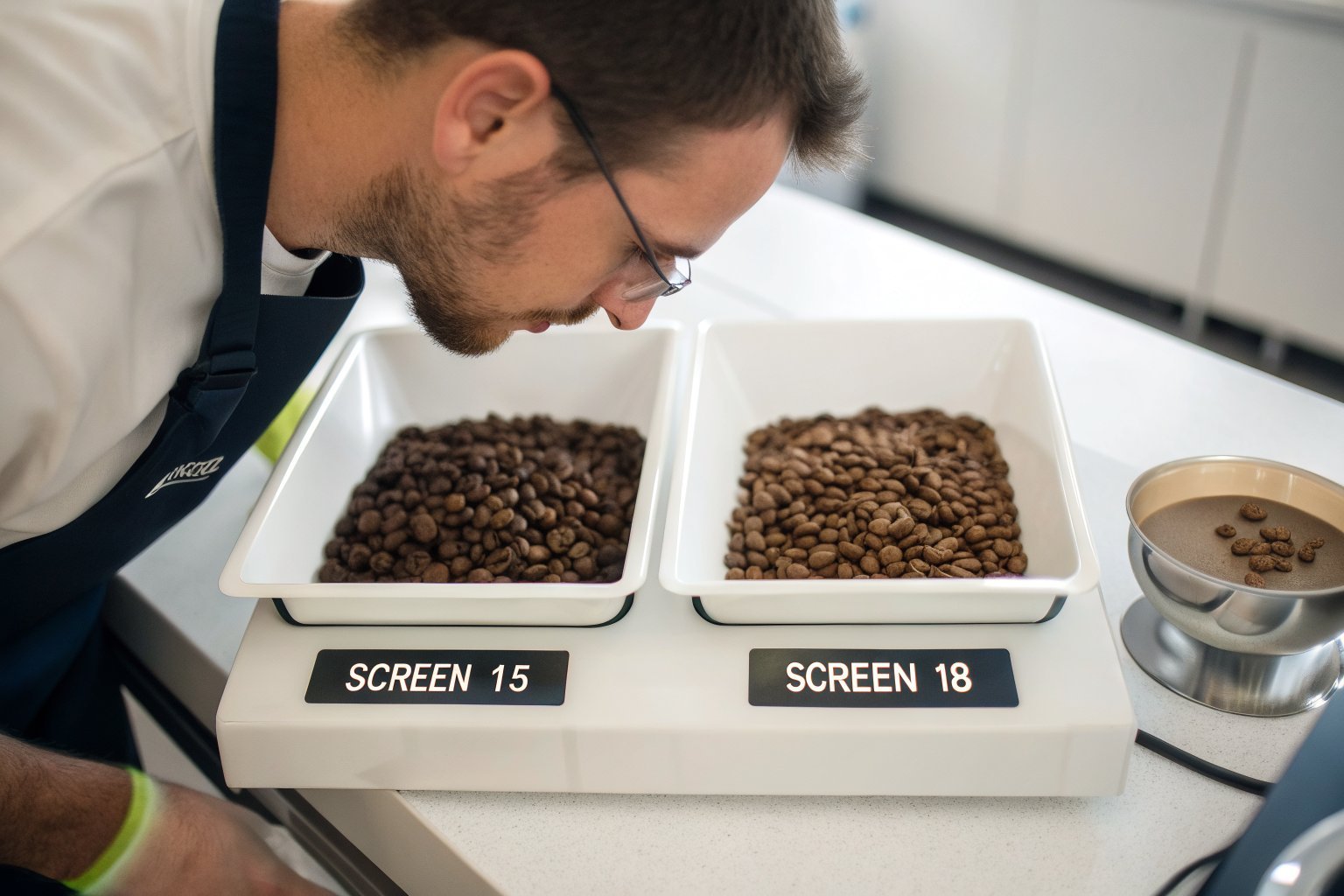
Yes. Larger beans within a lot are more uniform in size, and uniformity is the most important factor for even roasting. A lot that is primarily screen 15 will have some screen 14 and screen 16 beans mixed in — a 2-screen size spread. A lot that is screen 18 will typically be screen 17 to 19, also a 2-screen spread. The difference is that the absolute size range is larger for the screen 15 lot, which means the heat transfer characteristics vary more. The Roast Magazine's screen size uniformity study found that screen 18 lots had 18 percent fewer underdeveloped beans after roasting compared to screen 15 lots from the same farm when roasted to the same profile. The larger beans had a narrower density range, which translated into more predictable roast behavior. For a roaster paying 3.95 dollars per pound instead of 3.30 for screen 15, the reduced waste from underdeveloped beans recovers 0.10 to 0.15 dollars per pound of the premium.
How Does Screen Size Affect Grinding Consistency?
Screen size also affects particle size distribution during grinding. Larger beans produce a more uniform grind because the bean fragments are more consistent in size and shape. This matters most for espresso, where particle uniformity determines extraction quality and shot consistency. The Coffee Quality Institute's screen size grinding study found that espresso ground from screen 18 beans produced 12 percent fewer fines and 8 percent more uniform particle size compared to screen 15 beans from the same origin. The result was a higher extraction yield and a cleaner-tasting shot. For a busy cafe pulling 200 shots per day, that consistency translates directly into customer satisfaction and reduced waste.
When Does It Make Sense to Pay the Screen 18 Premium?
Paying for screen 18 is not always the right decision. The value depends on what you are doing with the coffee.
Should You Buy Screen 18 for Espresso Blends?
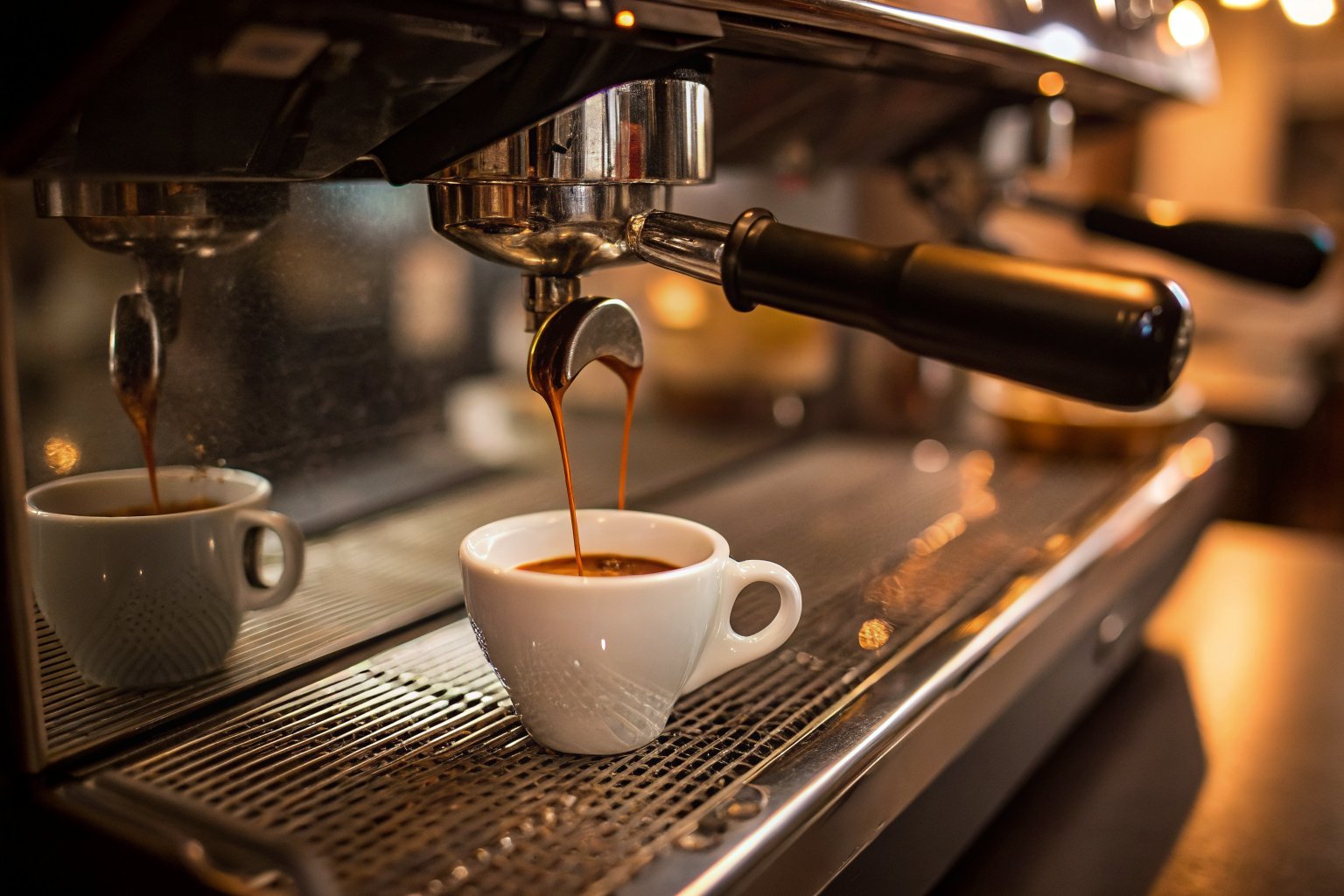
Yes, this is where the premium is easiest to justify. Espresso requires consistent grind and extraction, which larger beans deliver better. If you are building a signature espresso blend, pay the premium for screen 18 from your chosen base origin. The improved shot consistency will be noticeable to your baristas and your customers. For espresso blends, the screen 18 premium of 0.40 to 0.70 dollars per pound is offset by approximately 0.15 dollars per pound in reduced grinding waste and 0.10 dollars in improved extraction yield. The net cost premium is 0.15 to 0.45 dollars per pound. For a cafe selling 5-pound bags of espresso at 60 dollars, that premium is less than 1 percent of the retail price. At Shanghai Fumao, we supply screen 18 Yunnan Catimor specifically for espresso blend use, and buyers consistently report better shot stability compared to screen 15.
When Should You Save Money and Buy Screen 15?
Screen 15 is a better value when the coffee is destined for medium-dark to dark roast blends where the flavor differences from screen size are masked by roast development. It is also fine for cold brew, where long extraction times compensate for particle size variation, and for commercial-grade blends where the end customer is price-sensitive. The Green Coffee Association's screen size value guide recommends buying screen 15 when the coffee is going into a blend at 25 percent or less of the total recipe. At that proportion, the screen size effect on the final cup is negligible. The 0.40 to 0.50 dollar per pound savings on screen 15 flows directly to your margin.
How Do You Verify Screen Size Claims from Suppliers?
Screen size claims are easy to fudge. Any supplier can tell you their coffee is screen 18 when a significant portion falls below. Verification is simple and cheap.
What Is the Standard Method for Verifying Screen Size?
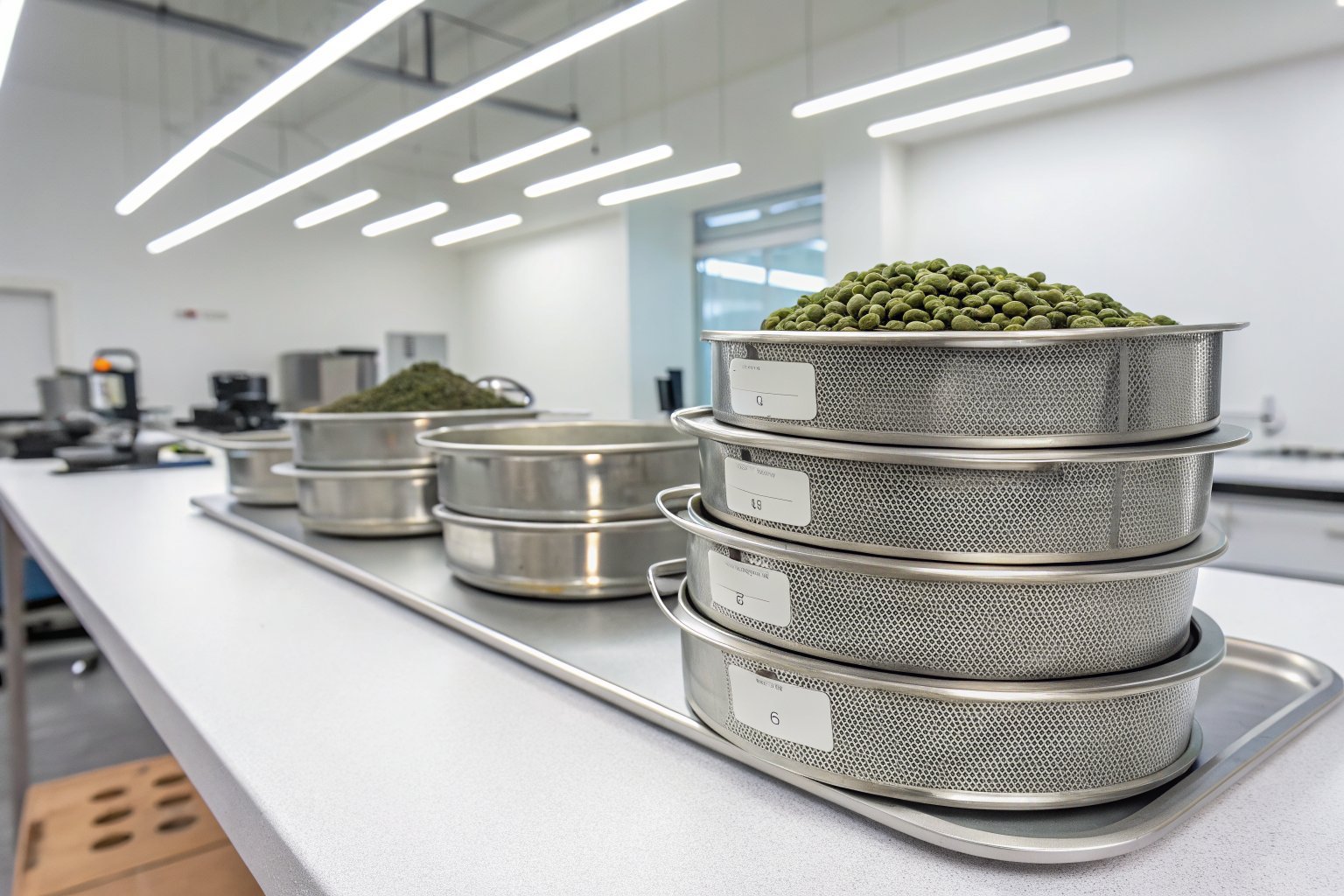
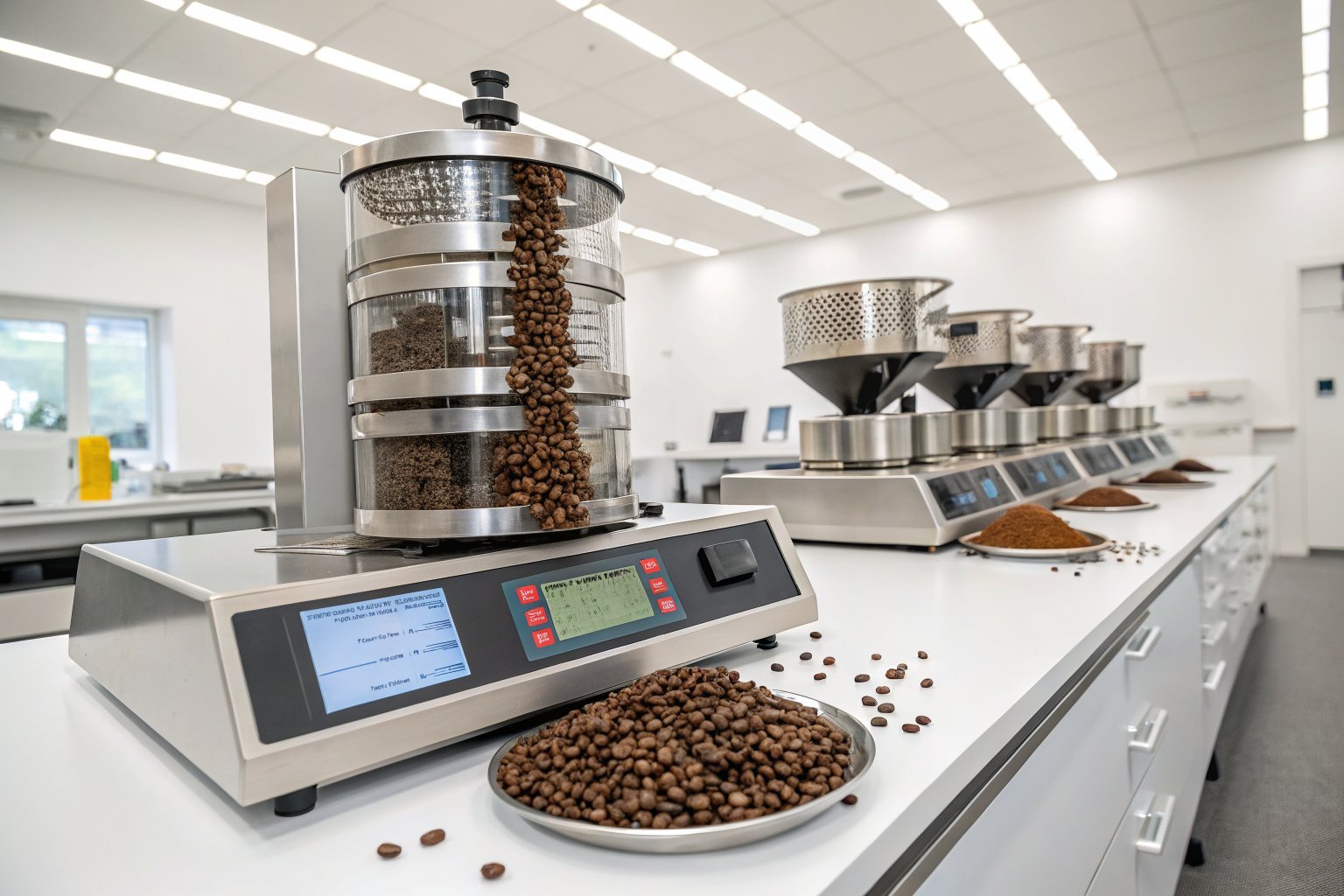
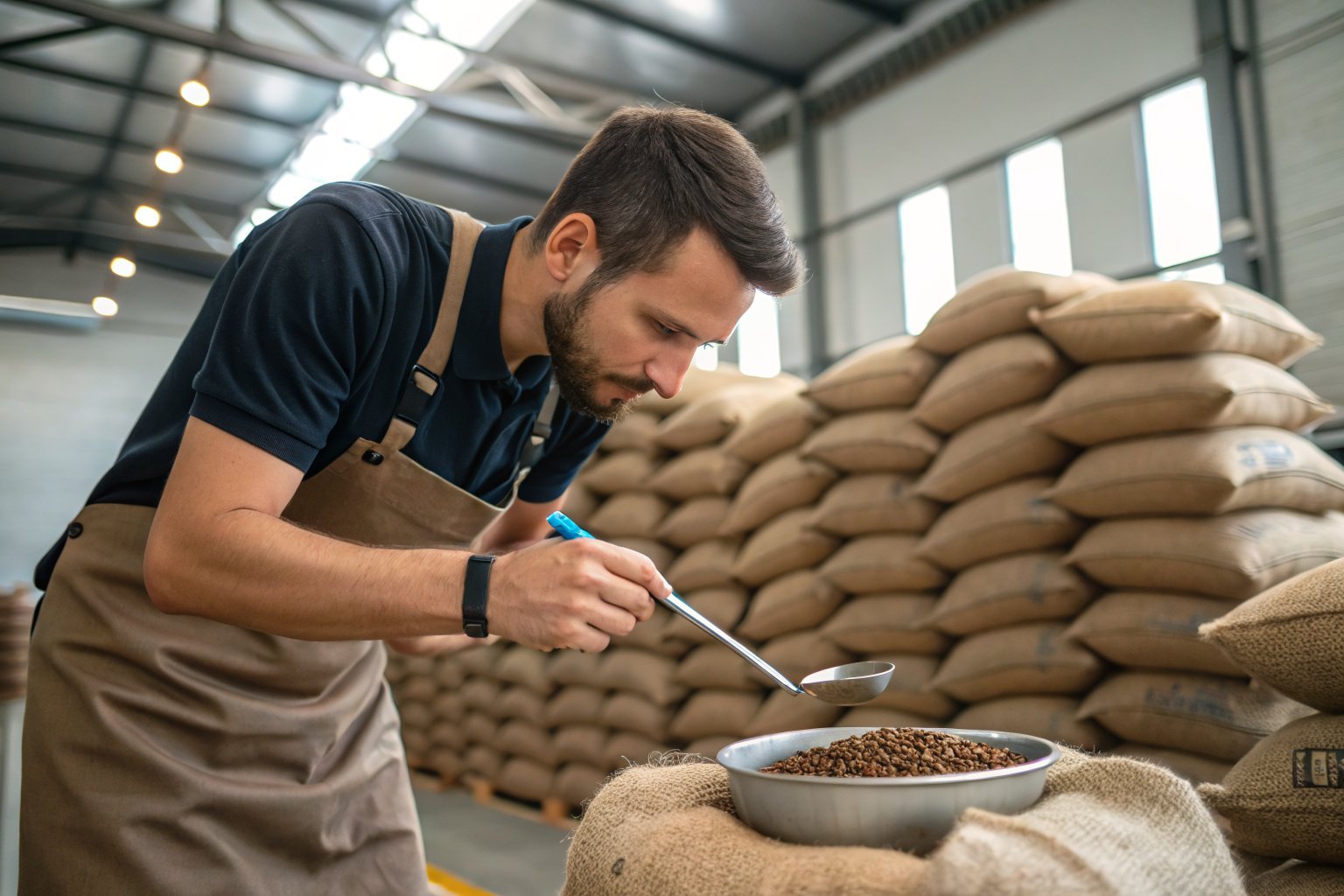
The standard method is a 100-gram sample run through a stack of graded sieves. The sieves are agitated for 2 minutes on a mechanical shaker, then the weight retained on each sieve is recorded. The result is expressed as the percentage retained on each screen size. Specialty-grade coffee should have at least 90 percent of beans within the stated screen size range. The Specialty Coffee Association's screen size grading protocol specifies that the sample must be taken from a minimum of 5 bags per lot and combined into a composite sample of 300 grams. Three 100-gram sub-samples are then tested and averaged. If the standard deviation between the three tests exceeds 3 percent, a fourth test is required.
What Red Flags Indicate Screen Size Misrepresentation?
A common trick is to mix screen 18 beans on top of the bag with smaller beans underneath. The first visual impression is good beans, but the real quality is lower. Always insist on a sample taken from the middle of the bag for screen size testing, not from the top. If a supplier resists providing a mid-bag sample, that is a red flag. Another red flag is a bimodal screen size distribution. A legitimate screen 18 lot should show a normal distribution centered on 18, with most beans at 17 to 19. If you see two peaks — one at 16 and one at 18 — the lot is likely a blend. At Shanghai Fumao, we provide screen size analysis reports with every lot, and we take the samples from a full-bag probe, not the surface. If a supplier cannot provide a proper screen size report, question their other quality claims.
Conclusion
The FOB price differential between screen 15 and screen 18 coffee ranges from 0.30 to 0.80 dollars per pound depending on origin and market conditions. Screen 18 offers better roast uniformity, less grinding waste, and higher extraction yield, which partially offsets the premium. The premium is easiest to justify for espresso blends and single-origin offerings. Screen 15 is a better value for dark roast blends, cold brew, and commodity programs. At BeanofCoffee, we offer both screen 15 and screen 18 Yunnan Catimor with verified screen size analysis for every lot. Whether you need the consistency of large beans or the value of standard size, we can match you to the right product. Contact Person: Cathy Cai Email: cathy@beanofcoffee.com Website: https://beanofcoffee.com/