You've found the right supplier in China, negotiated a great FOB price for a container of Yunnan Arabica, and are ready to pull the trigger. Then it hits you: "What will customs charge me when it arrives?" Getting this number wrong can turn a profitable deal into a loss. I speak with importers every week who are confused by this final piece of the cost puzzle. Let's make it clear.
Calculating duty rates for Chinese coffee imports requires three key inputs: the correct HS Code for your product, the Country of Origin (China), and the Value of the Goods. You then apply the specific tariff rate from your country's schedule to the customs value (typically CIF value) to determine the duty owed. For many destinations, green coffee is duty-free, but roasted coffee may have a tariff, and additional taxes (like VAT/GST) always apply.
That's the formula. But the simplicity ends there. The real challenge is in the details: using the exact HS code, determining the correct customs value, and understanding the total tax burden, not just the duty. A small mistake in classification can lead to a large financial error.
What is the First Step: Determining the Correct HS Code?
This is your non-negotiable starting point. The Harmonized System (HS) Code is a universal product classification. It's how customs authorities in your country identify what you're importing and what rules apply. Get this wrong, and everything that follows will be wrong.
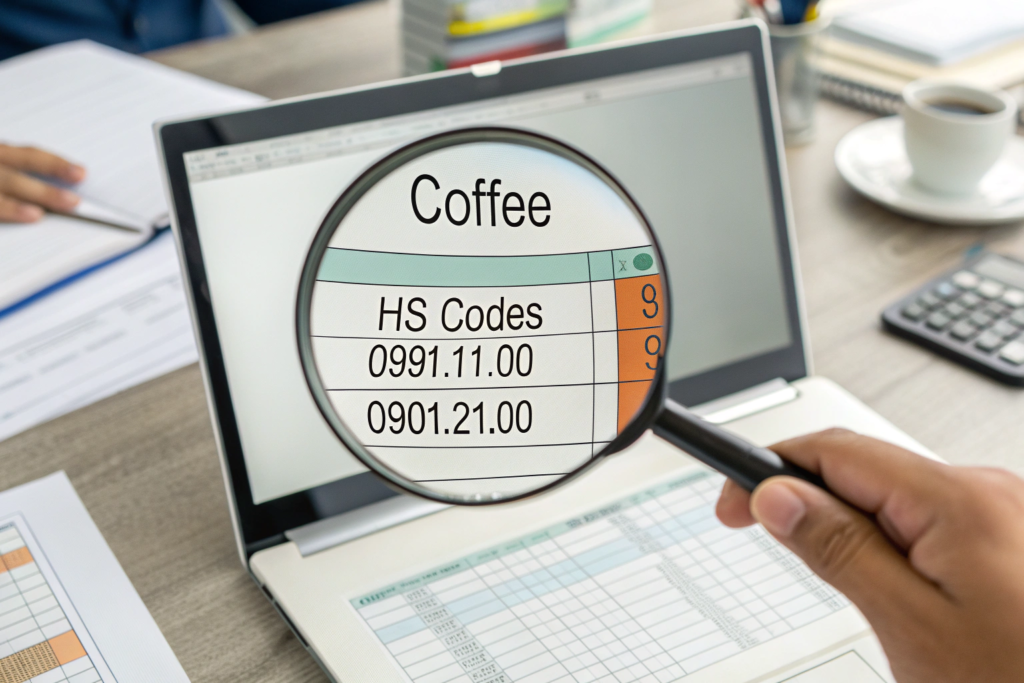
For coffee from China, the primary HS codes are:
- 0901.11.00: Green (unroasted) coffee beans, not decaffeinated.
- 0901.21.00: Roasted coffee beans, not decaffeinated.
- 0901.22.00: Roasted coffee, decaffeinated.
- 0901.12.00: Green coffee, decaffeinated.
Your product must be classified under the most accurate code. For example, our Catimor green beans would be 0901.11.00. A blend of roasted Arabica and Robusta would likely be 0901.21.00. You cannot use a generic code. You must verify the full, extended code (often 8-10 digits) used by your country's customs authority. This is the single most important piece of data for your calculation.
Where Can You Find the Official HS Code for Your Country?
You must use your own country's official resources, not China's. Do not rely on your supplier's code alone—they are classifying for export, not for your import.
- United States: Use the U.S. International Trade Commission (USITC) HTSUS (Harmonized Tariff Schedule) online search tool.
- European Union: Use the EU's TARIC database.
- Canada: Use the Canada Border Services Agency (CBSA) tariff database.
- Australia: Use the Australian Border Force (ABF) tariff classification.
Search for "coffee" and drill down by the description (e.g., "not roasted, not decaffeinated"). This will give you the legally binding code for your import declaration. This diligence is a core part of working with a reliable supplier; we at Shanghai Fumao provide the accurate product description and Chinese export code to help you with this cross-reference.
What Happens If You Use the Wrong HS Code?
The consequences are serious. Underpayment can lead to audits, back-payment of duties with interest, and substantial penalties. Overpayment means you've unnecessarily eroded your margin, and reclaiming it is a bureaucratic hassle. Worse, an incorrect code could trigger a physical inspection, causing port delays, demurrage fees, and potential spoilage. It flags you as an importer who may not understand the rules. Using the correct code from the start is the foundation of a safe and compliant import process.
How is the Customs Value for Duty Calculation Determined?
The duty is a percentage of a specific value, not your invoice price. That value is the "Customs Value" or "Dutiable Value." The most common basis is the CIF Value (Cost, Insurance, and Freight).
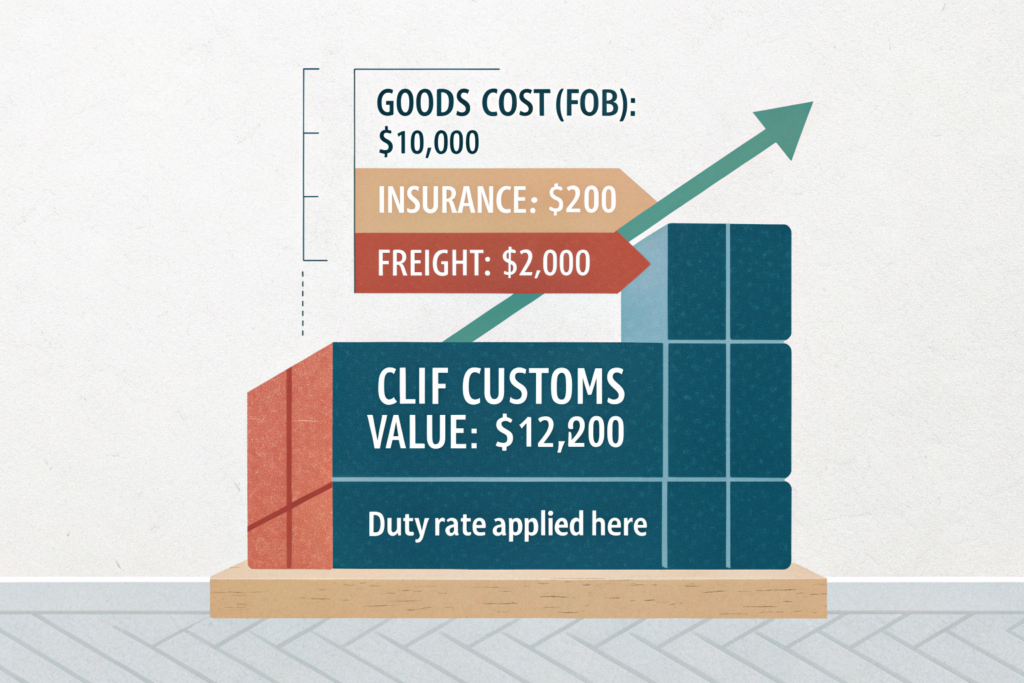
The formula is generally: Customs Value = Cost of Goods + Insurance Cost + Freight Cost to Port of Entry.
- Cost of Goods: The price you paid your supplier (FOB price).
- Insurance: The cost to insure the shipment.
- Freight: The cost to transport the goods to the port or point of entry in your country.
For example, if you bought coffee from us at $10,000 FOB Shanghai, paid $200 for insurance, and $2,000 for ocean freight to Los Angeles, your CIF value for U.S. customs would be $12,200. The duty rate is applied to this $12,200 figure. It's crucial that your commercial invoice from the supplier clearly breaks down these costs, as customs will review it.
Are There Other Valuation Methods Besides CIF?
Yes, but CIF is by far the most standard for imports into the U.S., EU, Canada, and Australia. Some countries may use FOB Value (Cost of Goods only) as the duty base. You must check your national regulations. The rules are set by the World Trade Organization's Valuation Agreement and implemented locally. For almost all coffee imports from China into major Western markets, the transaction value (CIF) is the correct method. When in doubt, your licensed customs broker will know the correct basis for your country.
How Do Incoterms Like FOB and CIF Affect the Duty Base?
Your Incoterms directly define what costs are included in your invoice and therefore in the declared value.
- FOB (Free On Board) Shanghai: Your invoice from us will show only the cost of the goods loaded onto the ship. You will have separate invoices for insurance and freight from other providers. You must add these to the goods cost to calculate the CIF value for customs.
- CIF (Cost, Insurance, and Freight) Los Angeles: Your invoice from us will be a all-inclusive price to the destination port. This single invoice value is typically your CIF customs value. This simplifies the calculation.
We offer both terms. For new importers, a CIF quote can make the landed cost more predictable and simplify your paperwork, though it may be slightly higher as we assume the freight and insurance risk.
What Are the Typical Duty Rates for Coffee in Key Markets?
Now for the rates. The good news is that coffee often enjoys low or zero duty in many countries due to trade agreements or generalized preference systems. However, "often" does not mean "always."
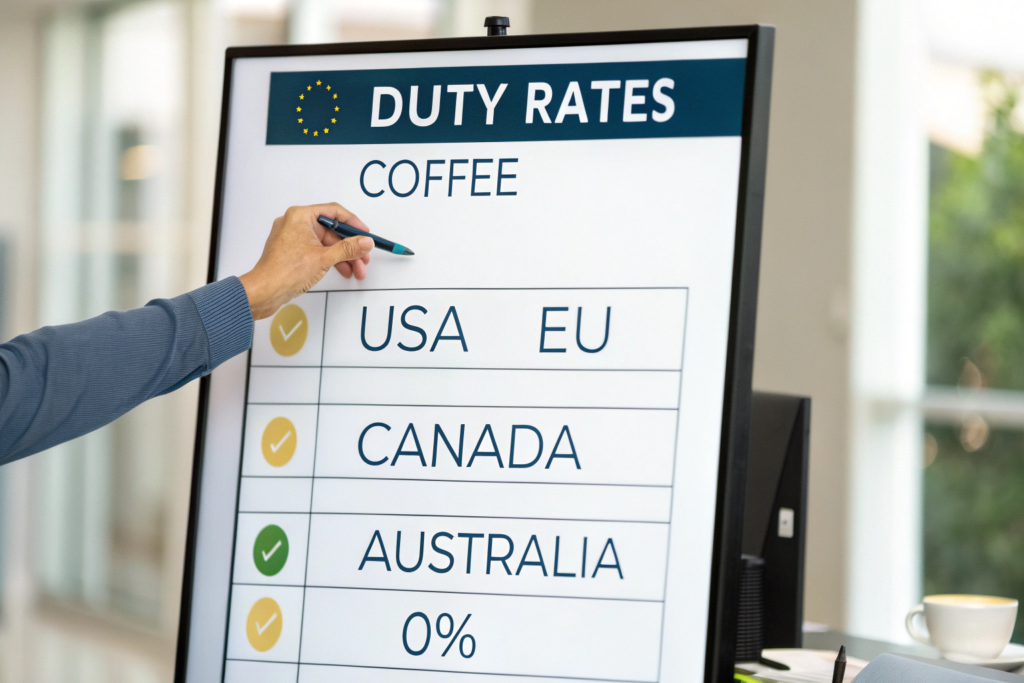
Here is a general guide for coffee imported from China:
| Destination | Typical HS Code | General Duty Rate (MFN) | Important Notes & Potential for 0% |
|---|---|---|---|
| United States | 0901.11.00 (Green) | 0% (Duty-Free) | Green coffee is generally duty-free. Roasted coffee may also be 0%, but always verify. |
| United States | 0901.21.00 (Roasted) | 0% | |
| European Union | 0901.11.00 (Green) | 0% | Most coffee enters the EU duty-free under the Generalized Scheme of Preferences (GSP). Certificate of Origin required. |
| European Union | 0901.21.00 (Roasted) | 7.5% | Roasted coffee carries a tariff. Check if your product qualifies for a suspension or reduction. |
| Canada | 0901.11.00 (Green) | 0% | |
| Canada | 0901.21.00 (Roasted) | 0% | |
| Australia | 0901.11.00 (Green) | 0% | |
| Australia | 0901.21.00 (Roasted) | 0% |
How Do Trade Agreements Affect Duties on Chinese Coffee?
China has Free Trade Agreements (FTAs) with many countries, but not with the U.S. or the EU. This means the Most Favored Nation (MFN) rate applies. However, many developed countries grant Generalized System of Preferences (GSP) status to developing nations, including China for some products. This can result in a 0% duty for eligible goods. This is critical: GSP benefits often require a specific Certificate of Origin (Form A in China) to be submitted with customs documents. As your exporter, we prepare this certificate for qualified shipments. Without it, you may pay the full MFN rate unnecessarily. Always ask your supplier, "Can you provide a GSP Certificate of Origin for this shipment?"
Are There Additional Taxes Beyond Import Duty?
Absolutely, and this is where many importers get a cost shock. Duty is just one part of the tax burden. You will almost certainly also pay:
- Value-Added Tax (VAT) / Goods and Services Tax (GST): This is a percentage applied to the sum of the CIF value and the import duty. For example, in the UK with a 20% VAT: If CIF value is £10,000 and duty is £0, VAT is £2,000. If duty were £500, VAT would be £2,100 (20% of £10,500).
- Excise Taxes: Rare for coffee, but always check local laws.
- Customs Processing Fees: A fixed fee for handling the entry.
Your total tax payable = Duty + (VAT/GST applied to (CIF Value + Duty)) + Other Fees. This is your true landed cost tax component.
How to Perform the Final Calculation and Plan for Payment?
Let's put it all together with a real-world example for a U.S. importer buying roasted coffee from us.
Scenario: Importing 10,000 kg of roasted Yunnan Arabica to Los Angeles.
- Determine HS Code: U.S. HTSUS code for roasted coffee is 0901.21.00.
- Determine Customs Value: Your invoice from us is CIF Los Angeles: $50,000. This is your customs value.
- Find Duty Rate: Check USITC HTSUS. For 0901.21.00, the general rate is 0% (Free).
- Calculate Duty: Duty = $50,000 x 0% = $0.
- Calculate Other Taxes: The U.S. has no federal VAT/GST on imports. However, you must pay a Merchandise Processing Fee (MPF), which is 0.3464% of the customs value, with a minimum of $27.23 and a maximum of $538.40.
MPF = $50,000 x 0.003464 = $173.20. - Harbor Maintenance Fee (HMF): 0.125% of cargo value.
HMF = $50,000 x 0.00125 = $62.50. - Total Estimated Customs Charges: $0 (Duty) + $173.20 (MPF) + $62.50 (HMF) = $235.70.

What Tools Can Help Automate This Calculation?
- Customs Broker: Your best tool. They have software that automatically pulls current rates and calculates everything.
- Online Duty Calculators: Many freight forwarders and logistics websites offer free calculators. Input HS code, origin, destination, and value for an estimate.
- Your Own Spreadsheet: Build a template with formulas using the official rates. This is good for budgeting but should be verified by a broker for actual shipment.
Who is Responsible for Paying the Duties and Taxes?
As the Importer of Record, you (or your designated entity) are legally and financially responsible for paying all duties, taxes, and fees to your country's customs authority. Usually, this is handled by your customs broker, who pays on your behalf and then invoices you. You need to ensure funds are available to reimburse them promptly to avoid clearance delays. This responsibility is a key reason why partnering with a trustworthy and transparent supplier who provides accurate paperwork is essential—it protects you from valuation disputes that can hold up payment and release of your goods.
Conclusion
Calculating duty rates for Chinese coffee imports is a systematic process of accurate classification, correct valuation, and application of the specific tariff schedule for your country. While the duty on green coffee is often zero, you must account for the full picture: the precise HS code, the CIF value, potential trade preference certificates, and, critically, additional taxes like VAT/GST and processing fees. Missteps in any of these areas directly impact your landed cost and profitability.
The most reliable approach is to partner with an experienced exporter who provides clear documentation and to engage a licensed customs broker in your country for the final calculation and filing. At BeanofCoffee, we support this process by ensuring our commercial invoices, packing lists, and certificates of origin are precise and compliant, giving you and your broker the clean data needed for an accurate assessment.
To get a detailed, all-inclusive CIF quote for your target port that helps clarify the pre-customs cost basis, or to discuss documentation requirements, please contact our sales lead, Cathy Cai. Let's ensure your cost calculations are built on a solid foundation from the very start.
Email Cathy at cathy@beanofcoffee.com for a transparent quote and expert guidance on import documentation.