You need to fill your warehouse. Your roasting schedule depends on it. You type "bulk coffee suppliers" into Google and get millions of results—from Alibaba storefronts to fancy specialty importers. Prices are all over the place. How do you find the truly cheapest source without getting burned? I talk to buyers like you every day. The hunt for low cost is real, but the cheapest price online often hides the highest risk.
The cheapest bulk coffee suppliers online are typically B2B marketplaces (like Alibaba) or direct exporters at origin who minimize intermediaries. However, "cheapest" must be balanced against total cost, which includes quality, reliability, and logistics. The most effective method is systematic filtering: use precise search terms on wholesale platforms, verify supplier credentials through audits and samples, and always calculate the landed cost—not just the FOB price.
That’s the strategy. But let’s be honest—anyone can post a low price. The real skill is separating the genuine high-volume producers from the risky trading companies. You need a process that protects you while finding that true cost advantage.
What Are the Most Effective Online Platforms for Sourcing?
Your starting point defines your options. General search engines like Google are overwhelming. Niche platforms can be expensive. The key is to match the platform to your volume and quality needs. For true bulk sourcing, B2B wholesale marketplaces are your primary tool, but they are just the first step.
For large-volume commercial buyers, Alibaba.com is the dominant global platform. Its strength is sheer volume and direct access to exporters, like us in China. For more specialized or premium green coffee, platforms like eCom or Trabocca connect buyers directly with origin, but prices reflect that curation. Don't overlook regional B2B sites specific to coffee origins, like those in Brazil or Vietnam. Also, LinkedIn has become a powerful professional network for finding export managers and company profiles. The platform dictates the type of supplier you'll find. On Alibaba, you'll find everything from small traders to major plantation owners. Your job is to filter aggressively.
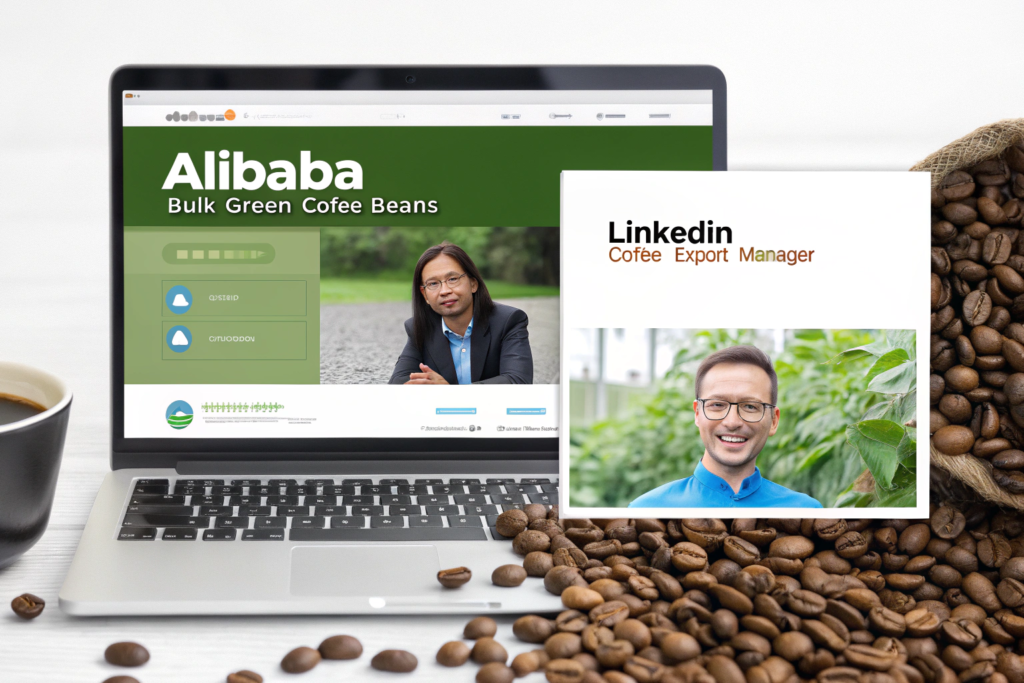
How to Use Alibaba Filters to Find Verified Suppliers?
Alibaba's power is in its filters, but most buyers don't use them deeply enough. Here’s a step-by-step approach:
- Search Term: Be specific. Use "bulk green arabica coffee beans" or "wholesale robusta green coffee" instead of just "coffee supplier".
- Filter by "Supplier Type": Crucially, select "Verified Supplier" and then "On-site Checked" or "Assessed Supplier." This means Alibaba has conducted some level of due diligence.
- Filter by "Business Type": Prioritize "Manufacturer" or "Plantation Owner" over "Trading Company". This gets you closer to the source.
- Look at Transaction History: A supplier with a history of "100+ Transactions" for a similar product is more reliable than one with zero.
- Check Response Time: Suppliers with a "24h" response rate badge are actively managing their storefront.
This process filters out countless unverified traders. It surfaces companies like Shanghai Fumao, where our profile clearly states we are a manufacturer/plantation owner with over 10,000 acres. This is how you start with a qualified list, not a random one.
Are Niche Coffee Sourcing Platforms Worth the Cost?
It depends on your priorities. Platforms like eCom or Cropster Marketplace offer transparency, lot-specific information, and quality guarantees. You're paying for curation, traceability, and reduced risk. For specialty roasters where exact quality is paramount, this cost is often justified. For large-scale commercial buyers seeking the cheapest price for consistent commercial-grade coffee (like Catimor or standard Arabica), these platforms may not be cost-effective. You are essentially paying a fee for a service you might replicate through your own direct supplier verification. The "cheapest" path usually involves building a direct relationship with a large-scale exporter at origin, which takes more legwork upfront but lowers long-term costs.
How to Verify a Supplier's Legitimacy and Capacity?
A low price is meaningless if the supplier can't deliver. Verification is your shield against fraud and disappointment. This step moves you from online browsing to serious procurement. You must confirm they are who they say they are and can do what they promise.
Start with a deep dive into their online presence. A legitimate bulk supplier should have a professional, informative website (like our BeanofCoffee site), active social proof, and consistent contact information. But you must go further. Request a copy of their business license and key certifications (like ISO, HACCP for processing). For capacity, ask direct questions: "What is your average monthly export volume for green Robusta?" or "Can you provide GPS coordinates of your farms?" A real producer will have answers and evidence. A trader might hesitate or give vague responses.

What Red Flags Should You Look for in Online Listings?
Watch for these warning signs:
- Prices that are too good to be true: Significantly undercutting the market often indicates a scam, low-quality beans, or hidden costs.
- Vague product descriptions: No mention of origin (e.g., Yunnan), grade, moisture content, or screen size.
- Stock photos only: No genuine photos of their facility, farms, or processing equipment.
- Pressure for upfront payment: Insisting on 100% T/T before production or shipment.
- Unprofessional communication: Poor English is not a deal-breaker, but evasiveness and inconsistency are.
- No physical address or verifiable contact: A P.O. Box is a red flag for a bulk supplier.
A legitimate supplier will be transparent. We always encourage potential clients to visit our plantations in Baoshan. If a visit isn't possible, we offer virtual tours and provide all requested documentation promptly.
How to Request and Evaluate Supplier Audits and Samples?
This is non-negotiable. Your request should be formal and specific.
- Request an Audit Report: Ask if they have a recent third-party audit report (SGS, Bureau Veritas) for their processing facility. This verifies quality control and operational capacity.
- Order a Pre-Shipment Sample: Pay for the sample and the courier. It shows serious intent. Specify the exact coffee you want sampled (e.g., "Your lot #XYZ of Catimor, grade AA").
- Evaluate the Sample Logistically: Did it arrive promptly? Was the packaging professional? Were the documents (invoice, analysis report) included?
- Evaluate the Sample Qualitatively: Cup it or have it lab-tested. Does it match the description? Compare it against the sample report they should provide (moisture, density, defect count).
This process separates real operators from paper companies. It turns an online price into a tangible product you can assess.
What Hidden Costs Make a "Cheap" Price Expensive?
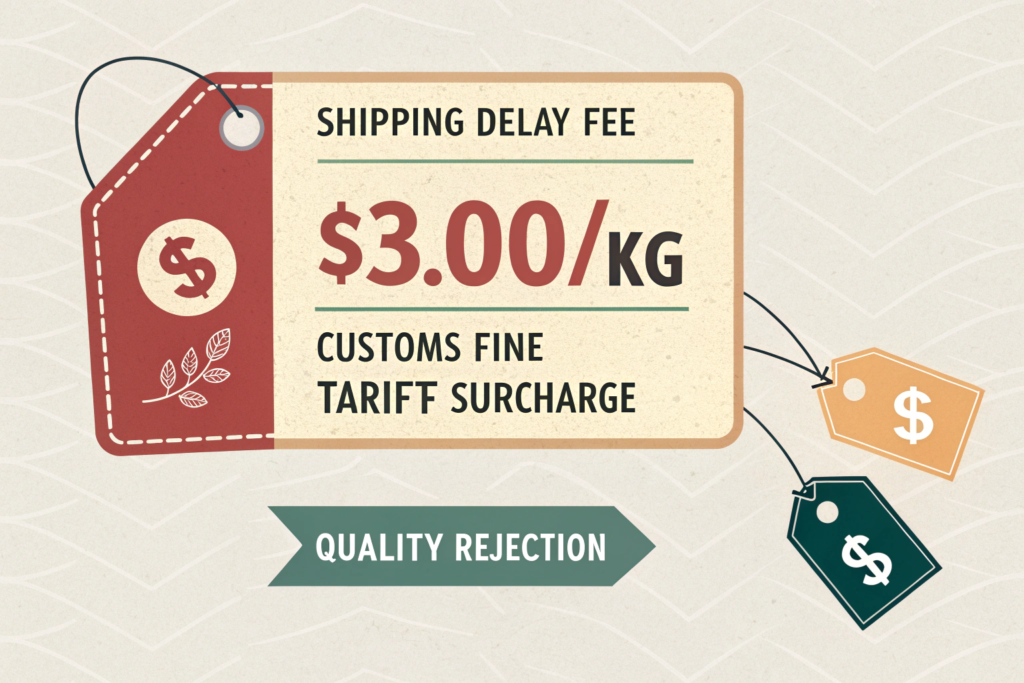
This is the core lesson. The FOB price you see online is just the beginning. A supplier may offer coffee at $3.00/kg FOB Shanghai. Another offers at $3.20/kg. The first seems cheaper. But does it include all the costs that will hit you later? You must calculate the Landed Cost.
Landed Cost = FOB Price + Shipping/Freight + Insurance + Customs Duties & Tariffs + Port/Harbor Fees + Inland Trucking + Customs Broker Fees + Potential Financing Costs. A "cheap" supplier might have unreliable logistics, leading to port delays and demurrage fees. They might provide poor documentation, causing customs holds. Their inconsistent quality might mean a higher defect count, so you're paying for waste. Their packaging might be subpar, leading to moisture damage in transit. All these are hidden costs that make the $3.20/kg supplier the truly cheaper option in the end.
How to Calculate True Landed Cost Per Kilogram?
Build a simple spreadsheet. Here’s a simplified example for shipping from China to the U.S. West Coast:
| Cost Component | Calculation Method | Estimated Cost (Example) |
|---|---|---|
| FOB Price | Supplier quote | $3.00/kg |
| Ocean Freight | Cost per container / total kg | $0.25/kg |
| Insurance | ~0.3% of cargo value | $0.01/kg |
| U.S. Customs Duty | Based on HS Code (often 0% for coffee) | $0.00/kg |
| Port & Broker Fees | Fixed fees amortized per kg | $0.15/kg |
| Inland U.S. Trucking | From port to your warehouse | $0.10/kg |
| **Total Landed Cost | Sum of all above | $3.51/kg |
Now, get the same quote from the $3.20/kg supplier. Their freight partnership might be better, bringing ocean freight down to $0.20/kg. Their reliable documentation might save on broker fees. Their reliable quality means no waste. Their total landed cost might be $3.45/kg. Suddenly, they are the cheaper, lower-risk option.
Why Does Payment Term Matter More Than Unit Price?
Payment terms directly affect your cash flow and risk. A supplier offering a slightly higher unit price but flexible terms (e.g., 30% deposit, 70% against copy of Bill of Lading) is often a better financial deal than a cheaper supplier demanding 100% upfront. The cheaper price ties up all your capital and transfers all the risk to you. If the shipment is delayed or has quality issues, you have no leverage. Favorable payment methods are a form of cost savings and risk management. They indicate a supplier's financial stability and confidence in their own process.
How to Negotiate with Online Suppliers for the Best Deal?
Negotiation isn't just about haggling on price. It's about structuring a deal that creates value for both sides. The goal is a long-term partnership that guarantees you stable, competitive pricing, not a one-time win.
Come to the negotiation informed. Know the current C-market price for comparable grades. Be clear about your volume and frequency ("I can commit to 4 containers per year"). This gives you leverage. Instead of just saying "your price is too high," ask: "Can we improve the price if I commit to a quarterly contract?" or "What is the best price for a full 40-foot container load (FCL)?" Discuss INCOTERMS. Moving from CIF to FOB might give you control over shipping and potentially lower your landed cost if you have a good freight forwarder.

What Leverage Do You Have as a Bulk Buyer?
Your main leverages are volume, consistency, and growth potential. A supplier wants predictable business. Offering a forward contract for multiple shipments over a year is highly attractive. It allows them to plan their production and purchasing. You can also leverage competition politely: "I have a comparable offer at X price, but I prefer to work with you because of your certifications. Is there any flexibility?" Also, being a smooth, professional client who pays on time and communicates clearly is a form of leverage. Suppliers discount for clients who are easy to work with, reducing their operational headaches.
Should You Prioritize Long-Term Contracts for Cheapest Prices?
For the absolute cheapest, stable prices, yes—if you have verified the supplier. A long-term contract (e.g., 12 months) allows a supplier like us to lock in costs at our origin and offer you a fixed or formula-based price. This protects you from market volatility. The risk is being locked into a supplier who underperforms. Therefore, a long-term contract should follow a successful trial order. Start with one container. If the quality, timeliness, and communication are excellent, then negotiate an annual agreement. This is the model that builds a stable and trustworthy supply chain. It turns you from a one-time buyer into a strategic partner, which always commands the best terms.
Conclusion
Finding the cheapest bulk coffee supplier online is a systematic process of smart searching, rigorous verification, and total cost analysis—not just a hunt for the lowest listed price. The platforms are tools, but your due diligence is the real differentiator. True cost savings come from partnering with a legitimate, capacity-backed exporter who offers reliability, transparent costing, and fair terms, turning low upfront price into low landed cost and low business risk.
This is the foundation of our export practice at BeanofCoffee. We compete on being the most reliable and trustworthy source, which in the long run delivers the most sustainable value and lowest total cost for our partners in North America, Europe, and Australia. We invite you to apply this process, and when you verify suppliers, include us in your evaluation.
For a transparent quote, sample offers, and verifiable documentation on our Yunnan Arabica, Robusta, and Catimor, please contact our Head of Sales, Cathy Cai. Let's discuss how a direct partnership can bring stability and true cost efficiency to your supply chain.Reach out to Cathy at cathy@beanofcoffee.com for your bulk sourcing needs.