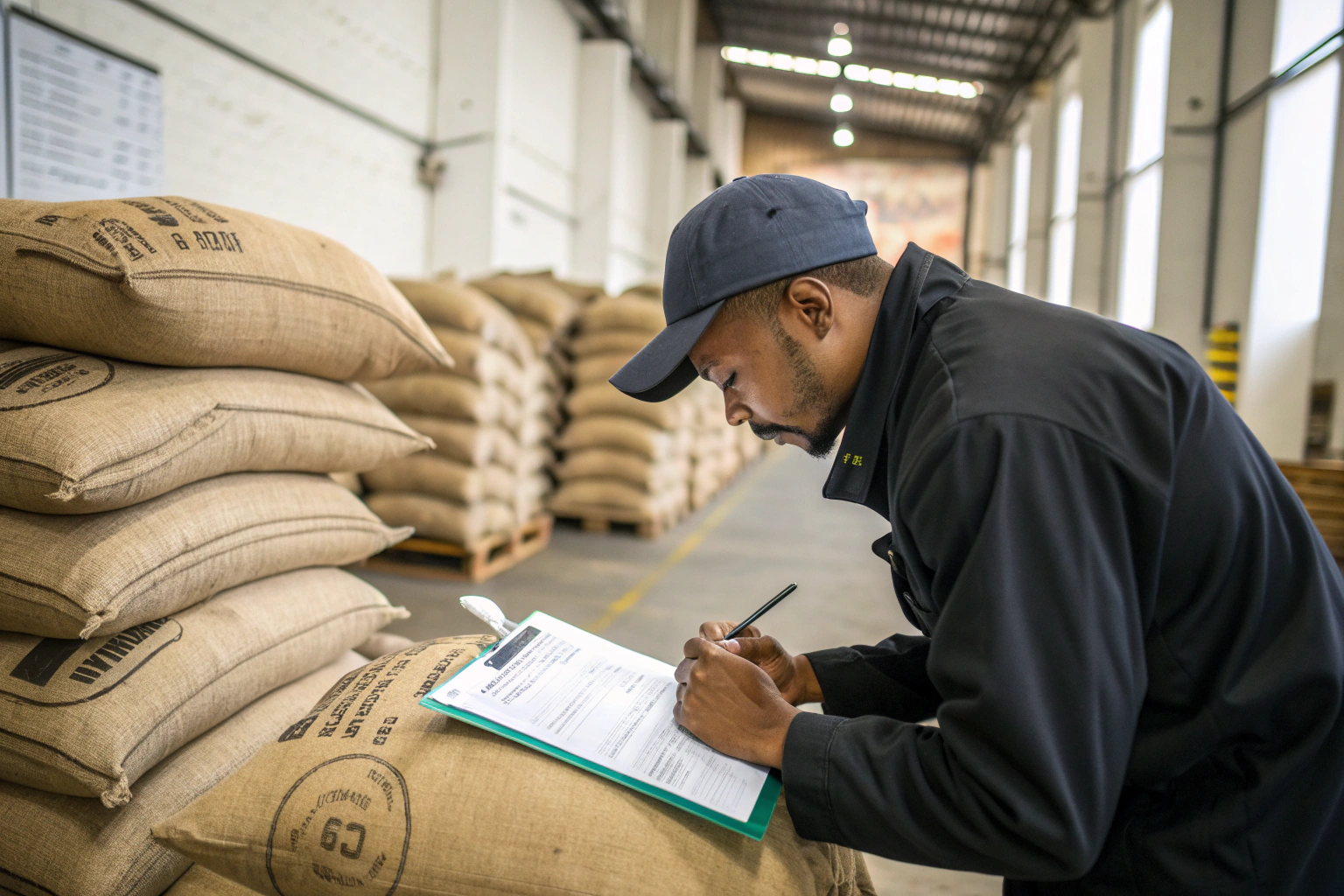
You've found the perfect coffee lot, the price is right, and the quality is exactly what you need. But if your documentation isn't in order, that perfect coffee will sit in a port warehouse, not your roastery. The paperwork is the unglamorous foundation of global trade. As an exporter who manages shipments daily, I can confirm that a complete document set is the truest mark of a professional, reliable, and trustworthy supplier.
Importing coffee requires a combination of commercial, transport, and regulatory documents. The universal core includes a Commercial Invoice, a Packing List, and a Bill of Lading. Critically, the required regulatory certificates vary by the coffee type (green vs. roasted) and the destination country's laws. For most markets, green coffee requires a Phytosanitary Certificate, while all food imports require compliance with the destination's food safety authority (like the FDA in the USA or EFSA in the EU).
That's the global standard. However, the devil is in the country-specific details. An importer in Germany needs different certificates than one in Australia. Getting the commercial papers right is half the battle; the other half is navigating the specific health, safety, and customs regulations of your port. Let's build the complete document checklist, layer by layer.
What Are the Universal Commercial Documents for Any Coffee Shipment?
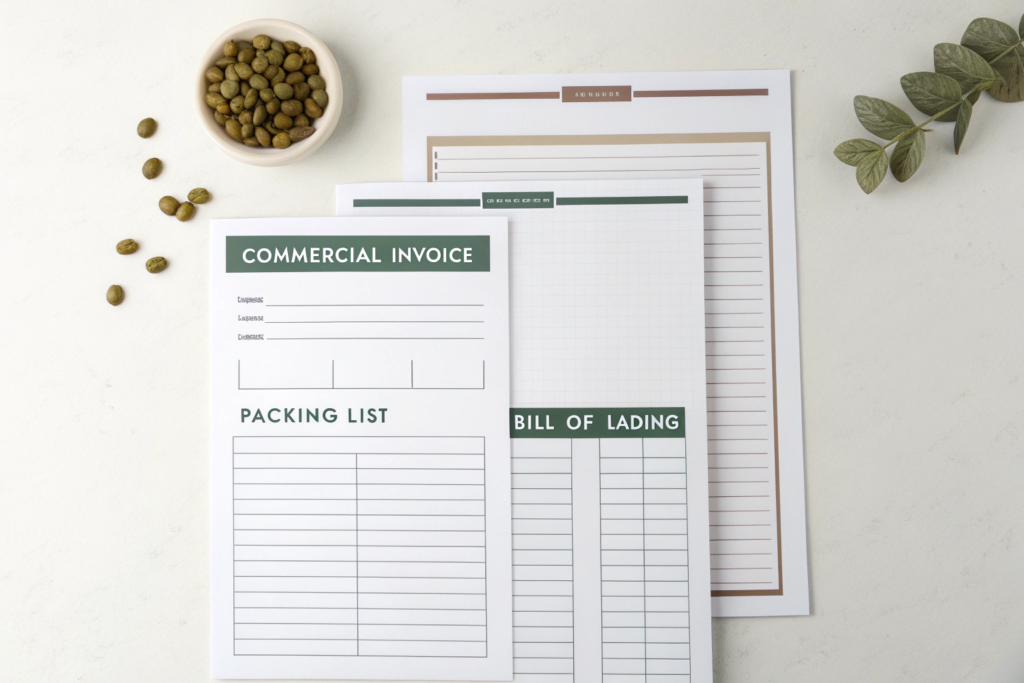
These three documents are non-negotiable for every single international shipment, regardless of destination. They form the legal and financial backbone of the transaction.
-
Commercial Invoice: This is the key document for customs valuation. Think of it as the definitive receipt. It must clearly state:
- Seller & Buyer: Full legal names and addresses.
- Product Description: Precise details (e.g., "Green Arabica Coffee Beans, Yunnan Origin, Grade AA, Screen Size 17/18").
- HS Code: The correct Harmonized System code for the product (e.g., 0901.11 for green coffee).
- Quantity & Price: Net weight in kilograms, unit price, and total value in the agreed currency.
- Incoterms: The trade term that defines responsibility (e.g., FOB Shanghai, CIF Rotterdam).
- Country of Origin: Must be explicitly stated (e.g., "China").
- Signature: Signed by the exporter.
-
Packing List: This is the "how" document. It details exactly how the goods are packed inside the container. It lists the number of bags (e.g., 275 jute bags), the net weight per bag (e.g., 60 kg), the gross weight (bag + beans), and the total net and gross weights. It is essential for logistics planning and any potential customs inspections.
-
Bill of Lading (B/L) or Air Waybill: This is the contract of carriage and, for ocean freight, a title document. The Original Bill of Lading proves ownership. The information on it—especially the consignee (receiver) and product description—must perfectly match the Commercial Invoice. Any discrepancy is a major red flag for customs.
Why is Perfect Consistency Between These Documents So Critical?
Customs authorities worldwide use automated systems. They cross-check every data point. If the invoice says "16,500 kg" and the packing list says "16,000 kg," the system will flag it. If the Bill of Lading description is vague ("Agricultural Products") but the invoice specifies "Coffee," it suggests misdeclaration. This triggers delays, requests for clarification, or physical inspections. Consistency is the single most effective way to ensure smooth clearance. This is a fundamental part of our process at Shanghai Fumao; we generate these documents from a single data source to ensure 100% alignment.
What's the Practical Difference Between an Original and a Telex Release B/L?
This choice impacts your speed and convenience.
- Original Bill of Lading: A physical set of 3 original papers. The exporter must courier them to you. You must present at least one original to the shipping line at the destination port to claim the goods. This adds days and risk of courier delay.
- Telex Release (Surrender): An electronic process. The exporter instructs the origin agent to "surrender" the B/L, meaning no original papers are needed. They email you a copy, which you use for pickup. It's faster, safer, and standard for trusted relationships. For coffee, where time can affect bean condition, this is often preferred. Discuss and agree on the method with your supplier upfront.
What Are the Key Regulatory Documents for Green vs. Roasted Coffee?
This is where requirements diverge based on your product's nature. Regulatory bodies treat raw agricultural commodities differently from processed foods.
For Green (Unroasted) Coffee Beans:
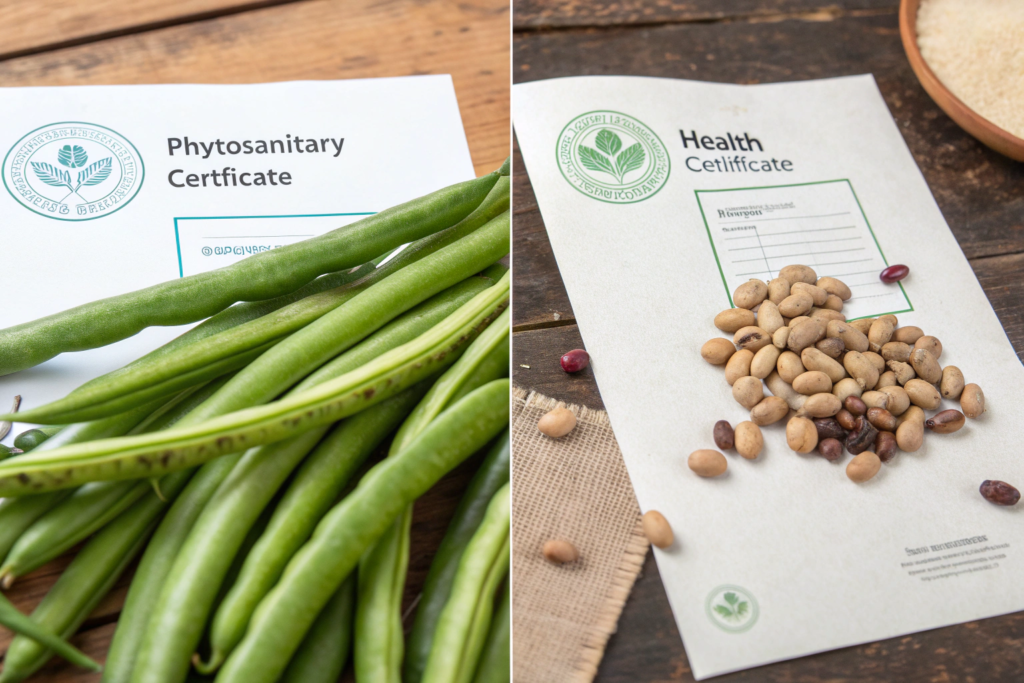
- Phytosanitary Certificate: This is the most important certificate for green coffee. Issued by the national plant protection organization of the exporting country (e.g., China's GACC), it certifies the shipment has been inspected and is free from quarantine pests, diseases, and soil. It is a mandatory requirement for almost all countries. Without it, your shipment will be refused entry or destroyed. We obtain this for every green bean shipment we make.
For Roasted Coffee Beans:
- Health Certificate / Food Safety Certificate: Because the roasting process eliminates pests, a phytosanitary certificate is usually not required. Instead, roasted coffee is treated as a processed food. Many countries require a certificate issued by the exporting country's health authority (e.g., China's Customs) attesting that the product is safe for human consumption and was produced in a registered, hygienic facility. This certificate often references the facility's HACCP or ISO 22000 certification.
For All Coffee (Green & Roasted):
- Certificate of Origin: This states where the coffee was grown. It is often required to claim preferential tariff rates under a Free Trade Agreement (FTA) or Generalized System of Preferences (GSP). For example, coffee from China may qualify for a reduced or zero tariff in some markets with a proper Form A certificate.
How Do FDA (USA) and EFSA (EU) Requirements Differ?
- USA (FDA): The U.S. Food and Drug Administration requires Prior Notice submission for all food imports and mandates that the foreign processing facility is FDA-registered. A phytosanitary certificate is required for green beans (USDA oversight). Roasted beans typically do not need one.
- European Union (EFSA): EU regulations are stringent. Imports require an Export Health Certificate (for roasted) or a Phytosanitary Certificate (for green). The exporter must be listed in an EU-approved establishment database. Furthermore, a significant percentage of shipments are subject to mandatory documentary, identity, and physical checks at the first port of entry into the EU. The paperwork must be flawless to pass.
Why is a Certificate of Origin More Than Just a Formality?
This document directly impacts your tariff costs. If your country has a trade agreement with China, presenting a valid Certificate of Origin can reduce your import duty to 0%. If you don't have it, you'll pay the standard "Most Favored Nation" rate, which could be 5-10%. It's literal money on the table. Always ask your supplier, "Can you provide a Certificate of Origin for this shipment to [Your Country]?" A competent exporter will know the correct form to use.
How Do Import Country-Specific Rules Change the Checklist?
Beyond the universal and product-specific documents, you must layer on the unique requirements of your destination country. This is where working with an experienced exporter and a local customs broker is invaluable.
Key country-specific considerations include:
- Customs Declarations: The specific forms required by your customs authority (e.g., CBP Form 3461 in the USA, Single Administrative Document - SAD in the EU).
- Import Licenses & Quotas: Some countries require specific licenses to import agricultural goods. Coffee is generally liberalized, but always verify.
- Additional Health Certifications: Certain countries may require tests for contaminants like ochratoxin A or specific pesticide residue reports.
- Labeling Requirements: While for green bean bulk imports this is less relevant, for retail-ready roasted coffee, the destination's labeling rules (language, nutritional info, etc.) must be met before customs clearance.
What are Common Additional Requirements for Major Markets?
- Australia (Department of Agriculture, Fisheries and Forestry): Requires strict import permits for both green and roasted coffee. The beans must be free from Khapra beetle risk, and the exporter must often provide a specific manufacturer's declaration.
- Japan: Has stringent food hygiene laws. An import notification must be submitted, and the processing facility must comply with Japanese standards. A Phytosanitary Certificate is required for green coffee.
- United Kingdom (post-Brexit): Now has its own system, similar but separate from the EU. Requires UK Health Certificates for roasted coffee and Phytosanitary Certificates for green coffee. Pre-notification on the UK's IPAFFS system is mandatory.
- Canada (Canadian Food Inspection Agency - CFIA): A Phytosanitary Certificate is required for green coffee. Roasted coffee may need other documentation. All importers must be registered with the CFIA.
Who is the "Importer of Record" and Why Does It Matter?
The Importer of Record (IOR) is the entity legally responsible for the shipment's compliance with all local laws. This is usually you, the buying company. The IOR's duties include:
- Ensuring accurate customs declaration and valuation.
- Paying all duties, taxes (VAT/GST), and fees.
- Maintaining records for the legally required period (e.g., 5 years in the USA).
- Filing specific pre-arrival documents (like the Importer Security Filing - ISF in the USA).
Your customs broker acts as your agent, but the ultimate legal and financial liability rests with the IOR. Choosing a reliable supplier who provides perfect paperwork is your first line of defense in mitigating this risk.
What is the Step-by-Step Customs Clearance Process?
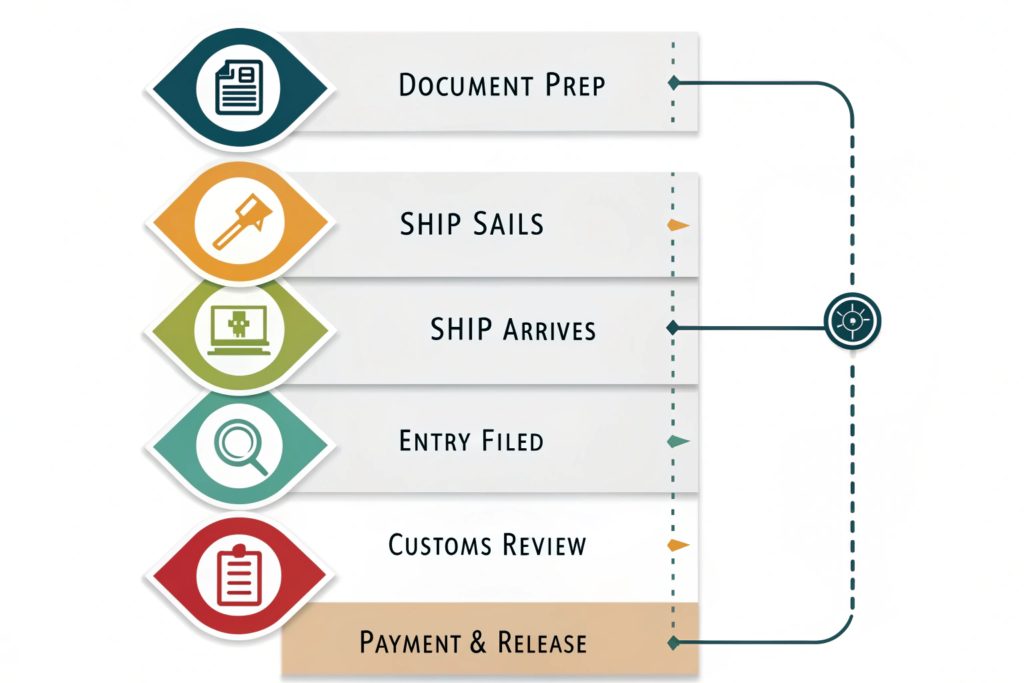
Understanding the journey of your documents helps you manage timelines and expectations. Here’s a generalized flow:
- Pre-Shipment: Exporter prepares documents. Importer/agent files any advance data (e.g., ISF in USA, pre-notification in UK).
- Shipment Departure: Exporter sends shipping documents (copy of B/L, invoice, packing list, certificates) to the importer.
- Goods Arrival: The vessel/plane arrives at the destination port.
- Entry Filing: Your customs broker submits the full package (Entry Manifest, commercial docs, regulatory certificates) to the customs and relevant agencies (FDA, USDA, etc.).
- Examination & Assessment: Authorities review the documents. They may:
- Release the goods immediately.
- Request More Information.
- Order an Inspection (documentary, physical, or both).
- Payment & Release: Once cleared, the importer pays the calculated duties and taxes. Customs releases the goods, and the shipping line is instructed to hand over the container to the importer's trucker.
What Are the Biggest Risks That Cause Delays (Demurrage)?
- Incorrect or Missing Certificates: The #1 cause. No phytosanitary for green beans = automatic hold.
- Data Inconsistencies: Weight, value, or description mismatches.
- Incorrect HS Code: Leading to wrong duty assessment.
- Slow Document Transmission: If the importer doesn't receive the B/L copy in time to file entry.
Delays lead to demurrage (port storage fees) and detention (container hold fees), which can cost hundreds per day. Perfect, timely documentation is your insurance against these costs.
Should You Use a Customs Broker?
For all but the most experienced importers, yes, absolutely. A licensed customs broker is an expert in your country's specific, ever-changing regulations. They file documents electronically, know how to resolve issues, and can save you from costly mistakes. Their fee is a wise investment for ensuring your coffee is released quickly and compliantly. Provide them with the complete, clean document set from your supplier.
Conclusion
Importing coffee successfully is a documentary exercise as much as a commercial one. The requirement list is defined by a universal commercial core, a product-specific regulatory layer (green vs. roasted), and a final, critical country-specific overlay. Mastering this three-tiered checklist is what separates smooth, profitable imports from logistical nightmares filled with delays and unexpected fees.
Your supplier plays a pivotal role. A professional exporter doesn't just ship beans; they are your partner in compliance, providing accurate, consistent, and complete documentation tailored to your destination. This is the essence of a stable, safe, and trustworthy supply chain partner.
If you are evaluating suppliers, scrutinize their understanding of documentation as closely as you cup their samples. Ask for examples of phytosanitary certificates, health certificates, and their knowledge of your market's rules.
For a complete sample document package relevant to your target market, or to discuss how we manage compliance for destinations in North America, Europe, and Australia, please contact our team.
Reach out to our sales lead, Cathy Cai, at cathy@beanofcoffee.com for documentation support and compliant coffee sourcing.