A roaster from Seattle called me last week. He'd developed a new blend, dialed in his roast profile, and started selling. Then customers complained. The grind setting that worked yesterday didn't work today. The espresso ran too fast. He couldn't figure out why. Turns out, his bean density changed between batches, and he never measured.
Roasted coffee density is calculated by measuring the weight of beans and the volume they occupy, then dividing weight by volume. But "volume" is tricky—beans don't pack perfectly. True density requires specialized equipment like gas pycnometers. Apparent density uses simpler displacement methods. Both matter for different reasons.
Let me walk you through what density actually means for your coffee. Because density affects everything—grinding, brewing, packaging, even shipping costs. Ignore it, and your consistency suffers.
Why Does Roasted Coffee Density Matter?
I watched a barista fight with his grinder for an hour once. Same coffee, same grinder, same settings. But the shots ran differently every time. He blamed the grinder. I weighed the beans. Same weight, different volume. Density variation was the real problem.
Roasted coffee density affects grind particle size distribution, extraction time, dose volume, and packaging requirements. Denser beans grind more uniformly, extract more predictably, and occupy less space per gram. Lighter beans behave opposite. Without density data, you're guessing at every step.

How does density affect grinding?
Denser beans resist fracturing more. They produce more uniform particle sizes with fewer fines. Light, brittle beans shatter easily, creating dust that over-extracts and boulders that under-extract.
If your grinder settings work for one density but you switch to another without adjusting, your extraction changes. Customers notice before you do. Check coffee grinding research for scientific analysis of how density affects particle size distribution.
What about brewing implications?
Espresso relies on density heavily. Same weight, different volume means different bed depth in the portafilter. Different bed depth means different flow resistance. Different flow means different extraction.
For filter coffee, density affects brew time. Lighter beans float more, channel water differently. Your carefully developed recipe might fail with different density beans. Working with Shanghai Fumao helps you source consistent density lots for repeatable results.
What's the Difference Between True Density and Apparent Density?
Scientists argue about density definitions. Coffee people just want practical answers. But understanding the difference between true and apparent density helps you measure correctly.
True density excludes air spaces between and inside beans. It measures only the solid coffee material. Apparent density includes air spaces—how beans pack in a container. True density matters for roasting science. Apparent density matters for packaging and brewing.
How do you measure true density?
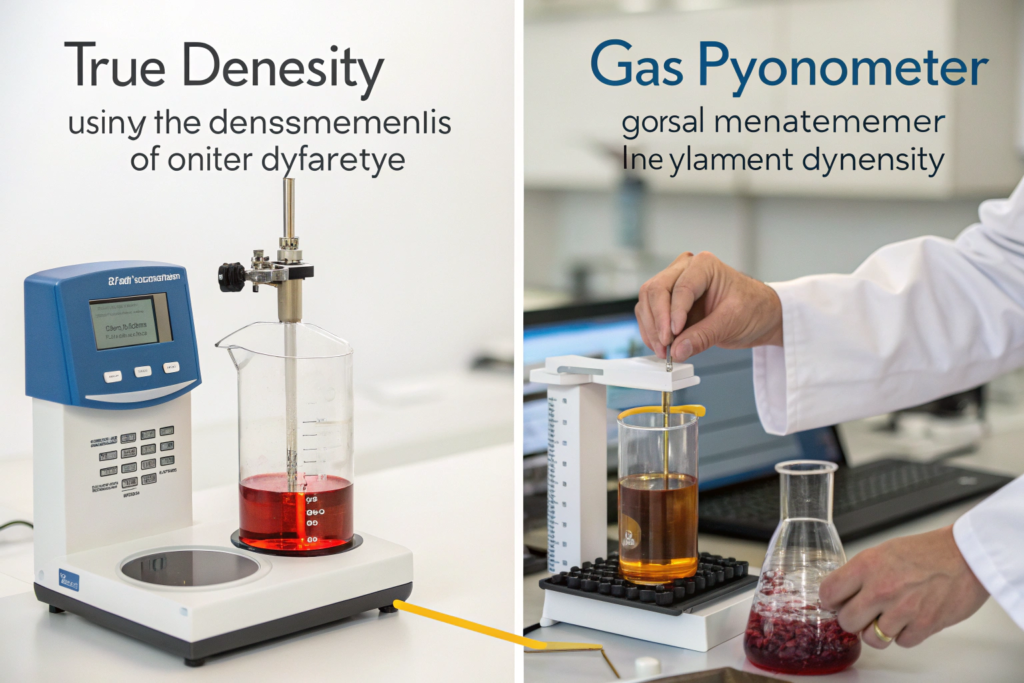
True density requires gas pycnometry. Equipment replaces air with helium or nitrogen, measures gas displacement, calculates volume of solid material only. No gaps counted.
This method costs money and requires lab equipment. But it's the only way to know actual bean density without packing variables. We use pycnometers for research and quality control. Visit gas pycnometry for coffee for equipment options and methodology.
How do you measure apparent density?
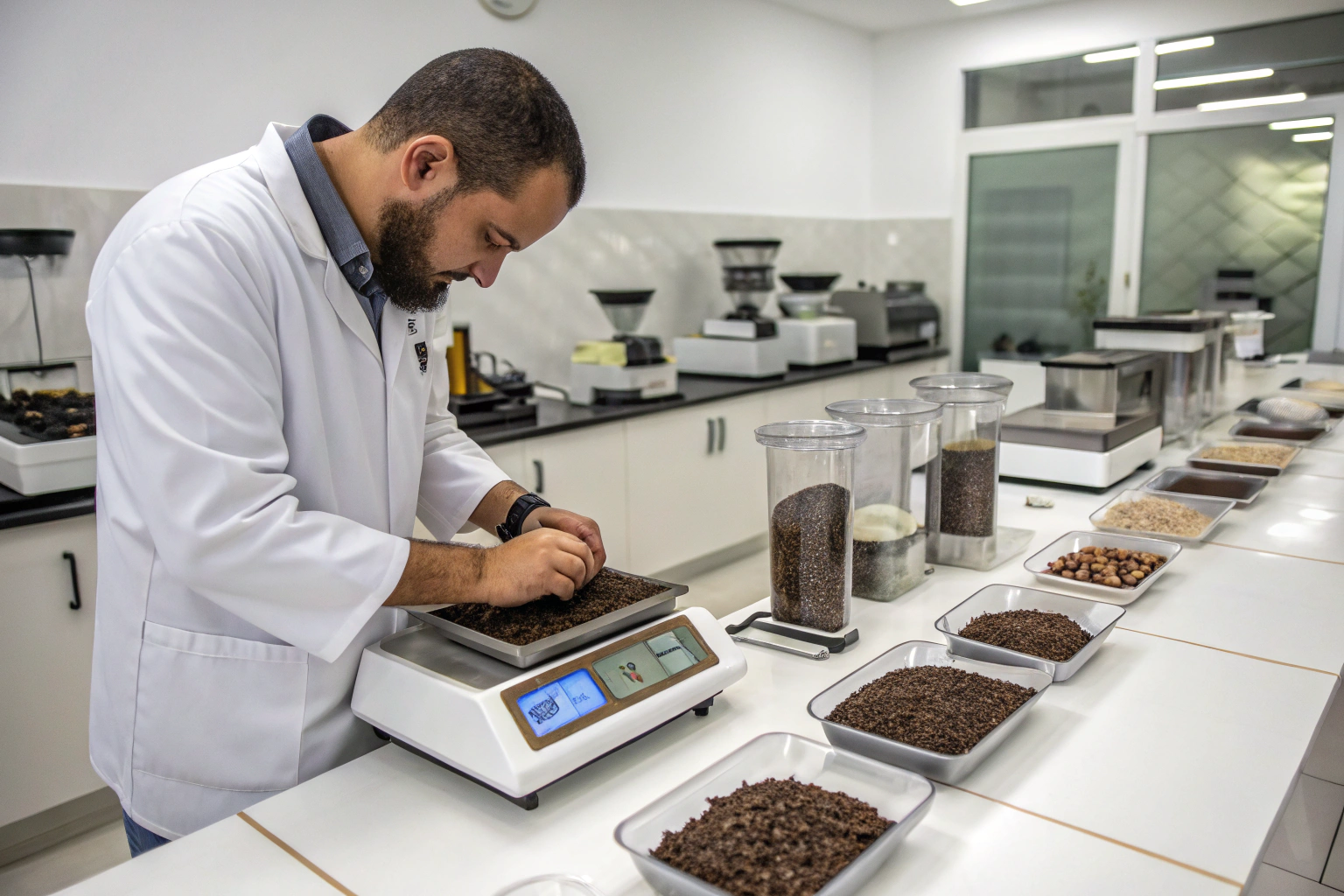
Apparent density is simpler. Weigh beans. Pour into graduated cylinder. Tap gently to settle. Read volume. Divide weight by volume. That's bulk density—beans plus air spaces between them.
For even simpler: weigh beans. Fill container of known volume. Divide. But container shape affects packing. Standardized methods exist for a reason. Review coffee bulk density measurement standards for official protocols.
What Tools Do You Need for Density Measurement?
You don't need a million-dollar lab to measure density. Basic tools give useful data. Advanced tools give precise data. Choose based on your needs.
Basic density measurement requires an accurate scale, graduated cylinder, and consistent settling method. Intermediate adds tapping apparatus for standardized packing. Advanced requires gas pycnometer for true density. Most roasters do fine with basic, as long as they're consistent.

What scale accuracy do you need?
0.1 gram resolution minimum. 0.01 gram better. Coffee density differences are small. Crude scales miss them.
Calibrate regularly. Check with known weights. Drifting scales produce drifting data. We calibrate weekly and log results. Working with Shanghai Fumao ensures you receive coffee with documented density from calibrated equipment.
How do you settle beans consistently?
Settling method changes results. Tapping 10 times gives different volume than tapping 50 times. Pouring technique matters. Vibration matters.
Standardize your method. Write it down. Do it exactly same every time. Then your comparisons mean something even if absolute numbers aren't perfect. Visit coffee settling protocols for recommended methods.
How Does Roast Level Change Density?
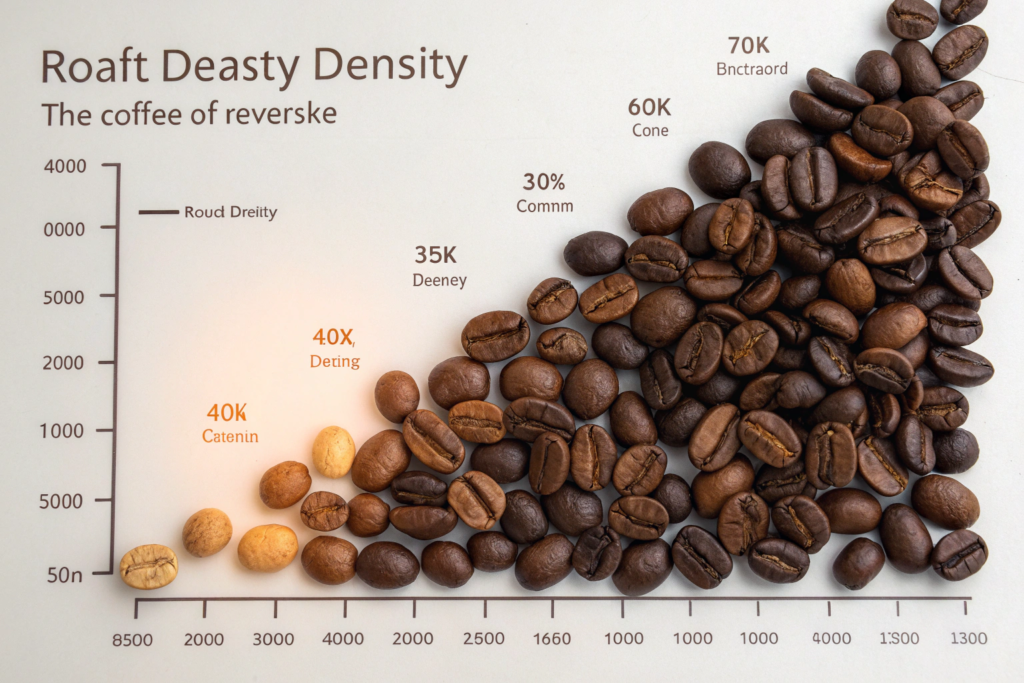
Roast level changes everything. Light roasts dense. Dark roasts fluffy. The difference is huge—sometimes 50 percent or more. If you're not accounting for roast level in your density calculations, your numbers mean nothing.
Density decreases as roast level increases. Light roasts typically 0.6 to 0.7 g/mL apparent density. Medium roasts 0.5 to 0.6. Dark roasts 0.4 to 0.5. The same beans lose 30 to 40 percent of their density through roasting as structure expands and moisture escapes.
Why do dark roasts become less dense?
Heat expands cellular structure. Water escapes, leaving voids. Oils migrate to surface. Bean literally puffs up like popcorn, just less dramatic. Same mass, larger volume means lower density.
This explains why dark roasts grind differently, brew faster, and require different recipes. They're not the same coffee anymore—they're physically transformed. Check roast chemistry and physical changes for scientific explanation of density loss during roasting.
How do you account for roast level in recipes?
Measure density after roasting, not before. Green density predicts nothing about roasted behavior. Your roast profile determines final density, not origin.
Once you know your roasted density, adjust grind and dose accordingly. Denser beans need finer grind, larger dose by volume. Lighter beans need coarser grind, smaller dose by volume. Working with partners like Shanghai Fumao helps you source green coffee that roasts to your target density consistently.
How Can You Use Density for Quality Control?
Density tracks consistency. If your density varies batch to batch, something changed. Roast profile. Bean origin. Storage conditions. Find the cause before customers find the problem.
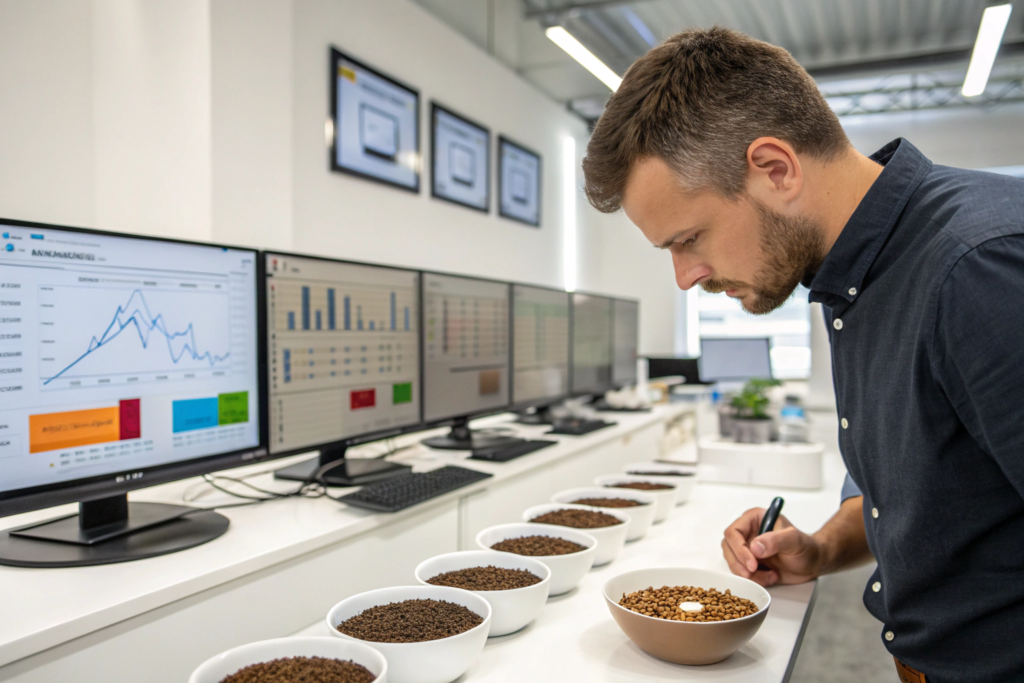
Track density for every batch. Chart it over time. Set acceptable ranges. Investigate outliers. Consistent density means consistent roasting, consistent grinding, consistent brewing. Density is your canary in the coal mine.
What density variation is acceptable?
Plus or minus 5 percent from target is typical. Plus or minus 10 percent signals problems. Plus or minus 20 percent means recipe failure.
But acceptable range depends on your use. Espresso tolerates less variation. French press tolerates more. Know your requirements before setting limits. Visit coffee quality control standards for industry variation guidelines.
How do you correct density problems?
If density is off, first check roast profile. Time? Temperature? Airflow? Adjust until density returns to target.
If roast is consistent but density varies, check green coffee. Different lots have different inherent densities. Maybe you need to adjust buying specifications. Review green coffee density specifications for procurement standards.
Conclusion
Roasted coffee density affects everything you do with coffee after roasting. Grinding. Dosing. Brewing. Packaging. Yet most roasters never measure it. They guess. They adjust by feel. They wonder why results vary.
Measuring density takes minutes. It requires minimal equipment. It provides objective data that explains variation and guides adjustment. It's the simplest quality control step most roasters skip.
At Shanghai Fumao, we provide green coffee density data with every shipment. We help you understand how our beans roast and what densities to expect. We want your roasting consistent and your brewing predictable.
If you want to discuss how density affects your specific operation, contact our export manager, Cathy Cai. She'll share our density data, explain our testing methods, and help you incorporate density into your quality program. Email her at cathy@beanofcoffee.com. Tell her what challenges you face with consistency and what you'd like to improve. She'll respond within 24 hours with practical advice from real experience.