
I have spent countless hours pulling shots. Testing blends. Adjusting grind. Watching crema form. And honestly? Choosing coffee for espresso is different from choosing for any other brew method. The pressure changes everything. The concentration changes everything. What tastes great as filter coffee can be terrible as espresso.
When I first started roasting for espresso, I made every mistake possible. Too acidic. Too bitter. No crema. Dead shots in seconds. But over the years, I learned. And now, helping buyers choose espresso blends is one of my favorite parts of this job. You can read about espresso science on Barista Hustle or check blend guides on Perfect Daily Grind.
Let me walk you through what I have learned. How to select beans. How to build blends. How to test. Because if you are roasting for espresso, or buying for your cafe, getting this right matters.
What Makes a Coffee Good for Espresso?
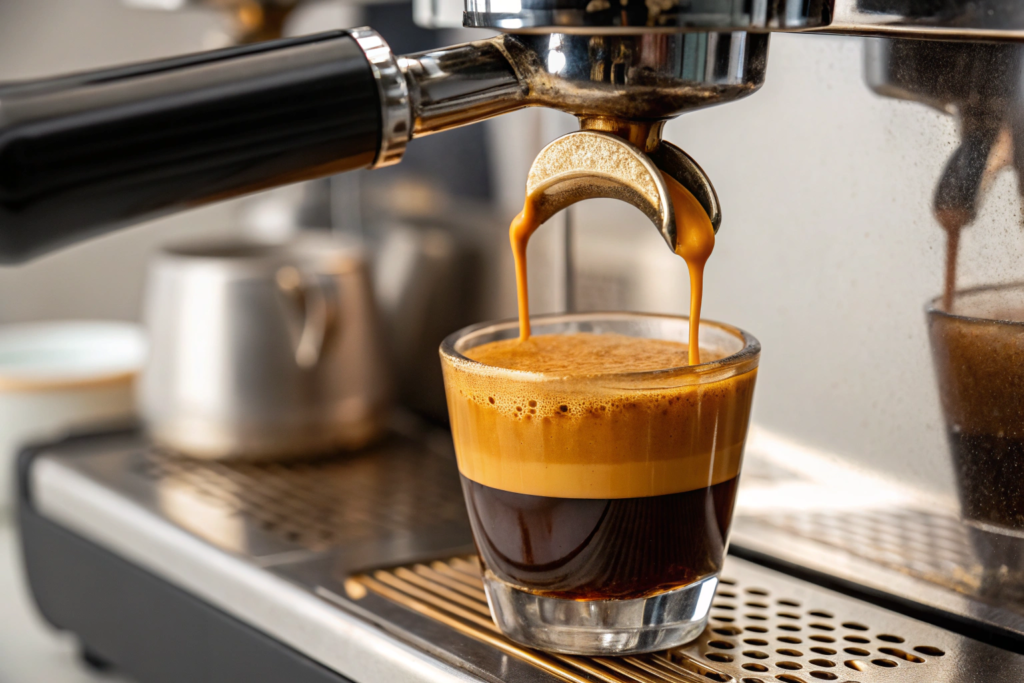
Espresso is concentrated. About 7 to 9 grams of coffee becomes 30 to 40 grams of liquid. That concentration magnifies everything. Good flavors become intense. Bad flavors become unbearable.
So what works? Beans with body. Beans with sweetness. Beans with balance. High acidity can work, but it must be balanced by sweetness and body. Otherwise, the espresso tastes sour and sharp.
What flavor profiles work best for espresso?
Chocolate, nuts, caramel, stone fruits. These work. They translate well under pressure. They read as sweet and smooth.
Floral and citrus notes are trickier. They can be amazing in the right blend. Bright, complex, interesting. But if they are too dominant, the espresso can taste like lemon juice. Not good. So you use them carefully, as highlights, not bases.
How does roast level affect espresso?
Medium to medium-dark is the sweet spot for most espresso. Light roasts can be too acidic. Hard to extract. They require precision and skill. Dark roasts can be too bitter. They lose origin character.
We roast our espresso blends to what we call "full city." Just into second crack but not beyond. That gives you sweetness, body, and enough development to extract well under pressure. You can read about roast levels on Roast Magazine.
How Do You Choose Beans for an Espresso Blend Base?
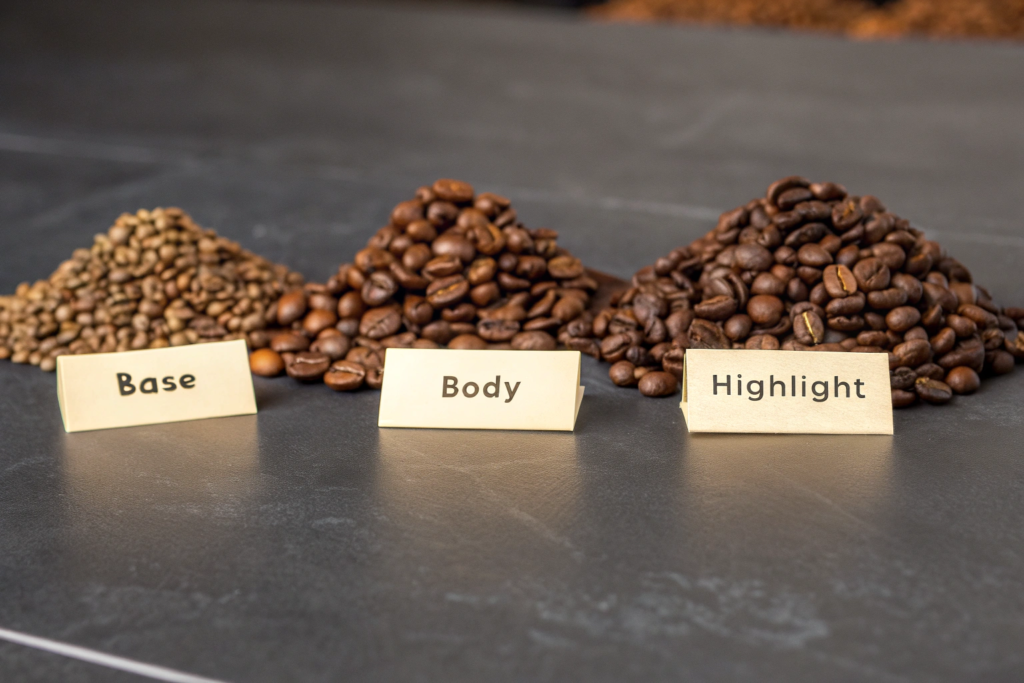
Every espresso blend needs a foundation. The base. This is 50 to 70 percent of the blend. It provides the core flavor, the body, the crema stability.
The base should be reliable. Consistent. Available year-round. You do not want your espresso to change every season because your base changes.
What origins make good espresso bases?
Brazil is classic. Low acidity, nutty, chocolatey. Consistent. Affordable. Colombian works too. Clean, balanced, slightly brighter than Brazil.
Our Yunnan Arabica makes an excellent base. It has body. It has sweetness. It is clean and consistent. We use it in many of our espresso blends. Buyers love it. It holds up to milk beautifully. Our partners at Shanghai Fumao have helped us introduce Yunnan-based espresso blends to buyers worldwide.
What characteristics should the base provide?
Body is essential. The base gives the espresso weight. Mouthfeel. That thickness that coats your tongue.
Crema is another. The base should produce stable, persistent crema. Not thin and bubbly. Thick and golden. That comes from proper roast development and bean selection.
Sweetness too. The base should not be sour or bitter. It should be sweet. Neutral enough to work with other components.
What Role Do Supporting Beans Play in Espresso Blends?
The base is the foundation. But supporting beans add complexity. Interest. Character.
You might add 20 to 30 percent of a bean that brings chocolate notes. Another 10 to 20 percent that brings fruit. The goal is balance. Nothing dominates. Everything works together.
What origins add complexity to espresso?
Ethiopian beans add fruit. Berries, citrus, florals. Use them carefully. Too much and the espresso becomes tea-like. Loses body.
Central Americans add brightness. Clean acidity. They lift the blend. Make it more interesting.
Indonesians add earth and spice. Heavy body. They can be powerful. A little goes a long way.
How do you balance different origins in a blend?
You taste. You adjust. There is no formula. Every crop is different. Every roast is different.
Start with a simple ratio. 60% base, 30% body, 10% highlight. Cup it. Adjust. Maybe more base if it is too bright. Maybe more highlight if it is too boring. It takes time. But that is the work.
How Do You Test Espresso Blends Before Committing?
You cannot just taste espresso as drip coffee. You have to pull shots. Real shots. On real equipment.
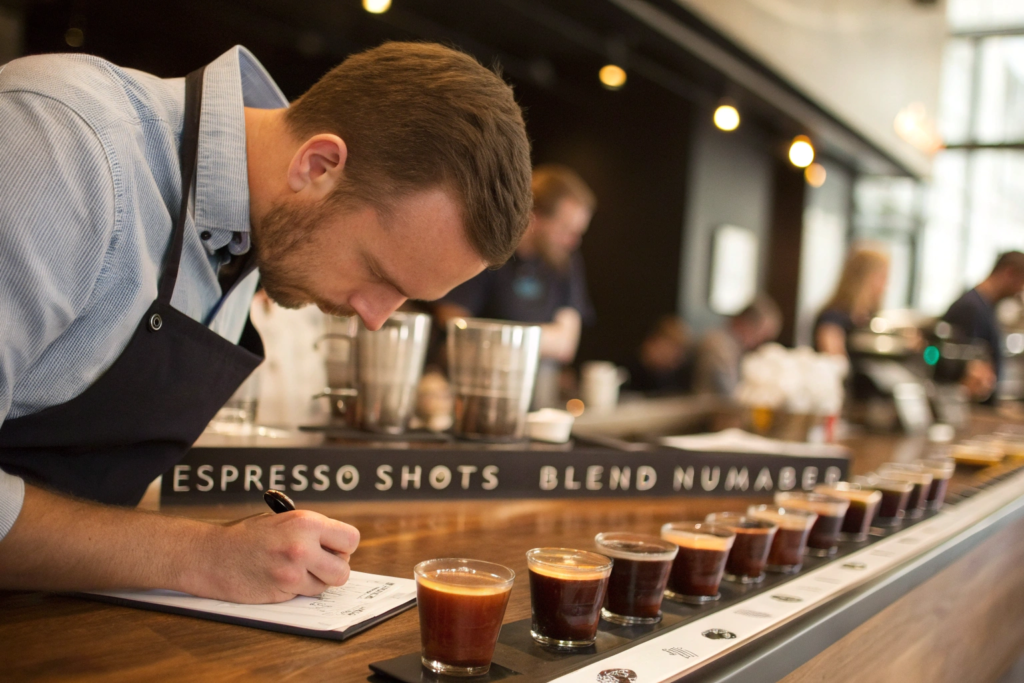
We test every potential blend on our espresso machine. Same dose. Same temperature. Same pressure. We watch the pour. We time it. We taste it. Straight and with milk.
What parameters should you test?
First, dose and yield. How much coffee, how much liquid. We start with a 1:2 ratio. 18 grams in, 36 grams out. Then adjust.
Time matters too. 25 to 30 seconds is the target. Faster might be under-extracted. Sour. Slower might be over-extracted. Bitter.
Crema is a clue. Thick, persistent, hazel-colored crema is good. Thin, pale, bubbly crema is bad.
How do you evaluate espresso straight and with milk?
Taste straight first. Acidity, sweetness, body, finish. Then add milk. Does the coffee cut through? Or does the milk dominate?
For milk drinks, you need body. The coffee should still be present after milk. Not washed out. Not overwhelmed. Some blends that taste harsh straight become perfect with milk. You have to test both.
How Do You Ensure Consistency in Espresso Blends?
Espresso drinkers are creatures of habit. They want the same shot every day. If your blend changes, they notice.
Consistency is hard because coffee changes. New crop is different from old crop. Weather changes flavor. You have to adjust.
How do you maintain the same flavor year after year?
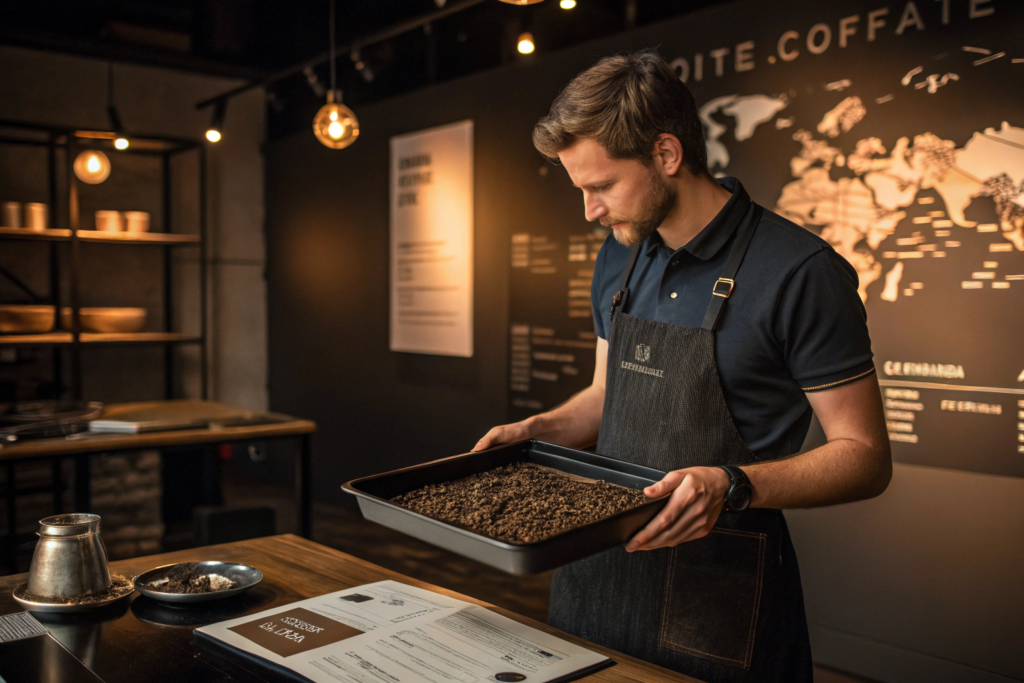
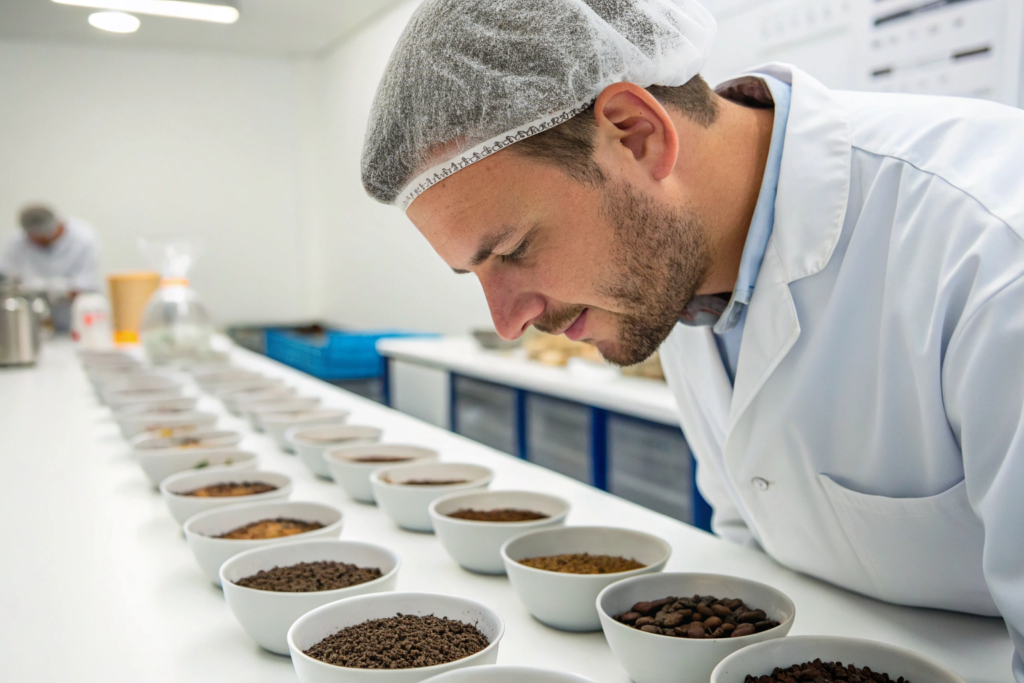
You keep a reference sample. Vacuum sealed. Frozen. That is your target. Every new batch gets cupped against that reference.
When a component changes, you adjust the blend. Maybe the new Brazil is more chocolatey, so you reduce another chocolate component. Maybe the new Yunnan is sweeter, so you balance with something neutral. The formula changes. The flavor stays the same.
What do you do when a key component becomes unavailable?
You plan ahead. You always have backup options. If you depend on one specific origin, you are vulnerable.
We keep multiple options for each role in our blends. Different origins that can substitute. And we test them ahead of time. So when something is unavailable, we know exactly what to use instead. Our partners at Shanghai Fumao help us source these alternatives and maintain consistency.
Conclusion
Choosing coffee for espresso blends is both science and art. You need the right base. The right supporting beans. The right roast. You need to test, adjust, test again. And you need consistency year after year.
At Shanghai Fumao, we have developed espresso blends for buyers around the world. For cafes, roasters, distributors. We know what works in milk. What works straight. What works in different climates and different waters.
If you are looking for espresso blends, or if you want help developing your own, reach out to us. Let us talk about your needs. Your market. Your preferences. We can send samples. Share our experience. Contact our export manager, Cathy Cai, at cathy@beanofcoffee.com.