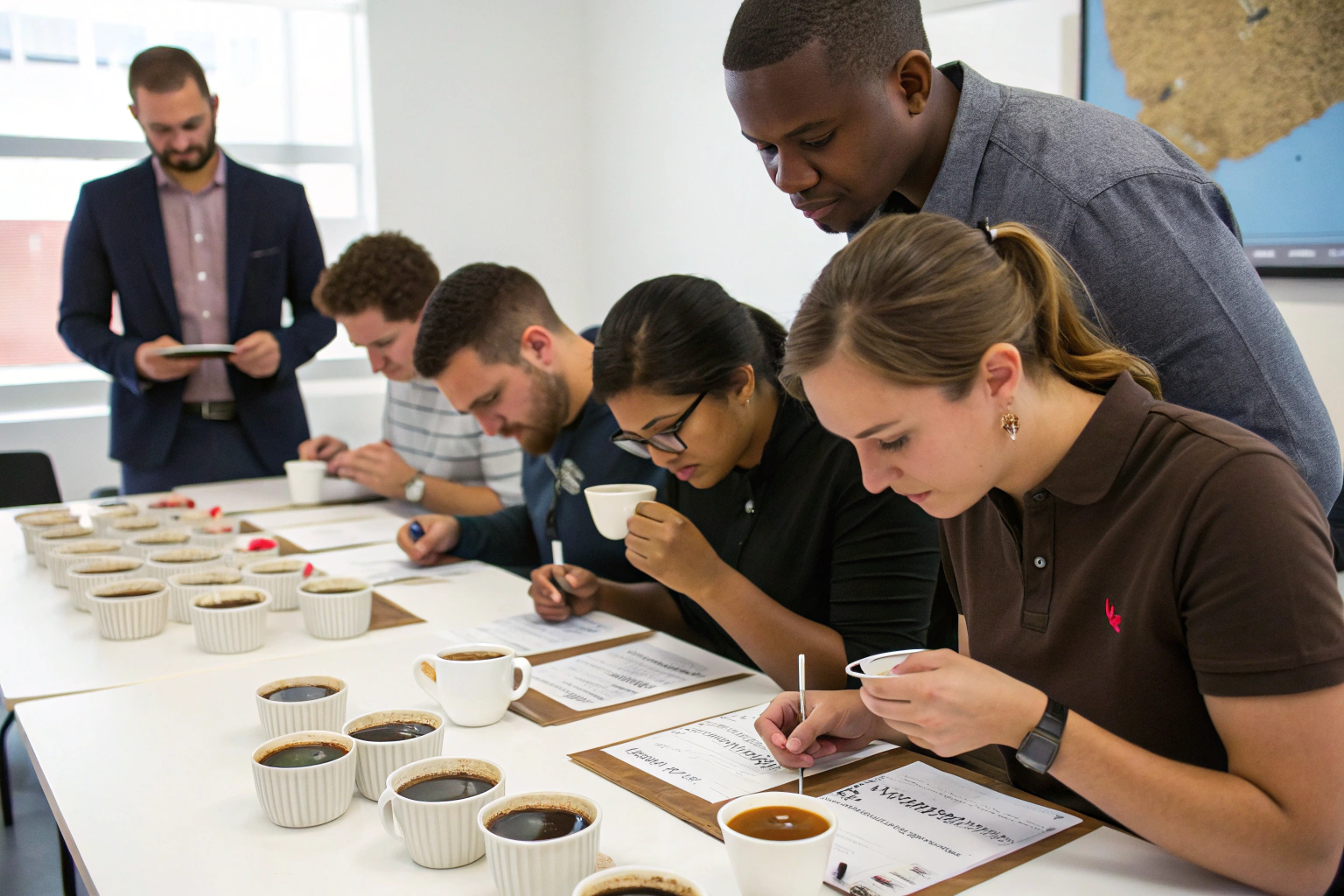
I have been blending coffee for over 15 years now. And honestly? Creating a blend that sells is harder than it looks. When I first started at BeanofCoffee, I thought blending was just mixing beans together until the cup tasted good. I was wrong. You know what I learned? A great blend is not just about taste. It is about consistency, cost, supply, and your customer's expectations. One of our best-selling blends almost failed because I ignored the supply side. The beans were perfect, but we could not get enough of them year-round. That was a painful lesson.
So, how do you create a coffee blend that sells well? The short answer is this: you need to balance flavor, cost, and availability. You need to understand your target market. And you need to test relentlessly. But let me break that down for you in a way that actually helps. You can study blending techniques on Roast Magazine or check market trends on Perfect Daily Grind.
Let me walk you through the process I use. The mistakes I have made. The successes I have celebrated. Because if you are a roaster or a buyer trying to build a blend that keeps customers coming back, this is for you.
How Do You Define Your Target Market Before Blending?
Look, you cannot blend for everyone. If you try, you end up pleasing no one. Before you even touch a bean, you need to know who you are blending for. Are you selling to specialty coffee shops? Or supermarkets? Home brewers? Office accounts? Each group wants something different.
Specialty shops want complexity. They want interesting origins. They want stories they can tell their customers. Supermarkets want consistency. They want the same cup every single time, month after month. Home brewers want forgiveness. Beans that taste good even if the brew is not perfect. Office accounts want body and familiarity. Nothing too wild. You have to pick your target. And then blend for them. You can research consumer preferences on National Coffee Association or check demographic data on Statista.
What price point does your target market expect?
This is huge. Price determines your bean selection. If you are selling to the mass market, you need lower-cost beans as your base. If you are selling to specialty, you can use more expensive components. But you have to know the ceiling.
We once developed a blend using high-grade Arabica from our Yunnan farms. It tasted amazing. But when we priced it out, it was too expensive for the buyers we were targeting. We had to go back and reformulate with a different cost structure. That was months of work wasted. Now we set the price target first, then build the blend to fit.
What flavor profile is popular in your target region?
Different markets want different things. In North America, many drinkers want smooth, chocolatey, nutty profiles. In Europe, especially Scandinavia, they want bright, fruity, acidic coffees. In Australia, they want balance. Something that works for both espresso and milk drinks.
We pay close attention to these regional preferences. For our buyers in the U.S., we often build blends with Brazil or Colombia as a base, then add our Yunnan beans for body. For our European clients, we might use more African beans for brightness, with Yunnan adding sweetness. You cannot ignore where your coffee is going. Our partners at Shanghai Fumao help us track these regional trends through their export data.
How Do You Select Base, Mid, and Top Notes for Your Blend?
Think of blending like building a house. You need a foundation. You need structure. And you need something that makes it special. That is base, body, and highlight. Every good blend has these three elements.
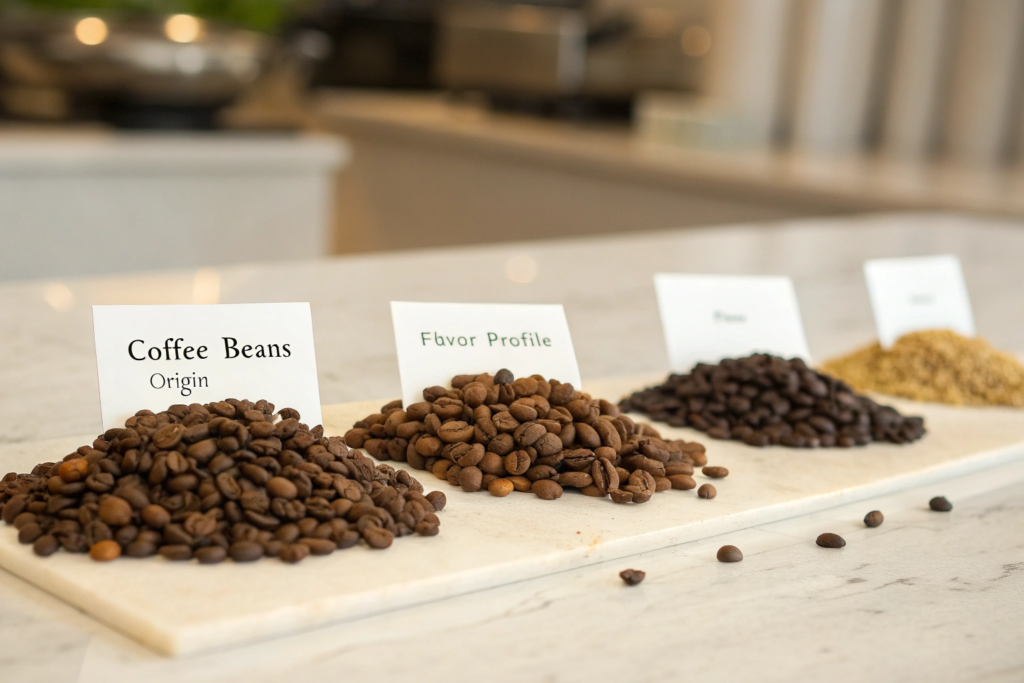
The base gives you the foundation. Usually 50 to 60 percent of the blend. These beans provide the core flavor and mouthfeel. They are often reliable, consistent origins. Brazil, Colombia, Vietnam. For our blends, we often use our Yunnan Arabica as the base. It is clean, sweet, and dependable.
The body or mid notes add complexity. Another 20 to 30 percent. These beans bring specific flavors. Chocolate, nuts, spice. They support the base and add depth. The highlight or top note is the star. 10 to 20 percent. These beans bring the distinctive character. The thing that makes your blend memorable. Fruit, florals, wine. Something that stands out.
What origins work best for each role?
For base, look for origins known for consistency and neutral flavor. Brazil Santos. Colombian Excelso. Our Yunnan Arabica. These are not boring. They are reliable. They give you a clean canvas.
For body, think about Guatemala, Costa Rica, or Peru. These bring chocolate and nut notes. They add weight to the cup.
For highlight, go with Ethiopia, Kenya, or natural processed Yunnan. These bring the fruit. The berries. The citrus. But use them sparingly. Too much highlight and the blend becomes unbalanced. Too little and it is forgettable.
How do you ensure your components are available year-round?
This is the trap I fell into early. I built a blend using a small-lot Ethiopian natural. It was incredible. But after three months, that lot sold out. The farmer could not produce more. The replacement was different. My customers noticed.
Now we only use components that we can source consistently. For our Yunnan beans, that is easy. We own the farms. We control the supply. For other origins, we work with trusted partners who guarantee volume. And we always have backup options. If one component becomes unavailable, we know exactly what we will substitute. You cannot afford to change your blend without warning your customers.
What Ratios Should You Test When Developing a Blend?
Here is where the real work begins. You have your components. Now you need to find the right ratios. And honestly? This takes time. There is no shortcut.
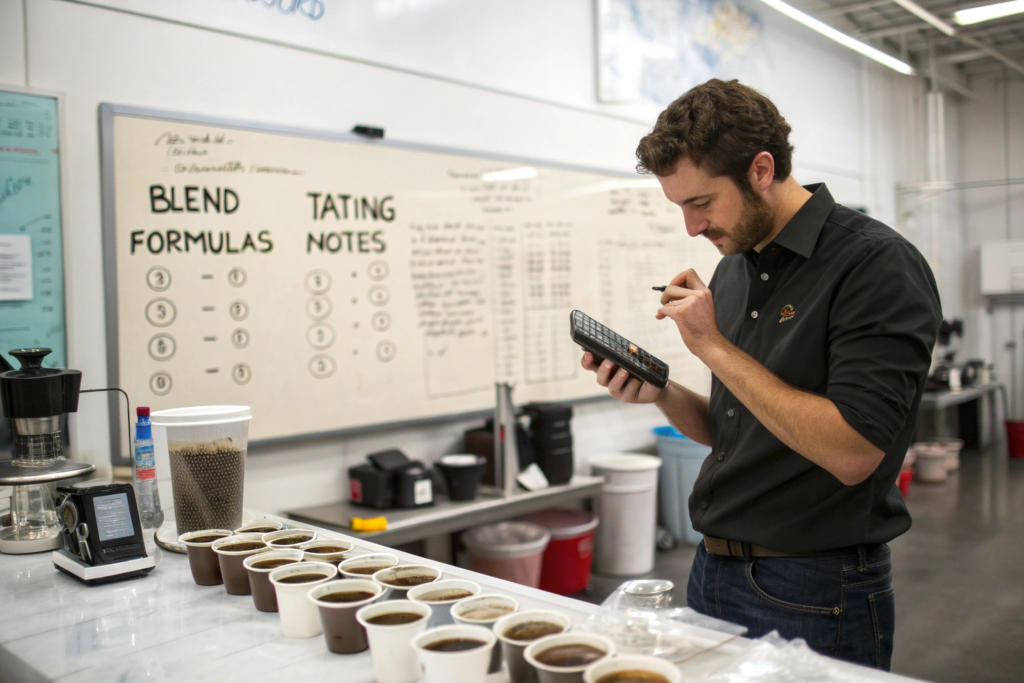
Start with simple ratios. 60/20/20. 50/30/20. 70/15/15. Cup them side by side. Take notes. Adjust. Then try again. We usually go through at least five to ten iterations before we settle on a final blend. Sometimes more. It is tedious. But it is necessary.
How do you cup and compare different blend iterations?
Do not just cup them once. Cup them multiple times. On different days. At different times. Your palate changes. Your mood changes. A blend that tastes great on Tuesday might taste flat on Friday. You need consistency across multiple sessions.
Also, cup them blind. Do not know which ratio you are tasting. That removes bias. Just score each one on flavor, acidity, body, aftertaste, and balance. The numbers will tell you which one wins. We use SCA cupping forms for this. You can download them from Specialty Coffee Association.
When do you know the blend is ready?
You know it is ready when it passes three tests. First, it tastes good to you. Second, it tastes good to a few other people you trust. Third, it performs well in milk or as espresso if that is your target.
We also test blends with a small group of customers before launching. We send out samples. We ask for honest feedback. Not just "do you like it?" but "what would you change?" That feedback is gold. It has saved us from launching blends that were not quite right.
How Do You Ensure Consistency Once the Blend Launches?
Launching the blend is just the beginning. The hard part is keeping it consistent. Month after month. Year after year. Because coffee is an agricultural product. It changes with every harvest. Your job is to make sure the cup does not change.
You need a system. For every batch of each component, you cup it. You compare it to the reference sample. If it is slightly different, you adjust the ratio. Maybe you use a little more of one origin and a little less of another. The goal is the same final flavor, not the same formula. That distinction matters.
How do you create a reference sample for your blend?
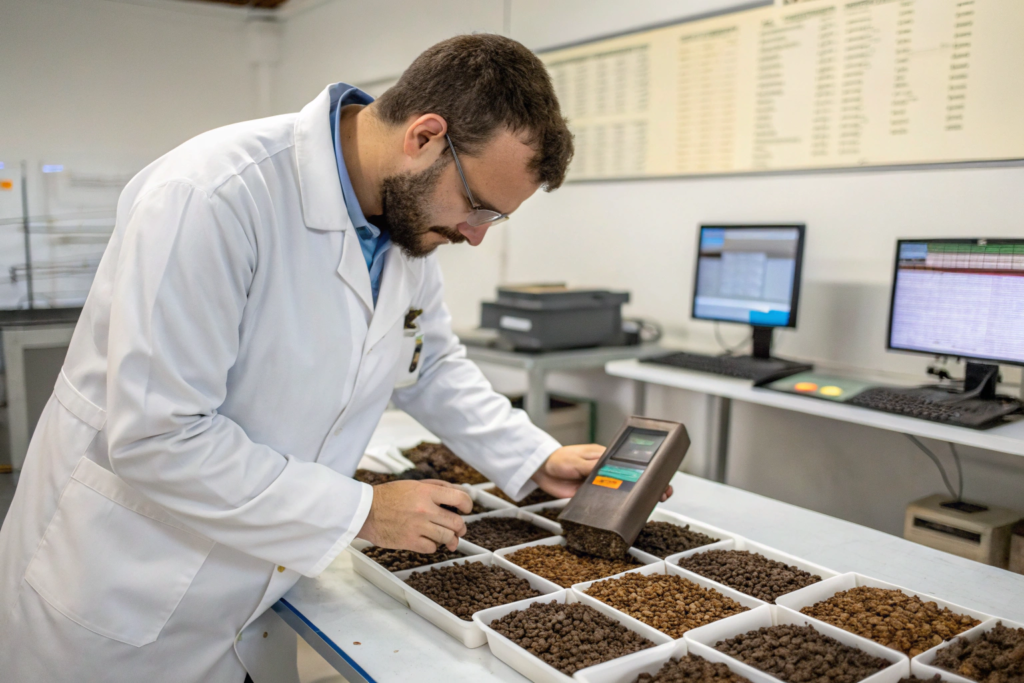
When you finalize your blend, set aside a large reference sample. Vacuum seal it. Freeze it. That is your benchmark. Every new production gets cupped against that reference. If it matches, you ship. If it does not, you adjust or you hold.
We keep multiple reference samples. One in our lab. One at our partner's facility. One at Shanghai Fumao for export verification. That way, no matter where we are, we have the standard.
What do you do when a component origin changes flavor?
This happens. Every year, the new crop tastes slightly different. Weather changes. Processing changes. It is natural. When it happens, you do not panic. You go back to your reference. You cup the new component alone. You understand how it is different.
Then you adjust the blend. Maybe the new Brazil crop is a bit more nutty. So you reduce another nutty component slightly. Maybe the new Yunnan crop is a bit sweeter. So you balance with something more neutral. The formula changes. The flavor stays the same. That is the art of blending.
How Do You Market Your Coffee Blend Effectively?
You can have the best blend in the world. But if nobody knows about it, it does not matter. Marketing matters. And coffee marketing is about storytelling.
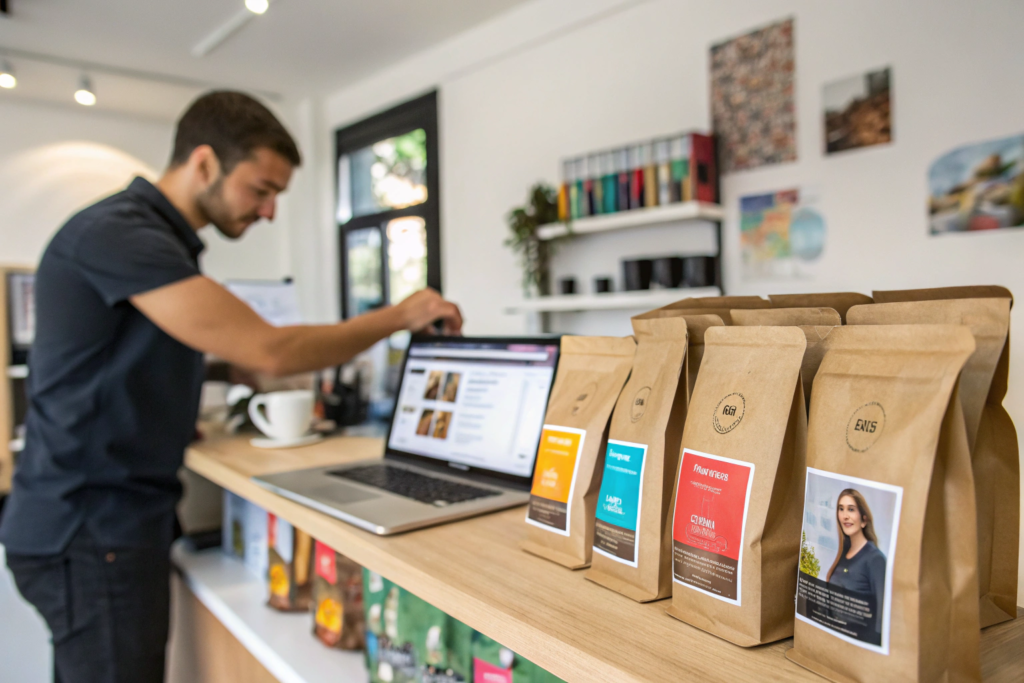
People do not just buy coffee. They buy stories. Where did the beans come from? Who grew them? Why did you blend them this way? What makes this blend special? You need to answer these questions. On your website. On your packaging. On social media.
What story should you tell about your blend?
Tell the truth. If you built the blend to be the perfect espresso for milk drinks, say that. If you built it to highlight a specific origin, say that. If you built it to be affordable but delicious, say that.
Our best-selling blend is called "Yunnan Morning." The story is simple: it is our Yunnan Arabica as the base, with a touch of washed Ethiopia for brightness. We talk about our farms. Our altitude. Our processing. Customers connect with that. They feel like they know where their coffee comes from.
How do you get feedback from customers after launch?
Ask. Seriously. Put a card in every bag. Send an email after purchase. Offer a discount for reviews. The more feedback you get, the better you can adjust. Not just the blend, but the story. The marketing. The positioning.
We also invite customers to cupping events. In person and virtual. We let them taste the blend and tell us what they think. Some of our best ideas came from customers. They notice things we miss. They have preferences we did not expect. Listen to them.
Conclusion
Creating a coffee blend that sells well is not magic. It is a process. Define your market. Select your components thoughtfully. Test your ratios relentlessly. Maintain consistency obsessively. And tell your story honestly. Skip any of these steps, and your blend will struggle.
At Shanghai Fumao, we have been blending for years. For our own brands and for buyers around the world. We know the challenges. We know the pitfalls. And we know how to build blends that keep customers coming back.
If you are working on a blend and need help, reach out to us. Let us talk about your goals. Your market. Your price point. We can supply the components. We can help with formulation. We can ensure consistency year after year. Contact our export manager, Cathy Cai, at cathy@beanofcoffee.com. She will connect you with our blending team.