I walked into a specialty cafe in Vancouver last year and stared at their menu for five minutes. It was beautifully designed. It had tasting notes like "citrus acidity" and "brown sugar sweetness." But here is the problem. Every single coffee on the menu was a washed Arabica from a different country, and they all tasted almost identical when brewed as a batch drip. The menu looked diverse on paper, but it was completely flat in the cup. The owner had confused geographic diversity with sensory diversity. His customers were paying a premium for an education they were not actually receiving.
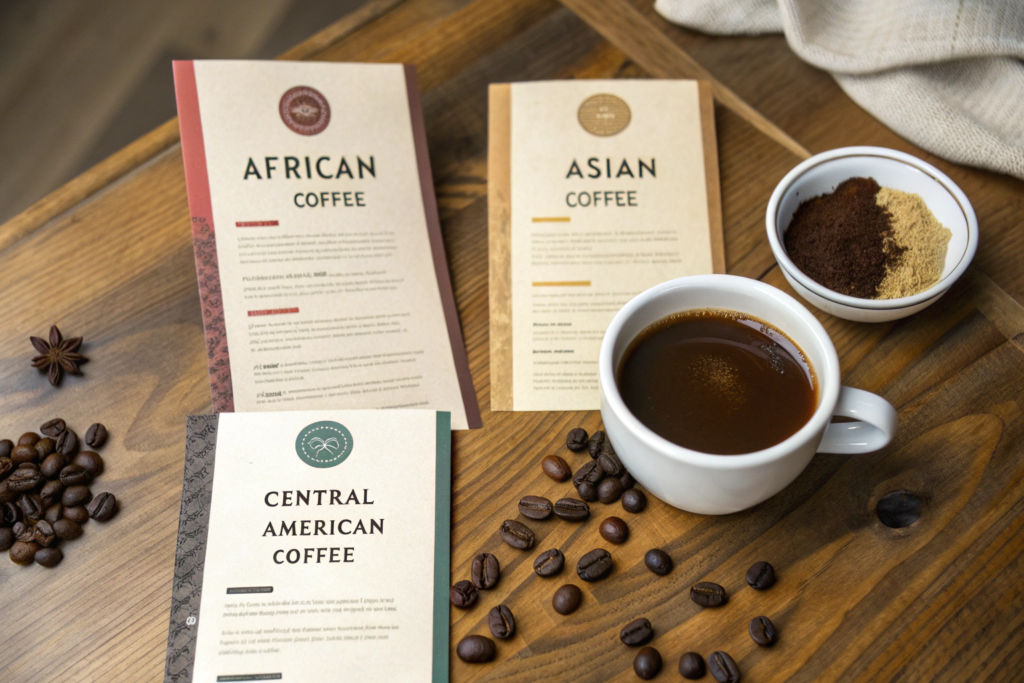
A coffee menu that truly highlights single origin diversity is built around contrasting sensory experiences, not just contrasting country names. You need to select coffees that represent distinctly different points on the flavor spectrum—a bright, acidic washed African profile, a heavy, earthy Asian profile, a balanced, chocolatey Central American profile—and then present them in a way that teaches the customer how to taste the difference. The menu's job is not to list facts. It is to guide a journey from familiar comfort to exciting discovery, and to make the customer feel smart for noticing the difference.
So, how do you build a menu that delivers on this promise? How do you select the right coffees, describe them in a way that actually means something to a non-expert, and price them so that the whole thing is profitable? This is the framework I have developed by working with dozens of cafes who serve our Yunnan Arabica as part of their origin lineup.
Why Does a Sensory-First Approach Matter More Than a Geography-First Menu?
Most cafes organize their single origin menu by country. Ethiopia. Colombia. China. Guatemala. This feels logical, but it is a trap. A washed Colombian from Huila and a washed Yunnan from Baoshan can taste incredibly similar. If you put them side by side on a menu, the customer orders one, tastes it, and thinks, "Okay, that's coffee." They do not taste the origin. They do not learn anything. The geography-first menu has failed at its only real job: creating a memorable, educational experience.
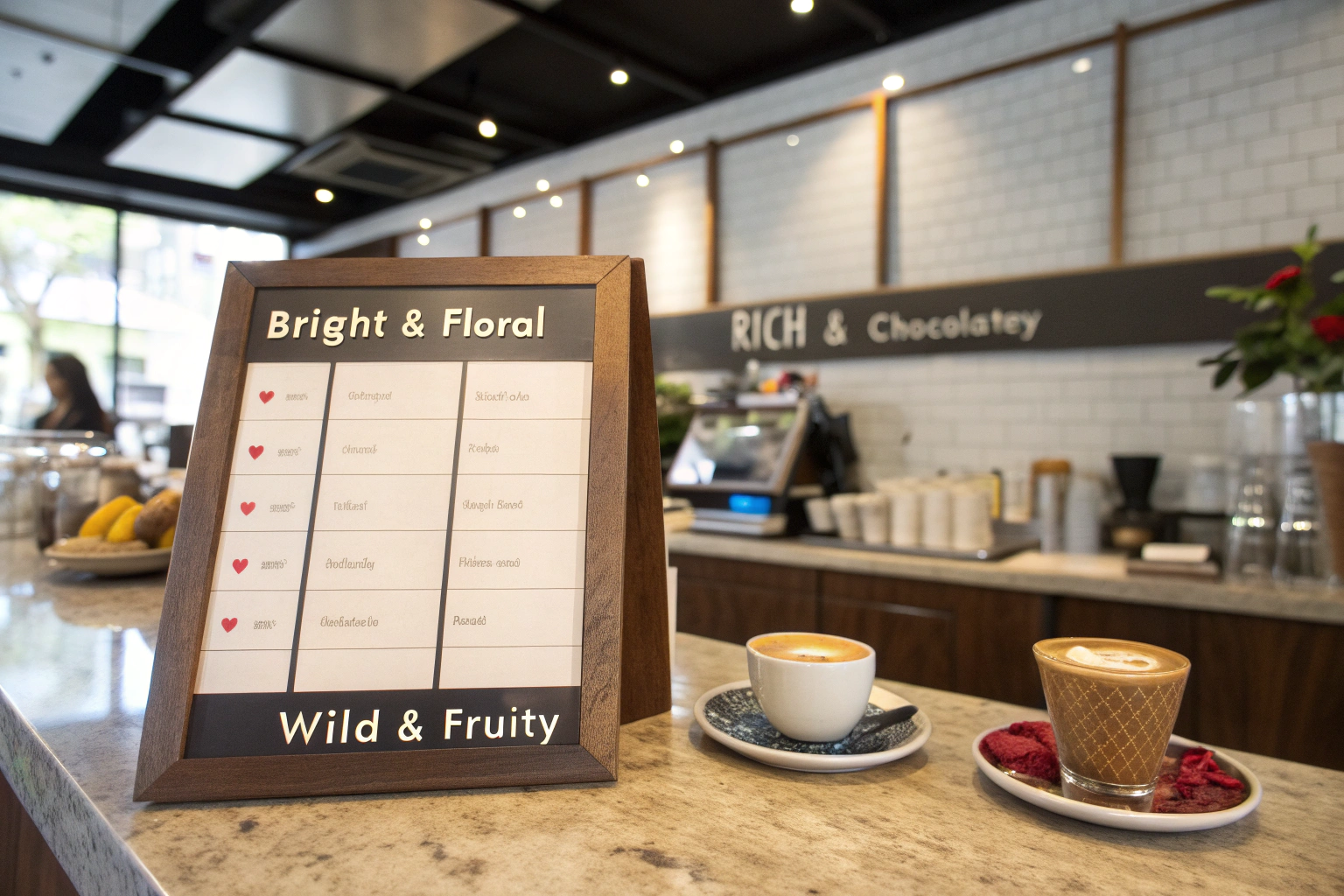
A sensory-first menu organizes coffees by how they actually taste, not where they are from. It might have a "Bright & Floral" section, a "Rich & Chocolatey" section, and a "Wild & Fruity" section. This immediately gives the customer a meaningful choice: "What am I in the mood for right now?" It also naturally creates contrast between your offerings, which makes the diversity of single origin coffee obvious and exciting, even to a complete beginner who has never heard of Yunnan.
Another way to look at this: a geography-first menu is about information. A sensory-first menu is about experience. Information is forgettable. Experience is what brings a customer back, what they tell their friends about, and what justifies the premium price you are charging. When I work with cafe clients, I always ask them to cup their menu blind and ask, "Do these coffees actually taste different?" If the answer is no, we need to rebuild the selection, not the descriptions. You can read more about building a menu that actually sells on our Shanghai Fumao, where we discuss strategies for presenting origin coffee effectively.
How can a simple "mood-based" menu guide a customer to the right single origin?
Think about how a wine bar works. They do not list wines by grape varietal and region only. They group them by "Crisp and Refreshing," "Rich and Buttery," "Bold and Tannic." Coffee can do the same. For a customer who drinks lattes, you guide them to "Rich & Chocolatey: Our Yunnan Catimor espresso base." For the customer who wants to try something new, you offer "Adventure: Our anaerobic fermentation lot." You are not dumbing down the coffee. You are providing an intuitive decision framework. The origin details—the farm name, the altitude, the processing—become the supporting story that adds depth to the choice they have already made based on their own taste preference.
Why does sensory contrast between menu items increase overall sales?
When the differences are obvious, customers often order a flight or come back multiple times to try all the options. I have seen a cafe in Portland do this brilliantly. Their menu had three single origins: "Chocolate & Nut," "Citrus & Floral," and "Fermented & Wild." They offered a $9 tasting flight of all three. It was their best-selling item. Every single customer who ordered that flight had a conversation with the barista about which one they preferred. That conversation led to a bag of beans sold. The sensory contrast did not just educate. It created a repeatable, revenue-generating ritual. The Specialty Coffee Association's consumer research often highlights how education and experience drive premium purchases in the specialty segment.
How Do You Write Tasting Notes That Actually Help Customers Choose a Coffee?
I am going to be brutally honest. Most tasting notes on coffee menus are terrible. They are poetry written by a roaster for other roasters. "Notes of stone fruit, bergamot, and baker's chocolate with a silky mouthfeel." What does that mean to a regular person who just wants a good cup of coffee before work? Nothing. It intimidates them. Or worse, they order it, taste it, and think, "I do not taste any stone fruit. Maybe I am bad at this." You have just made your customer feel stupid. They will not come back.
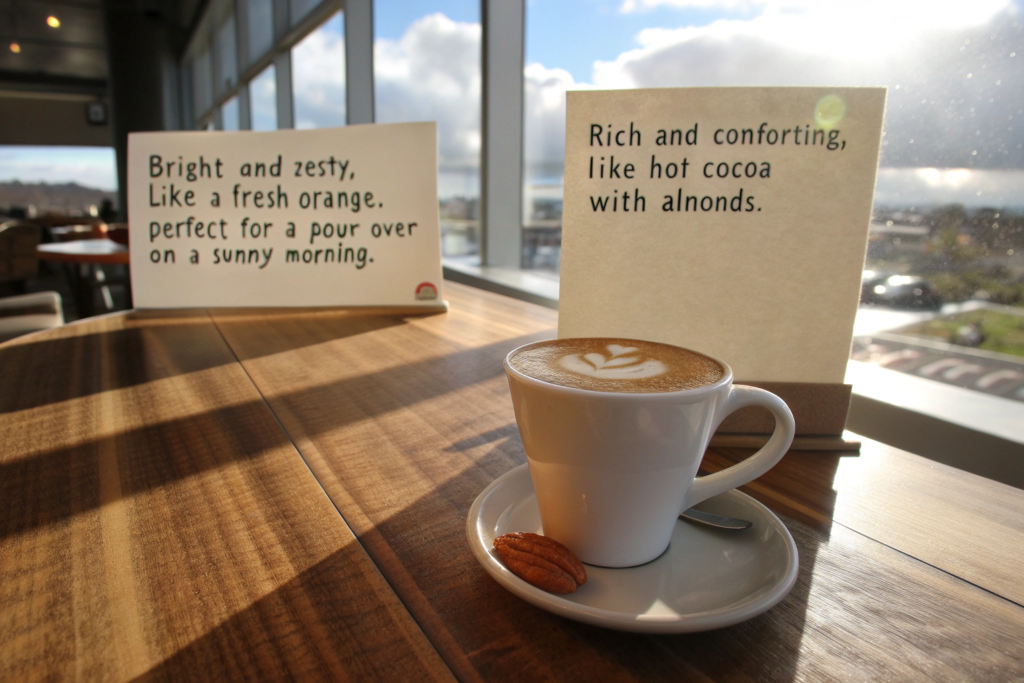
Effective tasting notes for a single origin menu use one or two familiar, concrete reference points and connect them to a feeling or an occasion. Instead of "bergamot and stone fruit," say "Bright and zesty, like a fresh orange. Perfect for a pour-over on a sunny morning." Instead of "baker's chocolate and toasted nuts," say "Rich and comforting, like hot cocoa with almonds. The ultimate rainy day espresso." The goal is not to be comprehensive. The goal is to be accurate enough to set an expectation and simple enough that the customer feels a small thrill of recognition when they taste it.
I always tell cafes to test their tasting notes on someone who does not work in coffee. Show them the menu. Ask them, "Which one sounds good to you, and why?" Their answer will reveal whether your descriptions are actually working as a sales tool, or just as decoration. A detail often missed: the language should also match your brand's personality. A fun, modern cafe can use playful, evocative language. A more serious, traditional establishment should use clear, elegant, restrained language. The words should sound like they came from you, not from a generic coffee marketing template.
What is the difference between "roaster-speak" and "customer-speak" in coffee descriptions?
Roaster-speak uses industry jargon: "Titratable acidity," "TDS," "mucilage," "SCA score 86." Customer-speak uses analogies and emotions: "Tastes like lemonade," "Feels like melted chocolate," "Our juiciest coffee." One is a technical report. The other is an invitation. I once worked with a cafe owner who rewrote all her descriptions from roaster-speak to customer-speak in a single afternoon. She told me her whole bean bag sales increased 30% in the following month. The beans had not changed. The words had. For more on how to build a direct relationship with a supplier who understands this kind of branding, you can learn more about our company, because we train our cafe partners on exactly how to describe our lots to their customers.
How many flavor descriptors are too many for a menu item?
Two is perfect. Three is the absolute maximum. One is often enough. "Chocolate-covered strawberry." "Toasted marshmallow." "Honey and green apple." The human brain can hold one or two sensory ideas and check for them while tasting. If you give a list of seven notes, the brain gives up. The customer tastes nothing specific, feels overwhelmed, and mentally labels the experience as confusing. A short, bold, specific description invites a focused tasting experience, which makes the customer feel like a skilled taster when they actually detect that chocolate note. That feeling of competence is what you are really selling.
What Are the Key Single Origin Profiles That Create a Balanced Menu Offering?
If your menu has five washed Arabicas from five different countries, all roasted to the same medium profile, you do not have a diverse menu. You have one coffee with five different names. A truly balanced single origin menu should span the full spectrum of what coffee can taste like, from delicate and tea-like to heavy and syrupy. It should give a customer a reason to try a different coffee each time they visit.
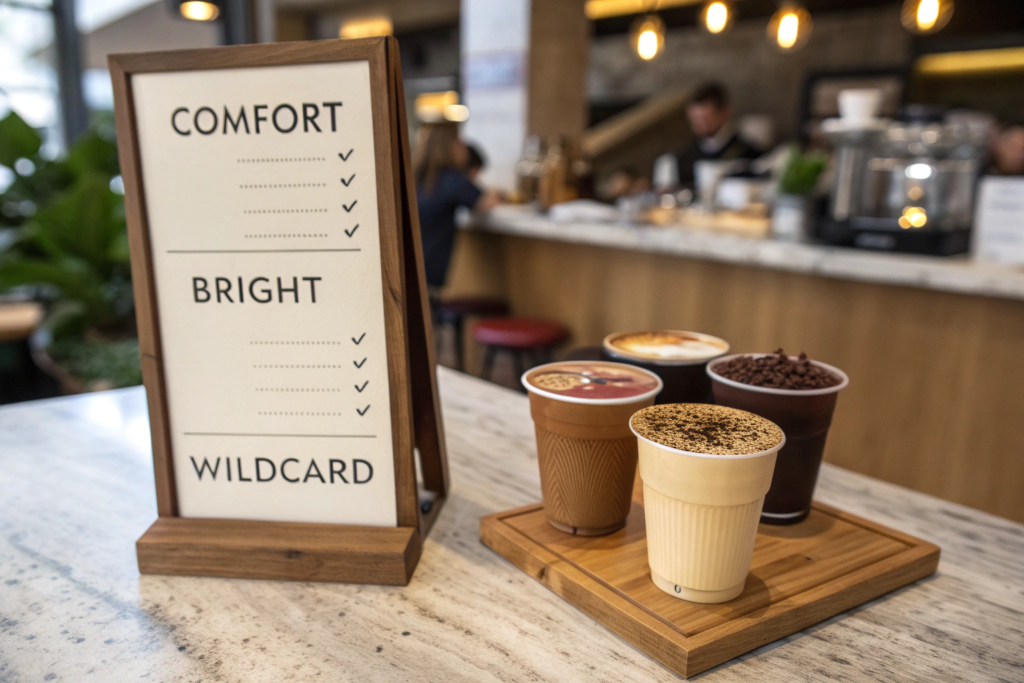
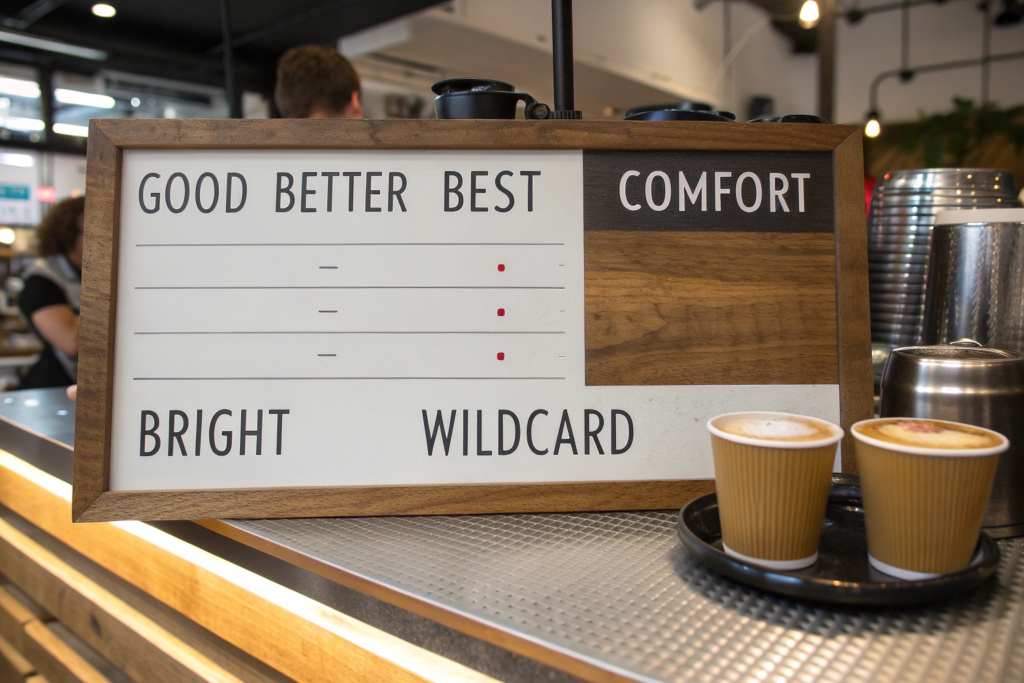
A balanced single origin menu needs at least three anchor profiles: a "Comfort" coffee (chocolatey, nutty, low acidity, heavy body), a "Bright" coffee (floral, citrusy, high acidity, light body), and a "Wildcard" (fermented, fruity, unexpected, usually a natural or honey process). The Comfort coffee is your best-seller, the Bright coffee is your educator, and the Wildcard is the conversation starter that gets people excited and brings them in the door to see what is new.
The Comfort slot on your menu is the most important. It is the coffee that you will run out of first. It is the coffee that the customer who says "I just like good coffee, nothing weird" will order every single day. For this slot, I consistently recommend a washed Yunnan Arabica or Catimor from our mid-altitude farms. It delivers exactly the profile that comfort-seeking customers want: rich, smooth, and deeply satisfying with notes of dark chocolate and caramel. The Bright slot might be a washed Ethiopian or a high-altitude Kenyan. The Wildcard is where you feature our experimental honey process lots or an anaerobic fermentation Catimor. This is the slot that gets your cafe featured in local "best of" lists and coffee blogs.
What makes a washed Yunnan Arabica an ideal "Comfort" anchor for a single origin menu?
It is reliable. It is affordable. And it tastes like what 90% of people think "really good coffee" should taste like. Our washed Yunnan Arabica consistently cups with a clean, sweet profile, notes of milk chocolate and toasted almond, and a round, heavy body. It is not weird. It is not polarizing. It is just excellent, classic coffee. For a cafe, it is the perfect daily driver. It is also a great bridge coffee for customers who are curious about single origins but intimidated by extreme acidity or funky fermentation. You can hand them a cup of this, and they will say, "Oh wow, this is single origin? I can actually taste the difference." That is a win. For a broader look at how different origins fit into a menu, the Coffee Review buying guide categorizes coffees by flavor profile in a way that can help you think about your own menu structure.
Why should your "Wildcard" slot rotate frequently to keep customers coming back?
The Wildcard is not a coffee. It is an event. It is the "you have to try this" moment that your baristas talk about all week. Because it changes every month or every quarter, it gives your regulars a reason to come in and see what is new. This creates a built-in loyalty mechanism that has nothing to do with punch cards. Our anaerobic fermentation lots, which produce wild notes of tropical fruit and baking spice, are perfect for this slot. They are limited. They are unusual. And when a customer tries one and loves it, they know they need to buy a bag right now because it might be gone next week. The Wildcard slot turns your coffee menu into a destination, and it is one of the most powerful tools a specialty cafe has to differentiate itself from the giant chain down the street.
How Do You Price a Single Origin Menu to Reflect Quality Without Scaring Buyers?
Pricing is where the art meets the math. Charge too little, and customers assume the coffee is not truly special. Charge too much, and it becomes a "special occasion" item that nobody orders regularly. The menu needs a pricing architecture that makes the premium options feel aspirational but still attainable, and makes the everyday options feel like a steal.
The most effective single origin menu pricing strategy uses a "Good, Better, Best" ladder. The "Comfort" coffee is priced at a fair, accessible entry point. The "Bright" coffee is priced slightly higher. The "Wildcard" is the premium offering. The gap between each tier should be small enough that a customer feels comfortable stepping up, but large enough that the value distinction is clear. You are not just pricing the bean. You are pricing the experience and the rarity of the flavor, and you are using the entry-level price to build trust that makes the premium purchase feel safe.
You also need to cost this backward from your target margin. If your Comfort coffee green cost is $3.50 per pound and your Bright coffee is $4.80 per pound, your retail cup price should reflect that difference, but it should also reflect the perceived value. The Bright coffee should not just be "more expensive because the bean costs more." It should be "our exclusive micro-lot from a family farm at 1,600 meters." The story matters as much as the math.
What is a reasonable price step between your "everyday" and "premium" single origins?
In a typical North American specialty cafe, I see the step work well at around $0.50 to $1.00 per cup. So if the Comfort pour-over is $4.00, the Bright is $4.50, and the Wildcard is $5.50. This is approachable. Most customers can justify the $0.50 upgrade without thinking too hard. And the customer who is deeply into coffee will happily pay $5.50 for a unique experience. For retail bags, the steps are larger. A 12oz bag of Comfort might be $16. Bright is $19. Wildcard is $24. These price points establish a clear quality hierarchy without alienating anyone. For more specific pricing data, the Specialty Coffee Association's research portal periodically publishes retail pricing benchmarks that can help you calibrate against your local market.
How do you explain a higher price for a single origin without sounding pretentious?
You do not talk about cost. You talk about value and story. Instead of saying, "It is more expensive because it scored 88 points," say, "This coffee comes from a tiny plot on our farm at the very top of the mountain. The slow ripening at that altitude creates a really special sweetness. It is a limited lot, and we are proud to share it." This transforms the price from a tax into a ticket. The customer is not paying more for beans. They are paying for access to something rare and beautiful. At Shanghai Fumao, we provide all of our cafe partners with the origin story, the farm details, and the cupping data for every lot, specifically so they can do this kind of storytelling with confidence. The story is part of the product we deliver.
Conclusion
A great single origin coffee menu is not a list. It is a guided tasting journey that starts with what the customer already likes and gently leads them toward something new. Build it around sensory contrast, not geographic trivia. Write your tasting notes for a human being who loves coffee but has never cupped a sample in their life. Anchor the menu with a reliable, chocolatey, beloved Comfort coffee—like our washed Yunnan Arabica—and then layer on a Bright educator and a Wildcard that rotates frequently to keep the excitement alive. And price it with a clear, approachable ladder that makes every step up feel like a small, rewarding adventure.
If you are designing or refreshing your cafe's single origin program and you are looking for coffees that deliver distinct, reliable, and story-rich profiles for each tier of your menu, I would love to help. We specialize in producing Arabica and Catimor lots that give you exactly the sensory range you need, from a comforting daily espresso base to a wild, limited-release fermentation. Contact Cathy Cai at cathy@beanofcoffee.com. She can send you our current offering sheet, cupping scores, and samples for each of the three menu tiers we have talked about here. Let us build a menu your customers will want to taste their way through, one cup at a time.