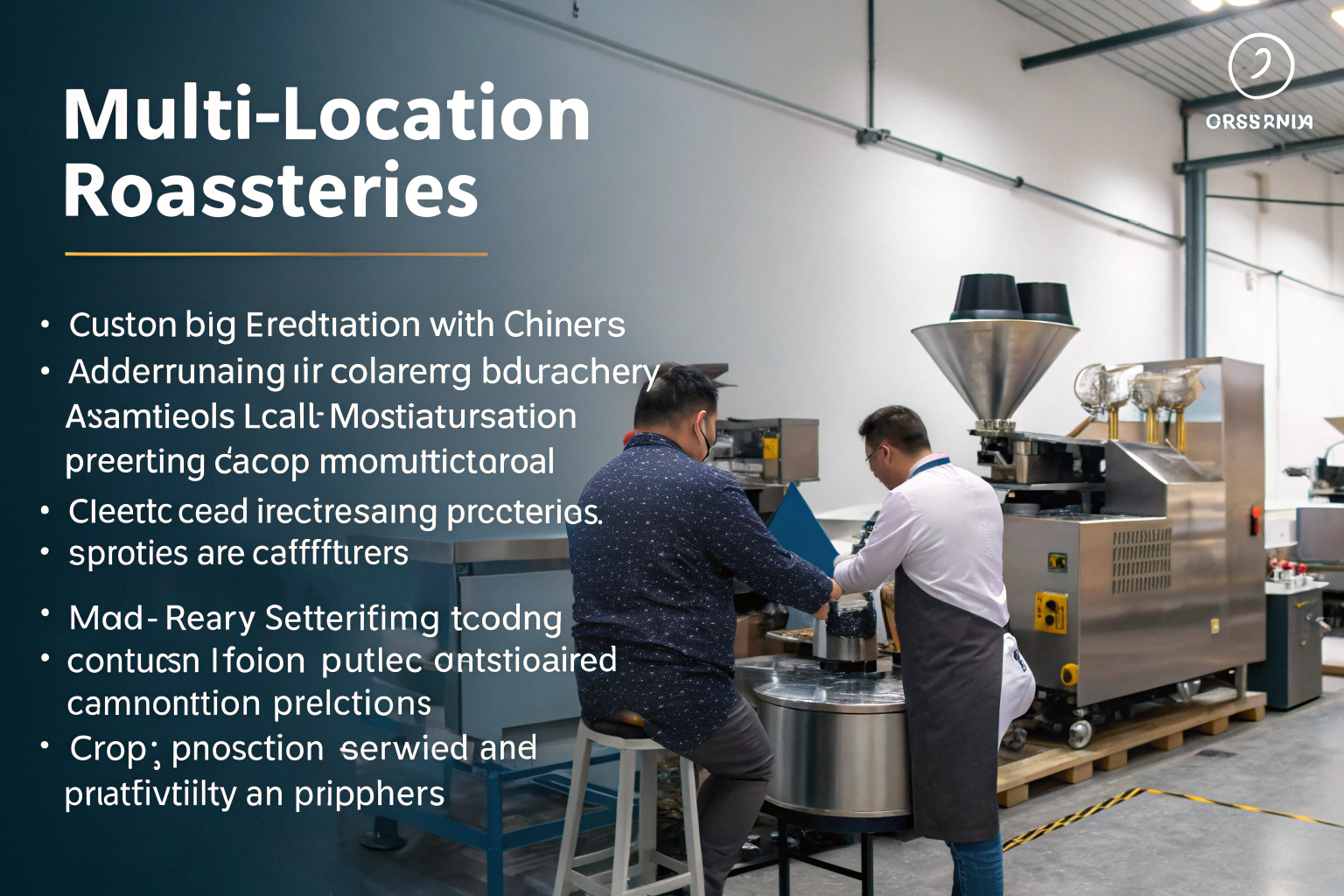
I was sitting in a co-roasting facility in Brooklyn last spring, talking to an owner who runs six locations across the Northeast. He was frustrated. Not with the coffee—his green buyer was excellent. He was frustrated with his packaging partner. A local company, supposedly premium, had just missed their third deadline in six months. The foil stamping on his new seasonal blend bags was crooked. The minimum order quantity was rigid. And the price per unit kept climbing. He looked at me and said something I will never forget: "I am a coffee company, not a packaging logistics company. I just want this to work." Two months later, he moved his entire branded packaging production to a partner in China. He has not missed a launch date since.
Multi-location roasteries are turning to Chinese manufacturing partners because they need a single, scalable solution that solves three critical problems simultaneously: brand consistency across all locations, production flexibility for seasonal and limited releases, and cost predictability that allows them to plan 12 to 18 months ahead. A Chinese partner with coffee-specific expertise offers custom bag manufacturing, private label roasting, and even direct-drop shipping to individual cafe locations, collapsing a fragmented, unreliable domestic supply chain into one streamlined operation built around the roastery's brand, not the supplier's convenience.
What flipped the switch for my friend in Brooklyn, and for dozens of other multi-location owners I have spoken with since? It was realizing that "local" does not automatically mean "better for my business." Sometimes it just means "more expensive and less reliable." Here is what a manufacturing partnership with a specialized Chinese coffee exporter actually looks like in practice.
What Supply Chain Complexities Do Multi-Location Businesses Face That a Single Partner Can Solve?
Running one cafe is a sprint. Running six or ten or twenty is a logistics marathon that never ends. I have seen owners try to stitch together a supply chain from five different vendors: one for green coffee, one for roasting, one for branded bags, one for labels, one for fulfillment. Each vendor has their own timeline, their own minimums, their own communication style, and their own problems. When one link breaks—the bag printer is delayed, the roaster is over capacity—the entire chain collapses. And the owner is the one left apologizing to their location managers and their customers.
The core complexity of a multi-location operation is coordination overhead. A single manufacturing partner who can handle green coffee sourcing, roasting, custom bag production, and consolidated shipping eliminates four or five separate vendor relationships. This does not just save time. It creates a single point of accountability. When the branded bags arrive at six different locations, all on the same day, all with the correct label, all with coffee roasted to the same profile, there is one phone call to make if something goes wrong. Not five. That consolidation of responsibility is worth more than any marginal savings on a per-unit bag price.
Another way to think about this is through the lens of cash flow. When you work with multiple local vendors, you are often paying multiple deposits, managing multiple payment terms, and dealing with multiple minimum order quantities that lock up capital in inventory you cannot sell yet. A single partner simplifies the entire financial picture. One contract. One deposit. One shipment. One invoice. For a business owner trying to manage the finances of multiple locations, that simplicity directly reduces stress and frees up mental bandwidth for the things that actually grow the business: marketing, hiring, and customer experience.
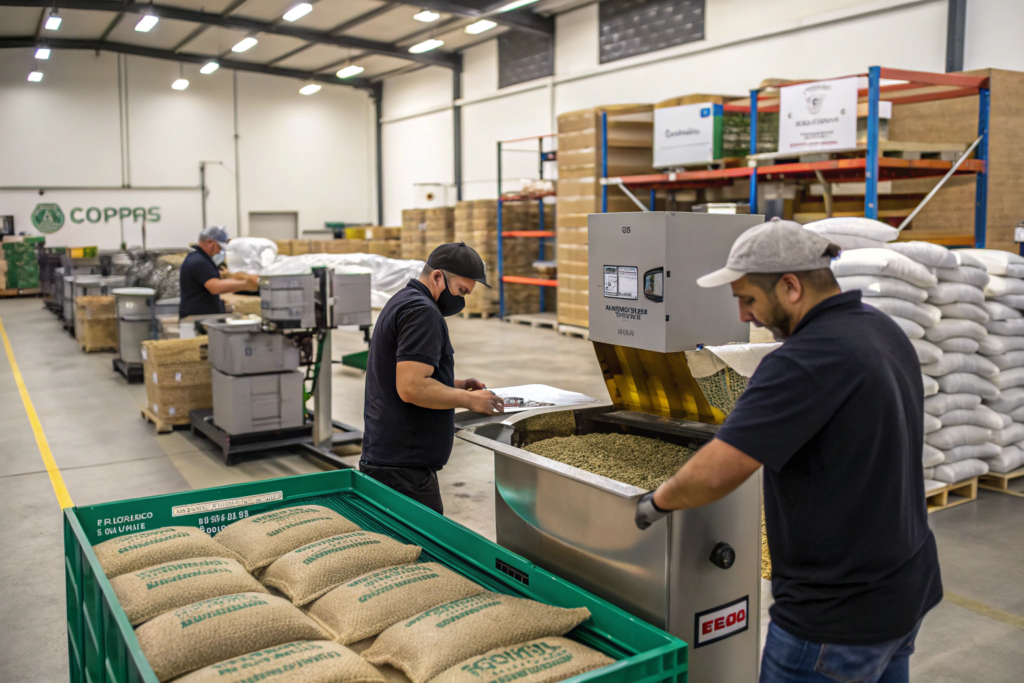
How does consolidating green sourcing, roasting, and packaging under one partner reduce errors?
When these functions are separate, information gets lost in the handoffs. The roaster does not know the bag dimensions have changed. The bag printer does not know the roast profile name has been updated. The fulfillment center does not know a new seasonal SKU is coming. These small miscommunications lead to big, expensive mistakes: bags that do not fit, labels with the wrong tasting notes, shipments sent to the wrong location. When one partner handles everything from green bean to finished bag, the information flows through a single internal system. At Shanghai Fumao, we manage the entire process: we roast the coffee, we pack it in your branded bags, and we ship it directly to your individual cafe addresses. The bag dimensions are matched to the roast batch size because the same team controls both. This kind of integration is not just convenient. It is an error-proofing mechanism.
Why is a single point of contact valuable during a supply chain crisis?
When a crisis hits—a shipping delay, a customs hold, a sudden tariff change—the last thing you want is to play detective, calling three different vendors to figure out where your product is and who is responsible for fixing the problem. A single partner gives you one person to call. One person who has the full picture. One person whose job is to solve the problem, not to pass you to the next vendor in the chain. I remember a container being held at the Port of Los Angeles for an extra ten days due to a customs inspection. Our client called Cathy, our international client lead. She had the updated shipping manifest, the customs agent's contact, and a revised delivery schedule in her hand within an hour. The client called his six location managers and gave them the new timeline. Crisis contained. That is the power of a single point of accountability.
How Do Chinese Manufacturing Partners Handle Customization Across Different Cafe Locations?
This is the detail that surprises most multi-location owners when they first talk to us. They assume that a manufacturing partner thousands of miles away will be inflexible. That they will have to order one bag type, in one size, for all locations. The reality is the complete opposite. A specialized coffee manufacturing partner in China is often more flexible than a domestic packaging company, precisely because they are set up to serve diverse international clients with diverse needs.
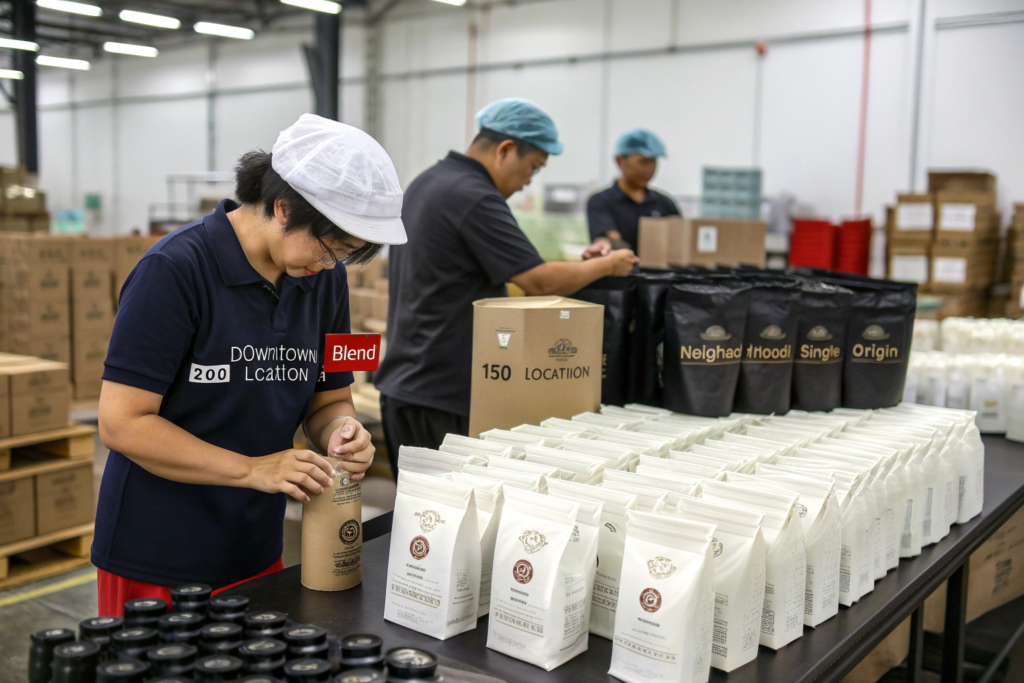
A skilled Chinese manufacturing partner can handle location-specific SKU variations within a single master production run. Location A needs 200 units of the "Downtown Blend" in 12oz matte white bags. Location B needs 150 units of the same blend in 2lb black kraft bags. Location C needs 100 units of a completely different "Neighborhood Single Origin" in 8oz tins. All of these variations can be produced, labeled, and packed into location-specific cartons at the factory, then shipped either as a consolidated container to a central warehouse or as separate LCL shipments directly to each cafe. This level of customization turns a potential logistical nightmare into a smooth, predictable process.
I have a client with twelve locations across the UK. Each location has a slightly different best-selling SKU. The city center locations sell more 8oz retail bags. The suburban locations sell more 2lb bulk bags. We produce all of these variations in a single production run, pack them into cartons clearly labeled for each specific address, and ship a consolidated pallet to their central distribution hub. From there, each carton is simply forwarded to the correct location. The cafe managers do not have to weigh, portion, or repack anything. They open the carton and put the bags on the shelf. This is the definition of a turnkey solution.
How do you manage location-specific labeling without massive minimums?
Digital printing technology has changed everything. Five years ago, a custom printed bag required expensive plates and minimum runs of 5,000 or 10,000 units. Today, digital printing allows for much smaller, more flexible runs. We can produce 500 bags with Location A's specific label and 500 bags with Location B's specific label, all within the same order, without the massive setup costs. This means a roastery with six locations can have each location's unique branding on the bag without ordering a decade's worth of inventory. For smaller chains, this is a game-changer. It allows them to create a hyper-local feel—"Roasted for our Williamsburg location" or "The Capitol Hill Blend"—without the hyper-local production cost. For more on the customization options available, you can visit BeanofCoffee's homepage to see how we structure these flexible production programs.
Can a Chinese partner handle seasonal and limited-release packaging efficiently?
Yes, and this is where the speed advantage becomes obvious. Domestic packaging companies often book their production lines months in advance. If you need a quick-turn seasonal blend bag for a holiday launch, you are at the back of a long line. Our production facility in China is designed for flexibility. We keep a buffer of commonly used bag materials in stock. When a client emails in October and says, "We want to launch a holiday blend in November, can you do 300 custom bags?", the answer is almost always yes. We can turn around a digital-print custom bag order in a fraction of the time many domestic suppliers require. This allows a multi-location roastery to be agile, to respond to trends, and to launch new products without being constrained by their packaging partner's schedule.
Why Is Cost Predictability for Branded Packaging More Stable with an Overseas Partner?
There is a quiet panic happening in the specialty coffee industry right now. Domestic packaging costs are volatile. Paper prices fluctuate. Labor shortages drive up printing costs. Shipping from a domestic supplier to multiple locations adds another layer of unpredictable expense. For a multi-location roastery trying to forecast its cost of goods sold 18 months out, this volatility is a budgeting nightmare. You cannot run a profitable business when your packaging cost per unit swings wildly from order to order.
Chinese manufacturing partners offer greater cost predictability because they operate within a more stable industrial ecosystem. Raw material supply chains for coffee bag materials—kraft paper, PLA liners, tin-tie closures—are deeply established and competitively priced. Labor costs for skilled production are stable over multi-year horizons. And crucially, a long-term partnership contract with a Chinese manufacturer typically locks in pricing for 12 to 24 months, allowing a roastery to forecast its packaging cost per unit with confidence. The per-unit cost is often 30-50% lower than a comparable domestic supplier, and that margin gap tends to widen, not shrink, as order volumes grow.
A detail that often gets overlooked: the shipping cost from China to your door is not a mystery. It is a known, quoteable line item. A good partner will provide an all-inclusive FOB, CIF, or DDP quote that accounts for every dollar from the factory floor to your warehouse or cafe. There are no "fuel surcharge" surprises tacked on after the fact. This transparency is essential for a business that operates on thin margins and needs to know, down to the penny, what each bag of coffee on the shelf actually costs.
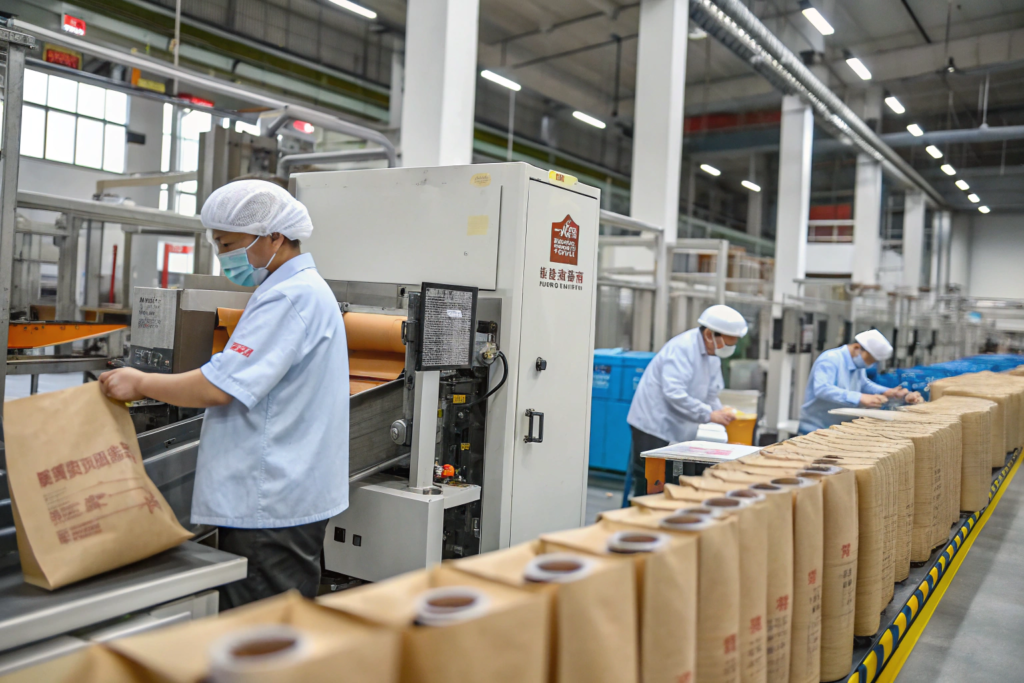
How does locking in a 12-month contract with an overseas partner protect against material price swings?
A domestic supplier might quote you a bag price today and then adjust it upward in six months due to "market conditions." An overseas partner with a strong supply chain can often commit to a fixed price for a full year, sometimes two. They are able to do this because they are closer to the raw material sources and can negotiate long-term contracts with their own paper and material suppliers. This stability flows downstream to you. When you lock in a price for your branded packaging for 12 months, you can set your retail prices confidently. You can run promotions without worrying that your underlying cost has changed. This kind of predictability is a strategic advantage, not just a cost-saving measure.
What is the real landed cost comparison between domestic and Chinese coffee bag production?
I have walked through this calculation with multiple clients. Let me give you a simplified example. A custom-printed, quad-seal, 12oz coffee bag with a one-way valve and tin-tie, ordered in quantities of 5,000 units. A domestic supplier might quote $0.85 to $1.20 per bag, plus shipping to multiple locations. A Chinese manufacturing partner might quote $0.40 to $0.55 per bag. Even after adding ocean freight, customs duties, and final-mile delivery, the landed cost often lands between $0.55 and $0.70 per bag. On 5,000 units, that is a savings of $750 to $2,500 per order. For a roastery running six locations and ordering quarterly, those savings compound quickly into tens of thousands of dollars a year. That is a new piece of equipment. That is an extra hire. That is real money that drops directly to the bottom line. For more context on how these partnerships fit into a broader sourcing strategy, Perfect Daily Grind's business section frequently analyzes the economics of coffee supply chains.
How Do You Vet a Chinese Manufacturing Partner for Long-Term Consistency and Trust?
This is the question I hear most often, and it is the most important one. The horror stories are out there. A roastery sends a deposit for custom bags. The sample looks great. The production run arrives, and the colors are wrong, or the valve adhesive fails, or the bags are a slightly different size and do not fit the heat sealer. The partner becomes unresponsive. The roastery is stuck with 10,000 unusable bags and a broken relationship. These things happen. They happen with domestic suppliers too. The key is to vet a partner properly so they do not happen to you.
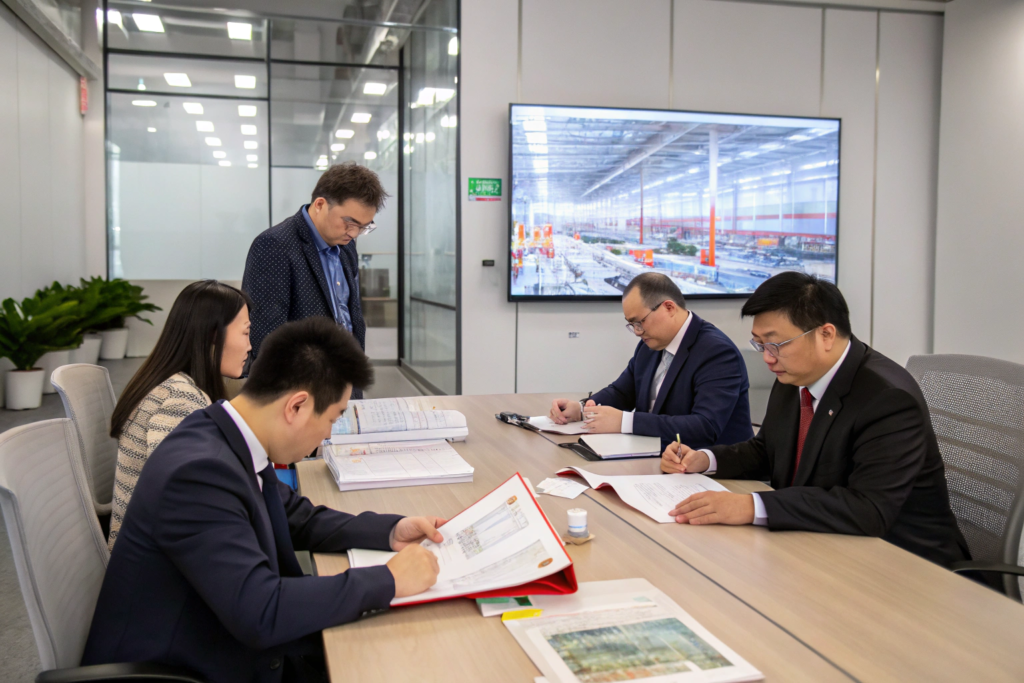
Vetting a Chinese manufacturing partner for a long-term coffee relationship involves five concrete verification steps. First, request a video tour of the actual production facility, not just a brochure. Second, ask for references from existing clients in your region and actually call them. Third, place a small paid trial order—not a free sample, a real order—to test their communication, quality consistency, and delivery timeline under real commercial conditions. Fourth, verify their export certifications and ask for a copy of their business license. Fifth, use a trade assurance platform or a milestone-based payment structure for the first full production order. A partner who passes all five checks is one you can build a business on.
I tell every potential client the same thing: do not trust my words. Test our process. Place a small order. Talk to a current client in your country. Visit our facility if you can, or take the video tour. A good partner welcomes this scrutiny. A bad partner avoids it. The vetting process itself reveals everything you need to know about how the relationship will function over the long term.
What specific questions should you ask a reference client during a vetting call?
Do not just ask, "Are you happy with them?" That is too vague. Ask specific, behavioral questions. "When something went wrong, how did they handle it?" "Have they ever missed a deadline, and if so, what was the communication like?" "Does the quality of the production run match the quality of the initial sample?" "Is the person you signed the contract with still your main point of contact?" The answers to these questions reveal the true character of the manufacturing partner. A client who hesitates, or says "mostly good, but..." and then trails off, is telling you something important. Listen to the pauses. They contain the truth.
Why is a small paid trial order more revealing than a free sample?
A free sample is a curated marketing tool. It represents the best a supplier can do under ideal conditions with unlimited time. A paid trial order, even 500 units, tests the supplier's actual production system under real constraints. It tests their project management, their quality control at scale, their packaging and shipping care, and their ability to hit a deadline. It also tests how they handle any mistakes. If a bag in the trial order has a minor defect, do they credit you immediately, or do they argue? The trial order is a microcosm of the entire relationship. I recommend every new client start with a small paid order before committing to a container-sized production run. At Shanghai Fumao, we insist on this. A relationship built on proven reliability, not promises, is the only kind worth having.
Conclusion
Multi-location roasteries are not choosing Chinese manufacturing partners because it is trendy. They are choosing them because the fragmented, expensive, and rigid domestic supply chain is failing to support their growth. A single integrated partner solves the coordination overhead that kills profitability. It delivers the customization flexibility needed for location-specific and seasonal branding. It locks in cost predictability that allows confident financial planning. And when properly vetted, it provides a level of accountability and long-term reliability that transforms the supply chain from a constant source of stress into a quiet, dependable engine of the business.
If you are running a multi-location roastery and you are tired of juggling vendors, missing launch dates, and watching your packaging costs climb without explanation, there is a better way. We built our entire operation around serving roasteries exactly like yours—with custom branded bags, private label roasting, and direct-drop shipping to every location on your list. Let us show you the facility, introduce you to a current client, and run a small trial order that proves our process before you commit to anything large. Contact Cathy Cai at cathy@beanofcoffee.com. She will set up a video call, walk you through our capabilities, and put together a test order that lets you evaluate us with zero risk. Your job is to build a great coffee brand. Let us handle the manufacturing and logistics that get your brand into your customers' hands.