Two years ago, a client of ours—a roastery chain with nine locations in Texas—called me in a panic. They had been working with a local co-packer for their private label capsule line. The co-packer was expensive, slow, and inflexible on minimums. But the real breaking point came when the co-packer announced a 22% price increase and a 90-day lead time for a reorder. My client had empty shelves in three of their locations. They were losing money every single day. They asked me if I knew anyone who could do capsules. I did not have an answer ready. That week, I started researching everything I could about manufacturing compatible coffee pods, not because I wanted to, but because I never wanted to tell a good client "I can't help you" again.
Finding the right supplier for private label coffee pods means looking for a manufacturing partner who can combine three capabilities under one roof: precision grinding and nitrogen-flushing for freshness, compatibility-certified capsule production for machines like Nespresso Original and Keurig, and customizable outer packaging that carries your brand identity—not a generic white box. The ideal supplier is not just a co-packer; they are an extension of your roastery, capable of matching your specific roast profile and flavor consistency batch after batch, while offering minimum order quantities that a growing business can actually manage.
What I learned in the year that followed changed our entire business model. We invested in capsule production capability ourselves. I visited factories. I tested pods on every machine I could find. I shipped samples to clients and waited anxiously for their cupping feedback. Here is everything I now know about finding, vetting, and partnering with a private label capsule supplier—whether it is us or anyone else.
What Equipment Capabilities Should Your Capsule Supplier Actually Have?
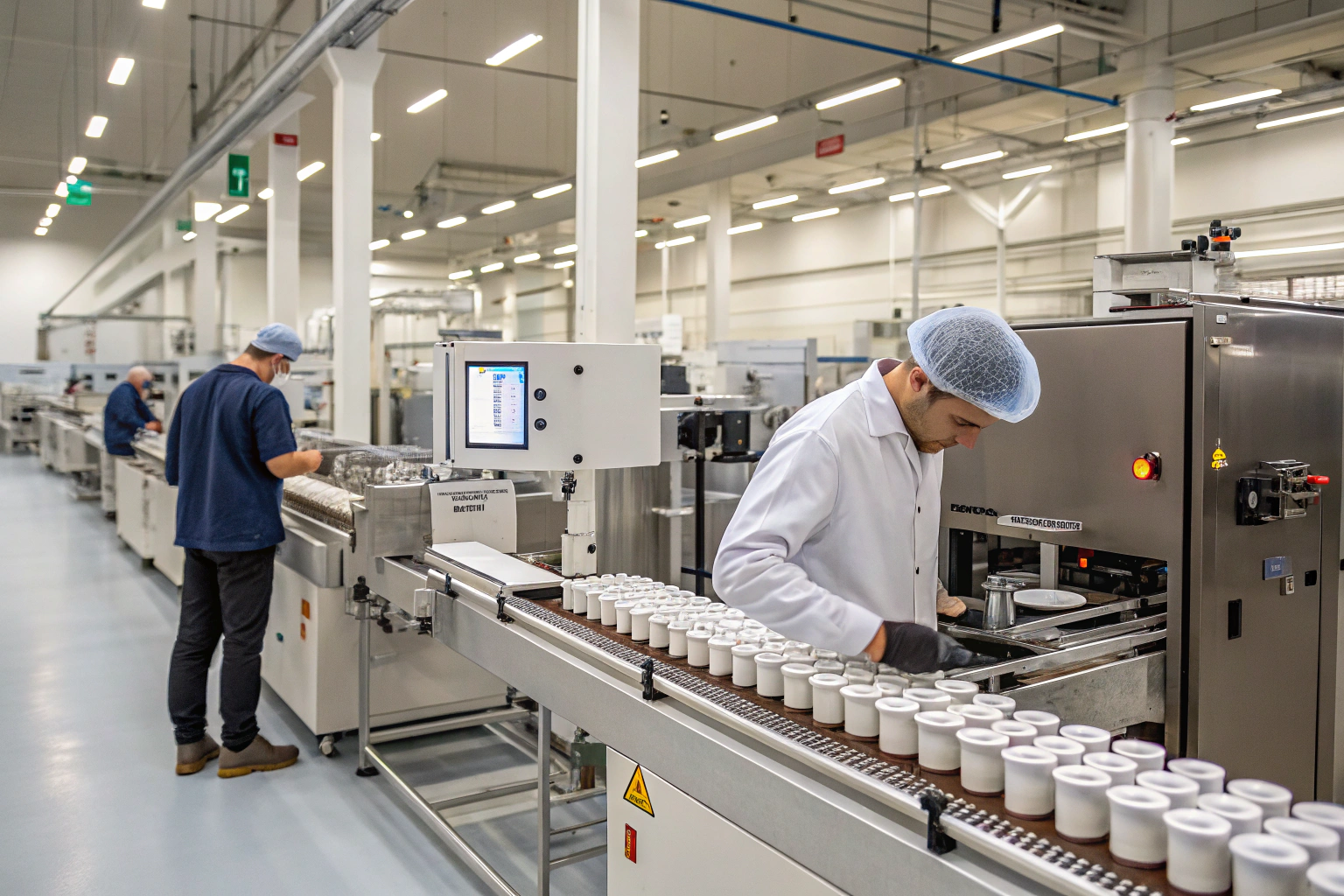
This is where most roasters get fooled. A supplier sends them a beautiful sample pod. It brews perfectly. The crema is thick. The coffee tastes great. But what you do not see is the machine it was produced on. Was it made on a manual, semi-automatic line that can produce 500 pods a day? Or a fully automated, nitrogen-flushed, multi-lane line that can produce 50,000 pods a day with zero variation between the first pod and the last? The sample tells you what is possible. The equipment tells you what is repeatable.
A serious private label capsule supplier operates a fully automated production line with at least four critical components: a high-precision industrial grinder capable of matching your target particle size distribution, a nitrogen injection system that reduces residual oxygen in each pod to below 3%, a multi-head filling and sealing machine with in-line weight checking, and a compatibility testing station that verifies every batch against the target machine platform—Nespresso Original, Nespresso Vertuo, Keurig K-Cup, or Lavazza. Without all four, consistency across a 50,000-pod order is a gamble, not a guarantee.
A detail that gets missed constantly: the grinder is more important than the sealing machine. If the grinder cannot hold a consistent particle size across a 12-hour production run, your capsule extraction will drift. The first 5,000 pods will taste balanced and sweet. The last 5,000 will taste hollow and over-extracted. Or vice versa. The client calls you, complaining the pods are "inconsistent." Your brand takes the hit. The supplier blames the green coffee. Nobody wins. When vetting a supplier, ask them directly: "What grinder are you running, and how often do you check particle size during a production run?" If they cannot answer instantly and with specifics, walk away.
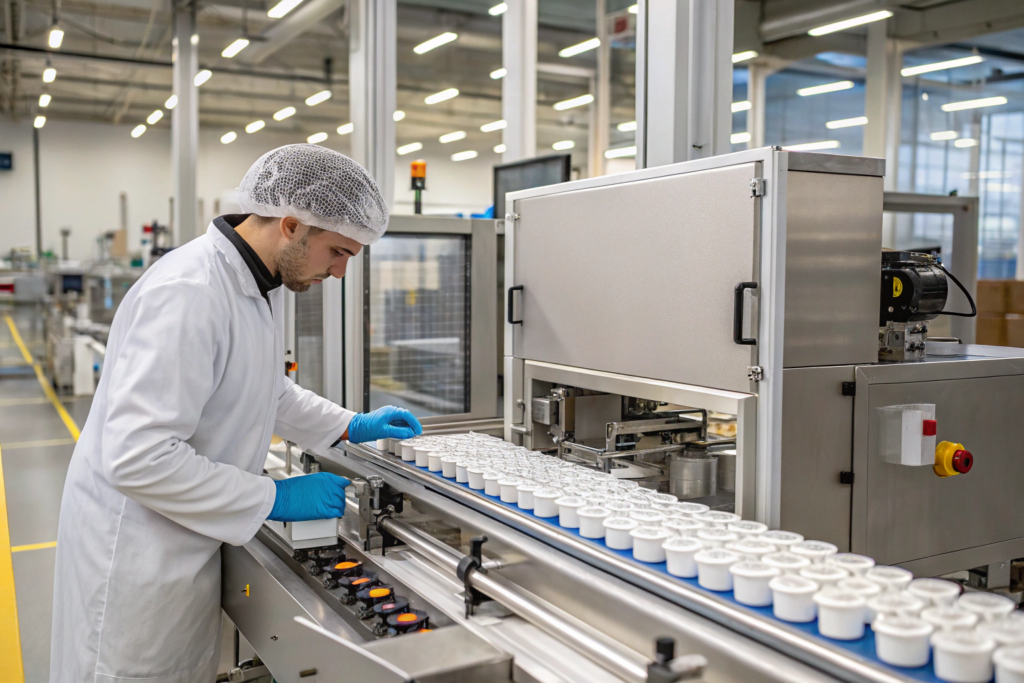
How does nitrogen flushing extend the shelf life of a private label pod?
A coffee pod without nitrogen flushing will start tasting stale within 3 to 6 months. Oxygen is the enemy. It oxidizes the coffee oils, fades the aromatics, and produces that flat, cardboardy taste that makes a customer think, "This brand is low quality." Nitrogen flushing replaces the oxygen inside the pod with inert nitrogen gas. This can extend the fresh flavor window to 12 to 18 months. But the flush has to be done correctly. Residual oxygen levels need to be tested and logged. At our facility, we target below 2% residual oxygen. We test randomly throughout the run. If a batch spikes above 3%, it is reworked. This kind of discipline is what separates a premium private label pod from a commodity one. You can read more about the science behind this on the Specialty Coffee Association's freshness research page, which documents the impact of oxygen on coffee staling.
Why does machine compatibility testing matter for your brand's reputation?
A pod that does not fit properly in the machine is a customer service disaster. It jams. It leaks water. It brews a weak, under-extracted cup. The customer does not blame the pod manufacturer. They blame your brand. "I tried these pods and they ruined my machine," they write in a one-star review. That review sits on your product page forever. Compatibility testing means running every production batch through actual target machines—not just measuring dimensions with a caliper, but brewing dozens of pods and checking extraction yield, flow rate, and crema quality. The Nespresso compatibility standards are specific and strict, and a legitimate supplier should be able to demonstrate their testing protocol. For Keurig, the Keurig commercial standards outline what a compatible pod must achieve. A supplier who cannot talk about these standards in detail is not a supplier you should trust with your brand.
How Do You Ensure the Coffee Inside the Pod Matches Your Roastery's Specific Flavor Profile?
This is the heart of the entire private label capsule proposition. You are not selling a pod. You are selling your coffee, your roast profile, your brand experience, in a convenient format. If the pod does not taste like your cafe's drip coffee or espresso, your customer feels cheated. They bought the pod because they love your cafe. If the pod disappoints, they stop loving your cafe. The connection breaks.
Matching a pod's flavor to your cafe's bulk coffee requires the supplier to reverse-engineer your extraction. A pod brews differently than a pour-over or an espresso machine. It uses a specific water volume, temperature curve, pressure profile, and extraction time. A skilled supplier will take your roasted coffee, analyze its density and particle size requirements, and adjust the pod's grind, dose weight, and tamp pressure so that the resulting cup tastes like it came from your cafe, not from a generic pod machine. This is a sensory development process, not just a filling job.
When I work with a new private label client, the first thing I ask for is not a purchase order. It is a sample of their roasted coffee, a sample of their brewed coffee from the cafe, and a detailed description of their target flavor profile. We then run a series of small-batch pod trials. We cup the pod-brewed coffee side by side with their cafe brew. We adjust the grind, the dose, and the fill parameters. We iterate until the match is as close as possible. This process might take two or three rounds of samples. It is not fast. But it is the only way to deliver a pod that genuinely represents the brand.
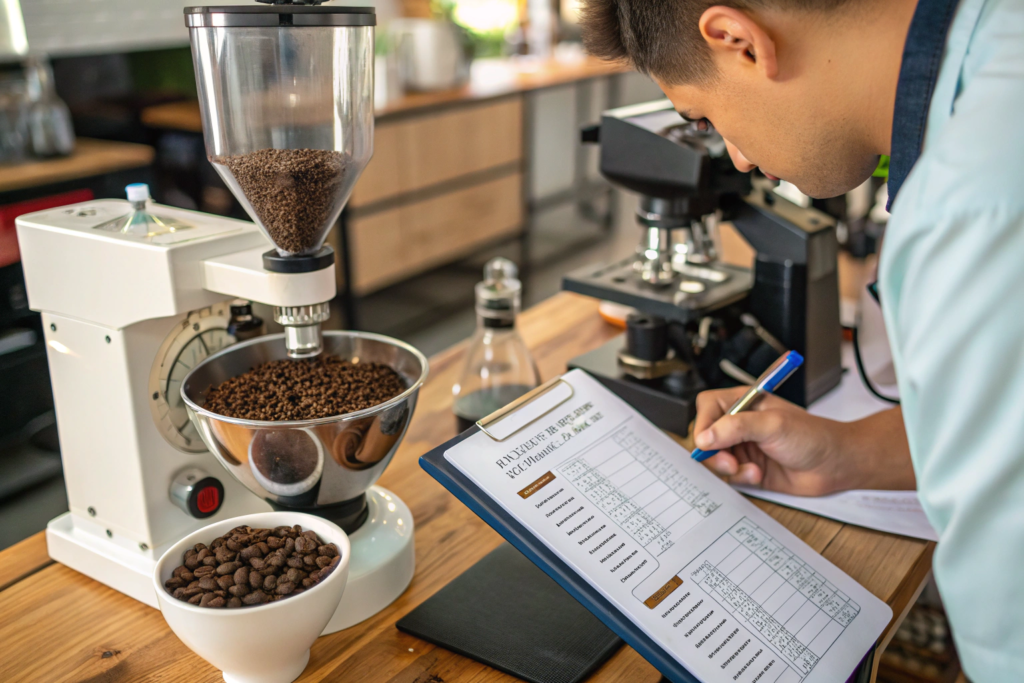
What information should you send to a supplier for an accurate flavor match?
Send a 500-gram sample of your roasted coffee, shipped in a sealed, valved bag as quickly as possible. Send a detailed roast profile sheet with your target Agtron color reading, development time ratio, and drop temperature. Send a cupping form or tasting notes document that describes your target flavor in plain language—not just "chocolate," but "milk chocolate, medium body, low acidity, caramel finish." And ideally, send a video of your head roaster or barista trainer describing the coffee and what they love about it. The more sensory data you give the supplier, the better the match will be. The Cropster roast profiling guide is a useful reference for standardizing this information.
How many sample rounds should you expect before approving a full production run?
Expect at least two rounds. The first round is the supplier's best guess based on your specifications. It will probably be close, but not perfect. You will cup it, brew it, maybe serve it blind to your team. You will send back feedback: "A touch too bitter, can we shorten the extraction slightly?" or "Body is a little thin, can we increase the dose weight?" The second round incorporates that feedback. It should be very close to your target. If it is not, a third round might be needed. If a supplier promises a perfect match from a single sample, they are either extremely lucky or not taking the sensory work seriously. Accept that this is a collaborative development process. The time invested in getting it right is trivial compared to the brand damage of getting it wrong.
What Are the Realistic Minimum Order Quantities for a Small to Medium Roastery?
This is the question that scares roasters away from private label pods. They hear numbers like "100,000 units minimum" and they assume the capsule game is only for giant brands. The truth is more nuanced. Yes, there are factories that will not touch an order under 100,000 pods. But there are also specialized suppliers—like us—who have built smaller, more flexible production lines specifically to serve the specialty coffee market.
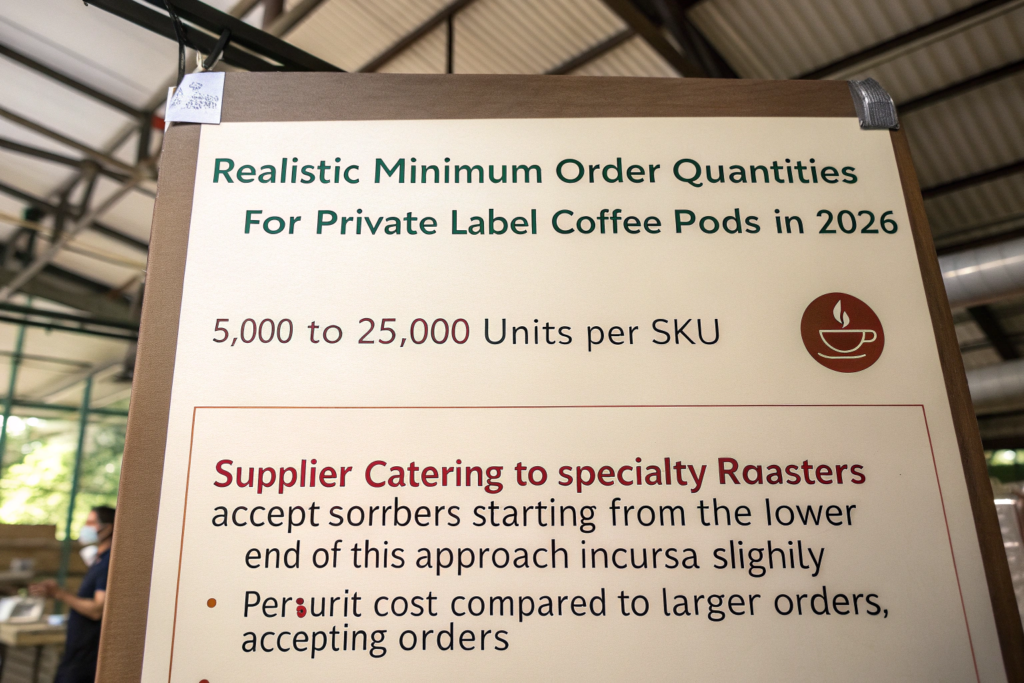
Realistic minimum order quantities for private label coffee pods in 2026 range from 5,000 to 25,000 units per SKU, depending on the supplier and the complexity of the packaging. A supplier focused on specialty roasters will accept orders at the lower end of this range and will often allow you to split the order across two or three blend SKUs. The trade-off is a slightly higher per-unit cost compared to a 500,000-pod run. But that premium is far smaller than the cost of tying up capital in inventory you cannot sell or, worse, throwing away expired pods that you over-ordered.
A practical approach I recommend to smaller roasteries: start with a single blend as your pod offering. Not your single origin, not your seasonal wildcard. Your core blend. The one your customers already buy in bulk bags. Produce 10,000 pods of that one SKU. Sell them in your cafes and online. Learn the demand velocity. Once you have data—"we sell roughly 2,000 pods per month"—you can plan your reorder cycle intelligently. Only then, after you have a proven sales channel, should you expand to a second blend or a single origin pod. This crawl-walk-run approach protects your cash and builds a sustainable pod program.
How can you negotiate a lower MOQ when starting a private label pod program?
Offer to pay a slightly higher per-unit price for the first run. This compensates the supplier for the inefficiency of a small-batch setup while keeping the door open. Commit to a 12-month volume forecast, even if you are not legally bound to it. A supplier is far more willing to accept a small first order if they can see a path to a larger, regular business relationship. And be flexible on lead time. If you can accept an 8-week lead time instead of 4 weeks, the supplier can slot your small order into a gap in their production schedule, which costs them less. For more on finding suppliers who work with smaller roasters, resources like how to find green coffee buyers can also help you understand how the sourcing conversation works in reverse, giving you insight into how suppliers think.
What is the shelf life of a private label pod, and how does that affect your ordering cadence?
A nitrogen-flushed, properly sealed coffee pod should carry a "Best By" date of 12 to 18 months from production. But you do not want to be selling pods that are 15 months old. The customer experience degrades. Plan your ordering cadence so that your maximum inventory age is 6 to 9 months. This means if you sell 2,000 pods per month, your maximum order should be around 18,000 pods, and you should reorder when you are down to your last 4,000 to 6,000 pods. This keeps your product fresh and minimizes waste. A good supplier will help you model this out. They will ask about your sales velocity and recommend an ordering rhythm that keeps your inventory healthy.
Why Is Custom Outer Packaging the Final Step in Building a Premium Private Label Brand?
The pod itself is a functional object. It brews coffee. But the outer packaging—the box, the sleeve, the multi-pack carton—is what the customer sees on the shelf. It is what they pick up, read, and judge in about three seconds. If the outer packaging looks generic, your pod is generic in the customer's mind, regardless of what is inside. If the packaging is beautiful, textured, and informative, the pod is premium. The packaging literally creates the value perception.
Custom outer packaging for private label pods transforms a commodity product into a branded experience. A skilled supplier will offer full-color digital or offset printing on the pod lid itself, custom-printed cardboard sleeves or folding cartons, and multi-pack boxes that are retail-ready. The packaging should tell your brand's origin story, list the tasting notes, and look like it belongs on the shelf next to the best specialty brands in the world—not in a discount bin. This is not just decoration. It is your silent salesperson on the shelf.
I have a client who invested heavily in custom packaging for their pods. The boxes have a soft-touch matte finish, a debossed logo, and a beautiful illustration of the Yunnan mountains where the coffee is grown. They charge a premium price for their pods, and they sell out regularly. The coffee inside is excellent, but it is the packaging that gets the first purchase. It is the coffee that gets the second. You need both. A supplier who can only do a generic white pod with a small sticker is offering you half a solution. Look for a partner who can deliver the complete package, literally.
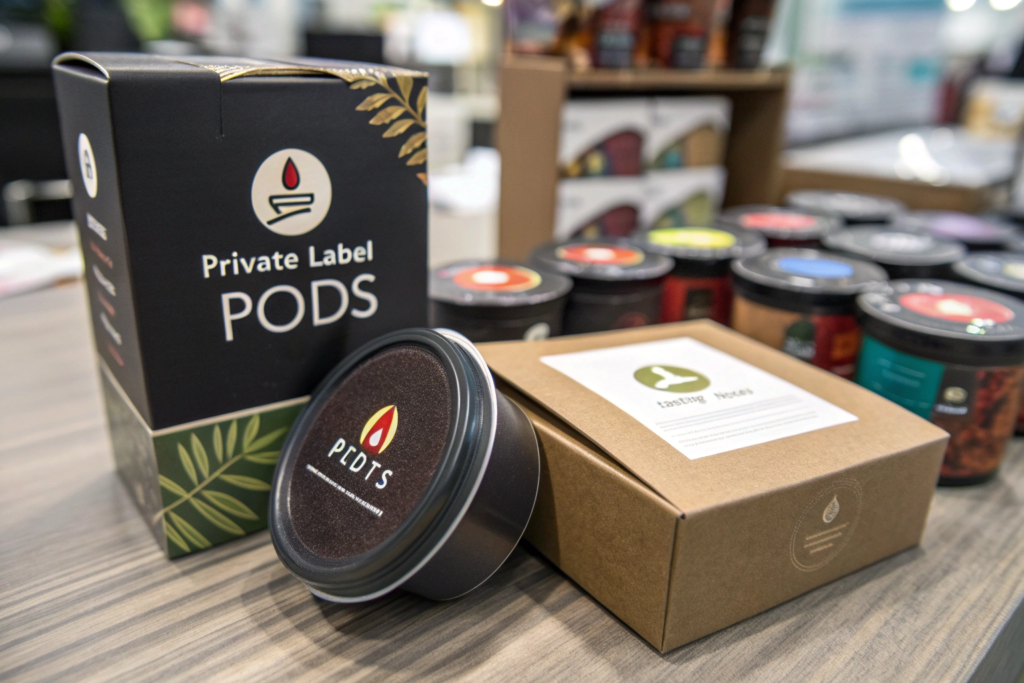
How does lid printing on the pod itself enhance brand recognition?
The moment a customer opens the box and sees your logo and blend name printed directly on the pod lid, something happens in their brain. They think, "This is a real product. This brand invested in me." A blank silver lid feels anonymous. It could be anyone's coffee. A printed lid is an unboxing experience. It also serves a practical function: if a household has multiple types of pods in a drawer, the printed lid makes your pod instantly identifiable. That tiny moment of recognition is a brand touchpoint you should not surrender. Ask your supplier about digital lid printing options. The technology is now accessible and affordable, even for smaller runs.
What packaging formats work best for retail, e-commerce, and cafe display?
For retail shelves, a folding carton with a tuck-top or telescoping lid stands upright and displays beautifully. For e-commerce, a more compact, durable box that fits standard shipping mailers without excess packaging waste is ideal. For cafe counter displays, a small, elegant box that holds 10 or 12 pods and sits next to the espresso machine can drive impulse purchases. A good supplier will offer multiple formats and help you choose the right one for each channel. The packaging should not be an afterthought. It should be designed into the product from the start. At Shanghai Fumao, we guide every private label client through a packaging consultation before any production begins. We want the box to be as good as the coffee inside it.
Conclusion
Finding the right private label capsule supplier is not a simple transaction. It is a partnership. It requires a supplier with serious, verifiable equipment capabilities—automated lines, nitrogen flushing, and rigorous compatibility testing. It requires a sensory development process that matches the pod flavor to your cafe's brew, not some generic "espresso" profile. It requires realistic, manageable minimum order quantities that fit a specialty roaster's cash flow and inventory turnover. And it requires custom outer packaging that elevates your brand on the shelf, online, and at the counter.
If you have been thinking about launching a private label pod line, or if you have been burned by an inflexible co-packer who treated you like a small fish, I would like to talk. Our capsule program was built specifically for specialty roasters like you. We can work with your roasted coffee, or we can use our own green coffee to match your profile. We have the equipment, the testing protocols, and the packaging options to build a pod that truly represents your brand. Contact Cathy Cai at cathy@beanofcoffee.com. Tell her about your brand, your target profile, and your volume expectations. She will set up a sample round and walk you through the entire process, from grind calibration to final packaging. Your customers are buying pods from someone else right now. Let us make sure the next pod they buy has your name on it.