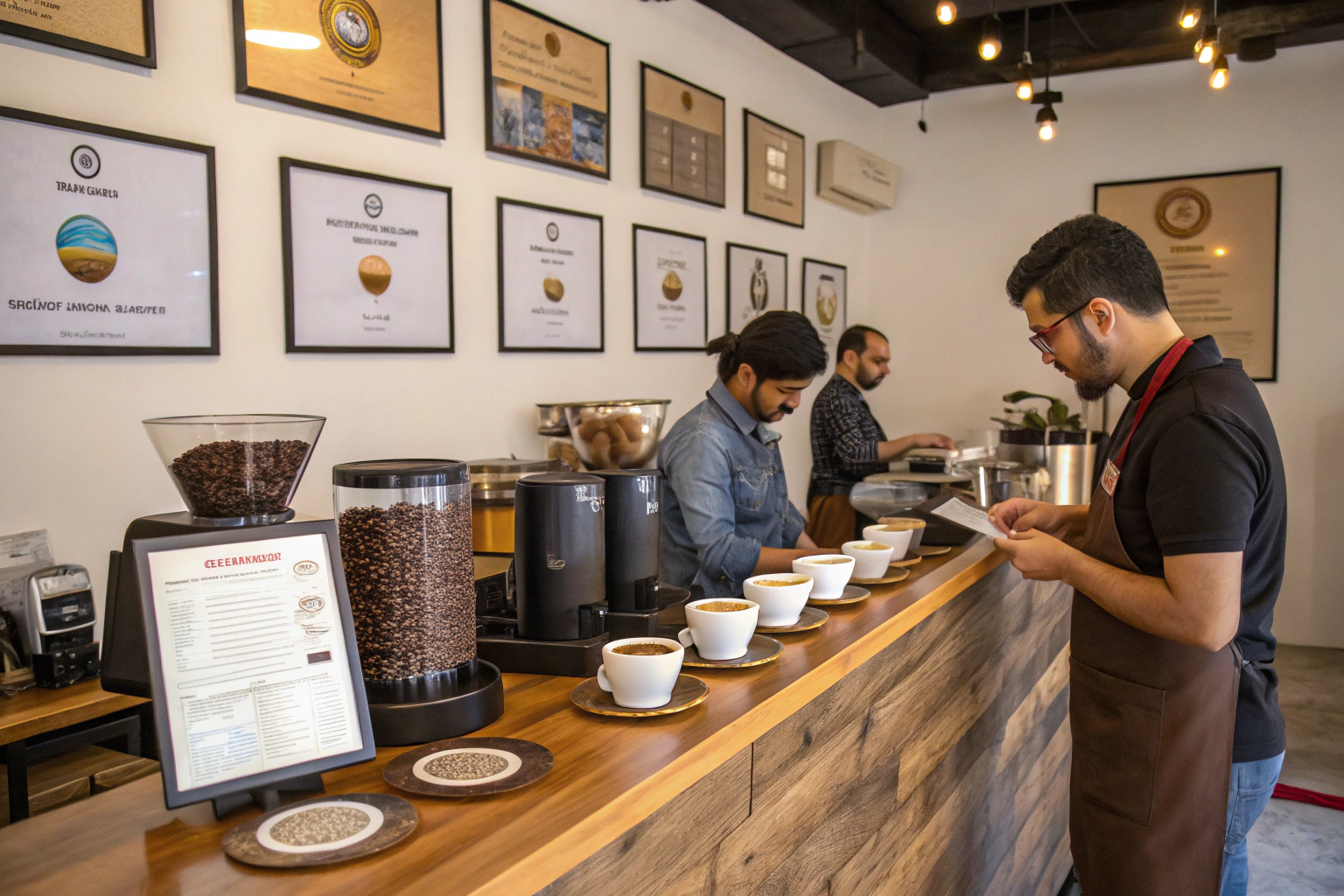
I was cupping at a public event in Seattle two years ago. A customer picked up a sample of our washed Yunnan Arabica, slurped it, and immediately put the cup down. She looked at me, a little confused, and said, "This doesn't taste like dirt." I was not offended. I understood exactly what she meant. In her mind, Asian coffee meant earthy, heavy, rustic Robusta from Vietnam or wet-hulled Sumatra. She had a mental model built over twenty years of drinking coffee, and our clean, bright, chocolatey Yunnan lot did not fit into it. That single sentence taught me the single biggest challenge we face as Asian specialty producers: we are not fighting bad coffee. We are fighting a complete absence of imagination about what Asian coffee can be.
Educating your customers about Asian specialty coffee is not a lecture. It is a story reset. You must replace the outdated "earthy and harsh" stereotype with a new narrative built on three pillars: the high-altitude terroir of regions like Yunnan that produces clean, sweet, complex Arabica rivaling Central America; the rapid investment in modern washed and honey processing that eliminates the rustic defects of the past; and the tangible quality proof of SCA cupping scores, international certifications, and barista competition placements. The education happens not through facts alone, but through guided tasting experiences that let the customer discover the new truth in their own cup.
What I have learned is that facts do not change minds. Experiences do. You cannot tell a customer "Asian coffee is great now." You have to hand them a cup and let them tell you. Here is how to design those moments, describe those coffees, and build a lasting brand story around one of the most exciting transformations in the coffee world.
Why Does the Old Stereotype of "Earthy and Harsh" Asian Coffee Still Persist?
I have thought about this a lot. The stereotype is not entirely a myth. It has roots in reality. For decades, much of Asia's coffee exports were low-altitude, commodity-grade Robusta, or wet-hulled coffees processed with methods that prioritized speed and weight over flavor. That coffee went into instant granules and cheap blends. Western consumers tasted it, even without knowing the origin, and their subconscious formed an association. Asia equaled bitter, thin, and forgettable.
The old "earthy and harsh" stereotype persists because it lives in the muscle memory of the specialty coffee industry itself. Many veteran baristas, roasters, and green buyers learned their trade in an era when Asian coffee was simply not part of the specialty conversation. They passed that knowledge gap down to their customers. The stereotype is not actively taught; it is passively inherited. Breaking it requires actively, and repeatedly, placing a beautifully clean Asian coffee in front of people and letting them update their mental model one cup at a time.
Another factor is terminology itself. "Earthy" is a culturally loaded word. In the Western cupping lexicon, "earthy" is often a polite way of saying "dirty." But in some Asian culinary traditions, earthy notes—think mushroom, forest floor, pu-erh tea—are highly prized. The problem is not the flavor. The problem is that the flavor was often the result of poor processing, not intentional craft. Today, when you taste a washed Yunnan Arabica, it is intentionally clean, intentionally bright. The earthiness is gone because it was never supposed to be there in the first place. The SCA's sensory lexicon is a good place to understand how these descriptors are officially categorized and how "earthy" is distinguished from "clean."
How do you respond when a customer says "Chinese coffee can't be good"?
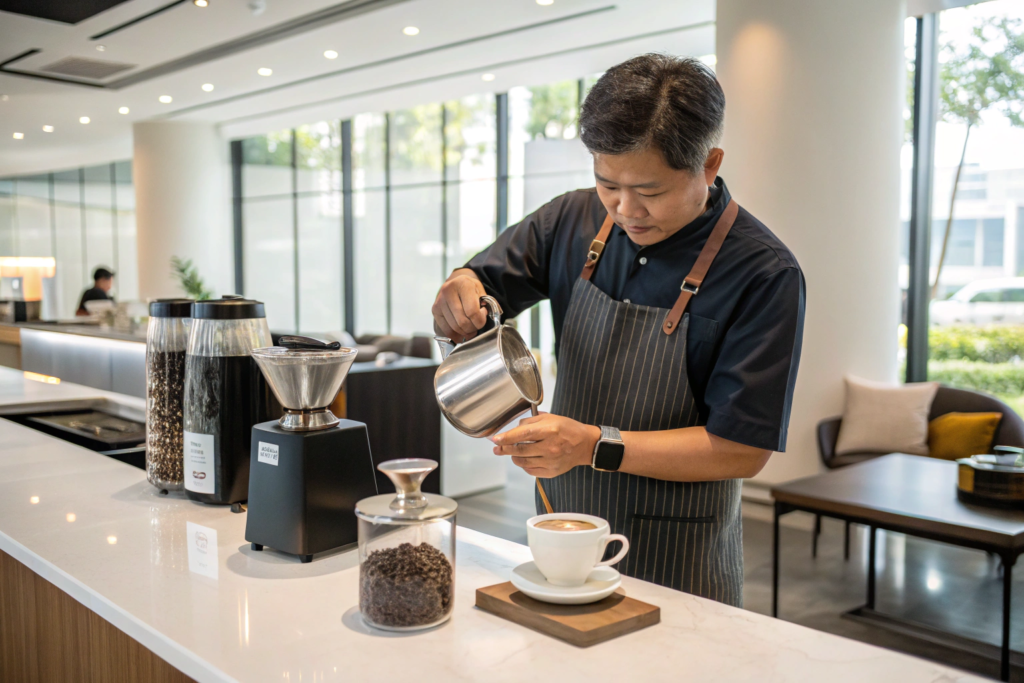
You do not argue. You pour. Hand them a cup of something bright, clean, and undeniably delicious. Do not tell them where it is from until after they have tasted it. Let them compliment it first. Let them ask, "Wow, where is this from?" That is the moment you say, "This is from a family-owned farm in Yunnan, China." Watch their face change. That moment of cognitive dissonance—"but I thought Chinese coffee was bad"—is the exact instant when real education happens. The brain cannot hold the old belief and the new sensory experience at the same time. The experience wins. This is far more powerful than any brochure or blog post. I have seen it work hundreds of times, from public cuppings to casual cafe conversations.
What role did the historical focus on commodity Robusta play in shaping perceptions?
Asia, particularly Vietnam and parts of India and Indonesia, became a global powerhouse of Robusta production. This was a deliberate economic strategy, not an accident. Robusta is hardy, high-yielding, and perfect for the instant coffee industry. But it cemented a reputation. The world came to know Asian coffee through the lens of the cheapest, most functional cup. What is happening now, especially in Yunnan, is a generational pivot. Farmers like us are ripping out old, low-quality Catimor trees and replanting with improved Arabica varieties, at higher altitudes, with modern processing infrastructure. The shift from commodity to specialty is not just a marketing claim. It is a visible, physical, agricultural transformation happening across thousands of acres. For a broader look at how this is unfolding, BeanofCoffee's homepage shows what a modern, specialty-focused Yunnan operation actually looks like on the ground.
How Do You Build a Tasting Event That Changes a Customer's Mind About Asian Coffee?
Lectures do not work. Powerpoint slides do not work. Tasting events work, but only if they are designed correctly. The goal is not to showcase "weird" coffees. The goal is to build a bridge from the familiar to the new. Start with a coffee they know and love. Then walk them step by step toward the unexpected.
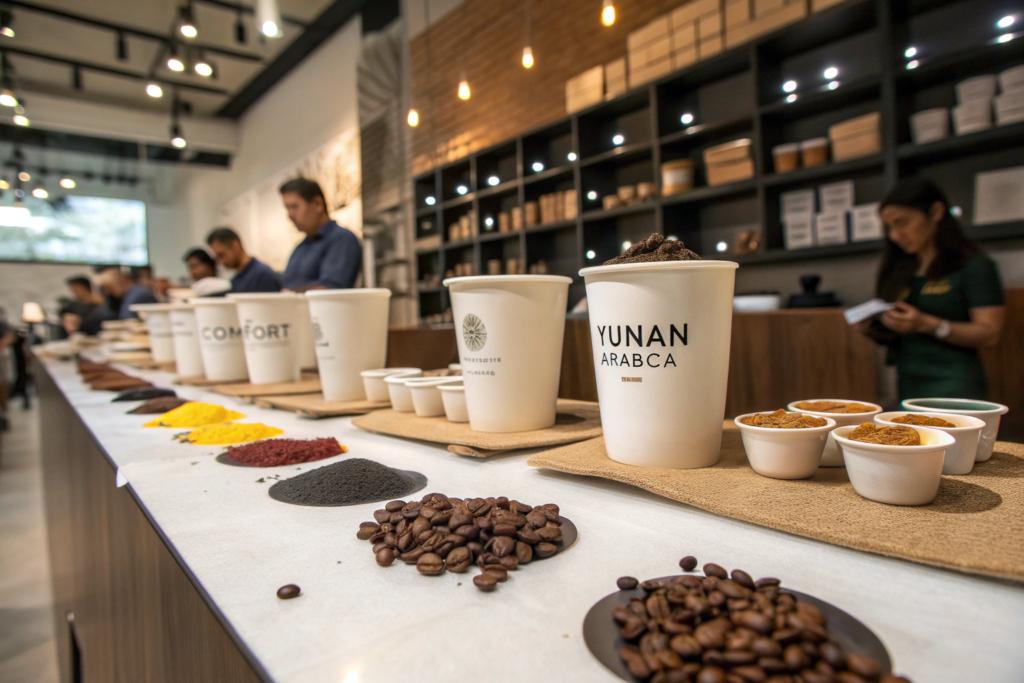
*An effective Asian specialty coffee tasting event is structured as a flight of three to four coffees that build a sensory narrative. Begin with a "Comfort" coffee—a familiar washed Colombian or Guatemalan with classic chocolate and caramel notes. Move next to a washed Yunnan Arabica, and invite the taster to compare the two directly. They will find them remarkably similar in quality and profile. This is the normalization moment. Then introduce a wilder option: a honey-processed Yunnan, a bright single-estate lot, or a clean Catimor espresso base. End with a discussion, not a quiz. The event's goal is for the customer to independently arrive at the conclusion: "Asian specialty coffee is just excellent coffee, full stop."
I once helped a cafe in Melbourne set up a tasting flight exactly like this. They called it "The Silk Road Flight." The first cup was their house Colombian. The second was our washed Yunnan Arabica. The third was our anaerobic fermentation Catimor. They did not tell customers the theme upfront. They just served the flight. After the third cup, the barista would reveal the origins. Almost every customer asked the same question: "Where can I buy the Chinese one?" The coffee had sold itself. The barista just provided the context. The Specialty Coffee Association's event resources offers great templates for structuring public cuppings and educational tastings.
What coffees should be in a "Gateway to Asia" tasting flight?
A three-coffee flight is ideal. The first should be a washed Yunnan Arabica from 1,200 to 1,400 meters. It should present as classic, clean, and chocolatey, with low acidity and a heavy body. This is the "Wait, this tastes like good coffee" moment. The second should be a higher-altitude washed Arabica, perhaps from 1,500 to 1,600 meters, with brighter malic acidity and floral notes. This shows the range and quality ceiling. The third should be a processed variant—a honey lot, a natural, or an anaerobic fermentation—that demonstrates the innovation happening in the region. This final cup is the "Wow, I did not know coffee could taste like this" moment. It opens their imagination to the full potential of the origin.
How do you train baristas to talk about Yunnan coffee with genuine enthusiasm?
Baristas will only sell what they believe in. Do not give them a fact sheet and tell them to memorize it. Sit them down and cup the coffees with them. Let them taste the evolution. Tell them the human story—the farmer who switched from tobacco to coffee, the mill that installed a second washing channel to get cleaner cups, the Q-grader who cupped 40 lots and selected this one. When a barista knows the story and has tasted the proof, their enthusiasm becomes real and contagious. A customer can feel the difference between a barista reciting a script and a barista sharing something they genuinely find exciting. I always offer to do a live video cupping with cafe teams. I hold up the green beans, describe the farm, and cup alongside them. It connects them directly to the origin in a way that a spec sheet never will. For more on building this kind of origin connection, our blog on coffee education covers strategies cafes can use.
What Flavor Stories and Origin Narratives Resonate Most with Western Specialty Drinkers?
Western specialty drinkers are not just buying a beverage. They are buying a story, an identity, and a small adventure. The most powerful story you can tell about Asian specialty coffee is not "we are just as good as Colombia." That is a defensive posture. The powerful story is "we are unique, and you have never tasted anything quite like this before."
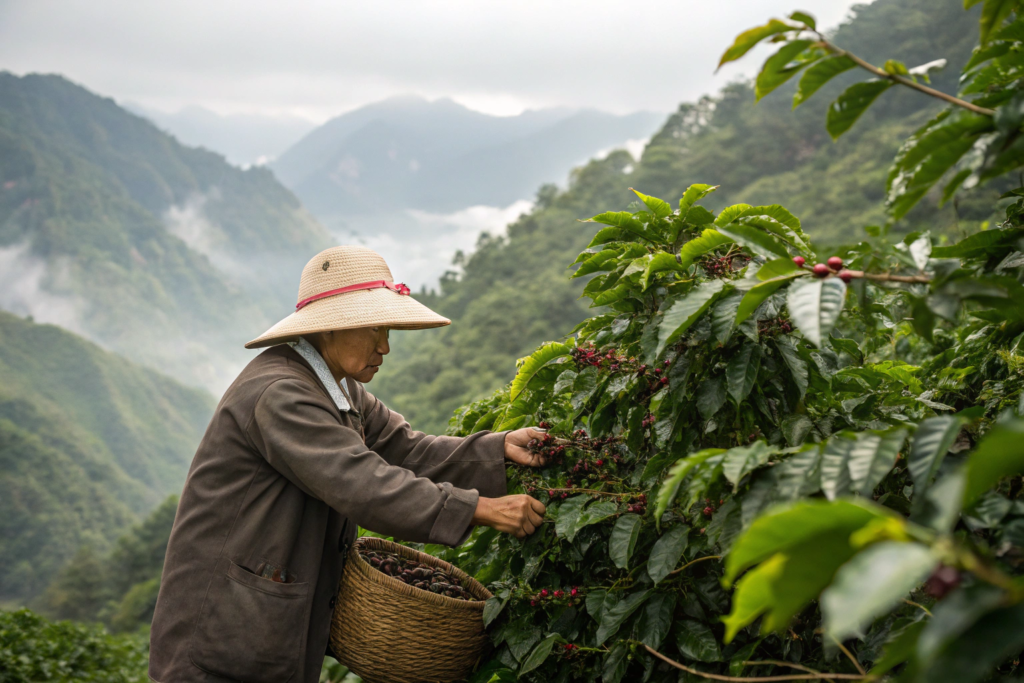
The flavor narratives that resonate most with Western specialty drinkers connect the cup profile to a specific, memorable image. For Yunnan coffee, the most effective story is often "The Tea Farmer's Coffee"—coffee grown by farmers who previously cultivated tea, using an attention to detail and fermentation control learned over centuries of tea production. This narrative explains the clean, delicate, sometimes tea-like body of high-altitude Yunnan lots in a way that feels authentic and culturally rich, not manufactured. It gives the drinker a mental movie to watch while they sip.
Another narrative that works well is the "New Latitude" story. Yunnan sits at the northern edge of the coffee-growing belt. The cool winters and distinct seasons create a slow ripening process that concentrates sugars in the cherry. This is not marketing fluff. It is botanical truth. When a customer understands that the same bean grown at the same altitude in Yunnan and Colombia will ripen differently because of the latitude, they feel smart. They have learned something real. That feeling of learning is part of the premium experience you are selling. The World Coffee Research catalog is an excellent resource for this kind of deep, geeky origin detail.
How do you describe a washed Yunnan Arabica to someone who has never tried one?
Use one familiar comparison and one surprise. "It has the chocolatey comfort of a great Colombian coffee, but with a clean, silky finish that almost feels like a well-brewed oolong tea." This sentence does two things. It anchors the new experience to something the customer already knows and loves. Then it adds a distinctive twist that is unique to Yunnan. The customer's brain goes: "I like Colombian. I like oolong. I am curious about this hybrid." That is exactly where you want them. Avoid long lists of tasting notes. One anchor, one twist. That is enough.
Why do barista competition placements matter for consumer trust?
When a Yunnan coffee is used by a barista champion in a national or international competition, it sends a signal that no amount of marketing can replicate. It says: "A professional, whose entire career depends on taste, chose this coffee to represent them on the biggest stage." This is a third-party endorsement of the highest order. If your supplier's coffee has been used in competition, mention it. Put the logo on the bag. Display the certificate in the cafe. It is an instant credibility shortcut for a customer who does not yet know the origin. It turns skepticism into curiosity.
How Do You Price and Promote Asian Specialty Coffee as a Premium, Not a Budget, Option?
There is a dangerous temptation to price Asian specialty coffee cheaply. The logic is understandable. It is a new origin. Customers are skeptical. A lower price reduces the barrier to trial. But this strategy is a long-term brand killer. It positions Asian coffee as a "value" option, a cheaper substitute for Colombian or Brazilian. Once that perception is set, it is almost impossible to reverse. You are not selling a discount. You are selling a discovery.
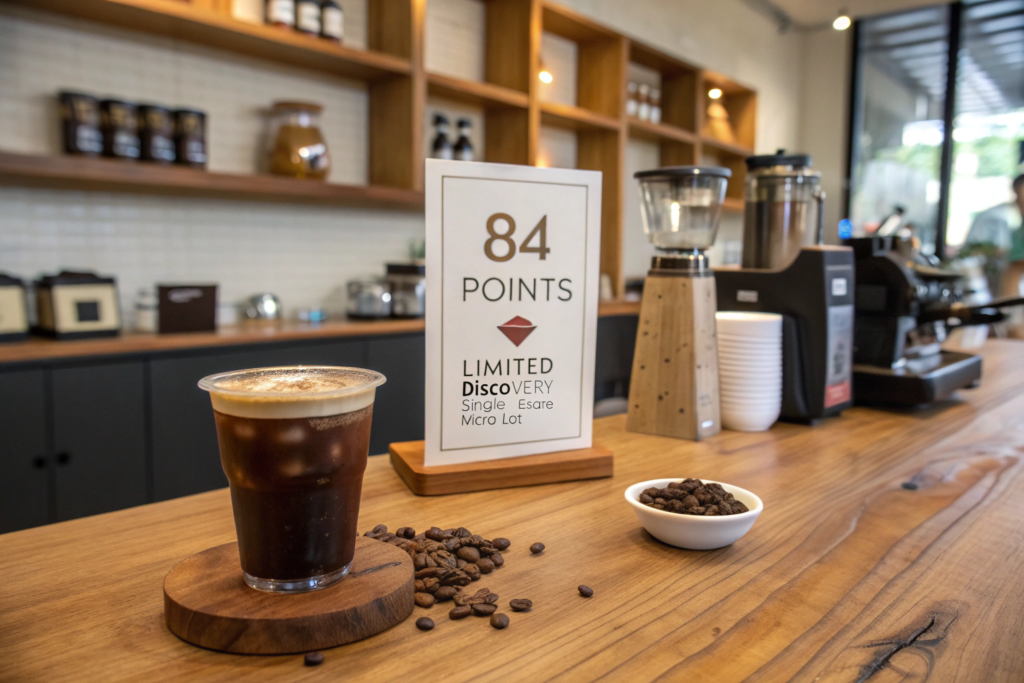
Asian specialty coffee must be priced in line with its quality, not its reputation. If the lot scores 84 points, it should be priced alongside other 84-point coffees on your menu, regardless of the country name. Promoting it as a "limited discovery," a "single estate micro-lot," or a "barista's selection" reinforces the premium positioning. The customer should feel they are gaining access to something rare and exclusive, not settling for a cheaper option. Price creates perception. Perception creates demand. Underpricing is the fastest way to undermine the entire origin's future.
I have had clients push back on this. They say, "But my customers will not pay that for Chinese coffee." My response is always the same: "They will if you give them a reason to believe." If you present it as a premium product, with a premium story, in beautiful packaging, and it tastes incredible, the price will feel fair. If you present it apologetically, with a low price and a generic label, you confirm every negative stereotype the customer held. The choice is yours. For a concrete example of how premium positioning works, look at our Yunnan Arabica Green Coffee Beans for Espresso product page. The language, the detail, the transparency—it all signals quality, not commodity.
What is the right price point for a single-origin Yunnan pour-over in a cafe?
In the current North American market, a specialty single-origin pour-over typically ranges from $4.50 to $7.00, depending on the market. A Yunnan single origin scoring 84 to 86 points should sit comfortably in the $5.00 to $6.50 range. It should not be the cheapest single origin on the menu, nor the most expensive. It should be priced alongside the Guatemalan and the Costa Rican. This signals parity. It says, "This coffee belongs here." If you are running a featured "Discovery" promotion for the launch week, you can temporarily offer a small discount to drive trial, but make it clear it is a limited-time offer. The regular price is the regular price.
How do you frame a Chinese specialty coffee on a retail bag so it feels worth a premium?
The bag should feature the farm name, the altitude, the processing method, and a specific flavor descriptor that sounds delicious, not exotic. "Baoshan Estate, 1,400m, Washed. Tasting notes: Dark chocolate, caramel, toasted almond." This reads like a premium specialty bag from anywhere in the world. It does not apologize. It does not say "surprisingly good." It just states the facts with confidence. If you want to add origin context, put it on the back of the bag in a short, compelling paragraph. "Grown in the high mountains of Yunnan, China, where cool winters and ancient tea-farming traditions create a coffee of remarkable clarity and sweetness." This is the kind of copy that makes a customer pick up the bag, read it, and think, "I want to taste this."
Conclusion
Educating your customers about Asian specialty coffee is not about correcting their ignorance. It is about inviting them into a discovery that you have already made. It is about handing them a cup that tastes like chocolate and caramel and watching them say, "Where is this from?" It is about building tasting events that let the coffee speak first and the origin story second. It is about telling stories of tea farmers turned coffee artisans, of high-altitude terroir, of new processing techniques that produce flavors no one expected. And it is about pricing and promoting these coffees with the confidence they deserve, not with an apology.
If you are a roaster or cafe owner who wants to bring this story to your customers, I would love to help you source the coffee and shape the narrative. We have spent years refining our lots to produce exactly the kind of clean, sweet, and surprising coffees that change minds. Contact Cathy Cai at cathy@beanofcoffee.com. She can send you our current offering sheet, cupping scores, and the stories behind each lot. Let us put a Yunnan coffee in your customers' hands and watch them discover what you already know: great coffee has no borders.