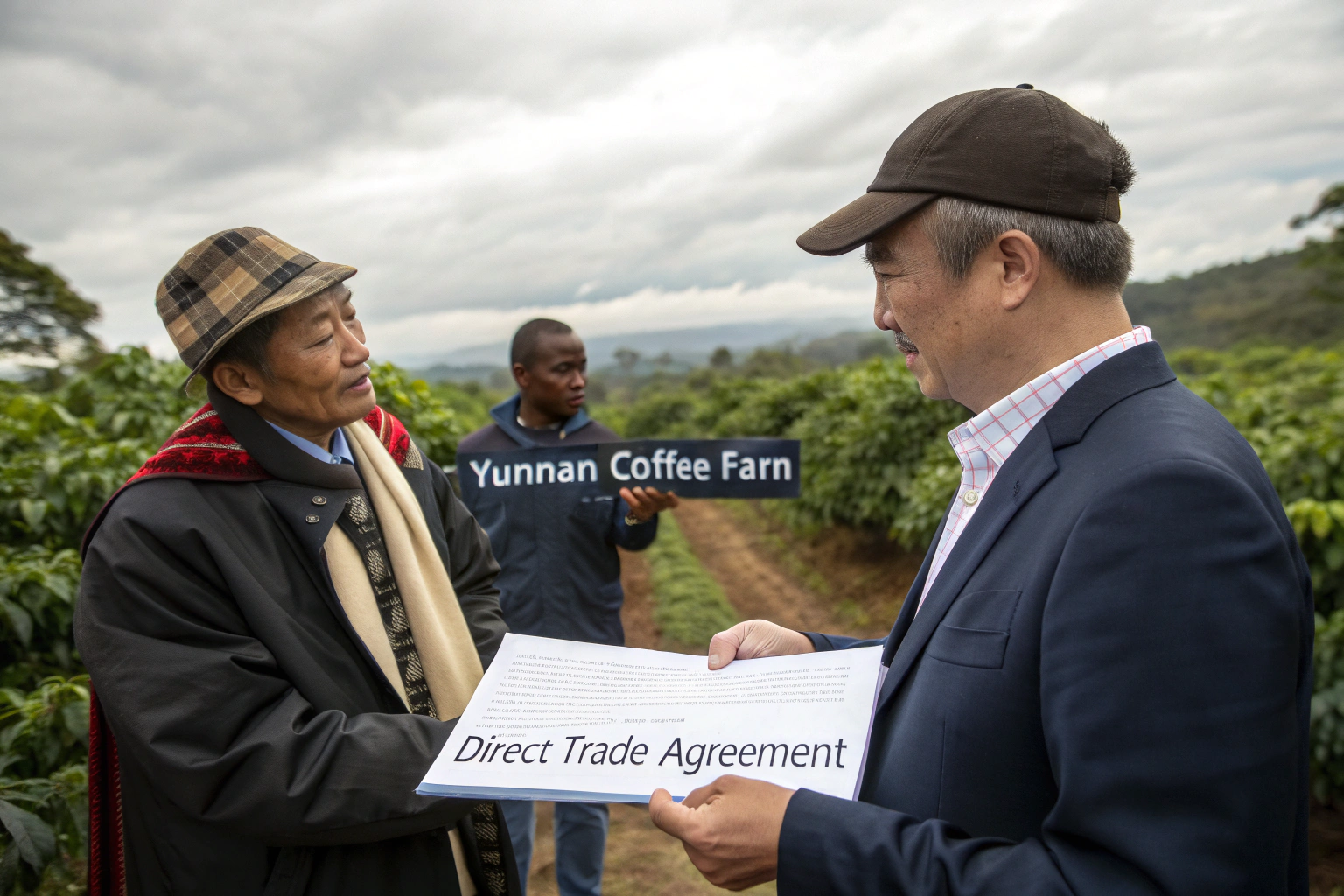
I received an email last March from a roaster in Copenhagen that stopped me mid-scroll. He had been buying our washed Arabica for two years, always the same lot from a specific 4-hectare plot on our highest farm. His customers had fallen in love with it. He had built a brand story around it. His packaging featured a hand-drawn map of that exact hillside. And then another roaster in his city, a competitor, started selling a coffee that tasted suspiciously similar—from the same lot, the same harvest, bought through a broker who had picked up the remainder. His brand's flagship product, the thing that made him unique, was suddenly not unique anymore. He asked me, "How do I make sure this never happens again?"
Securing exclusivity on a specific Yunnan coffee farm lot requires a formalized direct-trade agreement that goes far beyond a standard purchase contract. It must include a defined exclusivity period covering multiple harvest cycles, a guaranteed volume commitment from the buyer, a mutually agreed quality specification that triggers the exclusivity, and a first-right-of-refusal clause for subsequent harvests. This is not a transaction. It is a structured partnership where the roaster essentially sponsors the lot's production, and the farmer guarantees that no other buyer will receive beans from those exact trees.
What that roaster in Copenhagen and I built together over the following weeks was a new kind of relationship. We called it a Lot Partnership Agreement. It has since become one of our most successful models for working with quality-focused roasters. Here is exactly how it works, what you need to ask for, and how to protect the investment you are making in a specific farm, a specific plot, and a specific flavor.
What Does "Lot Exclusivity" Actually Mean in a Direct Trade Relationship?
This is where confusion starts. A buyer hears "exclusive" and assumes no one else in the world can buy coffee from the entire farm. That is almost never realistic. A single farm might have 20 different lots, from different altitudes, different varietals, different processing methods. No single roaster can take them all. That is not exclusivity. That is a monopoly, and it is bad for the farmer and bad for the roaster.
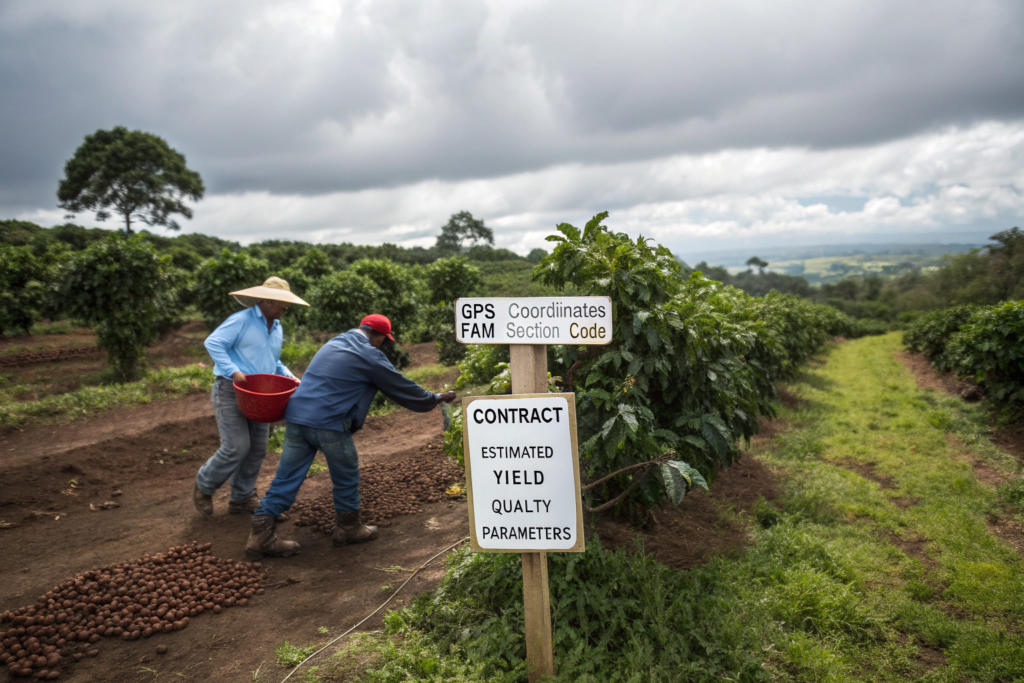
True lot exclusivity means that a specific, traceable section of a farm—defined by geographic boundaries, varietal, and processing method—is reserved entirely for a single buyer for a defined period. The contract specifies the exact plot (often identified by GPS coordinates or a farm section code), the harvest cycle (typically one or two harvests), the estimated yield, and the quality parameters. The farmer agrees not to sell beans from those specific trees to any other buyer. In return, the roaster agrees to purchase the entire lot, or a substantial guaranteed minimum, at a pre-agreed price that reflects the quality and the exclusivity premium.
Another way to think about it: you are not buying coffee. You are renting a piece of a farm's production capacity. That plot is yours for the season. The farmer manages it, harvests it, and processes it according to your agreed specifications. You get every bag it produces, from the highest-grade specialty selection to the slightly lower-grade secondary picks. This is critical. If you only take the best 80% and leave the farmer with the remaining 20%, you are not a partner. You are a cherry-picker. A true exclusivity agreement means you take the whole lot, and you have a plan for the lower tiers—perhaps as a blend component or a more affordable single-origin offering.
How is a specific farm lot legally defined and physically separated during harvest?
On our farm, every distinct plot has a code. For example, "BS-14-A" might refer to Block 14, Section A on the Baoshan farm. This code is tied to GPS coordinates logged in our farm management system. During harvest, pickers are assigned to specific blocks. The cherries from Block 14-A go into bags tagged with that code. They are processed separately, dried on separate raised beds or in separate mechanical dryer batches, and stored in separate GrainPro bags with the lot code clearly labeled. The coffee never mixes with beans from another block. This physical separation, backed by a paper trail from the picking bag to the shipping container, is what makes exclusivity real and verifiable. The World Coffee Research traceability protocols provide excellent guidance on how this is done at an industry level.
What is the difference between a named farm lot and a regional blend labeled as a farm?
A regional blend is a mix of coffees from multiple smallholders in the same area, sold under a regional name like "Baoshan Arabica." It can be excellent, but it is not exclusive. A named farm lot comes from a single, identifiable farm. A named plot lot goes even further—it comes from a specific, GPS-defined section of a single farm. This is the difference between "Bordeaux wine" and "Château Margaux." The first is a regional reputation. The second is a specific, defensible asset. If you are building a brand story around a specific hillside, a specific family, and a specific flavor, you need the named plot. You need to be able to say, "This coffee comes from these trees, and no one else has it." Anything less, and you are vulnerable to exactly the situation my Copenhagen client faced.
How Do You Negotiate a Multi-Harvest Exclusivity Contract That Protects Both Sides?
This is the delicate part. The farmer is being asked to give up the freedom to sell to other buyers. That is a risk. If the exclusive buyer disappears, or demands a lower price at the last minute, or simply goes out of business, the farmer is left holding a crop with no backup plan. The contract must address this fear directly. It must make exclusivity feel safe, not risky.
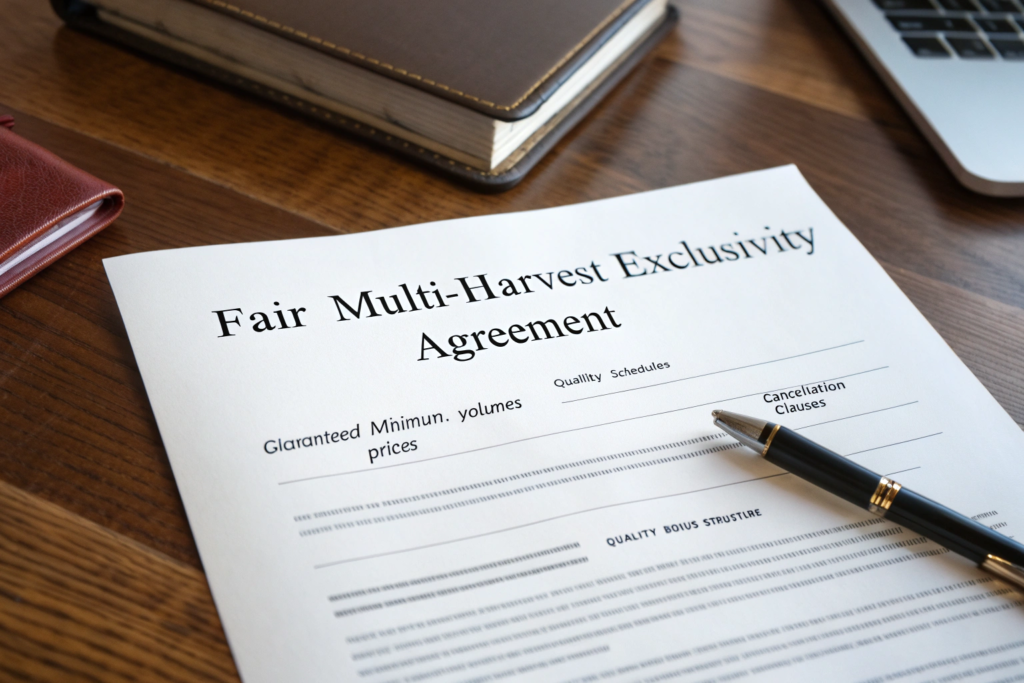
A fair multi-harvest exclusivity contract is built on a foundation of mutual commitment and mutual protection. It includes: a guaranteed minimum volume the buyer will purchase, a guaranteed minimum price or a transparent pricing formula tied to quality, a pre-agreed quality schedule that defines what is "in spec" and what happens if a harvest falls short, and a cancellation clause that gives the farmer enough time to find alternative buyers if the roaster cannot fulfill their commitment. The contract should also include a quality bonus structure: if the lot scores above the baseline, the farmer earns a premium. This aligns incentives toward quality, not just volume.
I always recommend starting with a one-harvest trial agreement before committing to multiple harvests. The trial year proves the concept. Both sides test the logistics, the quality consistency, and the communication. If the trial is successful, a three-year rolling agreement is the logical next step. Three years is long enough for the roaster to build a brand story and see a return on that investment. It is long enough for the farmer to justify investing in that specific plot. And it is short enough that neither side feels trapped in a bad marriage.
What is a fair pricing formula for an exclusive lot over multiple years?
A fixed price per pound that does not change for three years is dangerous for both sides. If the market drops, the roaster is overpaying. If the market spikes, the farmer feels cheated. A better formula ties the base price to a recognized benchmark, such as the C-market price for Arabica, plus a quality differential and an exclusivity premium. For example: "C-Market + $1.80/lb quality differential + $0.40/lb exclusivity premium." This means the price floats with the market, the farmer always earns a significant premium, and the roaster pays a fair, transparent price. The International Coffee Organization's market reports provide the benchmark data. The Specialty Coffee Transaction Guide is another invaluable resource for understanding what fair quality differentials look like in the specialty market.
How does a quality bonus structure incentivize the farmer to keep improving?
The base contract guarantees a minimum price for coffee that meets the agreed cupping score baseline, say 82 points. If the lot scores 84 points, the farmer receives a bonus of an additional $0.20/lb. If it scores 86, the bonus is $0.40/lb. This structure does something powerful: it makes the farmer a partner in the pursuit of quality, not just a supplier of volume. They have a direct financial incentive to invest in better picking, better sorting, better drying. This transforms the relationship from adversarial price negotiation into collaborative quality improvement. I have seen farmers become obsessed with hitting that bonus tier. They start experimenting with fermentation times, investing in raised beds, and training their pickers more carefully. The roaster gets better coffee. The farmer earns more money. The exclusivity becomes more valuable for everyone.
What Volume Commitment Do You Need to Make to Secure an Entire Farm Lot?
This is the reality check. A single hectare of well-managed Arabica in Yunnan can produce anywhere from 1,500 to 3,000 kilograms of green coffee per harvest, depending on the altitude, the varietal, and the year. A specific 4-hectare plot might yield 6,000 to 12,000 kilograms. That is 100 to 200 60-kilogram bags. You need to be prepared to buy that entire volume, or at least a very large guaranteed minimum, for the exclusivity to be meaningful.
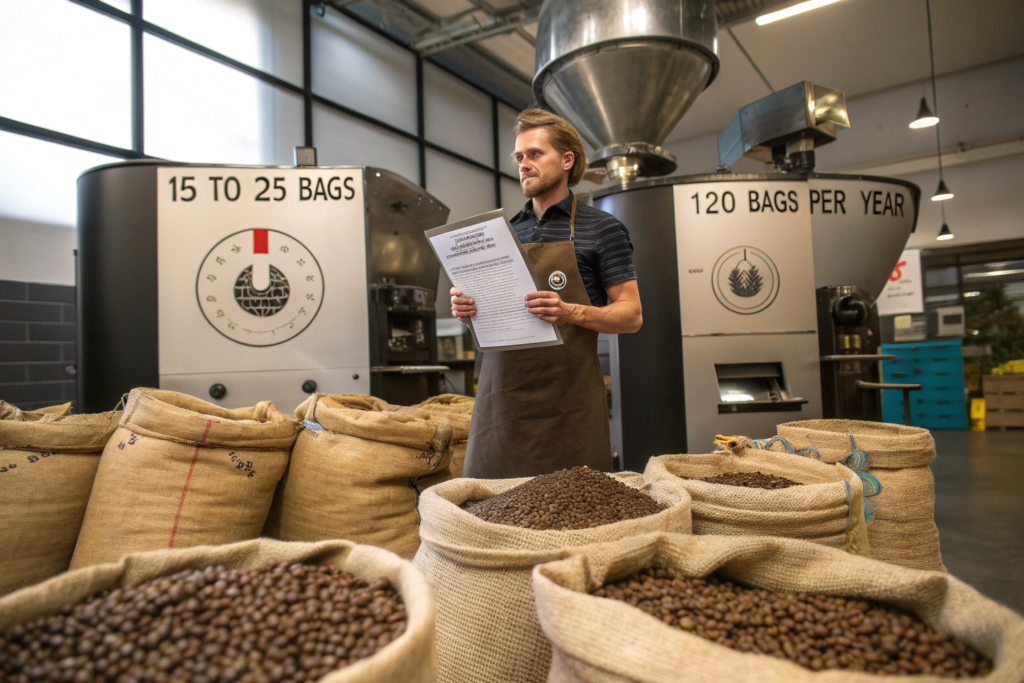
A roaster seeking exclusivity on a small specific lot should be prepared to commit to a minimum of 80-100% of the estimated annual yield. For a micro-lot of half a hectare, this might be only 15 to 25 bags, which is very manageable for a mid-sized specialty roaster. For a larger single-origin program, a 4-hectare lot producing 120 bags per year is a serious volume commitment. The roaster must have a plan for selling that volume—perhaps as a flagship single-origin offering, perhaps splitting it into a premium tier and a blend tier. The key is that the farmer knows every bag from that plot has a home before it is even harvested.
If you cannot commit to the full volume, be upfront about it. Negotiate a partial exclusivity: "I will take the top 80% of the lot by cupping score at the premium price, and I have the first-right-of-refusal on the remaining 20% at a slightly lower price for a blend application." This is still a valuable agreement for the farmer if the terms are clear and the commitment is solid. What you cannot do is ask for exclusivity and then only take the 50% that is easiest to sell. That is not a partnership.
What happens if the harvest yield is significantly lower than estimated?
This is an agricultural reality. Frost, drought, pests, or simply a poor flowering season can reduce yield dramatically. The contract must have a force majeure clause that addresses this. Typically, if the yield is below a certain threshold—say 60% of the estimated volume—the exclusivity obligation on the farmer's side is considered fulfilled with whatever volume was produced, and the roaster has the right to source the shortfall from a comparable lot elsewhere on the farm or from a neighboring farm with similar terroir, with full transparency. The roaster is not left without coffee. The farmer is not penalized for nature. The relationship survives the bad year.
How do you manage cash flow for a large upfront annual purchase?
A full lot purchase can be a significant cash outlay. Many roasters structure the payment in milestones rather than a single upfront payment. For example: a 20% deposit at contract signing to secure the lot, a 40% payment when the coffee is harvested and the initial cupping is approved, and the final 40% before shipment. This spreads the financial burden across the season and aligns payments with the production milestones. A letter of credit from a bank is another common tool for larger transactions, providing security for both sides. The important thing is to have the conversation about payment terms early, before you are staring at an invoice you were not prepared for. At Shanghai Fumao, we work with each exclusive partner to design a payment schedule that works for their cash flow cycle.
How Do You Build a Brand Story Around an Exclusive Farm Lot That Customers Love?
The contract gives you the legal right to the lot. The story gives you the commercial value. An exclusive lot without a compelling narrative is just expensive inventory. The narrative is what allows you to charge a premium, build customer loyalty, and make the exclusivity actually profitable. The good news is that an exclusive direct-trade relationship with a specific plot is one of the richest storytelling assets in specialty coffee.
Building a brand story around an exclusive Yunnan lot means going deep on three narrative layers: the place (the specific hillside, the altitude, the climate, the soil), the people (the farmer, the pickers, the mill manager, with names and faces and quotes), and the process (the exact varietal, the fermentation method, the drying technique, and the cupping notes that make it unique). This story should appear on your packaging, your website, your social media, and in the training you give your baristas. The customer should feel like they are not just buying coffee—they are visiting a specific patch of earth in Yunnan every time they brew a cup.
One of the most effective tools I have seen is the "Harvest Report" PDF. After each harvest, I help our exclusive partners create a one-page document that summarizes the season: rainfall, harvest dates, yield, cupping scores, and a few photos of the trees and the team. The roaster sends this to their wholesale accounts or publishes it on their website. It makes the coffee feel alive and seasonal. It connects the customer to the agricultural calendar. And it reinforces, year after year, that this coffee is special, limited, and theirs alone.
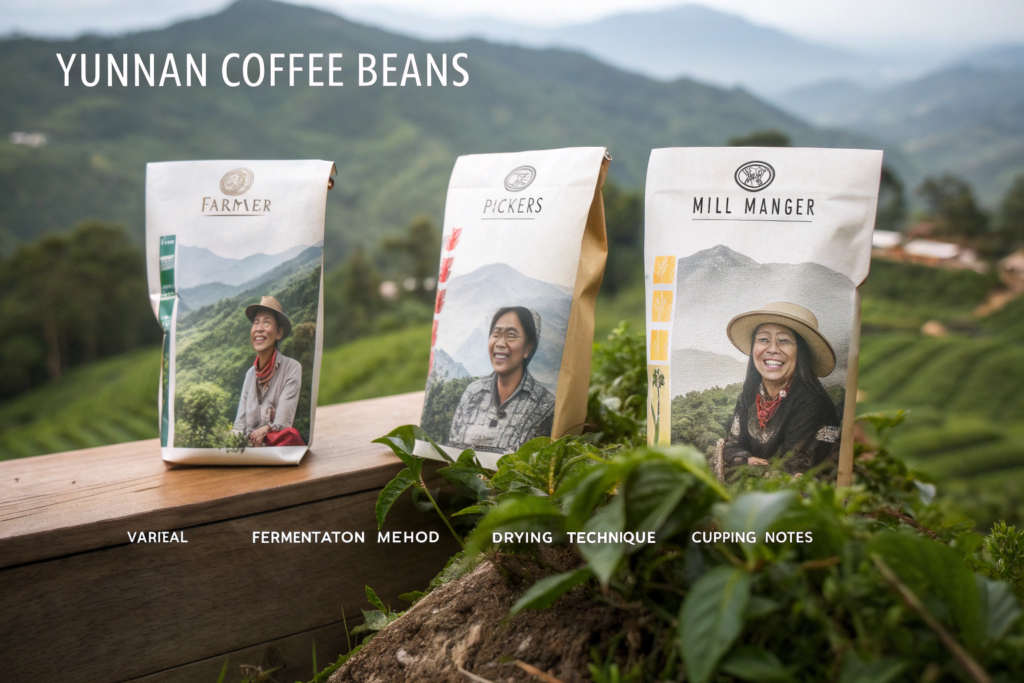
What specific details from the farm translate best onto a retail bag or cafe menu?
Name the farmer. Name the plot. State the altitude and the varietal. Use the GPS coordinates as a design element. A phrase like "Block 14-A, Li Family Farm, 1,520m, Baoshan, Yunnan" tells a customer everything they need to know. It says: this is a real place, a real family, a real coffee. It is the opposite of generic. Include a short tasting note and a one-sentence story: "Mr. Li has farmed this hillside for twenty years. His washed Catimor is the heart of our espresso." That is all you need. The customer's imagination fills in the rest.
How do you share the exclusivity story without alienating customers who are not "coffee geeks"?
Keep the technical details on the website and the emotional details on the bag. The bag should tell a human story. The website can go deeper into cupping scores and processing protocols. In the cafe, train baristas to offer a simple, excited summary: "This one is really special—we work directly with a single farm in China, and we are the only roaster in the country who has it. It tastes like dark chocolate and caramel." That last sentence is the most important one. Always connect the story back to the flavor. The customer is not buying a contract. They are buying a delicious cup of coffee. The exclusivity is the reason they should try it. The flavor is the reason they will come back. For a deeper guide on this kind of storytelling, the Specialty Coffee Association's consumer engagement resources provide excellent frameworks.
Conclusion
Securing exclusivity on a specific Yunnan coffee farm lot is not a power move. It is a promise. It is a promise from you to the farmer that you will buy their entire harvest and pay them fairly for the work of a full year. It is a promise from the farmer to you that no one else in the world can claim the coffee from those specific trees. It is a promise to your customers that when they buy your flagship single origin, they are tasting something genuinely rare and unrepeatable.
This kind of partnership is the future of specialty coffee. It replaces the anonymous commodity supply chain with a direct, transparent, mutually beneficial relationship. If you are a roaster with a proven track record of selling single-origin coffee and you are ready to build a brand story around a specific plot in Yunnan, I would like to explore that with you. We have several exceptional lots on our Baoshan farms that could be a fit. Contact Cathy Cai at cathy@beanofcoffee.com. Tell her about your volume, your flavor targets, and your vision for the partnership. She will send you the lot profiles, the cupping scores, and a draft framework for how an exclusive agreement could work. Let us build something that belongs only to you and the land it comes from.