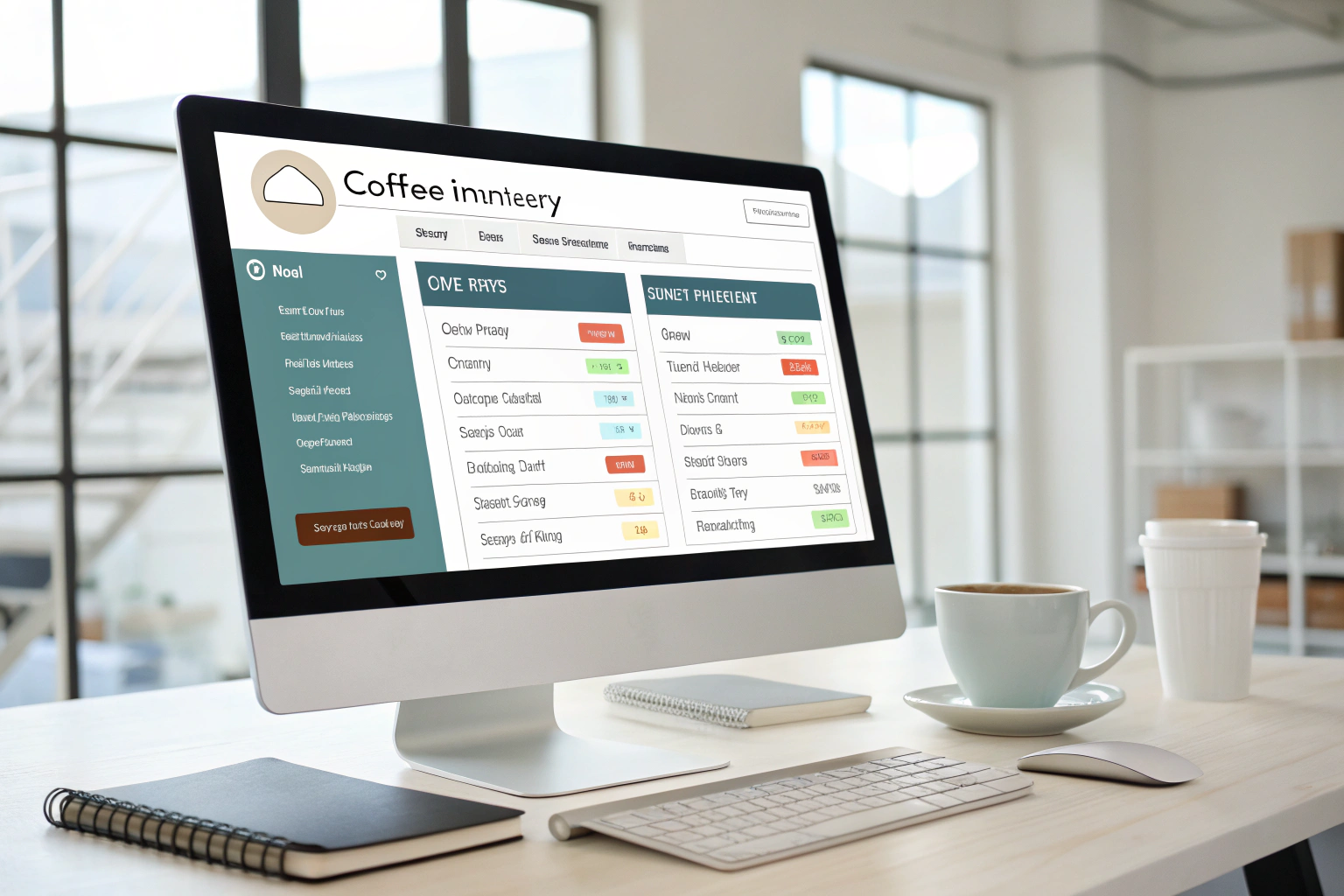
I nearly lost a major client in early 2025 because of a spreadsheet. A single, stupid spreadsheet error. Our logistics coordinator typed "300 bags" instead of "30 bags" for a specific washed Arabica lot heading to a roaster in Amsterdam. Suddenly, my system said we had 270 more bags of that lot than we actually did. I quoted it to another buyer. Promised a shipment. Then discovered the ghost inventory when it was time to mill. The result? Two weeks of delay, a very unhappy client, and a deeply embarrassing phone call I never want to repeat. That was the day I banned manual inventory tracking forever.
The most efficient way to manage coffee inventory in 2026 is to build a single source of truth that connects your physical bean stock with your sales pipeline in real time. This means abandoning disconnected spreadsheets entirely and moving to a cloud-based inventory management system that tracks every lot by its unique identifier—origin, crop year, processing method, cupping score, and current warehouse location. The system must automatically update available-to-sell quantities the moment a sample is approved or a proforma invoice is issued, and it must send low-stock alerts before you accidentally oversell a lot you cannot replace.
What does this shift actually look like for a coffee business? It is not about buying the most expensive software. It is about a mindset change. It is about treating every single bag like a unique, perishable asset with a ticking clock, and building a system simple enough that your entire team can use it without making catastrophic mistakes. Let me walk you through the four pillars of a system that actually works.
Why Is a Single Source of Truth More Critical Than a Perfect Spreadsheet for Coffee Stock?
I used to think I was a spreadsheet wizard. Multiple tabs. Color coding. VLOOKUP formulas linking purchase orders to shipments to client allocations. I was proud of it. The problem? Only I truly understood it. If I was out of the office, or in the fields, or just overwhelmed, no one else could safely update the data. The spreadsheet was a fragile masterpiece with a single point of failure: me. One wrong keystroke, one accidental sort that broke a formula, and the entire picture of our inventory was corrupted.
A single source of truth is a shared, real-time view of inventory that everyone on the team trusts. It eliminates the confusion of "which version of the spreadsheet is current" and the terror of discovering an error after you have already committed to a buyer. In 2026, this typically takes the form of a cloud-based ERP or inventory platform purpose-built for green coffee, where every bag movement—from the drying patio to the container—is logged by a user, timestamped, and instantly reflected in your available-to-sell balance.
Another way to think about it: your inventory system should be like a bank account. When you withdraw money, your balance drops instantly. When you deposit, it rises. There is no "version" of your bank balance that lives on one person's laptop. It is a shared truth. Your coffee stock deserves the same treatment. The moment a contract is signed, that coffee is no longer yours to sell. Your system must reflect that immediately, not when someone remembers to update a cell.
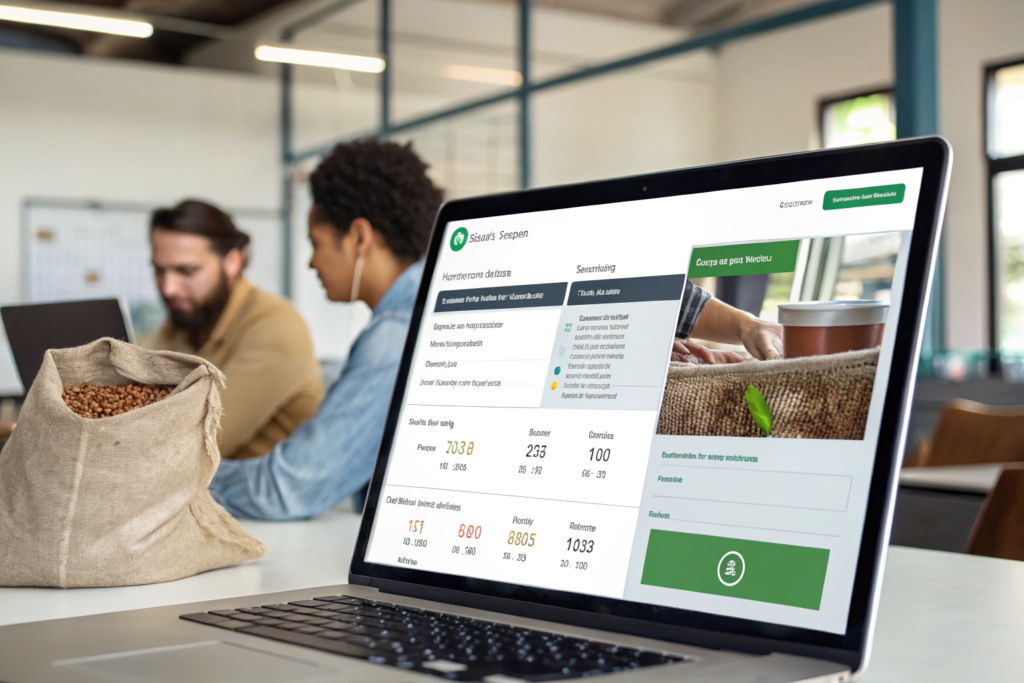
How does real-time inventory sync prevent overselling and double-booking?
Real-time sync is the safety net. We now use a system where our sales team can see, with a single glance, the exact "free stock" of every single lot we have. When they prepare a quote for a roaster in London, the system shows only the coffee that is genuinely available. If a lot is down to its last 50 bags, the system flags it yellow. If another quote is already pending on that lot, the system reserves it temporarily so two salespeople cannot promise the same beans to two different clients. This has completely eliminated the nightmare scenario I described earlier. For a deeper look at the operational side of this, Perfect Daily Grind's logistics section often covers inventory control strategies. On the software side, platforms like Cropster's inventory module are purpose-built for coffee professionals who need this exact kind of lot-level tracking.
What happens when only one person holds the key to the inventory data?
I lived this. That person gets sick, or goes on vacation, or simply makes a mistake while exhausted. And the business freezes. Orders are delayed because no one knows what is actually in the warehouse. Clients call, demanding answers, and the only honest reply you can give is, "I need to check with our inventory person." That is a terrible look. It signals disorganization and a lack of professionalism. When I finally moved our system to the cloud, with role-based access for the sales, logistics, and milling teams, it was like a weight lifted. I could finally go on a trip without my laptop and not worry that the entire supply chain would collapse without my personal intervention. The bus factor—how many people could get hit by a bus before your business stops functioning—went from one to four.
How Do You Accurately Forecast Green Coffee Demand When Quality Is Not Negotiable?
Forecasting in coffee is uniquely difficult. This is not like selling socks, where you can just look at last year's sales and add ten percent. Green coffee is an agricultural product. Quality is variable. A lot that scored 84 points last harvest might be an 82 this year. A client who loved your washed Arabica in 2024 might be shifting their blend toward a honey process in 2025. If you forecast purely on past sales numbers, you will either end up with expensive specialty lots going stale in your warehouse or, worse, be sold out of your best coffee before your best clients even place their orders.
Accurate demand forecasting for specialty green coffee in 2026 relies on a triangulation of three data points: historical sales volume by lot profile, direct pre-harvest intent conversations with your top twenty clients, and a rolling "buffer stock" strategy for your most consistent, blend-friendly lots. You are not forecasting an exact bean. You are forecasting a flavor and price bracket, and then backfilling it with the specific lots that match, which gives you the flexibility to handle quality variation without failing your commitments.
A detail people often overlook: your best clients can be your best forecasters, but only if you ask them early. Before the harvest even begins, I send an email to every client who bought more than 100 bags last year. I ask three simple questions: "Roughly how many bags are you planning for next year?", "Did the cup profile work for your blend?", and "Are you interested in any experimental lots?" Their answers give me a rough volume and quality target, and I contract our own farm production accordingly. This is not binding. It is a conversation. But it is a conversation that prevents me from growing 5,000 bags of a coffee no one wants.
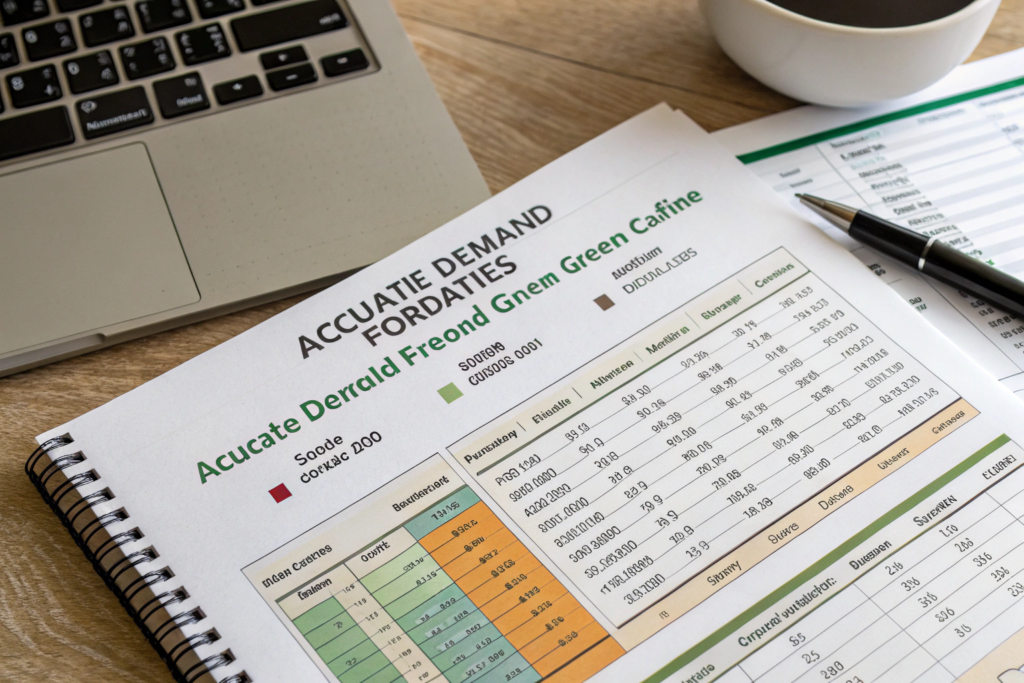
Why is buffer stock essential for maintaining quality consistency year-round?
Buffer stock is the coffee you hold back intentionally, not because you could not sell it, but because it acts as a shock absorber for your quality promises. Let me give you a real example. One of our core products is an espresso base from our 1,200-meter Catimor lots. The flavor profile is consistent, but micro-variations happen. If a client orders a container in June, I do not just pull one specific lot. I may blend a small percentage of an older, slightly sweeter lot with a fresher, slightly brighter lot to hit the exact target profile. That buffer stock is my quality insurance. Without it, you are at the mercy of whatever your farm just produced, and your client's blend consistency starts to drift. The Specialty Coffee Association's green coffee storage guidelines are a critical resource for understanding how to hold this buffer stock without degrading quality.
What data should a coffee supplier collect to predict a buyer's reorder timing?
You need to know your client's roasting volume and their typical inventory turn. If a roaster buys 200 bags and typically roasts 400 pounds a week, I know that a 200-bag order (around 26,000 pounds) will last them about 65 weeks. I set a reminder 8 weeks before they run out to reach out and start a conversation about their next lot. You also need to track their sensory preferences over time. If a buyer has consistently selected lots with low acidity and chocolate notes, do not offer them a bright, citrusy lot from your highest altitude farm as their next order. The data profile of a buyer—their volume, rhythm, and flavor fingerprint—is as important to manage as the data on your bean stock. This is the kind of relationship data that turns a transactional sale into a multi-year partnership, which is the entire foundation of how we work with clients at Shanghai Fumao.
What Technology Stack Simplifies Coffee Lot Tracking for Small to Medium Exporters?
You do not need an SAP-level enterprise system that costs more than a new dry mill. I have seen small exporters get paralyzed by this, thinking they need to choose between a whiteboard and a million-dollar ERP. There is a practical middle ground that works beautifully for exporters moving between 5 and 50 containers a year. It is about using simple, modern, connected tools that talk to each other, not one giant piece of software that does everything poorly.
The ideal technology stack for a small to medium coffee exporter in 2026 combines a cloud-based green coffee inventory platform for lot management, a professional communication tool like Slack or Teams for internal alerts, and a shared cloud document system like Google Workspace or SharePoint for contracts and shipping documents. The key is not the specific tools themselves, but the automated workflow that triggers a notification whenever a lot's status changes—from sample approved, to contract signed, to bag loaded into a container.
My own stack is built for simplicity. Our lot master data lives in a coffee-specific inventory platform where we create a digital ID for every single lot the moment it finishes drying. This ID contains: farm location, altitude, varietal, processing method, cupping score, bag count, and warehouse location. A unique QR code is generated and printed on a physical tag that goes onto every pallet. Our warehouse team scans the QR code with a phone to move stock. Our sales team sees the updated number instantly. No typing. No transcription errors. No spreadsheets.

How does QR code tagging on pallets eliminate manual counting errors?
Scanning a QR code is faster than reading a handwritten tag. It is also infinitely more accurate. When a lot is moved from our conditioning warehouse to the loading dock, the warehouse worker scans the pallet. The system immediately deducts those bags from the available-to-sell balance. If someone tries to scan the wrong lot for a specific client order, the system flashes a warning. This is the same technology used in every modern warehouse, and it is now cheap enough for a coffee exporter to implement. We are not a tech company. We are farmers. And if we can do it, anyone can. For a practical guide on setting up lot identification systems, the World Coffee Research sensory and sample handling protocols are a great place to start. For messaging and alerts, Slack's workflow automation is a simple way to push inventory alerts to the right people without building custom software.
What single workflow automation saves the most time in coffee inventory management?
The most transformative automation for us was the "sample approved to contract" trigger. Previously, a sample would be approved by a client over email. That email would sit in someone's inbox. Then a salesperson would manually draft a contract, often a week later, and only then would the inventory be mentally "reserved." In that gap, the coffee was vulnerable to being quoted elsewhere. Now, when a sample is approved, the salesperson logs it in our system with one click. This immediately triggers three things: the lot status changes to "Reserved," a Slack message is sent to the logistics team saying "prepare contract for [Client X, Lot Y]," and a countdown timer starts. If the contract is not issued within three business days, the system sends an alert. This simple automation closed the gap that caused 90% of our historical overbooking issues. It is not fancy. It is just disciplined.
How Do You Handle Green Coffee Shelf Life Without Losing Specialty Value?
Green coffee is not static. It is a living, breathing product that changes over time. I have tasted some washed Arabicas that peaked in flavor twelve months after harvest. I have also tasted some natural processed coffees that started fading and developing woody, papery notes after only nine months. A buyer's worst fear is receiving a "past crop" bag that tastes like a cardboard box. But a supplier's worst fear is taking a financial write-down on coffee that is still perfectly delicious but just past some arbitrary date on a calendar.
Managing green coffee shelf life in 2026 requires moving away from a rigid "one year and it is stale" rule and toward a sensory-driven freshness model. This means cupping your stored lots quarterly, tracking their moisture and water activity levels, and grading them into tiers: "Prime" for your premium clients, "Good" for blend bases where a slight softening of acidity is actually a benefit, and "Past Peak" for quick sale or instant coffee channels. GrainPro bags and climate-controlled storage are the tools that extend your sensory window and protect your investment.
An often-overlooked detail: a washed Arabica stored in a GrainPro bag at a stable 60 degrees Fahrenheit with 60% humidity can taste spectacular at 14 months. Its acidity might have softened slightly, but its body may have rounded out and become more syrupy. For an espresso blend, this is not a defect. It is an upgrade. The problem is that many buyers have been trained to look only at the harvest date and reject anything older than 12 months. Part of the job of a good supplier is to cup the coffee, speak honestly about where it is in its flavor evolution, and price it fairly.
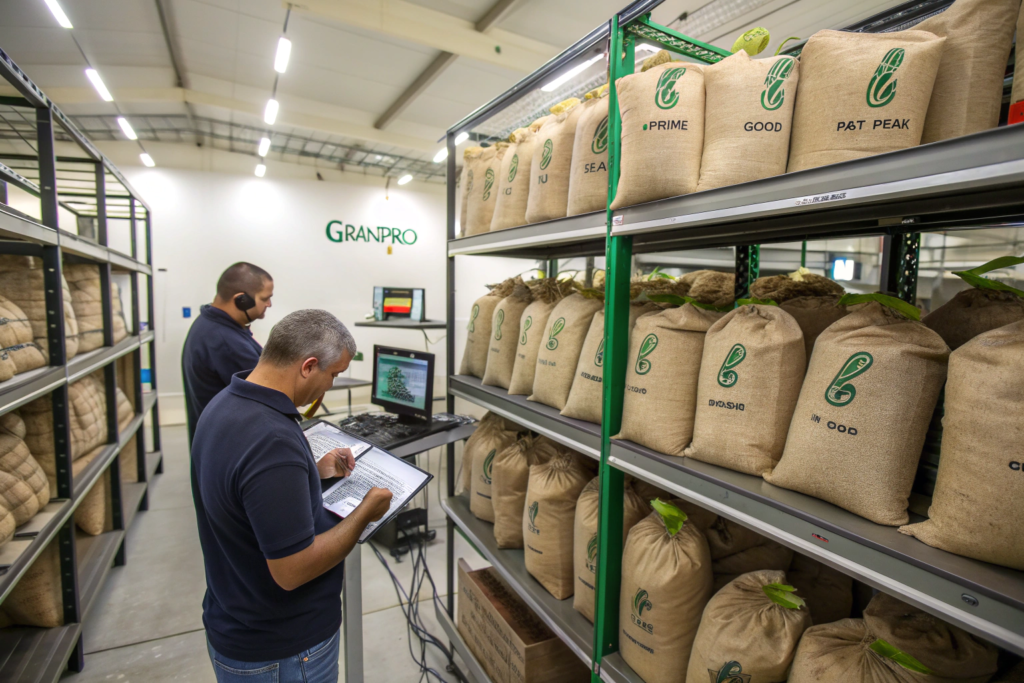
What is the real difference between "past crop" and perfectly aged green coffee?
"Past crop" is a sensory descriptor, not a calendar date. A past crop coffee has developed a flat, woody, or papery taste, often accompanied by a faded, hollow body and a distinct lack of sweetness. This happens faster with natural processed coffees and those stored in jute in humid environments. An aged coffee, on the other hand, may have a deeper, mellower character, with notes of baking spice and dried fruit, with no off-flavors. The difference is entirely in the cupping. We cup our retained lots every quarter without exception. If we detect any hint of past crop notes, that lot is immediately declassified. It will never go to a specialty client. But if it cups clean, with just a mellowed acidity, it still has a place in a high-quality espresso blend. The Green Coffee Association's storage and grading guidelines offer more context, and for a very practical look at how leading roasters think about this, the Coffee Review blog frequently covers discussions on freshness and aging.
How can climate-controlled storage turn shelf life from a risk into an asset?
We invested in a climate-controlled warehouse a few years ago, and honestly, it was one of the best decisions we have ever made. Before that, our coffee was at the mercy of the Yunnan seasons. Hot, humid summers would accelerate the aging process. Cold, dry winters would pull moisture out of the bean, making the coffee taste hollow and dusty. Now, with temperature and humidity held perfectly steady, the coffee ages gracefully. This means I can hold a larger buffer stock without panicking about spoilage. I can offer clients a consistent product across seasons. I can even hold back a small amount of an exceptional lot to release later at a premium, much like a wine library. It transformed shelf life from a destructive countdown into a strategic inventory tool. This is the kind of infrastructure investment that allows us, as your partner, to offer a level of reliability that most small suppliers simply cannot.
Conclusion
Efficient coffee inventory management in 2026 is not a software problem. It is a clarity problem. It is about knowing exactly what you have, where it is, and who it is for, in a system that everyone on your team can see and trust. It is about forecasting demand not just from spreadsheets but from honest, pre-season conversations with your key clients. It is about using simple, connected technology—QR codes, cloud platforms, and automated alerts—to eliminate the manual errors that destroy trust and delay shipments. And it is about treating your green coffee as a sensory asset with a dynamic shelf life, protecting it with climate control and cupping it regularly to know its true value, not just its calendar age.
If your current inventory management process is still held together by a spreadsheet that only one person understands, or if you have been burned by a supplier's inventory errors before, I would welcome a conversation about how we do it differently. Our entire system is built to give you the confidence that the coffee you ordered is the coffee that exists, is reserved for you, and will arrive when we say it will. Contact Cathy Cai at cathy@beanofcoffee.com. She can walk you through our lot tracking, our forecasting process, and how we keep your supply stable and transparent from our farm to your door. No ghost inventory. No spreadsheet anxiety. Just real coffee, accounted for in real time.