
I received an email from a client last month. It was not a pleasant one. The subject line was "Quality Issue - Container #XYZ." My stomach tightened. I opened it, expecting frustration and anger. Instead, I found a clear, calm, and meticulously documented report. There were photos of the uneven roast color. There was a cupping scoresheet with specific defect notes. There was a moisture reading that was out of spec. There was a reference to the specific clause in our contract. I was not defensive. I was impressed. This was a professional I could work with to solve a problem. The pain of a quality dispute is real. You have paid for coffee that is not right. You feel cheated. You feel powerless. But if you handle it correctly, you have power.
To successfully dispute a coffee bean quality issue with an Asian supplier, you must immediately halt any further processing of the coffee, meticulously document the specific defect with objective data (photos, moisture readings, cupping scores), retain the original samples and packaging, and initiate a formal, written claim that references the precise contractual specifications and proposes a clear, fair remedy.
This is not about being aggressive. It is about being professional and building an unassailable case based on facts and contract law. Emotion will not get you a refund. Evidence will. Let me walk you through the exact steps to take from the moment you suspect a problem to the resolution of the claim.
What Immediate Steps Should You Take Upon Discovering a Defect?
The moment you suspect a quality issue, the clock starts ticking. The actions you take in the first few hours are critical. They determine whether you have a strong case or just a complaint. Do not panic. Do not call the supplier and start yelling. Follow a protocol.
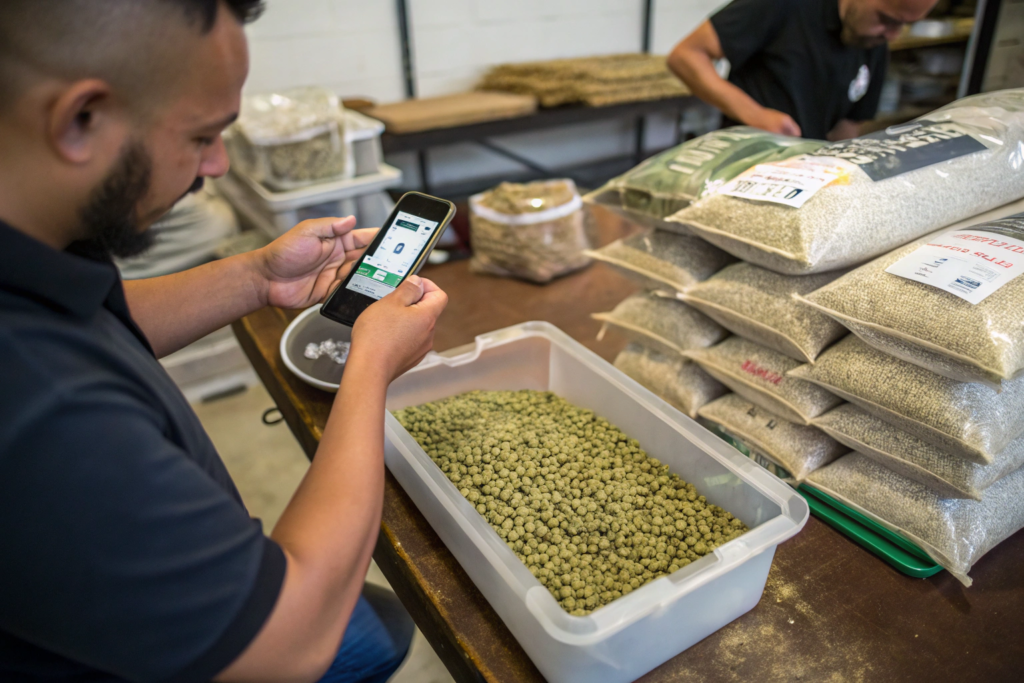
The immediate steps to take upon discovering a defect are: (1) Quarantine the affected coffee and stop all production use, (2) Gather and securely retain a representative sample of the defective beans along with the original packaging, (3) Document the issue thoroughly with high-resolution photos and objective measurements, and (4) Review the contract specifications to confirm the exact nature of the breach. This is about preserving evidence and establishing the facts. You are building a case file.
Why Is It Crucial to Retain the Original Sample and Packaging?
This is the single most important piece of advice I can give you. Do not throw away the evidence.
The Importance of the Original Sample:
- Chain of Custody: The sample you took from the bag is your proof. You need to be able to show it to the supplier or to a third-party arbitrator.
- Tamper-Proofing: Place a representative sample of the defective beans (at least 500g) in a clean, sealable bag. Label it clearly with the Lot Number, Date of Receipt, and Container Number. Sign your name across the seal. This creates a tamper-evident record.
- The Supplier's Right to Verify: A reputable supplier like Shanghai Fumao will want to see the evidence. We may ask you to send a portion of the retained sample to us or to an independent third-party lab (like SGS) for verification. If you have not retained a proper sample, you have no physical evidence. Your claim becomes your word against theirs.
The Importance of the Original Packaging:
- The Bag and the Seal: Keep the original jute bag with the stenciled lot number. Crucially, keep the GrainPro liner and the tamper-evident security seal. The seal number on the bag should match the number on the packing list we sent you. This proves the bag was not tampered with in transit.
- Transit Damage: If the defect is related to water damage or mold, the packaging itself might show evidence (water stains on the jute, a broken seal). This helps determine where the problem occurred—at origin or during transit.
At Shanghai Fumao, our Custom Blends Program and standard shipments all use sequentially numbered security seals. This is specifically to protect both you and us in the event of a dispute. It establishes an unbroken chain of custody. For more on evidence handling, resources from the Green Coffee Association discuss standard arbitration procedures.
How Should You Document the Defect with Objective Measurements?
Subjective opinions do not win disputes. "It tastes bad" is not a claim. "The moisture content measured 13.2%, exceeding the contractual maximum of 11.5%" is a claim.
The Objective Documentation Checklist:
- Moisture Content: Use a calibrated moisture meter to take multiple readings from different parts of the sample. Take a photo of the meter showing the reading next to the sample bag.
- Water Activity (if possible): If you have a water activity meter, take a reading. An aw > 0.65 is a serious food safety issue.
- Screen Size Analysis: If the beans look smaller than specified, use a set of sizing screens. Take a photo of the percentage of beans that fell through the required screen.
- Defect Count: Spread a 350-gram sample on a grading mat. Count and categorize the primary and secondary defects. Take a clear, well-lit photo of the entire mat.
- Roast Evaluation: Roast a small batch (e.g., 500g) using the exact profile you would normally use. Document the roast curve data. Take a photo of the roasted beans on a cooling tray, especially if the color is uneven.
- Cupping Scoresheet: Cup the coffee using SCA protocols. Fill out a formal scoresheet. Note the specific off-flavors (e.g., "Ferment," "Earthy," "Phenolic").
This is the data that forms the foundation of your claim. It is objective. It is verifiable. It is what a professional supplier needs to see to take your complaint seriously. At Shanghai Fumao, our Quality Specifications provide clear, measurable targets for all these parameters.
How Do You Structure a Formal Written Dispute to a Supplier?
Once you have gathered your evidence, it is time to communicate. The first email you send sets the tone for the entire dispute resolution process. It must be clear, firm, and professional.
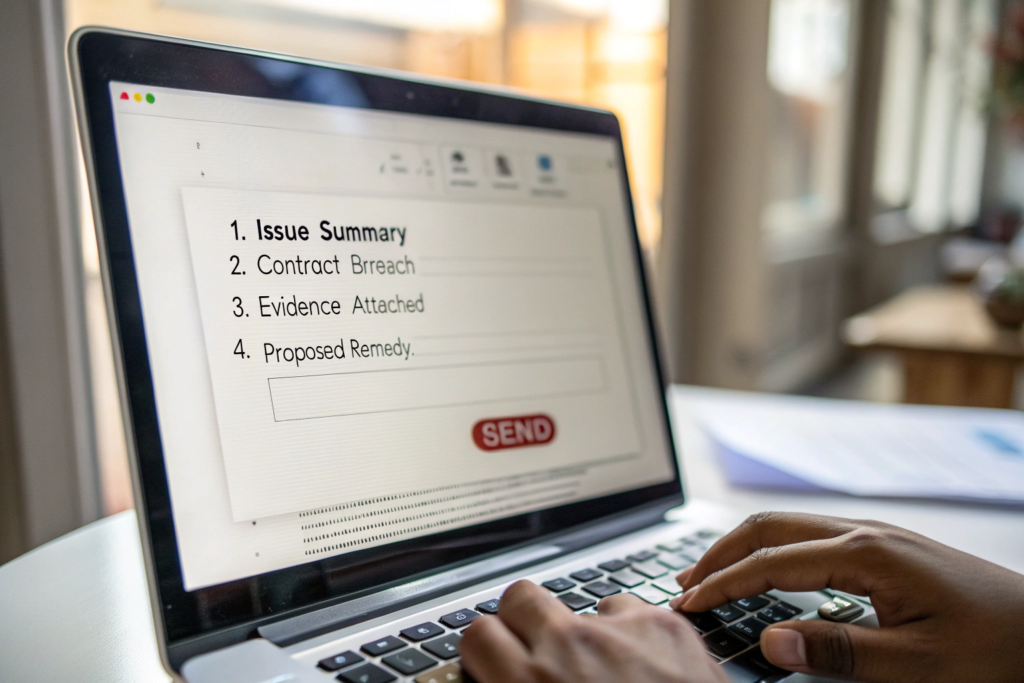
A formal written dispute should be structured with a clear subject line referencing the contract number, a concise summary of the issue in the first paragraph, a specific reference to the breached contract clause, a bulleted or numbered list of the objective evidence gathered, and a clear, realistic proposal for a remedy (e.g., discount, replacement, or return). This is a business letter, not a venting session. You are stating the facts and proposing a solution.
What Specific Contract Clauses Should You Reference in the Claim?
Your purchase contract is your legal shield. You must point to the specific language that the supplier has violated. Generic complaints are weak. Contractual breaches are strong.
Key Clauses to Reference:
- Quality Specifications: "Pursuant to Section 3.1 of our contract, the coffee was warranted to have a maximum moisture content of 11.5% and a minimum screen size retention of 90% on Screen 17."
- Grade Designation: "The coffee was sold as 'Strictly High Grown, Grade 1, Specialty Grade' as defined by the SCA Green Coffee Grading Standards."
- Food Safety: "Pursuant to the warranty of merchantability and fitness for a particular purpose, the coffee contains a ferment defect that renders it unfit for our intended use as a specialty single-origin offering."
- Arbitration Clause: If the dispute escalates, you may need to reference the clause that specifies how disputes will be resolved (e.g., GCA arbitration, jurisdiction).
Example Wording:
"As per Section 4.2 (Quality Warranty) of our signed contract #BOC-2026-XX, the coffee was guaranteed to be free of primary defects and to cup clean. Upon arrival and inspection, we have documented an excessive number of full black and sour beans, and the cup exhibits a distinct ferment taint, which constitutes a material breach of this warranty."
This language signals to the supplier that you know your rights and you are prepared to pursue them. It shifts the conversation from "I do not like it" to "You did not deliver what you legally promised." For standard contract language, the Green Coffee Association provides widely accepted templates.
What Are the Typical Remedies for a Validated Quality Dispute?
When you propose a remedy, be realistic. A full refund and you keep the coffee is rarely a fair outcome for the supplier, unless the coffee is completely unusable. There are standard industry remedies.
Common Remedies:
- Price Allowance (Discount): This is the most common outcome. The coffee is usable but not at the contracted grade. You agree to accept the coffee, and the supplier issues a credit or refund for a percentage of the invoice value. For example, if Grade 1 coffee has a significant number of Grade 2 defects, a discount of $0.20 - $0.40 per pound might be negotiated.
- Replacement of Defective Portion: If only a specific number of bags on a pallet are affected (e.g., top bags got wet), the supplier might agree to replace those specific bags in a future shipment or issue a credit for their value.
- Full Rejection and Return: This is the nuclear option. The coffee is so defective (e.g., severe mold, OTA contamination) that it cannot be used. The supplier must agree to take the coffee back and provide a full refund, including freight costs. This is rare and requires an airtight case.
- Return of Sample for Arbitration: If the supplier disputes your findings, the contract may call for the sealed retention samples (yours and theirs) to be sent to a mutually agreed-upon third-party lab or arbitration panel (like the GCA). Their finding is binding.
At Shanghai Fumao, we are committed to fair resolutions. We maintain sealed retention samples of every lot we ship precisely for this purpose. If our coffee is legitimately out of spec, we will make it right. Our reputation depends on it.
How Can You Prevent Quality Disputes Through Proactive Sourcing?
The best way to win a dispute is to never have one. While problems can still occur, a proactive sourcing strategy dramatically reduces the risk. It shifts the focus from firefighting to partnership.
You can prevent quality disputes through proactive sourcing by working only with transparent suppliers who provide detailed pre-shipment samples (PSS) and full documentation, by requiring third-party inspection certificates for large shipments, and by clearly defining all quality parameters and tolerances in a detailed specification sheet attached to the contract.
An ounce of prevention is worth a pound of cure, especially when that cure involves international shipping and legal fees.
How Does a Detailed Pre-Shipment Sample (PSS) Protocol Protect You?
We have discussed the PSS in detail, but it is the cornerstone of dispute prevention.
The Protective Power of the PSS:
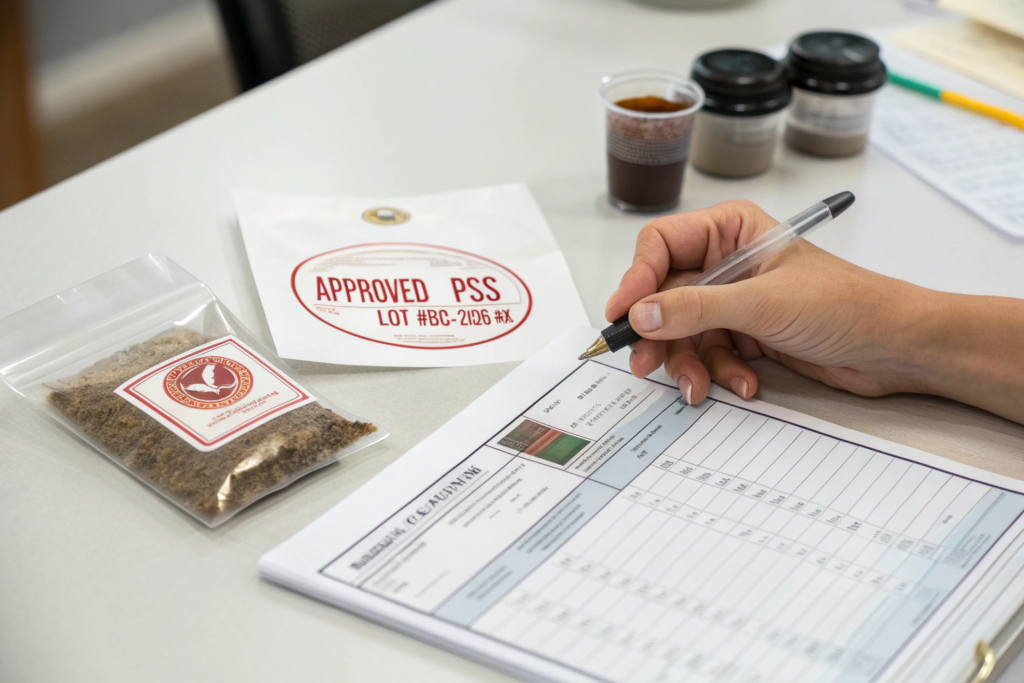
- Establishes a Benchmark: The PSS you approve is the gold standard. It is the physical and sensory representation of what the supplier has promised to deliver.
- Shared Reference Point: If the arrival sample tastes different, you and the supplier have a shared reference point. You can both pull your sealed retention samples and compare them to the approved PSS. This eliminates the "I think it tastes fine" argument. It becomes an objective comparison.
- Approval as Acceptance: Your written approval of the PSS is a powerful piece of evidence. It shows that before shipment, you agreed that the coffee met your standards. This makes it harder for a supplier to claim that the defect must have originated in transit or that you are just being picky.
The Protocol:
Always insist on a PSS drawn from the actual lot that will fill your container. Have it roasted to your specified profile. Cup it. Approve it in writing. File the approval email and the empty sample bag.
At Shanghai Fumao, this is a mandatory step for all new clients and all custom orders. We will not ship without your written PSS approval. It protects both of us. You can learn more about sample protocols from the Specialty Coffee Association cupping standards.
Why Is a Detailed Specification Sheet Your Best Legal Defense?
Your contract might say "Grade 1 Arabica." But as we know, "Grade 1" can be subjective. A Specification Sheet attached to the contract removes all subjectivity.
The Power of the Spec Sheet:
It defines, in objective, measurable terms, exactly what you are buying.
Essential Elements of a Spec Sheet:
- Screen Size: "Minimum 90% by weight retained on Screen 17."
- Defect Count: "Zero Category 1 defects. No more than 5 Category 2 defects per 350g."
- Moisture Content: "10.5% - 11.5%."
- Water Activity: "< 0.60 aw."
- Cup Profile: "Minimum SCA score of 83. Free of ferment, earthy, or phenolic taints."
- Crop Year: "Current crop, 2025/2026 harvest."
If a dispute arises, you do not argue about "quality." You simply point to the spec sheet and show where the coffee failed to meet the agreed-upon measurement. This is an open-and-shut case. It is your best legal defense.
We encourage all our clients to develop a spec sheet with us. We have a standard template on our Green Coffee Specifications page that we can customize for your needs.
Conclusion
Disputing a coffee bean quality issue with an Asian supplier is a stressful but manageable process if you approach it with professionalism, documentation, and a clear understanding of your contractual rights. The key is to move immediately to preserve evidence, communicate calmly and factually, and ground your claim in the objective language of your contract and specification sheet.
A legitimate, long-term-focused supplier like BeanofCoffee does not want a dispute any more than you do. We want to resolve the issue fairly, learn from the mistake, and preserve the business relationship. We have the systems in place—PSS approvals, sealed retention samples, detailed spec sheets—to facilitate a fair and swift resolution.
If you are ever in the unfortunate position of needing to discuss a quality concern with us, please follow the steps I have outlined. It will allow us to address your issue quickly and efficiently. If you have a concern about a recent shipment from us, please direct your initial communication to Cathy Cai with the contract number and your preliminary documentation. Contact Cathy at: cathy@beanofcoffee.com