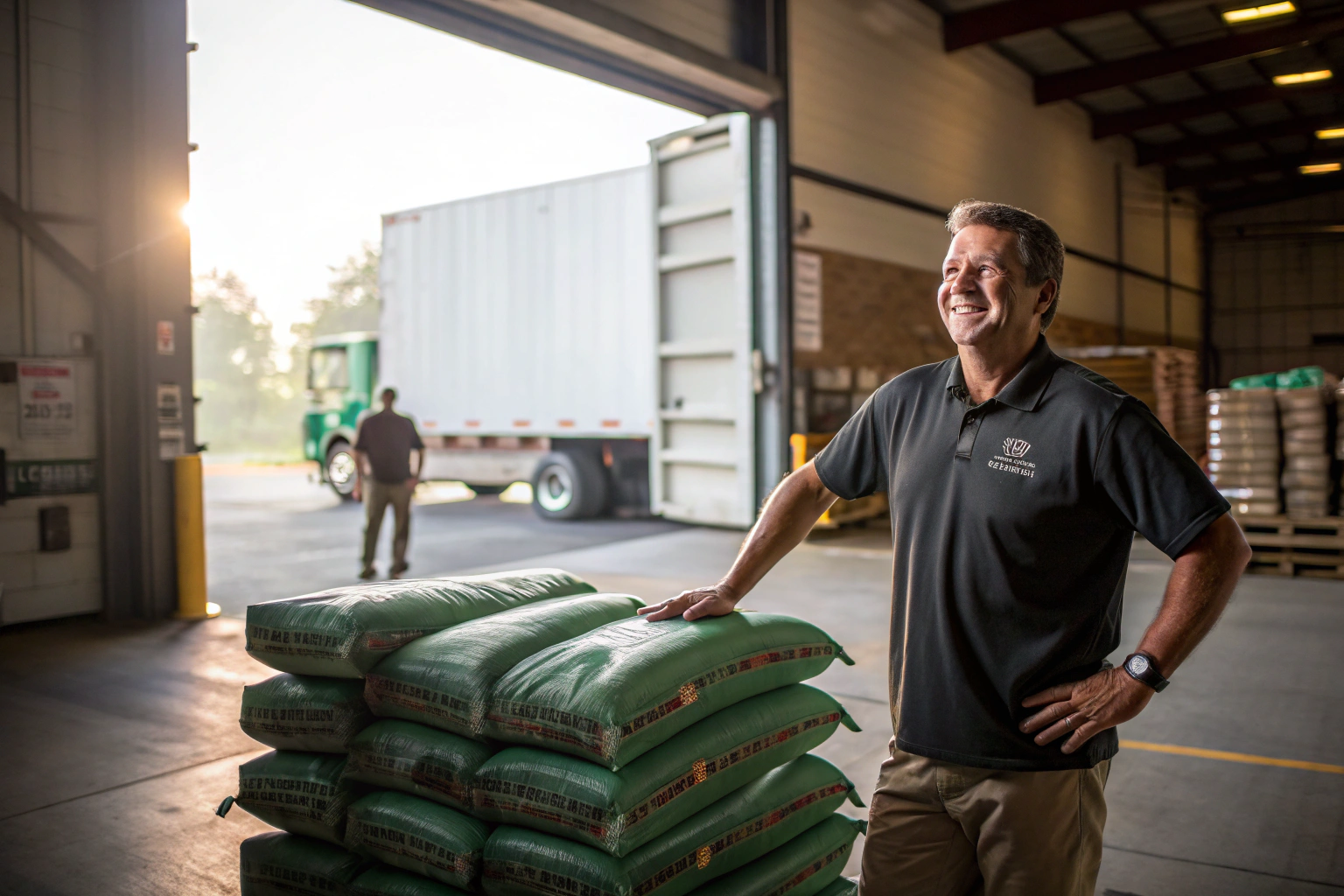
I learned the true weight of a DDP delivery promise one freezing January morning a couple of years ago. A small roaster in Minnesota, a guy I really respected for his craft, called me up. His voice was not angry, just tired. "The container got to the port in Los Angeles ten days ago," he said, "but the trucker is asking for twelve hundred dollars in detention fees before he will move it. And customs is holding the beans. What is going on?" I felt my chest tighten. I had sold these beans to him on DDP terms—Delivered Duty Paid—which meant I had promised to handle everything from my farm gate in Yunnan all the way to his roastery doorstep. And yet, here he was, stuck in the middle of a logistical mess that I was contractually responsible for fixing. That call made me rethink my entire approach to DDP shipments. It was no longer enough to just hand the problem to a generic freight forwarder. I needed to own every link in the chain.
A smooth DDP coffee delivery depends on selecting a freight partner who can pre-calculate all destination duties—including any Section 301 tariff exposure—anchor the trucking schedule before the vessel even docks, and provide a single, transparent landed cost document that eliminates the surprise fees that erode buyer trust and profit margins.
DDP, if you have not worked with this Incoterm before, basically places maximum responsibility on the seller. I pay the freight, the insurance, the customs duty at your port, and the final truck to your door. You, as the buyer, unload the pallets and that is it. For a busy coffee roaster or distributor in the United States, this term sounds like pure convenience. But I had to learn the hard way that unless the exporter builds a truly airtight internal process, a DDP deal can turn into a finger-pointing exercise. In this article, I want to walk you through the real steps we now take on our 10,000-acre farm operation to make sure a DDP coffee container lands at your warehouse without drama.
Why Do DDP Coffee Shipments Sometimes Fail Before They Dock?
Most of the trouble in a DDP shipment is born before the vessel even ties up at the dock. And the root cause is almost always the same: the seller quotes a landed price without really understanding what will happen at the port. I have seen this pattern pop up again and again over my years in this business. An exporter sees the direct ocean freight cost and maybe an average customs duty percentage, adds a small cushion, and calls it a day. Then the container lands. A customs broker raises a flag about classification. There is a bond exam. The destination terminal charges start counting up daily. And suddenly, the exporter is underwater on the deal, or worse, they are begging the buyer to split the extra cost. That is the essence of a DDP failure—the gap between the estimated costs and the actual costs that materialize only after arrival.
DDP coffee shipments fail most often because of inaccurate tariff classification, failure to pre-file for customs clearance, and a lack of bonded trucking connections at the destination port, all of which cascade into demurrage charges that can eat up the entire profit on a container in just a few days.
These failures are predictable. They are not acts of God. For us, learning to manage DDP properly meant we had to stop relying on a single freight forwarder's rough estimate. Now, before we quote a DDP price to any buyer, our logistics desk in Baoshan opens a direct channel with a dedicated U.S. customs broker who specializes in coffee. We give that broker the exact HTS code we intend to use, the specific port of entry—say, Newark or Oakland—and the estimated container arrival date. The broker runs a full landing cost simulation. We get back a line-by-line breakdown that includes the merchandise processing fee, the harbor maintenance fee, the customs bond charge, and, critically, a confirmation of the current tariff rate applicable to green coffee from China. Only with that simulation in hand do I approve a DDP price to a buyer. This pre-dock homework is what makes or breaks the delivery promise.

What hidden port charges usually surprise coffee importers?
Let me list out the ghosts that haunt a DDP container. The first one is the chassis split fee. This is a relatively recent charge in the U.S. shipping industry. The shipping line provides the container but not always the chassis—the wheeled frame that the truck hooks onto. If the trucker has to pick up a chassis from a separate pool, the fee for that use, a chassis split or chassis usage charge, hits the final bill. It can be $50 to $150 per day, and if there is a shortage at a busy port like Long Beach, the charge can roll up quickly. Many standard freight quotes do not include this, and the buyer sees it for the first time on the final invoice—if the exporter is not covering it.
Another charge is the pier pass fee. At the major Los Angeles and Long Beach terminals, a PierPass fee is required for cargo movement during peak daytime hours. If you do not pre-register and pay this, your container gets processed during a more expensive slot or it sits. Then comes the customs exam fee. There are different types of exams—an X-ray scan versus a full tailgate exam where customs officers physically open the container and inspect the coffee. The tailgate exam requires the container to be transported to a centralized examination station, unloaded, inspected, and reloaded. This process alone can cost $800 to $2,500, depending on the depth of the exam. On a DDP term, I bear that cost. So, I am extremely motivated to make sure my customs documentation is so perfect that an exam never gets triggered. I want the container to pass through with a simple document review. The difference between a document review and an intensive exam is a matter of paperwork precision—and that is exactly what we have mastered.
How can we pre-clear customs to avoid storage fees?
Pre-clearing customs is not a magic trick. It is a workflow discipline. We utilize Type 86 Entry, or in cases involving larger commercial entries, a formal consumption entry filed while the vessel is still on the water. The key is having the Importer Security Filing, known as ISF or "10+2," submitted at least 24 hours before the cargo is loaded onto the vessel in Shanghai. Once the vessel departs, I have roughly 14 days of ocean transit time before the container reaches the U.S. West Coast. During those 14 days, my customs broker is actively preparing the entry summary. We send the commercial invoice, the packing list, the bill of lading, the phytosanitary certificate, and the organic certificate if applicable, all while the ship is crossing the Pacific.
When the vessel is about five days out from the port, the broker files the customs entry. The duties are calculated and paid electronically. By the time the container is discharged from the vessel to the terminal, the customs status ideally shows "entry released." This means the container can be picked up immediately by a trucker without waiting for clearance. The faster the container leaves the terminal, the less likely it is to incur demurrage—storage charges from the shipping line for keeping the container at the terminal too long. A typical container has maybe four to five calendar days of free time at the port. After that, the meter starts running at $150 to $250 per day, depending on the carrier and the port. That is the difference between a container that clears in three days and one that clears in eight—roughly a $500 to $1,000 swing, and on a DDP term, that comes straight out of my pocket. This is why we never, ever let paperwork sit idle. My logistics coordinator operates on a principle that sounds dramatic, but she means it: "The vessel does not arrive without customs clearance." And Shanghai Fumao has not missed a pre-clearance window in the past eighteen months because of it.
How Do We Predict and Control DDP Customs Duty Costs on Coffee?
Customs duty cost is the big, scary unknown for every buyer who is considering a DDP offer. And honestly, it was my biggest fear when I first started offering this Incoterm. I knew the duty rate could shift depending on the political climate between the U.S. and China. I remember a period in 2019 when the trade war narrative heated up again. I had a buyer in Chicago who simply stopped placing orders altogether because he could not get a straight answer on what the duties would actually be. That experience forced me to get deeply knowledgeable about the tariff system, not just at a surface level, but down to the specific binding rulings and tariff engineering possibilities.
Predictable DDP duty management relies on correct Harmonized Tariff Schedule classification under Chapter 9 for green coffee, applying any available duty preference or reduction programs, and working with a customs broker who can produce a binding ruling before the first container ships, turning an unpredictable political variable into a known, fixed cost line.
The key number for coffee importers to know is the HTSUS code. For green coffee, not roasted, not decaffeinated, the classification generally falls under 0901.11.00 or 0901.12.00, depending on whether it is Arabica or Robusta. The most important fact I can share is that, at the time I write this, green coffee beans from most origins, including China, are generally duty-free under the normal trade relations tariff schedule. The duty rate schedule shows "Free" in the general rate column. This is because the United States does not grow commercial quantities of coffee and thus tariffs on green beans do not protect a domestic industry. However, the nuance is that specific Section 301 duties on Chinese-origin goods did not generally extend to agricultural commodities like green coffee in the same sweeping way. I always verify this with my broker for the specific shipment date, because executive orders can change the landscape. The point is, the duty cost for Chinese green coffee has often been zero or extremely low, a detail that surprises buyers who assume all China imports carry a 25% tariff. Communicating this clearly to the buyer before a DDP contract is signed removes the biggest psychological barrier.
What HTS code details are critical for correct coffee duty classification?
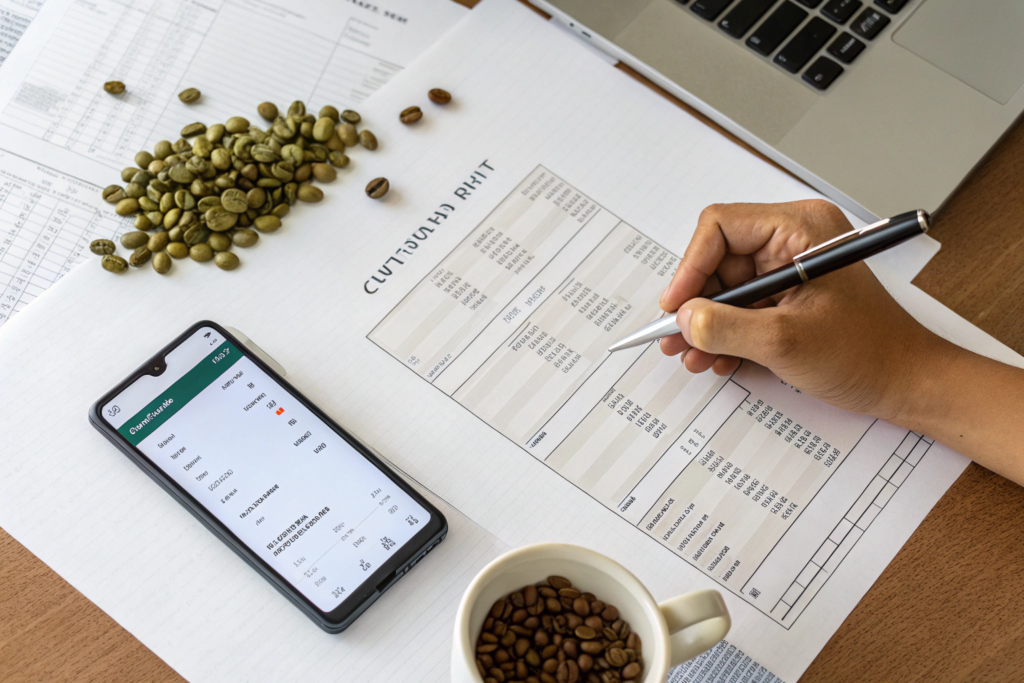
The Harmonized Tariff Schedule is granular, and the details at the ten-digit level matter. For our premium Arabica beans, the applicable subheading is 0901.11.0025, which covers "Coffee, not roasted, not decaffeinated, Arabica." If we ship Robusta, which we do for certain commercial buyers, the code shifts to 0901.11.0055. A common mistake I see exporters make is classifying under 0901.90, which can include roasted coffee or coffee substitutes, and that introduces a different duty scenario. The precision of the description on the commercial invoice must exactly match the HTS code description. If I write "green coffee beans" on the invoice but the broker enters "coffee, Arabica, not roasted" into the system, that slight mismatch can trigger a hold.
Even the country of origin marking rules need attention. The coffee was grown in China and processed in China, so the country of origin for customs purposes is clearly China. This origin is marked on each bag. The certificate of origin, which we provide, supports the claim and ensures the correct tariff treatment. Another detail: the Food and Drug Administration Prior Notice. Coffee entering the United States is subject to FDA bioterrorism regulations. A prior notice must be filed and confirmed before the shipment arrives. This is separate from the customs entry. If the FDA prior notice is not on file, the container gets held by customs for FDA review, even if the duty is paid. My broker files both the customs entry and the FDA prior notice in parallel, so they clear together. For a DDP customer, they never see any of this backend work. They simply get a delivery appointment notification. But I have learned that a smooth delivery is the result of these two dozen small, correctly executed steps converging without error.
How can an exporter lock in duty costs before a buyer commits?
Locking in duty costs starts with a candid conversation with the broker about the specific HTS code and the current tariff environment. I ask the broker for a "binding ruling request" if there is any ambiguity at all about the classification. A binding ruling from U.S. Customs and Border Protection is a formal legal determination of the correct HTS code for a product. It takes some weeks to obtain, but once you have it, no customs officer at the port can dispute the classification. This takes risk off the table permanently for that product.
For most shipments, the tariff for green coffee is straightforward, so a full formal ruling may not be necessary. What I do instead is obtain a written classification opinion from a licensed customs broker. I then include that classification, with the duty rate clearly stated, in the DDP quotation I send to the buyer. The quotation will say something like, "HTS 0901.11.0025, Duty Rate: Free, Merchandise Processing Fee: 0.3464%, Harbor Maintenance Fee: 0.125%." That transparency builds immense trust. The buyer can see every cost component, and they know that if the duty rate changes before the ship date, I will notify them immediately. This approach—full pre-contract disclosure—removes the fear that the exporter is padding the DDP price or hiding unknown risk fees. It is an approach that aligns with our core value as a supplier, being reliable and trustworthy in every transaction.
What Trucking and Last-Mile Strategies Guarantee a Reliable Warehouse Delivery?
The ocean voyage is just the first act. The last mile, that final truck ride from the port to the buyer's physical warehouse, is where a DDP relationship either succeeds in the buyer's eyes or fails memorably. I had one early shipment where everything went perfectly until the final trucking leg. The driver got lost, arrived after the warehouse had closed, and then refused to leave the container overnight because he needed his chassis back. The buyer had to pay his staff overtime to reopen the facility. That was a small operational failure, but it dominated the entire conversation about that order. The beans were perfect, but the delivery memory was sour.
Reliable DDP last-mile delivery requires pre-booking a bonded trucking partner at least ten days before vessel arrival, confirming the warehouse's receiving hours and dock height requirements, and sending a real-time tracking link in the 48 hours leading up to the final drop-off so the buyer can plan their labor roster precisely.
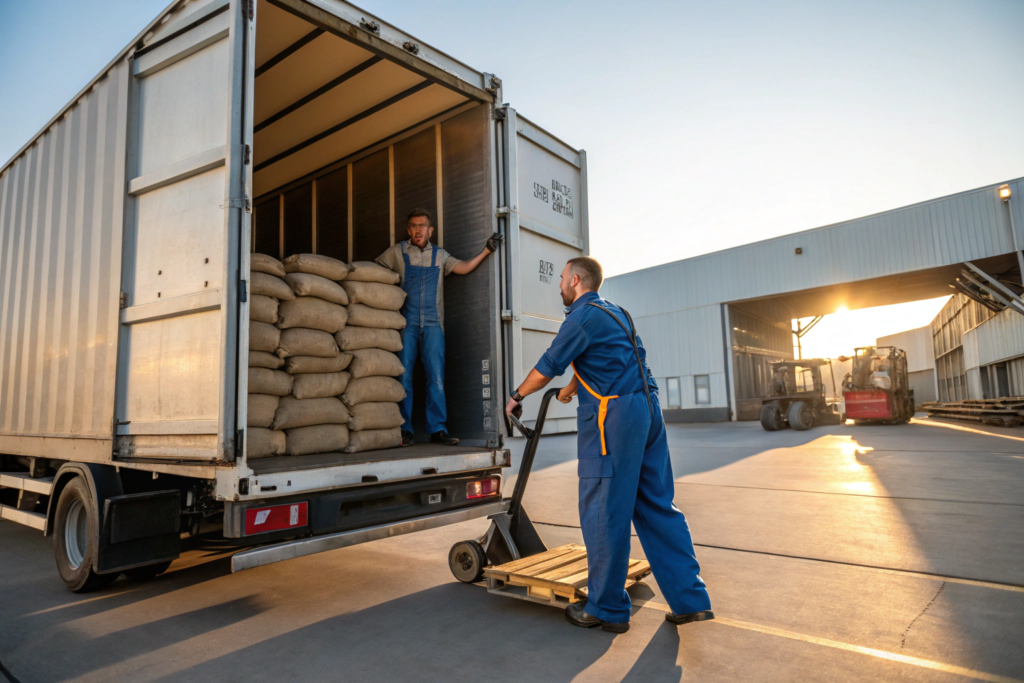
What we do now is straightforward. Once the vessel departure is confirmed, we know the estimated arrival window. About ten days before docking, we book the trucking with a partner who has proven experience on the specific port-to-warehouse corridor. For West Coast deliveries, this might be a trucking firm that covers the Los Angeles basin up to the Pacific Northwest. For East Coast deliveries, we use truckers experienced with the Port of New York and New Jersey and inland routes. The booking includes a chassis reservation, because having a chassis available on the day of pickup is the most common point of failure. We also check the buyer's warehouse specifications: Do they have a loading dock, or do they need a lift-gate truck? What are their receiving hours? Is an appointment required 24 hours in advance? All of this is collected by email and fed to the trucking coordinator. No assumptions are made.
Why is a trucker's container return timeline critical to cost control?
Let me explain a cost trap that many importers do not think about until the bill arrives. Every container used for the ocean shipment is owned by the shipping line. The trucker who picks up the loaded container from the port must return the empty container to a designated depot after the delivery is completed. The shipping line allows a certain number of calendar days of free use for the container at the destination end—this is separate from the port demurrage free time. It is called "detention" or "per diem."
If the trucker is slow returning the empty, or if the buyer's warehouse holds the container for an extra day to unload at their own pace, the per diem charges start accumulating. These charges can be significant. On a DDP term, I am the one who pays them if the return is delayed beyond the allotted free days. So, I have a conversation with the buyer's receiving team before the delivery: "We expect your team to unload the pallets within two hours. The trucker will wait. Is that feasible?" If the buyer needs longer, we arrange a drop-and-pick where the container is left on site for a day and then retrieved. But I budget for this. The point is, the container return timeline must be a planned event, not an afterthought. A good trucking partner will take a photo of the empty container returned to the depot and email it to me. That photo is my evidence that the per diem clock stopped, and my final cost on the logistics is locked in.
How can we ensure delivery flexibility for small roasters without docks?
Some of my best customers are small specialty roasters who operate out of an industrial unit in a city like Austin or Portland. They do not have a proper loading dock. They do not have a forklift. They have a pallet jack and a strong set of arms. For these buyers, sending a standard 53-foot container on a chassis without a lift gate is a recipe for a failed delivery. The trucker shows up, the roaster cannot extract the pallets, and the trucker, understandably, drives away with the container. The shipment goes into a failed delivery loop.
We handle this by specifically booking a truck with a lift-gate for these deliveries. A lift-gate is a hydraulic platform at the back of the truck that can lower a pallet from the container floor to ground level. This service adds a modest surcharge, usually $150 to $200, depending on the trucking company. I include this cost in the DDP quote if I know the buyer does not have dock access. I also confirm the delivery window a second time when the truck is two hours away, by phone call, not just email. A quick call to the roaster-owner saying, "Your beans are on the truck and the ETA is 2:15 PM" allows them to clear a space and have their pallet jack ready. This personal coordination turns what could be a stressful unknown into a routine delivery event. As Shanghai Fumao has grown, we have learned that a flexible, human last-mile approach is what creates the "smooth" experience that buyers tell their friends about in the industry.
How to Build a Repeatable DDP Process That Protects Everyone?
After all the lessons I have absorbed—the cold January call from Minnesota, the German buyer who challenged my organic cert, the Manchester client stuck in a BTOM inspection—I have arrived at a single, overriding insight. A DDP shipment is not a transaction. It is a promise of performance. And promises only hold value if you can repeat them accurately, container after container. Building a repeatable DDP process has been the single most valuable operational investment I have made in this business.
Building a repeatable DDP delivery system requires a documented standard operating procedure that covers the cost simulation, the pre-clearance timeline, the truck booking protocol, and the post-delivery review, turning a complex multi-party process into a predictable routine that any trained team member can execute without guesswork.
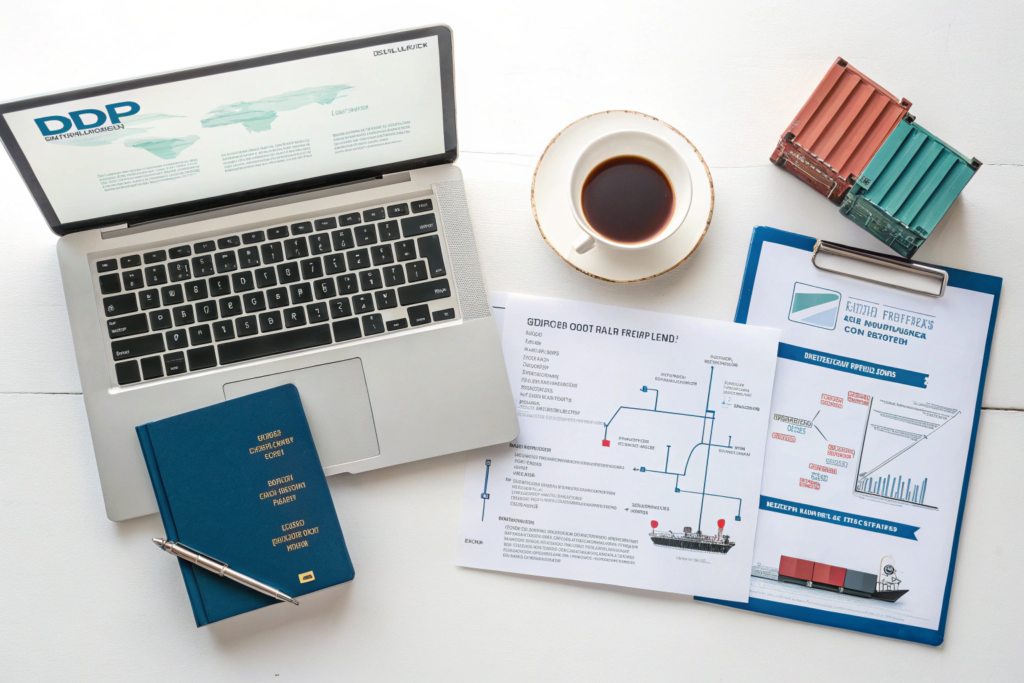
My internal process is documented in a shared digital playbook. It has checkpoints. First, a DDP request from a buyer triggers a seven-point cost simulation within 48 hours. Second, upon contract signing, a pre-shipment milestone calendar is set, counting backward from the requested delivery date at the buyer's warehouse. Third, during the ocean transit, a weekly status email goes to the buyer, even if the status is simply "Container is on schedule, currently passing through the Suez Canal." Fourth, upon discharge, the trucking is confirmed with a delivery appointment supplied in writing. Fifth, after delivery, I request a photo of the received shipment from the buyer and a signed delivery receipt. This post-delivery step closes the loop and serves as the record for any future claims. Having this repeatable system gives buyers confidence to move from single-container trial orders to multi-container annual contracts.
What post-delivery steps strengthen the buyer relationship for future orders?
The most underrated moment in a DDP deal is the week after the delivery. Most exporters grab the money and move on to the next deal. I take the opposite approach. Within 72 hours of the delivery, I send a brief email to the buyer asking two simple questions: "Did the delivery happen within the promised window? And did the beans arrive in the condition you expected?" These two questions signal that I care about the outcome, not just the payment.
One time, a buyer in Melbourne mentioned casually in his reply that the delivery driver had been gruff and had left the pallets a meter too far from the storage area. It was a small complaint. But I logged it. On the next shipment, I specified in the trucking order that the driver must place the pallets directly inside the designated storage zone, and I noted the driver's attitude request. The buyer, on the second delivery, wrote back amazed that the new driver was friendly and the pallets were placed exactly where he wanted. "How did you do that?" he asked. That is the kind of detail work that turns a transactional DDP buyer into a multi-year partner who does not even bother to request quotes from other suppliers anymore. The post-delivery step is cheap, takes five minutes, and builds a switching cost that no competitor can easily match through price alone.
How can a single point of contact simplify complex DDP coordination?
I assign one logistics manager to each DDP buyer account. The buyer deals with exactly one person from the moment of contract to the moment of delivery. They do not get bounced from the sales team to the shipping team to the finance team. This single point of contact owns the internal coordination across all those departments. The buyer only needs one email address, one phone number.
This human simplification is the glue that holds the repeatable process together. When something inevitably goes wrong—a vessel delay, a rail congestion at the port, a trucker breakdown—the buyer contacts their single point of contact and gets a calm, informed response within a few hours. They do not have to navigate a corporate directory. This personal relationship also means the logistics manager learns the buyer's preferences over time. One buyer always wants delivery on a Tuesday because her roastery does weekly production planning on Wednesdays. Another buyer needs a two-hour advance call, not an email, because he works on the warehouse floor and does not check his inbox constantly. These individual preferences get noted in the buyer's file and executed automatically on the next shipment. A repeatable DDP process is only as good as the human intelligence that personalizes it.
Conclusion
A smooth DDP coffee delivery is not the result of luck or a generous freight forwarder. It is the result of obsessive pre-arrival customs work, brutally honest duty cost analysis, trucker pre-booking with the right equipment, and a personal, post-delivery follow-up that cements the relationship. We have covered the hidden port fees that ambush unprepared importers, the correct HTS code classification that keeps duty costs at zero or near-zero, the last-mile lift-gate thinking that serves small roasters without a loading dock, and the standardized operating procedure that makes the whole thing repeatable.
When a DDP coffee delivery works flawlessly, the buyer does not think about logistics at all. They think about coffee. They think about their next roast profile and their happy café customers. That is the experience we have engineered for our partners, and we want to extend it to every buyer who feels anxious about the complexity of importing directly from China.
If you are a roaster or distributor in the U.S. or Europe who wants a true, door-to-door DDP experience with no hidden charges, no dock drama, and no customs surprises, I invite you to reach out to us at BeanofCoffee. Our DDP specialist, Cathy Cai, can prepare a full landing cost simulation for your warehouse address, specific to your preferred port of entry and your ideal delivery frequency. Connect with Cathy directly at cathy@beanofcoffee.com. Let us take the entire weight of the logistics off your shoulders so you can focus on what you do best—roasting amazing coffee.