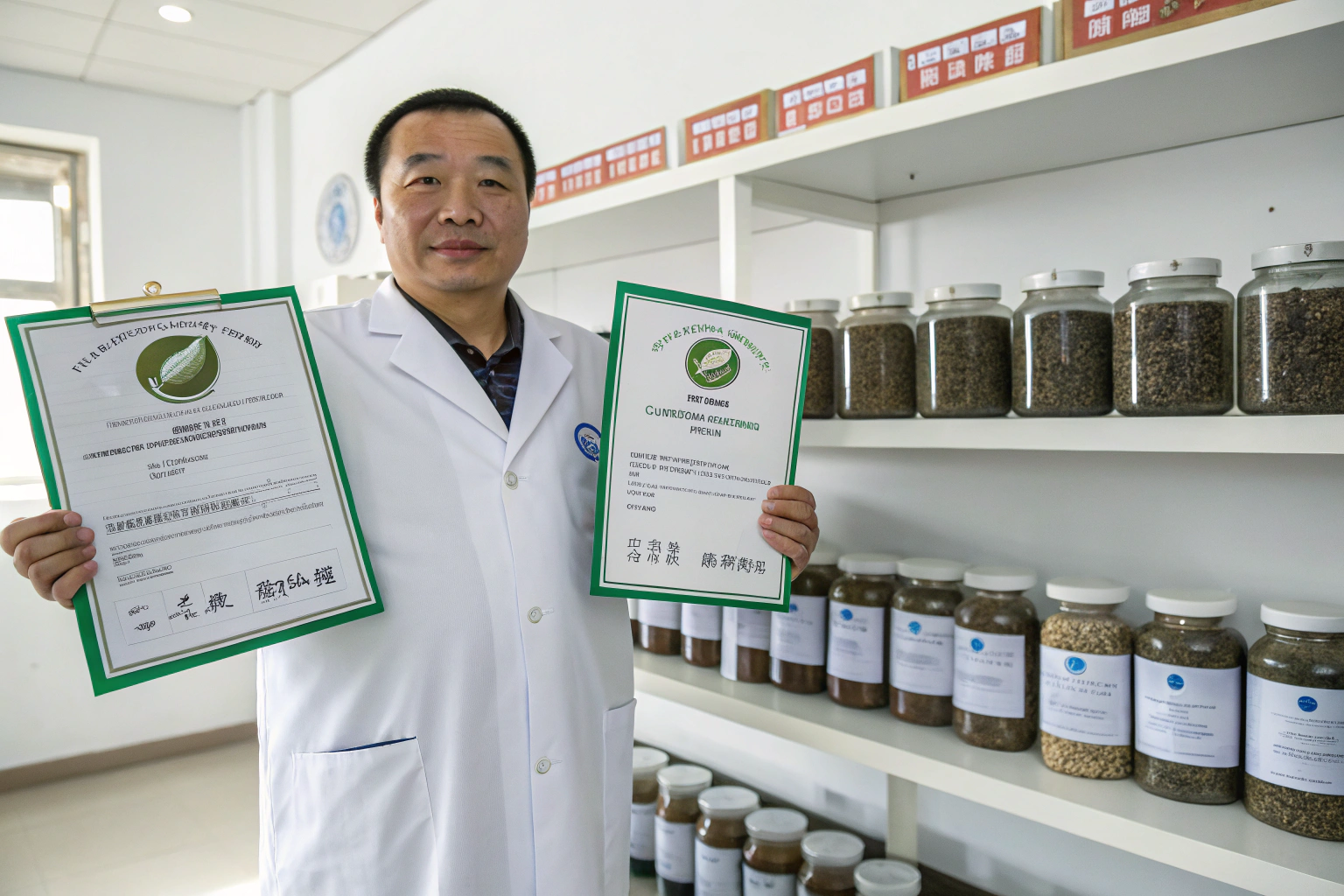
I still remember the afternoon I almost lost a major contract because of a misunderstanding about organic certifications. A buyer from Germany had been sourcing our Baoshan Arabica for two years. Then one day, he asked me to switch our certification to cover a new blend destined for the U.S. market as well. "Just send me the USDA cert," he wrote, as if it were a simple checkbox. I did not have it. I had the EU organic certification—the one with the green leaf logo—and I naively assumed it would be accepted everywhere. It was not. The buyer needed USDA Organic for his American retail partners, and my EU cert was not going to cut it. I had to scramble, hire a new auditor, and delay the shipment by two months. That experience taught me a hard truth: in the global coffee trade, organic is not just a word. It is a specific, jurisdiction-locked standard, and confusing the EU and USDA systems can cost you real money and client trust.
The fundamental difference between EU Organic and USDA Organic for coffee lies in their legal frameworks, residue testing thresholds, and the specific prohibited substances lists, with EU regulations centered on the European Green Leaf and USDA standards governed by the National Organic Program, meaning a coffee certified under one system does not automatically qualify for the other.
If you are a roaster, a distributor, or a fellow exporter reading this, you probably want clarity. You want to know which certification you actually need, how the audits differ, and whether a dual-certified approach is worth the investment. I have now gone through both processes on our own 10,000-acre plantation in Yunnan, and I want to share what I have learned on the ground. Not the theoretical stuff from a compliance handbook—the real, practical differences that affect your coffee business.
What Are the Core Regulatory Differences Between EU and USDA Organic Standards?
When I first started exploring organic certification for our plantation, I thought the process would be one-size-fits-all. I was wrong. The EU and the USDA operate two completely separate legal frameworks, and while they share some philosophical ground—no synthetic pesticides, no GMOs, soil health focus—their rulebooks diverge in ways that matter for your paperwork, your inspections, and your final product label. The EU framework is built around Council Regulation (EU) 2018/848, which governs organic production and labeling across all member states. The USDA system runs under the National Organic Program, or NOP, established by the Organic Foods Production Act of 1990 and codified in 7 CFR Part 205.
The core regulatory split rests on the fact that the EU requires compliance with its own Council Regulation and enforcement by EU-recognized control bodies, while USDA Organic requires certification by a USDA-accredited certifying agent operating under NOP rules, and each system maintains its own list of permitted and prohibited inputs with critical differences in processing aids and post-harvest treatments.
For coffee producers, this regulatory split has practical consequences. You cannot simply get one certification and assume mutual recognition covers you. There used to be an equivalency arrangement between the EU and the U.S., but I learned from my certifier that this does not mean a blind pass. It means the frameworks are recognized as comparable, but specific additional requirements must still be met, especially around livestock, antibiotics, and—crucially for us—the cleaning and pest control measures used in coffee storage. If you store your green beans in a warehouse that previously handled conventionally treated crops, both standards want to know how you prevented cross-contamination, but the evidence they demand differs. The USDA auditor wanted a complete cleaning logbook and swab test results. The EU inspector was satisfied with a signed declaration from the warehouse manager. These little differences add up.
How does the EU organic regulation define prohibited substances differently for coffee?
The EU's approach to prohibited substances is built around a "positive list" philosophy driven by Annex II of Regulation 2018/848. This annex explicitly states which substances are permitted, and anything not on that list is banned by default. For coffee processing, this covers everything from the fertilizers used in the nursery to the cleaners applied on the drying beds. One substance that caused me a headache was copper-based fungicides. Copper hydroxide is permitted in the EU under strict restrictions—a maximum of 28 kilograms per hectare over a seven-year period. Our plantation had historically used copper applications during especially wet seasons to control coffee leaf rust, well within historical norms but I had to go back and calculate our total application across the previous years to prove we did not exceed the rolling cap.
The EU regulation also has a particular strictness about post-harvest treatments. For example, the use of ethylene gas for ripening, though not common in coffee, is absolutely prohibited. More relevant to coffee, the EU organic standard has specific rules about the materials that can contact the beans during fermentation and washing. Our fermentation tanks had to be made of food-grade stainless steel or lined concrete, with documented traceability of the coating materials. The USDA also cares about these things, but the EU inspector drilled deeper into the chemical composition of the tank lining sealant, asking for the manufacturer's safety data sheet. This level of detail stems from the EU's precautionary principle, which places the burden of proving safety on the operator. Understanding this philosophical difference—the EU's "prove it is safe" versus the USDA's slightly more "meet the defined standard" approach—helps you prepare for the organic certification audit before the inspector even arrives.
What makes the USDA organic certification process distinct for imported coffee?
The USDA organic certification process for an imported product like our Chinese coffee has several features that differ markedly from the EU approach. First, the certifying agent must be USDA-accredited. Not just any organic certification body; it must be specifically recognized by the USDA National Organic Program. When I sought USDA certification for Shanghai Fumao, I had to engage a certifier who held that specific accreditation and was authorized to operate in China. The list of such certifiers is not huge, and booking an audit slot took longer than I expected.
Second, the USDA system places heavy emphasis on the supply chain traceability from farm to the U.S. port. The auditor required a full mass balance audit, meaning they reconciled our total cherry harvest weight with the processed green bean output, minus documented shrinkage from moisture loss and defects. They traced every kilogram. Third, the USDA has a strict rule about the "organic system plan," a comprehensive document describing every practice and input used, from soil management to pest control to storage. The EU also requires documentation, but my experience was that the USDA's organic system plan review was more procedural and checklist-driven, while the EU's was slightly more narrative and risk-assessment based. Finally, the USDA organic label on coffee imported into the U.S. must meet specific "made with organic" or "100% organic" labeling categories, and the importer of record—not just the exporter—is also subject to NOP recordkeeping requirements. This shared liability chain is something you must communicate clearly to your U.S. buyer, because they carry compliance obligations on their side too.
How Do Residue Testing and Inspection Protocols Differ Between the Two Systems?
I have been through both EU and USDA organic inspections now multiple times, and I can tell you the testing protocols are not just a box-ticking exercise. They involve actual lab analysis of our green beans, and the two systems look for slightly different things. The EU organic standard requires a minimum of 5% of organic operators to be sampled annually for residue testing, according to the control body's risk assessment. The USDA NOP mandates that certifying agents conduct residue testing on a minimum of 5% of their certified operations annually as well, but the risk factors that trigger a test differ. The USDA explicitly includes factors like previous non-compliances, the complexity of the operation, and the country of origin's pesticide use history.
EU organic residue testing focuses on a broad spectrum of pesticides with very low detection limits set by the European Food Safety Authority, while USDA organic residue testing specifically targets substances prohibited under NOP and applies a 5% of the EPA tolerance level as a default action threshold, creating two different risk landscapes for the same coffee lot.
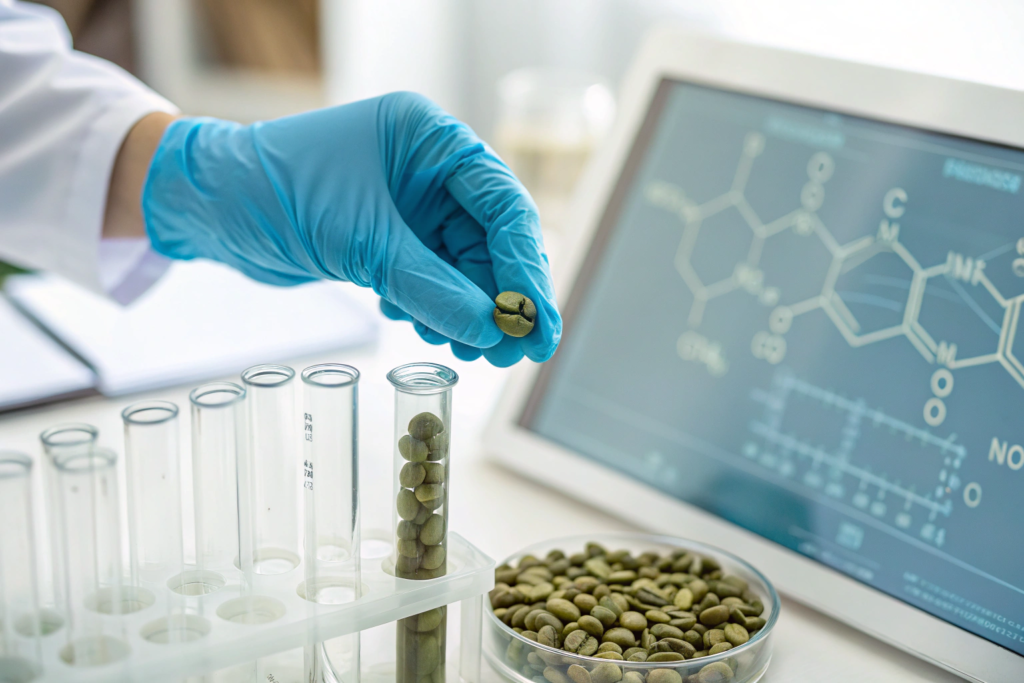
For me, this meant that after the EU audit, my bean samples were sent to a German lab that screened for around 500 substances. The USDA audit samples went to a U.S.-based lab that screened for a somewhat different panel. The difference in detection sensitivity also existed. The EU lab used a reporting limit close to 0.01 milligrams per kilogram for most substances, which is effectively the default maximum residue limit for unapproved substances in organic production. The USDA lab applied action thresholds based on EPA tolerance levels. A detail that surprised me: the USDA organic program explicitly states that if a prohibited residue is detected at or above 5% of the EPA tolerance for that commodity, the product cannot be sold as organic. This 5% threshold is a specific numeric trigger that does not have an exact counterpart in the EU regulation, which is more case-by-case. Understanding these testing nuances helps you prepare your farm to meet both standards without double-guessing.
What maximum residue limits does the EU apply to organic coffee compared to USDA?
The maximum residue limit conversation is where things get genuinely complicated. Under the EU organic regulation, certified organic products are not subject to the same MRLs as conventional products in the way most people think. Instead, the expectation is zero detectable pesticide residues from prohibited substances, with a technical detection limit serving as the practical boundary. For most pesticides, this detection limit sits at 0.01 milligrams per kilogram. If a residue appears above that level, the certifier opens an investigation. The product is not automatically decertified, but the burden of proof shifts. You must demonstrate the contamination was accidental and uncontrollable—say, drift from a neighboring non-organic farm—and that you took every reasonable precaution to prevent it.
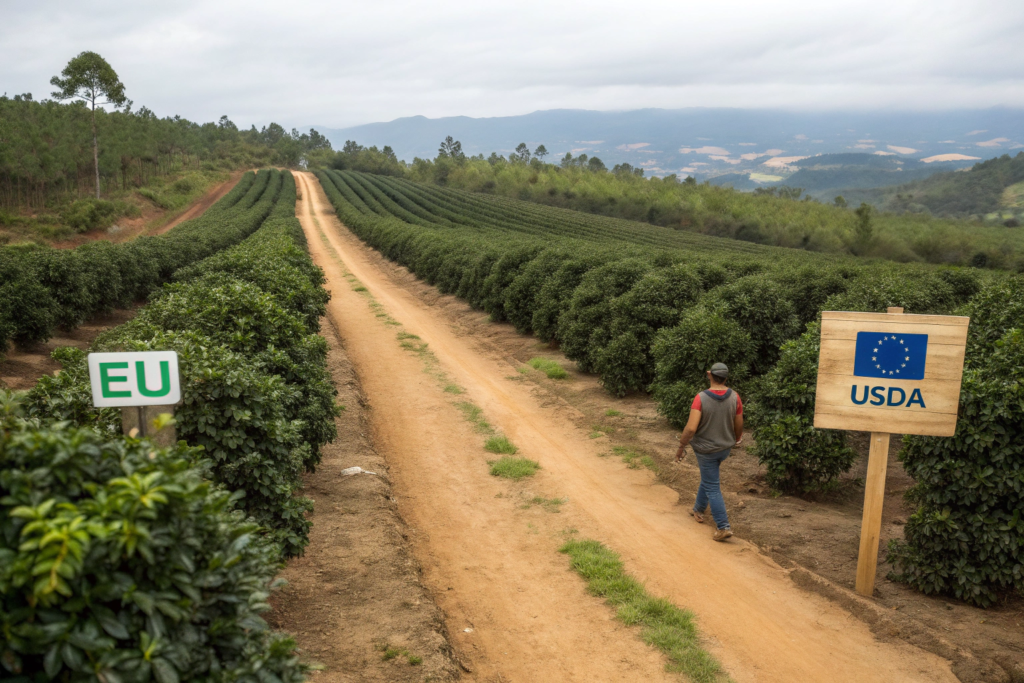
The USDA organic program takes a more structured approach. The NOP regulation 7 CFR 205.671 states that if residue testing detects a prohibited substance at or above 5% of the EPA tolerance level, that batch cannot be sold, labeled, or represented as organic. So, if the EPA tolerance for a specific pesticide on coffee beans is, for example, 0.1 milligrams per kilogram, then the USDA action threshold for organic would be 0.005 milligrams per kilogram. This creates a clear, numeric line. Below 5% of tolerance, sale as organic continues. At or above, the organic status is lost for that lot. The EU approach is less formulaic and more investigative. In practice, USDA's bright-line rule gives you more certainty but also less flexibility if a genuinely accidental, tiny contamination occurs. For our Yunnan plantation, I maintain a buffer zone of at least 25 meters between our organic coffee blocks and any conventional crop area, documented with GPS mapping. This buffer satisfies both residue testing regimes because it prevents drift contamination from ever reaching the beans in the first place.
How do the annual inspection requirements and audit scopes compare?
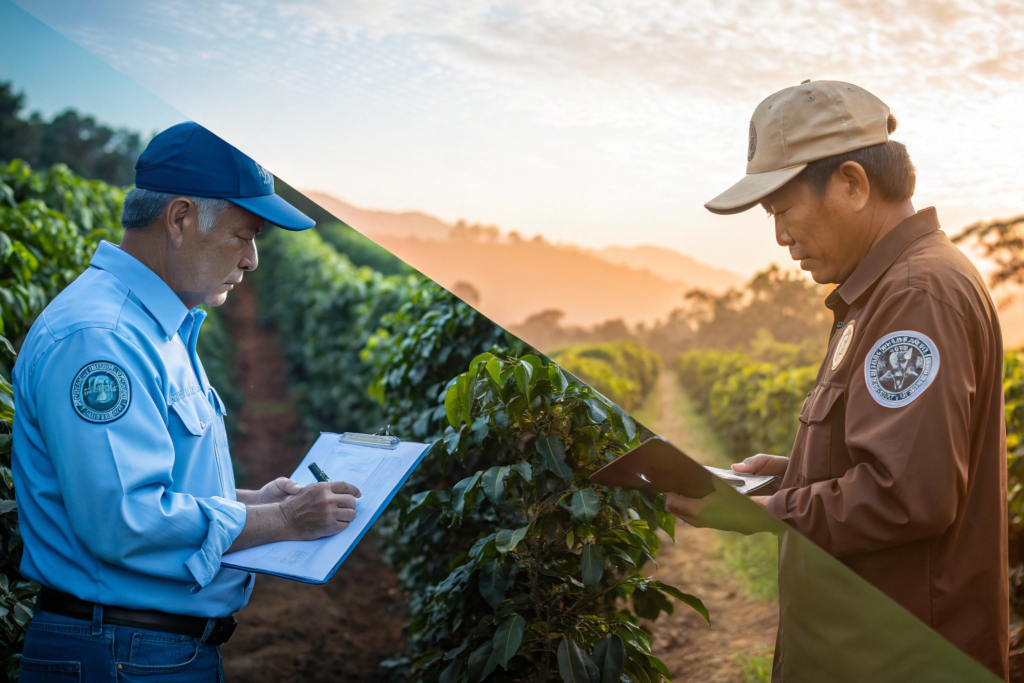
The rhythm of inspections is another area where the two systems part ways. The EU regulation requires at least one physical inspection per year for all organic operators, but the regulation also requires that a percentage of these inspections be unannounced. This means you cannot simply schedule your EU organic check and prepare for a single, known date. You must maintain continuous readiness. My first unannounced EU inspection happened on a rainy Tuesday morning in July. The inspector simply showed up at the dry mill gate and asked to see the entire production floor. Because our hygiene protocols are daily routines, not pre-audit cleanup frenzies, we passed without issues. But the psychological difference is real. You operate knowing an inspector could arrive at any time.
Under the USDA NOP, annual inspections are also required, and unannounced inspections are permitted, though in my experience the USDA-accredited certifiers have been more likely to schedule their audits in advance. The USDA audit itself tends to follow a more standardized checklist format aligned directly with the NOP regulations. The inspector walks through your organic system plan section by section and verifies each claim against physical evidence. My USDA inspector spent more time on the seed sourcing documentation and the composting records, while the EU inspector spent more time on the pest management records and the neighboring farm risk assessment. The difference is not in thoroughness—both are rigorous—but in emphasis. The USDA places higher weight on the written organic system plan and its exact correspondence to practice. The EU places slightly more weight on the land itself and the ecological context of the farm. For a coffee producer, the practical lesson is that you need two separate audit preparation workbooks, because the focus areas, though overlapping, are distinct enough that a single approach leaves gaps.
Can One Coffee Plantation Hold Both EU and USDA Organic Certifications Simultaneously?
When I tell other producers that we hold both EU and USDA organic certifications on our Baoshan estate, the first reaction is usually a raised eyebrow, followed by "How much extra did that cost you?" The honest answer is: more than I first budgeted, but less than losing a major buyer. The dual certification is absolutely possible, and my 10,000-acre plantation is living proof. But it requires a deliberate, parallel-track management system. You cannot simply assume that passing one audit automatically qualifies you for the other. The two certifications have enough differences in their standards that you must design your farm operations to satisfy the stricter requirement on every single parameter from the start.
Holding both EU and USDA organic certifications simultaneously is feasible for a single coffee plantation by building an integrated organic management system that meets the highest standard on each parameter across both frameworks, then undergoing separate annual audits by a USDA-accredited certifier and an EU-recognized control body, with clear documentation that tracks each lot from seed to shipment under both regulatory definitions.
Our approach was to identify the strictest rule across both standards for every practice and make that our internal policy. For example, on the buffer zone between organic and non-organic land, the USDA is typically more prescriptive about distances and physical barriers, so we adopted the USDA buffer zone specifications for all our organic blocks. For the cleaning validation of shared processing equipment, the EU auditor wanted more detailed chemical traceability, so we adopted the EU documentation standard. By operating at the higher requirement universally, neither audit catches us off guard. The cost lies primarily in the double audit fees and the extra time spent preparing two sets of yearly documents, but these are fixed, predictable costs that I now build into our export pricing for dual-certified lots.
What are the practical steps to achieve a dual-certification organic system?
Let me walk you through the roadmap I followed. The first step was a gap analysis. I hired an organic certification consultant who knew both systems and had her review our existing organic practices against the full requirements of both EU Regulation 2018/848 and the USDA NOP. She produced a 40-page report that listed every discrepancy, from the cleaning product composition for our wet mill to the format of our field activity logs. That report was the most valuable document I bought that year. It gave us a precise, prioritized list of fixes.
The second step was aligning our input purchasing. Every fertilizer, every pest control agent, every lubricant used on processing machinery that could incidentally contact the beans had to be checked against both the EU Annex II permitted substances and the USDA National List of Allowed and Prohibited Substances. If one standard permitted a substance and the other prohibited it, we eliminated it. We also set up a dedicated dual-certification lot tracking system within our quality control database. Each bag of green coffee destined for the dual-cert market is tagged with a unique code that links back to its specific harvest block, the batch of compost applied, the fermentation tank used, and the drying bed number. This degree of segregation allows me to present a clean chain of custody to either auditor. The third step was training our entire crew of 80 permanent workers. They needed to understand that picking for dual-cert lots meant using only dedicated, labeled picking baskets and avoiding any crossover with non-certified areas. The training took a full week, but it was essential because an inspector will stop and interview any worker at random. If the worker gives the wrong answer, you have a finding.
How does a bulk coffee exporter manage separate organic holding inventories?
Inventory management for dual-certified coffee is its own art form. I cannot store EU-only certified beans, USDA-only certified beans, and dual-certified beans in the same warehouse area without strict physical segregation and clear visual identification. Our dry mill warehouse has three distinct zones, marked with colored floor tape—green for EU organic, blue for USDA organic, and gold for dual-cert. Each pallet also carries a plastic tag with the certification status in both English and Chinese. This might sound like overkill, but during my last USDA inspection, the auditor specifically complimented the visual management system and said it reduced her sampling time by half because she could instantly identify the correct population of bags to inspect.
Beyond the warehouse, inventory management extends to the digital records. My inventory management software tracks not just the weight and origin of each lot but also its specific certification status. When a buyer from the UK requests a container of dual-certified Arabica, the warehouse clerk checks the system to confirm the available dual-cert volume, then physically verifies the gold-tagged pallets before loading. This dual physical-digital check prevents the nightmare scenario of accidentally shipping non-organic beans under an organic certificate, which could result in decertification. A practical detail for large volume buyers: maintaining separate inventories inevitably increases working capital because you are holding buffer stock across more certification categories. I plan for this by discussing forward contracts with distributors three to six months out, so I know how much of each certified category to allocate and avoid dead inventory.
What Financial and Marketing Benefits Does Each Certification Offer to Coffee Exporters?
Let me talk about the money side, because no exporter can afford certifications that do not pay their own way. The organic premium is real, but it is not uniform across markets. EU organic certification opens doors in Germany, Scandinavia, the Netherlands, and France, where organic-labeled food and beverage products command a significant consumer price premium. My German buyer pays a differential of about 25 to 35 cents per pound above our comparable non-organic specialty grade for EU certified beans. The premium exists because his retail customers—supermarkets and specialty coffee chains—require that green leaf logo on their shelf products. Without it, he simply cannot list the coffee in the organic section.
EU organic certification generally delivers higher volume demand from European specialty roasters who need the green leaf logo for their retail lines, while USDA organic certification unlocks the massive U.S. natural and organic food channel, with both certifications offering a premium above standard commercial coffee prices, but USDA organic access increasingly commands a slightly higher premium due to tighter import supply.
In my experience, the USDA organic premium has been creeping upward. Last year, I sold a container of USDA organic certified Arabica to a U.S. importer at a premium roughly 10 to 15 cents higher than what the same quality EU-certified lot would fetch. The U.S. market for organic coffee is growing, and the pipeline of USDA-certified green coffee from origins outside Latin America is still limited. Buyers who specifically need USDA Organic for their U.S. retail distribution are willing to pay more for a secure, documented source. This price signal alone justified the additional certification cost for our farm within 18 months.
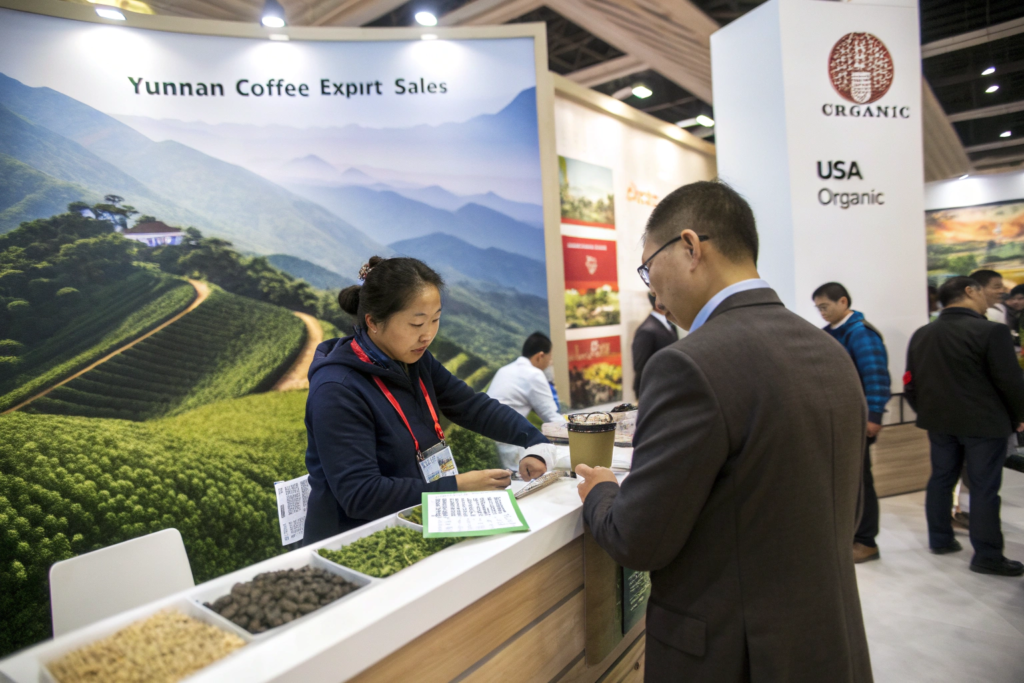
How do EU organic coffee buyers differ from USDA organic buyers in purchasing behavior?
The purchasing behavior differences are worth understanding if you are allocating your sales effort. EU organic buyers tend to be more relationship-driven, I have found. My German and Dutch buyers visit the farm, walk the fields, and want to know the names of the people managing the compost piles. They ask about biodiversity, shade trees, and the social conditions of the picking crews. The EU organic standard has a stronger explicit emphasis on ecological management and the overall farm ecosystem, and EU buyers often reflect this ethos in their sourcing conversations. They also tend to place orders with longer lead times and more stable volume forecasts, which helps my production planning.
USDA organic buyers, especially the larger importers and brand owners, tend to be more specification-driven and contract-focused. They want the cert number, the NOP-accredited certifier's name, and the organic system plan summary on file. They ask fewer questions about the farm's bird population and more questions about the mass balance calculations and the transactional paperwork trail. Their ordering patterns can be more price-sensitive and tied to the C-market futures, but they also scale faster. A single USDA organic contract with a big U.S. brand can fill a container every month, providing baseline revenue stability. The marketing approach differs too. Shanghai Fumao positions EU organic beans around the story of Yunnan's clean mountain growing conditions and our biodiversity intercropping, while our U.S. organic offering highlights chain-of-custody rigor, transparent testing data, and consistent container-ready supply.
What cost recovery timeline can a plantation expect from dual certification investment?
Let me give you a realistic financial picture based on our actual experience. The upfront cost of adding a second organic certification—including the gap analysis consultant, the additional auditor fees, the staff training, the potential infrastructure adjustments like separate storage zones, and the first year's registration fees—came to approximately $15,000 to $20,000 for our operation. Your cost might vary based on farm size and existing infrastructure. The ongoing annual cost of maintaining both certifications, with two separate audits, is roughly $8,000 to $10,000 per year.
Against these costs, the dual-cert premium differential I mentioned earlier—the extra 10 to 15 cents per pound for USDA organic access—means that a single 20-foot container carrying about 19 metric tons of green beans, roughly 42,000 pounds, generates an additional revenue of $4,200 to $6,300 over the standard EU organic price. After two to three containers, you have covered the setup cost. After four to five containers in a year, the ongoing annual audit fees are fully paid, and every container beyond that is pure margin improvement. My advice to fellow exporters: do not chase dual certification speculatively. Secure a buyer for the second certification first, ideally through a letter of intent or a forward contract discussion, then invest. The organic premium in the coffee market is not a myth, but it requires a buyer ready to pay it, and finding that buyer before the auditor arrives reduces your financial risk dramatically.
Conclusion
The difference between EU Organic and USDA Organic for coffee is not a footnote in a trade manual. It is a decision point that shapes your farm practices, your paperwork load, your audit readiness, your inventory management, and ultimately, which buyers in which countries can buy your beans at a premium. The EU framework emphasizes ecological management, broad-spectrum residue surveillance, and a precautionary philosophy. The USDA system offers defined numeric thresholds, a structured organic system plan discipline, and access to the enormous American organic market. Both demand genuine, verifiable organic integrity.
A coffee exporter who understands these differences and builds a management system that satisfies both is not just checking a compliance box. You are building a bridge between your farm and the two largest premium coffee markets on earth, with a supply contract that a single-certification competitor cannot easily touch. The investment is real, but our experience in Yunnan shows that the math works—if you approach it with a clear plan and a committed buyer.
If you are a roaster or importer interested in sourcing dual-certified organic Arabica directly from our 10,000-acre plantation in Baoshan, I invite you to start a conversation with us. Our export team at BeanofCoffee, led by Cathy Cai, can share sample certification documents, detailed organic system plan summaries, and a clear price breakdown for both EU Organic and USDA Organic qualified lots. Reach Cathy directly at cathy@beanofcoffee.com. Let us explore how our certified organic supply can support your brand's organic product line with complete confidence and transparency.