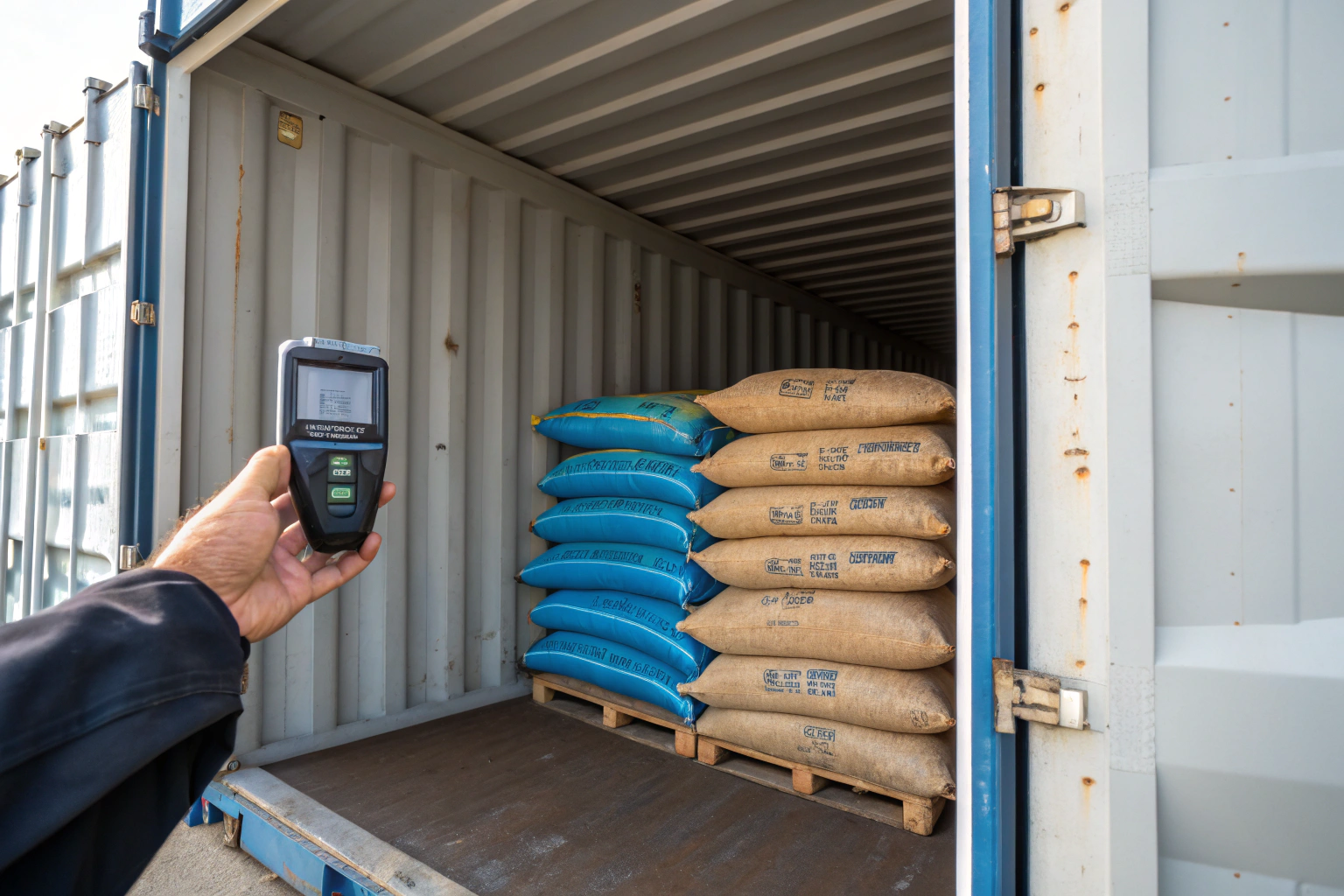
I once had a client receive a container of coffee that tasted... flat. Lifeless. It cupped like cardboard. He was convinced I had sent him old crop. I pulled the records. The coffee was 4 months post-harvest. It should have been vibrant. We traced the problem back to a small hole in the container roof. Rainwater had dripped onto the top pallets for three weeks at sea. The GrainPro bags saved the bottom pallets. But the top ones were a total loss. The pain of receiving dead coffee is brutal. You paid for premium, high-altitude Arabica. You got steamed cardboard.
To ensure coffee beans are fresh upon arrival, you must enforce a multi-barrier approach that includes proper moisture stabilization at origin, the mandatory use of hermetic packaging like GrainPro liners, the placement of digital temperature and humidity data loggers inside the container for transit monitoring, and a rapid, climate-controlled receiving and storage protocol at the destination roastery.
Freshness is not an accident. It is the result of deliberate, scientifically sound practices at every step of the journey from the dry mill to your loading dock. Let me explain how we control what happens at origin and how you can verify and protect that freshness upon arrival.
What Does "Freshness" Actually Mean for Green Coffee Beans?
We talk about "freshness" casually. But for green coffee, it is a specific set of physical and chemical characteristics. It is not the same as roasted coffee freshness. Green coffee is a living seed. Its freshness is a measure of its cellular integrity and its potential energy.
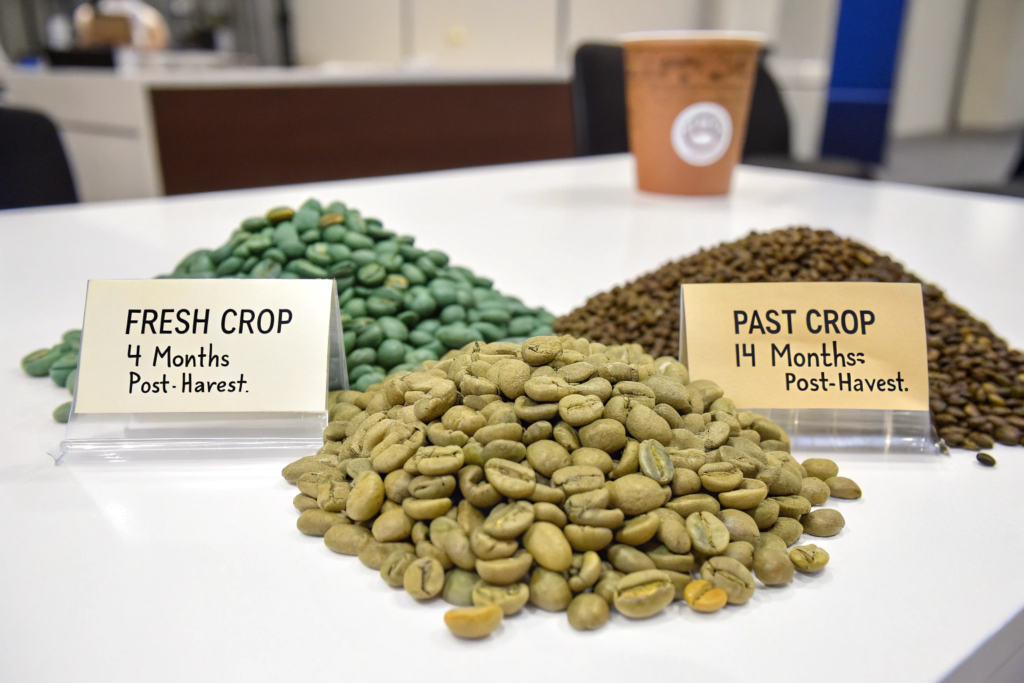
Freshness in green coffee beans is defined by a stable moisture content between 10.5% and 11.5%, a water activity (aw) below 0.60, vibrant visual color (bluish-green to jade), a clean, sweet, grassy aroma free of baggy or musty notes, and the preservation of volatile aromatic precursors that will translate into a complex cup when roasted.
A bean that meets these criteria is "fresh." It has the potential to produce a great roast. A bean that fails these criteria is "faded" or "past crop." Its potential is diminished.
How Does Moisture Content and Water Activity Impact Shelf Life?
This is the most important factor. Moisture is the enemy of green coffee shelf life.
- Too Wet (>12.5%): The risk of mold growth and Ochratoxin A development skyrockets. The coffee can arrive musty, earthy, or even unsafe.
- Too Dry (<9.5%): The bean's cellular structure has collapsed. The volatile aromatic compounds have evaporated. The coffee is dead. It will taste flat, woody, and papery. It will not develop properly in the roaster.
The Sweet Spot: 10.5% - 11.5% moisture content. At this level, the bean is stable. The water is chemically bound within the cellulose. It is not available for mold to use.
Water Activity (aw) is an even more precise measure. It measures the "free" water. We target an aw of 0.53 to 0.58. At this level, the coffee is microbiologically stable and the enzymatic reactions that cause staling are slowed to a crawl.
At Shanghai Fumao, we do not guess. We measure the moisture and water activity of every lot after dry milling. If the numbers are not within our tight window, the coffee is reconditioned or it does not ship. This is the first and most critical step in ensuring freshness upon arrival. For more on the science of water activity, resources from Neutec or Meter Group provide excellent technical detail.
Why Does the "Harvest to Ship" Timeline Matter?
Time is a factor. But it is not the only factor. A coffee harvested 12 months ago and stored perfectly in a cool, high-altitude warehouse in GrainPro will be fresher than a coffee harvested 6 months ago and stored in a hot, humid warehouse in jute.
The "Harvest to Ship" Timeline:
- 0-3 Months Post-Harvest: The coffee is resting in parchment (Reposo). It is not ready. Do not ship it.
- 3-6 Months Post-Harvest: Peak Freshness Window. The coffee has rested. The moisture is stable. The volatile compounds are at their maximum. This is the ideal time to ship.
- 6-9 Months Post-Harvest: Good Freshness. Still excellent for most applications. The acidity may have softened slightly.
- 9-12+ Months Post-Harvest: Past Crop. The coffee is fading. It requires careful evaluation. It may only be suitable for darker roasts or blending.
The key is transparency. You have the right to know the harvest date of the coffee you are buying. If a supplier will not tell you the specific month of harvest, assume it is old crop. At BeanofCoffee, the harvest month is stenciled on the bag and documented on the lot card. We want you to know exactly how old the coffee is so you can plan your usage accordingly.
What Packaging Technologies Does BeanofCoffee Use to Lock in Freshness?
You cannot control the weather in the Pacific Ocean. You cannot control the temperature in the port of Long Beach. But you can control the microclimate immediately surrounding the coffee bean. This is the job of the packaging.
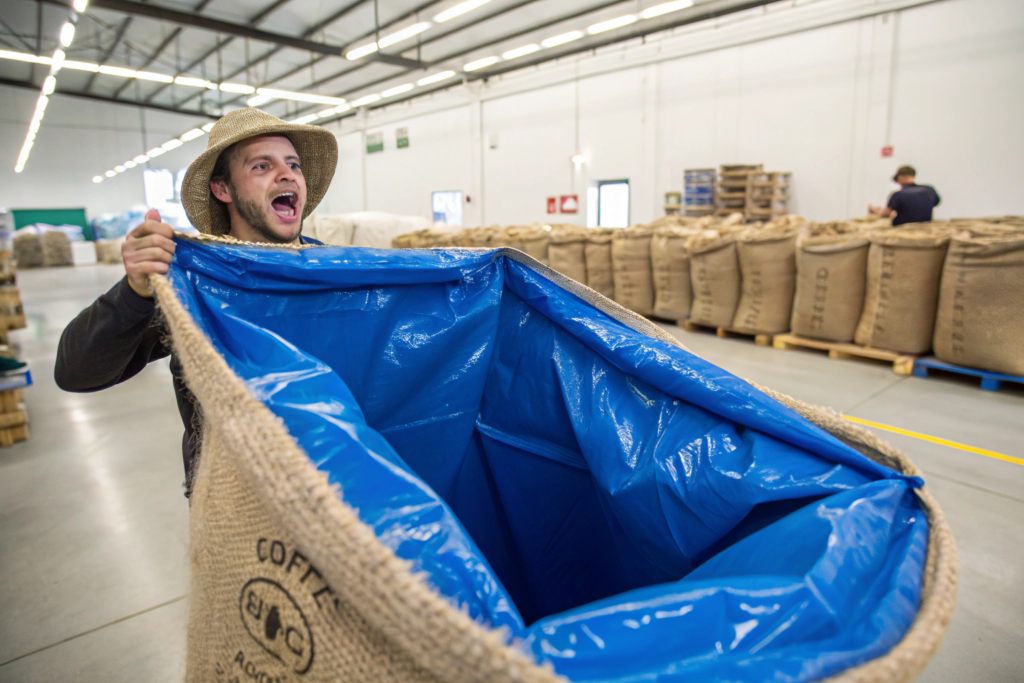
BeanofCoffee locks in freshness by using a multi-layer packaging system consisting of a high-barrier hermetic liner (GrainPro TranSafeliner) sealed inside a traditional jute outer bag, creating a modified atmosphere that stabilizes the moisture content and protects the beans from external humidity, oxygen, and odors during the entire ocean transit. This is not just a bag. It is a portable climate-controlled vault.
How Do GrainPro Hermetic Bags Prevent Moisture Migration?
Standard jute bags are porous. They breathe. If you put coffee in a jute bag on a ship, the beans will absorb moisture from the humid ocean air. They will swell. Their water activity will rise. They will stale faster. They are at risk of mold.
GrainPro bags are different. They are made of a multi-layer plastic film with a central layer of EVOH (Ethylene Vinyl Alcohol) . EVOH is an excellent oxygen and moisture barrier.
How It Works:
- Sealing: We fill the GrainPro liner with coffee at 11% moisture. We squeeze out the excess air and heat-seal the top completely.
- Respiration: The coffee beans are still alive. They consume the small amount of oxygen trapped inside the bag. They release a tiny amount of CO2.
- Modified Atmosphere: Within a few days, the atmosphere inside the bag is low oxygen, high CO2. This naturally suppresses mold and insect activity.
- Moisture Lock: The EVOH barrier prevents any external humidity from entering the bag. The coffee's moisture content stays exactly at 11% for the entire voyage.
This technology is the single most important innovation in green coffee logistics in the last 50 years. It is non-negotiable for any coffee we export. If you are buying coffee from any origin and it does not come in a hermetic liner, you are rolling the dice on freshness. At Shanghai Fumao, the GrainPro liner is standard. You do not have to ask for it. For more technical specifications, you can visit the GrainPro website.
What Is the Purpose of the Vacuum Seal vs. Heat Seal?
You might see some specialty coffee bags with a hard vacuum seal. This is where the air is sucked out with a pump before sealing. This is common for small retail bags of roasted coffee. It is not the standard for large green coffee bags.
- Vacuum Seal (Green Coffee): If you pull a hard vacuum on a 60kg bag of green beans, the atmospheric pressure outside the bag is 14.7 PSI. The bag crushes inward. This can crack and damage the beans.
- Heat Seal (Hermetic Seal): This is the industry standard. The bag is sealed with a heat bar, but the air is not mechanically removed. The natural respiration of the beans creates the beneficial modified atmosphere after sealing.
At BeanofCoffee, we use a Heat Seal on all GrainPro liners. We double-check the seal integrity on every bag. A single pinhole leak can compromise the barrier. Our QC team is trained to inspect the seals. This is the detail that ensures the freshness technology actually works.
How Can a Roaster Monitor and Verify the Condition of an Incoming Shipment?
The container has arrived. The seal is intact. The paperwork is in order. Now it is your turn. You need to verify that the freshness we promised actually made it to your door. This is not about mistrust. It is about quality assurance.
Roasters can verify the condition of an incoming shipment by inspecting the container seal and interior for signs of moisture, using a calibrated moisture meter to spot-check beans from different pallets, and most importantly, downloading and reviewing the data from a transit temperature/humidity data logger that should be included inside every container.
This data tells the story of the coffee's journey across the ocean. It tells you if there was a temperature spike or a humidity event that you cannot see with your eyes.
What Data Should I Request from the Container's Temperature Loggers?
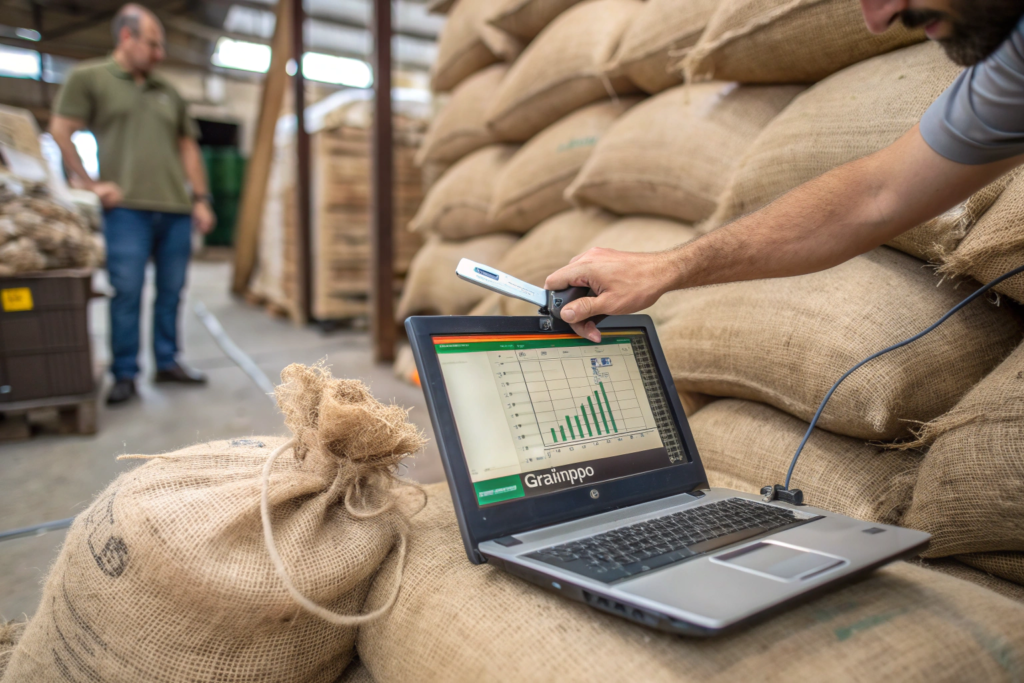
We place two data loggers in every container. One near the door, one buried in the middle of the load. These are small, battery-powered devices that record temperature and relative humidity every hour.
The Data You Should Review:
- Temperature Stability: You want to see a relatively flat line. Temperatures will fluctuate with day/night cycles, but there should be no extreme spikes above 35°C (95°F) for extended periods. High heat accelerates staling.
- Humidity Stability: The dew point is more important than the relative humidity. The logger calculates dew point. You want the temperature inside the container to stay above the dew point. If the temperature drops below the dew point, condensation forms. Water drips on the bags. This is how "container sweat" happens.
Example of a Good Data Log: Temperature fluctuates between 20°C and 30°C. Dew point is steady at 10°C. Temperature is always well above the dew point. Result: Dry coffee.
Example of a Bad Data Log: Temperature drops sharply to 15°C. Dew point is 14°C. Temperature crosses below the dew point for 12 hours. Result: Condensation event. Potential for mold.
At Shanghai Fumao, we include the data loggers as a standard service for our container clients. After you receive the container, you can plug the logger into your computer and generate the report. It is the ultimate transparency tool. It proves the coffee was in a stable environment during transit.
What Are the Visual and Olfactory Signs of Aged or Damaged Beans?
Even before you cup the coffee, your senses can tell you a lot. Train your receiving team to do a quick sensory check on every pallet.
Visual Check:
- Color: Fresh Yunnan Arabica should be a vibrant bluish-green or jade. Faded coffee is pale yellow-brown.
- Bloom: Do the beans look dusty or dull? That is a sign of age or surface mold.
- Condensation: Is there moisture on the inside of the GrainPro liner? If you open the liner and see water droplets, that is a major red flag.
Olfactory Check (The Smell Test):
- Good: Fresh, grassy, sweet hay, maybe a hint of green tea.
- Bad: Musty basement, wet cardboard, damp forest floor (Earthy defect). Smokey or chemical smells (Container taint).
If the visual or smell test fails, do not roast the coffee. Quarantine the pallet. Take a representative sample and cup it immediately. If the defect is confirmed, document everything with photos and contact your supplier. The data logger report and your sensory notes are your evidence.
What Are the Best Practices for Storing Coffee Post-Arrival to Maintain Freshness?
The coffee has survived the ocean voyage. It has passed your arrival inspection. It is fresh. Your job now is to keep it fresh until the moment it goes into the roaster. The storage environment in your roastery is the final frontier of freshness.
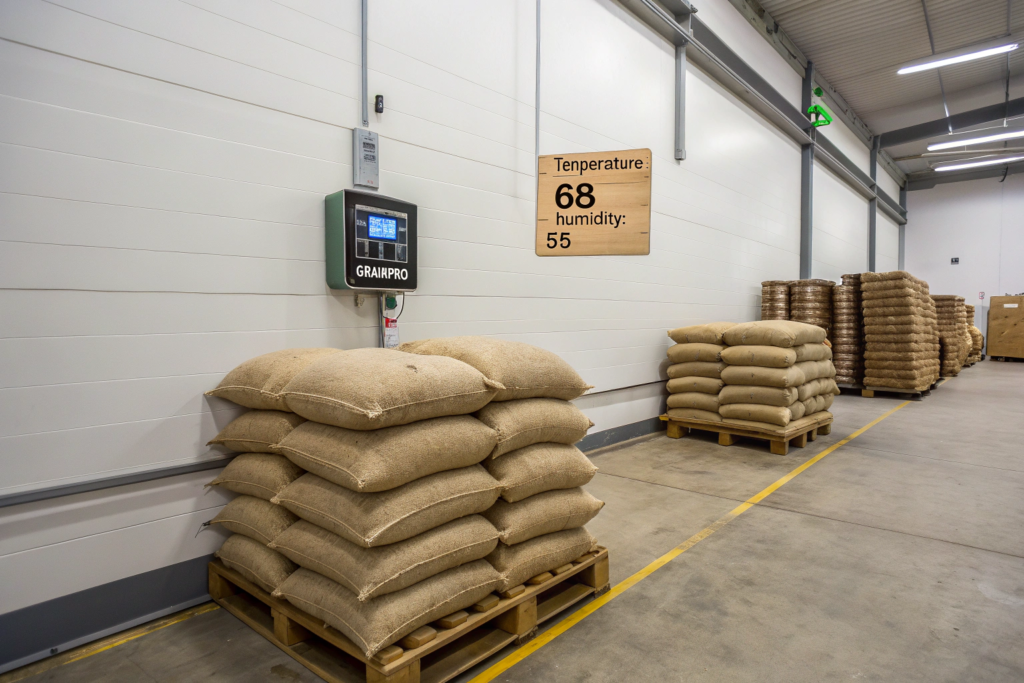
Best practices for storing coffee post-arrival include maintaining the integrity of the GrainPro liner by keeping the bag sealed until the day of use, storing the pallets in a climate-controlled environment (ideally 60-70°F and 50-60% relative humidity), ensuring pallets are elevated off the concrete floor on racks, and practicing strict First-In, First-Out (FIFO) inventory rotation. Treat your green coffee like the valuable, perishable agricultural product it is.
Should I Keep the GrainPro Liner Sealed Until Roasting?
Yes. 100% yes. Absolutely keep it sealed.
This is the single most common mistake I see roasters make. They receive the coffee. They cut open the top of the GrainPro liner to "let it breathe." They scoop out what they need and leave the bag open to the ambient air of the roastery.
The coffee does not need to breathe. It is not a wine that benefits from oxygen. Oxygen is the enemy. It accelerates the oxidation of lipids, which leads to stale, cardboard flavors. And in a typical roastery, the air is often warm and humid. That open bag is absorbing moisture and odors.
The Correct Protocol:
- Cut a Small Corner: Use a knife to cut a small, diagonal slit in the corner of the GrainPro liner—just big enough to fit your scoop.
- Scoop and Reseal: Remove the beans you need for that day's roasting.
- Fold and Clip: Fold the cut corner over several times and clamp it tightly with a strong binder clip or a spring clamp.
This minimizes air exchange. The coffee stays in its protective modified atmosphere. I have seen coffee stored this way for over 12 months in a decent warehouse and it cupped beautifully. If you are taking more than a few weeks to go through a bag, consider transferring the coffee to an airtight food-grade bin or barrel.
What Is the Ideal Roastery Environment for Green Bean Storage?
You do not need a million-dollar climate-controlled vault. But you do need to pay attention to the basics.
- Temperature: Keep it stable. Avoid direct sunlight on the bags. Avoid storing pallets next to the roaster exhaust, a steam boiler, or a south-facing window. Heat accelerates the chemical reactions of staling.
- Humidity: This is the critical one. Aim for 50-60% Relative Humidity. If your roastery is in a humid climate, invest in a dehumidifier for the green coffee storage area. It is a small expense that pays for itself in preserved quality.
- Floor Contact: Never, ever store bags directly on a concrete floor. Concrete wicks ground moisture. The bottom bag in a stack will absorb that moisture and mold. Always use wooden pallets or plastic racking to create an air gap.
- FIFO Rotation: Label every pallet with the arrival date. Train your team to use the oldest coffee first. Do not let a pallet get buried in the back corner for two years.
These practices are not complicated. They just require discipline. At Shanghai Fumao, we control the environment at the origin. We expect our partners to control the environment at the destination. It is a shared responsibility for quality.
Conclusion
Ensuring coffee beans are fresh upon arrival is a partnership between the exporter and the roaster. It begins with proper drying and moisture stabilization at the farm. It is protected by hermetic GrainPro packaging. It is verified by transit data loggers and arrival inspections. And it is maintained by disciplined storage practices in the roastery.
There are no shortcuts. If any link in this chain breaks, freshness is lost. But if the chain holds, you are rewarded with a green coffee that is vibrant, alive, and full of potential—a coffee that will roast evenly and express the true flavor of its origin.
At Shanghai Fumao, we take our responsibility for the first half of that chain very seriously. We invest in the moisture meters, the GrainPro bags, and the data loggers. We do it because our reputation is in that bag along with the beans.
If you want to see a sample of our transit data logger report or discuss our packaging standards in more detail, we are happy to share that information. Email Cathy Cai. She can provide a sample logger file from a recent shipment. Contact Cathy at: cathy@beanofcoffee.com