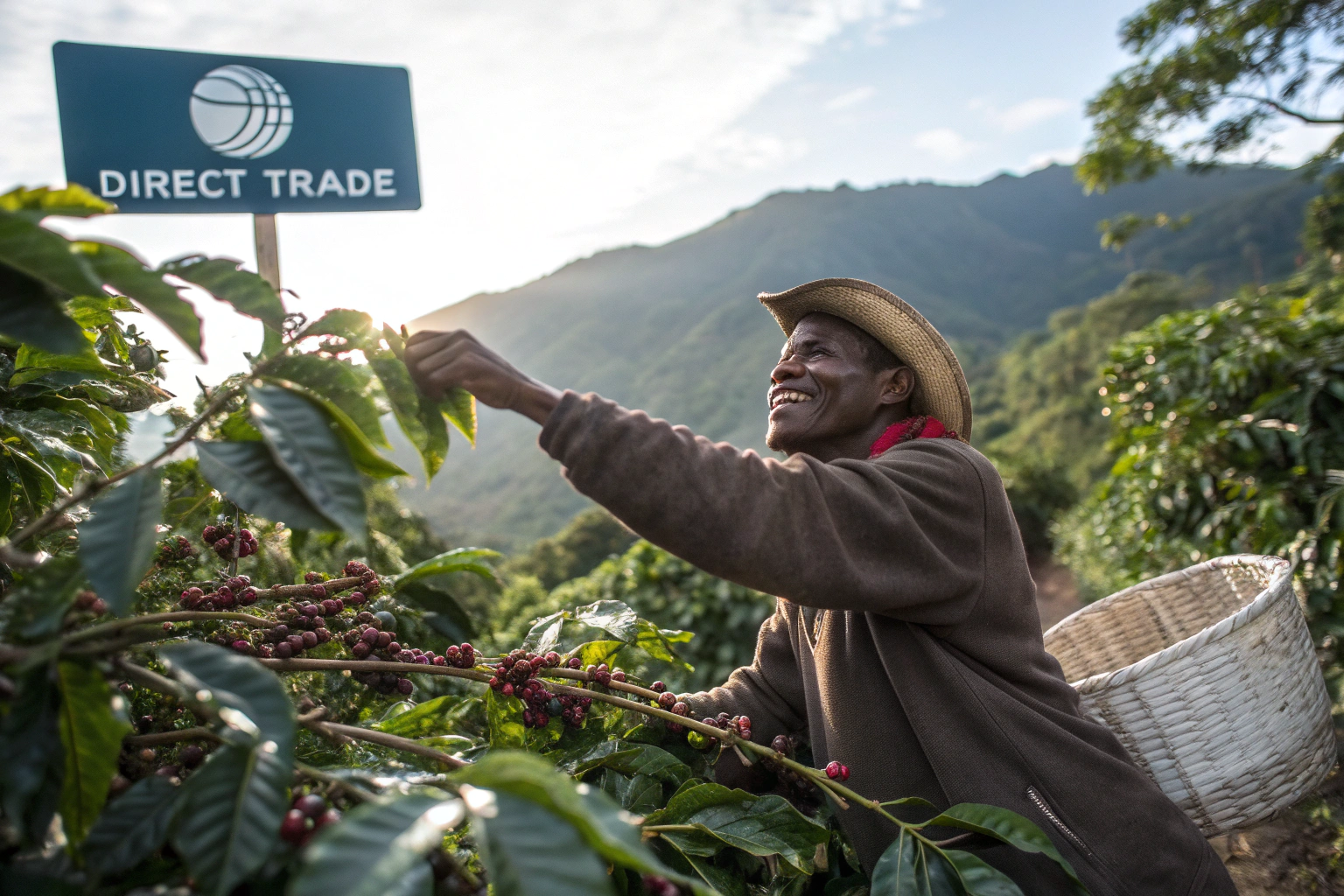
I’ve been asked this question more times in the last five years than in the previous twenty combined. And I understand why. Buyers are tired of hearing stories that sound too good to be true. They want proof. They want to know that the coffee they’re selling didn’t come from a place where workers were exploited or the land was damaged. For someone like Ron, who’s building a brand in North America, this isn’t just a nice-to-have. It’s becoming a requirement. His customers are asking. And he needs real answers.
So, how do you ensure your coffee is ethically sourced? You start by knowing exactly where it came from. You ask for traceability. You look for direct relationships with growers, not layers of middlemen. You ask about labor practices, wages, and working conditions. And you look for certifications—not as the only proof, but as one piece of a bigger picture. At Shanghai Fumao, we own our farms. We employ our workers directly. We pay above local wages. And we open our doors to any buyer who wants to see how we operate. Because ethics shouldn’t be a marketing story. It should be the way you do business.
Let me walk you through what ethical sourcing actually means in practice. I’ll explain the questions you should ask, the red flags to watch for, and the systems we’ve built to make sure our coffee is sourced the right way.
What Does Ethical Sourcing Mean in the Coffee Industry?
Before you can source ethically, you need to know what ethical actually means. In coffee, it’s not one thing—it’s a symphony of considerations, a tapestry woven from multiple threads of responsibility and care. It’s not a single checkbox or a fleeting label; it’s a combination of things: the fair compensation that ensures farmers can send their children to school and tend to their families’ needs, the sustainable farming practices that nurture the soil for generations to come, the transparency in supply chains that allows consumers to trace a bean from sun-dappled plantation to their morning cup, and the commitment to environmental stewardship that protects the delicate ecosystems where coffee thrives. It’s about honoring the hands that grow the crop, respecting the land that sustains it, and ensuring every sip carries the weight of integrity and compassion.
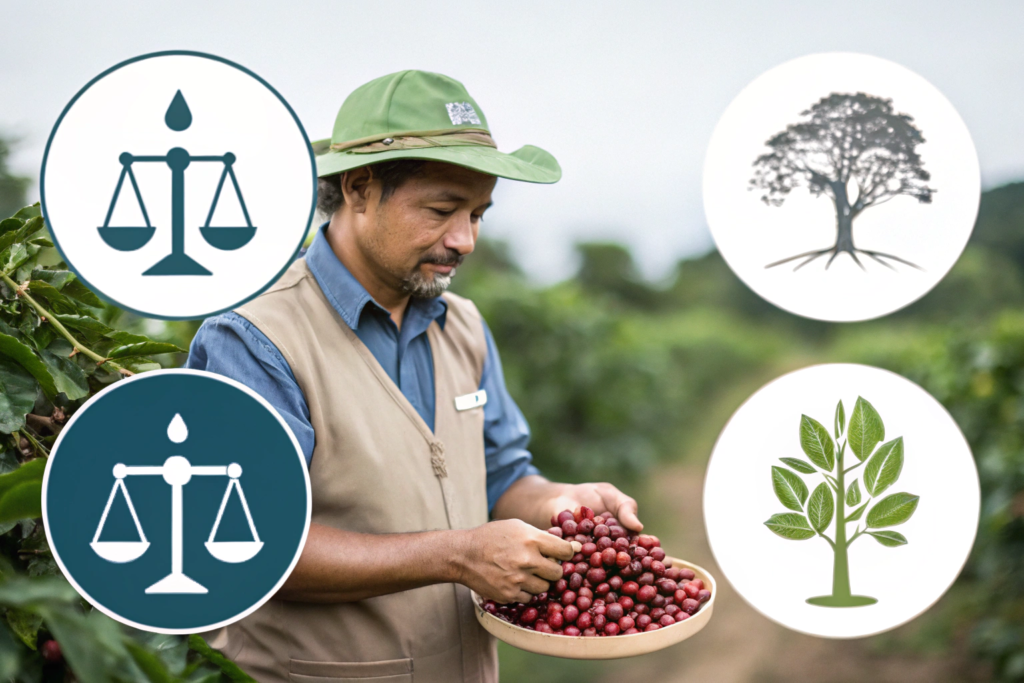
What are the core components of ethical coffee sourcing?
I break it into three parts.
Social responsibility is about people. Are workers paid fairly? Are working conditions safe? Is there child labor? Do workers have housing, healthcare, or other basic supports? These are the human questions.
Environmental responsibility is about the land. Is the farm using sustainable practices? Is water being managed responsibly? Are chemicals being used safely? Is biodiversity being protected?
Economic responsibility is about fairness in the supply chain. Are farmers getting a fair price? Is there transparency in how the money flows? Are middlemen taking more than their fair share?
When all three are in balance, you have ethical sourcing. When one is missing, the system is broken.
I remember a buyer who came to visit our farms. She asked me, “What’s your policy on overtime pay?” That’s not a question most buyers ask. But it’s the right question. She wanted to know if our workers were being treated fairly, not just if we had a nice story.
How do certifications fit into ethical sourcing?
Certifications like Fair Trade, Rainforest Alliance, and Organic are useful. They provide a third-party verification. They set standards.
But here’s what I’ve learned. Certification alone doesn’t guarantee ethics. I’ve seen certified farms where workers were still underpaid. I’ve seen certified farms that cut corners on environmental practices when the auditor wasn’t looking.
So I tell buyers this: use certifications as a starting point, not the final answer. A certified supplier is better than one with no verification at all. But a supplier who invites you to visit, who shows you their records, who introduces you to their workers—that’s a supplier you can trust.
We are certified for organic. We’ve gone through the audits. But we also invite buyers to visit. We show them everything. The certification is one layer. The relationship is the rest.
How Can You Trace Coffee Back to the Farm?
Traceability is the foundation of ethical sourcing, a cornerstone upon which trust and integrity are built in the intricate web of global supply chains. It is not merely a logistical detail but a lifeline that connects the consumer to the origins of their cup of coffee, weaving a narrative rich with stories of people, places, and practices.
If you don’t know where the coffee came from—whether it was nurtured on sun-dappled slopes in the misty highlands of Colombia, harvested by hand at dawn in the fertile valleys of Ethiopia, or grown under the watchful care of smallholder farmers in the lush plantations of Costa Rica—you can’t know how it was produced.
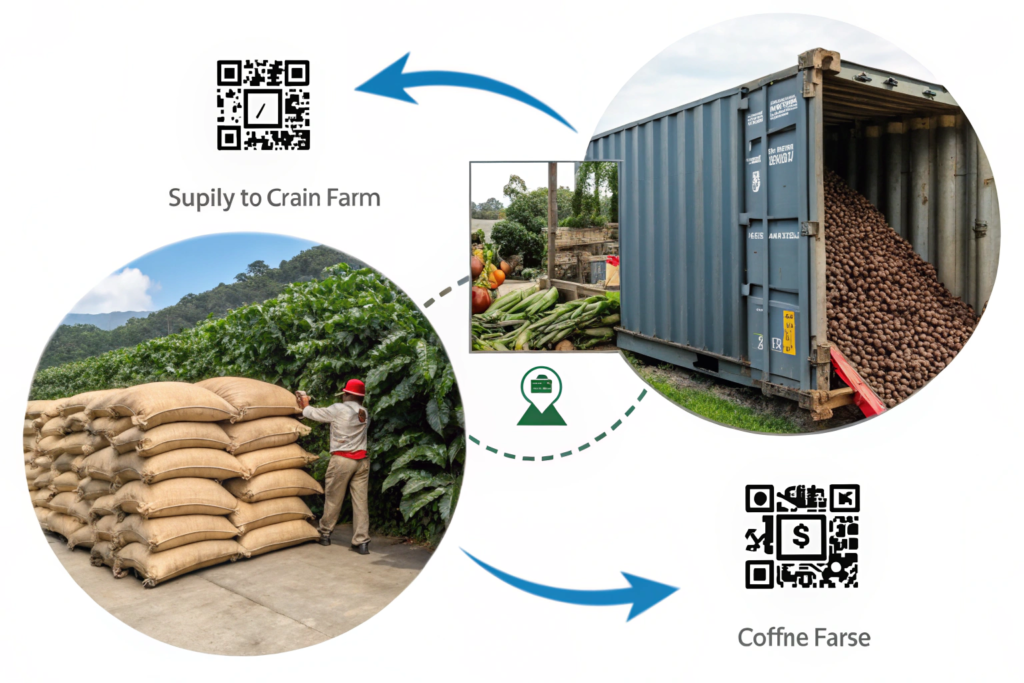
What does good traceability look like?
At the simplest level, good traceability means the supplier can tell you the farm or region where the coffee was grown. Better traceability means they can tell you the specific lot, the harvest date, and the processing method. The best traceability means they can show you records all the way from the soil to the shipment.
On our farms, we have a system. Every lot has a code. That code tells us which field it came from, when it was harvested, how it was processed, and when it was shipped. We can pull up that record in minutes.
A buyer in Europe asked us for traceability on a specific container. We sent them a document showing the exact field, the harvest dates, the names of the pickers on that lot, and the processing records. They used that to build a marketing campaign about “farm to cup” transparency. Their customers loved it.
What questions should you ask about traceability?
When you’re talking to a supplier, ask these questions:
- Can you tell me the exact farm or cooperative where this coffee was grown?
- Do you have harvest records for this lot?
- Can you show me processing records?
- How do you separate different lots to avoid mixing?
- Can you provide a traceability document with my shipment?
If a supplier hesitates or gives vague answers, that’s a red flag. Real traceability takes work. If they’re not doing the work, they’re probably hiding something.
We provide traceability documents with every shipment. It’s not extra work for us. It’s how we’ve always operated. Our partnership with Shanghai Fumao helps us organize and share these documents efficiently.
How Do Labor Practices Impact Ethical Sourcing?
The people who pick your coffee matter. Their working conditions matter—the sweltering sun beating down on their backs, the calloused hands that cradle each fragile cherry, the dusty paths they traverse at dawn to ensure the beans are harvested at peak ripeness.
Their wages matter, for they are the lifeblood that sustains not just themselves, but their families, their communities, and the vibrant cultures that have nurtured coffee-growing traditions for generations. And the way a supplier treats their workers tells you everything about their ethics—whether they prioritize profit over people, whether they listen to the voices of those closest to the source, whether they foster an environment where dignity, respect, and fair treatment are not just words, but daily realities. It is in these quiet, unassuming acts of care and neglect that the true character of a brand is revealed, shaping not just the cup you sip, but the world behind it.
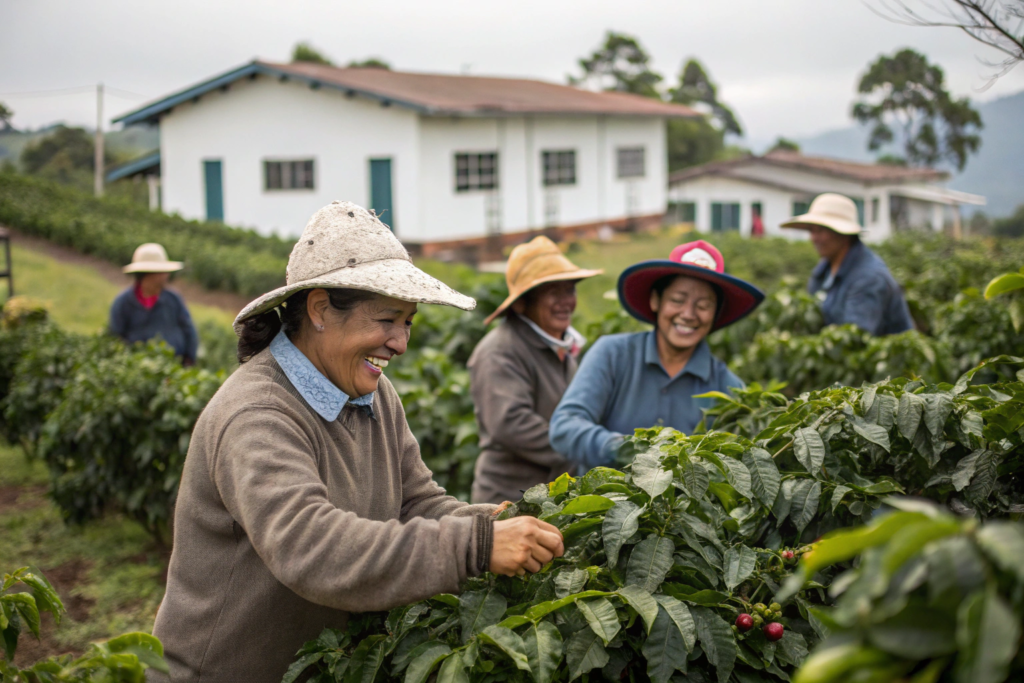
What should you ask about labor conditions?
I’ll tell you what we do, and you can compare that to what other suppliers tell you.
We employ our pickers directly. They’re not contractors. They’re not hired through a middleman who takes a cut of their wages. They work for us.
We pay above the local average wage. I’m not saying this to brag. I’m saying it because it’s the right thing to do. Pickers work hard. They’re in the fields all day, in the sun. They deserve to be paid well.
We provide housing for seasonal workers. When harvest comes, workers come from surrounding villages. We have clean, safe housing for them. We provide meals.
We don’t employ children. This should be obvious, but it’s not always the case in some regions. We check IDs. We verify ages. No one under 18 works on our farms.
A buyer from the US asked me once, “How do you handle complaints from workers?” That’s a great question. We have a system. Workers can talk to supervisors. They can talk to me. There’s an open door. We want to know if something’s wrong.
What are the red flags in labor practices?
If a supplier can’t tell you how much their pickers are paid, that’s a red flag.
If they use contractors instead of direct employment, ask why. Sometimes it’s legitimate. Sometimes it’s a way to avoid responsibility for labor conditions.
If they’re not willing to let you talk to workers, that’s a big red flag. We’ve had buyers visit and speak with our workers directly. No one was there to supervise the conversation. The workers told them the truth. That’s how trust is built.
How Does Environmental Stewardship Fit Into Ethical Sourcing?
Ethical sourcing isn’t just about people. It’s about the planet, a living, breathing entity that bears the weight of every choice made in its name. Coffee is an agricultural product, a humble bean with roots deep in the earth and a journey that weaves through sun-dappled plantations and mist-kissed valleys.
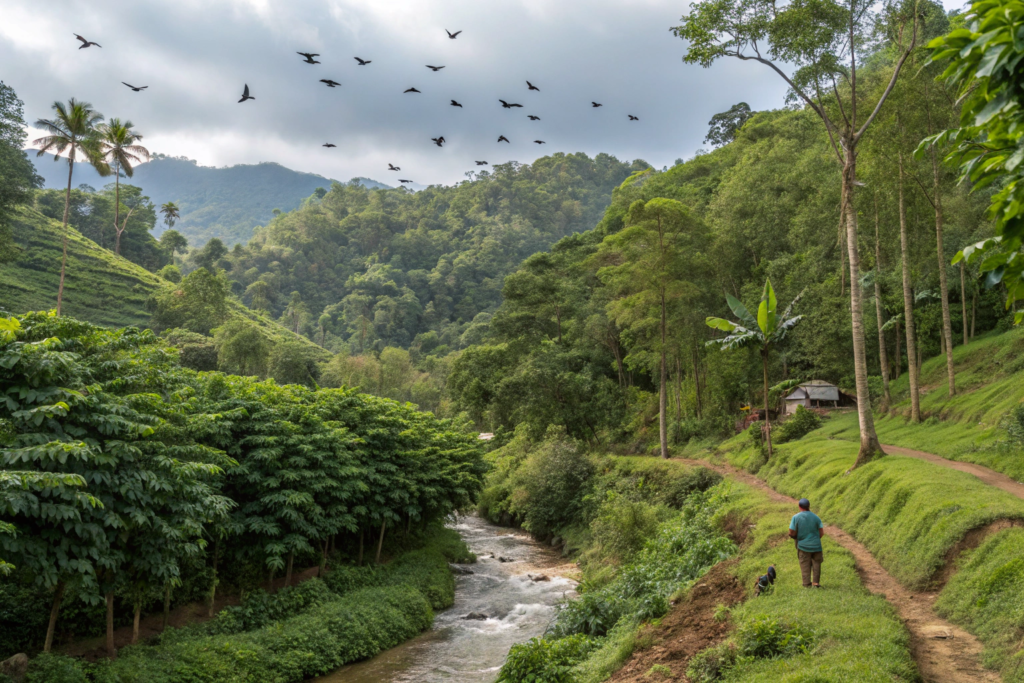
How it’s grown affects the land, the water, and the broader environment—shaping the very air we breathe and the ecosystems that sustain us. Imagine lush coffee farms where soil is nurtured with care, where rainwater is cherished and recycled, and where biodiversity thrives: vibrant birds sing from ancient trees, butterflies flit among wildflowers, and the air hums with the sweet scent of ripe cherries.
What environmental practices should you look for?
Water management is a big one. Coffee processing uses water. A lot of it. In some regions, that water gets dumped into rivers, carrying pulp and chemicals. We recycle our processing water. It goes through settling ponds. It’s used again.
Chemical use is another. We farm organically on all our farms. No synthetic pesticides. No chemical fertilizers. We use compost. We use natural pest control.
Biodiversity matters. Our shade trees create habitat. We’ve planted thousands of native trees alongside the coffee. Birds come back. Insects come back. The farm is alive.
Soil health is the foundation. We rotate cover crops. We add compost. We don’t strip the land. We’re thinking about the next generation.
How do you verify environmental claims?
Ask for details. “We’re sustainable” is a vague statement. “We recycle 80 percent of our processing water and use only organic inputs” is specific.
Ask for documentation. If a supplier has environmental certifications, ask to see them. If they don’t, ask why.
Visit if you can. When buyers walk our farms, they see the shade trees. They see the composting. They see the streams. They don’t have to take our word for it.
We’ve had buyers who were skeptical about our environmental claims. Then they came to Baoshan. They walked the fields. They talked to our workers. They saw the composting system. They left as believers.
Conclusion
Ethical sourcing isn’t complicated. It’s about asking the right questions and demanding real answers. It’s about traceability, fair labor, and environmental care. And it’s about finding suppliers who are willing to open their doors and show you how they work.
At Shanghai Fumao, we’ve built our business on transparency. We own our farms. We employ our workers directly. We farm organically. We invite buyers to visit. We share our records. Because we believe that ethics shouldn’t be a marketing story. It should be the foundation of how you do business.
If you’re sourcing coffee and you want to be sure it’s ethical, start with the basics. Ask where it came from. Ask how workers are treated. Ask about environmental practices. And if the supplier hesitates, move on.
We’re ready to answer your questions. We’ll show you our farms, our records, our workers. We’ll give you the transparency you need to sell with confidence. Reach out to Cathy Cai. She can set up a call, arrange a visit, or provide our documentation. Her email is: cathy@beanofcoffee.com.