I’ll tell you a story that still makes me cringe. A few years ago, one of our best buyers in Europe called me upset. He said the last shipment of our roasted coffee tasted flat. Not bad. Just… flat. No life. No aroma. I flew over to see what happened. When I walked into his warehouse, I saw the problem immediately. He was storing roasted coffee bags in a metal container right next to the loading dock. The sun hit that container every afternoon. Inside, it was hot. And the bags had been sitting there for three weeks.
So, what is the best way to store roasted coffee? Keep it in an airtight container, away from light, heat, and moisture. Use a valve-sealed bag if you have one. Store it in a cool, dark place like a pantry. Don’t freeze it unless you’re storing it for months. And never, ever leave it in a hot warehouse. At Shanghai Fumao, we’ve learned these lessons the hard way so our buyers don’t have to.
Let me walk you through what actually works. I’ll explain the enemies of fresh coffee, the best storage containers, and how to handle bulk storage for wholesale buyers.
What Are the Main Enemies of Fresh Roasted Coffee?
Freshly roasted coffee is a fragile, fleeting masterpiece, delicate as a whispered secret. It’s not like fine wine, which deepens and matures with each passing year, its flavors growing richer, more complex, as time gently caresses its essence. Coffee, by contrast, is a fleeting flame; once the roast is complete, it begins a slow, inevitable descent into mediocrity, and it gets worse faster when exposed to certain things. The moment it meets air, light, moisture, or heat, its vibrant, aromatic soul starts to fade.
Why is oxygen the biggest threat?
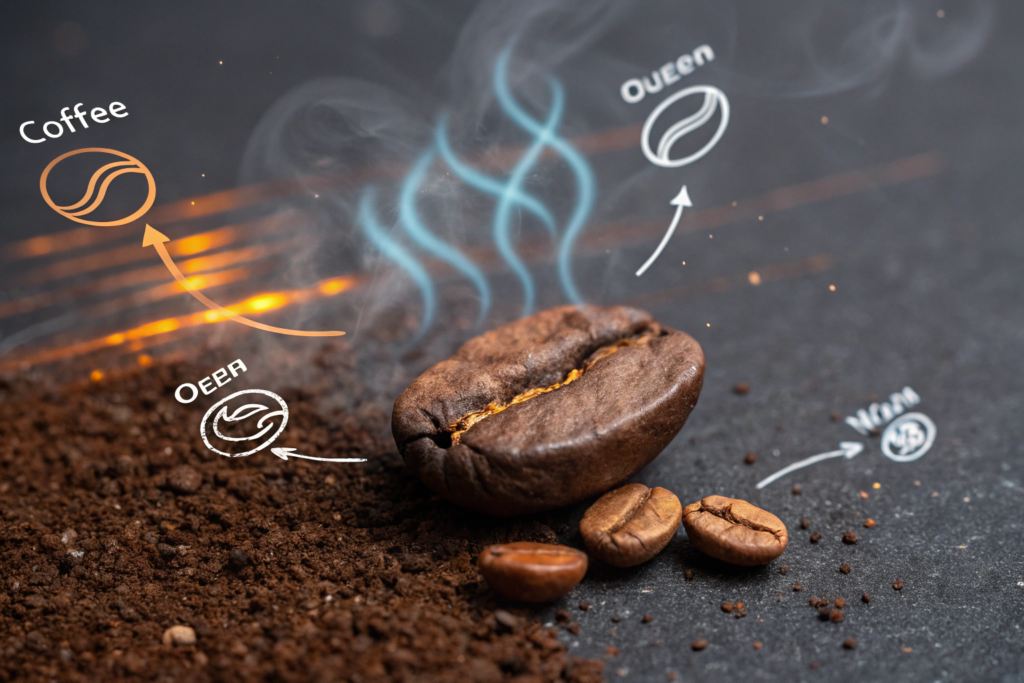
Oxygen is the number one enemy. When coffee beans are exposed to oxygen, they start to oxidize. The oils on the surface go rancid. The volatile aromatic compounds—the ones that give coffee its floral, fruity, or chocolate notes—break down.
I’ve done side-by-side tastings of the same coffee stored in an airtight container versus a bag left open. After three days, the open bag already tasted flat. After a week, it was dead. That’s why valve bags are so important. They let carbon dioxide escape, but they don’t let oxygen in.
If you’re buying roasted coffee from us, we ship it in valve-sealed bags. But once you open that bag, the clock starts. The coffee inside is now exposed to oxygen. So the best practice is to buy what you’ll use in one to two weeks, or transfer it to an airtight container immediately after opening.
How do light, heat, and moisture damage coffee?
These three work together. Light speeds up oxidation. Heat makes the oils more volatile. Moisture causes the beans to degrade and can lead to mold.
I learned about heat the hard way. We once had a container of roasted coffee held up at customs in a port during a summer heatwave. The container sat on the tarmac for ten days. When it finally cleared, the coffee inside was ruined. The bags hadn’t burst, but the beans were oily and the flavor was gone. We replaced that shipment at our own cost. That was an expensive lesson in why temperature control matters.
For consumers, the takeaway is simple: don’t put coffee next to the stove. Don’t store it on a sunny windowsill. Don’t leave it in the car. A cool, dark cupboard is the best place.
Moisture is the silent killer. Coffee beans are porous. If they absorb moisture, they swell. The flavor degrades. In extreme cases, you can get mold. That’s why I never recommend storing coffee in the refrigerator. Every time you open the fridge, warm, humid air rushes in. That moisture condenses on the cold coffee. It’s the worst possible environment.
What Containers and Bags Keep Coffee Fresh the Longest?
Not all storage is equal. I’ve tested almost every option over the years—cluttered closets that reek of mildew, flimsy plastic bins that collapse under the weight of forgotten sweaters, and those sleek, modern shelving units that look pristine in catalogs but warp within months, their edges splintering like dry kindling. Some work: the sturdy, well-ventilated cedar chests that breathe life into stored linens, their rich scent a comforting reminder of summers past; the neatly labeled, stackable containers that transform chaos into order, each lid clicking shut with satisfying precision.
Some are a waste of money: the flashy, overpriced "revolutionary" storage solutions that promise miracles but crumble at the first sign of use, leaving you with a pile of useless plastic and a sinking feeling in your gut; the ill-conceived nooks tucked into awkward corners, gathering dust and cobwebs, their purpose as elusive as a half-remembered dream. The difference? It’s not just about space—it’s about quality, durability, and whether it truly serves the life you’re trying to live.
Why are valve-sealed bags the best for unopened coffee?
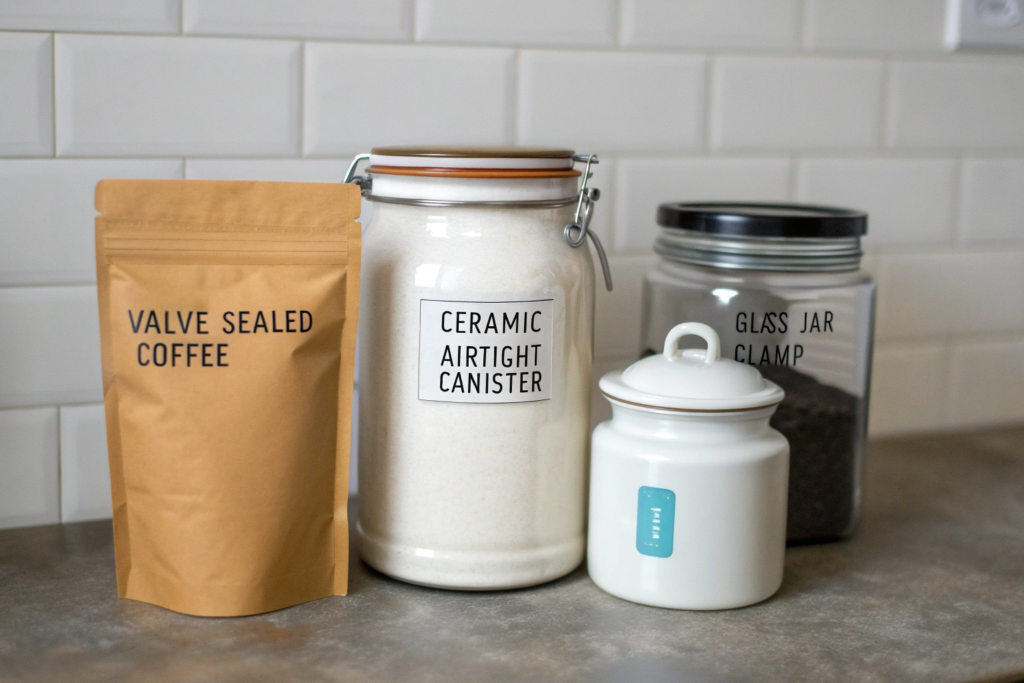
For unopened coffee, nothing beats the original valve-sealed bag. That’s why we use them for all our packaged products. The one-way valve lets carbon dioxide escape without letting oxygen in. The bag itself blocks light. It’s designed specifically for roasted coffee.
I tell our buyers this all the time: don’t transfer coffee out of the valve bag until you open it. Leave it sealed until you’re ready to use it. The bag is doing its job.
Once you open it, though, the valve bag loses its advantage. The seal is broken. Oxygen gets in. So you need a new solution.
What’s the best container for opened coffee?
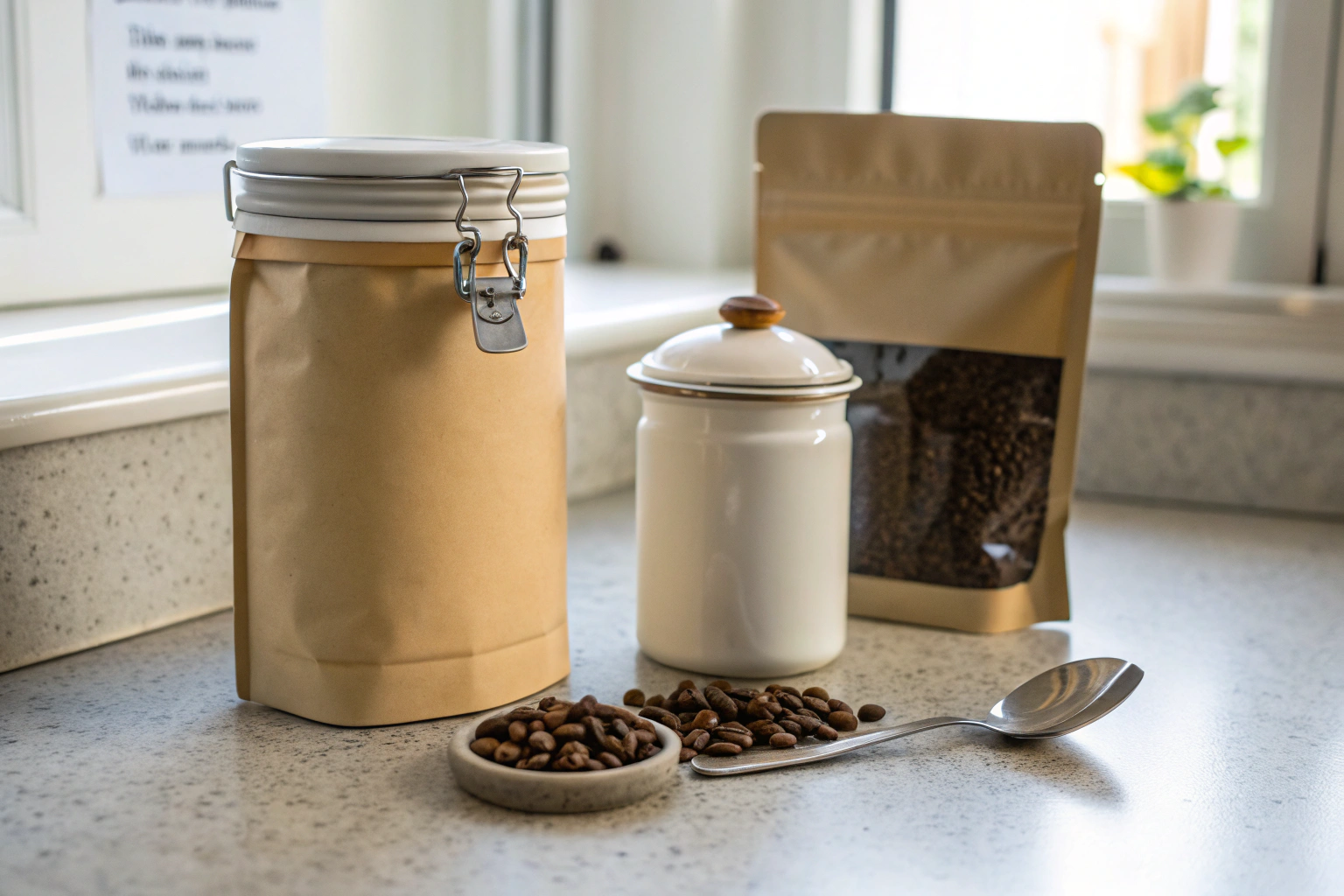
For opened coffee, I recommend an airtight ceramic or stainless steel canister with a tight seal. Glass can work if it’s kept in a dark place. But clear glass lets light in, so it’s not ideal unless you keep it inside a cupboard.
The key is the seal. A rubber gasket or a latch system that actually keeps air out. I’ve used cheap plastic containers with snap lids. They don’t work. Air gets in. The coffee goes stale in days.
One of our distributors in the US switched to selling ceramic canisters alongside our coffee. They found that customers who bought the canister ordered more frequently. They were using the coffee faster because it stayed fresh longer. That’s a small detail that builds loyalty.
How Should Wholesale Buyers Store Bulk Roasted Coffee?
For buyers like Ron who are importing large quantities, storage is a different challenge. You’re not just keeping one bag fresh. You’re managing pallets stacked high in dimly lit warehouses, where the air hums with the low drone of refrigeration units and the faint scent of fresh produce mingles with the earthy aroma of cardboard. Each pallet, heavy with crates of fruits or vegetables, demands careful placement—on sturdy racking systems that creak softly under their weight, in climate-controlled zones where temperature and humidity are monitored with relentless precision to prevent spoilage.
The task transforms from a simple act of preservation into a complex orchestration: coordinating forklifts that weave through narrow aisles, ensuring first-in-first-out rotation to avoid forgotten stock languishing in shadowed corners, and maintaining a constant vigilance to guard against the silent threat of decay.
What’s the ideal warehouse setup for bulk coffee?
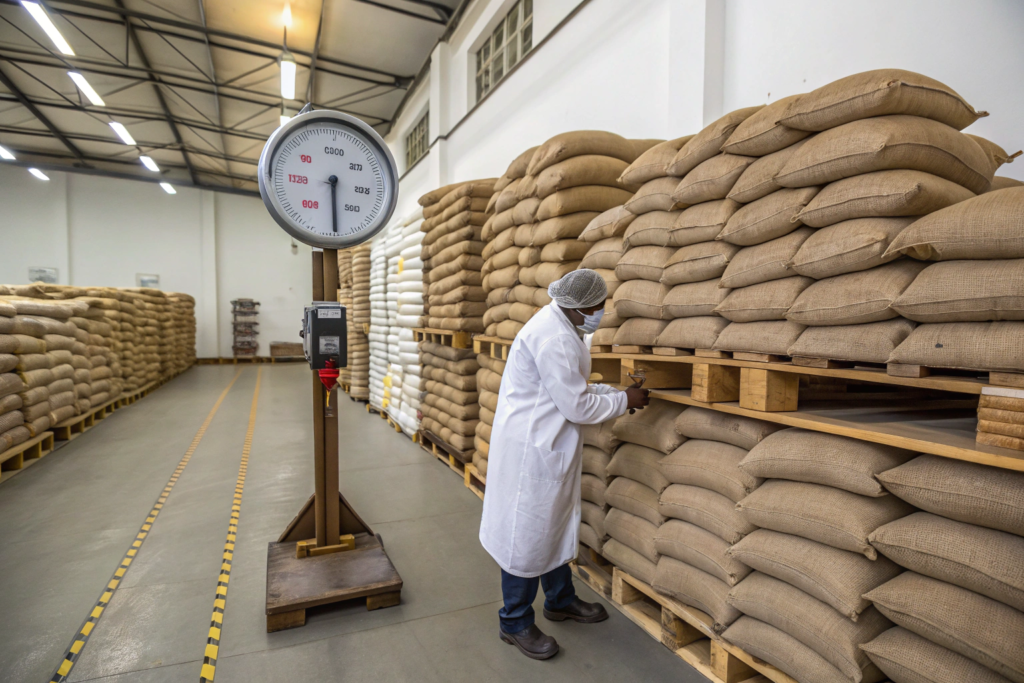
First, climate control. I cannot stress this enough. A stable temperature between 18°C and 22°C (65°F to 72°F) is ideal. Humidity should stay below 60%.
Second, keep coffee off the floor. Moisture can come up from concrete. Use pallets or racks. Leave space between pallets for air circulation.
Third, avoid temperature swings. A warehouse that’s cold at night and hot during the day is a problem. The expansion and contraction can affect the seals on bags. Consistent temperature is better than perfect temperature.
I visited a buyer in Australia who stored our coffee in a warehouse with no climate control. Summer temperatures hit 40°C inside. The coffee didn’t last. We worked with them to move to a climate-controlled section. Their shelf life doubled.
How do you manage inventory to maintain freshness?
The golden rule is first in, first out. FIFO. Use the oldest coffee first. Label every pallet with the roast date. Train your warehouse team to follow the system.
We label every box and every pallet clearly. Roast date, lot number, bean type. When you receive a shipment from us, you know exactly what you have and how old it is.
Another tip: order in smaller batches if you can. Yes, the per-unit cost might be slightly higher. But the savings from reduced waste and better quality often outweigh the shipping savings. I’ve seen buyers order a full container to save on freight, then sit on it for months. By the time they sell it, the coffee is past its prime.
If you’re not sure about your turnover rate, start with smaller orders. We can ship partial pallets. Our partnership with Shanghai Fumao helps us coordinate smaller, more frequent shipments. You don’t have to commit to a full container if your demand isn’t there yet.
How Long Does Roasted Coffee Actually Stay Fresh?
This is the question that lingers in the minds of every eager buyer, their eyes sparkling with anticipation as they reach for a bag of beans, their nose already catching a whiff of potential. And the honest answer, spoken with the warmth of a seasoned barista who knows the craft inside out, is: it depends. It depends on the roast level—whether the beans have been kissed by fire for a fleeting moment, yielding bright, citrusy notes, or cradled longer, surrendering to rich, chocolatey depths.
It depends on the packaging, those sleek, airtight pouches that lock in freshness like a secret, shielding the beans from the cruel hands of oxygen and light. And it depends, above all, on the storage conditions—the cool, dark pantry where they rest, away from the chaos of heat and humidity, preserving that delicate balance of flavor until the very last sip.
What’s the realistic shelf life for roasted coffee?
Here’s what I tell our buyers.
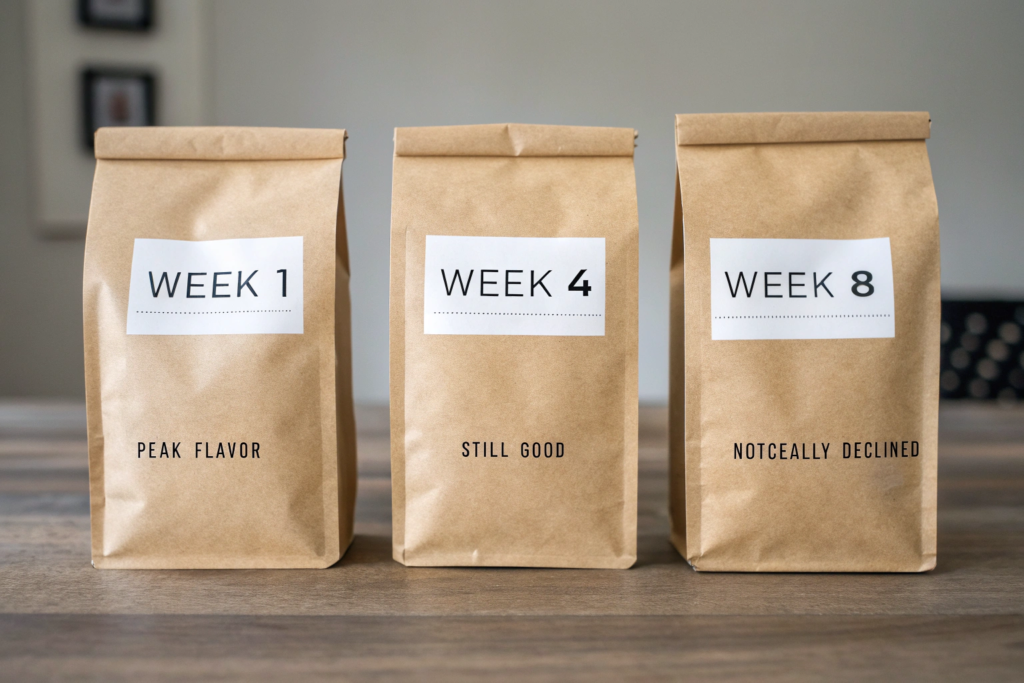
For peak flavor, aim to consume within two to four weeks of the roast date. That’s when the coffee has degassed enough to brew well, but before oxidation has taken its toll.
For good flavor, four to eight weeks is acceptable. You’ll notice a decline, but most casual drinkers won’t complain.
After eight weeks, the decline is noticeable. The aroma fades. The flavor becomes flat. It’s not “bad” in a safety sense, but it’s not what you paid for.
I did a test with a group of roasters last year. We cupped the same coffee at two weeks, four weeks, eight weeks, and twelve weeks. Everyone could tell the difference. At eight weeks, it was still drinkable but unremarkable. At twelve weeks, it was boring.
If you’re selling to consumers, educate them on this. Tell them to buy what they’ll use in two to three weeks. Tell them how to store it. They’ll thank you with repeat orders.
Does roast level affect shelf life?
Yes. Darker roasts stale faster. They’re more porous. The oils are already on the surface, so they oxidize more quickly.
Lighter roasts last longer. They’re denser. The oils are still inside the bean structure. So they hold their flavor for an extra week or two.
If you’re buying our light roast Arabica, you have a little more time. If you’re buying our medium roast Catimob, use it sooner. We note this on our product sheets so you can plan accordingly.
This is also why we recommend valve bags for all roasted coffee. They protect that shelf life window. Without a valve, that two to four week window shrinks dramatically.
Conclusion
Storing roasted coffee isn’t complicated, but it does require attention. Keep it away from oxygen, light, heat, and moisture. Use airtight containers. Don’t freeze unless you’re storing long-term. And if you’re a wholesale buyer, manage your warehouse conditions and your inventory turnover.
At Shanghai Fumao, we care about freshness from the moment the cherry is picked to the moment you open the bag. That’s why we use valve bags. That’s why we ship quickly. That’s why we partner with Shanghai Fumao to coordinate logistics that minimize transit time.
If you’re storing coffee right now, take a look at your setup. Is it cool? Is it dark? Are your containers airtight? Small changes can add weeks to your coffee’s life.
If you have questions about storage, or if you’re not sure how to manage your inventory, reach out to Cathy Cai. She can connect you with our quality team. We’ve helped dozens of buyers improve their storage practices. Her email is: cathy@beanofcoffee.com.
Let’s make sure your coffee stays fresh until the very last cup.