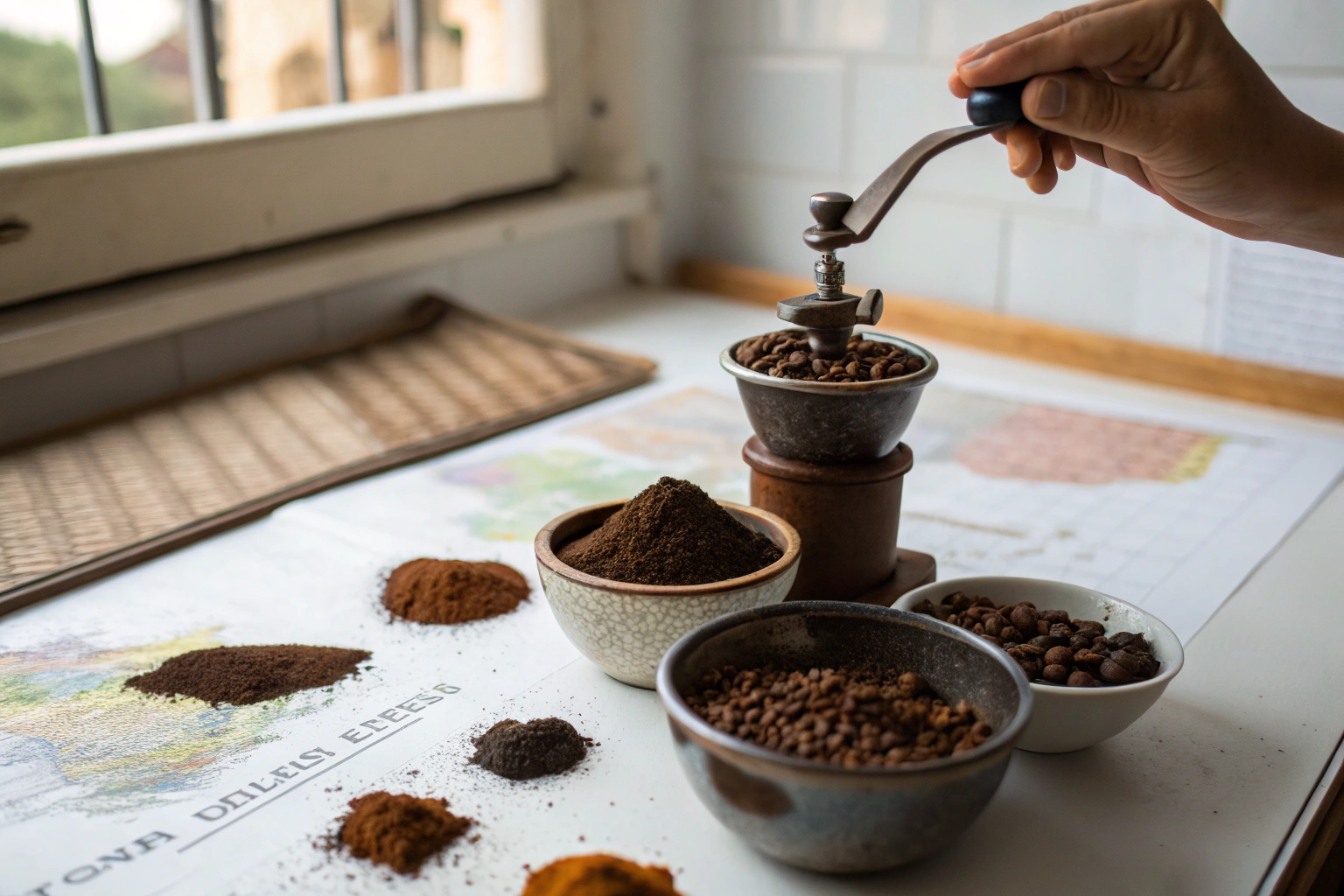
I remember a conversation with a buyer in Australia a few years ago. He was frustrated. He had sourced beautiful Arabica from our farms, roasted it perfectly, and shipped it in valve bags to protect freshness. But his café customers were complaining. The espresso was inconsistent. Sometimes it was sour. Sometimes it was bitter. He was ready to blame the beans.
Then I asked him one question. “How are they grinding it?” He didn’t know. So I flew down to Melbourne and spent a day in one of the cafés. What I found was simple: the grinders weren’t calibrated. One barista was grinding too fine, another too coarse. The same coffee, the same roast, but completely different results in the cup.
So, what’s the real impact of grinding on flavor? Grind size controls extraction. Too fine, and you over-extract—bitter, harsh, astringent. Too coarse, and you under-extract—sour, weak, empty. The right grind unlocks the flavors we worked so hard to grow and roast. At BeanofCoffee, we help our buyers understand this because even the best beans will taste bad if they’re ground wrong.
Let me break this down. I’ll explain the science behind extraction, how different grind sizes work for different brewing methods, and what you can do to get consistent results every time.
How Does Grind Size Control Coffee Extraction?
To understand grinding, you have to understand extraction. Extraction is what happens when water meets coffee. It pulls out the flavors, the oils, the acids. Get it right, and you get balance. Get it wrong, and the coffee tastes broken.
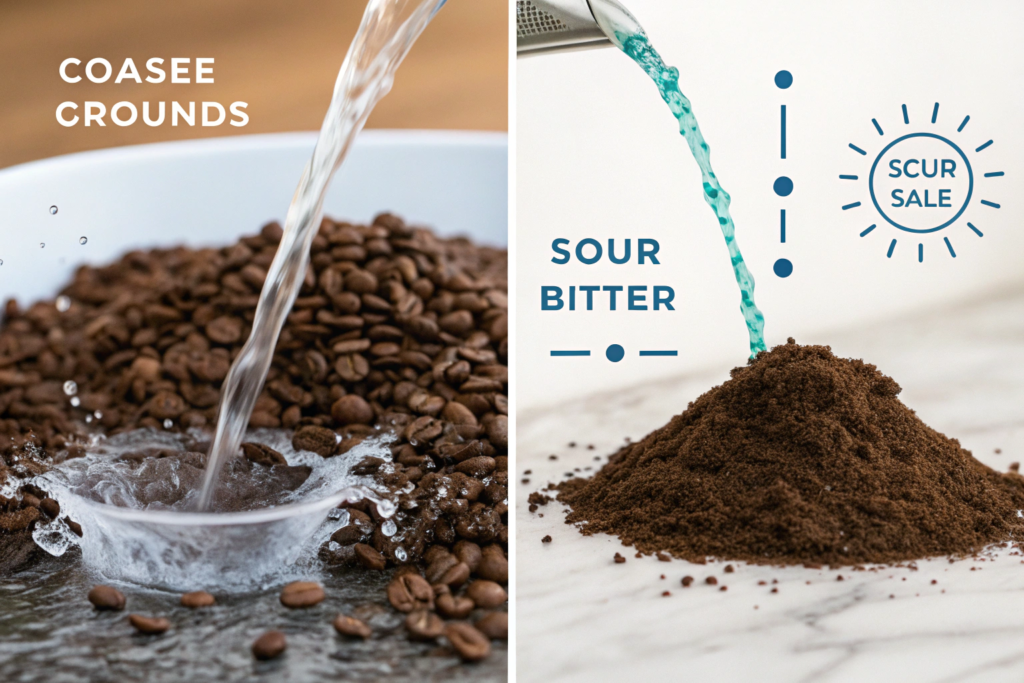
What happens when you grind too fine?
When the grind is too fine, the surface area of the coffee is huge. Water can’t flow through easily. It sits there longer, pulling out everything—including the bitter compounds that come out at the end of extraction.
I’ve seen this in cafés a hundred times. The shot takes 40 seconds instead of 25. It looks dark and syrupy. The taste is harsh, almost burnt. Baristas sometimes think this is “strong” coffee. It’s not. It’s over-extracted coffee. The sweetness is gone. All that’s left is bitterness.
For espresso, this is the most common mistake. People think finer equals stronger. But stronger isn’t the goal. Balanced is the goal.
What happens when you grind too coarse?
The opposite problem. When the grind is too coarse, water rushes through. It doesn’t have time to pull out the good stuff. You get a thin, watery brew that tastes sour or sharp.
This is common with drip coffee or French press. People use a grinder set for espresso and wonder why their pour-over tastes weak. Or they use a blade grinder that creates uneven particles—some too fine, some too coarse—so the brew is both bitter and sour at the same time.
I did a cupping once with a group of roasters. We brewed the same coffee—our Yunnan Arabica—with three different grind settings. The fine grind was bitter. The coarse grind was sour. The medium grind was sweet, balanced, and bright. Same beans. Same water. Same brewer. Only the grind changed.
That’s when I realized how powerful this is. You can’t fix a bad grind with better beans. The beans are already good. The grind is what lets them shine.
Which Grind Size Works Best for Different Brewing Methods?
Every brewing method has a grind size that works best—a sacred truth I’ve etched into my memory through countless trials, the bitter sting of over-extracted coffee and the sweet sigh of under-extracted brews guiding my way. I’ve learned this through trial and error, sipping on steaming cups that sing of precision or groan with imbalance, each mistake a lesson in the dance between grind and water.
I’ve helped dozens of buyers dial in their own recipes, watching as their eyes light up when that perfect cup—rich, balanced, alive with the unique notes of their chosen beans—finally materializes, turning casual coffee drinkers into passionate home brewers, one carefully measured scoop and adjusted grind at a time.
What grind size works for espresso?
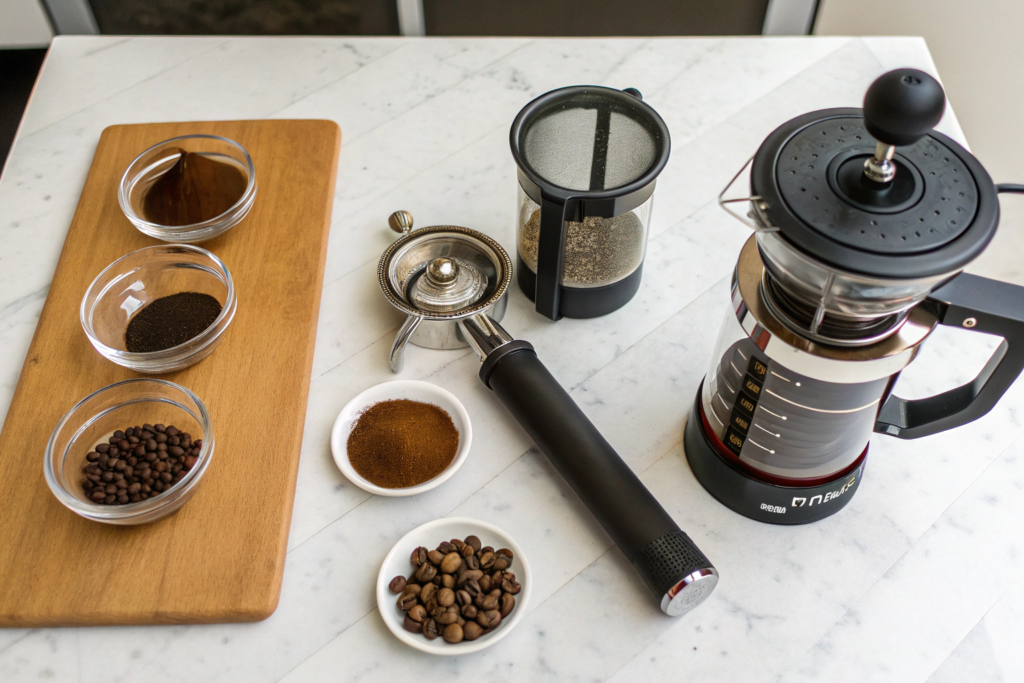
Espresso needs fine grind. Not powder fine, but fine. Think table salt. Maybe a little finer.
The reason is pressure. Espresso machines push water through the coffee at high pressure. If the grind is too coarse, water rushes through and you get a weak, sour shot. If it’s too fine, water struggles and you get a bitter, slow shot.
I worked with a roaster in the US who was using our Catimor for their espresso blend. They were struggling with consistency. We spent an afternoon calibrating their grinder. We found that their grind was slightly too fine. We backed it off just a little. The next day, their head barista said it was the best espresso they’d ever pulled from that blend.
The lesson? Small adjustments matter. A quarter turn on a commercial grinder can change the shot time by five seconds. And five seconds changes everything.
What grind size works for pour-over and drip?
Pour-over and drip machines need medium grind. Think sand. Not beach sand—finer than that. But not as fine as espresso.
The key here is evenness. If your grind is uneven, the water flows through some parts too fast and some parts too slow. You get a mix of under-extracted and over-extracted flavors. That’s why I always tell buyers to invest in a good burr grinder, not a blade grinder. A blade grinder chops coffee into random pieces. A burr grinder gives you uniform particles.
We have a partner in Canada who sells our roasted Arabica through their online store. They include a grind recommendation card with every bag. It lists grind settings for different brewers. Their return rate dropped after they started doing that. Customers were getting better results at home.
How Do Grinder Types Affect Flavor Consistency?
I’ve seen too many buyers spend good money on great coffee and then ruin it with a bad grinder. The grinder is the most important piece of equipment in a coffee setup. More important than the brewer. More important than the espresso machine.
Why does a blade grinder produce inconsistent results?
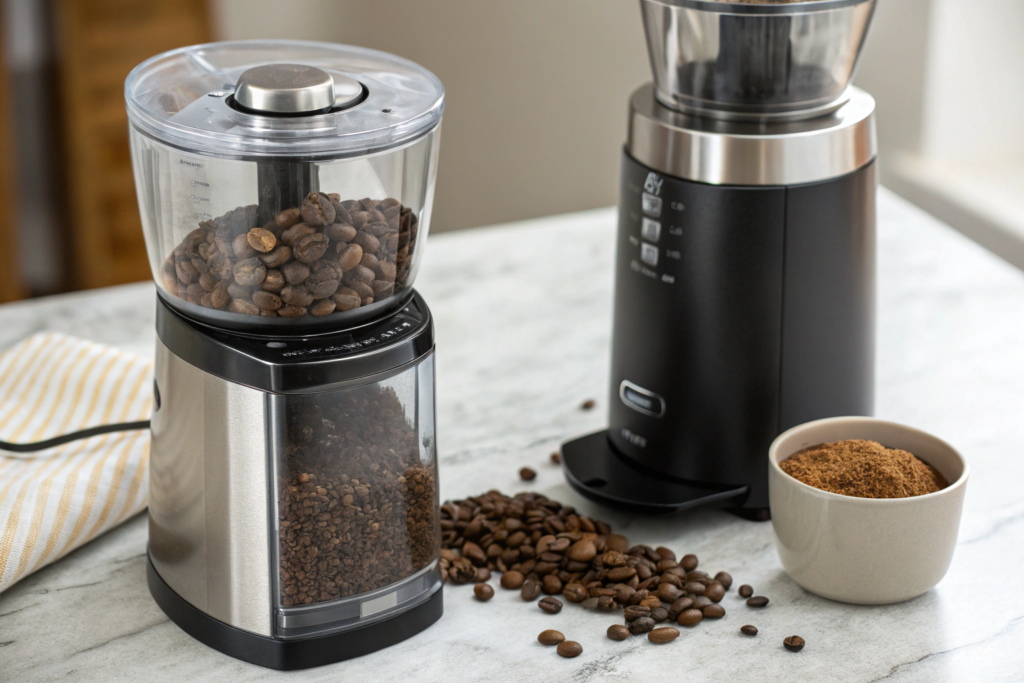
A blade grinder works like a blender. It spins and chops. The coffee sits on top of the blades, so the pieces on the bottom get chopped more than the pieces on top. The result is a mix of fine dust and large chunks.
When you brew that, the fine dust over-extracts and the large chunks under-extract. You get both bitterness and sourness in the same cup. It’s confusing. You don’t know if the problem is the coffee or your brewing.
I had a buyer in the UK who was selling our coffee to home consumers. She kept getting mixed reviews. Some people loved it. Some people said it was sour. We tracked it back to grinders. The people who loved it had burr grinders. The people who complained had blade grinders.
So we started including a simple guide: “For best results, use a burr grinder.” Complaints dropped by half.
What’s the difference between conical and flat burr grinders?
Both are good. Both are better than blade grinders. But they behave differently.
Conical burr grinders are common in home setups. They’re quieter, they generate less heat, and they’re usually more affordable. They produce a consistent grind that works well for most brewing methods.
Flat burr grinders are common in commercial settings. They’re faster, they’re more precise, and they give you a very uniform particle size. For espresso, flat burrs are often preferred because the consistency leads to more predictable shots.
We use flat burr grinders in our own cupping lab. When we’re evaluating our beans, we want to eliminate variability. The grinder is part of that. If you’re a roaster or a café owner, I’d recommend investing in a flat burr grinder for your espresso bar. It’s expensive, but it pays for itself in consistency and reduced waste.
If you’re sourcing from us and you’re not sure what grinder to recommend to your customers, we can help. We’ve tested dozens of grinders with our beans. We know what works.
How Do You Dial In Grind Settings for a New Coffee?
This is the part that sends a shiver down the spines of some buyers, a whispered doubt that lingers like mist over their morning routine. They think dialing in is a labyrinth of complicated numbers and arcane rituals, a process reserved for baristas with years of experience and a sixth sense for beans. It’s not. Oh, it’s not. It’s simply a gentle, step-by-step dance—a process as natural as breathing, as intuitive as learning to ride a bicycle.
And once you truly understand its rhythm, once you feel the pulse of it in your hands, you’ll find yourself applying it to any coffee, from the bold, earthy depths of a Sumatra to the bright, citrusy zing of a Kenyan, turning every cup into a personalized masterpiece. It’s not about fear; it’s about connection—connecting with the bean, with the water, with the moment—and that connection, once unlocked, transforms ordinary coffee into an extraordinary experience, one perfectly calibrated sip at a time.
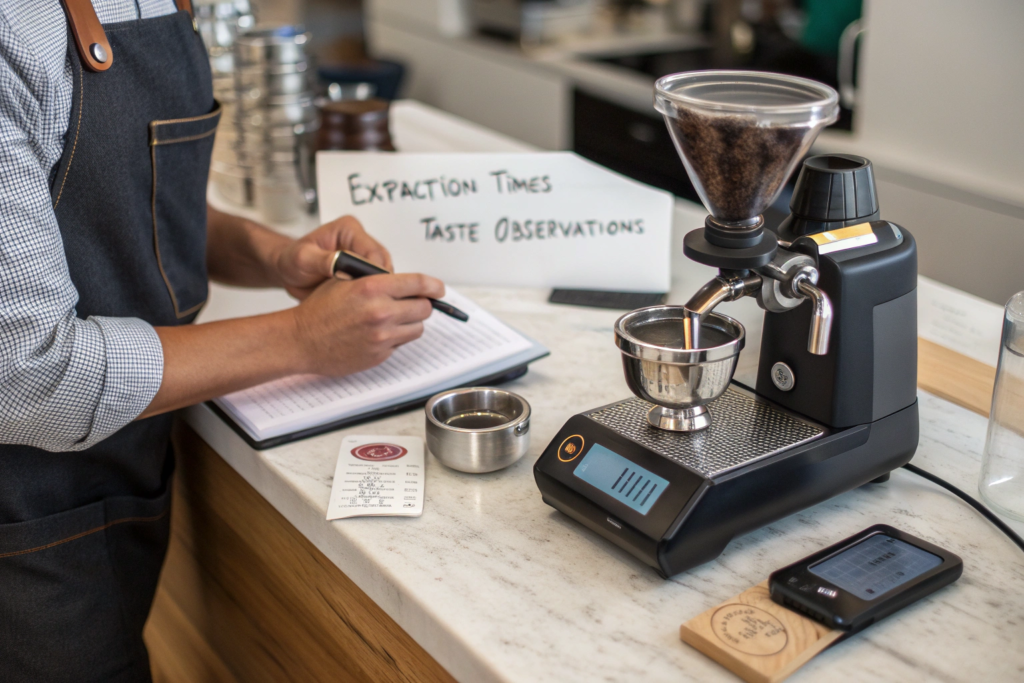
What’s the simple method for dialing in espresso?
I teach buyers a simple three-step method.
Step one: pick a dose. Keep it the same every time. I usually start with 18 grams for a double shot.
Step two: grind so that your shot time is around 25 to 30 seconds. If it’s faster, grind finer. If it’s slower, grind coarser. That’s your starting point.
Step three: taste. If it’s sour, grind finer. If it’s bitter, grind coarser. Change the grind in small increments—one notch at a time. Then taste again.
That’s it. There’s no magic. You’re just balancing time and taste.
I spent a morning with a new buyer in Singapore who was struggling with our Arabica. We dialed in three different coffees in about an hour. By the end, he was pulling shots that tasted clean and sweet. He told me he’d been overcomplicating it for months.
How do you adjust grind for different roast levels?
This is something I learned from our own roasting. Light roasts are denser. They’re harder to extract. So they usually need a finer grind than dark roasts.
Medium roasts fall in the middle. Dark roasts are more brittle and extract more easily, so they need a coarser grind.
If you’re buying our light roast Arabica for espresso, you might need to grind a little finer than you would for a medium roast. And you might need to increase the brew temperature slightly. These small adjustments make a big difference.
We include grind recommendations with every sample shipment. It’s not just a number. It’s a starting point based on our own testing. You can adjust from there based on your equipment and your taste.
This is another area where our partnership with Shanghai Fumao helps. They coordinate our sample shipments so that you get fresh coffee quickly. The faster you get the coffee, the sooner you can dial it in, and the sooner you can start selling it.
Conclusion
Grinding isn’t the most glamorous part of coffee. But it might be the most important. You can grow the best beans, roast them perfectly, and package them in the best valve bags. But if the grind is wrong, none of that matters. The coffee will taste bad. Your customers will be disappointed. And you’ll spend time and money trying to fix a problem that started with a simple adjustment.
At Shanghai Fumao, we take grinding seriously. We test our beans at multiple grind settings. We share those findings with our buyers. We help them understand how to get the best results from every bag.
If you’re sourcing from us—whether it’s green beans or roasted—I encourage you to spend time on your grind. Dial it in. Taste it. Adjust. The difference between a good cup and a great cup is often just a few clicks on the grinder.
If you have questions about grind settings for your specific brewing method, reach out to Cathy Cai. She can connect you with our quality team. We’re happy to share what we’ve learned. Her email is: cathy@beanofcoffee.com.