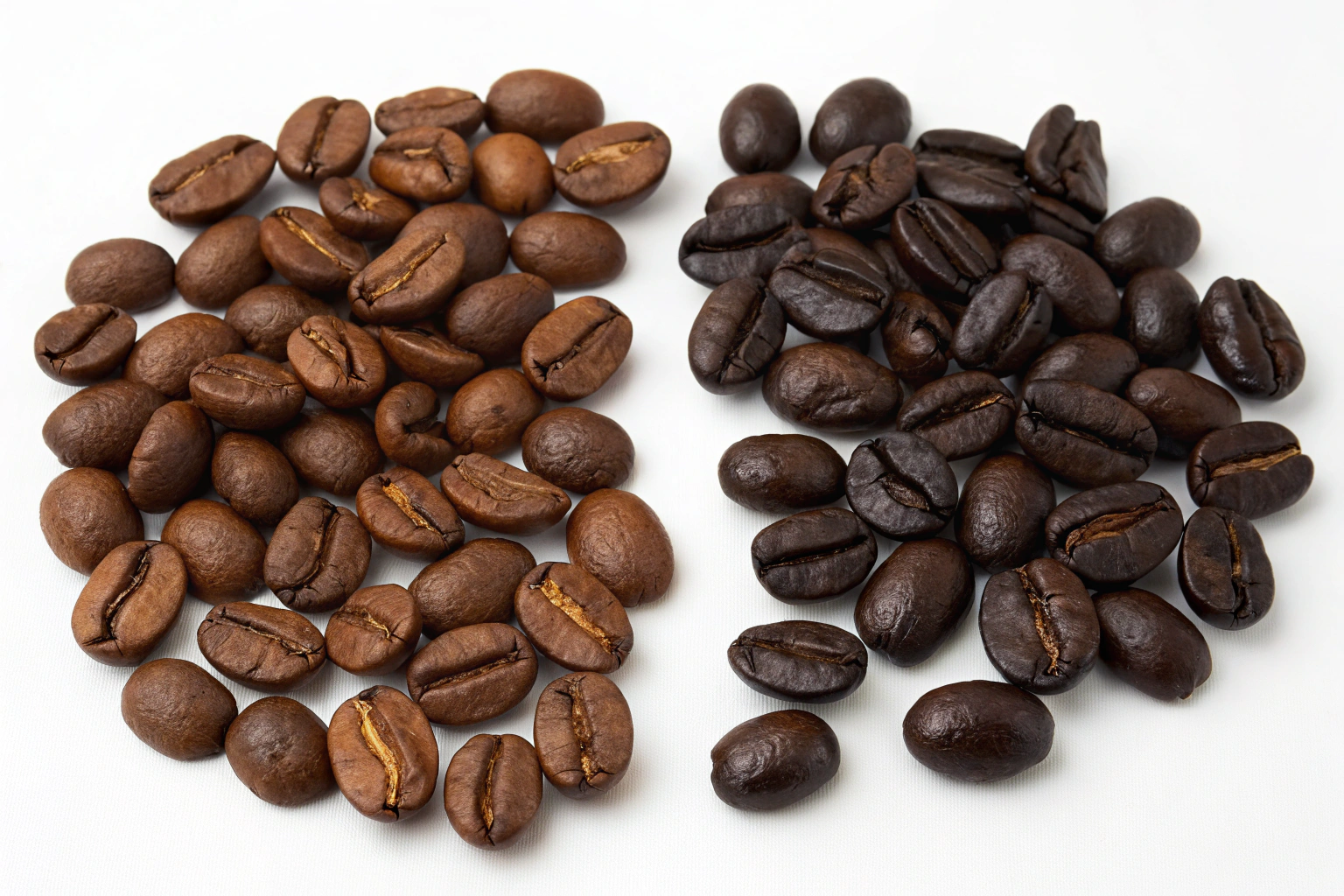
I still remember the first time I roasted coffee on my own. I was maybe 15 years old, helping my father in our small farmhouse. We had a simple drum roaster, the kind you turn by hand. I wanted to impress him. So I let the beans go longer. I thought darker meant better. Stronger coffee, right? When I pulled them out, they were almost black. Shiny with oil. My father looked at them, then looked at me. He didn’t say much. He just took a handful, smelled them, and said, “You burned the flavor out.” I didn’t understand then. But I do now.
So, what is the difference between medium and dark roast? Medium roast stops before the second crack. The beans are chocolate-brown, dry, and the flavor is balanced—acidity and body work together. Dark roast goes past the second crack. The beans are dark brown or almost black, often oily, and the flavor is dominated by the roast itself—smoky, bitter, with low acidity. One isn’t better than the other. They’re just different. And the choice depends on what you’re brewing and who you’re selling to. At Shanghai Fumao, we roast both, and we help our buyers choose the right profile for their market.
Let me walk you through the real differences. I’ll explain what happens inside the roaster, how the flavor changes, and how to choose the right roast for your market.
What Happens Inside the Roaster During Medium and Dark Roast?
To understand the difference, you have to understand what happens to a bean when you apply heat. It’s a journey—a transformation as rich and dynamic as the stories woven into each seed. Picture the raw bean, dense and earthy, its surface smooth and unyielding, holding within it the quiet promise of complexity.
As heat wraps around it, like a warm embrace, the bean begins to sing. A gentle crackling emerges, soft at first, then building into a chorus of pops and sighs, as if the bean itself is awakening from slumber. Its color shifts, deepening from a muted green to a vibrant amber, then to a rich chestnut or even a dark, glossy black, depending on the path taken.
What is first crack and second crack?
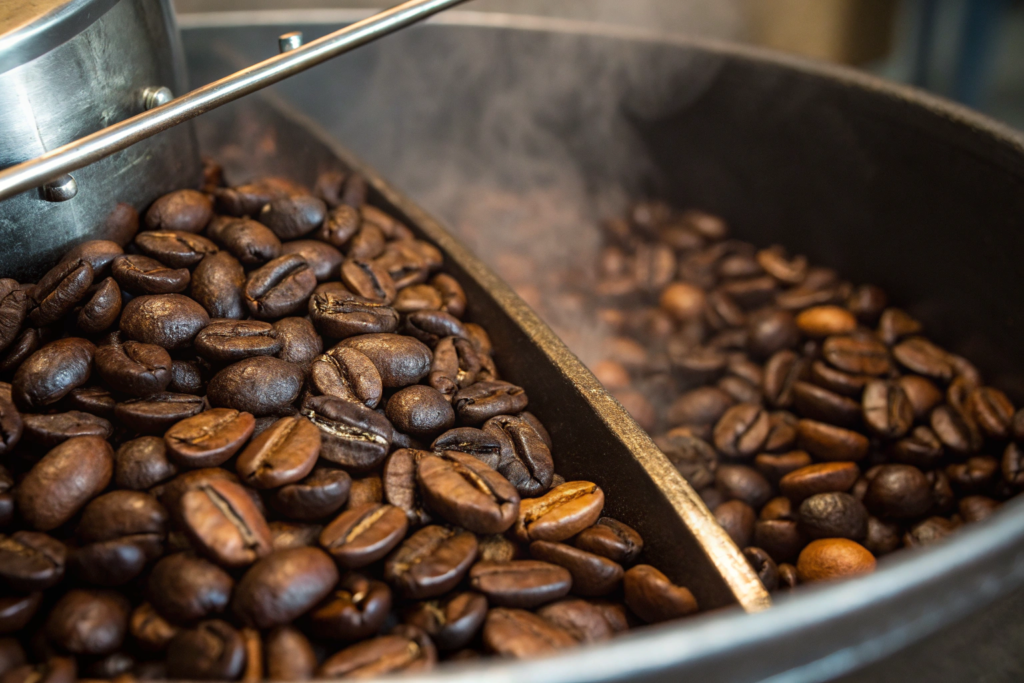
When you roast coffee, the beans go through two audible events. First crack sounds like popcorn popping. It’s the bean expanding, water turning to steam, the structure breaking open. This usually happens around 196°C to 205°C.
Medium roast stops somewhere after first crack, but before second crack. The beans have expanded. They’ve lost most of their moisture. But the internal structure is still intact enough that the bean surface is dry.
Dark roast goes past first crack and pushes into second crack. Second crack is quieter, faster. It sounds more like rice crispies. This happens around 225°C to 230°C. At this point, the bean structure is breaking down further. Oils are being forced to the surface. The bean is becoming more brittle.
I’ve stood in our roasting room thousands of times, listening for those cracks. You learn to hear the difference. First crack is loud, a bit chaotic. Second crack is sharper, quicker. A good roaster knows exactly when to pull the beans. If you’re new to roasting, you might find our guide on how to understand the impact of grinding on flavor helpful for understanding the full picture from roast to cup.
How does temperature change the bean structure?
At medium roast, the bean has lost about 14 to 18 percent of its weight, mostly water. The structure is porous but still holds together. The oils are mostly inside the bean, not on the surface.
At dark roast, the bean has lost 16 to 22 percent of its weight. The structure is more fragile. The cell walls have broken down enough that oils migrate to the surface. That’s why dark roast beans look shiny.
That oil is important. It oxidizes faster than the interior of the bean. So dark roast coffee tends to go stale faster than medium roast. It’s not a huge difference, but for buyers who care about shelf life, it matters. We cover this in more detail in our article on the benefits of using valve bags for extending freshness.
How Do Flavor, Acidity, and Body Change Between Medium and Dark Roast?
This is where the rubber meets the road. The flavor difference between medium and dark roast isn’t subtle—it’s a seismic shift, a sensory revelation that divides the coffee world into distinct realms. It’s the difference between tasting the bean and tasting the roast.
Medium roast beans, with their balanced, vibrant profiles, offer a window into the coffee’s origin: bright citrus notes that tingle on the tongue, a hint of floral sweetness that lingers like a whispered secret, and a clean, almost grassy finish that feels alive and true to the bean’s natural character.
How does medium roast taste?
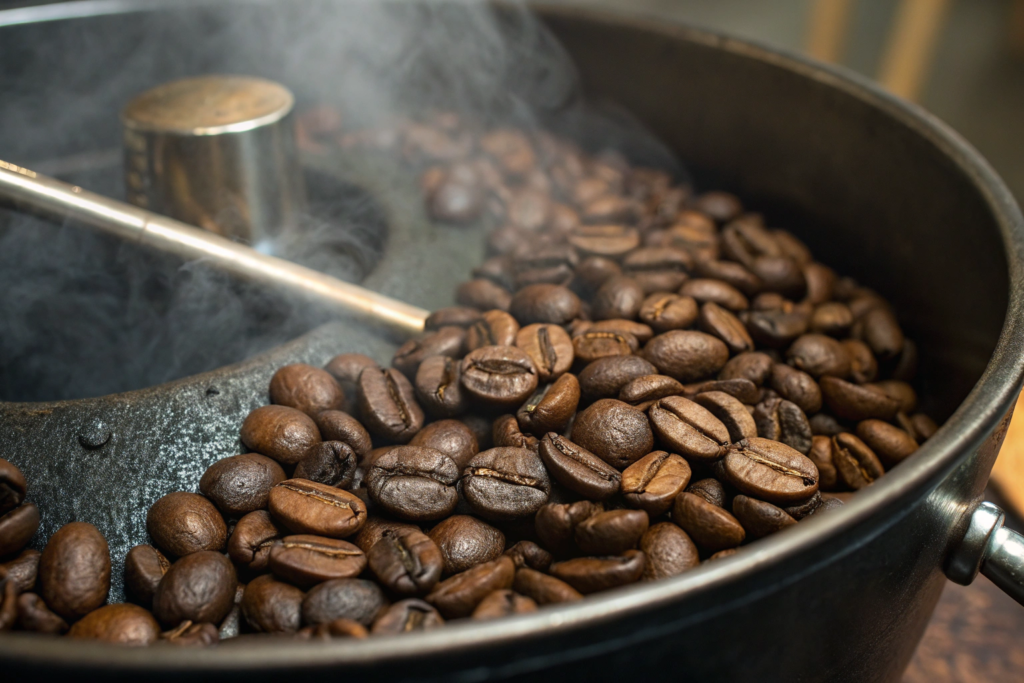
Medium roast is where most specialty coffee lives. The bean’s origin character is still present. You can taste the difference between our Yunnan Arabica and a coffee from Colombia or Ethiopia.
The acidity is balanced. Not sharp, not flat. Bright enough to be interesting, but smooth enough to be comfortable.
The body is medium. Not thin, not heavy. Just right for a morning cup.
Flavors are described as chocolate, nuts, stone fruit, caramel. These come from the bean itself, amplified by the roast.
When I cup our medium roast Arabica, I taste stone fruit. Peach, sometimes apricot. There’s a clean finish. It’s bright but not sour. That’s what medium roast does. It lets the bean speak. To learn more about how we grow these beans, check out our article on how coffee is grown in Baoshan, Yunnan.
How does dark roast taste?
Dark roast is a different animal. The roast flavor dominates. You taste smoke, dark chocolate, sometimes a bit of ash or charcoal.
Acidity is low. Almost gone. That’s why people who find coffee “too sour” often prefer dark roast.
Body is heavier. The coffee feels thicker in your mouth. It coats your tongue.
Flavors are more about the roast than the origin. You might taste bittersweet chocolate, toasted nuts, or a smoky note. But you won’t taste the fruitiness that was in the green bean.
I have a buyer in Canada who uses our dark roast for their espresso blend. They want that heavy body, that low acidity, that classic espresso flavor. It works. But if they tried to sell that same dark roast as a single-origin pour-over, their customers would ask why it doesn’t taste like our samples. Because the roast changed everything.
What happens to caffeine?
There’s a common belief that dark roast has more caffeine. It doesn’t. Caffeine is stable during roasting. It doesn’t burn off.
What changes is density. Dark roast beans are less dense. So if you measure by volume—a scoop, for example—a scoop of dark roast has fewer beans than a scoop of medium roast. So you get slightly less caffeine per scoop.
But if you measure by weight—which is how professionals brew—the caffeine content is nearly identical. So don’t choose a roast based on caffeine. Choose it based on flavor.
Which Roast Is Better for Espresso, Drip, and Other Brewing Methods?
I get this question from buyers all the time, a query that echoes through coffee shops and online forums alike, a universal curiosity that lingers in the air like the first whiff of freshly ground beans. They’re building a product line, their minds buzzing with visions of shelves lined with jars, each holding a promise of flavor, and they don’t know which roast to start with—their eyes wide with a mix of excitement and trepidation, as if choosing the wrong path might lead them astray in a world of rich, aromatic possibilities.
Which roast is better for espresso?
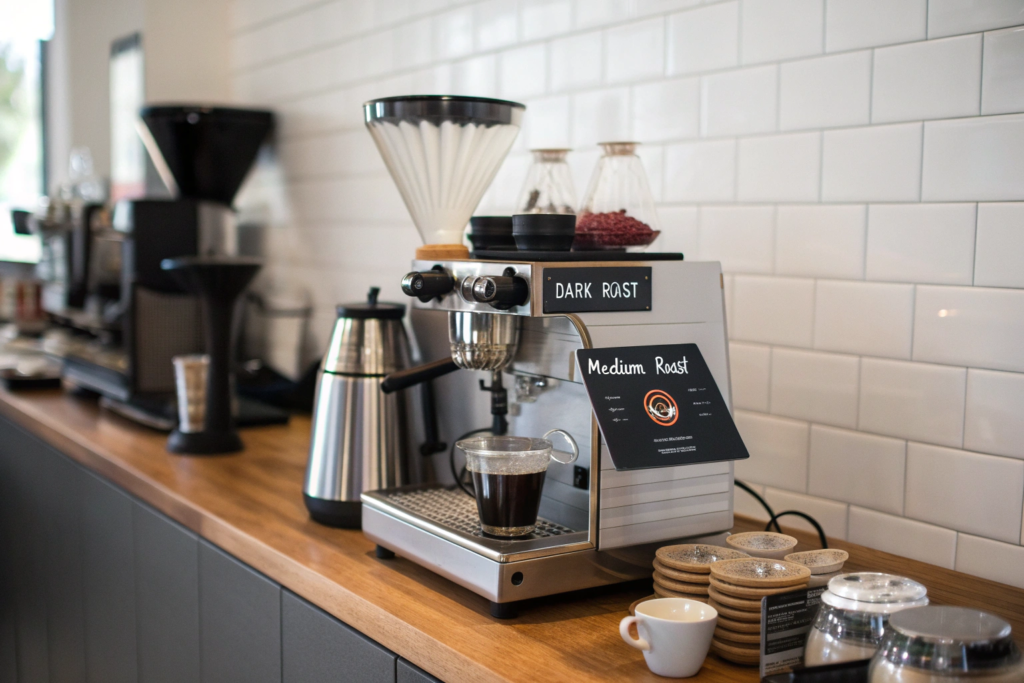
Traditionally, dark roast has been the standard for espresso. It produces a heavy body, low acidity, and the oils create a rich crema.
But things are changing. Many specialty coffee shops now use medium roast for espresso. They want to taste the origin character even in milk drinks. A medium roast espresso has more complexity. You taste fruit notes alongside the chocolate.
I’ve done blind tastings with baristas. Some prefer dark roast espresso for its traditional profile. Others prefer medium for its complexity. There’s no right answer. It’s about what your customers want.
Our medium roast Catimor works beautifully as espresso. It has the body to stand up to milk, but enough brightness to keep it interesting. Our dark roast Arabica? That’s for people who want a classic Italian-style espresso.
Which roast is better for drip and pour-over?
For drip and pour-over, I generally recommend medium roast. It extracts evenly. It shows the bean’s character. It’s forgiving.
Dark roast can work for drip, but it’s tricky. If the water is too hot, you over-extract and get bitter, ashy notes. If you brew with a paper filter, you lose some of the oils that make dark roast appealing.
I have a buyer in the UK who sells our dark roast specifically for French press. That works. The metal filter lets the oils through, and the immersion brewing method gives you a heavy, rich cup. But for pour-over with a paper filter? They use our medium roast. Understanding proper storage also matters—our article on the best way to store roasted coffee can help your customers keep that freshness longer.
How Do You Choose the Right Roast for Your Brand?
At the end of the day, choosing between medium and dark roast comes down to your market, your brewing method, and your brand identity. The warm glow of a bustling café in the morning, where customers seek a quick, bright pick-me-up, might lean toward the medium roast—its balanced acidity and vibrant notes of caramel or toasted nuts, a harmonious dance on the palate that awakens the senses without overwhelming them.
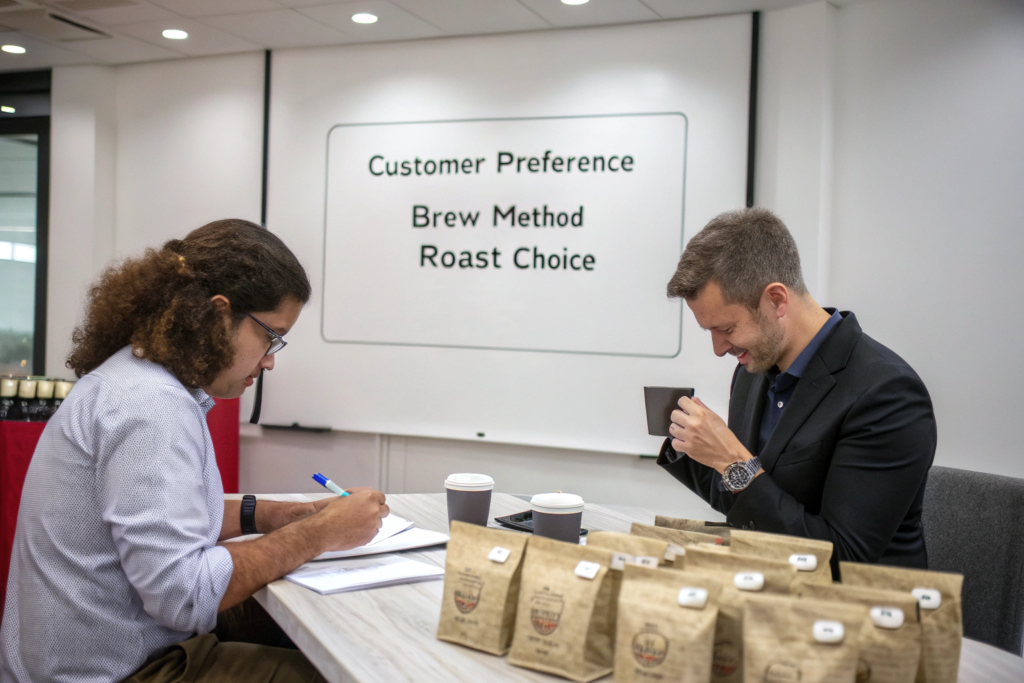
Who is your customer?
If your customers are specialty coffee drinkers who brew at home with a V60 or Chemex, they probably want medium roast. They want to taste the origin. They want to taste the difference between our Yunnan Arabica and other coffees.
If your customers are traditional coffee drinkers who add milk and sugar, dark roast might be a safer bet. It’s what they expect. It’s comfortable. It cuts through milk.
One of our buyers in Australia sells both. They have a medium roast single-origin for their retail bags, marketed to home brewers. They have a dark roast espresso blend for their wholesale café accounts. Same supplier. Same quality. Different roasts for different markets.
What equipment will they use?
This matters more than people realize. Medium roast is more forgiving across different brewers. It works well in automatic drip machines, pour-over, French press, and espresso.
Dark roast is less forgiving. It needs precise temperature control. Too hot, and it’s bitter. Too cool, and it’s flat. It works best with equipment that gives you control—like a good espresso machine or a French press.
If you’re selling to a market where most people use pod machines or basic automatic brewers, medium roast is usually the safer choice. If you’re selling to a market where people have espresso machines at home, dark roast has a place.
How does your brand identity play into it?
Some brands want to be seen as modern, transparent, and origin-focused. Those brands usually choose medium roast. It signals quality. It signals that you care about the bean.
Other brands want to be seen as classic, reliable, and accessible. Those brands often choose dark roast. It signals tradition. It signals that you’re making coffee the way people expect.
There’s no wrong choice. But the choice should be intentional. Know why you’re picking the roast you’re picking. And be able to explain it to your customers. For more guidance on sourcing decisions, take a look at our article on how to find coffee suppliers with organic options.
Conclusion
Medium and dark roast are different tools for different jobs. Medium roast lets the bean shine. The flavors are balanced, the acidity is present but smooth, and the origin character comes through. Dark roast lets the roast shine. The flavors are smoky, the body is heavy, and the acidity is low.
At BeanofCoffee, we roast both. We know our beans well enough to recommend the right roast for each buyer. Our Yunnan Arabica is beautiful at medium roast. Our Catimor holds up well at dark roast. And we’re always happy to send samples so you can taste the difference for yourself. Our partnership with Shanghai Fumao ensures that whether you choose medium or dark, your shipment arrives fresh and on time.
If you’re trying to decide which roast fits your brand, start with your customer. What do they expect? How do they brew? What story do you want to tell? Once you answer those questions, the roast choice becomes clear.
Reach out to Cathy Cai. She can set up a sample order so you can cup our medium and dark roasts side by side. Her email is: cathy@beanofcoffee.com.