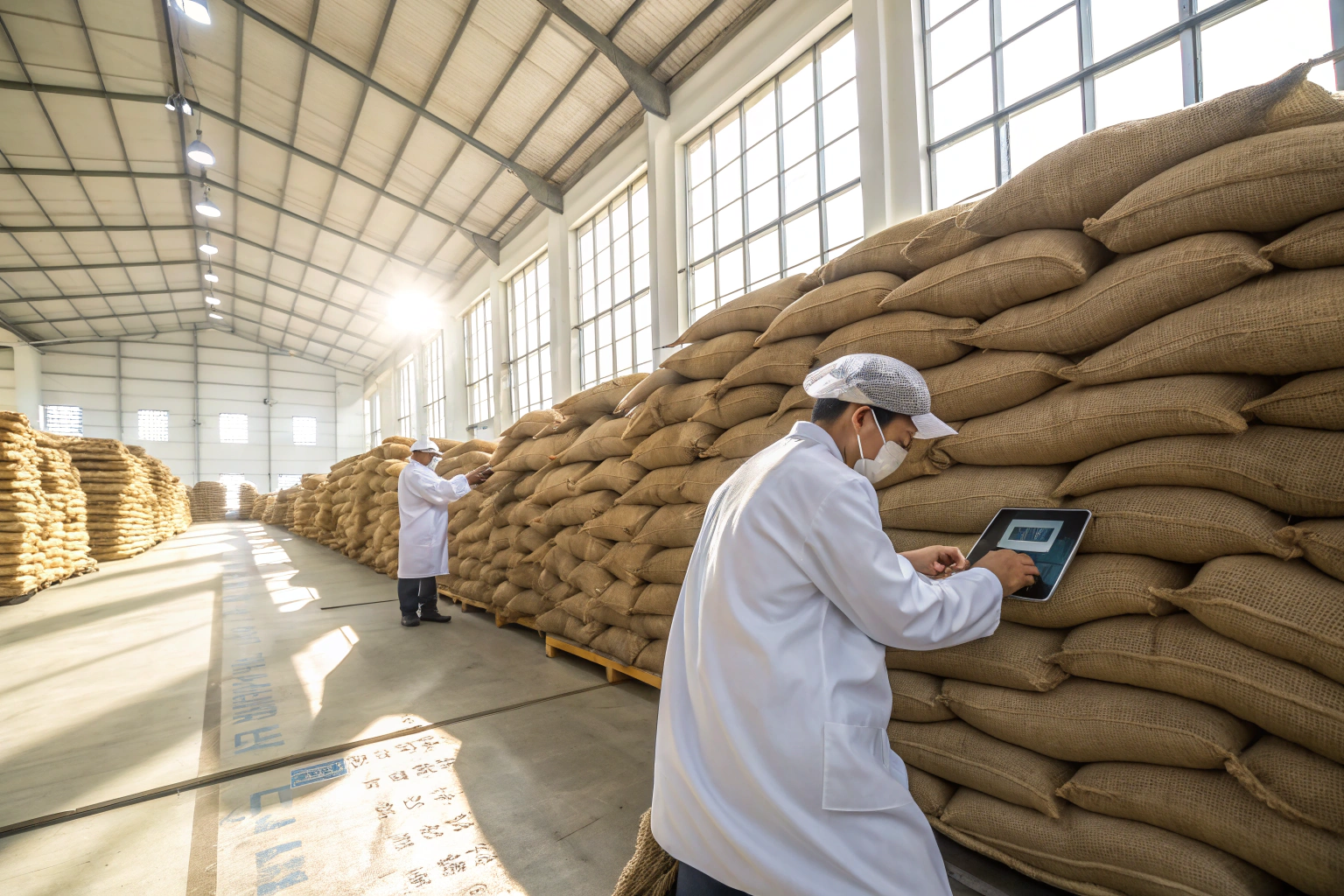
Let me be honest with you. I’ve been in this business long enough to know that freshness is everything. You can source the highest-grade Arabica from our farms in Baoshan, but if it arrives stale, or worse, damaged by moisture or heat, the whole deal falls apart. For buyers like Ron, this isn’t just a quality issue. It’s a financial risk. Returns, rejected shipments, unhappy customers—these are the nightmares that keep importers awake at night.
So, how do we guarantee freshness from our farm to your door? It comes down to three things: harvest timing, post-harvest handling, and proactive logistics management. We don’t just pick coffee and ship it. We monitor moisture content, use specialized packaging, and control the environment at every stage. Our 10,000 acres in Yunnan give us the scale to manage this consistently, and our partnership with Shanghai Fumao ensures that the transition from our warehouse to the vessel is seamless and fast.
Let me walk you through the specific steps we take. I’ll show you how we protect freshness from the moment a cherry is picked until the moment your container arrives. This isn’t theory. It’s the daily work we do to make sure our clients in North America, Europe, and Australia get coffee that tastes exactly as it should.
How Do We Protect Coffee Freshness During Harvest and Processing?
Freshness starts at the farm, where the air hums with the earthy scent of damp soil and the sweet, sun-warmed aroma of ripening fruit. If you harvest at the wrong time—when the cherries are still hard and tart, or when they’ve overripened into mush—you’re already losing quality, that delicate balance of juiciness and brightness that makes each bite a burst of summer.
If you let cherries sit too long after picking, their vibrant red hue fades to a duller shade, their skins wrinkling slightly, and their once-tart-sweet juice begins to seep, leaving them soft and less lively. We don’t take shortcuts here; we wait for the perfect moment, when the sun has kissed each cherry just right, when plucking them feels like harvesting liquid sunlight.
What happens on the day of harvest?
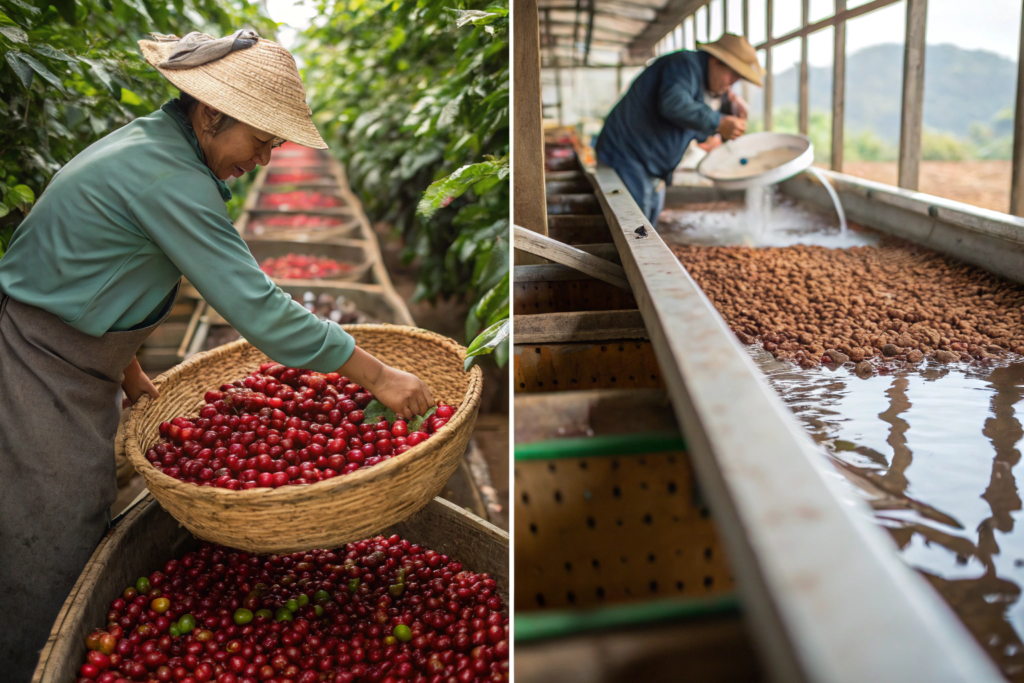
Our team starts early. We only pick cherries that are fully ripe—that bright red color you see in photos. It’s slower, yes. But it’s non-negotiable. Unripe cherries don’t develop the right sugars, and overripe ones can start fermenting before they even leave the field.
On a typical morning, our pickers fill their baskets and bring them to collection points within hours. We don’t let cherries sit overnight in the field. They go straight to our processing station. That same day, they enter the wet mill. This speed is critical. The longer the cherry sits after picking, the more the internal temperature rises, and the more moisture starts to shift. For specialty-grade Arabica, this window is tight.
We also test for moisture content right after pulping. Our target is precise. Too wet, and the beans can mold during drying. Too dry, and they become brittle and lose flavor. We use digital moisture meters to check every batch. This isn’t guesswork. It’s data-driven, and it’s logged for traceability. We follow specialty coffee processing standards to ensure every lot meets export quality.
How do we dry coffee without losing quality?
Drying is where a lot of freshness is lost or preserved. We use a combination of methods depending on the bean type and the weather.
For our washed Arabica, we use raised African beds. The beans are spread in thin layers and turned frequently. This allows for even drying and prevents fermentation or off-flavors. It takes longer, but the result is a clean, consistent bean.
For our natural-processed Catimor, we use controlled drying patios with covered areas. We monitor temperature and humidity closely. If rain is coming, we cover the beans immediately. One of our supervisors has been drying coffee for 20 years. He can tell by the sound of the beans being raked if the moisture level is right. That kind of experience can’t be replaced.
After drying, the beans rest in our ventilated warehouses. This resting period, usually 30 to 60 days, allows the moisture to equalize throughout the bean. It’s a step many suppliers skip. We don’t. It stabilizes the bean and ensures that when it ships, it’s less vulnerable to temperature swings during transit. This method aligns with green coffee storage best practices recommended by industry experts.
What Packaging and Storage Methods Keep Coffee Fresh Longer?
Once the green coffee is processed and rested, it’s not just “ready to ship.” We have to keep it in that perfect state until it leaves—nurturing its vibrant, earthy essence, preserving the delicate balance of acidity and sweetness that defines its character.
Our storage and packaging systems are built for this sacred task. Cool, dry warehouses with controlled humidity breathe life into the beans, their rich, nutty aroma lingering in the air like a promise of future warmth.
Why do we use GrainPro liners for almost all exports?
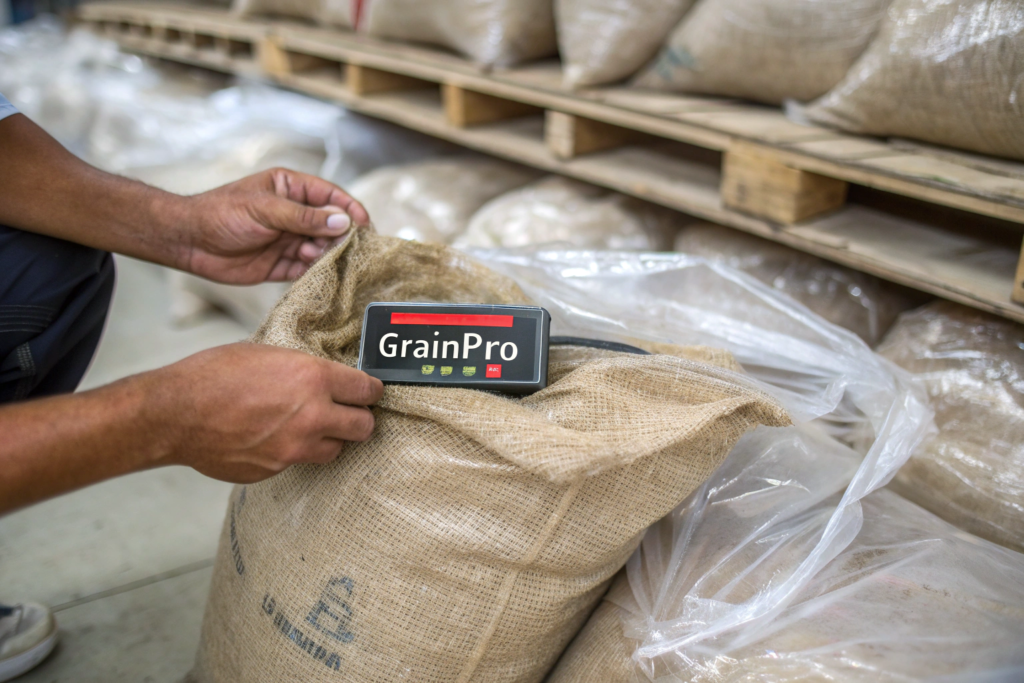
Standard jute bags breathe. In a humid shipping environment, that can be a disaster. Moisture can get in, and the beans can start to absorb odors from the container. We use GrainPro hermetic liners inside our bags. These are thick, food-grade plastic liners that create a sealed barrier.
Here’s what that means for you: the beans arrive with the same moisture content they had when they left our warehouse. No mold. No musty smells. No weight gain from humidity. We’ve tested this repeatedly. On a shipment to Europe last year, the beans were in transit for 45 days. When they arrived, the moisture content was within 0.2% of the day we packed them. That’s freshness protection.
We also offer vacuum-packing for smaller, processed orders. For roasted or ground coffee, oxygen is the enemy. We use nitrogen flushing and vacuum-sealed foil bags. This extends shelf life significantly. If you’re a brand buyer, this means your product has a longer window to sell once it hits your shelves.
How is our warehouse set up for freshness?
Our main warehouse in Baoshan isn’t just a shed. It’s climate-controlled. We maintain stable temperature and humidity levels year-round. We also use a first-in, first-out inventory system. Older lots ship first. Nothing sits longer than necessary.
We monitor the warehouse conditions daily. If humidity rises unexpectedly—which can happen during the rainy season—we adjust. We use industrial dehumidifiers in certain sections. We also keep the coffee pallets raised off the floor on racks. This allows air to circulate and prevents any moisture from the concrete from affecting the bottom layers.
This is where our partnership with Shanghai Fumao becomes important. They help us coordinate the timing so that coffee doesn’t sit in the warehouse at the Shanghai port. We stage shipments so that containers move quickly from our trucks to the vessel. Less waiting time at the port means less exposure to temperature swings in a non-climate-controlled environment.
How Does Logistics Management Affect Coffee Freshness?
Freshness doesn’t stop once the container door closes. It breathes, it evolves, and it waits—hungry for the care that will carry it through every mile of its journey. The journey matters, not as a mere passage of time, but as a symphony of precision and passion that shapes the final cup in your hands. How we manage logistics directly impacts how your coffee arrives: whether it bursts with the bright, citrusy zing of a freshly picked bean or fades into a dull, lifeless shadow of its potential. From the moment it’s harvested under the golden sun, each bean is a promise—a promise of aroma that will dance in your kitchen, of flavor that will linger on your tongue, of warmth that will wrap around you like a morning hug.
What steps do we take to manage transit time?
Time is the enemy of freshness. We track transit times carefully. For US-bound shipments, we use mainline carriers with reliable schedules. We avoid transshipment routes that add weeks to the journey if possible. Sometimes a direct sailing is available; we prioritize it.
We also communicate proactively. When we book a vessel, we give you the sailing date, the estimated arrival, and the vessel name. If there’s a delay—and sometimes there is, with global shipping—we let you know immediately. You’re not left wondering where your container is.
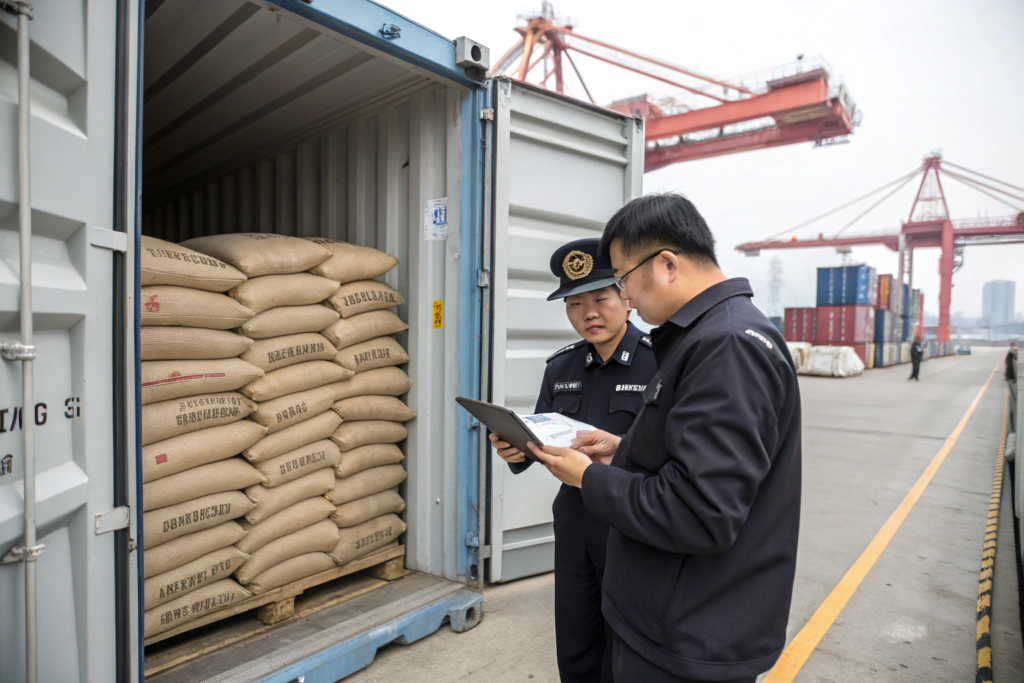
Our logistics team works closely with Shanghai Fumao to ensure all documentation is submitted early. Customs clearance in China is done in advance. This means the container doesn’t get held up on the export side. A delayed departure due to paperwork is something we simply don’t allow.
How do we protect coffee inside the container during ocean transit?
This is another area where experience matters. We know that containers on the deck of a ship can experience extreme temperature swings. The sun heats the metal, and at night it cools down. This can cause condensation inside the container—a phenomenon called “container rain.”
We fight this in two ways. First, we use the GrainPro liners I mentioned earlier. They act as a barrier against moisture changes. Second, we use container desiccants. These are large moisture-absorbing packs that we place inside the container before loading. They pull excess humidity out of the air inside the container, protecting the cargo.
We also instruct our loading team to stack the coffee bags in a way that allows airflow within the container. This isn’t always standard, but we train our team to do it. A well-packed container is less likely to have condensation issues or shifting cargo that could damage the bags. These methods follow international shipping guidelines for agricultural products to ensure safe transit.
For buyers like Ron, who are very concerned about timeliness and security, these details matter. A container that arrives on time, with the coffee in perfect condition, is the result of planning and care at every step. We don’t just hope for that result. We engineer it.
Conclusion
Freshness isn’t a single step. It’s a chain of decisions, from the moment a cherry is picked to the moment your container is unloaded. At BeanofCoffee, we control that chain. We own the farms. We manage the processing and storage. And we partner with experienced logistics teams like Shanghai Fumao to handle the export side with the same care.
We’ve built our reputation on reliability. When a buyer in North America or Europe opens a container from us, they know what they’re getting: stable moisture content, clean beans, and no surprises. That’s the standard we hold ourselves to.
If you’re tired of dealing with suppliers who treat freshness as an afterthought, let’s talk. I’d rather work with partners who value consistency as much as we do.
Reach out to Cathy Cai. She handles our export coordination and can walk you through our current harvest availability. Her email is: cathy@beanofcoffee.com.