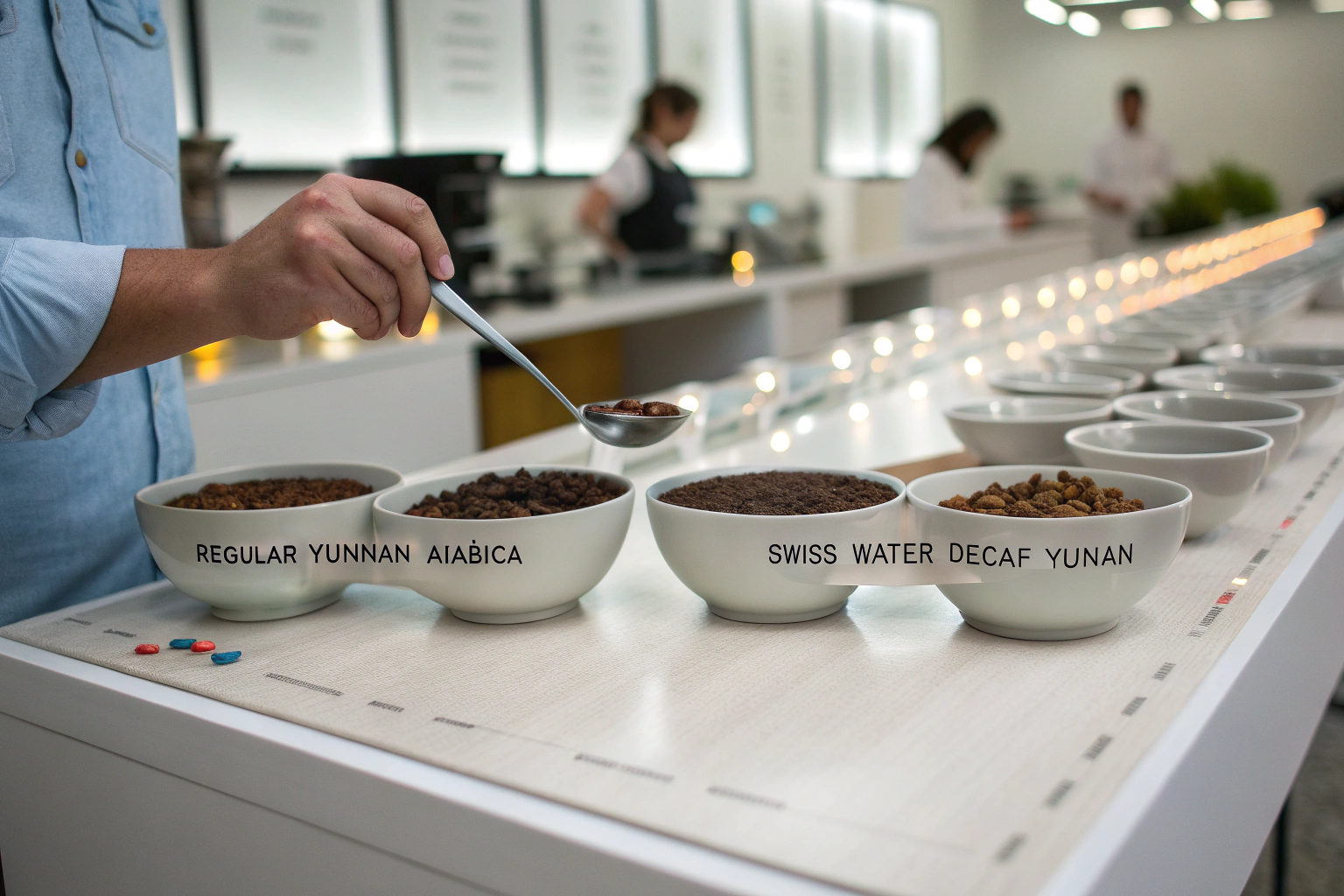
I had a client—a large hotel chain in Europe—who was desperate. Their afternoon and evening coffee sales were flat. Customers wanted a premium decaf option, but the decaf they had tried tasted flat, woody, and processed. It was ruining their brand experience. They asked me, "Can you do a Yunnan decaf that actually tastes like your Yunnan coffee?" I told them about the Swiss Water Process. They were skeptical. Then they cupped the sample. The clean, sweet, black tea notes of our Baoshan Arabica were still there. The deal was signed.
To source decaf coffee beans from China using the Swiss Water Process, you must first identify a green coffee supplier like BeanofCoffee who produces high-quality, dense Arabica suitable for decaffeination, then coordinate the shipment of the green beans to a certified Swiss Water facility (typically in Canada or Europe), and finally arrange for the re-import of the decaffeinated green coffee to your roastery or contract a toll-decaffeination service.
This is a more complex supply chain than buying regular green coffee. It requires coordination, trust, and a clear understanding of the process. But the reward is a premium decaf product that stands out in a market full of mediocre options. Let me walk you through how it works and how we can make it happen for you.
What Is the Swiss Water Process and Why Is It the Gold Standard for Decaf?
Most decaf coffee on the market is processed using chemical solvents like Methylene Chloride or Ethyl Acetate. These are effective and approved as safe, but they carry a stigma. The Swiss Water Process is different. It is a purely physical, water-based process.
The Swiss Water Process is a 100% chemical-free decaffeination method that uses water, temperature, time, and a proprietary carbon filter system to remove 99.9% of the caffeine from green coffee beans while preserving the delicate volatile compounds responsible for the coffee's unique origin flavor and aroma.
It is the only decaffeination method certified organic. It is the gold standard for specialty coffee because it is the gentlest on the bean's flavor.
How Does the GCE (Green Coffee Extract) Principle Work?
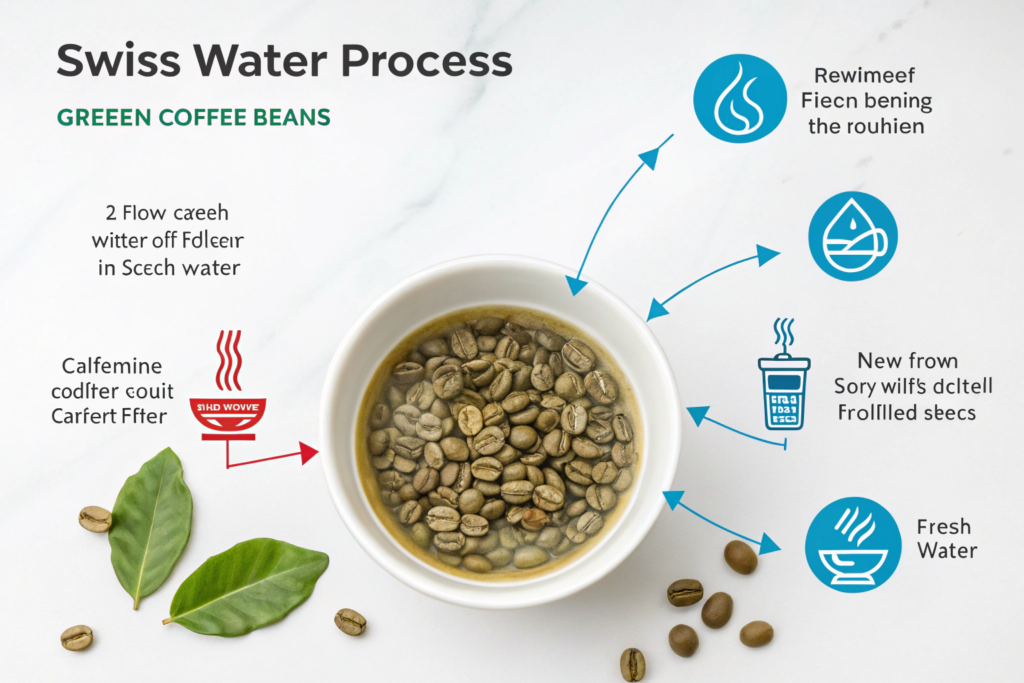
The genius of the Swiss Water Process lies in something called Green Coffee Extract (GCE) . It is based on the scientific principle of equilibrium.
Step-by-Step:
- Initial Soak: A batch of green coffee is soaked in pure, hot water. This water pulls out both the caffeine AND the water-soluble flavor compounds from the beans. This first batch of beans is discarded (or used for non-premium applications). The resulting liquid is now a "flavor-charged" water, full of coffee goodness but also full of caffeine.
- Carbon Filtration: This flavor-charged water is passed through a proprietary activated carbon filter. The pore size of this carbon is specifically designed to trap the large caffeine molecules while allowing the smaller flavor and aroma molecules to pass through.
- Creating GCE: The filtered water is now caffeine-free, but saturated with coffee flavor solids. This is the Green Coffee Extract (GCE) .
- Decaffeination: A new batch of premium green coffee (this is where your Yunnan beans come in) is soaked in the GCE. Because the GCE is already saturated with flavor compounds, it does not pull flavor out of the new beans. It only pulls out the caffeine, as the caffeine moves from an area of high concentration (the bean) to an area of low concentration (the GCE).
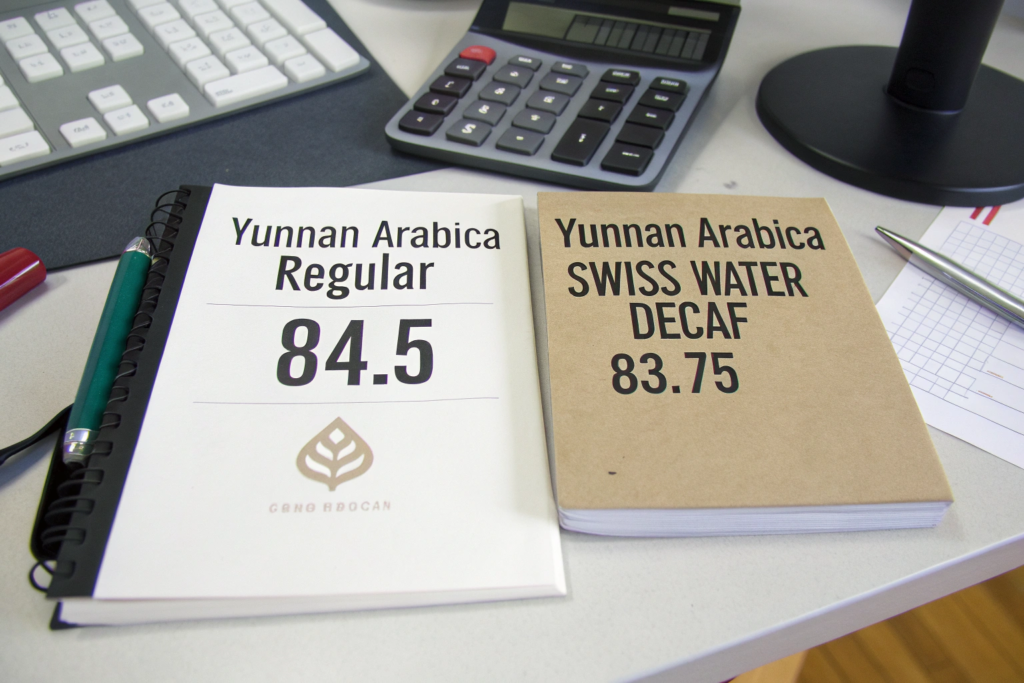
The result is a green coffee bean that is 99.9% caffeine-free but retains its full, complex flavor profile. At Shanghai Fumao, we have seen our 84-point Yunnan Arabica go through this process and come out cupping at 83.5. The loss of flavor is minimal. The character of Baoshan—the black tea, the brown sugar—remains intact.
Why Does the Swiss Water Process Preserve Origin Flavor Better Than Solvents?
Solvent-based processes (Methylene Chloride, Ethyl Acetate) are effective at removing caffeine. But they are less discriminating than the GCE method.
- Solvent Method: The solvent binds directly to the caffeine molecule. It is a targeted chemical extraction. However, the process often involves steaming the beans to open their pores, which can strip away some of the delicate, volatile aromatic compounds. The result can be a "flattened" cup profile.
- Swiss Water Method: The GCE creates a buffer. It protects the flavor compounds. The water is already "full" of flavor, so it has no "room" to absorb more from the bean. It only absorbs the caffeine.
This is why Swiss Water decaf coffees can exhibit distinct origin characteristics. You can taste the difference between a Swiss Water Colombian and a Swiss Water Sumatran. With a chemically decaffeinated coffee, those differences are often muted, replaced by a generic "decaf" taste.
For a roaster looking to offer a premium, single-origin decaf, the Swiss Water Process is the only choice that does justice to the origin. It allows the unique terroir of our Yunnan estate to shine through, even without the caffeine.
What Is the Step-by-Step Logistics of Sourcing Swiss Water Decaf from Yunnan?
This is the part that can seem daunting. The coffee does not go directly from my farm to your roastery. It makes a detour to a decaffeination facility. Understanding this logistics flow is essential for planning your inventory and your costs.
The step-by-step logistics of sourcing Swiss Water decaf from Yunnan involves: (1) selecting and contracting the green coffee lot at origin, (2) exporting the green coffee from China to the Swiss Water facility in Vancouver, Canada (or a partner facility in Europe), (3) the decaffeination process and quality control, and (4) exporting the finished decaf green coffee from the facility to your destination roastery.
This adds time and cost to the supply chain. But with proper planning, it is a smooth and reliable process.
Do We Ship the Green Beans to Canada First?
Yes. The primary Swiss Water Process facility is located in Vancouver, British Columbia, Canada. There is also a facility in Europe, but Vancouver is the main hub for coffee from the Pacific Rim.
The Flow for a U.S. Roaster:
- Step 1 (Origin): We prepare your selected lot of Yunnan Arabica. We bag it in GrainPro liners. We export it from Shanghai.
- Step 2 (Inbound to Canada): The container ships to the Port of Vancouver. The green coffee clears Canadian customs (under a temporary import bond for processing).
- Step 3 (Processing): The coffee is trucked to the Swiss Water facility in Delta, BC. It is decaffeinated. It is re-dried to the optimal moisture and water activity. It is re-bagged in GrainPro liners.
- Step 4 (Outbound from Canada): The finished Swiss Water Decaf coffee is exported from Canada. It ships via ocean freight or rail/truck to your roastery in the United States.
This is the most common route for our North American clients. For European clients, we often coordinate with the Swiss Water partner facility in Europe to reduce the overall freight miles.
At Shanghai Fumao, we manage this entire process for you. You have one point of contact (Cathy) and one contract. We handle the logistics coordination with the freight forwarders and the Swiss Water facility. You do not need to become an expert in Canadian import regulations. We do that for you.
What Are the Minimum Volume Requirements for a Decaf Tolling Run?
This is a critical question for planning. The Swiss Water facility is an industrial operation. They process large batches. You cannot send them 100 pounds of coffee for a custom run.
Minimum Volume Requirements:
- Toll Processing (Your Exclusive Coffee): The minimum batch size for a dedicated, traceable run is typically one full container load of green coffee—approximately 19,000 kilograms (42,000 lbs) . This is the volume that makes the logistics and the setup of the processing line economical.
- Pooled Processing (Blended Lots): If you cannot commit to a full container, you can participate in a "Pool" program. Your smaller lot of green coffee is combined with other lots to make up a full processing batch. You receive back a proportionate amount of decaf coffee. The downside is that you lose lot traceability. You are buying "Yunnan Swiss Water Decaf," not "BeanofCoffee Block 14A Swiss Water Decaf."
For roasters who want to build a premium, branded single-origin decaf program, the Toll Processing route with a full container is the way to go. It gives you exclusivity and a unique story. The volume commitment is significant, but the market differentiation is powerful. We work with our clients to forecast demand and plan these tolling runs 6-9 months in advance.
How Does the Decaffeination Process Affect the Quality and Price of Yunnan Beans?
It is important to have realistic expectations. The Swiss Water Process is the best available method, but it is not magic. It has a small impact on the cup and a significant impact on the price.
The Swiss Water Process results in a minor, often imperceptible, softening of the cup's acidity and a slight mellowing of the flavor intensity compared to the original green coffee, while adding a premium of approximately $1.50 to $2.50 per pound to the final green coffee price to cover the cost of the processing, the additional freight, and the yield loss from the process.
You are paying more for a slightly different cup profile. But you are getting a chemical-free, specialty-grade decaf that is virtually unique in the market.
What Flavor Notes Are Typically Preserved or Diminished?
Based on our experience sending Baoshan Arabica through the Swiss Water Process, here is a realistic sensory assessment.
Notes That Are Well-Preserved:
- Body and Mouthfeel: The heavy, syrupy body of Yunnan coffee remains intact. This is a huge advantage for decaf espresso.
- Chocolate and Nut Notes: The core, roasty, chocolatey notes are very stable.
- Sweetness: The brown sugar sweetness persists.
Notes That May Soften or Diminish:
- Bright Acidity: The sharp, citrusy lemon-zest acidity may become slightly softer, more like a gentle malic (apple) acidity.
- Delicate Florals: If a coffee has very delicate jasmine or bergamot notes, these may be less pronounced in the decaf version.
The Overall Cup: The decaf version is often described as "rounder," "smoother," and "more balanced" than the regular version. The edges are softened. For many consumers, especially those drinking decaf as a after-dinner coffee, this smoother profile is actually preferred. It is less challenging on the palate.
This is why Yunnan coffee is such an excellent candidate for Swiss Water decaf. Its core attributes—body, sweetness, and chocolate notes—are exactly the characteristics that survive the process best. A bright, acidic Kenyan coffee can sometimes taste hollow after decaffeination. A heavy, sweet Yunnan coffee retains its soul. At Shanghai Fumao, we specifically select lots with a strong chocolate and body profile for our decaf program.
Why Is the Price Per Pound Higher for Swiss Water Decaf?
Let's break down the cost drivers. The premium is not arbitrary. It reflects real costs in the supply chain.
| Cost Component | Impact on Price | Explanation |
|---|---|---|
| Decaf Processing Fee | +$1.00 - $1.50 / lb | The fee charged by the Swiss Water facility for the tolling service. |
| Yield Loss (Shrinkage) | +$0.20 - $0.30 / lb | The process removes caffeine and some bean mass. You lose about 5-7% of the original weight. |
| Additional Freight | +$0.20 - $0.40 / lb | The extra ocean voyage to/from Canada or within Europe adds freight cost. |
| Additional Handling | +$0.10 - $0.20 / lb | Extra warehousing, documentation, and customs brokerage fees. |
| Total Premium (Est.) | +$1.50 - $2.40 / lb | This is added to the base price of the green coffee. |
For a high-quality Yunnan Arabica with a base FOB price of $3.00/lb, the landed cost of the Swiss Water Decaf version could be $4.80 - $5.50/lb.
This is a premium product. It commands a premium retail price. Roasters who are successful with Swiss Water decaf market it as a specialty product. They do not compete on price with commodity chemical decaf. They compete on quality and the "chemical-free" story. The consumers who seek out Swiss Water decaf are willing to pay more for it.
How Can I Ensure the Traceability of My Yunnan Lot Through the Decaf Process?
This is the final, crucial piece for a roaster building a transparent brand. You do not want to just claim "Swiss Water Decaf." You want to prove that your specific lot of Yunnan coffee was processed in that specific way.
Traceability through the Swiss Water Process is maintained via a strict "Toll Processing" agreement and a documented chain of custody, where the incoming green coffee lot number is tracked through the facility and linked to the outgoing decaf lot number, supported by a Certificate of Processing and retained samples for sensory verification.
This documentation allows you to tell the complete story of the coffee, from the farm in Baoshan to the decaf facility in Vancouver to your roastery.
Does the Swiss Water Facility Provide a Certificate of Processing?
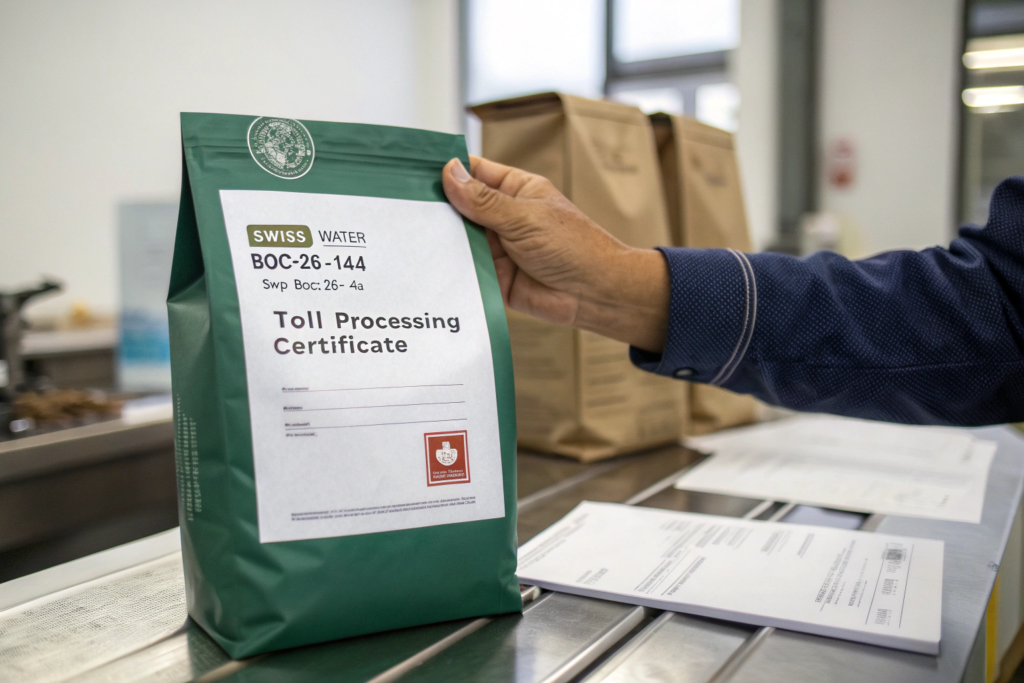
Yes. This is a standard document for any toll processing client. It is the proof that your coffee was decaffeinated using the Swiss Water Process.
The Certificate of Processing typically includes:
- Inbound Lot Information: The original lot number, the weight received, and the date of receipt.
- Process Date: The date the coffee was run through the decaffeination line.
- Process Verification: A statement confirming that the coffee was processed using the 100% chemical-free Swiss Water Process.
- Outbound Lot Information: The new lot number assigned to the finished decaf coffee, the final weight, and the date of shipment.
- Caffeine Content: Verification that the coffee meets the international standard for decaffeinated coffee (99.9% caffeine-free).
This certificate is a valuable marketing asset. You can show it to your wholesale customers. You can feature it on your website. It is third-party verification of your product's integrity.
At Shanghai Fumao, we include this Swiss Water Certificate in the final documentation package we provide to you for your decaf shipment. It is part of the full traceability file.
Can I Cup the Finished Decaf Sample Before Committing to a Full Shipment?
Absolutely. This is a non-negotiable step in our process. Given the significant investment in a tolling run, you must approve the final product before it leaves the decaf facility.
The Approval Process:
- Pre-Shipment Sample (PSS) from Origin: Before the green coffee even leaves China, you cup and approve the original lot.
- Post-Process Sample: After the coffee is decaffeinated in Vancouver, the Swiss Water facility pulls a representative sample of the finished decaf green coffee. They roast it to the agreed-upon specification.
- Sample Shipment: They ship the roasted sample (and a small green sample) directly to you via express courier.
- Your Evaluation: You cup the decaf sample. You evaluate it against your quality standards.
- Approval to Ship: You send an email approval to us and the facility. Only then is the container of decaf coffee released for shipment to your roastery.
This step ensures that there are no surprises. You know exactly how the decaf process affected the cup profile of your specific lot. If there is an issue (which is extremely rare), we can address it before the coffee is on a ship to you. This is the level of care required for a premium decaf program.
Conclusion
Sourcing decaf coffee beans from China using the Swiss Water Process is a more complex, more expensive, but ultimately more rewarding path than buying commodity decaf. It allows you to offer a truly premium, chemical-free, single-origin decaf that retains the soul of the Yunnan terroir.
It requires a partner at origin who understands the logistics, the quality control, and the importance of traceability. It requires a commitment to volume and a willingness to invest in a superior product.
But the result is a decaf coffee that you can proudly stand behind—a decaf that does not taste like a compromise. In a market where consumers are increasingly seeking both quality and transparency, a Swiss Water Yunnan decaf is a powerful differentiator.
If you are interested in exploring a Swiss Water decaf program with our Baoshan Arabica, let's start the conversation. We can provide samples of our current decaf offerings and walk you through the logistics and costing for a dedicated tolling run. Email Cathy Cai. Tell her you want to learn about the "Swiss Water Decaf Program." Contact Cathy at: cathy@beanofcoffee.com