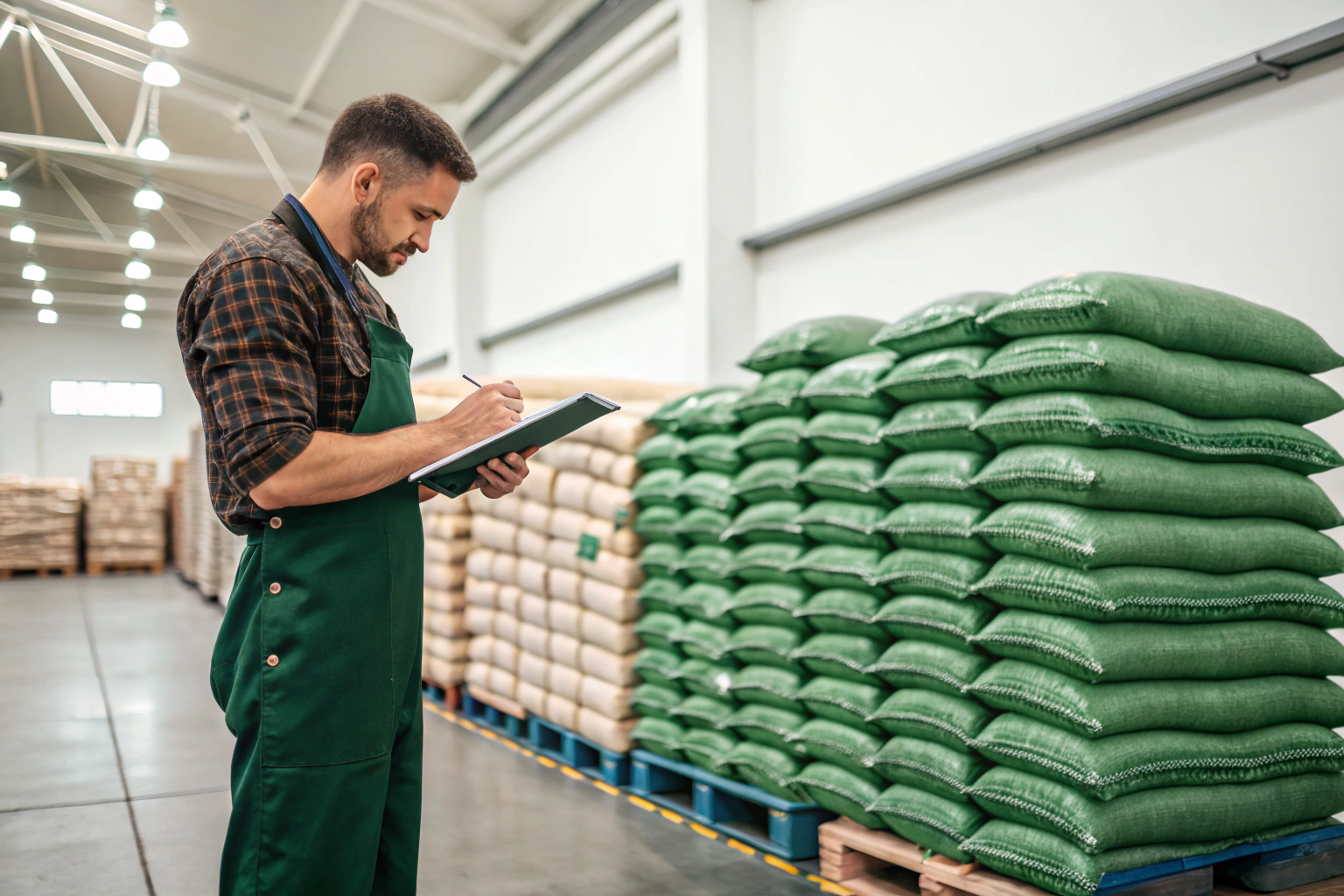
You know that feeling. You build a blend your customers love. They come back for it week after week. Then, one day, the taste changes. Or worse, the beans don't arrive at all. Your customers notice. They ask questions. They might even switch to someone else.
It's a nightmare, right? I've been there. When I first started, I sourced from different farms, different regions. Every harvest was a gamble. I never knew what I was going to get. That uncertainty almost broke my business.
So, how do you ensure your coffee supply is consistent? The short answer is control. Control over the source. Control over the process. Control over the relationship. At BeanofCoffee, we've spent years building systems that guarantee our clients get the same quality, the same flavor, and the same reliability, shipment after shipment.
Let me walk you through what it takes. Because in markets like North America, Europe, and Australia, consistency isn't just a nice-to-have. It's the foundation of your reputation.
Why Is the Source of Your Coffee the Most Important Factor?
Consistency starts at the very beginning. The farm. If your supplier doesn't own the farm, they can't control what happens on it. They buy from whoever has beans that year. And that changes every season.
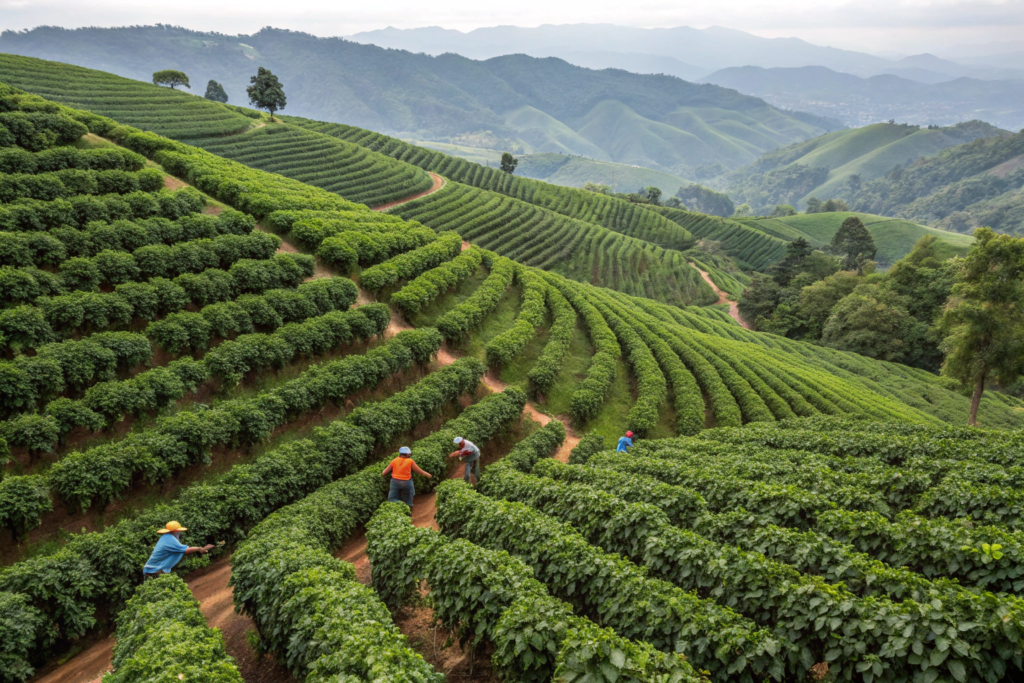
At BeanofCoffee, we own our 10,000 acres in Baoshan. This means we decide which varieties to plant. We decide when to harvest. We train every worker. We use the same processing methods year after year. Nothing changes unless we want it to.
If you're sourcing from a trader, you're at their mercy. They might get good beans one year and bad beans the next. You have no say in it. So, the first step to consistency is working with someone who controls their own source.
Another way to look at this is through the lens of "vertical integration." The more of the supply chain you control, the more you can guarantee the outcome. Let's get into the specifics of how this works.
What are the risks of sourcing from multiple smallholders?
I've seen this happen so many times. A roaster wants to support small farmers. That's a good thing. But they buy from 50 different farms in one region. Each farm has its own practices. Some dry beans on raised beds. Some dry on concrete. Some harvest at the right time. Some don't.
When you blend all that together, you might get a decent average. But you also get variation. One bag might be amazing. The next bag might be mediocre. Your customers notice.
Worse, if a few of those farmers have a bad year, your entire supply is affected. You can't predict it. You can't control it. That's the risk of a fragmented supply chain.
How does owning the farm guarantee consistency?
Let me give you an example. At our farms, we have a standard operating procedure for every stage. We pick cherries only when they reach 22-24% brix (sugar content). We process within 4 hours of picking. We use the same fermentation times. We dry on raised beds for the same duration.
Every worker is trained on this. Every supervisor checks the work. The result is that the green beans from our farm are nearly identical, lot after lot, year after year.
When you buy from us, you know what you're getting. There's no guessing. There's no "let's see what shows up this time." It's the same coffee, made the same way, every time. This is why our clients in the US and Europe trust us to be their long-term partner.
How Can You Verify Quality Before Shipment?
Owning the farm is the foundation. But you still need to check the work. Quality control is not a one-time thing. It's a process that happens at every stage.
We test our beans multiple times before they leave our warehouse. We cup every batch. We use the same cupping protocols that specialty roasters use. We score for defects, moisture content, and flavor profile.
If a batch doesn't meet our standard, it doesn't get exported under our name. Simple as that. We'd rather lose the sale than send out a bad batch. Because that bad batch would hurt your business and our reputation.
Another way to look at this is through the lens of "redundancy." We test, then we test again. We don't rely on one person's opinion. We have a system. Let's break down what that system looks like.
What testing methods ensure consistent flavor?
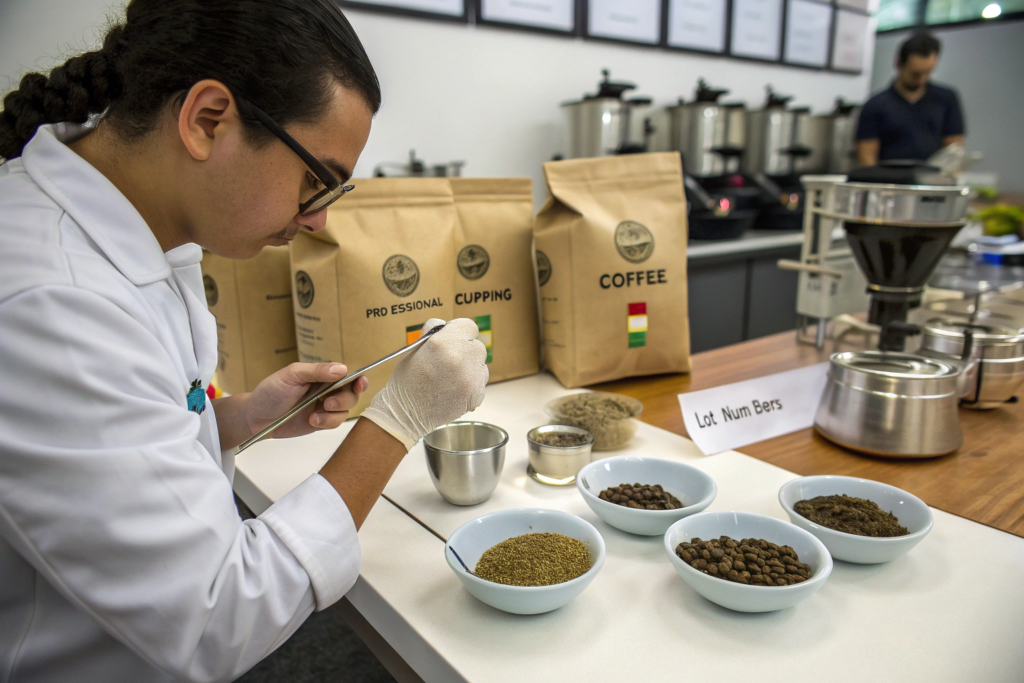
We use a combination of physical grading and sensory cupping. First, we take a 350-gram sample from every lot. We visually inspect it. We count defects. Black beans, sour beans, insect damage. If defects are above a certain threshold, the lot is downgraded or rejected.
Then we roast a sample. We grind it. We steep it. We taste it. We have a team of trained cuppers who use the same form every time. They look for specific notes: chocolate, nuts, sweetness, acidity, body. They also look for defects like mold, ferment, or earthy flavors.
Only if the lot scores above 80 points does it get approved for export. This system means our beans taste the same every time you order them. For more on cupping standards, the Specialty Coffee Association has official protocols that we follow closely.
How do you maintain traceability from farm to container?
Traceability is key. Each lot from our farms has a unique number. That number follows the beans from the drying bed to the warehouse to the container. We know exactly which trees produced which beans.
When you order from us, we can tell you which block of the farm your beans came from. We can tell you when they were harvested and processed. This level of detail is rare. But it's essential for consistency.
If a problem ever arises, we can trace it back to the source. We can fix it. We can make sure it doesn't happen again. For more on traceability systems, organizations like Coffee Quality Institute offer resources on best practices.
What Role Does Processing Play in Consistent Supply?
Processing is where good coffee can become great coffee. Or where great coffee can become ruined. It's a critical stage, and it's one that many suppliers overlook.
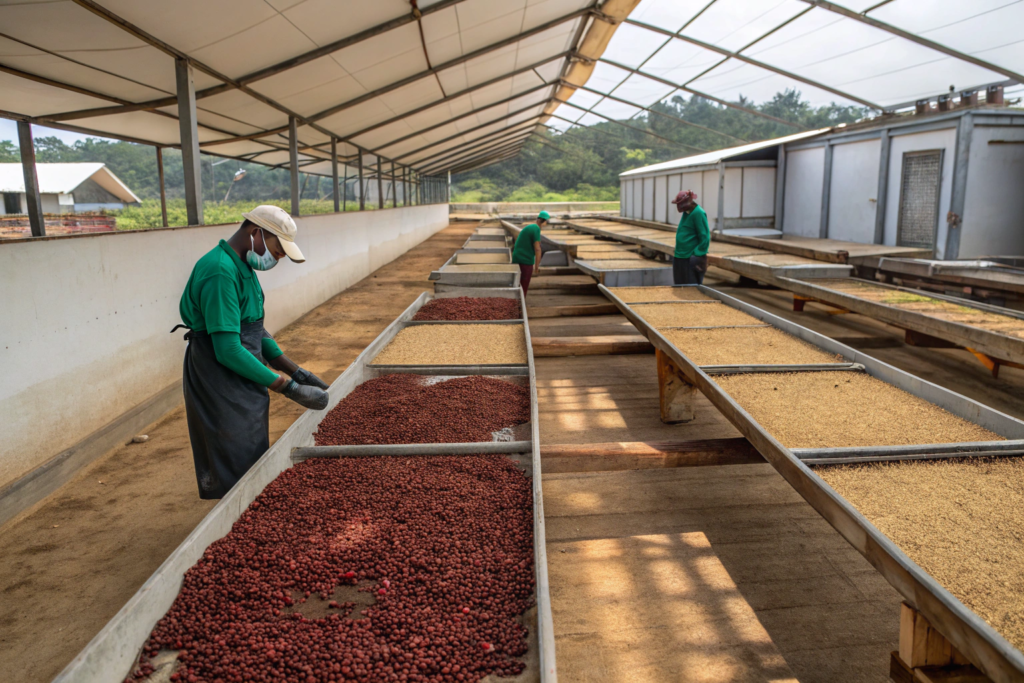
At our farms, we use consistent processing methods. For our washed Arabica, we depulp, ferment for a set time, wash, then dry on raised beds. For our naturals, we dry the whole cherry for a set number of days, turning regularly to prevent mold.
These methods don't change. They are documented. They are followed by every worker. This means the green beans we produce have the same moisture content, the same density, and the same potential for flavor every time.
Another way to look at this is through the lens of "process control." If you control the process, you control the outcome. Let's look at the specifics.
Why is consistent processing essential for predictable roasting?
Roasters need predictable beans. If the moisture content varies, the roast curve changes. If the bean density varies, the heat transfer changes. A roaster who dials in a profile for one batch expects it to work for the next batch.
If the processing is inconsistent, the roaster is constantly chasing the roast. That's frustrating and inefficient. It wastes time, energy, and coffee.
By keeping our processing consistent, we make your job easier. You can set your roaster and trust that the same profile will produce the same result. That's the kind of reliability that builds loyalty.
How do you avoid post-harvest defects?
Post-harvest defects come from bad drying or bad storage. If beans are dried too fast, they crack. If they are dried too slow, they mold. If they are stored in humid conditions, they degrade.
We use raised beds to dry our beans. This allows air to circulate evenly. We turn the beans regularly to prevent uneven drying. We cover them at night to protect from dew.
Once dry, we store them in GrainPro bags inside a climate-controlled warehouse. This keeps the beans stable until they are shipped. This attention to detail means you never receive beans with mold or off-flavors from poor storage.
How Do You Build a Partnership That Guarantees Long-Term Supply?
You can have the best farms and the best processes. But if you don't have a real partnership with your buyer, supply can still be disrupted. Consistency is not just about the coffee. It's about the relationship.
At Shanghai Fumao, we treat our clients as partners. We communicate openly. We give them forecasts. We listen to their needs. We plan together.
This approach means we know what our clients need before they even ask. We can reserve specific lots for them months in advance. We can adjust our harvest plans based on their projected orders. It's a true collaboration.
Another way to look at this is through the lens of "mutual dependency." We rely on you to buy our coffee. You rely on us to supply it. When we both understand that, we work together to make it work.

Why is communication the foundation of a reliable supply chain?
I can't stress this enough. If you don't talk to your supplier, things go wrong. Maybe you need to change an order. Maybe there's a delay at the port. Maybe the harvest is early or late.
When we have open communication with our clients, we can adapt. We can hold a container if they need more time. We can push up a shipment if they need it sooner. We can tell them about market conditions that might affect price.
This level of communication requires trust. It requires both sides to be honest. When you work with us, we commit to that honesty. You'll never get a surprise from us. We'll always let you know what's happening.
How do long-term contracts support consistency?
A one-off order is fine. But a long-term contract changes everything. When you commit to buying a certain volume over 6 or 12 months, we can plan around that. We can reserve specific lots. We can allocate processing capacity. We can even adjust our planting decisions.
This benefits you too. A long-term contract locks in pricing. It protects you from market spikes. It guarantees that you will have coffee when you need it.
At Shanghai Fumao, we love long-term partnerships. They allow us to invest in quality and consistency. They give us the confidence to improve our farms and our processing. And they give you the peace of mind that your supply is secure.
Conclusion
Ensuring a consistent coffee supply isn't magic. It's a system. It starts with owning the source. It continues with rigorous quality control and consistent processing. It's supported by strong partnerships and open communication. And it's protected by contingency plans for when things go wrong.
At Shanghai Fumao, we've built this system over years. Our farms in Yunnan, our processing facility, our warehouse in Shanghai, our logistics team—all of it is designed to deliver the same quality, every time, to our clients in North America, Europe, and Australia.
If consistency is what you need, we're ready to be your partner. Let's talk about your requirements. Contact our export manager, Cathy Cai. She can discuss how we can build a supply plan that works for your business. Her email is cathy@beanofcoffee.com. Let's build something reliable together.