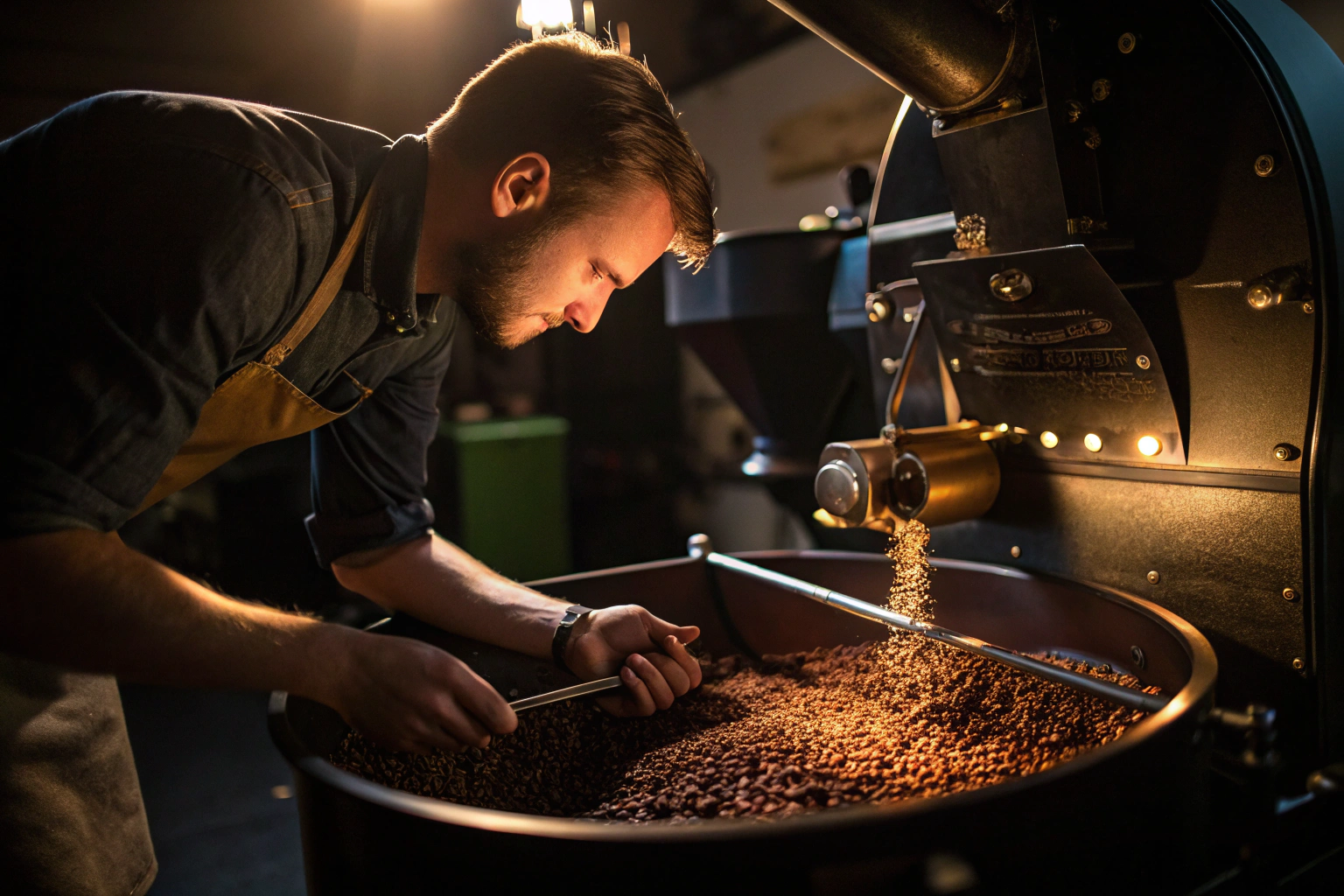
You've got the beans. Maybe you sourced them from us at BeanofCoffee. Maybe you're trying Catimor for the first time. And now you're standing in front of your roaster, wondering... what do I do with these? I get it. Every bean is different. And Catimor? It has a reputation. Some people love it. Some people aren't sure. But honestly, most of the problems come from roasting it wrong.
So, what is the best way to roast Catimor beans? The short answer is: with care and attention. Catimor is not your average Arabica. It has its own personality. It was developed to be resistant to leaf rust, which makes it tough and productive. But that same toughness means it needs a gentler hand in the roaster. If you roast it like a standard wet-hulled Sumatra, you might get unpleasant flavors. If you roast it right, you get a clean, sweet, balanced cup with a nice body.
At our farms in Baoshan, Yunnan, we grow a lot of Catimor. It thrives at our altitude. We've cupped it thousands of times. We've worked with roasters all over North America, Europe, and Australia who use our beans. So, I've seen what works. I've collected feedback. And I want to share that knowledge with you. Let's break down exactly how to get the best out of these beautiful beans.
What Makes Catimor Beans Different from Other Arabicas?
Before you even turn on the roaster, you need to understand what you're working with. Catimor is a hybrid. It's a cross between Timor (which has Robusta genetics) and Caturra (a Bourbon Arabica variety). That Robusta lineage gives it strength. It's more resistant to disease. It produces higher yields. But it also gives it some unique characteristics.
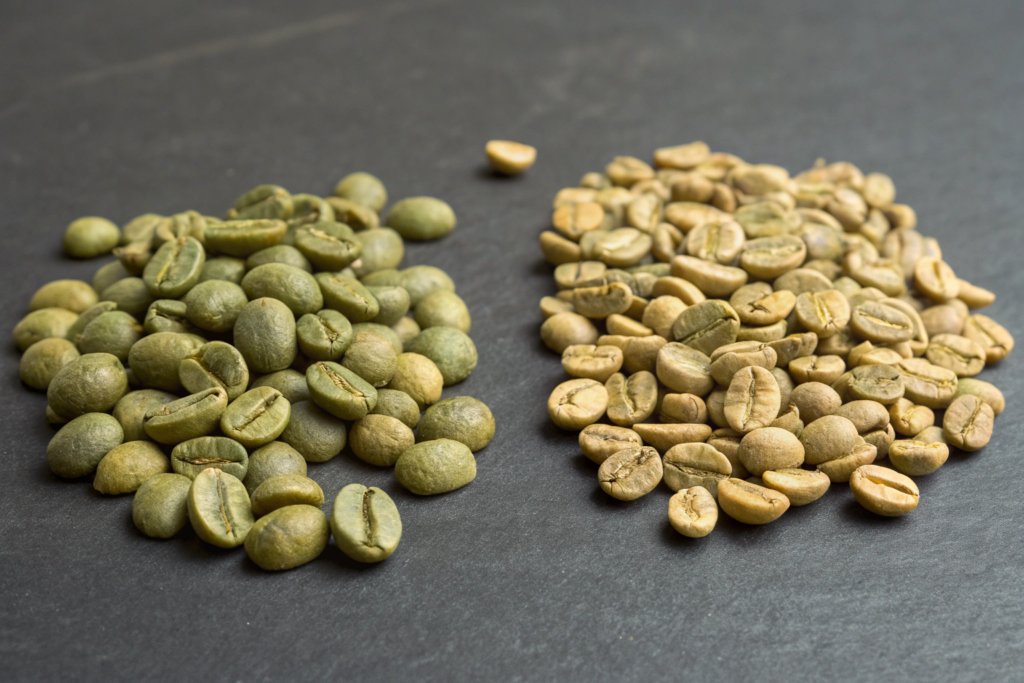
The bean structure is different. Catimor beans are often denser than some other Arabicas. They can be a bit larger and more uniform in shape. This density affects how heat transfers during roasting. A dense bean takes more energy to get moving. It needs a different approach than a soft, low-grown bean.
Also, the flavor profile is distinct. Good Catimor, grown well and processed well, can have a clean cup with notes of chocolate, nuts, and mild citrus. It has a medium body and low-to-medium acidity. It's balanced. But if it's roasted poorly, that Robusta heritage can show up as harshness or a rubbery note. So, your goal as a roaster is to highlight the good stuff and avoid the bad.
Another way to look at this is through the lens of "potential." Catimor has huge potential. It's not a "lesser" bean. It's just different. In places like Yunnan, it's become a staple because it grows well and tastes great. You just have to treat it with respect.
How does bean density affect the roasting profile?
Bean density is one of the most important factors in roasting. Think of it like cooking a potato versus cooking a piece of bread. The potato is dense. It takes longer to cook through. The bread is light. It cooks fast. Coffee is the same.
Catimor is dense. This means it has more thermal mass. It takes more energy to raise the internal temperature. If you apply too much heat too fast, you can scorch the outside while the inside is still underdeveloped. This leads to a "baked" or "hay-like" taste. Or, if you really blast it, you get a scorched, smoky flavor that masks everything else.
So, with dense beans like Catimor, you generally want a slightly longer roast with a gentler rise in temperature, especially in the early stages. You need to give the heat time to penetrate to the center of the bean. We've found that a roast time of 11 to 13 minutes for a medium roast works well for our Catimor. For a deeper dive into bean density and roasting, resources like Royal Coffee's Crown Jewel blog often have detailed profiles for specific origins, including dense beans.
What flavor notes should you expect from well-roasted Catimor?
When you get it right, Catimor is a delight. From our Yunnan farms, we consistently see a few key flavors. First, there's chocolate. Not a dark, bitter chocolate, but more of a milk chocolate or cocoa powder note. Second, there are nuts. Almonds, walnuts, sometimes a hint of peanut. Third, there's a mild sweetness, like brown sugar or caramel.
The acidity is present but gentle. You might get a hint of citrus—like orange zest or a touch of lemon—but it's not sharp or overpowering. It's a smooth, balanced cup. This makes Catimor excellent for blends. It provides a solid, reliable base. But it can also stand alone as a single origin, especially if you want a comforting, everyday coffee. For official flavor profile descriptions, you can check resources from the Coffee Quality Institute, which sets standards for specialty coffee grading.
What Roast Level Works Best for Catimor?
This is the big question. Light? Medium? Dark? There's no single right answer. It depends on what you want. But I can tell you what we've seen work best for most of our clients.
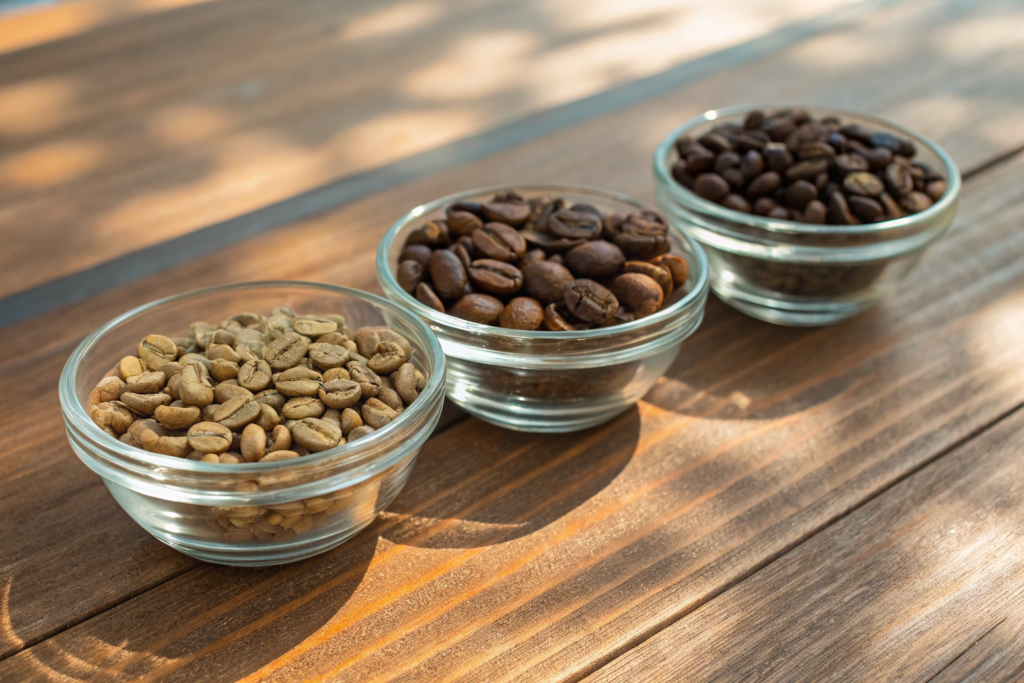
For single-origin offerings, especially in specialty markets like the U.S. and Europe, a medium roast is often the sweet spot. It preserves the bean's origin characteristics. You get the chocolate and nut notes without losing the gentle acidity. It's balanced. It's approachable. It works for filter coffee and espresso.
Light roasts can be tricky with Catimor. Because of that density, a very light roast might leave the bean underdeveloped. You might get grassy or peanutty flavors, which are not desirable. If you want to go light, you need to be very careful with your development time ratio. You need to ensure the bean is fully cooked even if the color is light.
Dark roasts are popular in some markets, especially for espresso blends. Catimor can handle a dark roast. It takes on a smoky, bold character. The chocolate notes become darker, more like baker's chocolate. But you lose the origin nuance. It becomes more about the roast flavor than the bean flavor. So, it's a choice. Let's look at the details.
What is the ideal temperature curve for a medium roast?
For our Yunnan Catimor, we recommend aiming for a medium roast that hits first crack around 9 to 10 minutes, and then drops the beans about 2 to 3 minutes after first crack ends. Here's a simple guideline based on feedback from our successful roaster clients:
| Stage | Target | Notes |
|---|---|---|
| Charge Temp | 200-205°C (392-401°F) | A slightly lower charge temp helps avoid scorching the dense bean. |
| Turning Point | Monitor closely | Ensure the temperature doesn't drop too low; you want a smooth curve up. |
| Drying Phase | 4-5 minutes | Aim for a steady, gradual rise in temperature. Don't rush this. |
| Maillard Phase | To first crack | This should be a smooth, upward slope. Avoid "flicking" (sudden heat increase). |
| First Crack | 9-10 minutes | It should be vigorous and clear. |
| Development Time | 2-3 minutes (20-25% of total roast) | This is after first crack. Longer development brings out chocolate notes. |
| Drop Temperature | 210-215°C (410-419°F) | Adjust based on desired color and flavor. |
This is a starting point. Every roaster is different. You have to adjust for your machine, your batch size, and your personal taste. But this profile has worked for many.
Should you roast Catimor differently for espresso versus filter?
Yes, absolutely. The brewing method changes what you need from the bean. For filter coffee, you want clarity and brightness. A slightly lighter medium roast works well. You want to preserve those nutty and chocolate notes with a clean finish. The development time might be on the shorter end, maybe 20-22% of the total roast.
For espresso, you need more body and sweetness to cut through the milk (if you're making milk drinks) or to stand up to the pressure of the machine. A slightly darker medium roast, or a medium-dark roast, is often better. You might extend the development time to 23-25% or even a bit more. This creates more caramelization and a heavier body. The oils start to come to the surface, which helps with crema production. We've had roasters tell us they use our Catimor as a base for their espresso blend specifically because it takes this slightly darker profile so well, adding body without harshness.
How Does Processing Method Affect the Roast?
Here's something many roasters forget. The way the bean was processed at the farm changes how it behaves in the roaster. At BeanofCoffee, we offer Catimor that is processed in different ways. Mostly washed, but also some naturals and honeys. And they all roast differently.
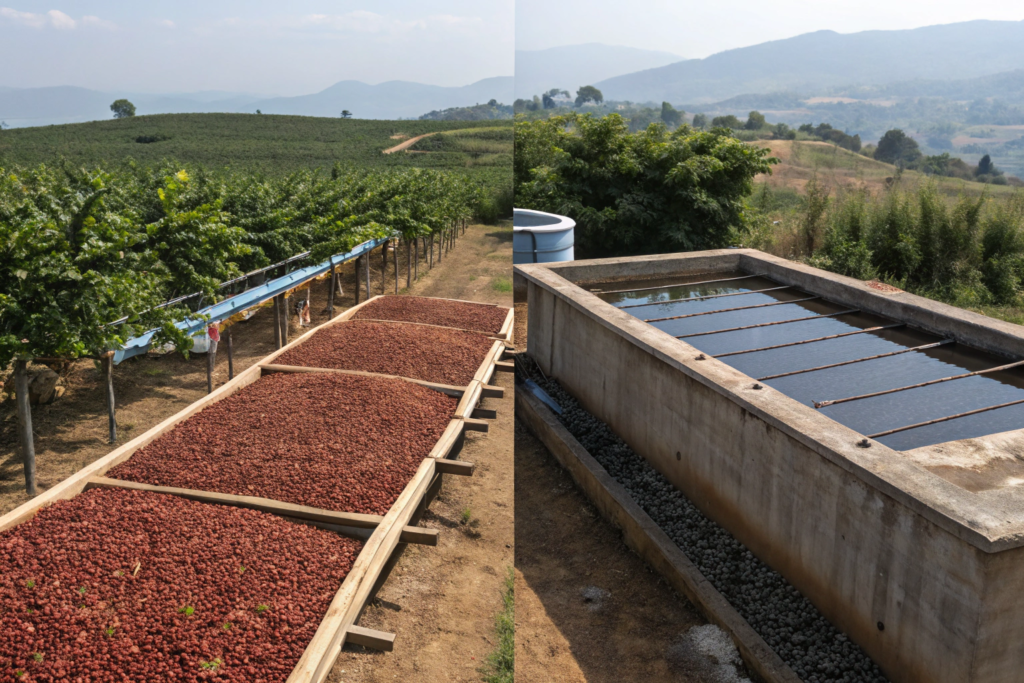
Washed Catimor is the cleanest. It has had the fruit removed before drying. This results in a bean that is very consistent and highlights the intrinsic flavor of the coffee. It's usually brighter and more acidic. It roasts a bit more predictably.
Natural (or dry) processed Catimor is dried inside the whole cherry. This infuses the bean with fruit flavors. You might get notes of berry, wine, or tropical fruit. But it also makes the bean less dense in a way? Or rather, the sugars can cause it to roast differently. It can take heat faster and might develop color more quickly.
Honey processed is in between. Some mucilage is left on the bean during drying. This adds sweetness. It roasts somewhere between washed and natural. So, you need to know what you have. You can't roast a natural Catimor the same way you roast a washed Catimor. Let's look at why.
How does a washed Catimor differ from a natural in the roaster?
Washed Catimor is the most forgiving. Because the bean is clean and the moisture content is very uniform, it roasts evenly. You get a nice, steady temperature curve. The flavors are clean and direct.
Natural Catimor, though, is trickier. The sugars from the fruit can caramelize on the bean surface. This can make the bean appear darker than it actually is inside. If you roast by sight alone, you might drop the beans too early, thinking they are done, when they are actually underdeveloped inside. Or, you might accidentally scorch the sugars on the surface if your heat is too high. With naturals, you really have to trust your temperature probes and your ears (listening to first crack) more than your eyes. The color can be deceptive. For more on processing methods, Sweet Maria's has extensive library articles explaining how each method affects the bean.
Should you adjust your profile for honey-processed Catimor?
Honey processing is popular in some regions, and we're experimenting with it more in Yunnan. The honey process leaves some of the sticky mucilage on the bean during drying. This adds a syrupy sweetness to the cup.
In the roaster, honey-processed beans act a bit like naturals, but less extreme. They have some residual sugar, so you need to be careful with heat application in the early stages. Too much heat too fast can scorch that sugar. A slightly gentler charge temperature and a steady rise are recommended. The reward is a coffee with amazing body and sweetness. It's fantastic for espresso. We've seen roasters use a slightly longer development time with honey Catimor to really bring out that caramel sweetness.
What Are Common Mistakes When Roasting Catimor?
Okay, let's talk about what not to do. I've made these mistakes myself. I've seen roasters make them with our beans. Learning from mistakes is part of the craft. But if I can help you avoid them, that's even better.
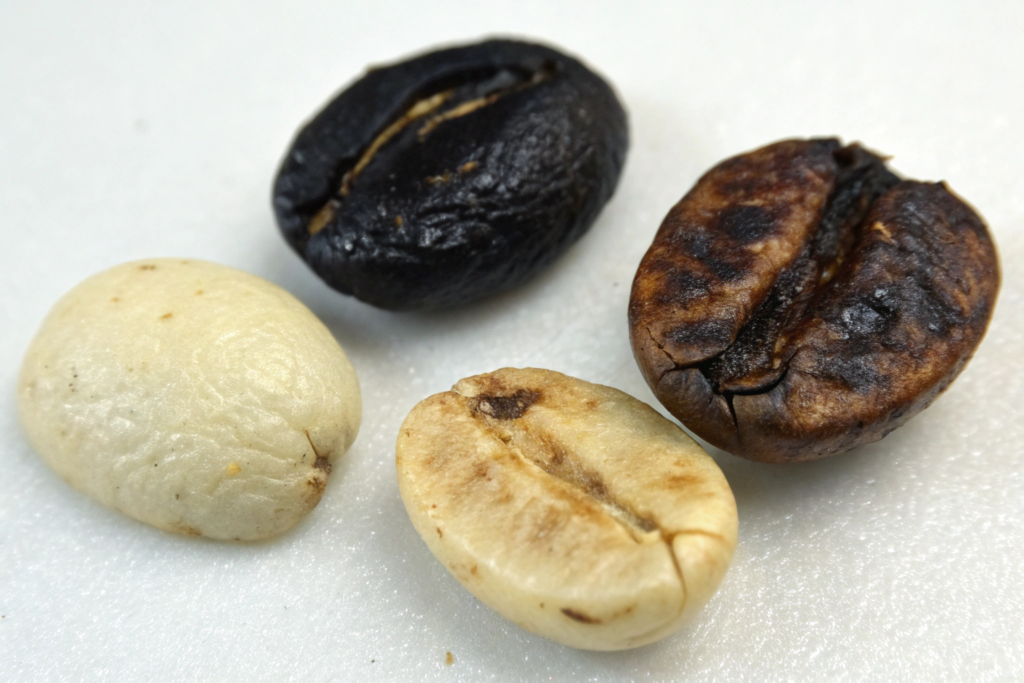
The biggest mistake is rushing. Catimor is dense. It needs time. If you try to shorten the roast by blasting it with heat, you'll end up with a baked or scorched coffee. The outside will look dark, but the inside will be underdeveloped. It will taste flat and papery.
The second mistake is not resting the beans enough after roasting. Catimor, especially when roasted medium or dark, needs time to degas. It can taste a bit sharp or ashy if you brew it too soon. Give it at least 2-3 days, sometimes up to a week, for the flavors to settle and sweeten.
The third mistake is assuming all Catimor is the same. It's not. Catimor from different regions, different farms, different altitudes, and different harvest years will vary. You have to cup every batch and adjust your profile accordingly. Don't just set it and forget it.
What causes "baked" or "underdeveloped" flavors in Catimor?
A "baked" flavor tastes like bread or cereal. It's flat. It lacks life. This happens when you don't have enough energy in the roast. The temperature rises too slowly, or it stalls. The beans sort of stew in the drum instead of actively developing. To avoid this, make sure you have a steady, positive rate of rise (ROR) throughout the roast, especially in the Maillard phase. Don't let the ROR flatline.
Underdevelopment tastes grassy, pea-like, or vegetal. This happens when you drop the beans too early, before the internal chemical reactions are complete. Even if the bean looks brown, it might not be fully cooked inside. This is common with dense beans like Catimor if you roast too fast. The solution is to ensure you have enough development time after first crack. Aim for that 20-25% development time ratio as a starting point. Tools like Cropster can help you track your ROR and development time precisely.
Why is post-roast resting crucial for Catimor?
I can't stress this enough. Freshly roasted coffee is not ready to drink. It's full of CO2. The flavors are volatile and not yet integrated. For Catimor, resting is especially important.
Right after roasting, the beans are still degassing. If you brew them immediately, the extraction will be uneven. You'll get a lot of sharpness and maybe some astringency. Over the next few days, the CO2 slowly releases, and the flavors mellow and blend together. The chocolate notes become smoother. The acidity becomes more integrated.
For our Yunnan Catimor, we've found that the peak flavor window is often between day 4 and day 14 after roasting. For espresso, some roasters even prefer resting for 7-10 days. So, be patient. Let the beans rest in a one-way valve bag. Your customers will taste the difference. For more on the science of degassing, resources from the Specialty Coffee Association explain the chemical changes during the resting period.
Conclusion
Roasting Catimor well is about understanding its nature. It's a dense bean with a unique heritage. It needs a gentle hand, a steady rise, and enough development time to unlock its full potential. When you get it right, you're rewarded with a balanced, chocolatey, nutty cup that satisfies a wide range of coffee drinkers.
At Shanghai Fumao, we're proud of the Catimor we grow in Yunnan. We work hard to produce beans that are consistent and flavorful. And we love helping roasters like you succeed with them.
If you want to try some for yourself, or if you have questions about a specific batch, reach out. Contact our export manager, Cathy Cai. She can send you samples and talk through the harvest details. Her email is cathy@beanofcoffee.com.