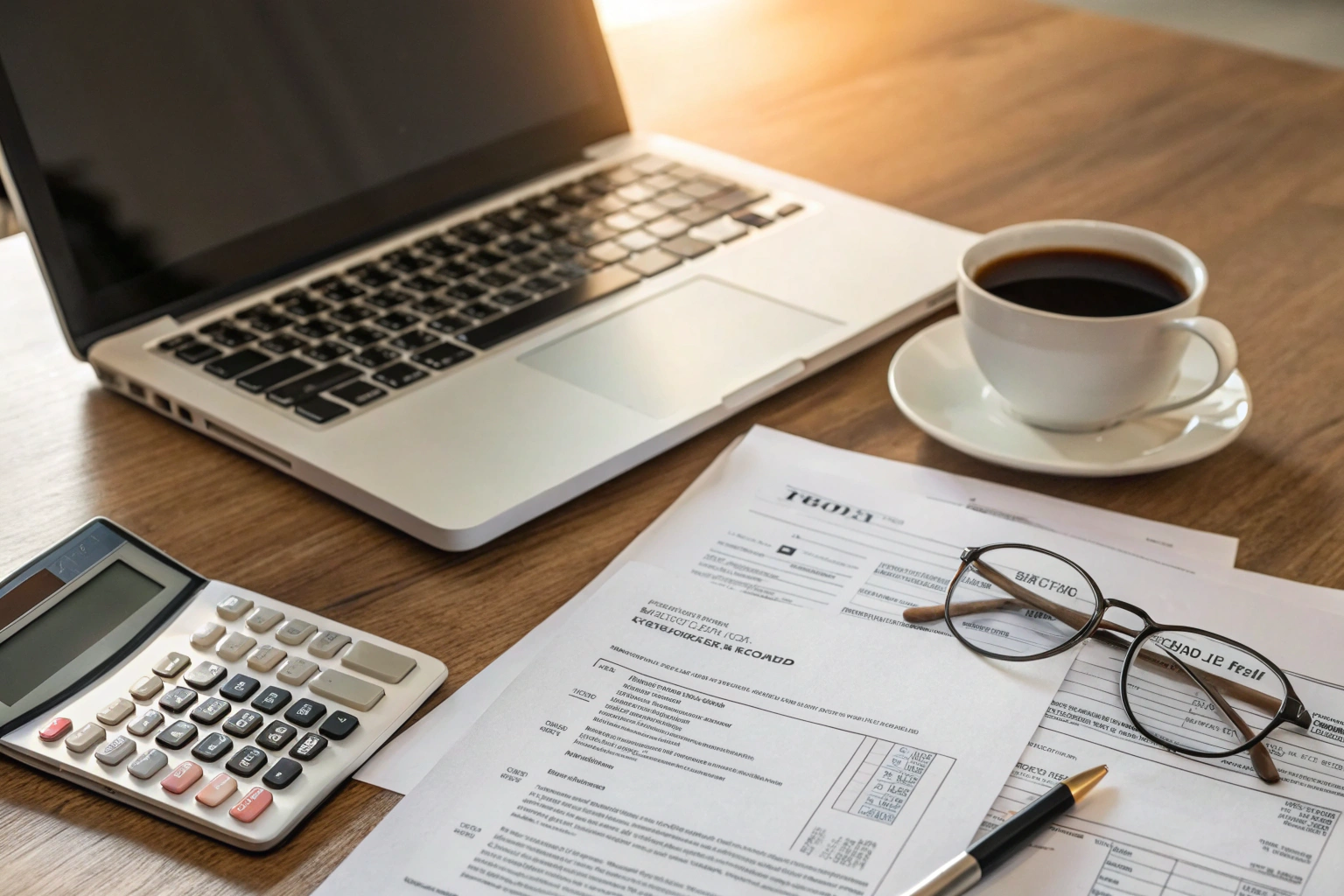
You've found the perfect coffee. The samples tasted amazing. The supplier seems reliable. Then the quote arrives. And your head starts spinning. FOB. CIF. Insurance. Freight. Tariffs. Customs bonds. It feels like a foreign language. Honestly, I've been there. When I first started exporting from China, even I got confused by all the different costs. And I was on the selling side.
So, how do you actually understand the cost breakdown of coffee imports? It's simpler than it looks. You just need to break it into pieces. Think of it like building a house. You have the foundation (the bean cost), the walls (the logistics), and the roof (the taxes and fees). Each part is separate. Each part has to be paid. And if you understand each piece, you can control the total price.
At BeanofCoffee, we work with buyers in North America, Europe, and Australia every day. We send quotes to people like Ron, the 44-year-old business owner from America. He cares about price and timeliness. He needs to know exactly what he's paying for. So we make it clear. We break it down line by line. That's what I'm going to do for you here. Let's walk through the entire cost structure together. By the end, you'll be able to read any quote and know exactly where your money is going.
What Is the Actual Cost of the Coffee Beans Themselves?
Let's start at the very beginning. The bean. This is the base cost. Everything else gets added on top of this. But even "the bean cost" isn't one simple number. It depends on a few things.
First, there's the type of bean. Arabica costs more than Robusta. Always. Our Catimor, which is an Arabica variety, sits in a certain price range. Second, there's the grade. Higher screen size, fewer defects, higher score in cupping—all of that increases the price. Third, there's the processing method. Washed processes often cost more than natural processes because they use more water and labor. And fourth, there are certifications. Organic, Rainforest Alliance, Fair Trade—each certification adds a premium because they require audits and compliance.
Another way to look at this is through the lens of "quality = price." You get what you pay for. A very cheap bean probably has defects. It might taste flat. It might arrive with mold or insect damage. We've seen it happen with buyers who went with the lowest quote. So, when you look at the bean cost, ask yourself: What am I actually paying for? Am I paying for consistency? Am I paying for traceability? Am I paying for peace of mind?
What factors determine the base price of green coffee beans?
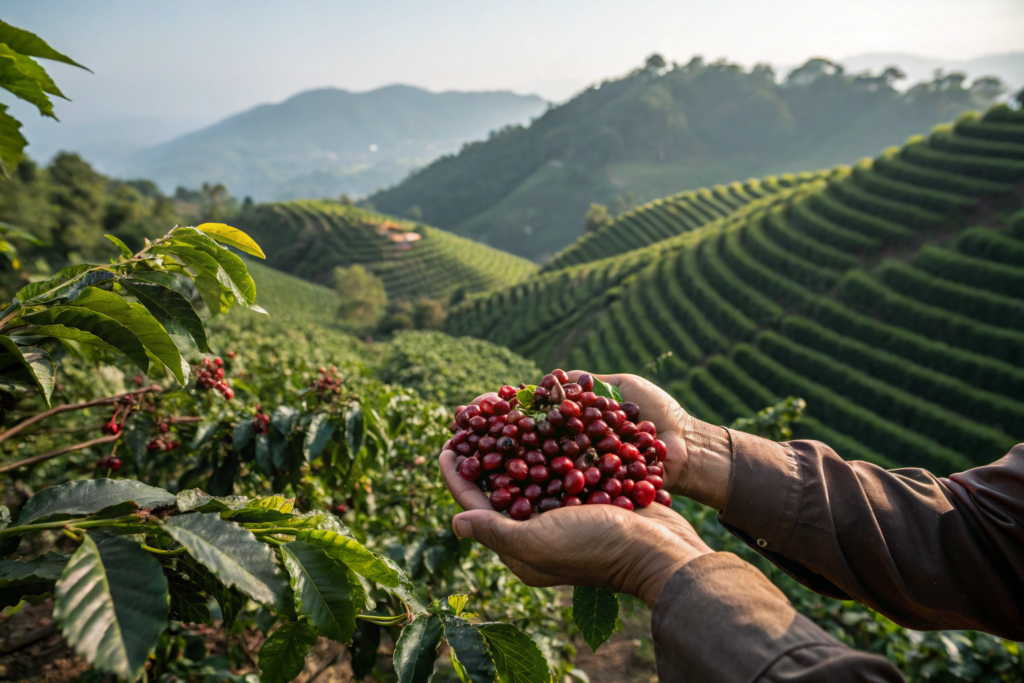
The base price is set by the commodity market, but specialty coffee is different. For our beans from Yunnan, the price reflects the specific growing conditions. High altitude? That costs more. Low temperatures that slow down cherry maturation? That costs more. Both of these create better flavor. Also, the labor cost matters. Hand-picking cherries is expensive. It takes more people and more time than machine harvesting. But it results in fewer defects. So, when you see our price for Arabica, you're paying for the hand-picking, the altitude, and the care. You can check global coffee price trends on resources like the International Coffee Organization website to see how specialty prices compare to the commodity market.
How do certifications like Organic or Fair Trade affect the cost?
Certifications add a layer of cost that many buyers don't see. It's not just a sticker. To get Organic certification, for example, the farm must go through a three-year conversion period where no synthetic chemicals are used. During that time, yields might drop. Then, every year, there's an inspection. There are fees for the certifying body. There's paperwork. All of this costs money. Fair Trade adds a minimum price guarantee and a premium that goes back to the community. These are real costs that the farmer has to cover. So, when you buy certified beans, part of your payment goes toward maintaining those standards. It's an investment in a system. For detailed information on certification costs and requirements, the Fair Trade International website has comprehensive guides.
What Are the Logistics Costs from the Farm to the Port?
Okay, the beans are harvested, processed, and bagged. Now they need to get to you. This is where logistics costs start piling up. And this is also where a lot of confusion happens for first-time importers.
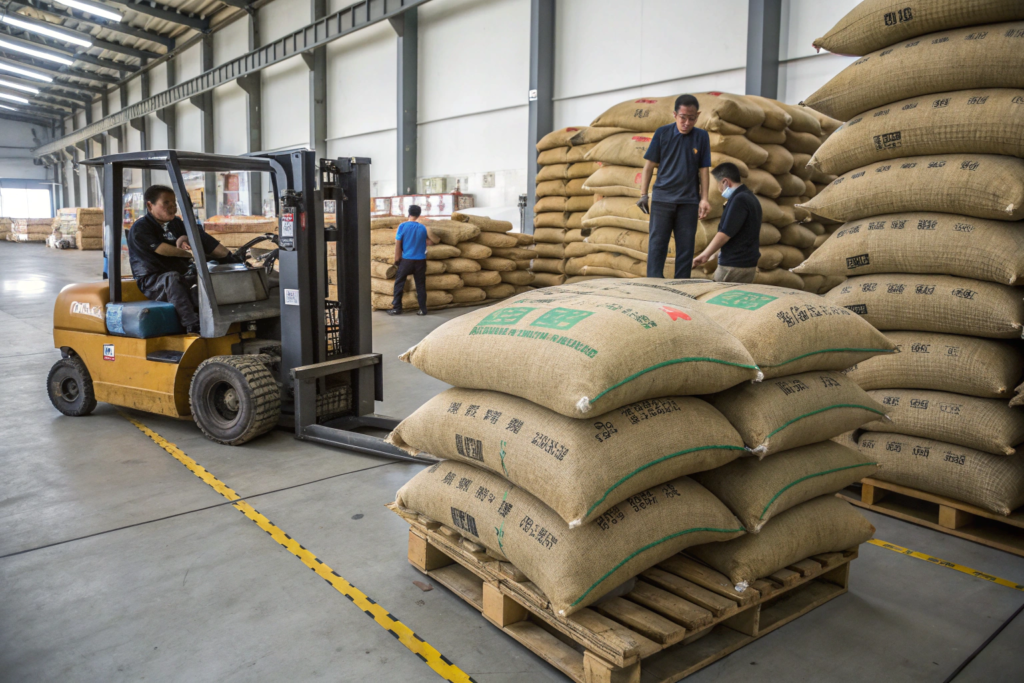
First, there's inland transportation. The beans have to get from our warehouse in Baoshan, Yunnan, to the port in Shanghai. That's a long truck ride. Trucking costs money. Then there are port handling charges. Loading the container onto the ship. Terminal handling fees. Documentation fees for the export declaration. All of these are small amounts, but they add up.
Then you have the big one: ocean freight. The cost of putting that container on a ship and sending it across the ocean. This price changes constantly. It depends on fuel prices, on demand, on port congestion, on the time of year. Before COVID, a container to the U.S. West Coast might cost $2,000. During COVID, it hit $20,000. Now it's somewhere in between. You have to stay flexible.
So, what does this mean for your budget? It means you can't just look at the bean price. You have to look at the total delivered cost. And you have to understand that the freight part is variable. It can change between the day you get the quote and the day you book the shipment.
What is the difference between FOB and CIF pricing?
This is the most common question I get. Let me make it simple. FOB stands for "Free on Board." Under FOB, the seller's responsibility ends when the goods are on the ship. So, with FOB pricing from us at BeanofCoffee, our price includes the bean, the bag, the inland truck to Shanghai, and the port export fees. Once the container is on the vessel, the risk and cost transfer to you. You pay for the ocean freight and insurance.
CIF stands for "Cost, Insurance, and Freight." Under CIF, the seller arranges and pays for the ocean freight and insurance up to the destination port. So, with CIF pricing, we give you one price that includes everything until the ship arrives at your port, say, in Long Beach or Rotterdam.
Which is better for you? It depends. If you have your own freight forwarder and you want control over the shipping line, choose FOB. If you want simplicity and one point of contact, choose CIF. We offer both. The key is to know what you're getting. You can learn more about Incoterms on the International Chamber of Commerce website, which defines these rules.
How do you calculate insurance costs for a coffee shipment?
Insurance is a small cost, but it's essential. You never want to skip it. A container of coffee can be worth $50,000, $100,000, or more. If the ship sinks, or if the container gets damaged, you lose everything. Insurance protects you.
The cost of insurance is usually a small percentage of the total invoice value. Typically, it's around 0.3% to 0.5% of the CIF value. So, for a $50,000 shipment, insurance might cost $150 to $250. That's nothing compared to the risk. When we arrange CIF shipments, we include this cost. If you arrange your own shipping under FOB, you need to ask your freight forwarder to add insurance. Don't assume the ship's liability covers you. It usually doesn't fully. For standard practices, you can look at guidelines from organizations like the International Union of Marine Insurance.
What Import Taxes and Duties Will You Pay?
We're getting closer. The ship has arrived. The beans are in your country. Now you have to get them out of the port. This is where customs duties and taxes come in. And this is another area where new importers get surprised.
Every country has a tariff code for coffee. It's called an HS code. For green, unroasted coffee, the HS code is usually 0901.11. But even within that, there can be sub-codes. The code determines the duty rate. In the United States, the duty on green coffee is generally low. Often it's zero for certain origins under trade agreements. But you still have to pay a Merchandise Processing Fee (MPF) and a Harbor Maintenance Fee (HMF). These are small percentages, but they add up.
In Europe, there is also a duty rate, and then you have VAT (Value Added Tax). VAT can be high—often 20% or more. But here's the key: VAT is usually recoverable if you are a registered business. You pay it at the port, but you claim it back on your tax return. So, it's a cash flow issue, not a final cost.
Another way to look at this is through the lens of "landed cost." Your landed cost is the bean price + logistics + duties + taxes. This is the real number you need to know. This is what tells you if you can make a profit.
How do you find the correct HS code and duty rate for coffee?
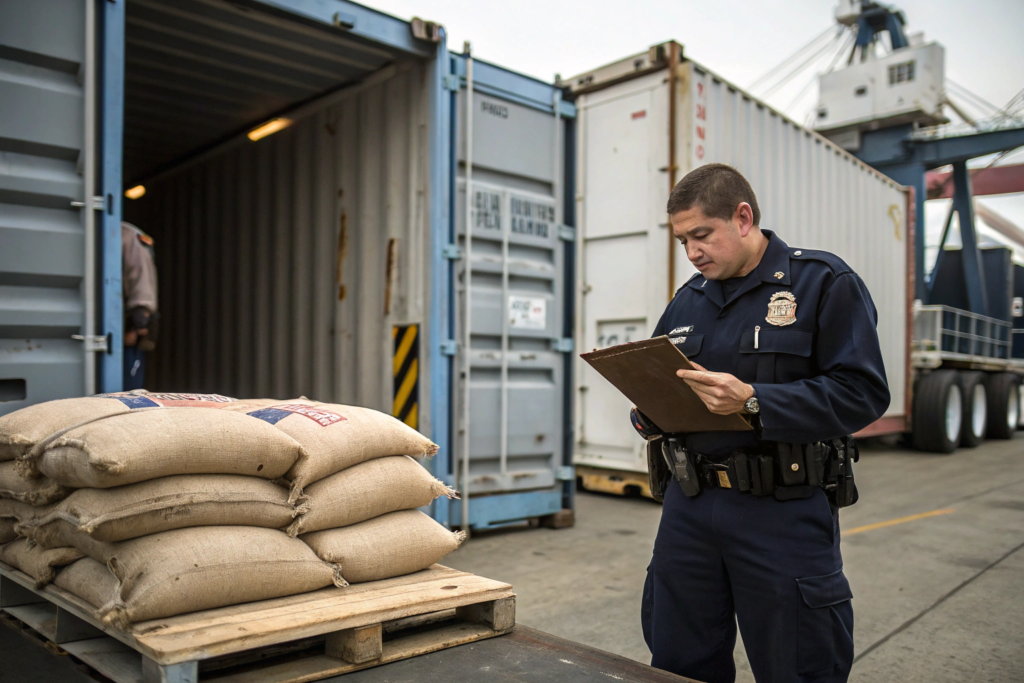
This is a job for your customs broker. A good customs broker is worth their weight in gold. You give them the product description and the country of origin. They tell you the correct HS code and the duty rate. But you can also do some research yourself. In the U.S., you can use the U.S. International Trade Commission's Tariff Database. Search for "coffee" and you'll see the different categories. In Europe, you can use the EU's Access2Markets portal. It's a bit complicated, but it's all public information. We always include the HS code we use on our invoices to make it easier for your broker.
What is the difference between duty and VAT, and how do they impact cash flow?
This trips up a lot of new importers. Let's say you import $10,000 worth of coffee into the UK. The duty rate might be 0% for green coffee from a developing country. So, duty cost = $0. But VAT might be 20%. So, you have to pay $2,000 in VAT to get your coffee out of the port. That's $2,000 cash you need right now.
But here's the good news. When you sell that coffee to your customers, you will charge them VAT. You collect that VAT from them. Then, at the end of the tax period, you tell the government: "I paid $2,000 in VAT at the port, and I collected $3,000 in VAT from my sales. Here's the difference of $1,000." So, you get the $2,000 back eventually. But you have to have the cash flow to cover it upfront. This is a critical point for business planning. We always advise our clients to talk to an accountant in their own country before their first shipment.
What Hidden Fees Should You Watch Out For?
We've covered the big pieces. But there are always smaller fees. I call them "hidden" because new importers don't expect them. But they are normal. You just need to know they exist.
First, there are destination terminal fees. When the ship arrives, the port charges a fee to move the container off the vessel and into the terminal. Then there's a chassis fee if you need a trailer to pull the container. Then there's a delivery order fee from the shipping line. Your freight forwarder will also charge an administration fee for handling the paperwork. None of these are huge. But if you have five of them at $100 each, that's $500 you didn't plan for.
Second, there are demurrage and detention fees. This is the big one. Demurrage is a fee for leaving the container in the port too long. Detention is a fee for keeping the container outside the port too long. The clock starts ticking the moment the ship arrives. You usually have a few "free days." After that, the fees are high. Like $100-$200 per day, per container. So, you need to have your paperwork ready and your truck booked to pick up the container quickly. So, what does this mean? It means you need to work with a forwarder who tells you about all these fees upfront. A good forwarder will give you an "estimated landed cost" that includes everything.
What are demurrage and detention, and how can you avoid them?
Let me give you a real example. A client of ours in Australia once had a shipment arrive on a Friday. His truck was booked for Monday. But there was a public holiday. The port was closed. He couldn't pick up until Tuesday. That was four days after arrival. His free time was only three days. He got charged one day of demurrage. It was $180. Not a disaster, but annoying.
How do you avoid this? First, track the vessel. We give our clients the vessel name and voyage number. You can see exactly when it's coming. Second, have all your documents ready. Make sure your customs clearance is done before the ship arrives. Third, book your truck for the first available pickup day. Don't wait. And fourth, build a buffer into your schedule. If the free time is 5 days, aim to pick up in 3 days. That way, if something goes wrong, you have a cushion. For more tips, logistics companies like DHL's customer guides often have helpful articles on avoiding port fees.
How do currency exchange rates affect your final cost?
This is a big one for international trade. If you are in the U.S. and buying from us in China, our quote might be in U.S. dollars. That's easy. But sometimes quotes are in Chinese Yuan (RMB) or Euros. If the exchange rate changes between the quote date and the payment date, your cost changes.
For example, if the Euro weakens against the dollar, your cost in dollars goes down. Good for you. If the Euro strengthens, your cost goes up. Not so good. How do you manage this? You can ask for the quote to be in your own currency. We always quote in USD for our American clients to avoid this confusion. Or, you can use a forward contract with your bank to lock in an exchange rate. This is more common for very large shipments. But for most coffee buyers, just being aware of the rate and timing your payment can save you money. You can track live rates on sites like XE.com.
Conclusion
Understanding the cost breakdown of coffee imports isn't magic. It's just a list. Bean cost. Logistics. Duties. Fees. Each piece is separate. Each piece is manageable. And when you put them all together, you get your true landed cost. That number tells you if you have a viable business.
At Shanghai Fumao, we believe in transparency. We want you to succeed. That's why we break down every cost for our clients. No surprises. No hidden fees. Just honest numbers so you can plan with confidence.
If you're ready to start your importing journey, or if you just want a clear quote for high-quality Arabica from our Yunnan farms, reach out. Contact our export manager, Cathy Cai. She can walk you through every line item and answer all your questions. Her email is cathy@beanofcoffee.com.