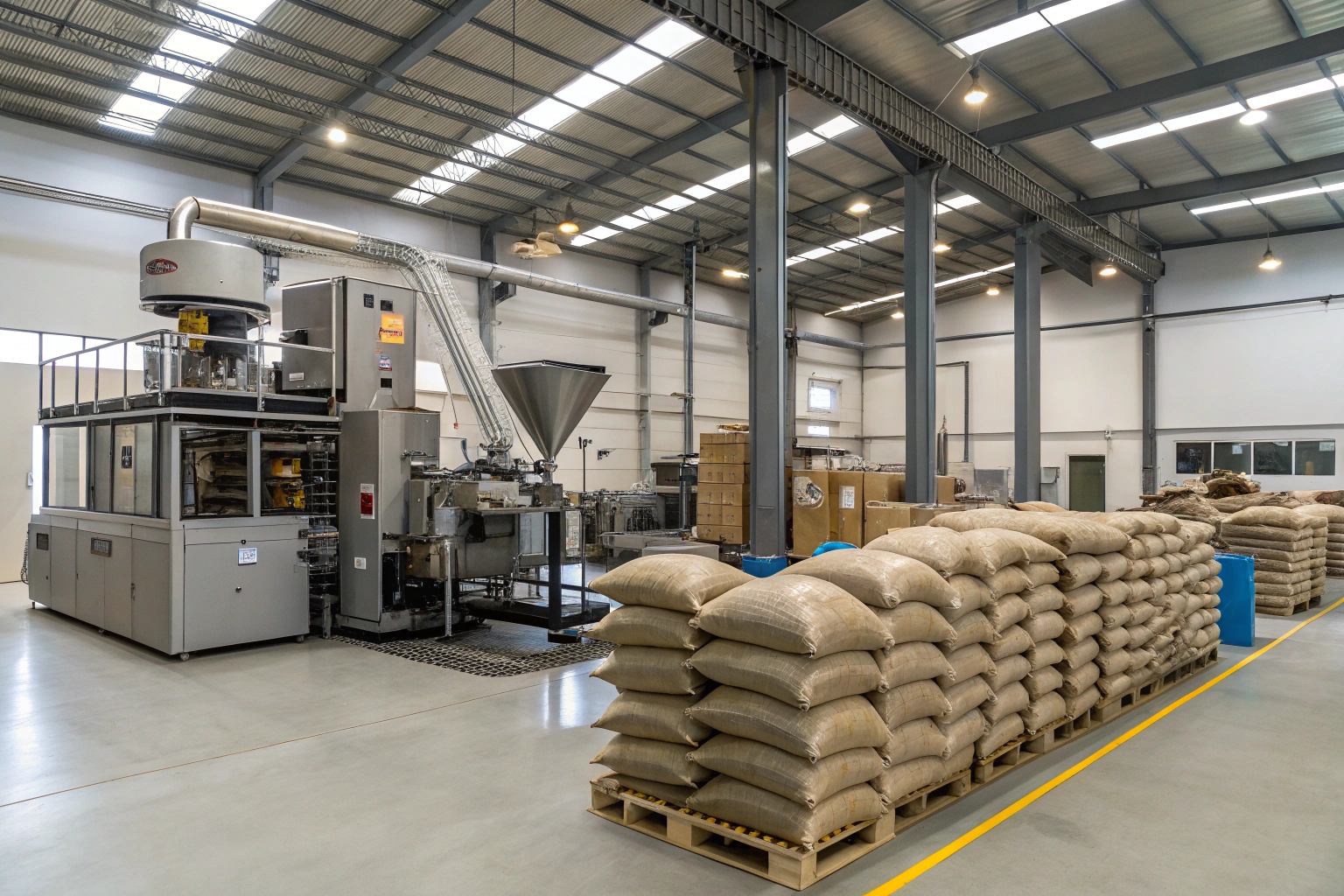
I almost lost a hotel chain contract two years ago because of a grinder. The client needed whole bean coffee for their lobby cafe and pre-ground, portion-packed coffee for their in-room drip machines. Two formats. One supplier. It sounded simple. But every factory I called could do one or the other. The whole bean roasters did not have grinding and portion-packing lines. The ground coffee co-packers did not want to deal with whole bean packaging and the freshness demands that came with it. I spent three weeks stitching together a solution with two different vendors, double the logistics, and a pricing spreadsheet that made my head hurt. The client was patient, but I knew I had one shot to get this right. That experience forced me to find, vet, and eventually build the kind of integrated production capability that multi-format buyers actually need.
Finding a single factory that handles both whole bean and ground wholesale requires looking for a partner with in-house grinding, nitrogen-flushing, and flexible packaging lines that can switch between whole bean bags and ground coffee formats—whether that is bulk packs for cafes or portion-packed pods and sachets for hospitality. The ideal factory has both a commercial drum roaster for whole bean profile development and an industrial roller or disc grinder with precise particle size control, plus the sealing equipment to handle multiple bag formats under one roof. This capability is rare in small artisan roasters and commodity mega-plants alike, but it is exactly what growing multi-channel brands need to consolidate their supply chain.
What I learned in the year after that hotel contract near-miss changed how I think about factory capability entirely. I visited facilities, asked hard questions about grinder maintenance and particle size testing, and eventually invested in our own integrated line in Baoshan. Here is what you need to know to find the right partner, whether it is us or anyone else.
Why Is Finding Both Grinding and Whole Bean Capability Under One Roof So Difficult?
Most coffee factories are built for a single workflow. A specialty roaster invests in a beautiful Probat or Loring drum roaster, a whole bean packaging line, and maybe a small retail grinder for bagged ground coffee sold in tiny volumes. A commodity grinding plant invests in massive industrial roller mills designed to produce thousands of pounds of generic ground coffee for instant or institutional use. These two worlds rarely meet. The specialty roaster does not have the grinding capacity or the particle size discipline for wholesale ground orders. The commodity plant does not have the roast profile flexibility or the whole bean packaging standards for specialty clients.
The difficulty lies in the fundamentally different engineering, hygiene, and quality control requirements of whole bean versus ground coffee production. Whole bean packaging is relatively forgiving. The bean is its own protective shell. Grind it, and you immediately accelerate staling by exposing volatile aromatics and oils to oxygen. A factory that grinds must have nitrogen-flushing or vacuum-sealing on its packaging line, strict protocols for cleaning grinders between different clients' lots to prevent cross-contamination, and a particle size analysis system to ensure the grind matches the client's specification. Few factories invest in all of this because few clients demand both formats from a single source.
A detail I noticed during my factory visits: many places that claimed to do "both" were actually outsourcing the grinding to a third party. They would roast the coffee, truck it across town to a grinding facility, truck it back, and then package it. This was not a single-factory solution. It was a logistics chain with extra handling, extra risk, and extra cost. The beans got lost. The batches got mixed. The freshness suffered. I decided early on that if we were going to offer this, we had to do it all inside our own four walls.
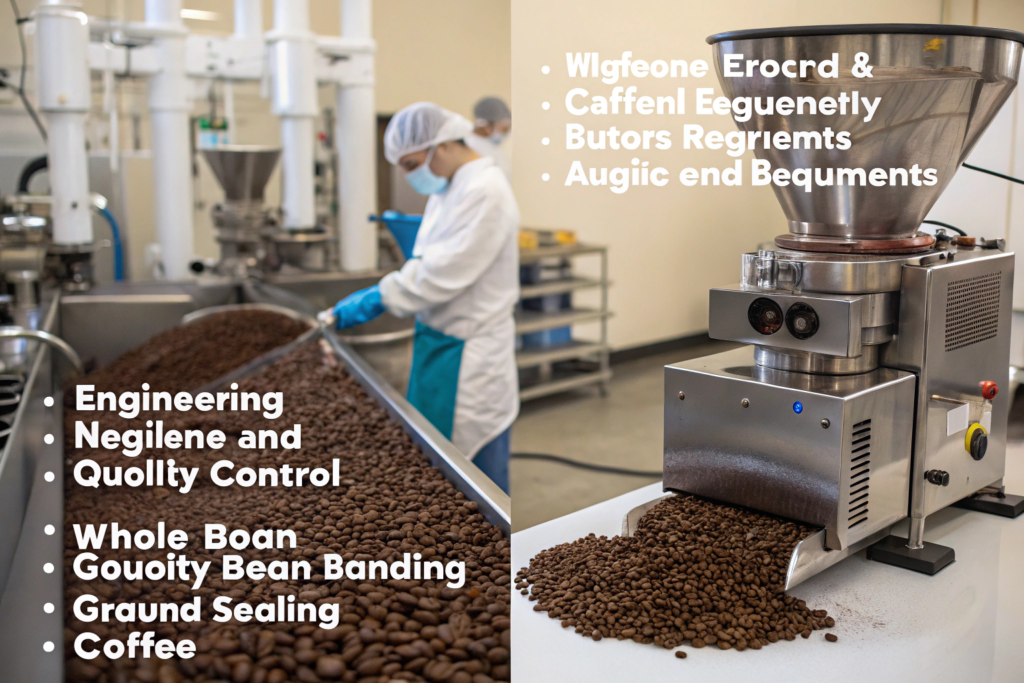
How does cross-contamination between client lots become a risk in shared grinding facilities?
Every coffee has a distinct flavor profile. A dark-roasted Sumatra and a light-roasted Yunnan Arabica have completely different oil content, density, and volatile aromatics. If a grinder is not purged and cleaned between lots, the residue from the previous batch contaminates the next. The client receiving the light-roasted Yunnan suddenly detects a hint of earthy, smoky notes in their ground coffee. They complain about quality. The root cause is not the coffee. It is a dirty grinder. A factory that handles multiple clients must have a documented purge-and-clean protocol between runs, typically involving running a small amount of the next lot through the grinder to flush the previous residue, then a physical cleaning of the burrs or rollers on a set schedule. Ask the factory directly: "How do you prevent cross-contamination between different clients' lots?" If they cannot answer in detail, they are not managing this risk.
What is the minimum volume that justifies an integrated grinding and packaging line?
For a factory to maintain separate grinding, whole bean, and ground packaging lines, there is a baseline volume that keeps the equipment running efficiently. For a specialized co-packer serving the specialty market, this might be as low as 500 to 1,000 kilograms per month across all clients. For a larger industrial plant, it could be 5,000 kilograms or more. The key is not the factory's total volume. It is their willingness to accept your volume. Some factories are giant but flexible. Some are small but rigid. The question to ask is: "What is the minimum batch size for a ground coffee run, and can we combine multiple SKUs into a single production day?" A good partner will work with you to batch your whole bean and ground orders into a single, efficient production schedule that meets their minimums without forcing you to over-order.
How Do You Vet a Factory's Grinding Precision and Particle Size Consistency?
Grinding coffee for wholesale is not the same as grinding it for a retail bag. A cafe ordering pre-ground coffee for their batch brewers needs a specific particle size distribution optimized for their equipment. A hotel chain ordering portion-packed sachets for in-room drip machines needs a different grind, one that works with a specific filter paper and a specific water flow rate. If the grind is off, the extraction is off. The coffee tastes weak or bitter. The end customer blames the coffee brand, not the factory's grinder.
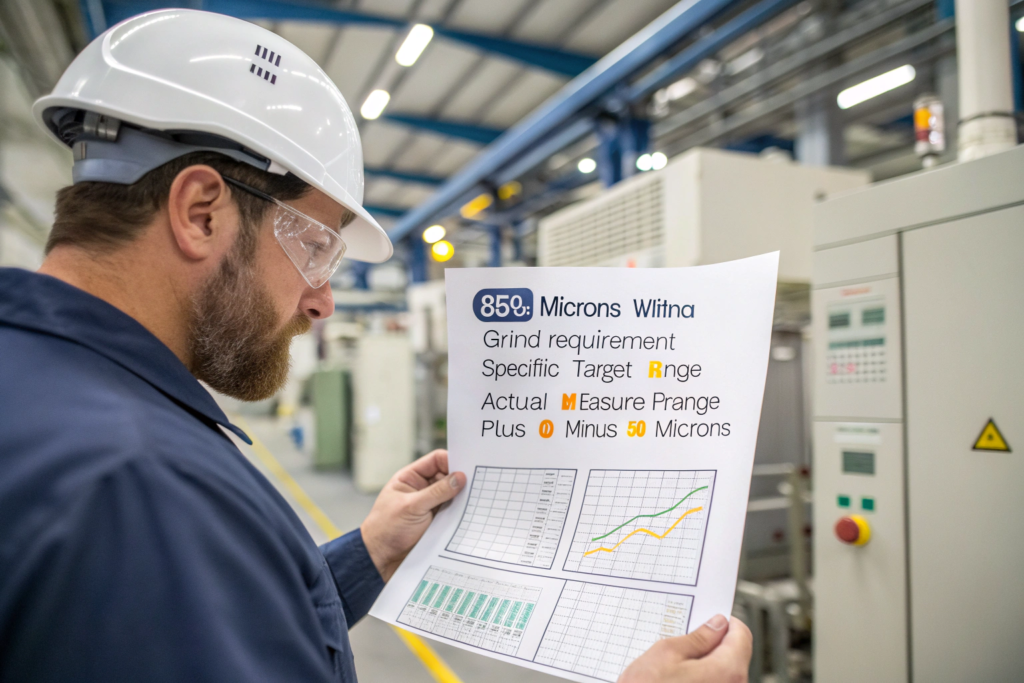
Vetting a factory's grinding capability requires you to ask for a particle size distribution report, not just a "coarse" or "medium" label. A professional grinding operation uses laser diffraction or sieve analysis to measure the exact percentage of particles at various micron sizes. They should be able to produce a lot-specific report showing the target range, the actual measured range, and the variance. They should also be able to match a grind specification that you provide, whether that is "850 microns with a tolerance of plus or minus 50 microns" or a detailed distribution curve. If they look confused when you ask about particle size, they are not a precision grinding facility.
I once received a pre-ground sample from a potential partner that was supposedly "drip grind." I ran it through a simple sieve test in our cupping lab. The particle distribution was all over the place—fines, boulders, everything in between. It would have brewed terribly. The factory was using a cheap disc grinder with worn burrs and no quality control. We did not partner with them. The difference between a worn, uncalibrated grinder and a well-maintained industrial roller mill is the difference between a coffee that tastes as intended and one that tastes like disappointment. For technical background on particle size measurement, the Specialty Coffee Association's brewing standards include grind size as a critical variable. For the equipment side, Mahlkönig's industrial grinding solutions show what serious grinding engineering looks like.
What specific questions reveal whether a factory takes grind consistency seriously?
Ask these five questions. One: "What type of grinder do you use, and what is its burr or roller replacement schedule?" A factory that cannot tell you when the burrs were last replaced is not maintaining their equipment. Two: "Do you perform a particle size analysis on every production batch, and can I see a sample report?" Three: "What is your protocol if a batch falls outside the target particle size range?" Four: "How do you adjust grind size for different roast levels, given that darker roasts are more brittle and produce more fines?" Five: "Can you match a grind specification I provide from my own grinder, and how many trial batches do you need to dial it in?" The answers to these questions separate precision operations from guesswork.
Why does grind consistency directly impact your wholesale customer's extraction quality?
A cafe brewing your coffee on a Fetco batch brewer expects every pot to taste the same. Their recipe is built on a specific dose, water temperature, and extraction time. If the grind size drifts finer, the extraction goes up and the coffee becomes bitter and astringent. If it drifts coarser, the extraction drops and the coffee becomes weak and sour. The cafe owner does not have the time or the equipment to recalibrate their grinder for every new bag. They need the grind to be right, every time, out of the bag. That consistency is what they are paying you for. If your factory cannot deliver it, your brand loses that cafe's trust. This is why particle size control is not a technicality. It is a brand promise.
What Packaging Formats Should an Integrated Whole Bean and Ground Coffee Factory Offer?
A factory that offers both whole bean and ground coffee should also offer the packaging formats that match how those products are actually sold. Whole bean goes into valved bags with tin-ties or zippers, in sizes from 8oz retail to 5lb bulk. Ground coffee for cafes might go into larger 2lb or 5lb valved bags. Ground coffee for hospitality might go into fractional packs—single-serve sachets, filter packs, or compatible pods. If the factory can only do one bag type, you are back to managing multiple vendors for different channels.
A truly integrated coffee factory offers a full spectrum of packaging formats that match every wholesale channel. For whole bean, this means valved block-bottom bags, side-gusseted stand-up pouches, and bulk sacks. For ground coffee, it means the same retail bag formats plus fractional pack options: single-serve stick packs, drip-filter sachets, and compatible capsules. The factory should have the sealing equipment to handle nitrogen flushing across all these formats and the labeling capability to customize each one with your brand. This breadth of capability is what allows a single supplier to serve your cafe, retail, e-commerce, and hospitality channels from one production schedule.
One of our hotel clients needs three formats from the same coffee: 5lb whole bean bags for the lobby espresso, 2lb ground bags for the banquet kitchen's batch brewers, and individually wrapped drip-filter sachets for the guest rooms. All three formats come from the same roast batch, ground and packed on the same production day, and shipped together. This integration is what makes the supply chain manageable. The client places one order, receives one consolidated shipment, and deals with one invoice. The alternative—three different vendors—would be a logistical nightmare. For inspiration on packaging formats, Packaging of the World's coffee section showcases what is possible across all these formats. For functional standards, the Specialty Coffee Association's packaging resources cover the technical requirements for freshness and barrier protection.
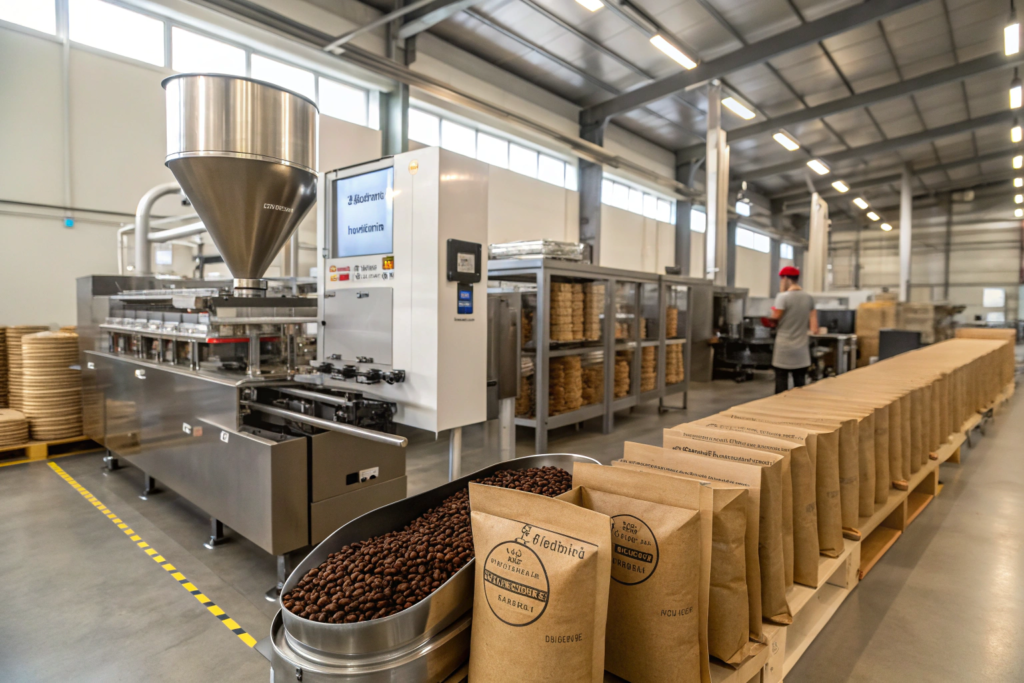
What is the difference between a fractional pack and a bulk ground bag, and why does it matter?
A bulk ground bag is a single large bag, like a 5lb valved pouch, filled with ground coffee. The customer—usually a cafe or restaurant—opens the bag, scoops out what they need, and re-seals it. A fractional pack is a pre-portioned, single-use packet. Think of a drip-filter sachet that sits on top of a hotel room coffee mug. The coffee is ground, dosed into an individual filter paper, and sealed in a nitrogen-flushed envelope. The equipment and the quality control for fractional packs are completely different from bulk bags. The dosing has to be precise to within a few grams. The seal integrity has to be perfect, or the nitrogen leaks and the coffee stales. A factory that can do both has invested in two entirely separate packaging lines, which is a significant commitment.
How does nitrogen flushing work differently for whole bean versus ground coffee packaging?
Whole beans release carbon dioxide slowly over days and weeks, which can actually help displace oxygen in a sealed bag if a one-way valve is used. Ground coffee releases gas much faster, but it also stales much faster because the surface area exposed to oxygen is exponentially larger. For ground coffee, nitrogen flushing is not optional. It is essential. The packaging machine must evacuate the oxygen from the bag and replace it with nitrogen immediately after grinding and filling, and the residual oxygen level must be tested. At our facility, we target below 3% residual oxygen for whole bean and below 2% for ground coffee. This is a technical distinction that a factory should be able to explain. If they treat whole bean and ground the same way on the packaging line, they do not understand the different physics of staling.
How Do You Consolidate Logistics for Mixed Whole Bean and Ground Wholesale Shipments?
You have found a factory that can do both formats. The coffee is roasted, ground, packed, and ready. Now comes the next challenge: getting it to multiple locations without the shipping costs eating your margin alive. A mixed shipment of whole bean and ground coffee, especially when fractional packs are involved, has different cube utilization, different weight distribution, and different handling requirements than a uniform pallet of whole bean bags.
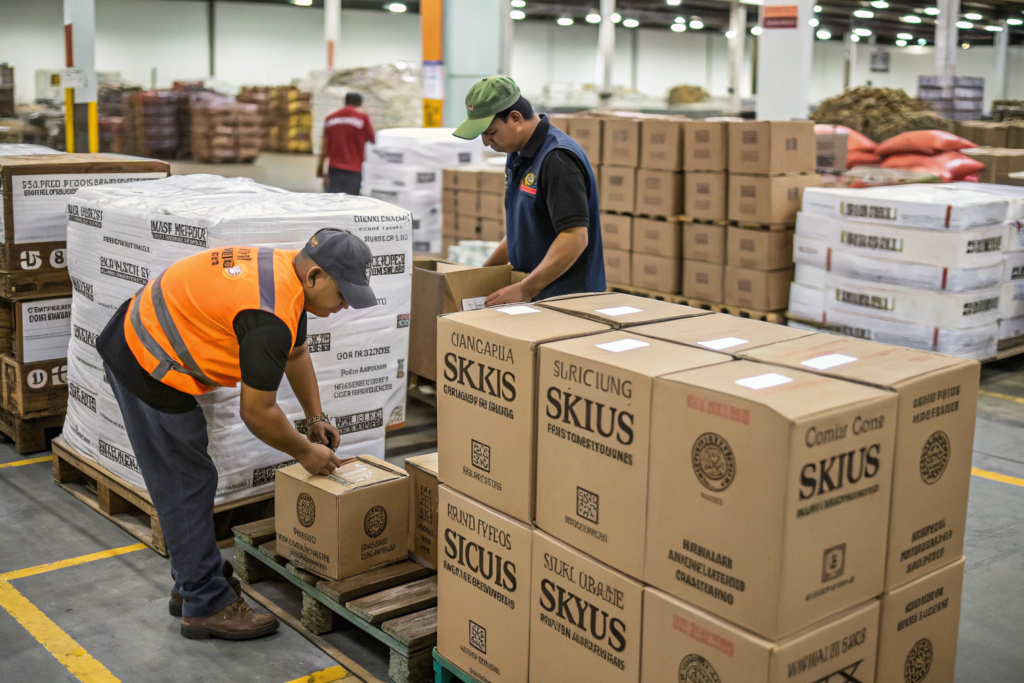
Consolidating logistics for mixed whole bean and ground coffee shipments means designing the pallet configuration and the shipping documentation before production even starts. The factory's logistics team should map out exactly how many cartons of each SKU fit on a standard pallet, calculate the total cubic volume and weight, and optimize the mix to minimize dead air space in the container. For multi-location deliveries, the cartons should be pre-labeled by destination at the factory and either cross-docked at a central warehouse or shipped as separate LCL consignments with clear destination markings. The goal is for the receiving location to open the container or pallet and immediately see which cartons are theirs, without sorting through a mixed heap.
I learned the hard way that a mixed shipment without pre-labeled destination cartons turns into chaos. A distributor received a pallet with 12 different SKUs, some whole bean and some ground, destined for three different cafes. The labels were on the individual bags, not the outer cartons. The distributor had to open every carton to figure out what was inside and where it was going. That client very politely told us we needed to fix the system. We did. Now, every outer carton has a large, clear label with the destination name, the SKU, and the quantity inside. The distributor never has to open a carton except to put the bags on the shelf.
How do you design a pallet map for mixed-format coffee shipments?
Create a visual diagram before the pallet is built. A standard pallet is 48 inches by 40 inches. Cartons of 12oz retail bags, 2lb bulk bags, and fractional pack cases have different dimensions. The pallet map should show exactly which cartons go where, layer by layer, with heavier cartons on the bottom and lighter, more fragile ones on top. The map should be sent to the buyer for approval before the shipment is packed. This prevents the "tower of Pisa" pallet that arrives leaning, collapsed, or with crushed cartons on the bottom. A good factory includes the pallet map as a standard part of the shipping documentation.
What shipping documentation prevents customs delays for multi-format coffee imports?
A detailed packing list is your best defense against customs delays. It should list every SKU with its harmonized tariff code, its net weight, its gross weight including packaging, its country of origin, and its carton count. Whole bean and ground coffee may share the same HTS code, but fractional packs in filter paper might be classified differently if the packaging is considered part of a "set" or "kit." A customs broker can advise on the correct classification. The important thing is that the packing list is meticulously accurate and matches the commercial invoice exactly. Discrepancies trigger inspections, and inspections trigger delays and demurrage charges. For official tariff classification resources, the U.S. International Trade Commission's HTS lookup is the primary reference. For logistics management, the Freightos digital freight platform provides tools for quoting and managing multi-SKU international shipments.
Conclusion
Finding a single factory that handles both whole bean and ground wholesale is not about convenience. It is about supply chain integrity. Every time you split production between two vendors, you introduce a handoff, a communication gap, a quality risk, and a cost. When you find the right integrated partner, you collapse complexity. One roast batch, one production schedule, one set of quality tests, one consolidated shipment, one invoice. Your whole bean cafe supply and your ground coffee hospitality program become two branches of the same tree, not two separate forests.
If you are currently juggling multiple suppliers for your whole bean and ground formats, or if you are looking to launch a multi-format program and want to start with a single, capable partner, I would like to show you what our integrated facility in Baoshan can do. We have invested in the roasting, grinding, nitrogen-flushing, and packaging equipment to handle everything from a 5lb whole bean bag to a single-serve drip sachet, all under one roof, all to your specifications. Contact Cathy Cai at cathy@beanofcoffee.com. She can send you our capabilities document, arrange sample production across your target formats, and build a consolidated logistics plan that works for all your locations. You did not get into coffee to manage a fragmented supply chain. Let us handle the complexity for you.