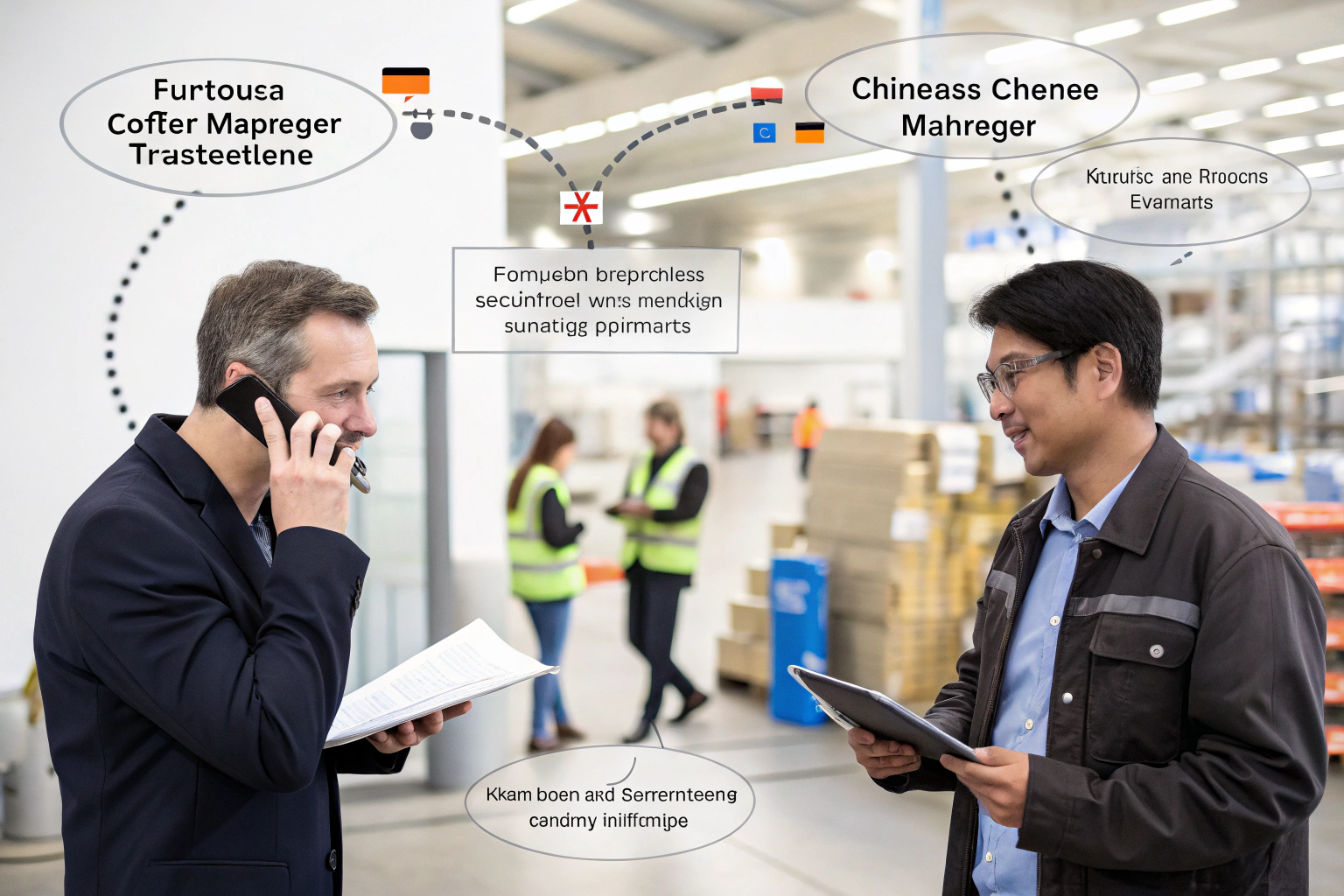
I lost a container of coffee once. Not literally. The ship did not sink. The coffee did not get stolen. But for three weeks, I had no idea where it was. The shipping line's tracking system was down. My logistics coordinator in Shanghai was out sick. The client in San Francisco was emailing me every day, his tone getting sharper and sharper. I was forwarding those emails to a freight forwarder who replied in single-word sentences. And then, after twenty-one days of silence, the container appeared at the Port of Oakland, completely fine, as if it had never been missing. But the damage was already done. The client said, "The coffee is great, but I cannot work with someone who disappears when things go wrong." That was the day I realized communication is not a soft skill in this business. It is the business.
Communication is the biggest hurdle in international coffee trade because the supply chain is long, multi-party, culturally diverse, and linguistically fragmented, and every link in that chain represents an opportunity for a small misunderstanding to become a catastrophic delay. A buyer in Germany asks a question in English, which is translated into Chinese for a logistics manager, who passes it to a warehouse worker speaking a local dialect, and the answer travels back through the same fragile chain. At each step, context evaporates, nuance disappears, and what started as a simple inquiry about an estimated ship date becomes a game of telephone played across eight time zones and three languages.
This is not a theoretical problem. This is the daily reality of moving coffee from a farm in Baoshan to a roastery in Portland or a cafe in Melbourne. Over the years, I have developed systems, protocols, and habits to close these communication gaps. Here is what I have learned about why the gaps exist, how they hurt businesses, and what both suppliers and buyers can do to build bridges that actually hold.
Why Do Language Barriers Create More Than Just Translation Problems in Coffee Sourcing?
I speak enough English to run my business. But I am not a native speaker. I think in Chinese. I sometimes translate literally in my head, and the result is a sentence that is grammatically correct but emotionally wrong. "We will try to ship next week" is what I might say. What a native English speaker hears is, "We are not committing to anything, and we are probably already delayed." What I actually meant was, "We are working hard and I am confident it will go next week." The words were right. The confidence was lost.
Language barriers in coffee sourcing go far beyond vocabulary mismatches. They create a layer of emotional and contextual blindness between buyer and supplier. Direct translations often strip out the tone, the urgency, the commitment level, and the cultural nuance that a native speaker instinctively encodes in their language. A supplier's "maybe" might mean "I am 90% sure but I am humble enough not to overpromise." A buyer's "as soon as possible" might be a polite way of saying "you are already late." Neither side hears the true message. Resentment builds. Trust erodes. And it all happens invisibly, inside the gaps between translated words.
A detail I have noticed over many years of cross-cultural negotiation: Chinese business communication tends to be indirect, especially around bad news. A supplier might say, "There is a small problem with the container," when the container has actually missed the vessel entirely and is sitting at the port. They are not lying. They are softening the blow, trying to manage the relationship by avoiding a dramatic confrontation. But the Western buyer hears the "small problem" language, assumes it is minor, and then explodes when they discover the full truth. The supplier is confused by the anger. They thought they were being polite. The buyer feels deceived. This pattern repeats endlessly across the industry. The Specialty Coffee Association's trade relations resources provide excellent frameworks for navigating these cultural differences. For a practical language perspective, the Common European Framework of Reference for Languages is the standard many international businesses use to assess and bridge language competency gaps.
How can a bilingual liaison on the supplier side prevent most translation misunderstandings?
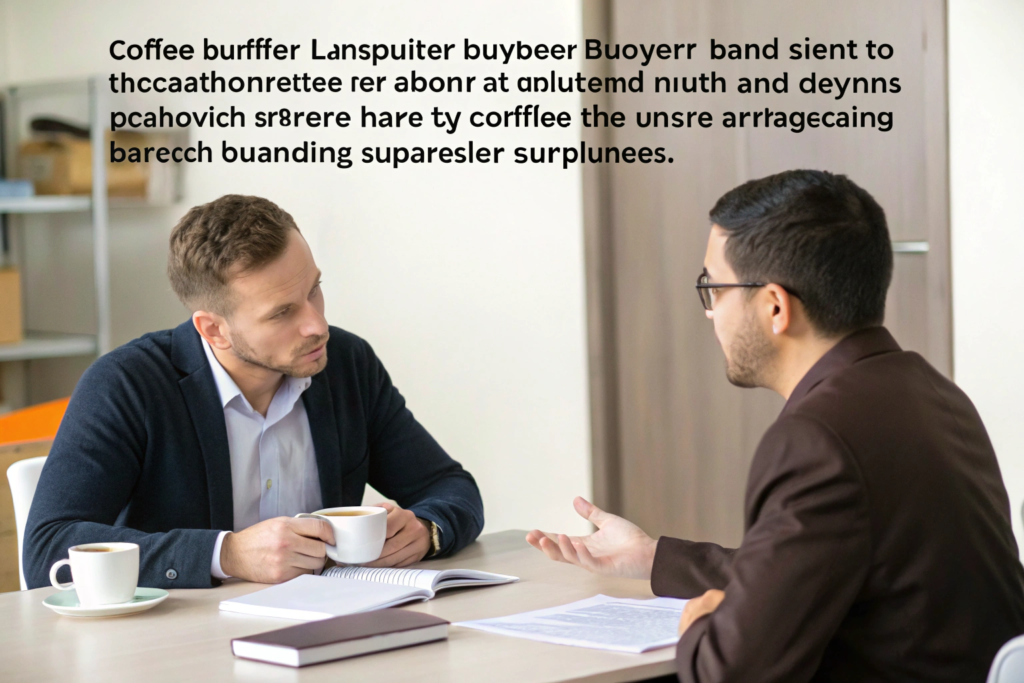
A bilingual liaison is not just a translator. They are a cultural interpreter. They understand not just the words, but the intent behind the words in both directions. When I say, "We will try to ship next week," my liaison Cathy, who works directly with our international clients, knows to rephrase that for the Western buyer: "We expect to ship next week, and I will confirm the exact vessel and departure date by Wednesday." She adds the specificity and the commitment that my culturally humble phrasing left out. She also does the reverse. When a buyer says, "This is unacceptable," she does not translate it as the harsh Chinese equivalent. She translates the urgency without the personal offense. This role is not optional for any coffee exporter who is serious about international trade. It is the single most important hire you will make.
Why do direct translations of coffee-specific terminology often fail?
The coffee supply chain has its own language. Terms like "FOB," "CIF," "GrainPro," "water activity," "cupping score," "defect count," and "moisture content" have precise, legally significant meanings. A mistranslation of "FOB Shanghai" as something like "free on board" translated literally could lead to a dispute over who pays for what. I have seen a contract where the term "pre-shipment sample" was translated in a way that the buyer thought it meant a sample from the actual container, while the supplier thought it meant a generic sample from the same harvest. The coffee arrived, and it was slightly different. A huge argument erupted. The root cause was not bad coffee. It was two people using the same English words but attaching different meanings based on their own industry context.
How Do Time Zone Differences Disrupt the Flow of Urgent Decisions in Coffee Logistics?
The coffee world runs on a split schedule. When I am starting my morning in Baoshan, checking on the drying beds and cupping new lots, my client in California is finishing dinner and putting his kids to bed. When he wakes up and checks his email at 7 AM his time, I am already home for the evening, having dinner with my own family. There is almost no real-time overlap. Every conversation is asynchronous. And asynchronous communication is a breeding ground for anxiety.
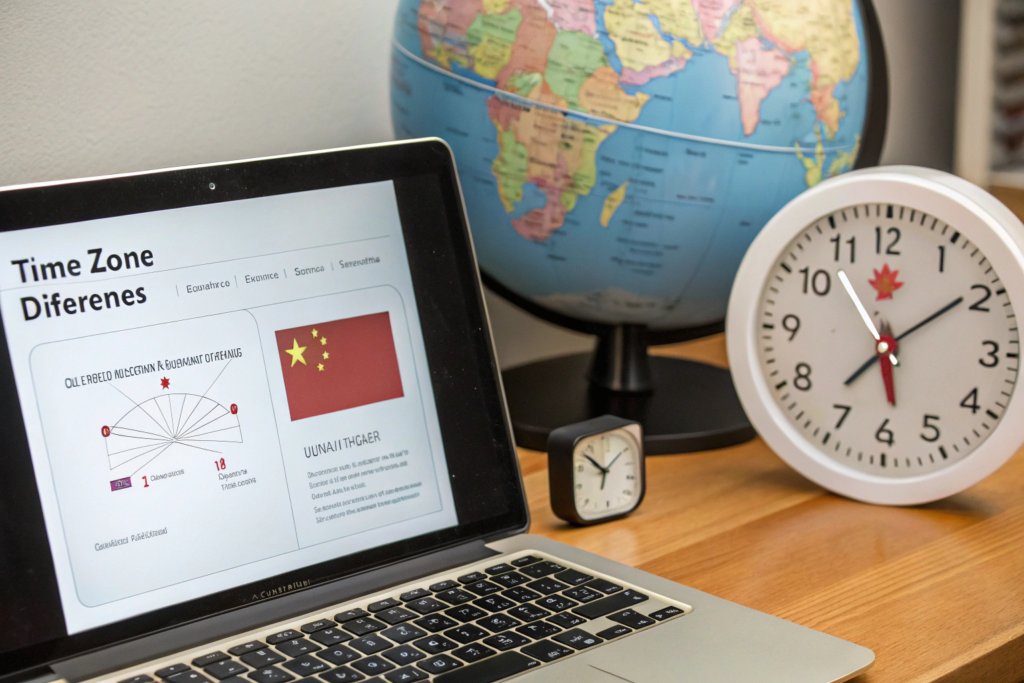
Time zone gaps, particularly the 12 to 15 hour difference between China and the mainland United States, turn what should be a 10-minute real-time conversation into a 24 to 48 hour email thread. A buyer sends a question at 9 AM their time. I receive it at midnight my time. I reply at 9 AM my time. They receive it at 6 PM their time and reply the next morning. A single question and answer cycle consumes two full business days. If the answer generates a follow-up question, it consumes two more. In an industry where a vessel booking deadline can expire in hours, this lag is not an inconvenience. It is a direct threat to on-time performance.
I have learned to manage this by being relentlessly proactive. I anticipate questions before they are asked. When I send a shipment update, I do not just say "it is on schedule." I include the vessel name, the estimated departure date, the estimated arrival date, the container number, the bill of lading draft, and the contact details of the receiving agent. I try to answer every question the buyer might have in a single email, so the loop closes in one cycle instead of three. This discipline is not natural. It is learned. And it is the only way to function across a 15-hour time gap.
What communication protocols can close the 15-hour gap between China and the U.S.?
First, agree on a shared communication tool where messages are threaded and searchable. We use email for formal documentation and WhatsApp or WeChat for quick updates. Second, establish a "communication window" where both sides commit to being available. For us, it is often 8 PM to 10 PM China time, which is 5 AM to 7 AM on the West Coast. One of us stays up a little late. The other wakes up a little early. It is not ideal, but it works. Third, use a project management tool or a shared document that tracks the status of every active order, so the buyer can check the real-time status without having to send an email at all. The Project Management Institute's communication planning resources offer frameworks that apply directly to this kind of cross-time-zone coordination. For logistics specifically, Maersk's digital tracking platform is an example of the kind of tool that reduces the need for back-and-forth emails entirely.
Why is "proactive over-communication" the only sustainable strategy across time zones?
You cannot afford to be reactive. If you wait for the buyer to ask a question, you have already lost days. Proactive over-communication means you send updates before they are requested. You send the vessel confirmation the moment you have it, even if it is midnight your time. You send a photo of the container being loaded. You send a screenshot of the tracking page. The buyer should feel like they are watching the shipment move in near real-time, not like they are pulling teeth to get a scrap of information. This level of communication feels excessive when everything is going well. But it is precisely what prevents anxiety, builds trust, and makes the buyer feel secure enough to place larger orders. At Shanghai Fumao, we operate on a simple principle: no client should ever have to ask us where their coffee is.
What Role Do Unspoken Cultural Assumptions Play in Ruining a Coffee Trade Partnership?
A buyer from Australia once visited our farm. I was excited to host him. I prepared a dinner, a tour, a cupping session. At the end of the visit, he looked a little uncomfortable. He finally said, "I need to be honest with you. The coffee is fantastic. But I almost did not come. Your emails were so short. No greeting. No 'how are you.' Just the facts. I thought you did not like me." I was stunned. In my Chinese business culture, short, direct emails are a sign of respect for the other person's time. I was trying to be professional. He was reading it as cold and dismissive.
Unspoken cultural assumptions are the silent iceberg that sinks international coffee partnerships. A buyer from a relationship-oriented culture expects warmth, small talk, and personal connection as a foundation for business. A supplier from a task-oriented culture expects efficiency, brevity, and a focus on the transaction as a sign of professionalism. Neither is wrong. But when these two cultures collide without explicit conversation, the buyer feels disrespected, the supplier feels confused, and the partnership collapses for reasons that have nothing to do with coffee quality or price.
Another common landmine: the concept of time. In many Western business cultures, a deadline is a promise. Missing a deadline is a breach of trust. In some Asian business contexts, a deadline is a target. Missing it slightly, with a reasonable explanation, is not a catastrophe. A supplier says, "We will ship by March 15th," and they ship on March 18th. To them, this is close enough. To the buyer, this is a three-day failure. The supplier does not understand the buyer's anger. The buyer does not understand the supplier's relaxed attitude. Both are operating from deeply ingrained cultural assumptions they have never actually discussed.

How do "high-context" and "low-context" communication styles clash in coffee buying?
China is a high-context culture. Meaning is embedded in the relationship, the situation, and the non-verbal cues. "Yes" might mean "I understand you," not "I agree to do that." "We will consider it" might mean "no." The United States, Germany, and Australia are low-context cultures. Meaning is embedded in the explicit words. "Yes" means yes. "No" means no. When a low-context buyer asks a direct question and receives a high-context answer, they walk away with a completely inaccurate understanding of the agreement. The only solution is to train both sides in the basics of cross-cultural communication. It takes one honest conversation: "When I say yes, I mean yes. When you say yes, what do you mean?" This conversation feels awkward. It is infinitely less awkward than a failed shipment.
Why is "saving face" a powerful force in Asian supplier communication?
Saving face, or maintaining dignity and avoiding public embarrassment, is deeply important in many Asian business cultures. A supplier might delay telling a buyer about a problem because admitting the problem publicly would cause them to lose face. They hope to fix it quietly before the buyer notices. From the buyer's perspective, this looks like dishonesty. From the supplier's perspective, it is a desperate attempt to preserve a reputation. Understanding this dynamic does not excuse the behavior, but it explains it. A buyer who builds a relationship where problems can be shared without humiliation will get the truth much faster. I tell my clients: "I want you to tell me problems immediately. I will never punish you for bad news. I will only be frustrated if you hide it." This explicit permission changes everything.
What Communication Protocols Do the Most Reliable Coffee Exporters Use to Prevent Disputes?
The most reliable exporters are not the ones who never have problems. They are the ones who have built communication systems that catch problems early, resolve them quickly, and leave a clear, documented trail of every decision. This is not about charisma. It is about process engineering applied to human conversation.
Reliable coffee exporters use a layered communication system that separates formal, legal communications from informal, operational updates. Formal communications—contracts, quality disputes, shipping document approvals—go through email with clear subject lines and are archived systematically. Informal updates—shipping status, sample feedback, quick questions—go through instant messaging platforms like WhatsApp or WeChat, with the understanding that any substantive agreement reached there will be confirmed in a follow-up email. This dual-layer system prevents the chaos of important decisions being buried in a chat scroll, while still allowing the speed and warmth of instant messaging for daily operations.
We have a simple internal rule: if a decision is made on a phone call or a chat message, someone sends a one-line email summary within one hour. "Confirming our conversation: we agreed to extend the shipment date to March 25th due to the vessel delay. Please reply to confirm." This takes sixty seconds. It creates a legal record. It prevents the "I thought you meant..." arguments that poison trade relationships.

How should a coffee exporter handle a formal quality dispute communication?
Quality disputes are the most emotionally charged conversation in the trade. The buyer is disappointed and possibly angry. The supplier is defensive and possibly embarrassed. This is precisely why a formal, structured protocol is essential. The protocol should be: one, the buyer sends a detailed written complaint with photos and cupping notes. Two, the supplier acknowledges receipt within 24 hours and requests a sealed sample be sent to a pre-agreed third-party SCA-certified lab. Three, both parties agree in writing to be bound by the lab's findings. Four, upon receiving the lab results, the supplier proposes a resolution—a replacement, a discount, a credit—within 48 hours. This protocol removes emotion from the process and replaces it with evidence and clear timelines. The Green Coffee Association's dispute resolution guidelines are the industry standard reference for this. For the cupping protocol, the SCA cupping standards provide the objective measurement framework that prevents arguments about subjective taste.
Why is a post-shipment debrief call more valuable than a hundred status emails?
After every major shipment, I schedule a 30-minute video call with the client. The purpose is not to sell anything. It is to ask three questions: "What went well?", "What could have been better?", and "What do you need from me for the next order?" This call often reveals tiny communication failures that never rose to the level of a formal complaint but left a bad taste. "The pallets were stacked a little high and my warehouse team struggled." "The shipping documents had a typo in the port code that delayed customs by a day." These are fixable problems. But they only surface in a conversation explicitly designed to surface them. A client who feels heard in a debrief call is a client who will give you the next order without a bid. For more on how we structure these partnerships, Shanghai Fumao integrates this feedback loop into every long-term client relationship.
Conclusion
Communication is the biggest hurdle in international coffee trade because it is the layer that sits on top of everything else. You can have the best coffee in the world, the best price, the best logistics. But if your communication is slow, culturally misaligned, linguistically garbled, and lost in time zones, none of the rest matters. The buyer will never taste your coffee because they will never trust you enough to order it. The solution is not to become a native speaker or to work 24 hours a day. The solution is to build systems: bilingual cultural liaisons, proactive over-communication protocols, explicit cross-cultural conversations, formal dispute resolution procedures, and consistent debrief rituals.
If you are a buyer who has been burned by communication failures with previous suppliers, or if you are simply looking for a partner who treats communication as seriously as coffee quality, I would welcome a conversation. We have spent years building the systems I have described here, and we are always working to improve them. Contact Cathy Cai at cathy@beanofcoffee.com. She is our international client liaison, our cultural bridge, and the person who ensures you never have to wonder where your coffee is. Ask her about our communication protocols. Test her responsiveness. We believe you should not have to fight for information. You should have to decide what to do with it.