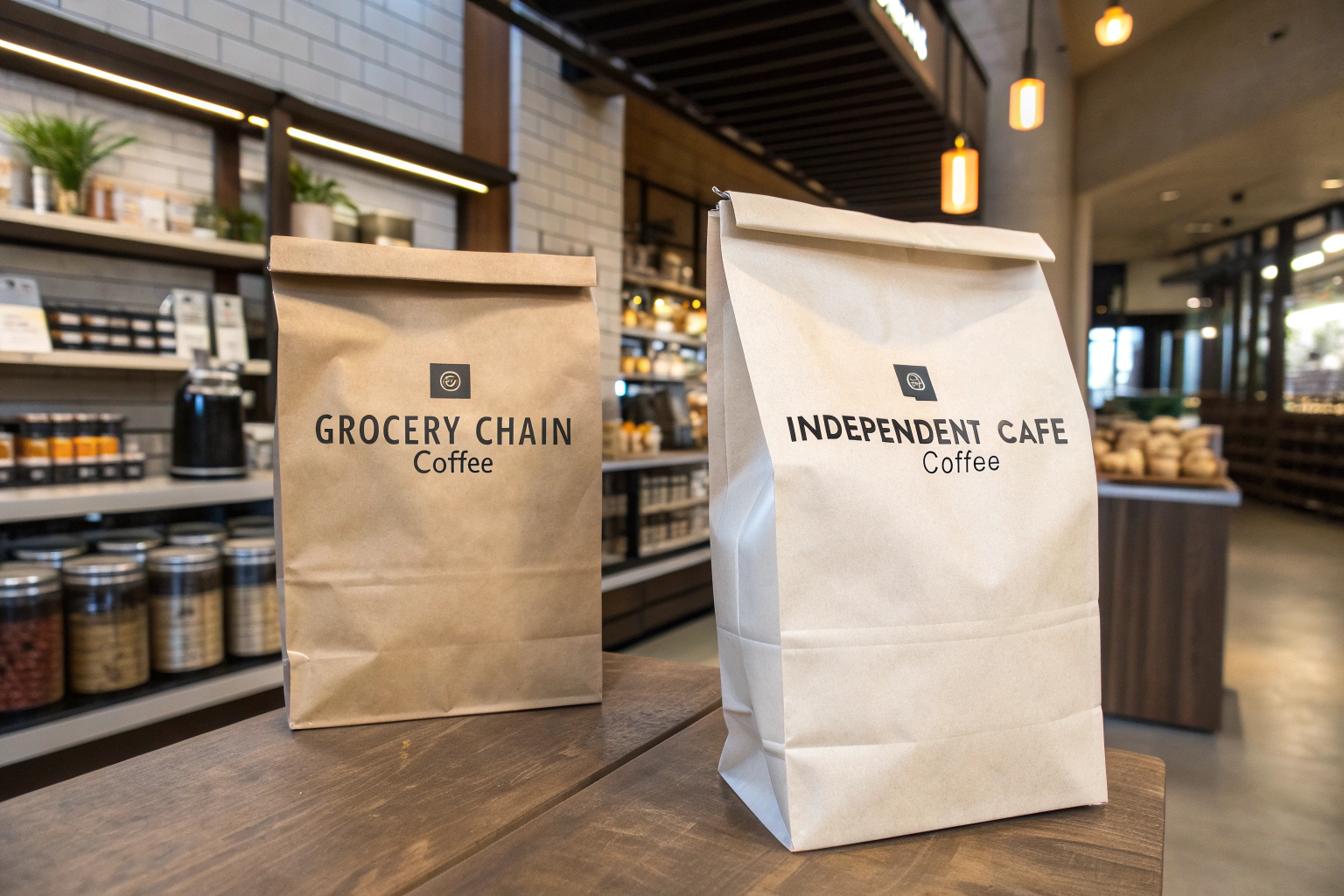
I made a mistake early on that cost me a grocery buyer relationship I had spent six months building. The buyer from a regional chain in the Midwest had tasted our washed Yunnan Arabica, loved it, and was ready to place a trial order. Then she asked me a question I was not prepared for: "What is your guaranteed shelf life on the retail bag, and how do you handle unsold stock returns?" I said, "Our coffee is fresh, we roast to order, and we don't do returns." She closed her notebook, thanked me for my time, and left. I did not understand what had just happened. I thought I had given a confident, quality-focused answer. What I had actually communicated was: "I do not understand how grocery works, and I will be a liability as a supplier."
Selling coffee to grocery chains versus independent cafes requires fundamentally different business models. Grocery is a slow-moving, compliance-heavy, margin-compressed channel where the buyer's priorities are shelf stability, scan data, slotting fees, and guaranteed sell-through. Cafe is a fast-moving, relationship-driven, quality-focused channel where the buyer's priorities are flavor, freshness, barista training, and equipment support. A supplier who treats these two channels the same will fail in at least one of them, probably both. The coffee inside the bag might be identical. Everything else—the packaging, the pricing, the logistics, the sales conversation, the support structure—must be channel-specific.
What I learned from losing that grocery buyer transformed how we structure our wholesale business. Today, about half our volume goes to grocery and half to cafes, and we run them as two distinct operations with different teams, different metrics, and different promises. Here is what I have learned about the gap between these two worlds, and how to bridge it without breaking your business.
Why Do Grocery Buyers Prioritize Shelf Stability Over Freshness Claims?
Every specialty coffee roaster I know, myself included, is obsessed with freshness. We put roast dates on our bags. We talk about peak flavor windows. We ship coffee within days of roasting. This obsession is a badge of honor in the specialty world. In the grocery world, it is often seen as a problem. A product with a two-week peak freshness window is a product that will go stale on the shelf before the customer even picks it up. The grocery buyer is not evaluating your coffee based on what it tastes like the day it is roasted. They are evaluating it based on what it will taste like 90 days later, after it has sat on a shelf, under fluorescent lights, at inconsistent temperatures, waiting for a consumer to choose it.
Grocery buyers prioritize shelf stability because their business model is built on slow inventory turns, broad distribution, and the elimination of shrink—the industry term for product that expires or is damaged before it is sold. A specialty coffee with a 30-day peak window is a shrink risk. A coffee with a 12 to 18 month "best by" date and a robust barrier package is a safe investment. The buyer's bonus is not based on how good your coffee tastes. It is based on category margin, velocity, and shrink rate. Your freshness story is only valuable if it can coexist with a shelf life that protects the buyer's financial metrics.
I learned to adapt to this reality without compromising our quality. We now offer a specific grocery SKU that uses a high-barrier mono-material bag with nitrogen flushing and a one-way valve, labeled with a 12-month "best by" date that is conservative and honest. The coffee inside is the same quality we sell to our cafe clients. The difference is the packaging and the shelf-life guarantee. We also work with grocery buyers to establish realistic order-to-shelf timelines. If the coffee is going to take 45 days from roast to shelf, we plan for that. We do not pretend it is going to be on the shelf in seven days and then disappoint.
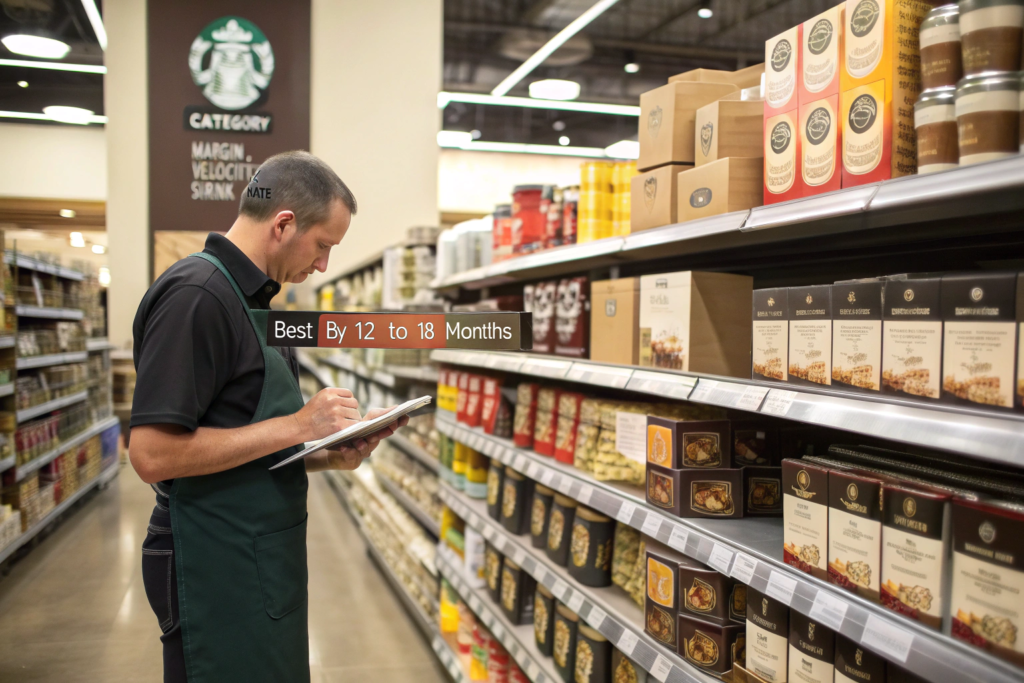
What is a "slotting fee" and why does it change the entire pricing conversation?
A slotting fee is a charge that grocery chains impose on suppliers for the privilege of placing a new product on their shelves. It is effectively a rent payment for shelf space. These fees can range from a few hundred dollars per SKU for a small regional chain to tens of thousands of dollars for a national launch. The grocery buyer's logic is simple: shelf space is their most valuable asset, and if they are going to give some of it to an unproven coffee brand instead of a known national brand, they want to be compensated for the risk. This fee fundamentally changes your pricing model. You cannot price a grocery SKU the same as a cafe SKU and also absorb a slotting fee and remain profitable. You have to either build the slotting fee into your cost of doing business in grocery, negotiate a lower fee based on promotional commitments, or start with chains that do not charge them—like some regional co-ops and independent natural food stores.
How do "velocity reports" and scan data determine whether your coffee stays on the shelf?
In grocery, your coffee is not evaluated by a human tasting it every month. It is evaluated by data. Every time a bag is scanned at a checkout, that transaction is recorded. The buyer receives a weekly or monthly velocity report showing exactly how many units of your coffee sold per store, per week. If the velocity is below a certain threshold—and that threshold varies by chain and category—your product is flagged for discontinuation. It does not matter how good it tastes. It does not matter how much the buyer personally likes you. The data is the data. This is why grocery launches often require promotional support, demos, coupons, or in-store marketing to drive those initial scan numbers. You are not just launching a product. You are launching a velocity campaign. The Food Marketing Institute's category management resources provide detailed guidance on how grocery buyers evaluate supplier performance. For a more coffee-specific perspective, the Specialty Coffee Association's market research offers data on retail coffee trends and velocity benchmarks.
How Does the Cafe Relationship Differ From a Transactional Grocery Partnership?
A cafe is not a distribution channel. It is a partnership. When a cafe owner buys our coffee, they are not just purchasing a product to resell. They are trusting us with their reputation, their customer experience, and the daily ritual of hundreds of people. If our coffee is inconsistent, their baristas look bad. If we are late on a shipment, their menu has a hole in it. The relationship is intimate, ongoing, and built on a foundation of mutual dependence that is completely different from the quarterly business review with a grocery buyer.
The cafe relationship is sustained by services and support that go far beyond the coffee itself. A cafe partner expects barista training, either in person or via video call, on how to dial in the espresso with our specific beans. They expect equipment guidance on grinder settings and maintenance. They expect a direct line of communication to someone who can solve a problem immediately, not a customer service ticket that goes into a queue. They expect you to visit their cafe, drink their coffee, and care about their business. And in return, they offer something priceless: brand advocacy. A satisfied cafe client is a daily, in-person endorsement of your coffee to hundreds of their customers.
One of our longest cafe partnerships is with a small chain in Melbourne. The owner and I talk at least once a month, sometimes about coffee, sometimes about his kids, sometimes about the challenges of running a hospitality business. I visited his cafes. He visited our farm. When we had the frost last year that damaged one of his favorite lots, he did not threaten to leave. He worked with us to find an alternative because he trusted that we would solve the problem. That kind of loyalty does not come from a transactional relationship. It comes from years of showing up, being honest, and treating his business like it was our own.
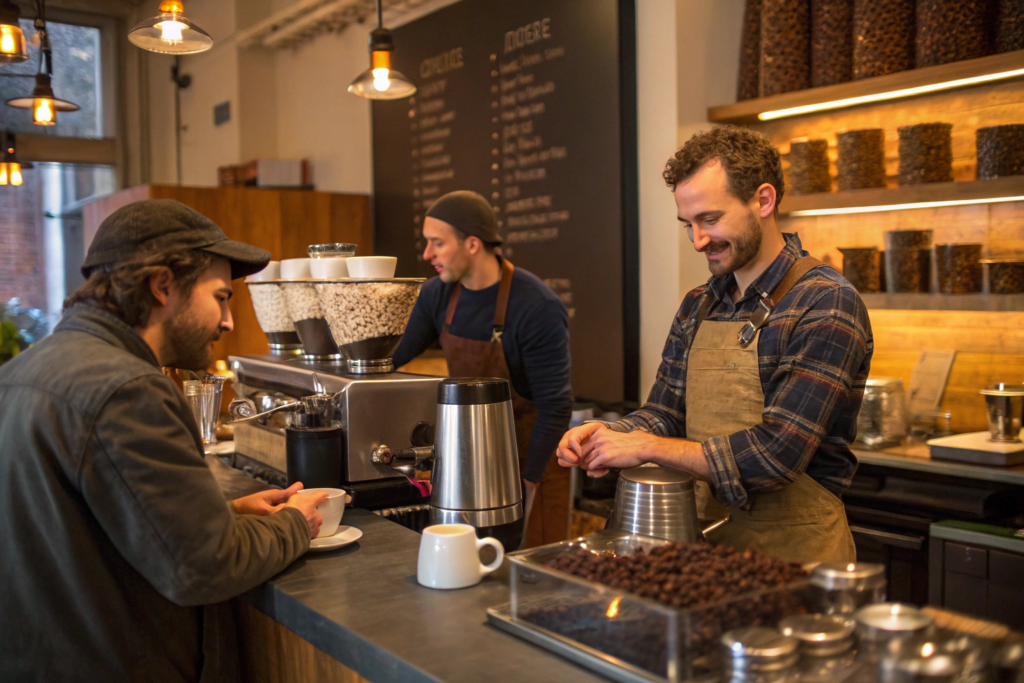
Why is barista training a non-negotiable element of selling to cafes?
A cafe can buy the best coffee in the world, and a poorly trained barista will still serve a bad cup. The end customer does not blame the barista. They blame the coffee. "I tried that new coffee at that cafe, it was terrible." Your brand just took a hit because of a channeling shot, a dirty grinder, or an incorrect brew ratio. Barista training is your quality control at the final point of service. It is your insurance policy against brand damage. When we onboard a new cafe client, we send a detailed brew guide for each coffee, offer a live video calibration session with their head barista, and, if possible, visit in person to taste and adjust. We do not leave the quality to chance. Neither should any supplier who is serious about the cafe channel.
What makes a cafe owner a long-term brand advocate rather than a transactional buyer?
Cafe owners talk to each other. They go to trade shows. They are part of local food and beverage communities. A cafe owner who genuinely loves your coffee and your partnership will recommend you to other owners. This word-of-mouth referral is the most powerful marketing in specialty coffee, and it cannot be bought. It can only be earned. The cafe owner becomes an advocate when they feel like more than a customer. When they feel like a partner. When they have your direct phone number. When they know you will fix a problem without making them jump through hoops. When they visit the farm and see the trees and meet the pickers. That emotional connection, combined with consistent quality and reliable logistics, turns a buyer into an ambassador. At Shanghai Fumao, many of our longest-standing cafe clients came to us through referrals from other cafe owners. That network is the most valuable asset we have.
What Are the Packaging Requirements That Differ Most Between Cafe Bulk and Retail Grocery?
A cafe receives a 5lb bulk bag, opens it, pours the beans into a hopper, and throws the bag away. The bag's job is functional: protect the beans during shipping, sit in a back room for a week or two, and then disappear. A grocery bag sits on a shelf, surrounded by a dozen competitors, under bright lights, waiting to be picked up, examined, and judged by a consumer who has never tasted the coffee inside. The bag's job is to sell the product. These two jobs require completely different packaging solutions.
Cafe bulk packaging prioritizes function, economy, and ease of use. A simple valved, resealable kraft bag with a clear label showing the coffee name, roast date, and lot code is sufficient. The bag is a logistics tool. Retail grocery packaging prioritizes visual appeal, shelf impact, information density, and barrier protection. It needs high-quality printing, a compelling brand story, tasting notes, origin information, a clear "best by" date, a barcode, and often a QR code linking to more content. The grocery bag is a salesperson. Spending the same budget on cafe bulk bags as on retail grocery bags is a misallocation of resources in both directions.
I have seen roasters try to use their beautiful, expensive retail bags for cafe wholesale accounts. They are giving away margin on a bag that will be ripped open and discarded in a back room. I have also seen roasters try to sell their coffee in plain kraft bags on grocery shelves. It looks like a generic store brand, and it sells like one too. Match the packaging investment to the channel's function.
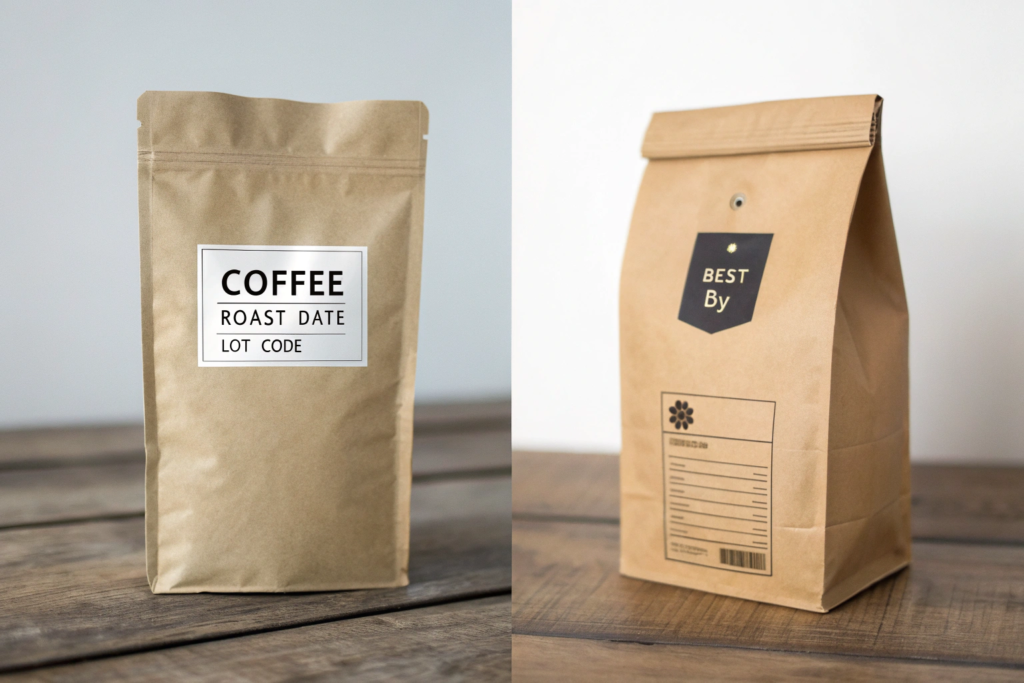
How do barcode and labeling requirements differ between cafe and grocery channels?
A cafe bulk bag might only need a printed label with the coffee name and roast date. No barcode. No nutritional information. No legal disclaimers. A grocery bag must have a UPC barcode that is registered and unique to that SKU. It often requires a net weight statement in both imperial and metric units, a country of origin declaration, and depending on the jurisdiction, a nutritional facts panel even though coffee has essentially no calories. These requirements vary by country and by retailer. Getting the labeling wrong can result in the product being rejected at the warehouse. Before you design a retail bag, get the exact labeling specifications from the grocery buyer and cross-check them with the relevant food labeling regulations. The GS1 barcode standards organization is the authority on UPC registration, and the FDA's food labeling guide is the U.S. regulatory reference.
Why do grocery bags need a completely different design approach than cafe bags?
In a cafe, the coffee is recommended by a human being. The barista says, "I really love this new single origin, you should try it." The sale is driven by trust and personal interaction. On a grocery shelf, there is no barista. The bag has approximately three seconds to grab a shopper's attention and communicate what the coffee is, why it is special, and why it is worth the price. This requires a design that is visually arresting at a distance, with a clear hierarchy of information: brand name, coffee name or blend, flavor descriptors, and a strong visual element like an illustration or a bold color. The back of the bag can tell the deeper story, but the front has to close the sale in silence. This is a completely different design discipline.
How Do You Manage Inventory and Cash Flow Across Two Radically Different Sales Cycles?
This is the operational challenge that breaks many growing coffee companies. Cafes order frequently—weekly or bi-weekly—and pay relatively quickly, often within 30 days. The cash flow is fast and predictable. Grocery chains order infrequently—perhaps quarterly or even just twice a year for a major reset—and pay slowly, often on net 60 or net 90 terms. You ship a huge order to a grocery warehouse, wait three months to get paid, and in the meantime, you still have to buy green coffee, pay your roasters, and fulfill your cafe orders. The cash flow mismatch can kill a business that is not prepared for it.
Managing the cash flow gap between fast cafe revenue and slow grocery receivables requires deliberate financial planning. You must either negotiate shorter payment terms with the grocery chain, factor the grocery invoices through a receivables financing company, or maintain a cash reserve that can cover operating expenses during the grocery payment lag. You also need to manage inventory differently for each channel. Cafe inventory turns fast and can be managed on a just-in-time basis. Grocery inventory sits in a warehouse or on a shelf for months, tying up working capital in finished goods that you have already paid to produce. The financial model for grocery is fundamentally different, and you need a separate cash flow forecast for that channel.
I learned this the hard way in our first year of grocery. We landed a great purchase order from a regional chain. We were thrilled. We bought the green coffee, roasted it, packaged it, shipped it. And then we waited. And waited. Our cafe revenue was steady, but it was not enough to cover the next green coffee purchase for the following month's production. We had a cash crunch that was entirely caused by success. We solved it by negotiating a small line of credit with our bank specifically for grocery production, secured against the purchase orders themselves. It was a financial tool we should have had in place before we ever signed the grocery contract.

What is a "scan-based trading" model and how does it impact supplier cash flow?
Some grocery chains use a scan-based trading model, where the supplier does not get paid when the product is delivered to the warehouse. The supplier gets paid when the product is scanned at a checkout register and actually sold to a consumer. This shifts the entire inventory risk from the retailer to the supplier. You produce the coffee, ship it, and wait for it to sell through, which could take months. If it does not sell, you take it back. This model can be devastating to a small supplier's cash flow unless you have the capital reserves to absorb the waiting period. Understand the payment model before you sign the vendor agreement. If it is scan-based trading, build that lag into your financial projections and price accordingly.
How do you forecast production for two channels with completely different demand signals?
Cafe demand is relatively predictable. A cafe uses roughly the same amount of coffee every week, and you can forecast based on their historical orders. Grocery demand is lumpy and promotional. A big display promotion can spike sales for a month, followed by a lull. A shelf reset can cause a one-time large order, followed by no orders for a quarter. You need separate forecasting models. Use historical velocity data from the grocery buyer to project base demand, and communicate constantly about upcoming promotions, resets, and seasonal planogram changes. The more lead time you have, the less likely you are to over-produce or under-produce. And over-production in grocery is particularly painful because you are sitting on finished goods that will expire before you can sell them through another channel.
Conclusion
Selling to grocery and selling to cafes are not variations on the same theme. They are two distinct businesses that happen to share a product. Grocery rewards shelf stability, data-driven category management, compliance-ready packaging, and the financial patience to handle slow payments and long lead times. Cafe rewards flavor, freshness, relationship depth, training support, and the operational agility to solve problems in real time. The coffee inside the bag connects them. Almost everything else separates them.
If you are a coffee business thinking about expanding into a new channel, or if you are a buyer who needs a supplier that understands the specific demands of your world, I would be happy to share more of what we have learned. We now run dedicated teams and dedicated SKUs for each channel, and we have made most of the mistakes so you do not have to. Contact Cathy Cai at cathy@beanofcoffee.com. Tell her what channels you are currently selling into and where you want to grow. She can walk you through how we structure our grocery and cafe programs, share packaging samples for both, and help you think through the financial model that fits your growth stage. Great coffee is the foundation. Channel-specific execution is the house.