Three years ago, I planted 20 hectares of a new Catimor hybrid on our Baoshan farm. It was a calculated risk. My agronomist believed the variety would cup well at our altitude. My sales team thought specialty roasters were not ready for Catimor. My gut told me the market was shifting—that smaller roasters were getting squeezed on traditional Arabica prices and would soon be looking for a high-quality, cost-effective alternative. I had no data to back up my gut. I just had fifteen years of watching the specialty coffee market lurch from trend to trend. The planting turned out to be one of the best decisions I have ever made. Demand for specialty Catimor has grown faster than I projected. But I got lucky. Luck is not a strategy. Today, I am trying to replace luck with something more reliable: data.
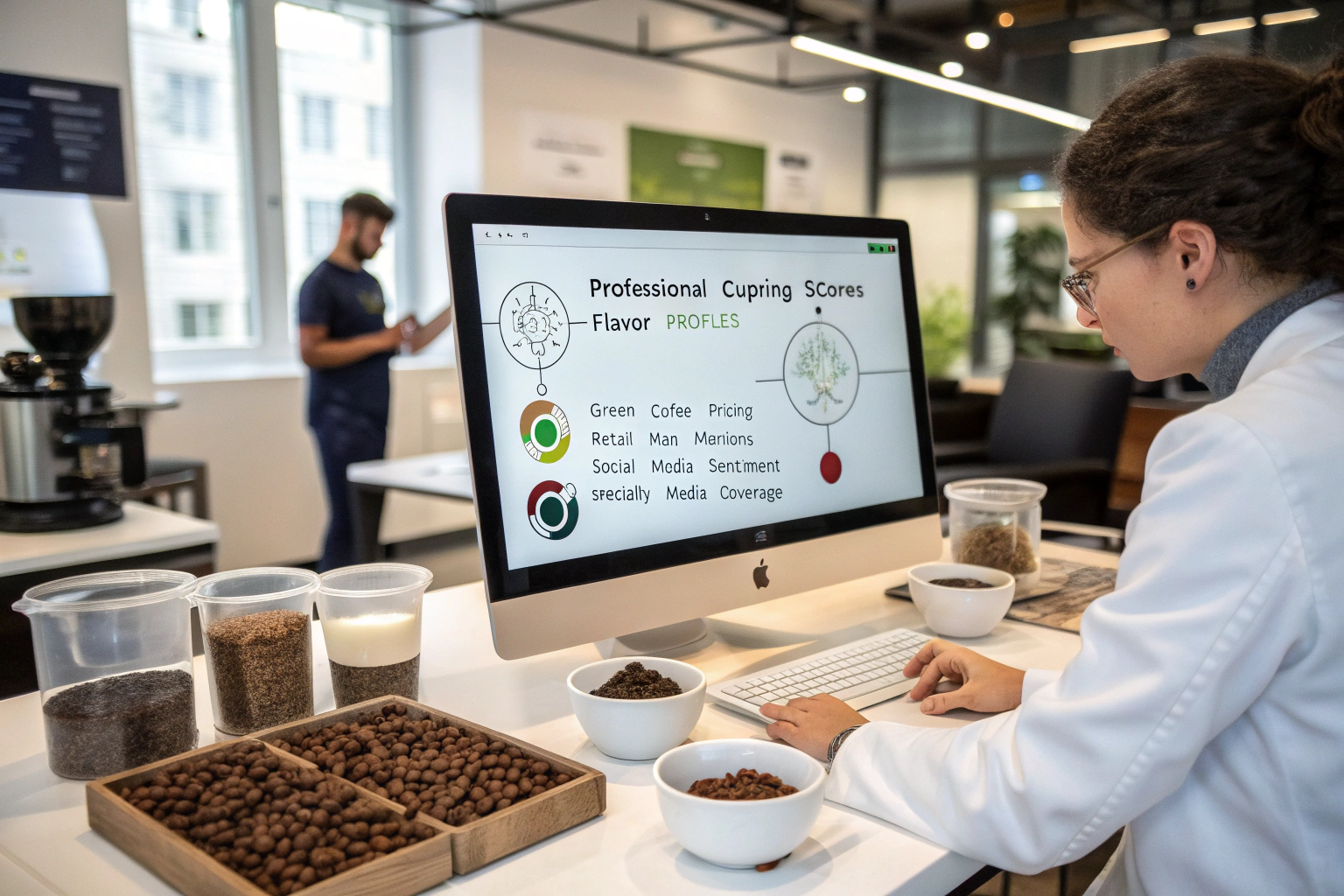
Using AI to predict trending coffee bean varieties means training machine learning models on three interconnected data streams: the sensory data from professional cupping scores and flavor profiles, the market data from green coffee pricing, trade volumes, and retail menu mentions, and the cultural data from social media sentiment, barista competition routines, and specialty media coverage. The AI does not make predictions by magic. It identifies correlations and patterns that a human analyst might miss—like a sudden spike in "anaerobic fermentation" mentions on barista forums six months before a corresponding spike in wholesale inquiries. The output is not a crystal ball. It is a probability-weighted signal that helps farmers, exporters, and roasters make planting and purchasing decisions with more confidence and less guesswork.
I am not a data scientist. I am a farmer who has learned enough about AI tools to apply them practically to my business. What I am describing here is not a theoretical future. It is what we are starting to do now, with tools that already exist, to make smarter decisions about what to plant, what to process, and what to offer our clients. Here is how it works, broken down into pieces that make sense for a coffee professional, not a programmer.
What Data Streams Matter Most for Predicting Coffee Variety Trends?
Trends do not emerge from nowhere. They leave traces. A barista in Oslo experiments with a new variety for a competition routine. A specialty coffee YouTuber posts a tasting video. A green coffee importer starts getting more inquiries for "clean Catimor" than they did last year. A drought in Brazil shifts buyer attention toward Asian origins. Each of these signals is weak on its own. But when several signals point in the same direction at the same time, a pattern emerges. The challenge is collecting and connecting those signals in a systematic way.
The most predictive data streams for coffee variety trends fall into four categories. First, cupping score and sensory databases, which track the quality trajectory of specific varieties over multiple harvests. Second, trade and pricing data, including differentials, export volumes, and futures market movements. Third, consumer-facing signals, including specialty coffee menu mentions, retail product launches, and social media sentiment. Fourth, agricultural and climate data, which forecasts where certain varieties can be successfully grown in the future. A useful AI model pulls from all four, weighs them, and surfaces the varieties that are showing simultaneous, upward movement across multiple categories.
A single data stream is noisy and misleading. I remember seeing a spike in social media posts about a certain rare variety a few years ago. It looked like a breakout trend. But the trade data showed zero increase in actual import volumes. The social media buzz was just that—buzz. The variety never translated into commercial demand. If I had looked only at the social sentiment and planted 10 hectares, I would have lost a lot of money. Cross-referencing multiple data streams is the difference between chasing a fad and identifying a sustainable trend.

How can cupping score databases reveal the long-term quality trajectory of a variety?
Every year, thousands of professional cuppings happen across the industry. SCA-certified labs, green coffee importers, and quality-focused exporters generate scores for acidity, body, flavor, balance, and overall impression. Aggregated over time, this data tells a story. It shows whether a variety like Catimor is improving in average cup score as processing methods improve and better cultivars are planted. It shows whether a variety is plateauing or declining. An AI model trained on this data can project the quality trajectory forward. If the five-year trend shows Catimor's average score rising from 80 to 83 points, the model flags it as a variety with quality momentum—a strong candidate for increased specialty adoption. The Coffee Quality Institute's database is one source of structured cupping data, and the World Coffee Research sensory program is building variety-specific sensory profiles that feed into exactly this kind of analysis.
Why are barista competition routines a surprisingly strong leading indicator?
Barista competitions are where trends break into the public eye. A competitor who puts an obscure variety on stage at the World Barista Championship is making a bet. They have spent months selecting that coffee, practicing with it, and deciding it is exciting enough to stake their reputation on. When a variety appears in multiple national-level routines in the same year, it signals that the specialty community's most influential tastemakers are validating it. This signal is particularly valuable because it precedes wider market adoption by 12 to 24 months. If an AI model scrapes competition routine descriptions, extracts variety and processing mentions, and tracks their frequency over time, it can spot the varieties that are about to move from the competition stage to the specialty cafe menu. The World Coffee Events competition archive is the primary source for this data, and the Specialty Coffee Association's competition coverage provides analysis that contextualizes the routines.
How Can AI Analyze Social Media and Search Trends to Spot Emerging Coffee Preferences?
I was skeptical about this at first. Social media feels like noise. One day, everyone posts about a coffee. The next day, it disappears. But I have learned that there are layers to social media data. The surface layer—viral posts, influencer hype, random tags—is indeed noise. But underneath that, there is a slower, more meaningful signal: the conversations happening in niche communities, the questions people are asking in search engines, the recipes they are trying at home. That signal is predictive.
AI can analyze social media and search trends by separating the signal from the noise through volume, velocity, and context analysis. A meaningful trend signal is not one viral post. It is a sustained increase in mention volume over three to six months, across multiple platforms—Reddit coffee forums, specialty Facebook groups, barista Instagram accounts, YouTube review channels. Simultaneously, search engine data from Google Trends or keyword research tools shows an increase in specific queries like "Catimor coffee taste" or "best anaerobic coffee." The AI correlates the social conversation with the search intent. People are not just talking about it because someone else posted. They are actively seeking it out. That combination is a strong predictor of future demand.
I started paying attention to this when I noticed a pattern around honey-processed coffees a few years ago. The term started appearing more frequently in specialty coffee subreddits. Not in big, viral threads. In small, detailed discussions among serious home brewers. Then Google Trends showed a slow, steady increase in searches for "honey process coffee." Six months later, our wholesale inquiries for honey-processed lots doubled. The early signal was there. I just did not have a systematic way to capture it at the time.

What is the difference between a viral coffee trend and a sustainable one in social data?
A viral trend spikes and crashes. It looks like a mountain peak on a chart. A celebrity posts a video using a specific coffee gadget, and suddenly everyone wants it. Two weeks later, the volume is back to baseline. A sustainable trend looks like a staircase. It steps up, plateaus, steps up again. The volume is not driven by a single event. It is driven by a growing community of people incorporating the variety or processing method into their regular coffee routine. AI can distinguish these two patterns by analyzing the shape of the volume curve and the diversity of the sources generating the mentions. A viral spike has a narrow source base—most posts are sharing the same original content. A sustainable trend has a broad source base—many independent accounts generating original content about their own experience.
How can Google Trends data complement social listening for variety prediction?
Social media tells you what people are talking about. Google Trends tells you what people are trying to learn. A rise in the search query "what does Catimor coffee taste like" is a different signal than a tweet saying "just tried Catimor, it was good." The tweet is a passive observation. The search query is active intent. Someone is considering buying it, brewing it, or putting it on their menu. When both signals rise together—more conversation and more intent—the predictive power is much stronger. Google Trends data is free, geographically granular, and goes back years, making it an excellent baseline dataset for training a simple predictive model. For more advanced analysis, the Google Trends data tools can be exported and cross-referenced with trade data.
What Role Do Climate Models Play in AI-Driven Coffee Variety Forecasting?
This is the long-term layer of prediction. A variety might be trending now, but if climate models show that the regions where it is currently grown will become too hot or too dry in ten years, its long-term trajectory is a decline. Conversely, a variety that is currently obscure but is projected to thrive in shifting climate zones could be the most important planting decision a farmer makes today.
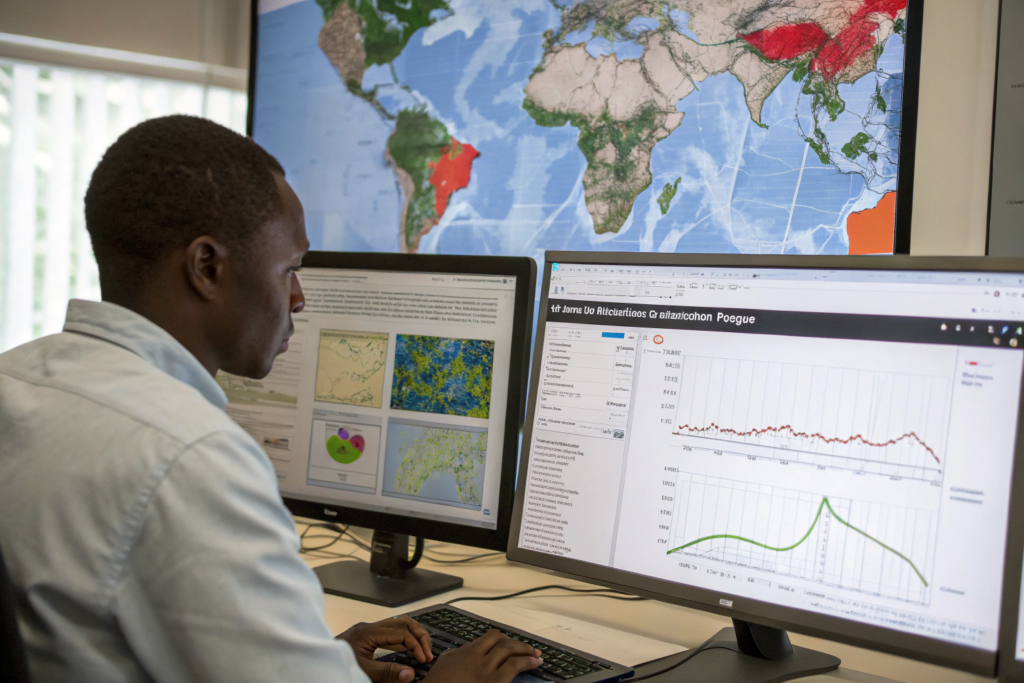
Climate models feed into AI-driven variety forecasting by projecting the future suitability of current growing regions for specific Arabica and Robusta varieties. Models like those from World Coffee Research and the Intergovernmental Panel on Climate Change map how temperature, rainfall, and pest pressure will shift over the next 10 to 30 years. An AI system can overlay these climate projections with current variety-specific growing data to identify which varieties are likely to be resilient—and therefore reliably available—in a warming world. For a roaster or an importer, a variety that scores well on quality, shows rising consumer interest, and is projected to survive climate shifts is not just a trend. It is a strategic procurement priority.
This is personal for me. Yunnan's coffee belt sits at a relatively high latitude and altitude, which gives us some climate resilience that lower, hotter origins do not have. But I need to know which varieties will continue to thrive specifically on our farms as temperatures rise. We are already using climate projection data to make planting decisions for the next decade, not just the next harvest. This is not speculation. It is agricultural risk management with a very long time horizon. The World Climate Research Programme provides the foundational climate models, and World Coffee Research's variety-specific climate adaptation resources translate those models into actionable coffee farming guidance.
How can AI predict whether a variety will be viable in Yunnan's changing climate?
An AI model can ingest climate projection data for Yunnan specifically—temperature, rainfall, seasonal variability—and map it against the known physiological requirements of different coffee varieties. Catimor, for example, has robust resistance to coffee leaf rust and tolerates a wider temperature range than some delicate Arabica lines. The model can assign a "future viability score" to each variety for a specific location. It can also suggest shifts: "By 2035, your 1,200-meter farm may be too warm for high-quality Arabica, but your 1,500-meter farm remains suitable." This kind of analysis, which used to require a team of agronomists and months of work, can now be done with AI tools that are becoming increasingly accessible.
Why should a coffee buyer care about variety climate resilience when making sourcing decisions?
If you build a brand around a specific single-origin coffee from a specific region, you are making a long-term bet on that region's climate stability. A buyer who commits to a variety that is projected to decline in yield or quality due to climate change is committing to a supply chain that will become more expensive, less reliable, and ultimately impossible to maintain. A buyer who chooses a variety with strong climate resilience—especially from an origin like Yunnan that has altitude and latitude buffers—is building a brand on a more stable foundation. The climate resilience data is now available. Smart buyers are integrating it into their sourcing decisions alongside cupping scores and prices.
How Can a Small to Medium Coffee Business Start Using AI for Trend Prediction Today?
You do not need a data science team. You do not need a custom-built AI platform. You need to start small, use tools that already exist, and build a habit of data-informed thinking. The goal is not to replace your intuition. It is to give your intuition a better information diet.
A small to medium coffee business can start using AI for trend prediction by combining three accessible tools: Google Trends and keyword research platforms for search intent data, social media monitoring platforms for conversation volume tracking, and a simple spreadsheet-based scoring model that tracks the variety-specific signals you care about most. You assign weights to different signals—say, 30% cupping score trend, 25% trade volume trend, 20% social conversation trend, 15% search intent trend, 10% climate resilience score—and update the scores quarterly. This is not full AI. It is a lightweight, human-managed trend radar. But it is vastly better than relying on gut feeling alone.
We built a simple internal scoring tool that tracks the top 20 coffee varieties and processing methods we monitor. It pulls in a few automated data feeds and combines them with our own cupping data and sales inquiry logs. Every quarter, we review the scores and identify the varieties that are showing upward momentum across multiple categories. This process directly informs our planting decisions, our processing experiments, and our client recommendations. It took a few months to set up, and it has already improved the quality of our strategic conversations.

What free or low-cost tools can a small roaster use to track variety trends?
Start with Google Trends for search intent tracking. Use a free social media monitoring tool like Google Alerts or a paid but affordable option like Brand24 to track mentions of specific varieties and processing methods. Use the SCA's publicly available competition coverage and the World Coffee Research website for sensory and agronomic data. Use industry trade publications like Perfect Daily Grind and Coffee Review for market analysis. Collect all of this in a shared spreadsheet or a simple Notion database. The key is consistency: update the data on a regular schedule, and review it with your team. The tool is less important than the habit. For more advanced needs, platforms like Cropster's analytics can integrate production and quality data, and the International Trade Centre's coffee trade statistics provide volume and pricing data that can feed into a more sophisticated model.
How do you build a simple internal scoring model for variety trend potential?
Create a spreadsheet with varieties as rows and signal categories as columns. Assign a simple score from 1 to 5 for each signal category based on the data you have gathered. For example, "Cupping Score Trend" for Catimor might be a 4 because average scores are rising. "Social Conversation Trend" might be a 3 because mentions are increasing but from a low base. "Climate Resilience" might be a 5 because Catimor is rust-resistant and temperature-tolerant. Weight the categories according to what matters most for your business. If you are a quality-focused roaster, weight cupping score trend higher. If you are a large importer, weight trade volume trend higher. Calculate a weighted average score for each variety. Update it quarterly. The varieties with the highest and most consistently rising scores are your trend candidates. This is not AI in the machine-learning sense, but it applies the same logic: multiple data streams, weighted and analyzed, producing a ranked recommendation. It is an excellent starting point before you invest in more advanced tools. At Shanghai Fumao, we are happy to share what we are seeing on our internal radar with our long-term clients.
Conclusion
AI is not going to tell you the future with certainty. Coffee is too human, too agricultural, too culturally complex for that. But AI can give you an edge. It can surface signals that you would otherwise miss, buried in cupping data, trade reports, social media conversations, and climate projections. It can replace "I think this variety might be big" with "three independent data streams suggest this variety is gaining momentum, and here is the evidence." In a competitive, trend-driven market, that edge matters.
If you are a roaster, importer, or cafe chain thinking about which varieties to bet on for the next three to five years, I would encourage you to start your own trend radar. Even a simple one will change the quality of your conversations. And if you are sourcing from Yunnan, we are watching these signals closely too. We plant based on what we see coming, not just what is selling today. Contact Cathy Cai at cathy@beanofcoffee.com. She can share our current variety outlook, our cupping data for the varieties we are most excited about, and our perspective on where the specialty market is heading from our vantage point in China. Do not just react to trends. Start anticipating them.