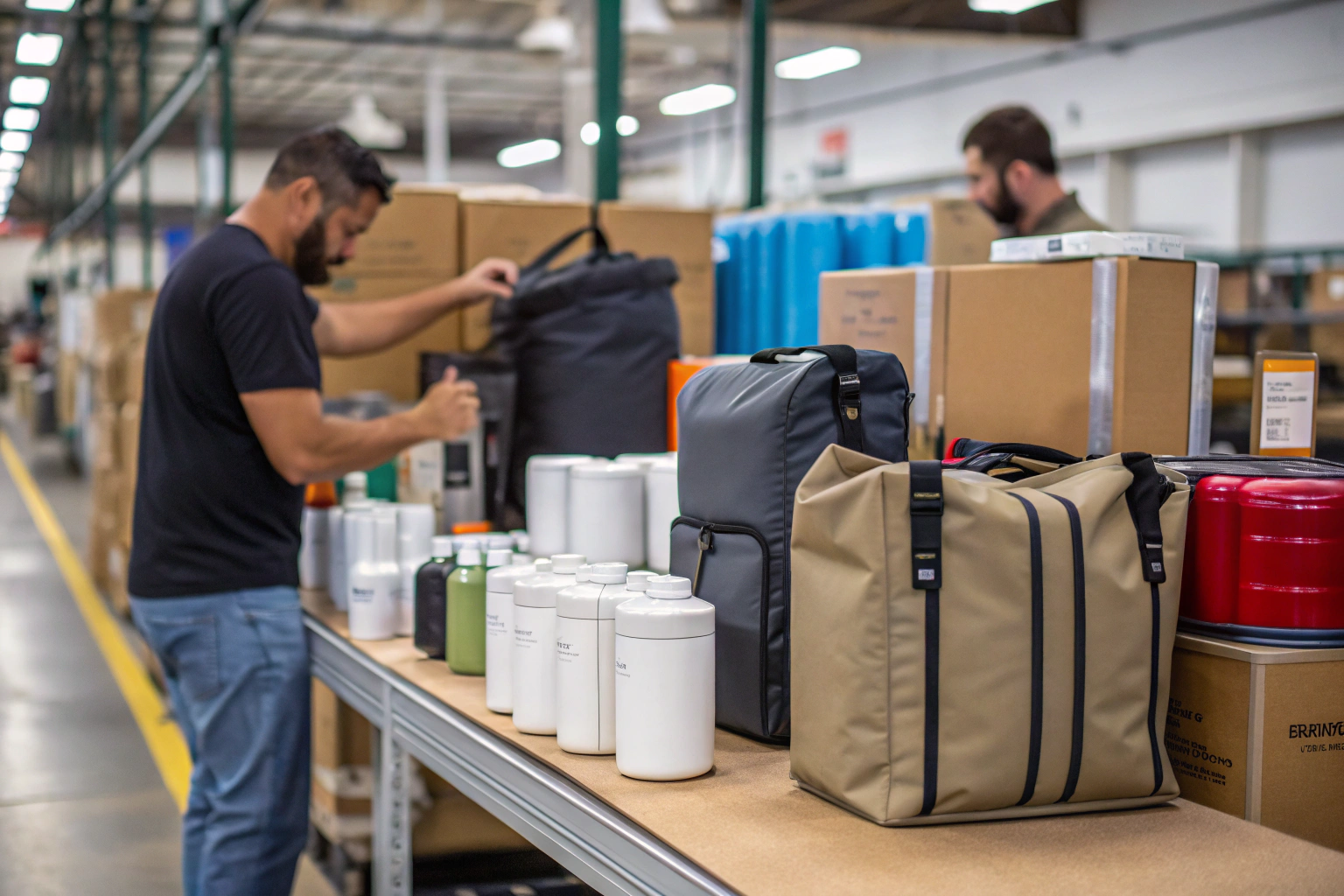
I received a panicked email from a distributor in Toronto last November. He had just landed a new account—a small chain of boutique hotels that wanted our Yunnan Arabica in their guest rooms. The catch? They needed a 1.75-ounce fractional pack, individually wrapped, with their logo, in boxes of 24. The distributor's existing wholesale bags from us were 2-pound and 5-pound bulk formats. He had a purchase order in hand worth significant annual revenue, and he had no way to fulfill it. He asked me, "Can you do this? And can you do it in six weeks?" My honest answer at the time was, "Not yet." That was the moment I realized packaging size flexibility was not a value-added service. It was a competitive necessity.
Custom packaging size flexibility is critical for distributors because their entire business model depends on fitting their suppliers' products into their customers' specific operational environments. A distributor does not control the end customer's storage space, their brewing equipment, their portioning workflow, or their brand presentation requirements. The distributor's value is solving the mismatch between what a factory produces and what a customer can actually use. If the factory only offers two bag sizes, the distributor is constantly having to say "no" to opportunities that fall outside those boxes. Every "no" is revenue left on the table and a door opened for a more flexible competitor.
What followed that email was a six-month project to overhaul our packaging capabilities. We invested in new sealing equipment, new bag formats, and a new mindset about what "flexible" actually means. Here is what I learned, what it cost, and why it has already paid for itself many times over.
How Does Bag Size Variety Help Distributors Win More Retail and Hospitality Accounts?
A distributor is not a seller of coffee. A distributor is a solver of problems. When a hotel chain says, "We need a single-serve sachet that fits our in-room drip tray," the distributor who can say "yes" wins the business. When a specialty grocery says, "Our shelf planogram only fits a 10-ounce bag, not a 12-ounce," the distributor who can supply the 10-ounce bag keeps the shelf. When an office coffee service says, "We need a 1-pound bag, not a 5-pound, because our clients have small storage areas," the distributor who can deliver the 1-pound bag gets the contract.
Bag size variety allows a distributor to access three distinct market segments with the same core coffee product. The retail segment requires sizes that fit standard shelf planograms and match consumer price expectations: 8-ounce, 10-ounce, 12-ounce, and 1-pound bags. The foodservice and hospitality segment requires portion-control formats: single-serve fractional packs, 1.5-ounce to 2.5-ounce sachets, and portion-pack boxes. The cafe and office coffee segment requires larger bulk formats optimized for hopper-fed grinders: 2-pound, 5-pound, and sometimes 1-pound bags for low-volume accounts. A distributor armed with all these size options from a single supplier can walk into any sales conversation and answer the size question with "yes, we can do that."
I saw this play out in real time with the Toronto distributor. Once we added the 1.75-ounce fractional pack capability, he not only won the hotel chain account, he used the same format to win three more hospitality contracts within six months. The coffee was the same. The quality was the same. The only thing that changed was the size of the bag it came in. That single addition to our production line has generated more new revenue for his business than any new blend or origin we have introduced. The Specialty Coffee Association's market segmentation resources provide data on how packaging size influences purchasing behavior across different channels, and the National Coffee Association's U.S. consumption reports track the growth of single-serve and portion-pack formats in hospitality.
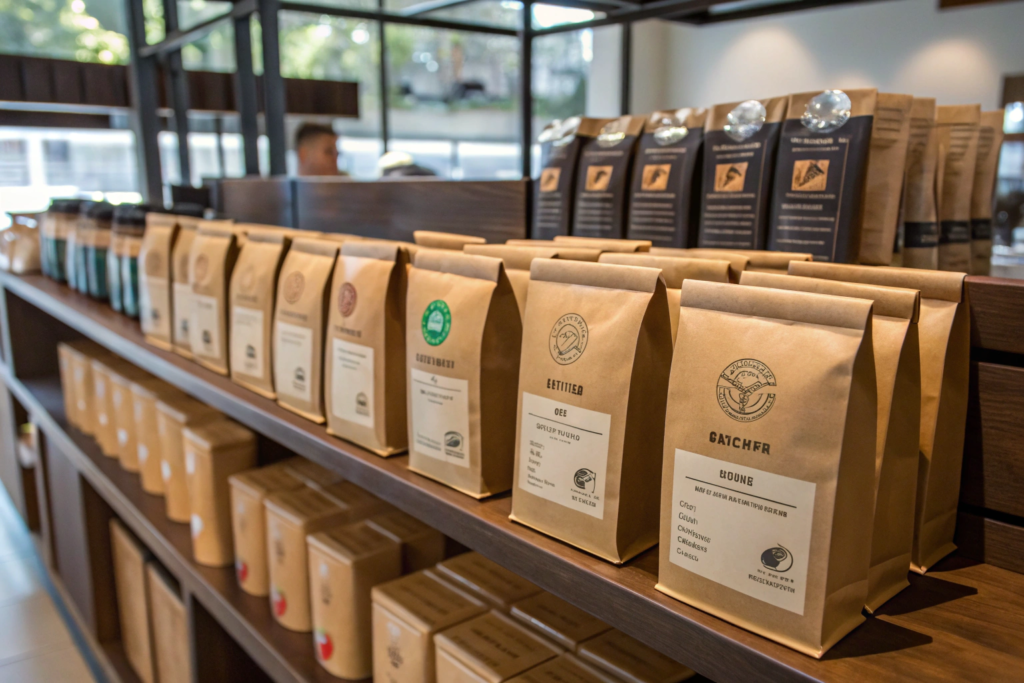
Why do grocery shelf planograms dictate specific bag dimensions more than any other factor?
A grocery shelf is a rigid grid. Each product category has an assigned space measured in inches of shelf width, height, and depth. A planogram—the schematic that maps exactly where every product sits—is not negotiable. If the planogram slot for specialty coffee is 5 inches wide and 10 inches tall, and your bag is 6 inches wide, it does not go on the shelf. The buyer does not reorganize the entire aisle for one new coffee. They simply find a coffee that fits. This is why understanding standard grocery planogram dimensions in your target market is essential before designing a retail bag. The coffee can be the best in the world. If the bag does not fit the shelf, it will never be tasted. The Food Marketing Institute's shelf management standards offer guidance on typical planogram specifications for different retail categories.
What portion-pack formats are hospitality buyers demanding in 2026?
The shift is toward three specific formats. First, the classic single-serve drip sachet with filter paper wings that sit on top of a mug, still dominant in hotel guest rooms across North America and Europe. Second, the compatible single-serve pod—Nespresso Original and Keurig K-Cup formats—which are increasingly requested by higher-end boutique hotels and short-term rental operators who have installed pod machines. Third, the fractional ground pack, a flat, nitrogen-flushed envelope containing pre-ground coffee in precise doses of 1.5 to 2.5 ounces, designed for the in-room drip machine that many mid-tier hotels still use. A distributor who can offer all three from a single supplier is a one-stop shop for hospitality. A distributor who can only offer one is vulnerable to being displaced by a competitor who offers the full suite.
Why Do Flexible Portion Formats Reduce Waste and Improve Margins for End-Users?
Waste is the silent margin killer in every coffee operation. A cafe opens a 5-pound bag for a slow afternoon shift, uses half of it, and the rest sits in the hopper overnight, oxidizing and losing flavor. By the next morning, the barista tastes the stale coffee, dumps it, and opens a fresh bag. The wasted coffee goes into the cost of goods sold, but it is invisible on the invoice. The cafe owner just knows margins are tighter than they should be. The distributor knows the cafe is ordering more frequently than their volume suggests they should need to. Everyone is losing, but no one is talking about the root cause: the bag was too big for the usage pattern.
Flexible portion formats allow end-users to match their package size to their actual consumption velocity, which directly reduces waste and improves margins. A low-volume cafe might waste 15-20% of a 5-pound bag that goes stale before it is fully used. Switching that cafe to 2-pound or 1-pound bags eliminates the waste almost entirely. The per-pound price might be slightly higher due to additional packaging and handling, but the elimination of waste more than offsets the price difference. The cafe's effective cost per brewed cup goes down, not up. The distributor gains a more satisfied, stickier customer who is ordering exactly what they need instead of compensating for waste with larger, less frequent orders.
I walked through this math with a small cafe chain in Melbourne. They were using 5-pound bags across all locations, but three of their eight cafes had very low afternoon traffic. Those three cafes were dumping stale coffee every morning. We switched them to 2-pound bags for the slow locations, keeping the 5-pound bags for the busy ones. Their total coffee cost went up slightly on a per-pound basis, but their waste dropped so much that their net coffee cost per cup served actually decreased. The cafe owner told me, "I did not realize I was paying for coffee I was throwing away." That is the invisible problem that flexible portioning solves.
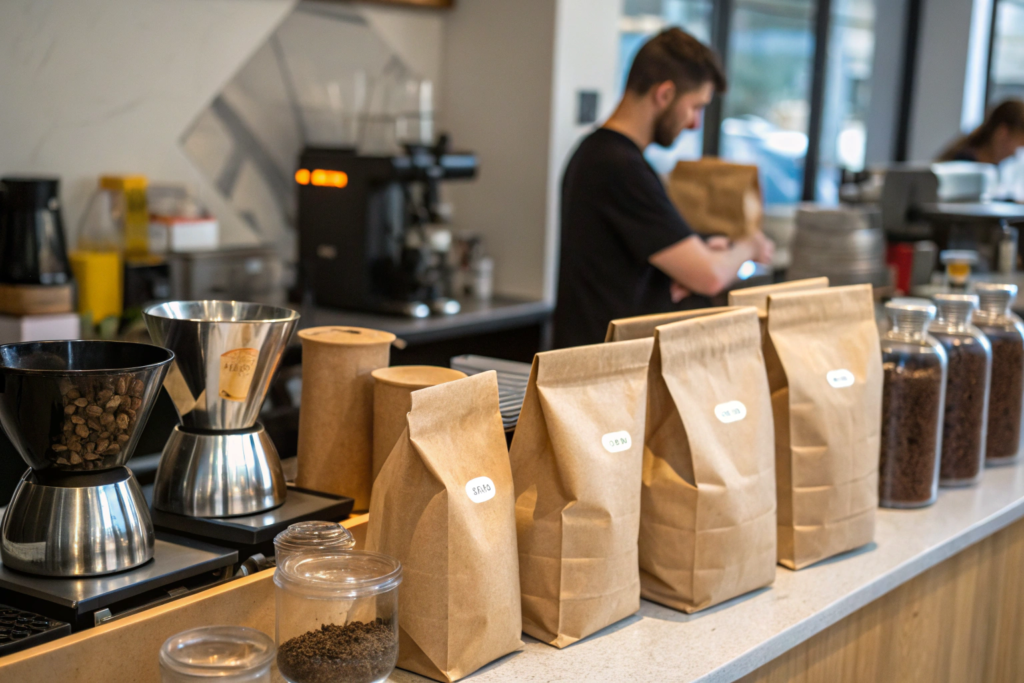
What is the real cost of "hopper waste" in a cafe that uses oversized bags?
Hopper waste is the coffee that sits in the grinder hopper overnight or over a slow weekend, exposed to oxygen, losing volatile aromatics and absorbing ambient moisture. A cafe that only sells 30 cups of drip coffee in an afternoon but opens a 5-pound bag has committed the remainder of that bag to rapid degradation. The next morning, the barista tastes the first shot, finds it flat and papery, and purges the grinder. Depending on the grinder, that can be a quarter-pound to half a pound of coffee thrown away every single day. Over a month, that is 5 to 10 pounds. Over a year, 60 to 120 pounds. At $8 to $12 per pound wholesale, that is $500 to $1,500 per year in wasted coffee per location. A 2-pound bag for that same cafe would cost perhaps $0.50 more per pound. On the same annual volume, the additional packaging cost is a fraction of the waste cost.
How can a distributor use portion flexibility as a consultative sales advantage?
A distributor who walks into a cafe with a waste analysis in hand, not just a price sheet, is a consultant, not a vendor. Ask the cafe owner: "How many pounds do you dump every week because it went stale?" Most owners do not know the number. They know it is happening, but they have not quantified it. Help them do the math. Then propose a portion-size adjustment as a solution. "Let us switch you from 5-pound to 2-pound bags on the slow days. Your waste should drop by X percent. Let us trial it for a month and compare your actual usage." This conversation builds trust and solves a real problem. It also locks in the distributor relationship because the owner now sees the distributor as someone who improves their business, not just someone who drops off coffee.
How Does Custom Packaging Flexibility Simplify Inventory Management Across Multiple SKUs?
A distributor juggles dozens, sometimes hundreds, of SKUs from multiple suppliers. Every supplier has their own set of standard bag sizes, their own case pack configurations, their own labeling conventions. The distributor's warehouse team has to store all of these, pick them, pack them, and ship them accurately. The complexity is staggering, and complexity costs money in labor, errors, and storage inefficiency.
Custom packaging flexibility from a single supplier reduces inventory complexity by allowing the distributor to standardize case pack configurations, outer carton dimensions, and labeling formats across their product range. Instead of receiving 5-pound bags in cartons of four from one supplier and cartons of six from another, the distributor can specify a standard case pack that works for their shelving, their picking workflow, and their shipping cartons. This reduces picking errors, speeds up warehouse operations, and lowers the training burden on warehouse staff. The flexibility is not just about the end-customer. It is about optimizing the distributor's own operational efficiency.
We work with several distributors now who have told us exactly what case pack and pallet configuration they need, and we build to that specification. One distributor wanted all 2-pound bags packed in cartons of 10, all 12-ounce retail bags packed in cartons of 24, and all single-serve sachets packed in cartons of 50. Those numbers were not random. They were designed to match the distributor's pick-and-pack workflow, their shipping box sizes, and their customers' typical order quantities. Standardizing to those configurations across our product line eliminated a significant source of friction in their daily operations.
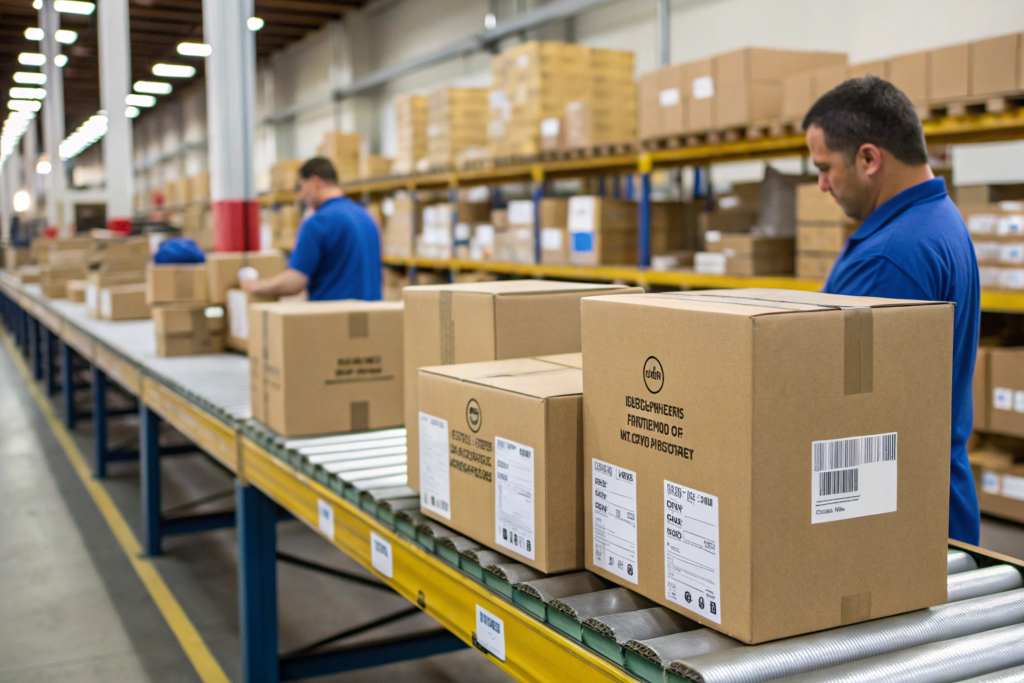
How can standardized case packs across bag sizes reduce warehouse picking errors?
When every SKU from a supplier arrives in a consistent carton size and a consistent bag count per carton, the warehouse picker does not have to read the fine print on every box. They can glance at the carton, recognize the format, and pick it. When a 12-ounce retail carton always holds 24 bags and a 2-pound bulk carton always holds 10 bags, the mental math of fulfilling an order becomes automatic. Errors drop. Speed increases. New warehouse staff can be trained faster. These operational benefits are invisible to the end customer but directly impact the distributor's profitability and service reliability.
Why does outer carton labeling consistency matter as much as bag size consistency?
A distributor's receiving team processes incoming shipments from multiple suppliers every day. If every supplier uses a different label format—different placement, different information hierarchy, different barcode type—the receiving process slows to a crawl. Staff have to search each carton for the SKU number, the quantity, and the lot code. Standardized outer carton labels, with barcodes in a consistent location and a consistent information layout, allow receiving to be fast, accurate, and scannable. This is a detail that few suppliers think about, but every experienced distributor appreciates. At Shanghai Fumao, we now align our outer carton labeling with each distributor's warehouse management system requirements as part of the onboarding process.
What Is the Relationship Between Packaging Flexibility and a Distributor's Brand Loyalty?
A distributor's brand is not the coffee they sell. It is the promise they make to their customers. The promise is: "Whatever coffee problem you have, I can solve it." Every time a distributor has to say, "Sorry, our supplier does not make that size," their brand promise cracks a little. Over time, enough cracks, and the customer starts looking for a distributor with a broader solution set. Packaging flexibility is brand protection.
Packaging flexibility drives distributor brand loyalty by making the distributor the easiest, most capable partner for their end customers. When a customer knows their distributor can handle any size request, they stop looking elsewhere. They consolidate more of their coffee purchasing with that one distributor. The distributor becomes the default, not just for coffee but potentially for related products like teas, syrups, and paper goods. The packaging flexibility on the coffee SKU has a halo effect that strengthens the entire distributor-customer relationship and increases the switching cost for the end customer.
The distributor in Toronto told me something that stuck with me. He said, "Before you could do the fractional packs, I was just another coffee distributor to those hotels. Now, I am the guy who solved their guest room coffee problem. They call me for everything now, not just coffee." That is the strategic value of packaging flexibility. It transforms the distributor from a commodity supplier into a trusted solutions provider. The National Association of Wholesaler-Distributors' industry research documents how value-added services like custom packaging increase distributor profitability and customer retention. For a deeper look at how leading distributors build brand loyalty through service, the Harvard Business Review's distribution strategy resources offer case studies that apply directly to the specialty food industry.
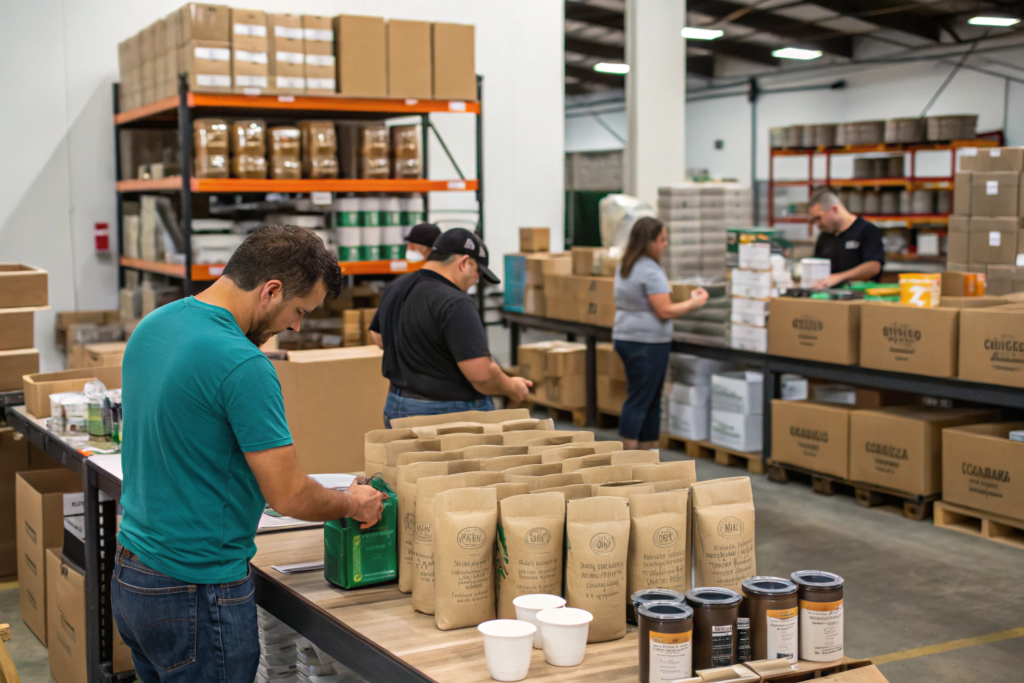
How does being a "one-stop shop" for all coffee formats increase a distributor's customer retention?
Every additional product format a distributor can supply is one less reason for the customer to talk to a competitor. If the customer buys bulk bags from Distributor A but has to buy portion packs from Distributor B, they have two supplier relationships to manage. They are constantly comparing pricing, service, and quality between the two. If Distributor A adds portion packs, the customer can consolidate to one relationship. One purchase order. One delivery. One invoice. One person to call when there is a problem. The convenience of consolidation is a powerful retention force. The distributor who makes life simplest for the customer wins the long-term loyalty.
Why do private label opportunities depend entirely on packaging size flexibility?
Private label is the ultimate distributor opportunity. The distributor puts their own brand on the bag, builds their own brand equity, and captures higher margins than they would on a third-party brand. But private label only works if the packaging matches the distributor's brand standards and their customers' needs. If the supplier can only offer the distributor's brand on a 12-ounce bag but not on a 5-pound bulk bag or a single-serve sachet, the private label program is fragmented and confusing. A flexible packaging partner allows the distributor to build a complete, coherent private label line across all formats and sizes, strengthening their brand presence in every account. For more on how we structure private label programs with full size flexibility, Shanghai Fumao works with distributors to build customized lines from the ground up.
Conclusion
Packaging size flexibility is not a production detail. It is a market access strategy. For distributors, it is the difference between being a limited supplier who can only serve certain accounts and a comprehensive partner who can walk into any sales conversation—retail, hospitality, cafe, office coffee—and say "yes." It reduces waste for end customers, simplifies warehouse operations for the distributor, and builds a brand loyalty that no price discount can match. The investment required to offer multiple formats is real, but the revenue it unlocks and the relationships it protects are far larger.
If you are a distributor who has been frustrated by rigid packaging options from your current suppliers, or if you are looking to expand into new customer segments and need a packaging partner who can grow with you, let us talk. We have spent the last several years building the capability to offer flexible bag sizes, fractional packs, and compatible pods all from a single production facility. Contact Cathy Cai at cathy@beanofcoffee.com. She can send you our full format and size capability document, discuss your specific account requirements, and put together trial samples in the formats you need to win your next deal. Your customers are asking for different sizes. Do not let a rigid supplier be the reason you say no.