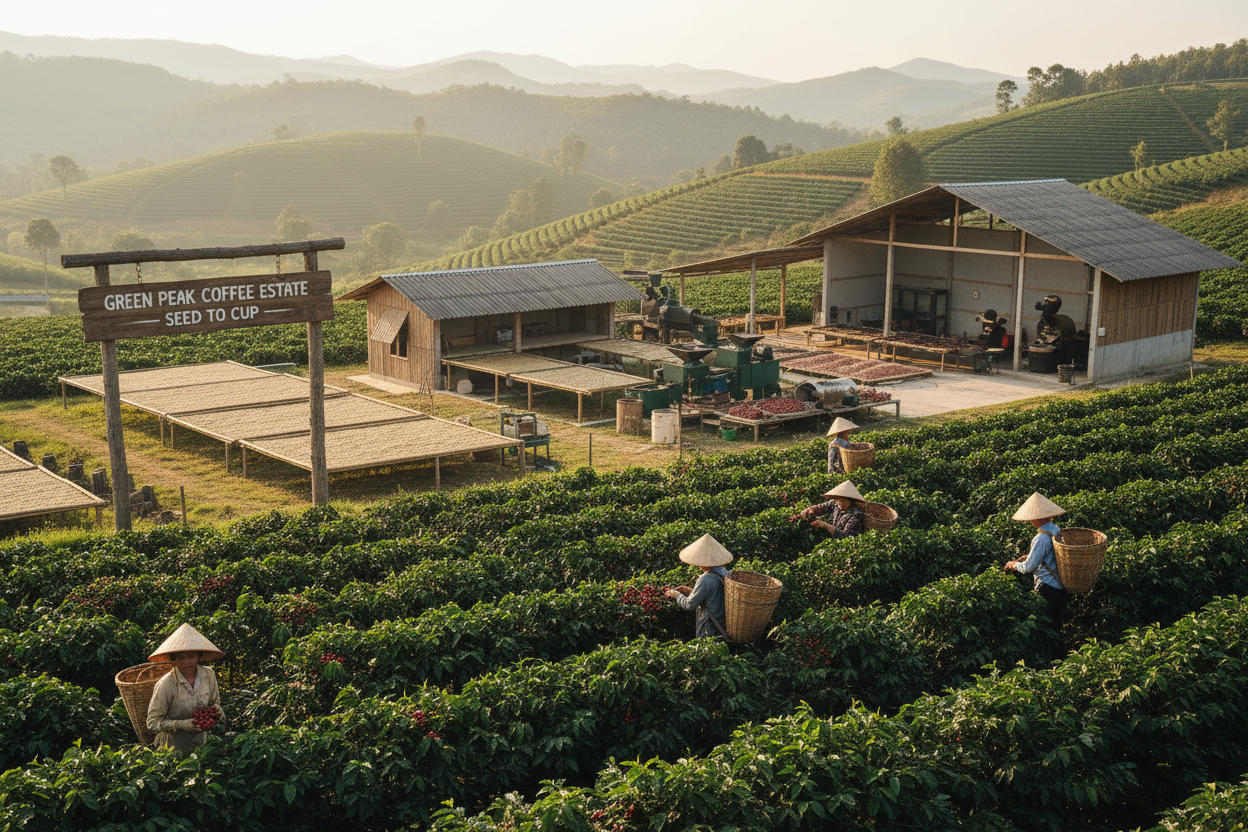
You've built the brand. You have the vision. You know your target market. Now you need a partner to execute. Someone to take your specifications—the green coffee grade, the roast profile, the custom packaging—and turn it into a finished, shelf-ready product with your name on it. You're looking at Asia for its combination of quality, scale, and value. But the search feels like a minefield. Flashy Alibaba profiles, vague promises, and the constant fear of sending a deposit halfway around the world to a company that might disappear.
Finding a reliable coffee bean OEM manufacturer in Asia requires a strategic shift from broad platform searches to deep, verification-based due diligence. The most reliable partners are not anonymous trading companies; they are vertically integrated operations that control the core asset—the coffee farm and the processing mill. The process involves four key steps: (1) Identifying potential partners with verifiable farming and processing assets, not just a sales office. (2) Conducting a live, virtual audit of their facility. (3) Demanding and verifying specific documentation and certifications. (4) Starting with a small, paid trial order to test their execution and communication before committing to volume.
I run a fully integrated operation at Shanghai Fumao. We OEM for roasters across North America, Europe, and Australia. I know what a reliable OEM partnership looks like from the manufacturer's side. Let me give you the insider's roadmap to finding a partner who will protect and elevate your brand, not exploit it.
What Is the Difference Between a Coffee OEM, ODM, and Private Label?
Before you start your search, you need to know exactly what you're looking for. The terms OEM, ODM, and Private Label are often used interchangeably, but they represent very different levels of partnership and control.
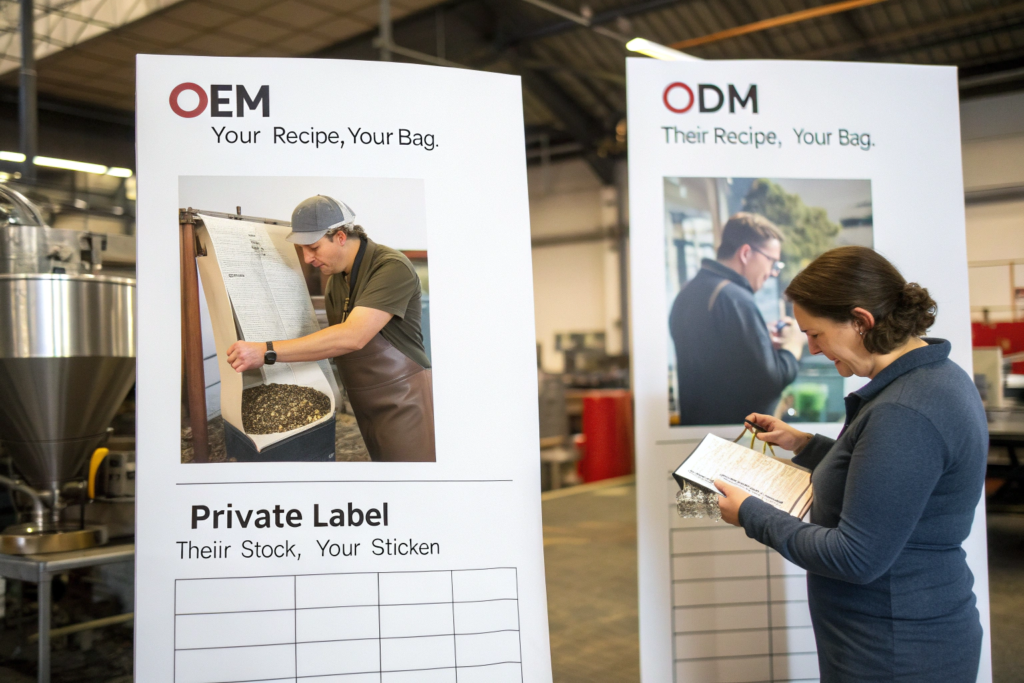
- OEM (Original Equipment Manufacturer): You provide the exact specifications. You specify the green coffee origin, grade, and varietal. You specify the roast profile (Agtron number, development time). You provide the custom packaging design. The manufacturer executes your formula. This is the highest level of control and is ideal for established roasters who have a signature product they want to scale.
- ODM (Original Design Manufacturer): The manufacturer offers a range of pre-existing "recipes" or blends. You select one from their catalog and put your brand on it. This is faster and has lower minimum order quantities (MOQs), but you have less control over the unique flavor profile.
- Private Label: The manufacturer has a finished, packaged product. You simply apply your label to their existing bag. This is the fastest and lowest-cost entry point but offers the least brand differentiation.
For a roaster serious about building a unique brand, OEM is the model that offers true partnership and long-term value.
Which Model Offers the Best Value for a Growing Roastery?
It depends on your stage of growth.
If you're just testing a new market or a new product category, ODM or Private Label allows you to launch quickly with minimal upfront investment. It's a way to validate demand.
However, if you have an established customer base and a reputation for quality, OEM is the only model that protects that reputation. It ensures that the coffee in the bag is exactly the coffee you've built your brand on. It prevents "formula drift" and gives you a proprietary advantage. The higher MOQs and longer lead times of OEM are an investment in brand integrity. At Shanghai Fumao, we specialize in OEM partnerships because they align with our strengths: vertical integration and quality control. We want to execute your vision, not sell you a generic blend.
How do find a manufacturing partner I can actually trust with my Coffee bean brand?
The journey to securing such a partner is akin to crafting the perfect cup of coffee—requiring patience, discernment, and a deep understanding of the nuances that define quality and integrity. It begins with a clear vision of what your brand stands for: whether it’s ethically sourced beans, artisanal roasting techniques, or sustainable packaging, your core values should serve as a compass. Trust, in this context, is not merely a handshake but a tapestry woven from shared principles, transparent communication, and a proven track record of reliability.
Start by immersing yourself in the world of coffee manufacturing. Research facilities that specialize in small-batch or specialty coffee production, where attention to detail is paramount. Visit their operations if possible, to witness firsthand the cleanliness of their spaces, the precision of their equipment, and the passion in the eyes of their team as they handle each bean with care. The air might carry the rich, earthy aroma of freshly roasted coffee, mingling with the faint scent of machinery and the warm hum of activity—a symphony of dedication to craft.
Dig deeper into their credentials. Scrutinize certifications: organic, fair trade, direct trade—these are not just labels but promises.
How Can I Verify That an Asian Manufacturer Actually Owns a Farm and Mill?
This is the single most important question in your search. The Asian coffee industry has many trading companies that present themselves as manufacturers. They have a nice website and a sales office, but they own no land and no machinery. They are middlemen.
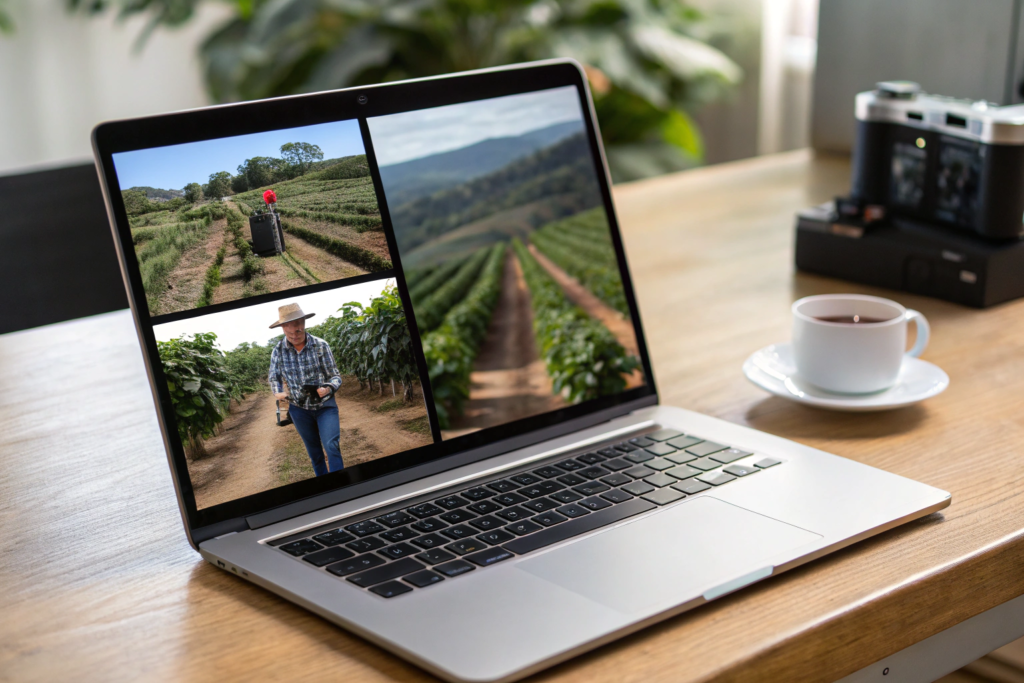
Verifying actual farm and mill ownership requires bypassing the polished marketing materials and demanding real-time, visual proof. The gold standard is a live, unscripted video walkthrough. Ask the supplier to take out their phone, open a video call, and show you three things: (1) Their coffee trees, with a specific, identifiable landmark. (2) The interior of their wet mill or dry mill, showing the equipment in operation. (3) Their warehouse, showing the scale of their inventory. A trader cannot do this. A real farm owner can do it in five minutes.
What Is a "Virtual Farm Tour" and What Questions Should I Ask?
A virtual farm tour is a live video call, not a pre-recorded, edited video. It's your remote site visit. It's how you bridge the 8,000-mile gap.
When you're on the call, don't just passively watch. Ask specific, impromptu questions that require real-time interaction:
- "Can you walk over to that fermentation tank and show me the temperature gauge?"
- "Can you show me the lot number written on those drying beds?"
- "Can you pan the camera around the warehouse so I can see the full scale of the stacks?"
- "Can you hold up today's newspaper or show me the date on your phone?"
A legitimate farm owner will be happy to do this. They are proud of their operation. A trader will make excuses—"The farm is far away," "The manager is not available," "The internet is bad." These are red flags. At Shanghai Fumao, I personally conduct virtual farm tours for prospective OEM clients. It's the best way to build trust and demonstrate our capabilities.
Why Is the Factory Audit Report Not Enough?
A factory audit report from Alibaba or a third-party inspection company is a useful baseline. It confirms the company legally exists and has a physical facility.
But it has limitations. An audit report is a snapshot in time, often months old. It may verify the existence of a warehouse, but it doesn't verify that the company owns the coffee trees that fill it. It doesn't verify their day-to-day quality control practices. It's a piece of paper. The live video call is a dynamic, real-time interaction. It allows you to see the operation in motion and, more importantly, to gauge the transparency and communication style of the people you'll be working with. Use the audit report as a filter, but use the live video call as the final proof.
What Documentation Should I Demand from a Potential Asian OEM Partner?
Trust is built on transparency. A reliable OEM partner will have a well-organized documentation package ready to share with serious prospects. If you have to fight for basic paperwork, it's a sign of things to come.
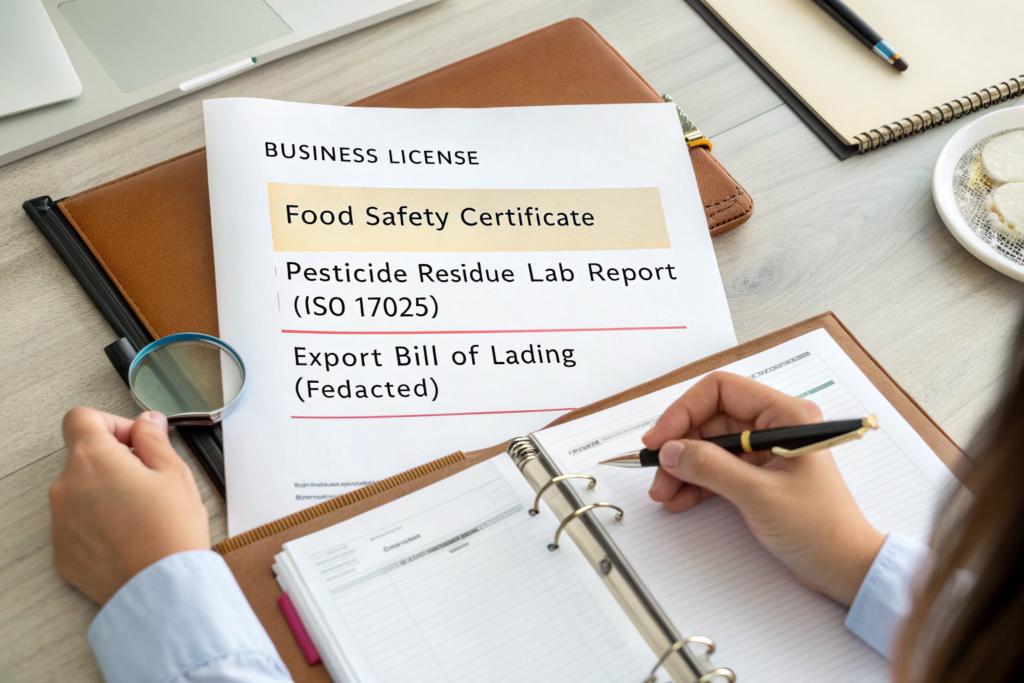
You should demand a minimum of four core documents from a potential Asian OEM partner: (1) The company's Business License, with a clear English translation showing the scope of business includes "manufacturing" and "import/export." (2) A recent, third-party Pesticide Residue and Ochratoxin A analysis report from an ISO 17025 accredited lab. (3) A redacted copy of a recent Bill of Lading for an export shipment to your region, proving export experience. (4) Any relevant food safety or quality certifications (e.g., HACCP, ISO 22000) for their processing facility.
Why Is the Pesticide Residue Lab Report Non-Negotiable?
This is your food safety insurance policy. A generic "Certificate of Analysis" from the manufacturer is not sufficient. You need a full, multi-page report from an independent, internationally accredited laboratory (like Eurofins or SGS).
The report should use GC-MS/MS and LC-MS/MS methods to screen for over 400 pesticide compounds. It should show the Limit of Quantification (LOQ) and the result for each compound. You're looking for "Not Detected" or results below 0.01 mg/kg. This report provides objective, scientific proof that the coffee is clean and safe for your customers. A partner who provides this report willingly is a partner who takes food safety seriously. At Shanghai Fumao, we run these screens on every export lot and provide the full report to our OEM clients. It's a cornerstone of our quality assurance.
What Does a Redacted Bill of Lading Tell Me?
It tells you they've done this before. Successfully. A Bill of Lading (B/L) is the official receipt for an ocean container shipment.
A redacted B/L (with sensitive commercial information like pricing blacked out) will still show: the exporter's name, the consignee's destination, the port of loading, the vessel name, and the container number. This proves that the company has experience navigating the complex logistics of international coffee export. It proves they have relationships with shipping lines and can get your product on a vessel. A company that can't produce a redacted B/L for a shipment to your region is likely a trading company with no direct export experience.
How Should I Structure a Trial Order to Minimize Risk?
You've done the video tour. You've reviewed the documents. The communication has been good. Now it's time to put the relationship to the test with real coffee and real money. But you don't start with a full container.
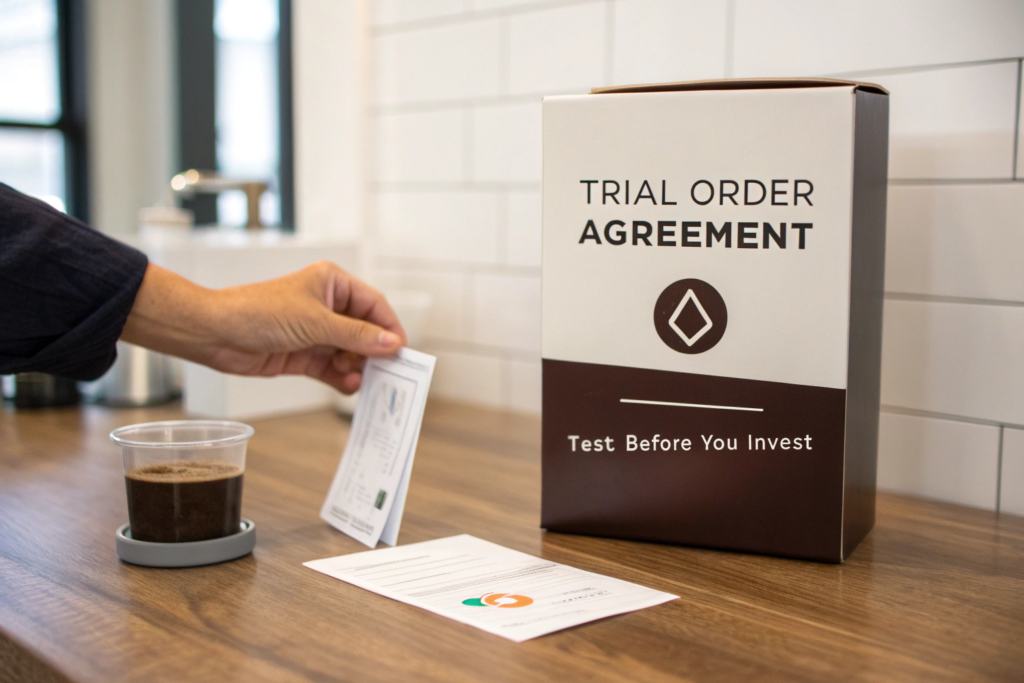
Structuring a low-risk trial order involves four key principles: (1) Order a small, manageable volume—typically a few pallets (e.g., 500-1,000 kg) shipped via air freight or LCL (Less than Container Load) sea freight. (2) Use a secure payment method for the initial transaction, such as PayPal, credit card, or Alibaba Trade Assurance. (3) Establish clear, written acceptance criteria for the trial order (based on the approved sample and spec sheet). (4) Evaluate the entire experience, not just the coffee: communication timeliness, documentation accuracy, packaging quality, and shipping execution.
Is Air Freight Worth the Cost for a Small Trial Order?
For a 500kg trial order of OEM coffee, the cost of air freight is significantly higher per pound than sea freight. But it's often a smart investment.
Why? Speed and reduced risk. Air freight gets the coffee to you in 5-7 days, not 5-7 weeks. You can evaluate the product quickly. If there's an issue with the roast profile or the packaging, you get that feedback fast and can iterate before placing a large container order. It also reduces the risk of quality degradation during a long, hot ocean voyage for a small, less-than-container load. Think of the air freight premium as R&D cost. Once the trial is successful and you're ready for volume, you switch to the much more economical ocean freight. At Shanghai Fumao, we support both air and sea trials, advising clients on the most cost-effective approach for their specific situation.
What Am I Evaluating Beyond the Coffee in the Cup?
The coffee itself is the most important thing. Does it match the approved sample? Does it roast consistently? Does it taste great?
But a successful OEM partnership is about more than the bean. During the trial order, you're evaluating the partner's operational excellence. Ask yourself:
- Communication: Were emails answered within 24 hours? Was the contact person clear and helpful?
- Documentation: Were the commercial invoice, packing list, and any certificates accurate and provided on time?
- Packaging: Did the custom bags arrive as specified? Were they filled and sealed correctly? Were the cartons labeled properly?
- Shipping: Did the shipment depart and arrive on the promised timeline?
A partner who excels in these operational details is a partner you can scale with. A partner who stumbles on the small stuff will likely stumble on the big stuff.
Conclusion
Finding a reliable coffee bean OEM manufacturer in Asia is a process, not a single click. It's a process of moving from anonymous online profiles to verified, transparent partnerships. It requires you to be a skeptical investigator: demanding the live video tour, scrutinizing the lab reports, and testing the relationship with a small, smart trial order.
The reward for this diligence is immense. The right partner—a vertically integrated farm and mill with a commitment to quality and transparency—becomes an extension of your own roastery. They give you the scale, the consistency, and the supply chain security to build a powerful, enduring coffee brand.
If you're ready to start that process and want to explore an OEM partnership with a farm that owns its land, its mills, and its commitment to quality, I invite you to schedule a virtual tour of Shanghai Fumao. Let's see if we're the right fit. y email is cathy@beanofcoffee.com.