You've been in this business long enough to know the feeling. You find a great coffee. The price is right. You build it into your blend. It becomes a staple. Then, six months later, you go to reorder. The price has jumped. Or the quality is different. Or the contact person has changed. Or worse, the coffee is simply "not available." You're back to square one, cupping samples, scrambling to fill a hole in your menu. And you realize: you weren't buying from a source. You were buying from a middleman. A trader. You're asking: How do I break this cycle and build a supply chain that's actually mine?
Wholesale coffee buyers prefer working directly with vertically integrated factories (estate farms with on-site mills) over traders for three fundamental business reasons: Price Stability and Transparency, Quality Consistency and Traceability, and Long-Term Supply Security. A factory-owner controls the cost of production and the processing protocol. A trader controls neither. By eliminating the intermediary, the buyer gains a direct line to the actual source, reducing markups, improving communication, and building a partnership based on mutual commitment rather than transactional opportunism.
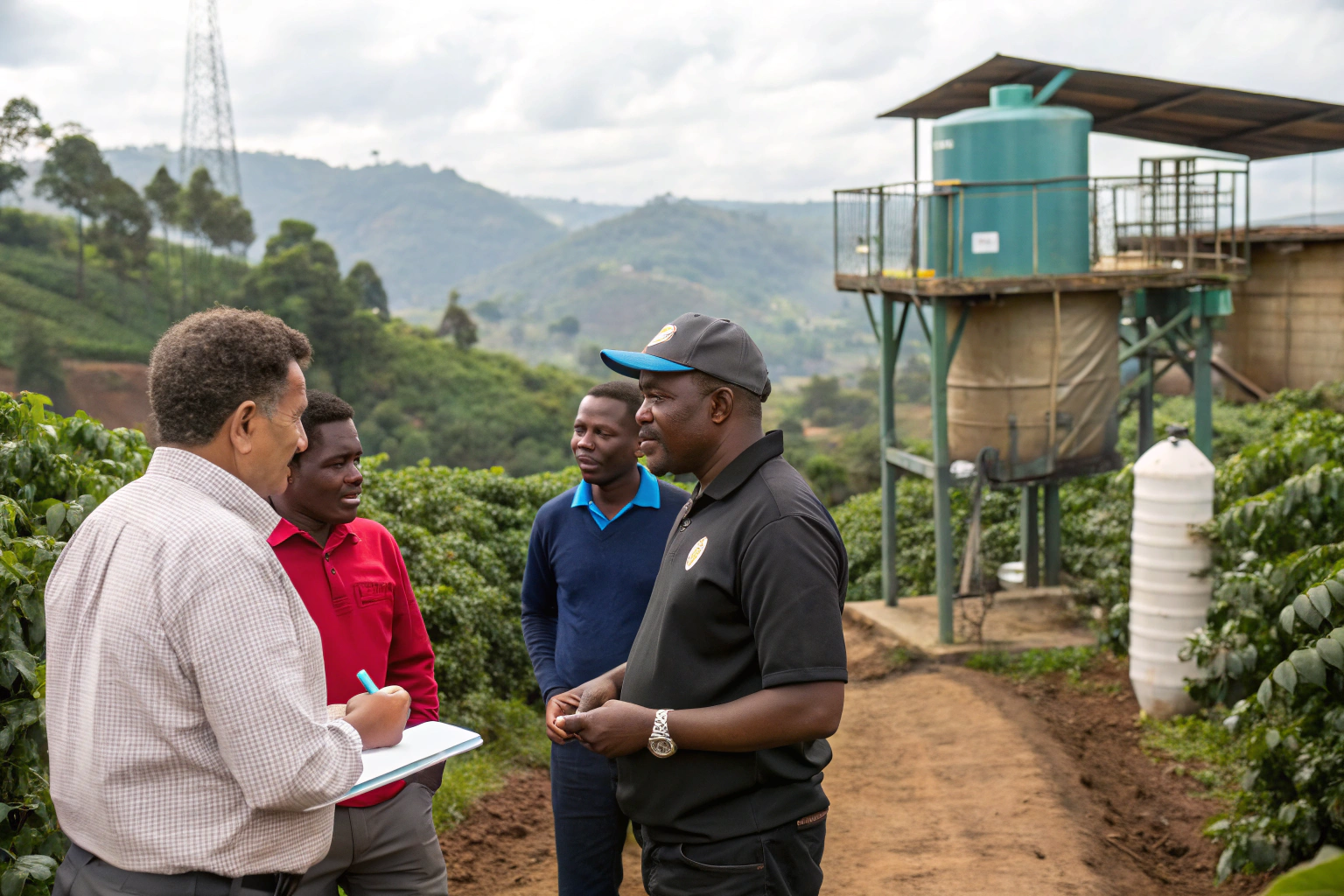
I see this from the other side of the table. At Shanghai Fumao, I'm not just an exporter. I'm a farmer. I own the dirt. I own the mill. And I've seen firsthand why the smartest, most resilient coffee companies are shifting their sourcing strategies toward direct factory relationships. Let me break down the concrete advantages that a factory offers over a trader.
How Does Buying Direct from a Factory Improve Price Transparency and Stability?
This is the most immediate and tangible benefit. When you buy from a trader, you are paying for their profit margin, and often the margin of the intermediary they bought from. This cost is baked into the FOB price, and it's completely opaque to you.
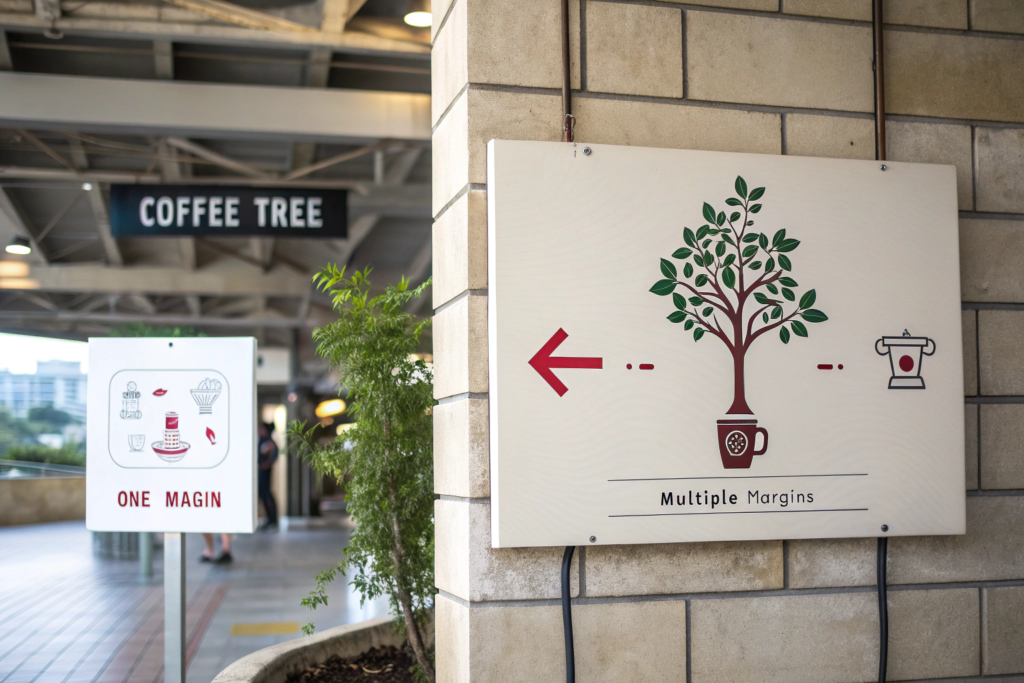
A factory's FOB price is based on its actual cost of production plus a single, transparent margin. A trader's FOB price is based on their purchase price from a farm or collector, plus their own markup. In a rising market, the trader's price is doubly volatile: it reflects both the rising C-market and the farm's (or collector's) increased asking price. A factory, owning the means of production, can offer a more stable differential and a price that more accurately reflects the true value of the coffee, not the accumulated friction of the supply chain.
Why Is the Factory's Differential More Stable Than a Trader's?
Remember the formula: FOB Price = C Market + Differential. The C Market is volatile for everyone. The Differential is the controllable part.
A factory's differential reflects its internal costs and its desired profit. It's a number the factory owner controls. A trader's differential reflects the price they paid a farmer, plus their own need for a margin. When a middleman squeezes the trader, the trader squeezes you. The trader's differential can swing wildly based on local supply dynamics that are invisible to you. By working directly with a factory like Shanghai Fumao, you're negotiating the differential with the source. We have a clear understanding of our costs. We can commit to a differential for a season or even a multi-year contract, providing you with budget predictability that a trader simply cannot match.
How Does Vertical Integration Eliminate Hidden "Sourcing" Fees?
A trader's value proposition is "I find the coffee for you." They charge for that service, either through an explicit fee or, more commonly, a hidden markup in the FOB price.
When you work with a vertically integrated factory, there is no "sourcing." The coffee is already there. It's grown on the farm you're talking to. The only cost is the cost of production, processing, and export. There is no intermediary to pay. This doesn't mean the factory's price is always the absolute cheapest on a given day. A trader might be desperate to move old inventory and offer a lowball price. But over time, the direct factory relationship delivers a lower average cost and, more importantly, a predictable cost. You're not playing the spot market lottery. You're building a reliable cost basis for your business.
Why Is Traceability and Quality Control Stronger with a Factory?
Traceability is not just a marketing buzzword. It's the foundation of quality assurance. If a problem arises—a quality dip, a food safety concern—you need to know exactly where it came from to fix it. A trader is a break in the chain of information.
A vertically integrated factory offers a "closed-loop" traceability system. The same entity manages the coffee from seed to container. If a quality issue is detected, the root cause can be traced back to a specific farm plot, a specific harvest day, or a specific processing batch. A trader, who aggregates coffee from dozens or hundreds of anonymous smallholders, offers at best "regional" traceability. When a problem occurs with a trader's lot, the source is often a mystery, making corrective action impossible.
Who Controls the Critical Fermentation and Drying Protocols?
This is where cup quality is made or lost. The wet mill process—fermentation time, water quality, drying speed—determines whether a coffee is clean and sweet or fermenty and flawed.
A factory-owner controls these protocols directly. We have standard operating procedures. We train our staff. We monitor pH and temperature. We can make adjustments in real-time based on the weather and the condition of the cherry. A trader has zero control over this. They buy parchment from farmers who may have excellent practices or terrible ones. The trader is at the mercy of the farmer's skill and honesty. By buying from the factory, you're buying the process, not just the bean. You're buying the assurance that the coffee was handled with consistency and care at its most vulnerable stage. This is the invisible quality that shows up in the cup as Clean Cup and Uniformity.
How Does Factory Ownership of the Dry Mill Prevent Commingling?
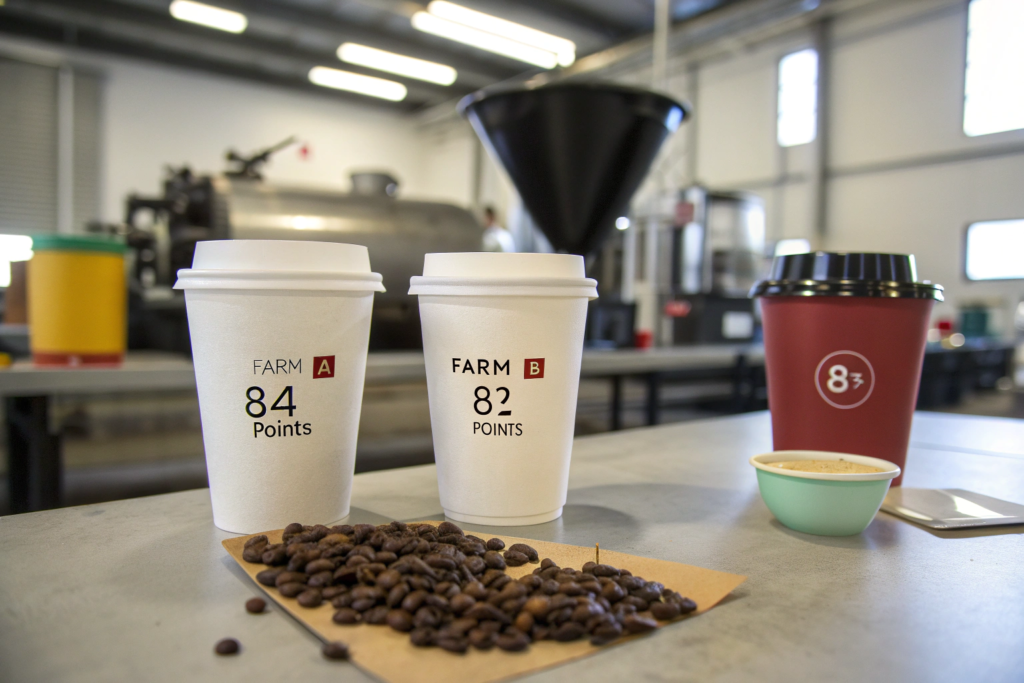
Commingling is the practice of mixing coffees from different sources. A trader might buy 100 bags from Farm A and 100 bags from Farm B. Both are "Yunnan Grade 1." They look similar. The trader combines them into a single 200-bag lot for export.
The problem? Farm A's coffee cups at 84 points. Farm B's coffee cups at 82 points, with a slightly harsher finish. The commingled lot is now an inconsistent 83-point coffee. The roaster who approved the sample from Farm A receives a container that doesn't match. This is a classic trader problem. A factory that processes only its own coffee never commingles. The lot integrity is absolute. The coffee from Block 7 of our farm is kept separate from Block 12. When you contract a specific lot from Shanghai Fumao, you receive only that lot. This guarantees that the sample you approved is truly representative of the container you receive.
How Does a Direct Factory Relationship Provide Better Long-Term Security?
Coffee is a long game. Your customers expect their favorite blend to taste the same, year after year. You need a partner who will be there, with the same quality and volume, through market ups and downs. A transactional trader relationship cannot offer this security.
A direct factory relationship is built on mutual commitment. The roaster commits to buying a certain volume, providing the factory with the financial security to invest in the farm and mill. The factory commits to reserving that volume and maintaining the quality specifications for that roaster. In a tight market, when coffee is scarce and prices are high, a trader will sell to the highest bidder. A factory with a long-term partnership will honor its commitments to its core clients, valuing the relationship over a short-term windfall.
What Happens to a Trader's Supply in a Volatile Market?
It dries up. Or the price becomes unworkable. A trader relies on their ability to buy coffee. In a rising market, farmers and local collectors often hold back their coffee, waiting for even higher prices. The trader cannot source the volume they promised.
Or, a farmer who agreed to sell at a certain price reneges on the deal when they see the market has moved. The trader is left scrambling. They either have to buy at a much higher price (and pass the cost, or the loss, on to you) or they simply default on the contract. This is a common story. The trader's supply chain is only as strong as their weakest contract with a smallholder. A factory's supply chain is rooted in the soil of their own farm. The coffee is there. It's not going anywhere. Our ability to supply you is not dependent on convincing hundreds of individual farmers to honor their word. It's dependent on the weather and our own farming practices. This is a fundamentally more secure foundation.
Can a Factory Offer More Flexible or Customized Contract Terms?
Often, yes. A trader operates on thin margins and high volume. They are often rigid in their terms: full container loads only, standard payment schedules, no deviations.
A factory, especially one that values long-term partnerships, can be more flexible. Because we understand our own production costs intimately, we can structure deals that work for both parties. We can offer smaller trial shipments. We can work with you on a payment schedule that aligns with your cash flow. We can collaborate on custom processing experiments (like a special honey process) or reserve a specific micro-lot just for you. This flexibility is a direct result of vertical integration. The decision-maker is the owner. You're not negotiating with a junior salesperson who has to "check with management." You're talking to the person who can say "yes."
What Are the Hidden Risks of Relying on a Coffee Trader?
Traders play a vital role in the coffee industry, especially for managing logistics and financing for smallholder farmers. But for a wholesale buyer seeking a core, long-term component, the trader model carries inherent structural risks that are often invisible until it's too late.
The hidden risks of relying on a trader include: (1) Supply Chain Opacity: You have limited visibility into the true origin, farming practices, and processing methods. (2) Quality Drift: As the trader sources from different farms to fill your order, the cup profile can shift subtly (or dramatically) over time. (3) Counterparty Risk: In a volatile market, a trader's thin margins can evaporate, leading to contract defaults or bankruptcy. (4) Information Asymmetry: The trader knows more about the coffee's true cost and quality than you do, putting you at a negotiating disadvantage.
What Is "Quality Drift" and Why Is It So Damaging to a Brand?
Quality drift is the slow, often imperceptible decline in cup quality or shift in flavor profile over multiple shipments. The first container is great. The second is... okay. The third is noticeably different.
This happens because the trader is not selling you a farm's coffee. They are selling you a description of coffee (e.g., "Yunnan AA, Screen 18, 83 points"). They fill that description from whatever source is available and cheapest on that day. Farm X this month, Farm Y next month. The specs on paper are the same, but the cup is subtly different. For a roaster who has built a brand around a specific flavor profile, this is a disaster. Customers notice. Trust erodes. You spend hours tweaking roast profiles and blend percentages to compensate for an invisible, shifting variable. With a factory, you are buying that farm's coffee. The terroir is consistent. The processing is consistent. The profile evolves subtly with the seasons, but it doesn't "drift" to a completely different flavor signature.
How Does a Trader's Lack of Asset Ownership Increase My Risk?
A trader's primary assets are their inventory, their relationships, and their cash flow. They own no land. They own no mill.
This makes them inherently more vulnerable to market shocks. If the C Market spikes, their cost to replace inventory skyrockets, squeezing their working capital. If a key farmer relationship sours, their supply vanishes. If a large client defaults on a payment, their cash flow craters. A factory's assets are the land and the machinery. These are tangible, long-term assets. The business is built on a more solid, less liquid foundation. This doesn't mean factories are immune to financial trouble, but the risk profile is fundamentally different. You're partnering with an entity that has deep roots, not a nimble but fragile trading desk. This is the "safe, reliable, stable, and trustworthy" factor that buyers like Ron are ultimately seeking.
Conclusion
The preference for factories over traders is not about demonizing intermediaries. Traders serve a purpose. But for a wholesale coffee buyer who is serious about building a resilient, distinctive, and defensible coffee program, the advantages of a direct factory relationship are too significant to ignore.
It's about taking control. Control over your price stability, by eliminating hidden markups and negotiating a transparent differential. Control over your quality, by partnering with a source that manages every step from cherry to container. Control over your long-term security, by building a relationship based on mutual commitment rather than transactional convenience.
At Shanghai Fumao, we've built our entire business model around this principle. We are the factory. We are the farm. And we are looking for partners who value that direct connection as much as we do.
If you're ready to move beyond the limitations of the trader model and build a supply chain that's truly yours, I invite you to start a conversation with me directly. My email is cathy@beanofcoffee.com.