I once had a client—a brilliant roaster and a great entrepreneur—whose business was growing fast. He was spending his evenings doing cupping and his weekends on marketing. The one thing that terrified him was logistics. He did not have the time or the expertise to become a shipping expert. The alphabet soup of FOB, CIF, Bill of Lading, and Customs Entry gave him a headache. He saw his dream of importing direct-trade coffee slipping away because he was afraid of making a costly logistical mistake. The pain is real. You want the quality and margins of direct sourcing, but you do not want to hire a full-time logistics manager. The good news is, with the right partner, you do not have to.
To import coffee beans without a full-time logistics manager, you must partner with a truly full-service supplier who offers comprehensive CIF (Cost, Insurance, Freight) or DDP (Delivered Duty Paid) shipping terms, acts as a single point of accountability for the entire international journey, and provides a managed, turnkey process where they proactively handle all the shipping, documentation, and customs clearance complexities on your behalf.
You do not need to become a logistics expert. You need to choose an export partner who already is one. Let me explain how this works, how to structure your partnership, and how to protect yourself from hidden problems. At Shanghai Fumao, this is exactly the service we provide for our clients. Our entire Logistics & Planning page is designed to make this process feel simple for you.
Why Should a Small Roaster Avoid FOB and Choose CIF or DDP Terms?
The single most important decision you can make to simplify your life as an importer is choosing the right Incoterm. The international commercial term you agree upon with your supplier defines who is responsible for what—and, crucially, who bears the risk—at every stage of the journey. For a roaster without a logistics manager, one specific choice makes all the difference.
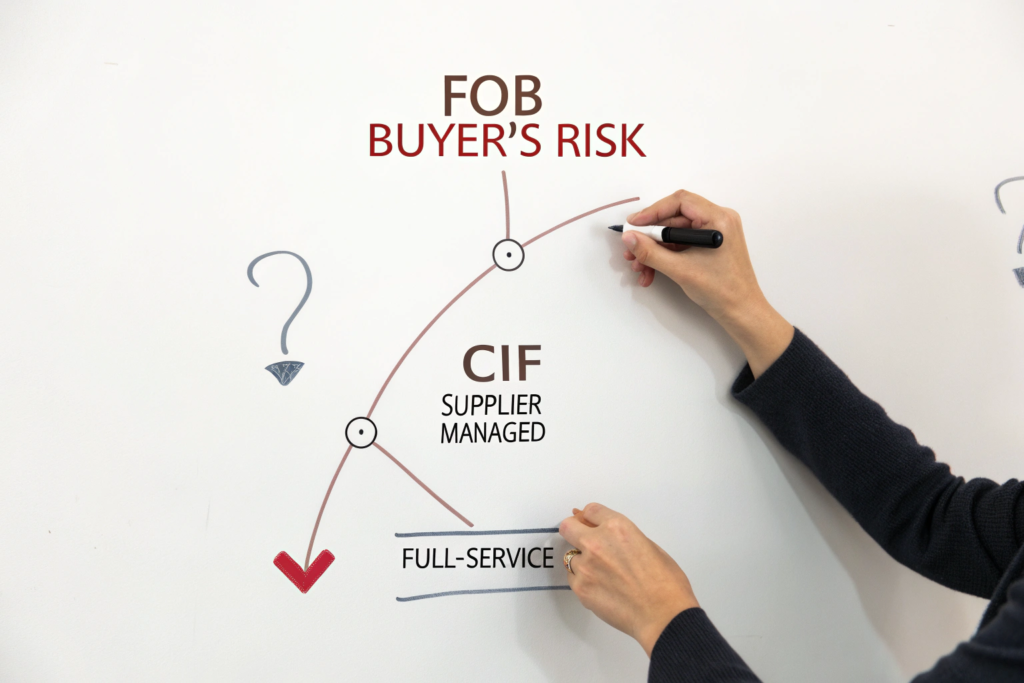
A small roaster should avoid FOB (Free on Board) terms because it shifts the burden of managing and paying for ocean freight, marine insurance, and the entire destination process onto you, requiring you to become an international logistics expert; instead, you should opt for CIF (Cost, Insurance, Freight) or DDP (Delivered Duty Paid) terms, where the supplier takes full responsibility for delivering the coffee to your nearest port or even to your roastery door.
This choice is about where you want the stress to live. With FOB, it lives with you. With CIF or DDP, it lives with your trusted supplier.
What Hidden Costs and Risks Are Buried in FOB Terms for a Novice?
An FOB price looks cheaper on the surface because it only covers the cost of the coffee and the inland freight to the port of Shanghai. However, for a novice importer, FOB is an iceberg. The low sticker price hides a massive, dangerous mass of costs and risks below the waterline.
- Freight Rate Volatility: You would need to book the ocean freight yourself, paying the spot market rate. As we discuss in our guide on What Are the Hidden Costs in Coffee Bean Logistics from Asia to EU?, this rate fluctuates wildly. You could budget $2,000 for a container from Shanghai and end up paying $4,500 due to a Peak Season Surcharge you never saw coming.
- Destination Surprises: At the U.S. port, a cascade of unexpected bills will appear, all in your name: Destination Terminal Handling Charges (THC), Customs Brokerage fees, potential USDA exam fees, and crippling port storage (demurrage) if you cannot clear the container immediately. All of these are your sole responsibility under FOB. A single mistake or delay can cost thousands of dollars.
- The Administrative Burden: You would need to find and vet your own freight forwarder and customs broker. You would be the central communication point for the shipping line, the trucker, the warehouse, and CBP. This is a logistical puzzle that can easily overwhelm a small team.
Choosing FOB means choosing to become an amateur logistics manager. For most small roasters, that time and mental energy is far better spent on roasting and selling coffee.
How Does a CIF Contract Simplify the Entire Journey to Your Door?
For a roaster who wants to focus on their business, not on shipping routes, a CIF (Cost, Insurance, Freight) contract from a full-service partner like us is a transformative solution. It dramatically simplifies the process and transfers the major logistical burden onto the supplier.
- One Point of Contact: Under a CIF contract, my team at Shanghai Fumao manages everything from our mill door to your designated U.S. port. We book the vessel. We pay the ocean freight. We purchase the marine insurance. You receive a single, all-inclusive price. When a logistical question arises, you have one person to call: Cathy.
- Built-In Logistics Expertise: You are no longer managing logistics yourself. You are leveraging our established relationships with freight forwarders, our negotiated contract rates with carriers, and our deep understanding of the coffee export process. Our expertise becomes your in-house logistics department, without the salary.
- A Predictable, Landed Cost: We provide you with a single, predictable "Landed Cost" quote from our door to the U.S. port, as we detail in our guide on How to Calculate ROI on a Private Label Coffee Line from a Chinese Factory?. You know your cost per pound before the coffee even leaves our mill. This allows you to budget with confidence.
CIF gives you control without the headache. It allows you to outsource the most stressful part of the import process to a partner who is already an expert at it.
What Does a Full-Service Supplier Manage on Your Behalf?
To truly liberate yourself from logistics, you need more than just CIF terms on a contract. You need a supplier who acts as your proactive partner, managing the physical journey and the entire paper trail on your behalf. You should be able to glance at a simple dashboard or a bi-weekly email and know exactly where your coffee is, without having to chase anyone for information.
A full-service supplier manages the entire international logistics chain on your behalf, starting with the meticulous preparation and electronic pre-clearance of all export documentation in China, continuing through the booking and monitoring of the ocean freight and insurance, and extending to coordinating with your designated U.S. customs broker to ensure a smooth and rapid clearance process.
You are paying for a managed service. You should be able to tell your supplier, "Handle it," and trust that it will be handled. This is the level of partnership we strive for.
What Pre-Shipment Documentation Does the Supplier Handle Proactively?
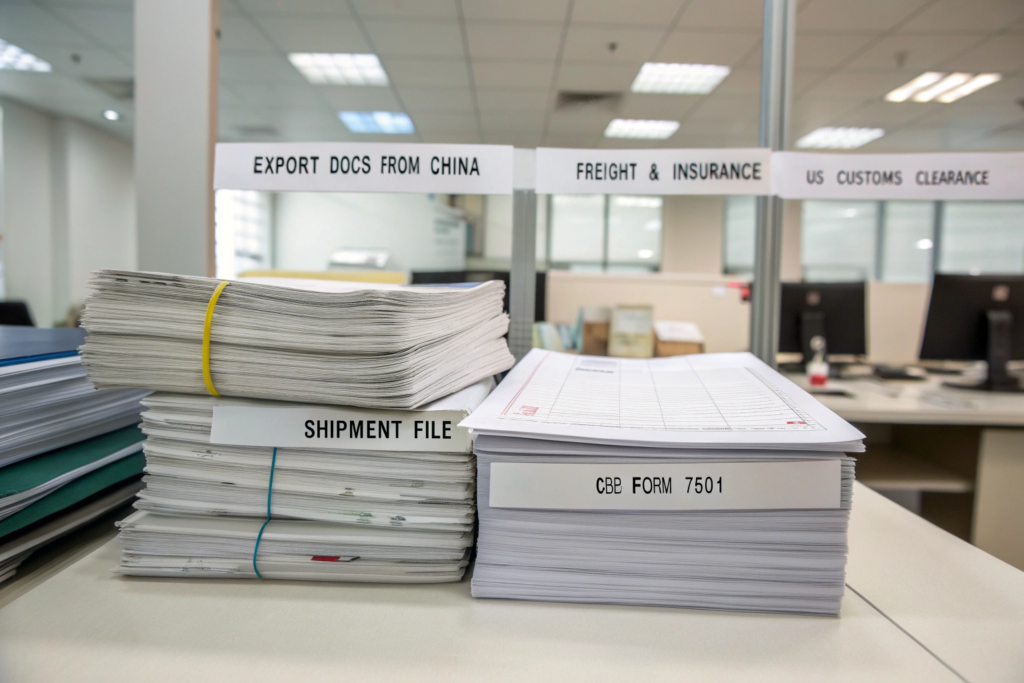
The paperwork for an international coffee shipment can be daunting. It must be perfectly accurate, or the container will be delayed at customs, costing you time and money. A full-service supplier takes ownership of this entire process, ensuring the "paperwork" moves faster than the ship.
- The Complete Document Package: Before the vessel even leaves Shanghai, we will have prepared and electronically submitted a complete package of original documents. This includes the Commercial Invoice, the Packing List, the Bill of Lading (the title to the goods), the Certificate of Origin (Form E for duty savings), and the Phytosanitary Certificate from China Customs. We do not just email you a stack of PDFs and wish you luck.
- Proactive Problem-Solving: Our team, led by Cathy, cross-references every piece of data. We ensure the weights, container numbers, and buyer names are perfectly consistent across all documents. We know that a single typo in a customs declaration can cause a hold. We catch those errors before they happen.
- Digital Pre-Clearance: By the time your container arrives at the U.S. port, your customs broker has already received the digital pre-clearance information they need to file the entry with U.S. Customs and Border Protection (CBP) immediately. This drastically reduces the risk of the container sitting idle, accruing storage fees. This is the standard of service we provide at Shanghai Fumao.
How Does the Supplier Protect the Coffee Quality During the Ocean Crossing?
A full-service partner is not just concerned with moving a box; they are concerned with protecting the quality of your coffee inside that box. We take proactive steps to ensure the hard-won flavor of our Baoshan Arabica is not damaged by the ocean environment.
- Multi-Layered Packaging: We start with our standard, non-negotiable packaging protocol. Every bag is sealed in a GrainPro hermetic liner, as we discuss in Why Do Coffee Roasters Prefer GrainPro Bags for Shipments from Asia?, which locks in the coffee's perfect moisture and protects it from humidity and odors.
- Proactive Container Protection: Before loading, we inspect every container for holes and cleanliness. We use desiccant packs to absorb any residual moisture and prevent "container sweat." For highly sensitive lots, we can upgrade to a thermal container liner to reflect heat.
- Transit Monitoring: For our clients who want the ultimate peace of mind, we include a digital temperature and humidity data logger inside the container. This provides a verifiable record that the coffee was transported in stable conditions. You can download the data and see exactly what happened during the voyage. If you want to ensure this level of protection is in your contract, review our guide on How to Write a Clear Specification Sheet for Your Coffee Bean Order?.
How Do You Choose and Coordinate with a U.S. Customs Broker?
Even with a full-service supplier managing the export side, you, as the Importer of Record, are legally responsible for the coffee when it arrives in the United States. You must have a licensed U.S. Customs Broker to file the entry on your behalf. However, your supplier can and should make this relationship simple and seamless. You do not need to find this person on your own and manage them in isolation.
You can choose and coordinate with a U.S. Customs Broker with zero stress by asking your full-service supplier for a trusted recommendation, ideally one that has a direct, existing working relationship with your supplier's logistics team, creating a seamless, three-way information loop that requires almost no hands-on management from you.
Your supplier should introduce you to a broker they have worked with successfully before, and then they should take the lead in coordinating the information flow. You should be copied on the emails, not writing all of them.
What Information Do You Need to Give Your Broker for the First Shipment?
The initial setup with a new customs broker requires some administrative legwork. A good supplier will guide you through this. Here is what you will typically need to provide, and how we make it easy.
- Your Business Information: Your company's legal name, address, and your IRS-issued Employer Identification Number (EIN).
- A Customs Bond: This is a non-negotiable, legal requirement for all commercial imports valued over $2,500. It is an insurance policy that guarantees payment of duties to CBP. Your broker can easily sell you a bond for either a single transaction or, more economically, for a full year.
- A Signed Power of Attorney (POA): This is a standard form that legally authorizes your broker to act on your behalf with U.S. Customs.
At Shanghai Fumao, we make this easy. Cathy will directly introduce you to a trusted, coffee-experienced broker we work with. She will share the necessary forms with you. More importantly, she will handle the communication that matters: sending the pre-clearance documents directly to your broker at the right time, so they have everything they need to file a smooth entry. Your job is to sign the forms. Our job is to make the process work.
How Can Your Supplier Act as the Central Coordinator with the Broker?
This is the ultimate power of a full-service partnership. You do not need to be the middleman, translating between a Chinese freight forwarder and a U.S. customs broker. Your supplier should act as the central hub.
- A Single, Synchronized Workflow: We do not just email you a Bill of Lading and say, "Good luck." Our logistics team sends the complete, pre-audited document package directly to your customs broker via email at the exact right moment, with you in copy. This ensures the broker has the data they need to file the "Entry" with U.S. Customs before the vessel even arrives. There is no delay, no frantic phone calls, and no risk of a missed document.
- Proactive Issue Resolution: If the broker has a question—perhaps about the harmonized system (HS) code for an organic certification—they do not need to call you. They can email Cathy, who can answer instantly. If a government agency holds the container for a random exam, your broker will coordinate directly with the logistics team on the ground to schedule the inspection, and you will simply be kept informed. This is a seamless, integrated service that makes you feel like you have a logistics department, just without the overhead. Your time is freed to focus on your craft.
Conclusion
Importing coffee beans without a full-time logistics manager is not only possible; it is the standard, worry-free model for growth when you have the right partner. The secret is not in becoming a shipping expert yourself. It is in strategically abandoning the complex, high-risk FOB model and choosing a full-service supplier who offers transparent CIF or DDP contracts and acts as a single, accountable point of contact for the entire journey.
With this partnership, you are not just buying green coffee. You are buying a managed import service. Your supplier handles the documents, the freight, the insurance, and the proactive coordination with your customs broker. Your role is beautifully simple: you sign a contract, you receive a predictable landed-cost price, and then you welcome your coffee at your roastery door.
At BeanofCoffee, this is the partnership we offer. Our team, led by Cathy, manages the complex global logistics so you do not have to.
If you want to know what a door-to-door CIF price looks like for your next order, or if you are simply tired of the stress of managing freight, let's talk. We can provide a clear, all-inclusive quote. Email Cathy Cai. Tell her your destination port, and ask for a "CIF Door-to-Door Quote." Contact Cathy at: cathy@beanofcoffee.com