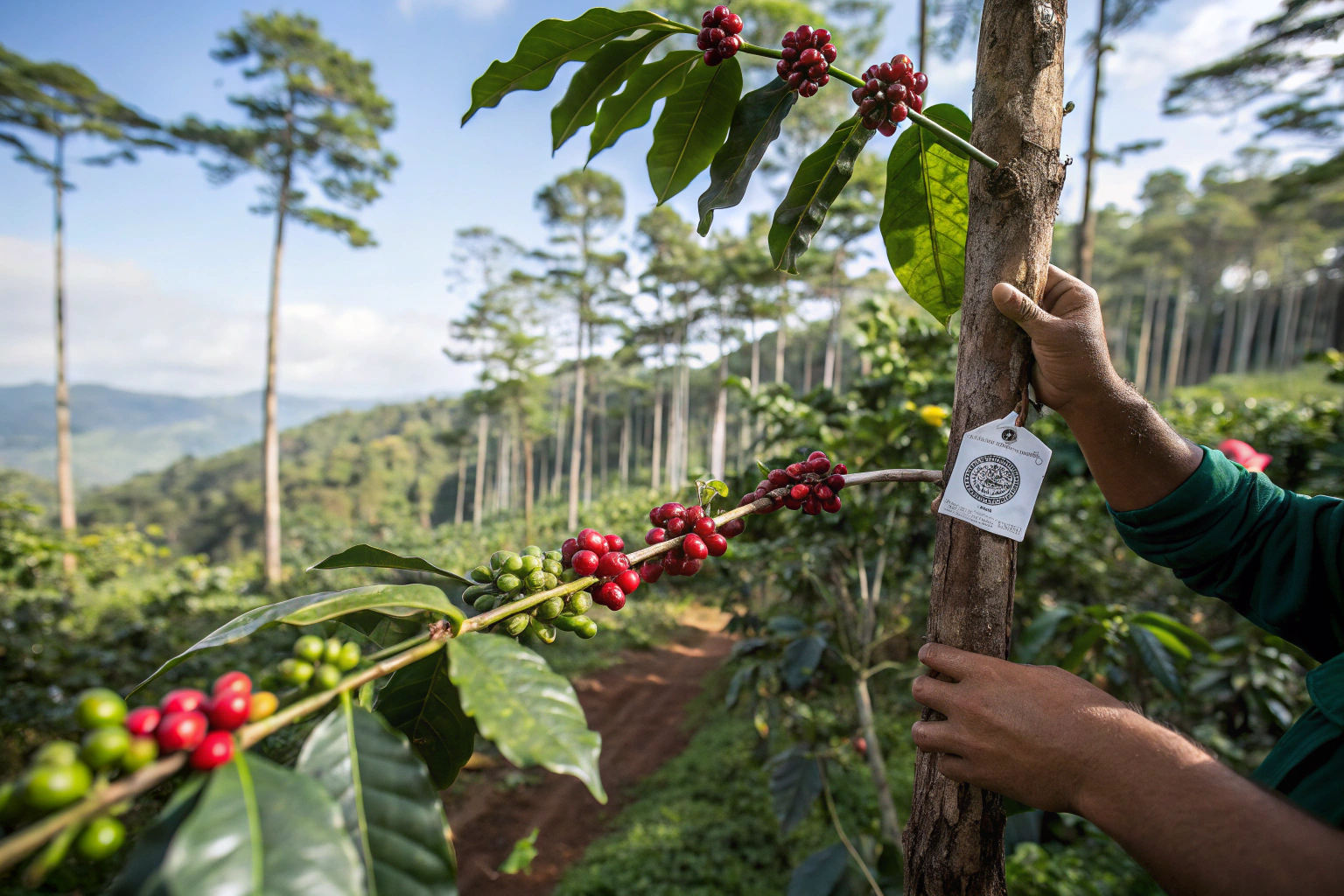
I remember the first time an auditor from the Rainforest Alliance visited our farm. He did not just look at our coffee trees. He walked deep into our forested areas. He checked the cleanliness of our water sources. He sat down with our workers, privately, to ask about their wages and their safety training. He was auditing not just a crop, but an entire ecosystem and a community. The process was rigorous, humbling, and deeply affirming. It validated what we had always believed: that a truly great coffee must be grown in a way that respects the land and the people who live on it.
The Rainforest Alliance (RA) Standard for coffee farms in China is a comprehensive, third-party audited framework that requires farms to demonstrate continuous improvement across four interconnected pillars of sustainability: effective farm management, rigorous environmental protection (including biodiversity, soil health, and water conservation), decent work and social well-being for farmers and workers, and productive, climate-smart agricultural practices.
It is not a single-issue certification. It is a holistic system for building a resilient, sustainable, and ethical coffee farm. Let me explain what this standard looks like in practice on our land in Baoshan, and what it means for you as a buyer. At Shanghai Fumao, our commitment to these principles is detailed on our Sustainability page.
What Are the Core Requirements of the Rainforest Alliance Sustainable Agriculture Standard?
The Rainforest Alliance seal is not given lightly. It is earned through an annual, independent audit against the Sustainable Agriculture Standard. This standard is not a simple checklist; it is a comprehensive management system designed to drive positive change. It requires farms to think holistically and to commit to a path of continuous improvement.
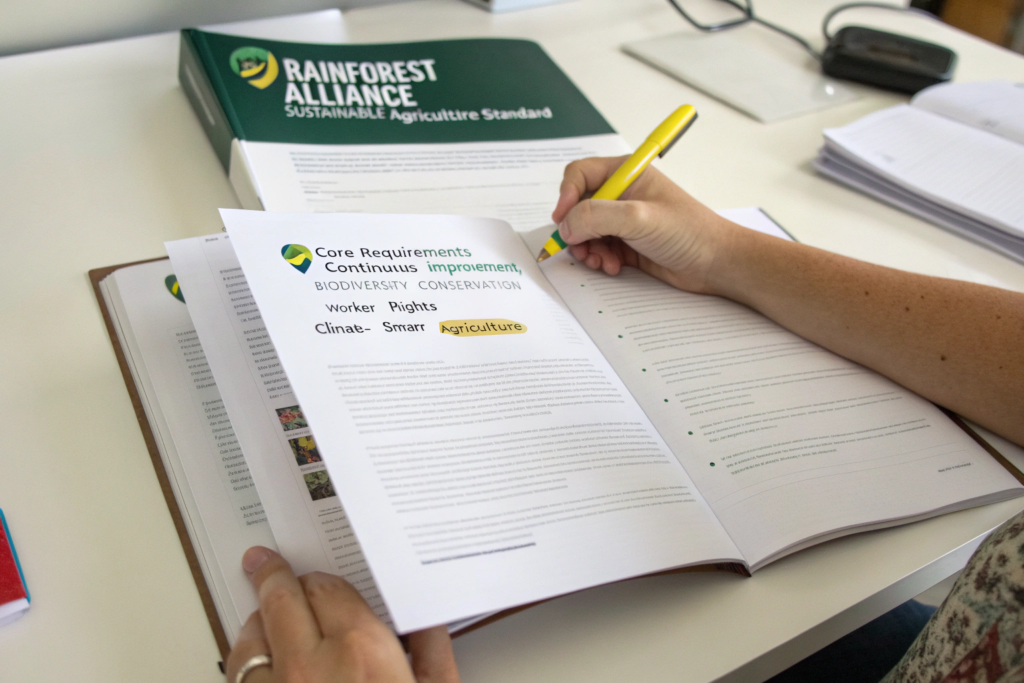
The core requirements of the Rainforest Alliance Standard are built upon four pillars: (1) Management, which requires robust planning and internal assessment systems; (2) Environmental, which mandates the protection of native forests, waterways, and biodiversity; (3) Social, which guarantees the rights, safety, and well-being of all workers; and (4) Economic, which requires detailed farm planning for long-term profitability and resilience.
These pillars are interconnected. You cannot protect the environment without also protecting the people who depend on it. Let's break down what these key pillars mean for a coffee farm in Yunnan.
How Does the Standard Protect Biodiversity and Natural Forests on a Farm?
This is arguably the most defining feature of the Rainforest Alliance. The standard goes beyond just "no pesticides." It actively requires farms to be a force for ecological good. Protecting biodiversity is a non-negotiable, foundational requirement.
- Zero Deforestation Commitment: The standard strictly prohibits any deforestation or conversion of natural forests after a 2014 cut-off date. On our farm, we conduct regular GPS-mapped satellite monitoring, which is cross-referenced during the audit, to prove that our coffee production is not expanding into the surrounding native forest. This is directly linked to the traceability required by the European Union Deforestation Regulation (EUDR).
- Protection of Native Ecosystems: We are required to identify and map all natural ecosystems on and around our farm—native forests, wetlands, and waterways. These areas must be actively protected and, where degraded, a restoration plan must be in place. This involves planting native trees and allowing natural regeneration.
- Maintaining Biodiversity: The standard encourages a biodiverse, shade-grown coffee system. We have planted over 50,000 native shade trees across our estate, which provide a habitat for birds, pollinators, and other wildlife, creating a living buffer zone between our coffee and the surrounding forest. You can see the impact of this approach in our article on What Affects the Flavor of Yunnan Arabica Coffee?.
What Are the Standard's Requirements for Worker Welfare and Safety?
A certification that only protects trees is incomplete. The Rainforest Alliance Standard dedicates an entire pillar to the well-being of the people who make the coffee possible. This is an area where the annual audit is particularly rigorous.
- Decent Work Conditions: The standard prohibits all forms of forced and child labor. It mandates that workers have the right to freedom of association and collective bargaining. These are not just words; the auditor conducts private, confidential interviews with a random selection of our workers to verify compliance.
- A Living Wage and Fair Treatment: The standard is on a journey toward ensuring a living wage. It requires us to track the gap between the minimum wage (which we always exceed) and a calculated living wage for the Baoshan region, and to develop a plan to close that gap. It also mandates transparent contracts, strictly limits working hours, and prohibits any form of discrimination or harassment.
- Occupational Health and Safety (OHS): This is a major focus. We are required to have a formal OHS management plan. This means providing all workers, especially those in the wet mill handling machinery or in the fields during any necessary pesticide application, with full personal protective equipment (PPE) at no cost. It means rigorous safety training during working hours, first aid kits in every work area, and access to clean drinking water and sanitary facilities. A safe, healthy, and fairly treated workforce is the engine of a high-quality, consistent farm.
How Does Rainforest Alliance Certification Support Climate-Smart Agriculture?
Climate change is the single greatest threat to coffee. The Rainforest Alliance Standard does not just acknowledge this; it actively prepares farmers for it. The environmental pillar is deeply integrated with climate-smart agriculture, moving beyond simply protecting nature to actively building resilience against heat, drought, and unpredictable weather.
The Rainforest Alliance Standard supports climate-smart agriculture by requiring farms to implement specific, audited practices that mitigate greenhouse gas emissions and adapt to climate risks, focusing on building healthy, carbon-rich soils through organic matter management, and protecting and restoring natural tree cover for temperature moderation and carbon sequestration.
This is not an abstract goal. It is a set of practical actions that make our farm stronger and more resilient, which directly translates to supply security for you.
How Does Soil Health Management Sequester Carbon and Improve Resilience?
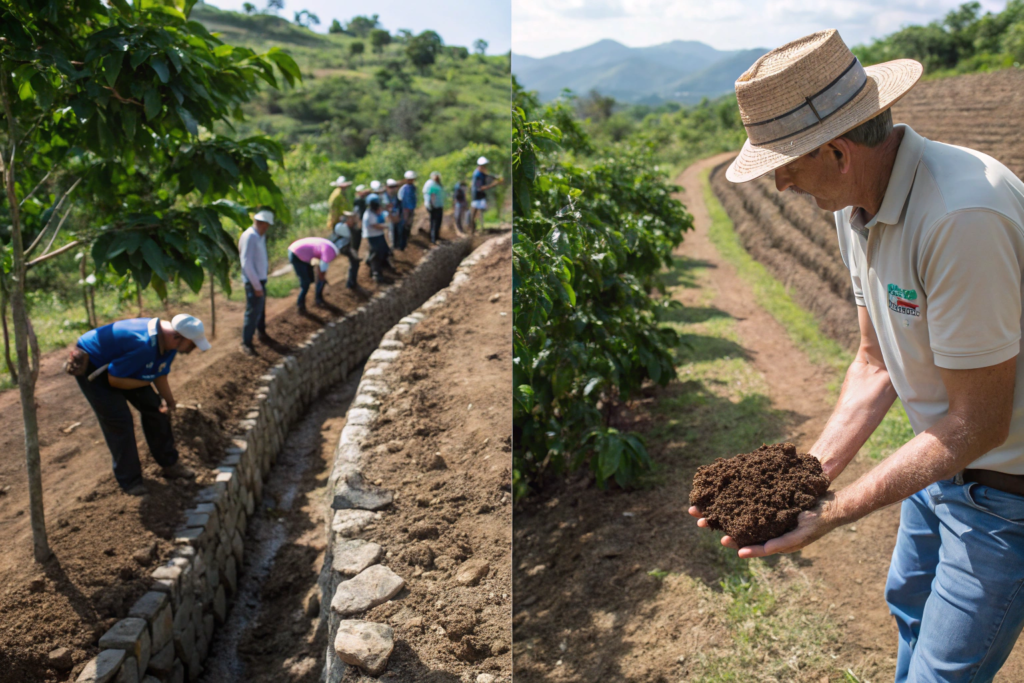
The standard correctly identifies soil as one of the most powerful tools in the fight against climate change. A healthy soil ecosystem is a massive carbon sink and the foundation of a resilient coffee tree. The auditor will physically inspect our fields and our compost operation to verify these practices.
- Carbon Sequestration: By mandating practices like the use of cover crops, the application of organic compost, and strict erosion control measures, the standard promotes the buildup of organic matter in the soil. This organic matter is largely composed of carbon, which is pulled from the atmosphere and stored safely in the ground. We move beyond simply not using synthetic chemicals to actively building new, fertile topsoil.
- Improved Water and Nutrient Retention: Soils rich in organic matter act like a giant sponge. They absorb and hold significantly more rainwater, making the farm far more resilient to drought. They also provide a slow-release source of nutrients to the coffee trees, reducing the need for even organic inputs. A resilient coffee tree is better able to withstand heat stress and produce a consistent, high-quality cherry crop year after year. This directly protects the consistent quality and volume you depend on. Our organic program, as detailed in Are Yunnan coffee beans organic and non-GMO?, is perfectly aligned with these climate-smart soil practices.
Why Is the Protection of Waterways and Riparian Buffers Audited?
Water is a precious resource, especially in the mountains. The Rainforest Alliance Standard takes a zero-tolerance approach to water pollution and mandates active protection of all natural waterways.
- Zero Discharge of Untreated Wastewater: The single biggest environmental risk from a coffee wet mill is the discharge of untreated, acidic wastewater from fermentation tanks, which can devastate aquatic life. The RA standard strictly prohibits this. The auditor checks our wastewater treatment system to ensure all water is neutralized and filtered through a system of settling ponds before it is clean enough to be used for irrigation, ensuring no untreated effluent ever reaches a natural stream.
- Mandatory Riparian Buffers: We are required to maintain and protect a vegetated "riparian buffer" zone of native trees and plants along all streams, rivers, and springs on our property. This buffer acts as a vital barrier, filtering out any potential sediment runoff from the coffee fields, stabilizing the banks, and shading the water to keep it cool and oxygen-rich for aquatic life. During our audit, the trained inspector walks the length of these waterways to verify the integrity of the buffer zone. This protection of the watershed is an ecological responsibility that benefits the entire downstream community.
How Does the Rainforest Alliance Standard Ensure a More Traceable Supply Chain?
A sustainability label is meaningless if you cannot verify it. The Rainforest Alliance has built a rigorous digital traceability system to prevent fraud and ensure that every claim on a bag of coffee is backed by audited data. This system is what protects your brand when you make a certified claim.
The Rainforest Alliance Standard ensures a traceable supply chain through a mandatory digital traceability platform where every certified actor, from our farm to the final brand owner, must record each sale and purchase with a unique Transaction Certificate, creating a continuous, auditable digital chain of custody that tracks certified coffee by volume.
This is how a "60% Rainforest Alliance Certified" claim on your bag is legally defensible. The volume of certified coffee you buy is digitally tracked and reconciled.
What Is a Rainforest Alliance Transaction Certificate (TC)?
Think of a Transaction Certificate (TC) as the digital passport for a shipment of certified coffee. It is the traceable proof that a specific volume of certified coffee was sold by one certified operator (like our farm) and purchased by another (like your business).
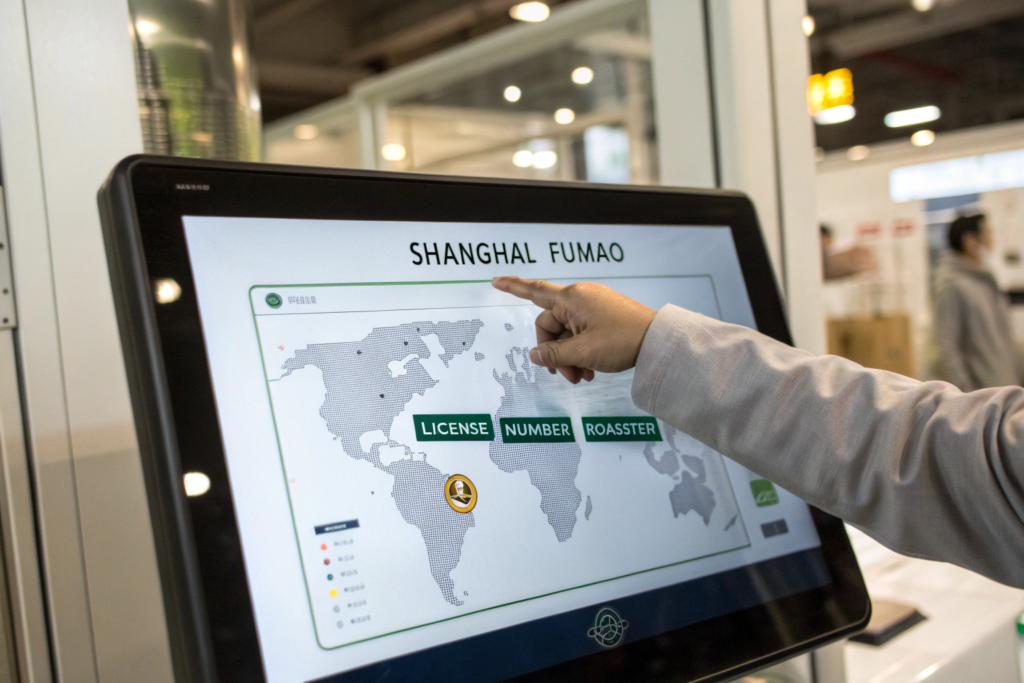
- How It Works: When we sell you a container of RA-certified coffee, we do not just send an invoice. We go onto the Rainforest Alliance's online traceability platform and issue an electronic Transaction Certificate. This TC states the unique RA license numbers of both our farm (the seller) and your company (the buyer), the specific product (e.g., Green Coffee, Arabica), the exact volume sold (e.g., 19,200 kg), and the claim type (e.g., "Identity Preserved" or "Mass Balance").
- Your Audit Trail: This digital TC is the primary document your own organic or sustainability auditor will ask to see. It is the irrefutable proof that the coffee you purchased was legally certified. The digital system prevents the same volume of certified coffee from being sold twice. It creates a closed-loop traceability system that is far more robust than paper certificates, which can be forged. This is a key part of our commitment at Shanghai Fumao to provide verified, trustworthy products.
How Do "Identity Preserved" and "Mass Balance" Traceability Differ?
When you buy RA-certified coffee, you are buying one of two models of traceability. Understanding the difference is crucial for the claims you want to make on your bag.
| Traceability Model | How It Works | On-Product Claim | Key Advantage for You |
|---|---|---|---|
| Identity Preserved (IP) | The certified beans are kept physically separate from non-certified beans at every single stage—from the specific farm block, through our mill, to the container. The coffee in the bag is 100% from a certified farm. | You can make a strong, direct link between the specific coffee and a certified farm. | The highest level of traceability. It allows for a pure, single-estate story. |
| Mass Balance (MB) | Certified and non-certified coffee may be mixed at some stages in the supply chain (e.g., during milling). However, the volume of certified coffee sold is strictly controlled and matched to the volume purchased. | You can rightfully say the product "supports certified farms," but you cannot claim that every bean is from a certified source. | Allows for greater flexibility and cost-effectiveness in blended or multi-origin products, while still providing financial support to certified farmers. |
At Shanghai Fumao, we offer both models. For our single-estate, direct-trade clients who want the purest story, we provide Identity Preserved lots. For a client creating a complex blend, Mass Balance is a pragmatic and honest way to support the RA mission at scale. We are transparent about the traceability level for every lot. For more on traceability, see our guide on How to Verify the Origin of Yunnan Arabica Beans with Documentation?.
Conclusion
The Rainforest Alliance Standard for coffee farms in China is far more than a simple checklist. It is a rigorous, audited, and holistic framework that verifies a farm's commitment to building a better future for its people and its ecosystem. It demands the protection of natural forests and biodiversity, the fair and safe treatment of all workers, the implementation of climate-smart agricultural practices, and a fully digital, auditable system of traceability.
For you, the buyer, these standards translate into a product you can trust completely. They ensure that the delicious, high-quality coffee you are purchasing was grown in a way that is ethical, sustainable, and resilient. Choosing a Rainforest Alliance certified partner like BeanofCoffee strengthens your entire value proposition, allowing you to sell not just a great cup, but a great story.
If you would like to receive a sample of our Rainforest Alliance certified coffee along with the corresponding documentation, including a sample Transaction Certificate, we are ready to provide it. Email Cathy Cai. Ask for the "Rainforest Alliance Certified Sample & Documentation Pack." Contact Cathy at: cathy@beanofcoffee.com