
A distributor from Seattle called me last year. His warehouse was chaos. Pallets everywhere. Bags damaged from poor stacking. Workers spending hours searching for lots. Inventory counts never matched records. He was losing money on every shipment and didn't even know how much.
Coffee warehouse efficiency depends on layout optimization, inventory management systems, proper stacking techniques, climate control, and workflow design. The difference between an efficient and inefficient warehouse can be 30 to 50 percent in operating costs—and even more in product quality preservation.
Let me walk you through what we've learned managing our own warehouses and helping buyers improve theirs. Because your coffee's quality doesn't just depend on how we store it—it depends on how you store it too.
How Should You Organize Your Coffee Warehouse Layout?
I remember walking into a buyer's warehouse in Germany. Everything had a place. Green coffee in one zone. Roasted in another. Empty pallets stacked neatly. Workers moved without confusion. You could feel the efficiency. No wasted motion, no wasted time.
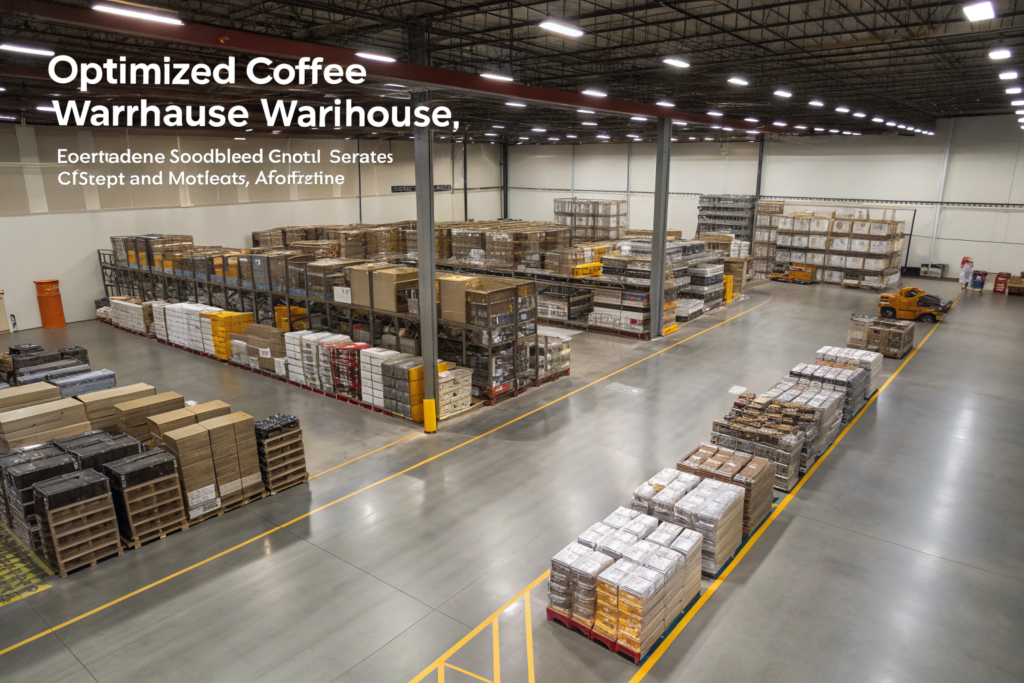
Organize your warehouse by product type, then by age, then by destination. Green coffee together, roasted separately. Oldest stock accessible first. Outbound orders staged near shipping docks. Every product has a fixed home—you never search for anything.
What zoning system works best?
Three zones minimum: receiving, storage, shipping. Within storage, separate green from roasted. Within green, separate by origin or by customer if you store for multiple clients.
Consider also: quarantine area for new arrivals awaiting testing. Damaged goods area for inspection. Empty pallet storage. Each zone should be clearly marked and consistently used. Check warehouse zoning best practices for detailed layout strategies.
How do you calculate optimal aisle width?
Wider aisles waste space. Narrow aisles slow movement. Balance depends on equipment. Forklifts need more space than hand jacks. Reach trucks need less than counterbalance.
Measure your equipment turning radius. Add safety margin. Design aisles that allow efficient movement without wasted space. Working with Shanghai Fumao provides access to logistics consultants who specialize in coffee warehousing.
What Inventory Systems Prevent Coffee Loss?
Paper systems fail. Humans make mistakes. Coffee gets lost. Inventory counts drift. By the time you discover discrepancies, it's too late to fix. Digital systems prevent these problems.
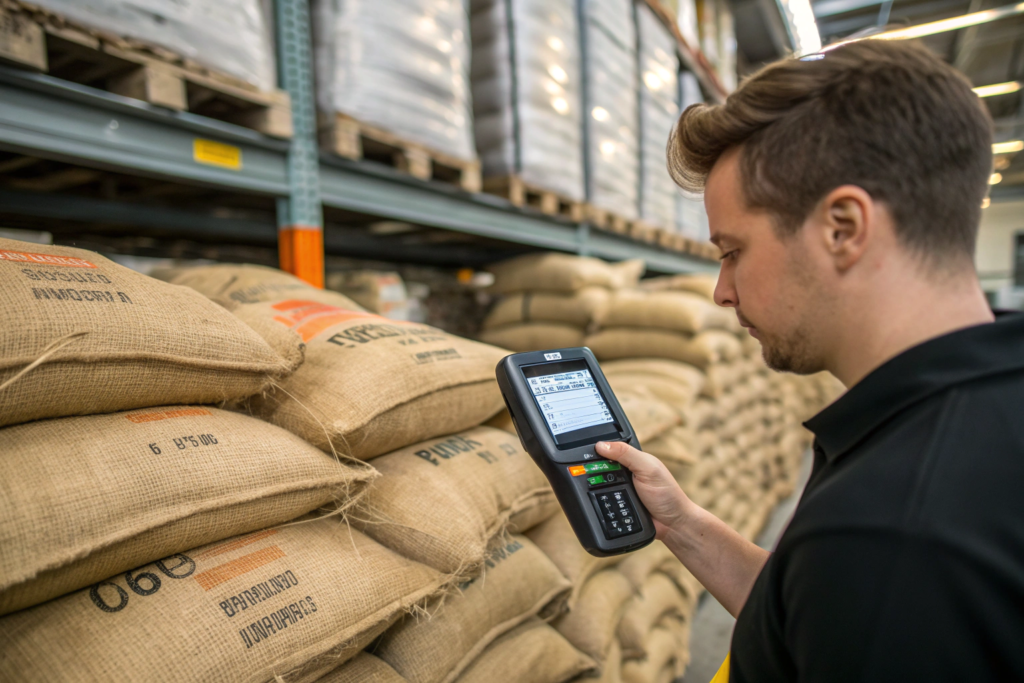
Implement barcode or RFID tracking for every pallet. Scan when received, when moved, when picked, when shipped. Real-time inventory visibility prevents loss, enables FIFO rotation, and provides data for purchasing decisions. Without digital tracking, you're guessing.
What software works for coffee warehouses?
Warehouse management systems range from simple spreadsheets to complex ERP integrations. Choose based on your volume and complexity.
Small operations: cloud-based inventory tools with barcode scanning. Medium operations: dedicated WMS with lot tracking. Large operations: integrated ERP with WMS module. Visit warehouse management software comparisons for options that fit coffee-specific needs.
How do you track multiple lots efficiently?
Each lot needs unique identifier. Link to origin, arrival date, cupping scores, customer allocations. Barcode on every pallet ties physical inventory to digital records.
We use lot codes that encode harvest year, origin, processing method, and sequential number. Anyone can read the code and understand what's in that bag. Working with partners like Shanghai Fumao ensures consistent lot tracking throughout supply chain.
What Stacking Methods Maximize Space and Protect Quality?
I've seen warehouses stack bags too high. Bottom bags crush. Coffee quality suffers. I've seen warehouses stack haphazardly. Bags fall, rip, spill. Proper stacking protects both coffee and workers.
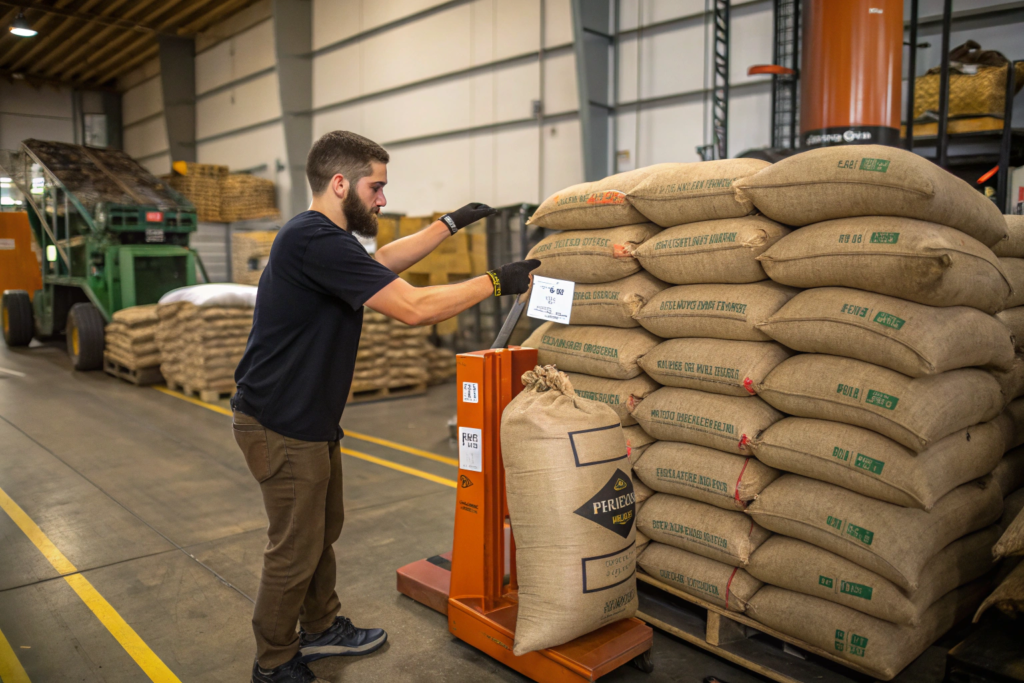
Stack coffee bags on pallets, never directly on floor. Limit stack height based on bag weight—heavier bags, lower stacks. Leave space between stacks for air circulation. Ensure stacks are stable, plumb, and accessible for FIFO rotation.
How high can you safely stack coffee bags?
Standard 60-kilogram bags: 5 to 6 high maximum. GrainPro bags inside: 4 to 5 high. Heavier bags, fewer layers. Lighter bags, more layers.
Consider pallet stability, worker safety, and bag compression. Test by measuring bottom bag thickness after stacking. If compressed significantly, reduce height. Check coffee bag stacking guidelines for industry standards.
What pallet configuration works best?
Block stacking (bags directly on pallet) vs. rack storage (bags on shelves). Block stacking uses space efficiently but limits access to individual pallets. Rack storage enables selective access but costs more and uses more space.
For high-volume single products, block stacking works. For mixed inventory with frequent picks, rack storage better. Review pallet storage system comparisons for coffee warehouse applications.
How Do You Manage Climate Control in Coffee Warehouses?
Coffee is sensitive. Temperature swings cause condensation. High humidity grows mold. Heat accelerates staling. Without climate control, your warehouse destroys quality slowly every day.
Maintain coffee warehouses at 18 to 22 degrees Celsius, relative humidity below 60 percent. Monitor continuously with data loggers. Respond immediately to deviations. Install dehumidifiers in humid climates. Insulate warehouses to reduce temperature fluctuations.

What humidity level prevents mold?
Below 60 percent relative humidity. Above 65 percent, mold risk increases dramatically. Above 70 percent, mold grows actively.
Measure humidity throughout warehouse, not just at one point. Corners and near doors differ from center. Use multiple sensors. Working with Shanghai Fumao provides access to our climate monitoring expertise.
How do you handle seasonal temperature changes?
Summer heat requires cooling or at least insulation. Winter cold requires heating to prevent condensation when warm trucks enter cold warehouses.
Air locks at loading docks prevent outside air from flooding interior. Fast-acting doors minimize exchange. HVAC systems sized for peak loads. Visit coffee warehouse climate control for technical specifications.
What Workflow Practices Improve Picking and Shipping?
Picking errors cost money. Wrong coffee shipped means returns, re-shipping, unhappy customers. Efficient workflows reduce errors and speed fulfillment.
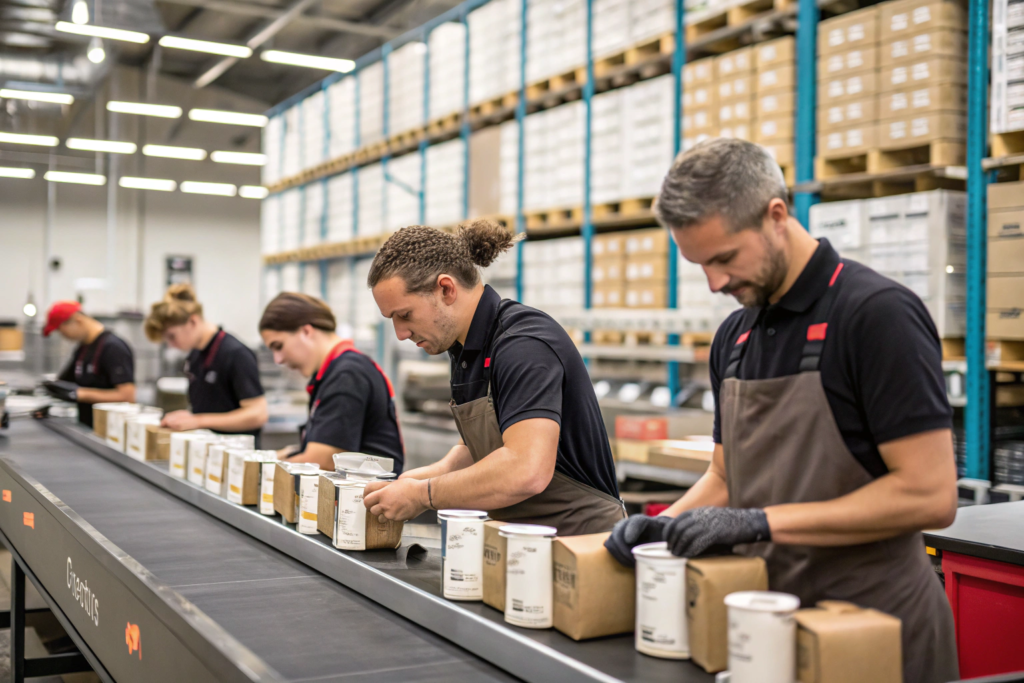
Stage orders in advance. Pick by zone to reduce travel time. Verify each pick with barcode scanning. Double-check before sealing. Train workers on importance of accuracy—every error costs far more than the time to prevent it.
How do you organize picking routes?
Group orders by product location. Pick multiple orders in one pass rather than running back and forth. Use batch picking for similar products.
Zone picking works well for large warehouses: each zone picks products in that area, passes to next zone. Reduces travel time dramatically. Check warehouse picking optimization for methodology comparisons.
What quality checks prevent shipping errors?
Scan at pick. Scan at pack. Compare to order. Visual check of lot codes. Weigh shipment to verify total matches expected.
We recommend final check before sealing: one person reads order, another confirms products. Two-person verification catches errors one person misses. Review coffee shipping quality control for industry best practices.
Conclusion
Coffee warehouse efficiency isn't one thing—it's many things working together. Layout organizes space. Inventory systems track products. Stacking protects quality. Climate control preserves freshness. Workflow speeds fulfillment. Each element matters. Together, they determine whether your warehouse adds value or destroys it.
At Shanghai Fumao, we've invested heavily in our own warehouses. We know what works and what doesn't. We share that knowledge with buyers because their success affects our success.
If you want to improve your warehouse operations, contact our export manager, Cathy Cai. She'll share our best practices, connect you with logistics experts, and help you think through improvements. Email her at cathy@beanofcoffee.com. Tell her about your current operation, your challenges, and your goals. She'll respond within 24 hours with practical advice that actually helps.